
6 857 Computer Network Security Lecture 3 OneTime

- Slides: 32
6. 857 -Computer & Network Security Lecture 3 One-Time Pad and Hash Functions Ronald L. Rivest & Yael Kalai February 10, 2020
Today: • One-Time Pad – Security objective – Method – Proof of “perfect secrecy” • Hash Functions – Definition – Ideal security: Random Oracle Model – Properties (collision resistance, one-way, target collision resistance, pseudo-randomness) – Applications 2
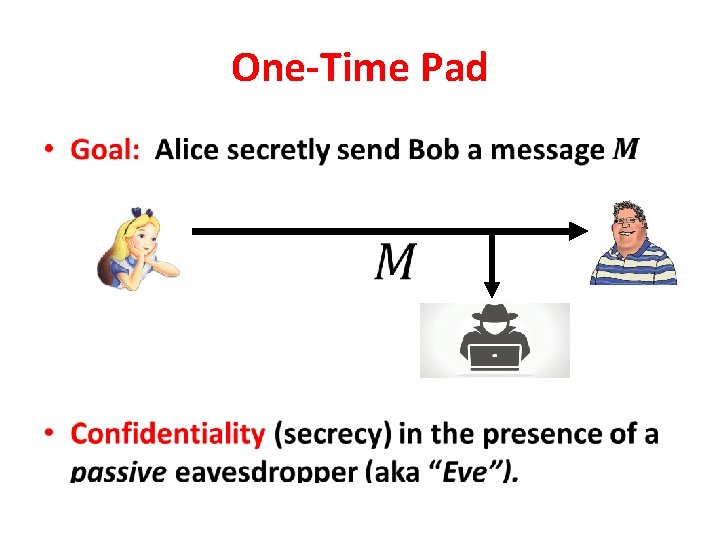
One-Time Pad •
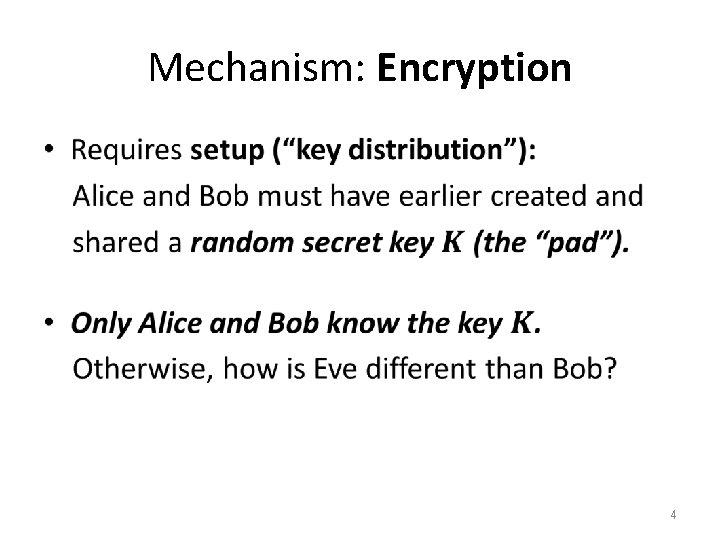
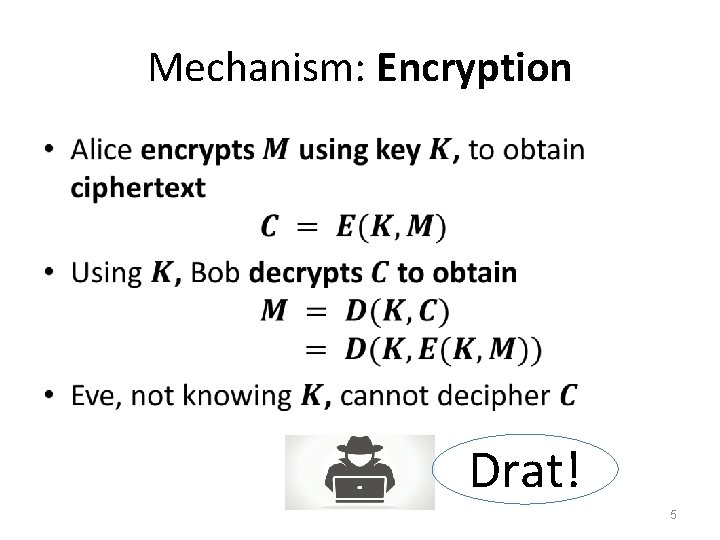
Mechanism: Encryption • 4
Mechanism: Encryption • Drat! 5
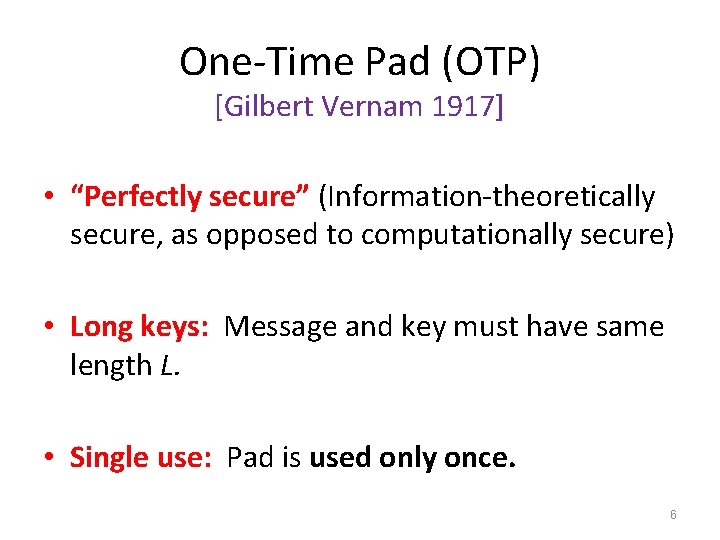
One-Time Pad (OTP) [Gilbert Vernam 1917] • “Perfectly secure” (Information-theoretically secure, as opposed to computationally secure) • Long keys: Message and key must have same length L. • Single use: Pad is used only once. 6
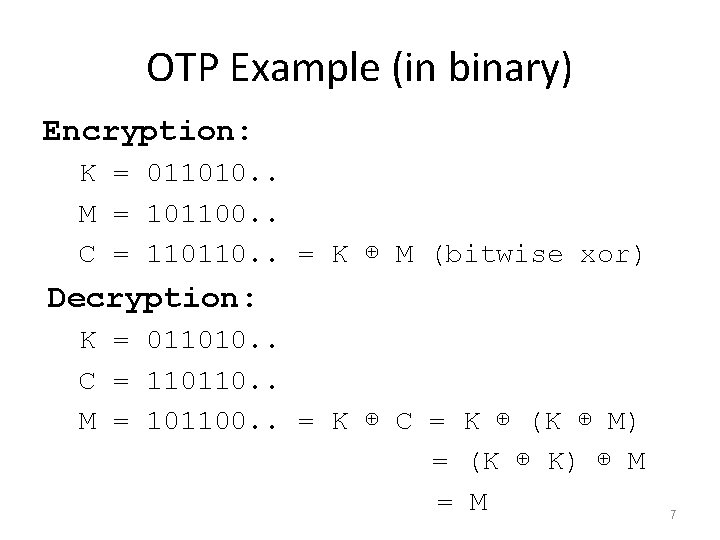
OTP Example (in binary) Encryption: K = 011010. . M = 101100. . C = 110110. . = K ⊕ M (bitwise xor) Decryption: K = 011010. . C = 110110. . M = 101100. . = K ⊕ C = K ⊕ (K ⊕ M) = (K ⊕ K) ⊕ M = M 7
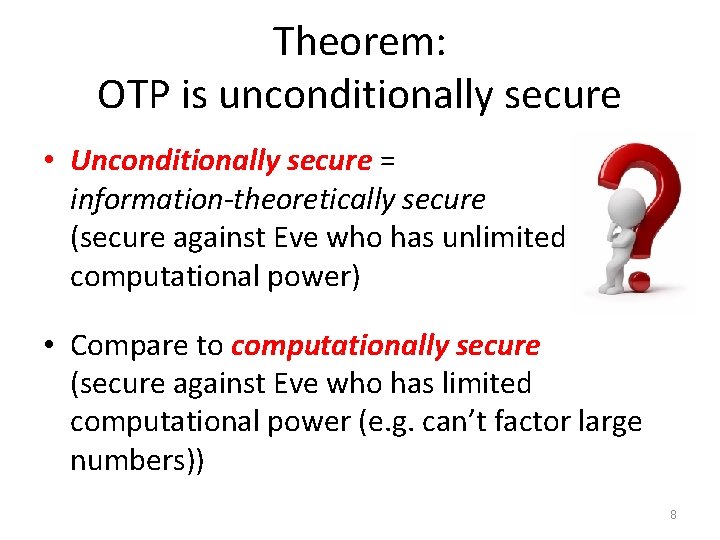
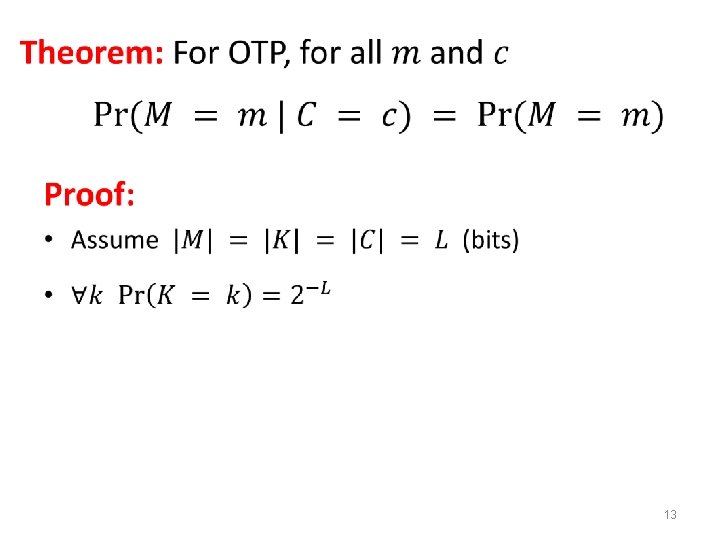
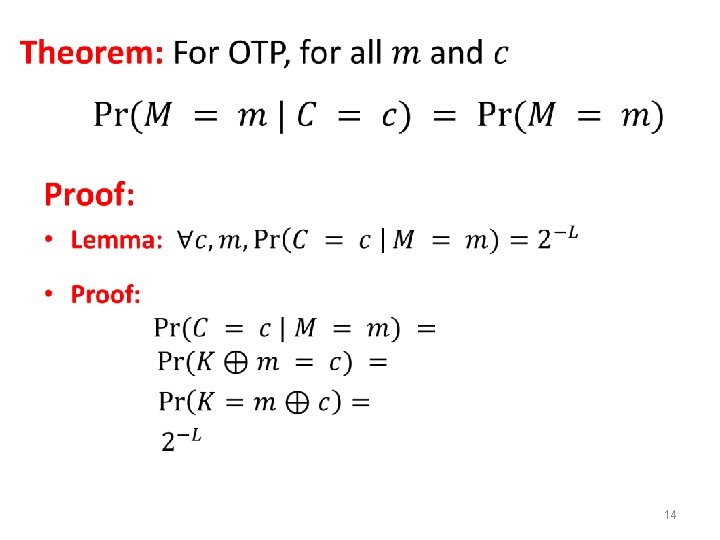
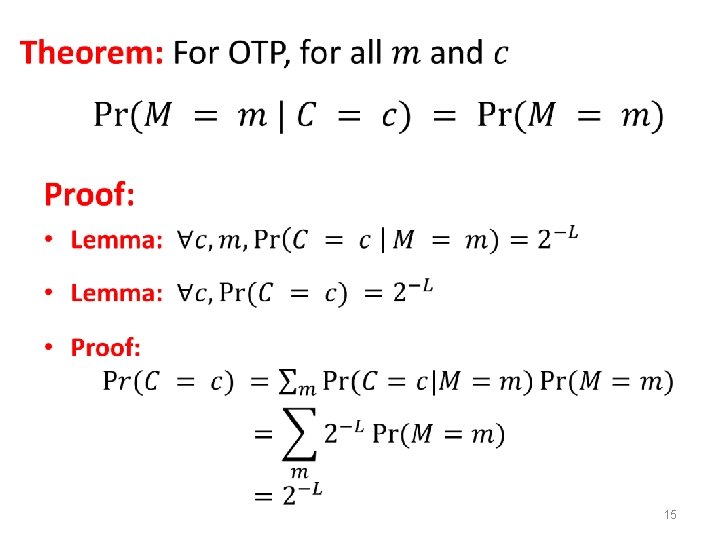
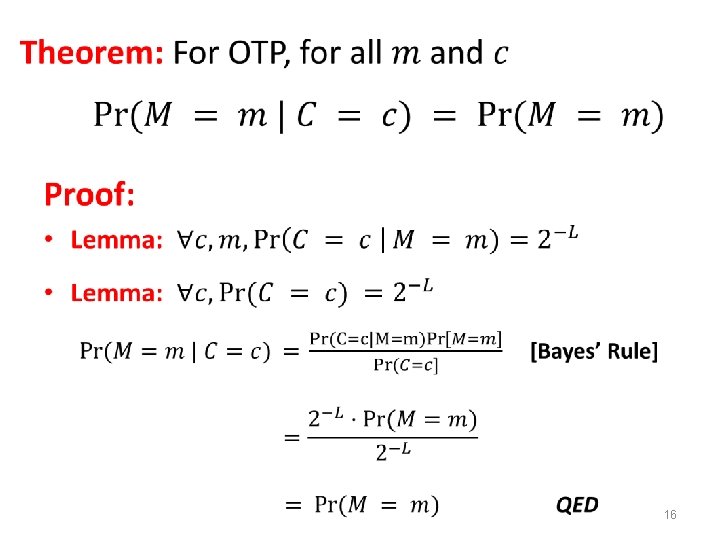
Theorem: OTP is unconditionally secure • Unconditionally secure = information-theoretically secure (secure against Eve who has unlimited computational power) • Compare to computationally secure (secure against Eve who has limited computational power (e. g. can’t factor large numbers)) 8
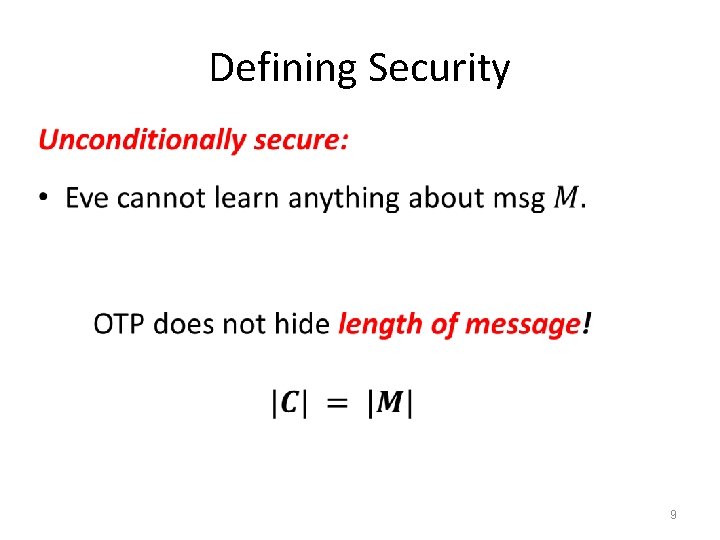
Defining Security • 9
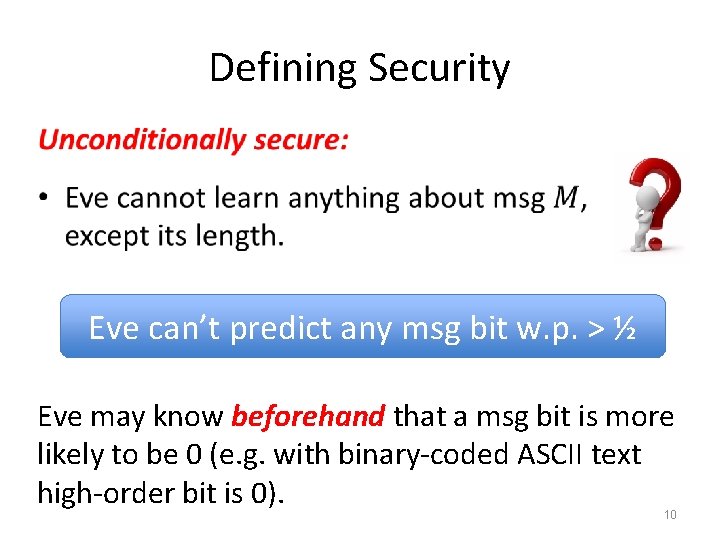
Defining Security • Eve can’t predict any msg bit w. p. > ½ Eve may know beforehand that a msg bit is more likely to be 0 (e. g. with binary-coded ASCII text high-order bit is 0). 10
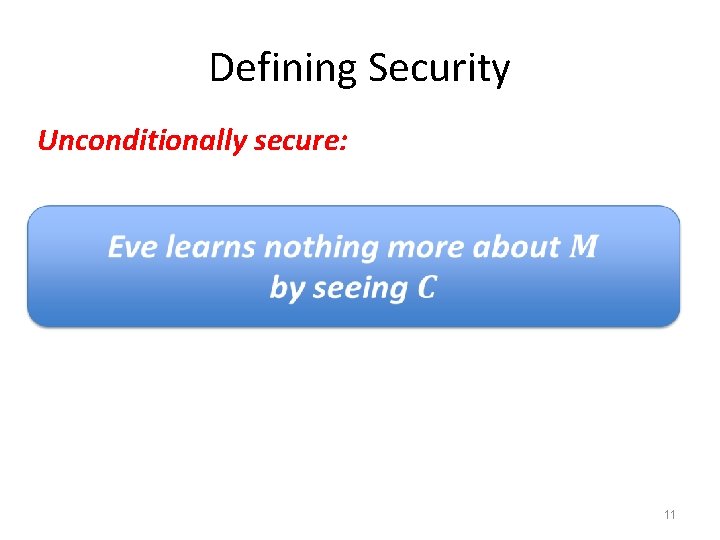
Defining Security Unconditionally secure: 11
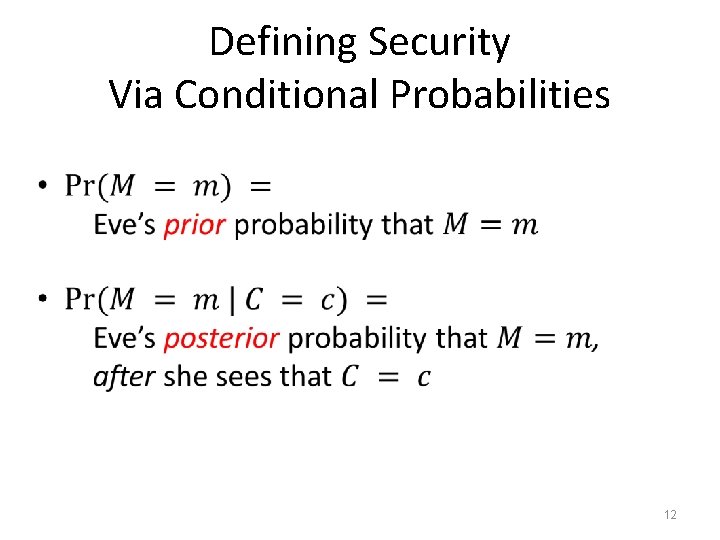
Defining Security Via Conditional Probabilities • 12
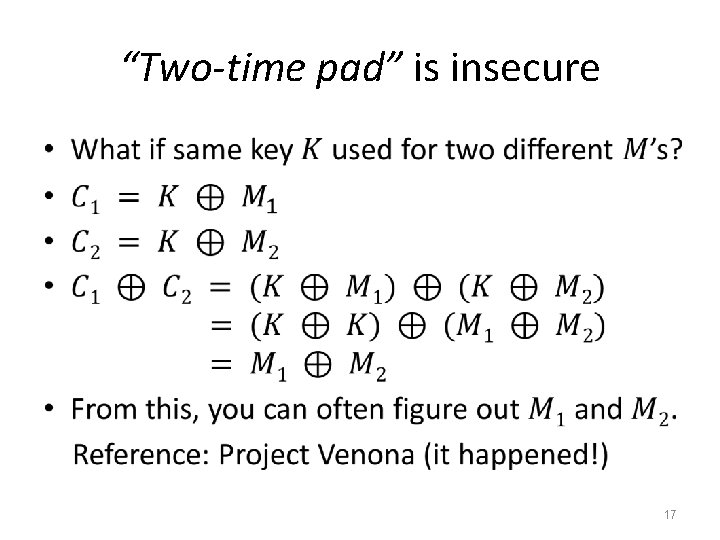
“Two-time pad” is insecure • 17
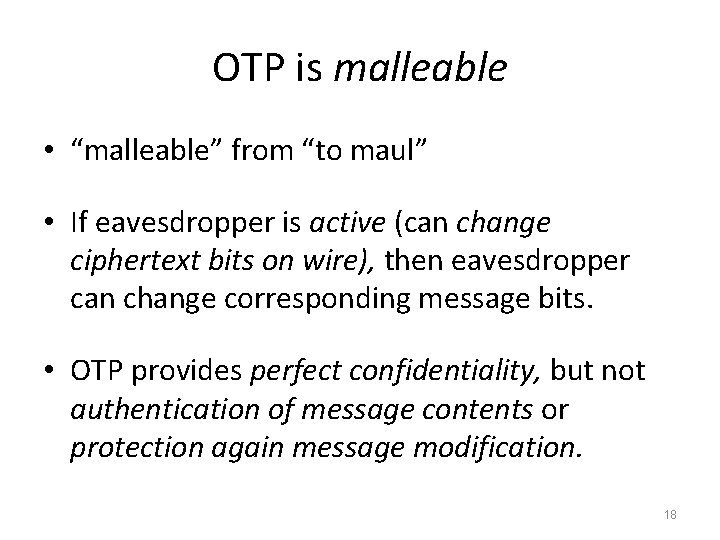
OTP is malleable • “malleable” from “to maul” • If eavesdropper is active (can change ciphertext bits on wire), then eavesdropper can change corresponding message bits. • OTP provides perfect confidentiality, but not authentication of message contents or protection again message modification. 18
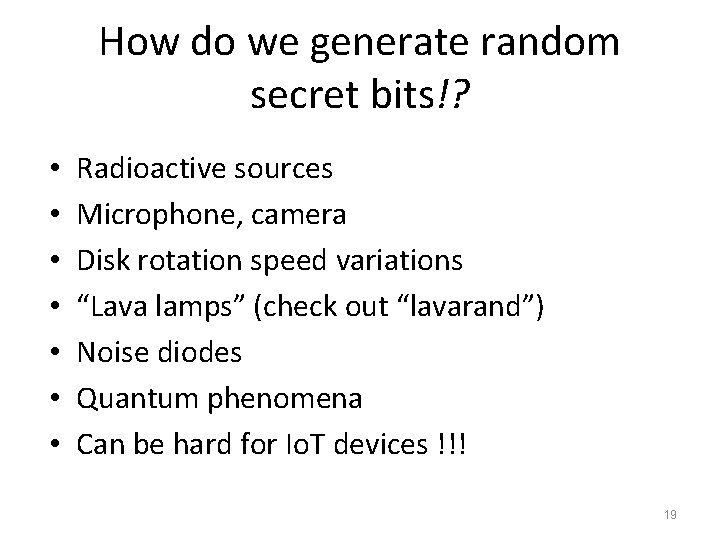
How do we generate random secret bits!? • • Radioactive sources Microphone, camera Disk rotation speed variations “Lava lamps” (check out “lavarand”) Noise diodes Quantum phenomena Can be hard for Io. T devices !!! 19
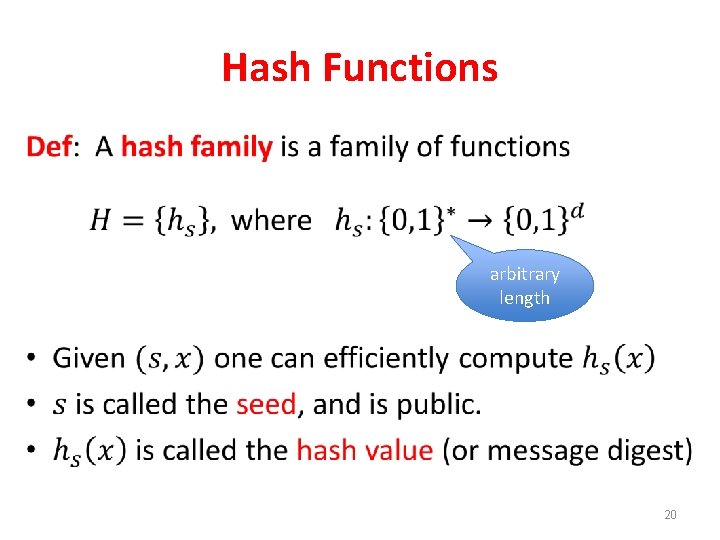
Hash Functions • arbitrary length 20
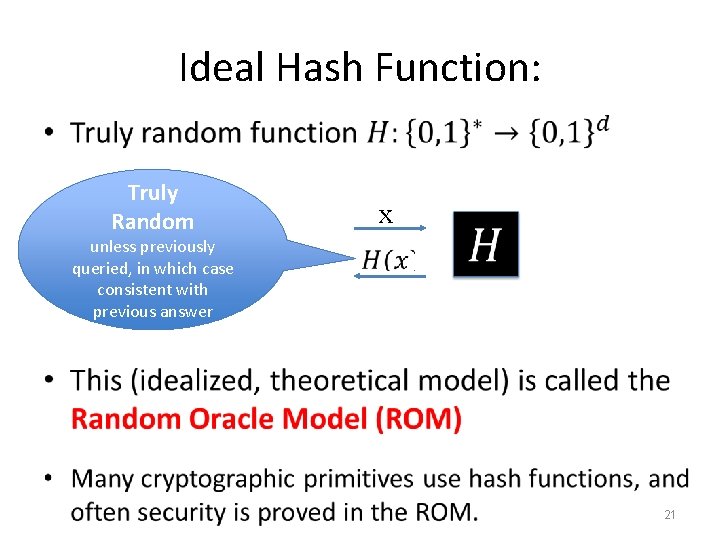
Ideal Hash Function: • Truly Random unless previously queried, in which case consistent with previous answer x 21
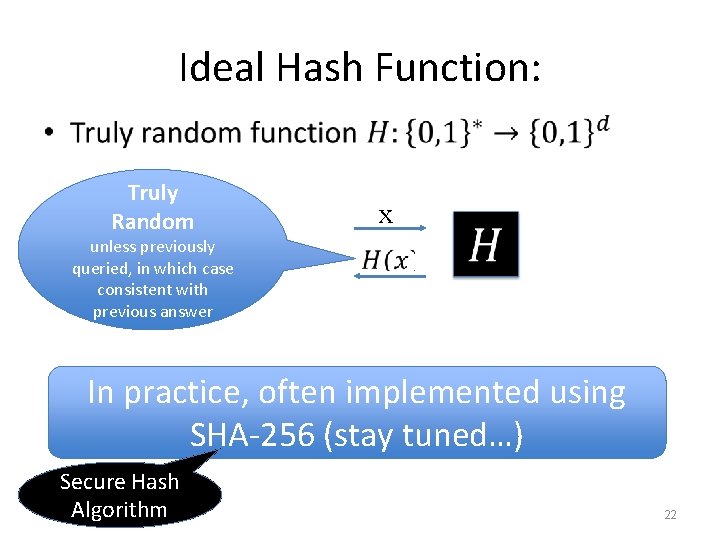
Ideal Hash Function: • Truly Random unless previously queried, in which case consistent with previous answer x In practice, often implemented using SHA-256 (stay tuned…) Secure Hash Algorithm 22
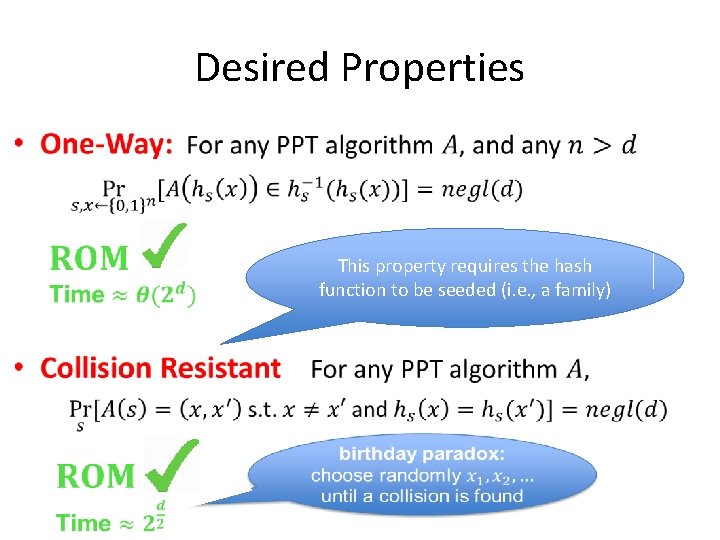
Desired Properties • This property requires the hash function to be seeded (i. e. , a family)
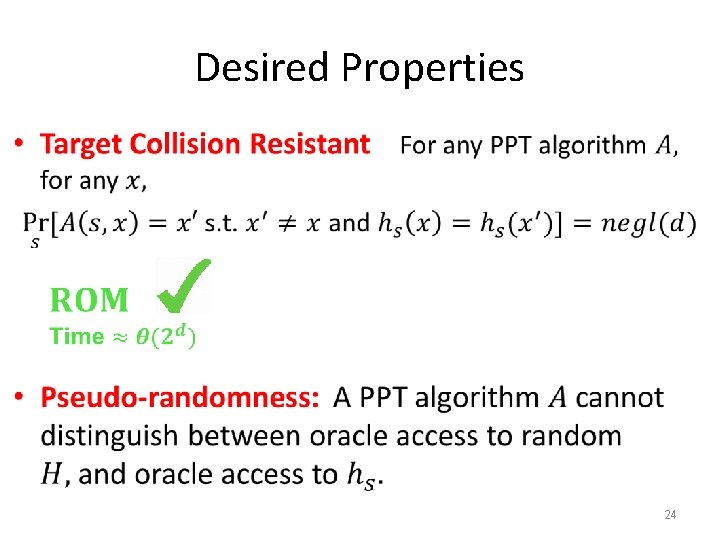
Desired Properties • 24
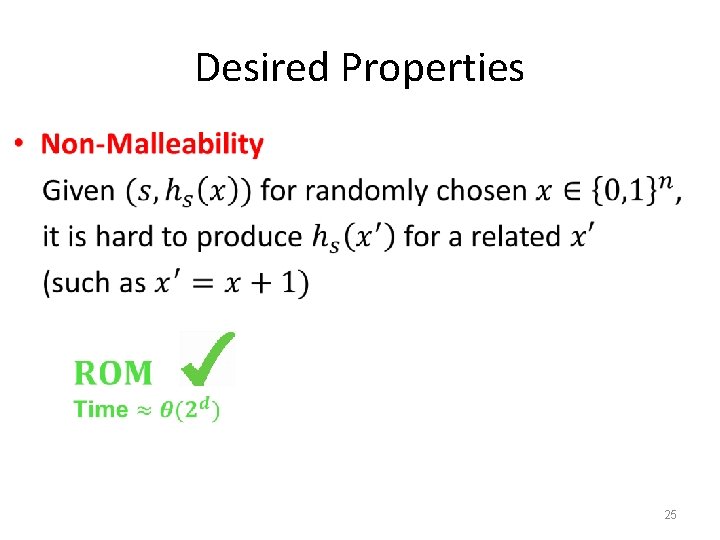
Desired Properties • 25
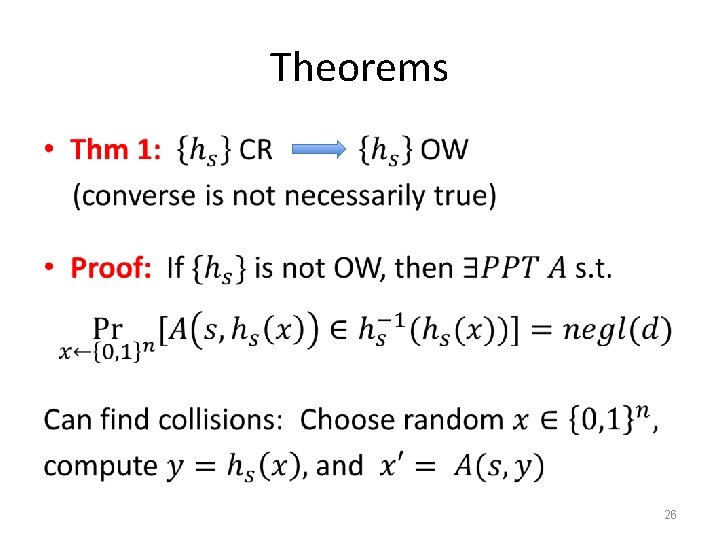
Theorems • 26
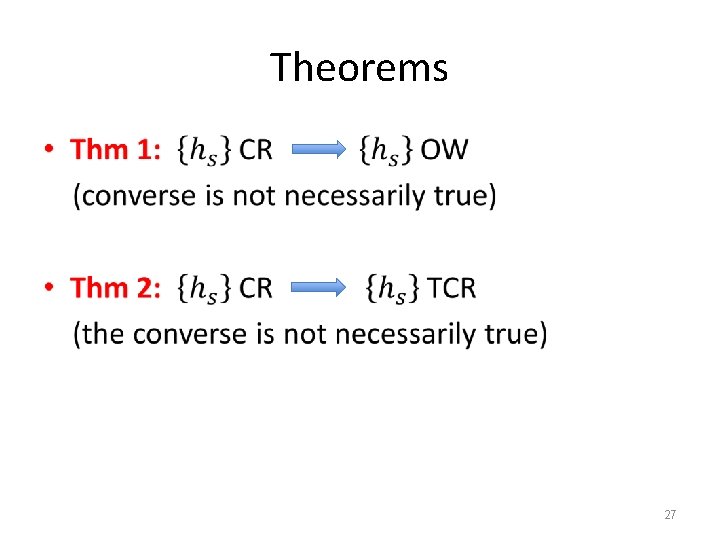
Theorems • 27
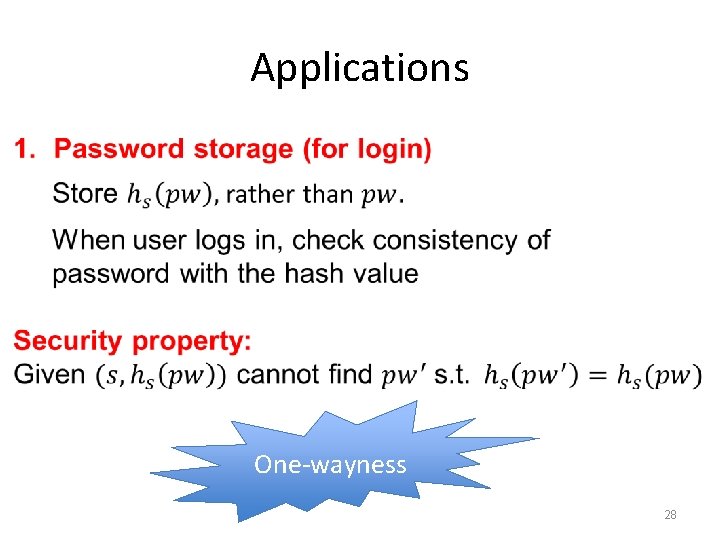
Applications One-wayness 28
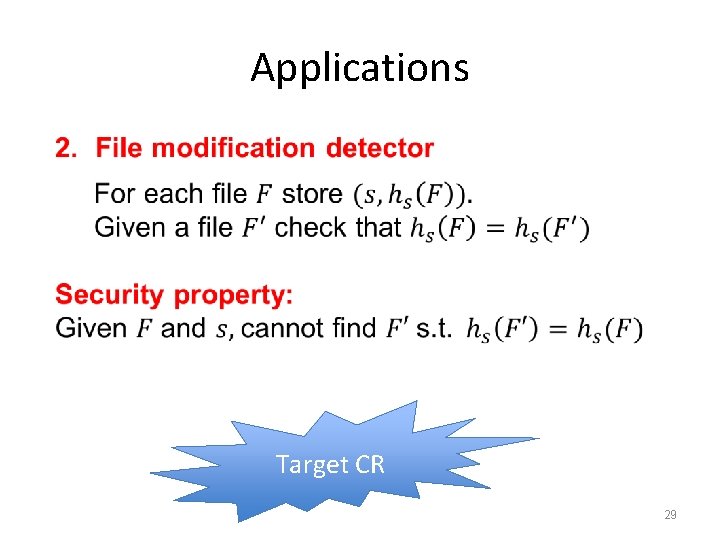
Applications Target CR 29
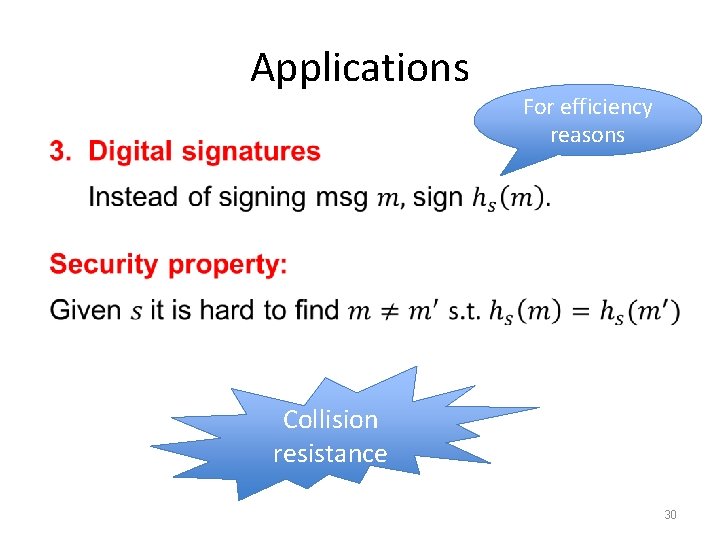
Applications For efficiency reasons Collision resistance 30
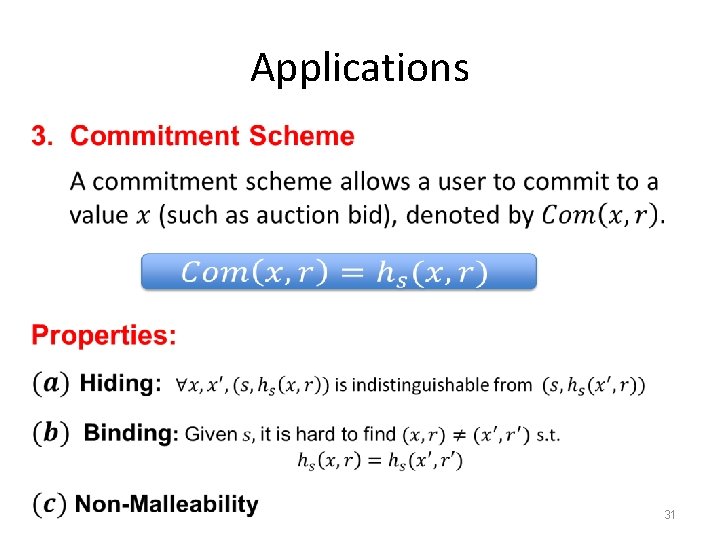
Applications 31
The End Thanks for your attention! See you next class!