
6 8 MARICULTURE 6 8 MARICULTURE ocean ranching
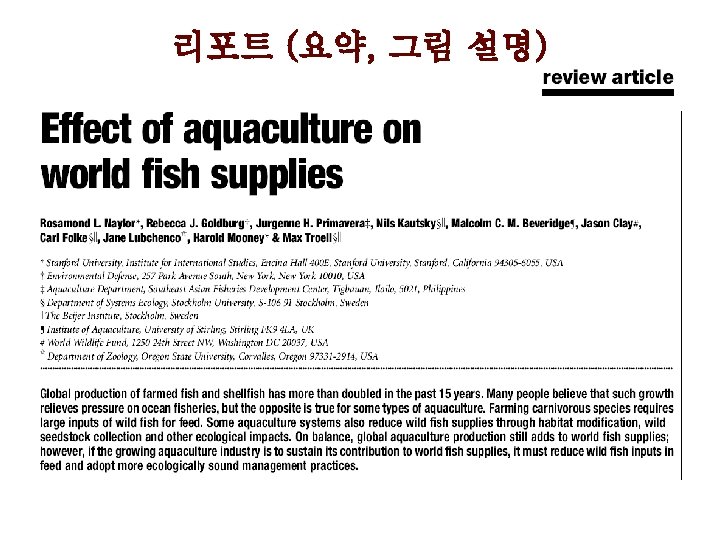
- Slides: 40
6. 8 MARICULTURE
6. 8 MARICULTURE • ocean ranching – rear salmon eggs in hatcheries and then release the young salmon into the sea • monoculture and polyculture – uneaten food and fecal material – anoxic • • increasing demands for more protein for human consumption luxury foods
• • the selection of suitable sites disease control economic balance coastal pollution
5. Aquaculture and Ranching 1. Introduction a. Scale; b. General types of aquaculture 2. The biological basis for aquaculture a. Diet; b. Environmental conditions; c. Reproductive losses; d. Predation and disease 3. Aquaculture of fish a. Carp culture; b. Trout and salmon (rainbow trout, salmon); c. Tilapia; d. Other fish (catfish, eels, grey mullet, sea bass) 4. Aquaculture of invertebrates a. Shrimps and prawns; b. Oysters and mussels; c. Other shellfish (crayfish, crabs, clams, scallops, abalones) 5. 6. Aquaculture of plants and algae Polyculture (integrated culture, multiple trophic+) a. Ducks, terrestrial animals and fish; b. Rice fields; c. Salmon and mussels 7. Ranching a. Stocking in fresh waters; b. Marine stocking; c. Regulation 8. Interactions between aquaculture and the environment a. Modifications to the environment; b. Waste products; c. Interactions with wildlife; d. Use of resources 9. Summary
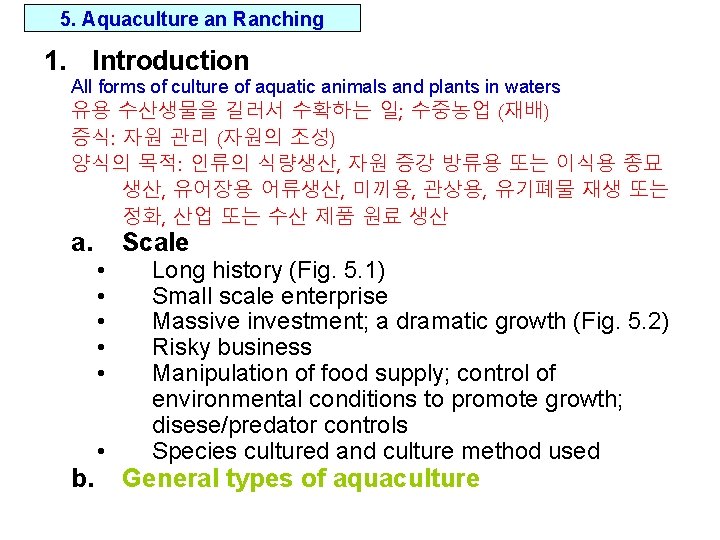
5. Aquaculture an Ranching 1. Introduction All forms of culture of aquatic animals and plants in waters 유용 수산생물을 길러서 수확하는 일; 수중농업 (재배) 증식: 자원 관리 (자원의 조성) 양식의 목적: 인류의 식량생산, 자원 증강 방류용 또는 이식용 종묘 생산, 유어장용 어류생산, 미끼용, 관상용, 유기폐물 재생 또는 정화, 산업 또는 수산 제품 원료 생산 a. b. • • • Scale Long history (Fig. 5. 1) Small scale enterprise Massive investment; a dramatic growth (Fig. 5. 2) Risky business Manipulation of food supply; control of environmental conditions to promote growth; disese/predator controls Species cultured and culture method used General types of aquaculture
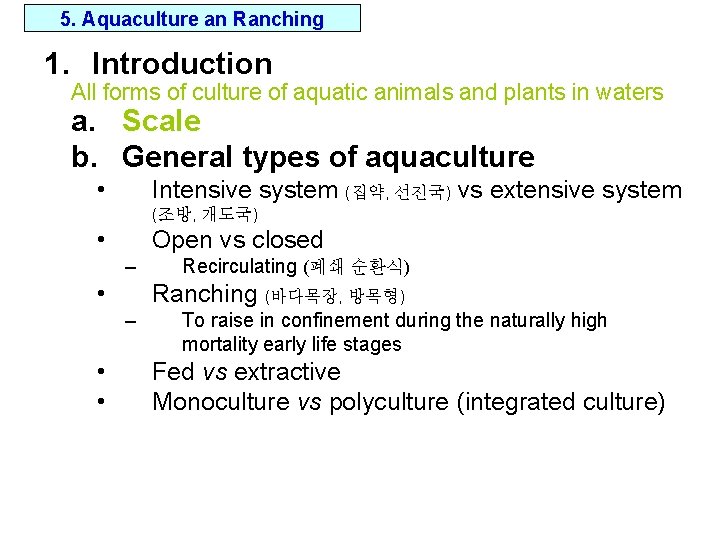
5. Aquaculture an Ranching 1. Introduction All forms of culture of aquatic animals and plants in waters a. Scale b. General types of aquaculture • Intensive system (집약, 선진국) vs extensive system (조방, 개도국) • Open vs closed – • Ranching (바다목장, 방목형) – • • Recirculating (폐쇄 순환식) To raise in confinement during the naturally high mortality early life stages Fed vs extractive Monoculture vs polyculture (integrated culture)
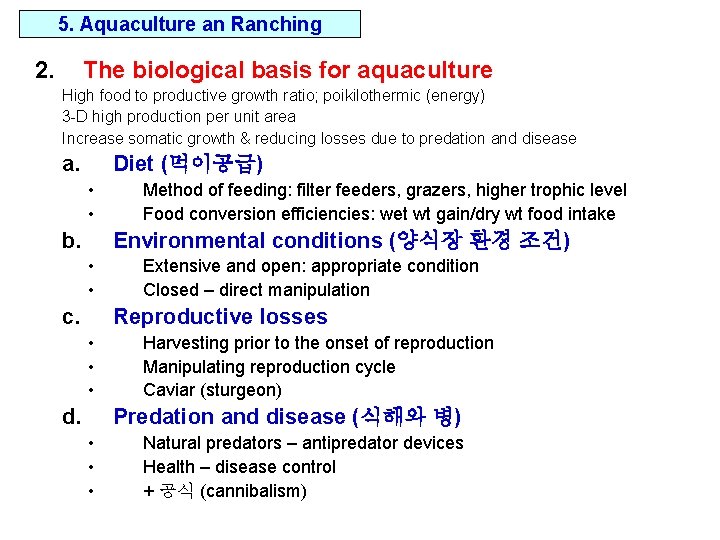
5. Aquaculture an Ranching 2. The biological basis for aquaculture High food to productive growth ratio; poikilothermic (energy) 3 -D high production per unit area Increase somatic growth & reducing losses due to predation and disease a. Diet (먹이공급) • • b. Method of feeding: filter feeders, grazers, higher trophic level Food conversion efficiencies: wet wt gain/dry wt food intake Environmental conditions (양식장 환경 조건) • • c. Extensive and open: appropriate condition Closed – direct manipulation Reproductive losses • • • d. Harvesting prior to the onset of reproduction Manipulating reproduction cycle Caviar (sturgeon) Predation and disease (식해와 병) • • • Natural predators – antipredator devices Health – disease control + 공식 (cannibalism)
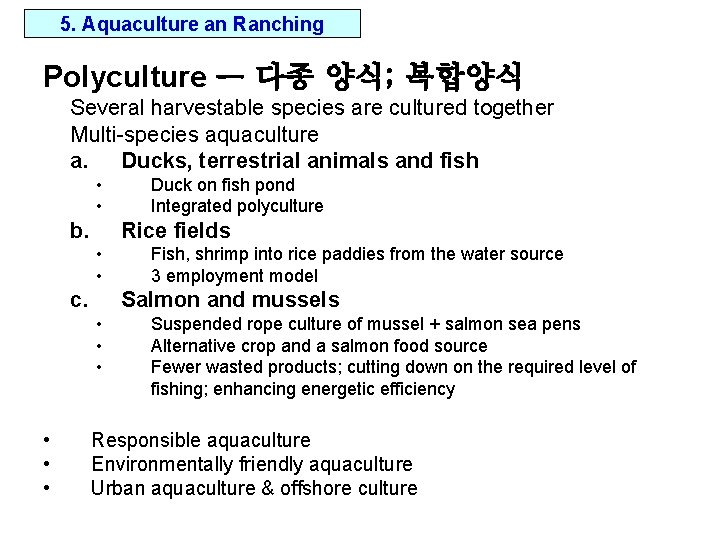
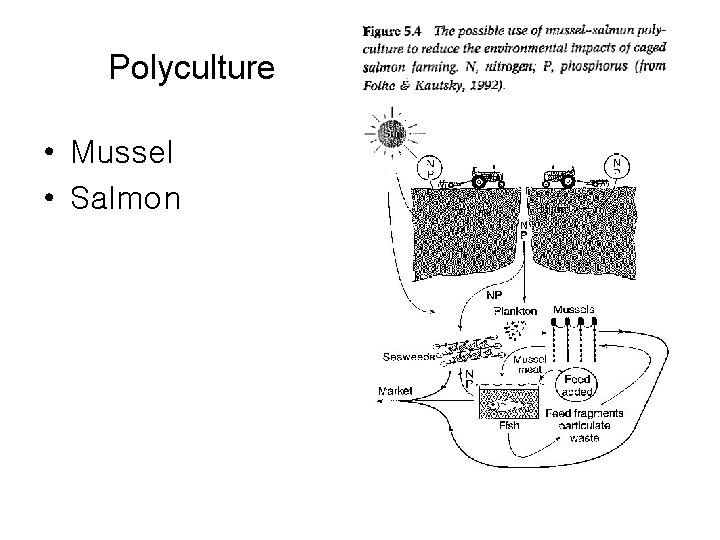
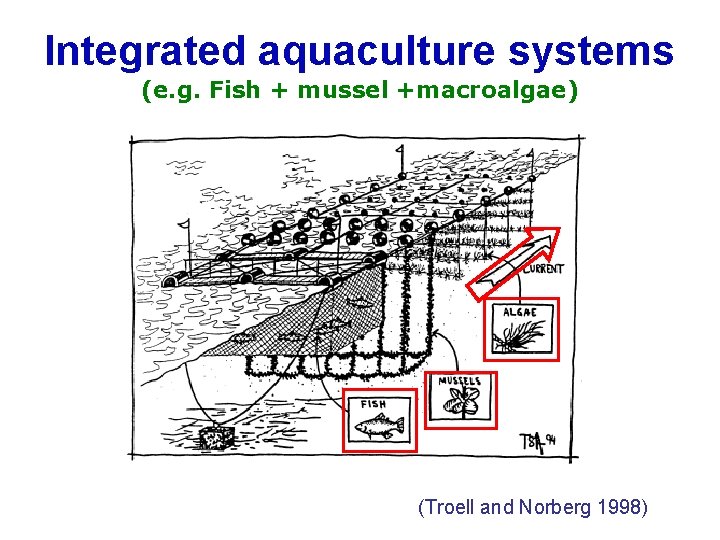
5. Aquaculture an Ranching Polyculture ㅡ 다종 양식; 복합양식 Several harvestable species are cultured together Multi-species aquaculture a. Ducks, terrestrial animals and fish • • b. Rice fields • • c. Fish, shrimp into rice paddies from the water source 3 employment model Salmon and mussels • • • Duck on fish pond Integrated polyculture Suspended rope culture of mussel + salmon sea pens Alternative crop and a salmon food source Fewer wasted products; cutting down on the required level of fishing; enhancing energetic efficiency Responsible aquaculture Environmentally friendly aquaculture Urban aquaculture & offshore culture
Polyculture • Mussel • Salmon
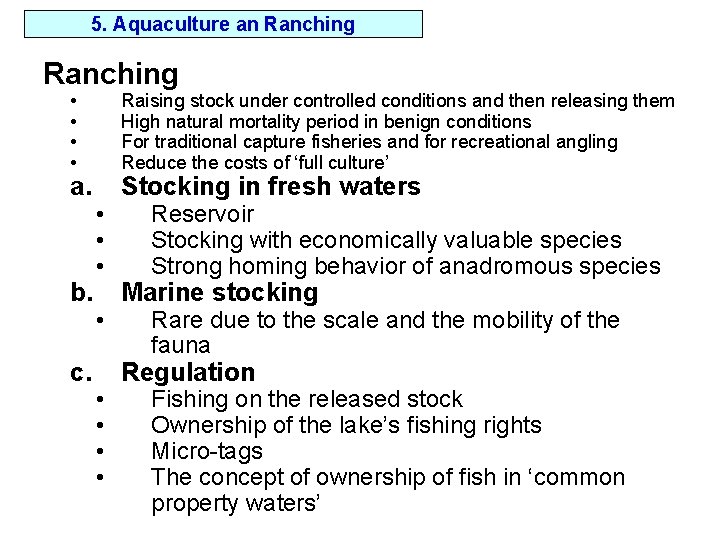
5. Aquaculture an Ranching • • a. b. c. Raising stock under controlled conditions and then releasing them High natural mortality period in benign conditions For traditional capture fisheries and for recreational angling Reduce the costs of ‘full culture’ • • Stocking in fresh waters Reservoir Stocking with economically valuable species Strong homing behavior of anadromous species Marine stocking Rare due to the scale and the mobility of the fauna Regulation Fishing on the released stock Ownership of the lake’s fishing rights Micro-tags The concept of ownership of fish in ‘common property waters’
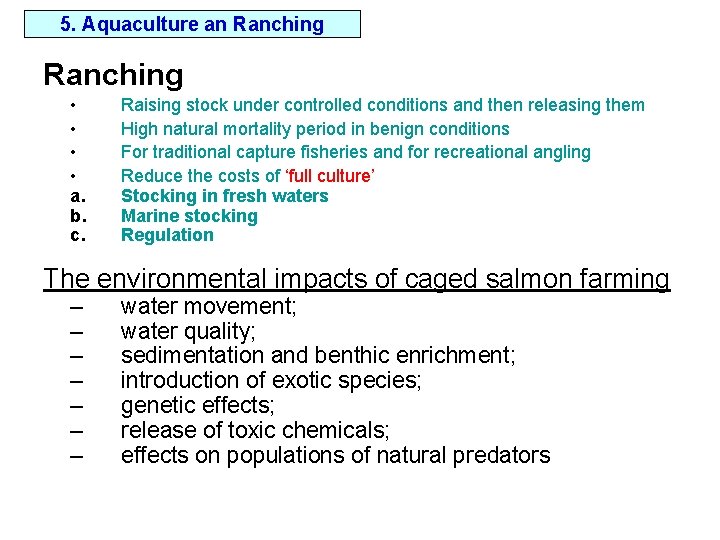
5. Aquaculture an Ranching • • a. b. c. Raising stock under controlled conditions and then releasing them High natural mortality period in benign conditions For traditional capture fisheries and for recreational angling Reduce the costs of ‘full culture’ Stocking in fresh waters Marine stocking Regulation The environmental impacts of caged salmon farming – – – – water movement; water quality; sedimentation and benthic enrichment; introduction of exotic species; genetic effects; release of toxic chemicals; effects on populations of natural predators
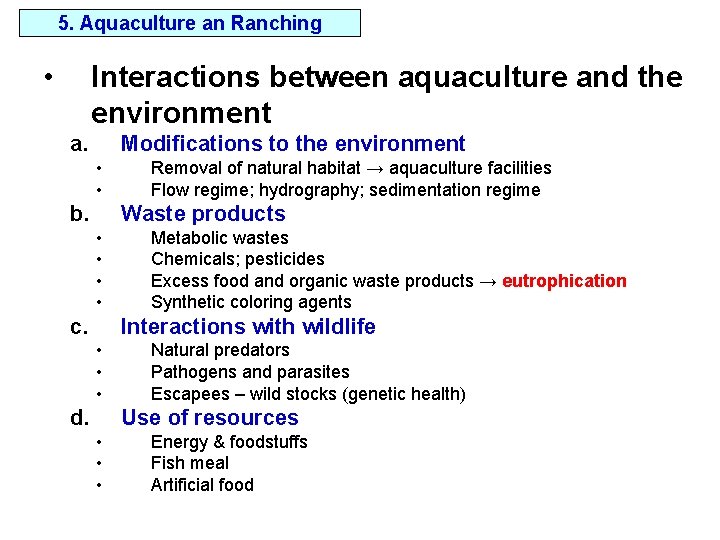
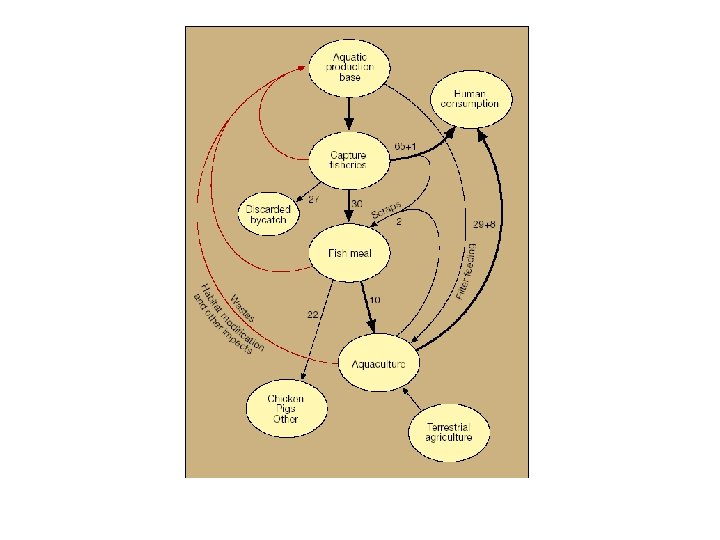
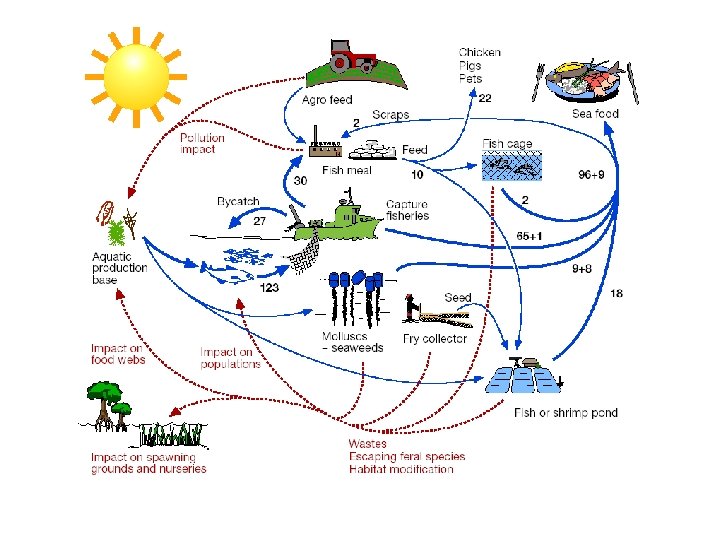
5. Aquaculture an Ranching • Interactions between aquaculture and the environment a. Modifications to the environment • • b. Removal of natural habitat → aquaculture facilities Flow regime; hydrography; sedimentation regime Waste products • • c. Metabolic wastes Chemicals; pesticides Excess food and organic waste products → eutrophication Synthetic coloring agents Interactions with wildlife • • • d. Natural predators Pathogens and parasites Escapees – wild stocks (genetic health) Use of resources • • • Energy & foodstuffs Fish meal Artificial food
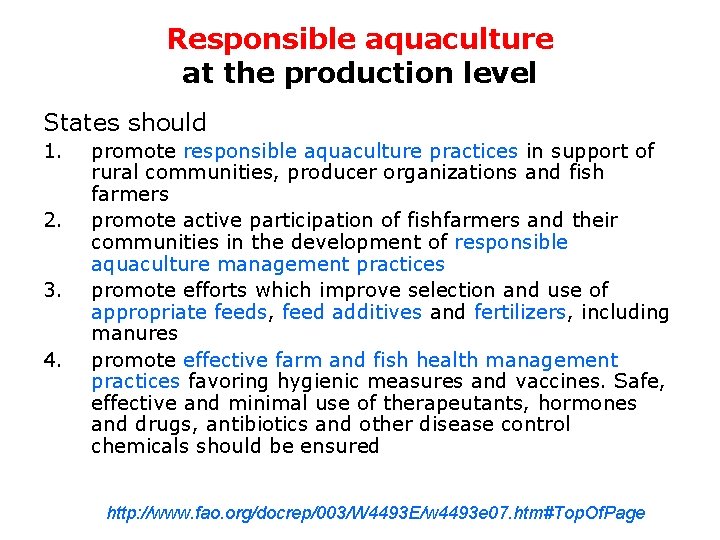
Responsible aquaculture at the production level States should 1. 2. 3. 4. promote responsible aquaculture practices in support of rural communities, producer organizations and fish farmers promote active participation of fishfarmers and their communities in the development of responsible aquaculture management practices promote efforts which improve selection and use of appropriate feeds, feed additives and fertilizers, including manures promote effective farm and fish health management practices favoring hygienic measures and vaccines. Safe, effective and minimal use of therapeutants, hormones and drugs, antibiotics and other disease control chemicals should be ensured http: //www. fao. org/docrep/003/W 4493 E/w 4493 e 07. htm#Top. Of. Page
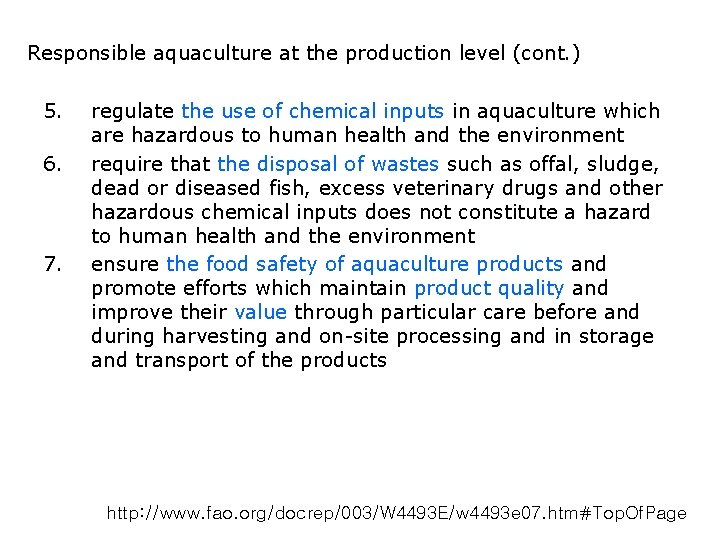
Responsible aquaculture at the production level (cont. ) 5. 6. 7. regulate the use of chemical inputs in aquaculture which are hazardous to human health and the environment require that the disposal of wastes such as offal, sludge, dead or diseased fish, excess veterinary drugs and other hazardous chemical inputs does not constitute a hazard to human health and the environment ensure the food safety of aquaculture products and promote efforts which maintain product quality and improve their value through particular care before and during harvesting and on-site processing and in storage and transport of the products http: //www. fao. org/docrep/003/W 4493 E/w 4493 e 07. htm#Top. Of. Page
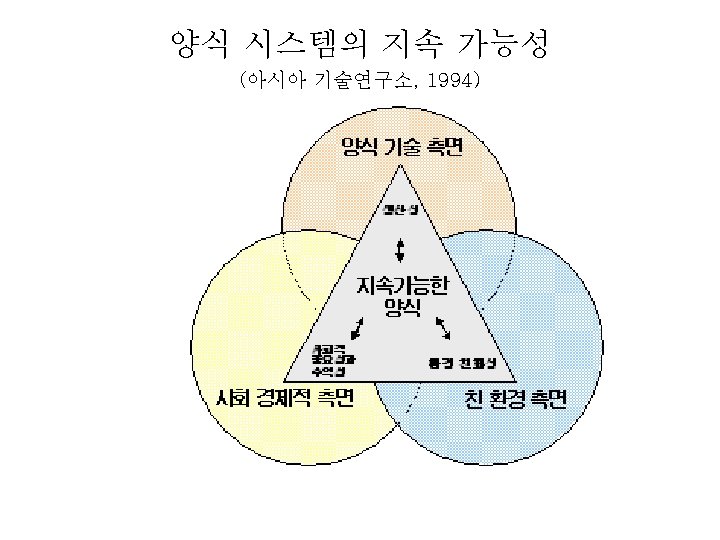
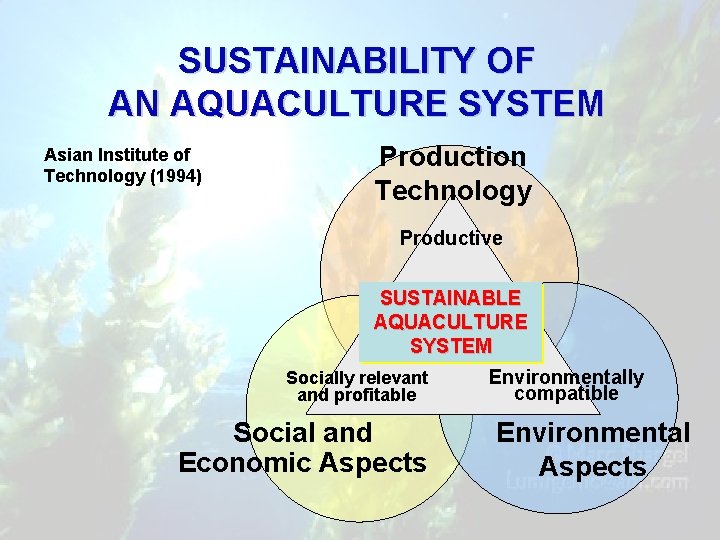
SUSTAINABILITY OF AN AQUACULTURE SYSTEM Asian Institute of Technology (1994) Production Technology Productive SUSTAINABLE AQUACULTURE SYSTEM Environmentally Socially relevant compatible and profitable Social and Economic Aspects Environmental Aspects
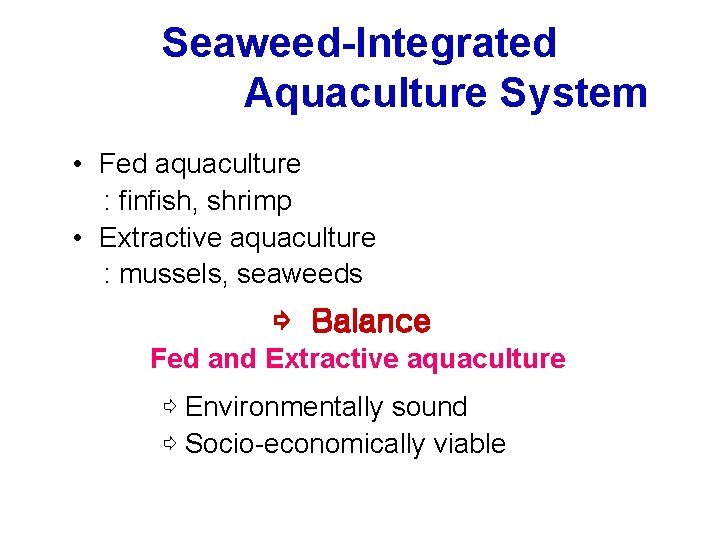
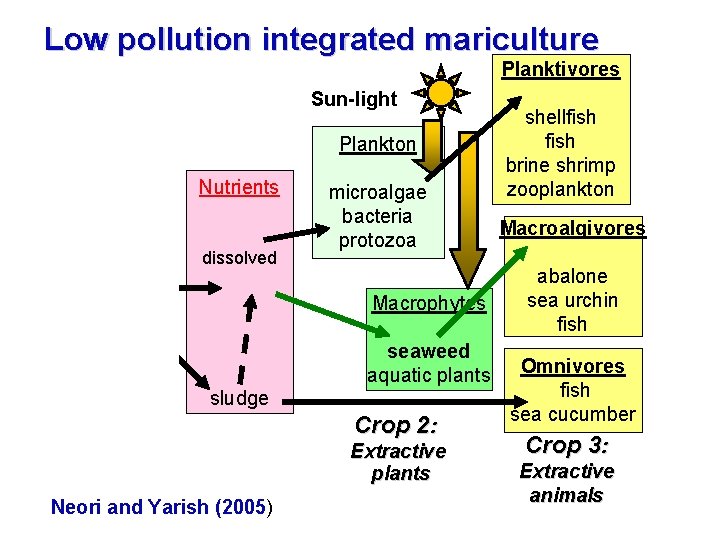
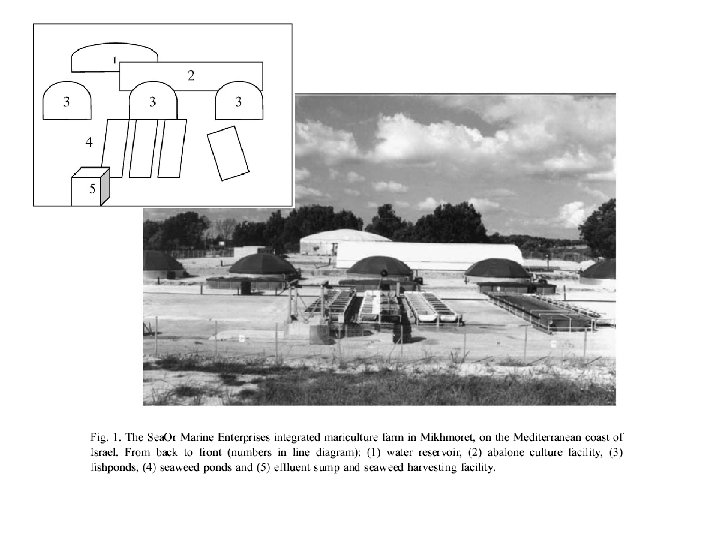
Seaweed-Integrated Aquaculture System • Fed aquaculture : finfish, shrimp • Extractive aquaculture : mussels, seaweeds ⇨ Balance Fed and Extractive aquaculture ⇨ Environmentally sound ⇨ Socio-economically viable
Integrated aquaculture systems (e. g. Fish + mussel +macroalgae) (Troell and Norberg 1998)
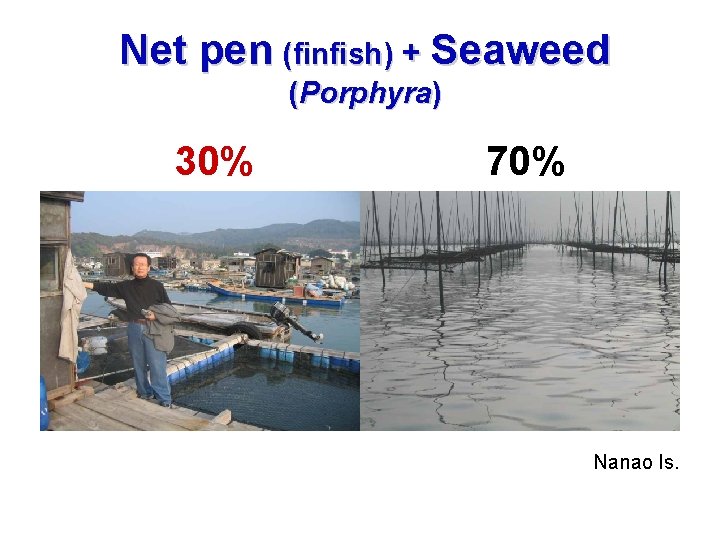
Net pen (finfish) + Seaweed (Porphyra) 30% 70% Nanao Is.
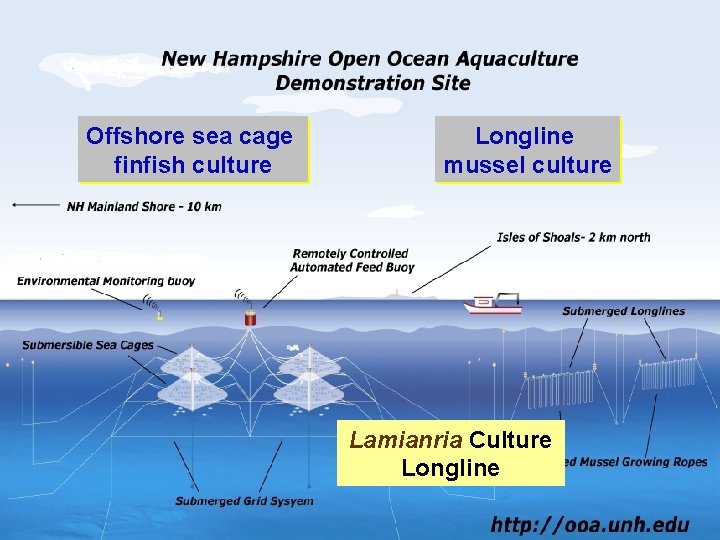
Offshore sea cage finfish culture Longline mussel culture Lamianria Culture Longline
Low pollution integrated mariculture Planktivores Feed Sun-light Plankton Nutrients Fed organisms dissolved microalgae bacteria protozoa fish shrimp Macrophytes Crop 1: seaweed aquatic plants fish / shrimp sludge Crop 2: Extractive plants Neori and Yarish (2005) shellfish brine shrimp zooplankton Macroalgivores abalone sea urchin fish Omnivores fish sea cucumber Crop 3: Extractive animals
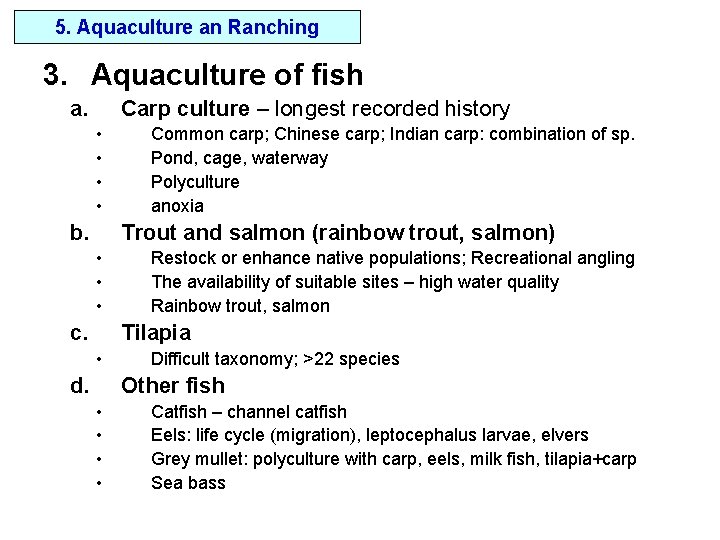
5. Aquaculture an Ranching 3. Aquaculture of fish a. Carp culture – longest recorded history • • b. Common carp; Chinese carp; Indian carp: combination of sp. Pond, cage, waterway Polyculture anoxia Trout and salmon (rainbow trout, salmon) • • • c. Restock or enhance native populations; Recreational angling The availability of suitable sites – high water quality Rainbow trout, salmon Tilapia • d. Difficult taxonomy; >22 species Other fish • • Catfish – channel catfish Eels: life cycle (migration), leptocephalus larvae, elvers Grey mullet: polyculture with carp, eels, milk fish, tilapia+carp Sea bass
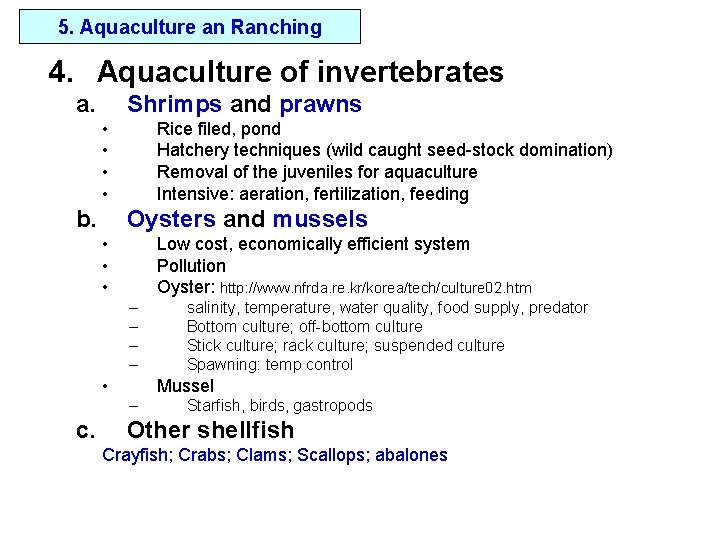
5. Aquaculture an Ranching 4. Aquaculture of invertebrates a. Shrimps and prawns • • b. Rice filed, pond Hatchery techniques (wild caught seed-stock domination) Removal of the juveniles for aquaculture Intensive: aeration, fertilization, feeding Oysters and mussels • • • Low cost, economically efficient system Pollution Oyster: http: //www. nfrda. re. kr/korea/tech/culture 02. htm – – • Mussel – c. salinity, temperature, water quality, food supply, predator Bottom culture; off-bottom culture Stick culture; rack culture; suspended culture Spawning: temp control Starfish, birds, gastropods Other shellfish Crayfish; Crabs; Clams; Scallops; abalones
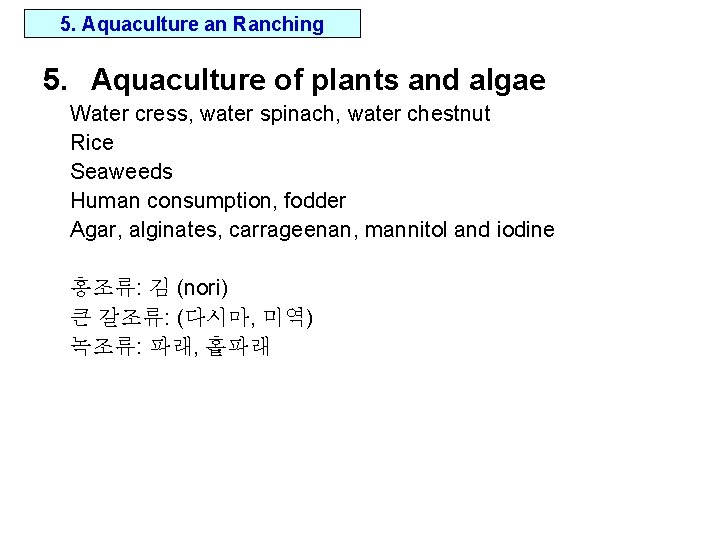
5. Aquaculture an Ranching 5. Aquaculture of plants and algae Water cress, water spinach, water chestnut Rice Seaweeds Human consumption, fodder Agar, alginates, carrageenan, mannitol and iodine 홍조류: 김 (nori) 큰 갈조류: (다시마, 미역) 녹조류: 파래, 홑파래
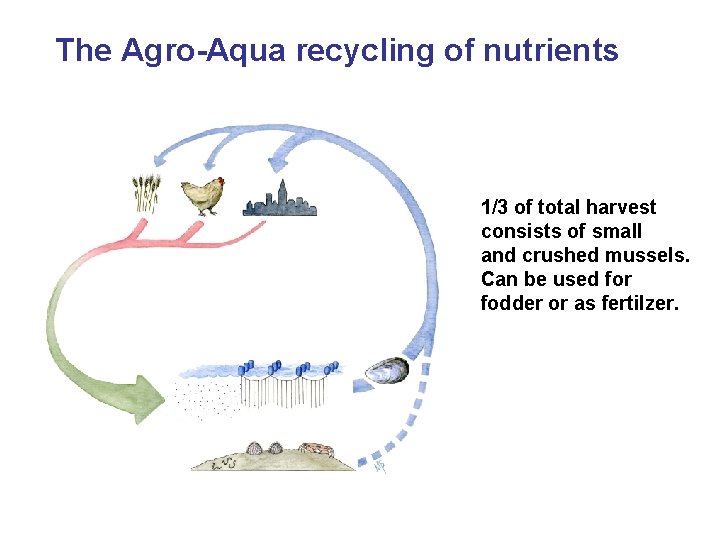
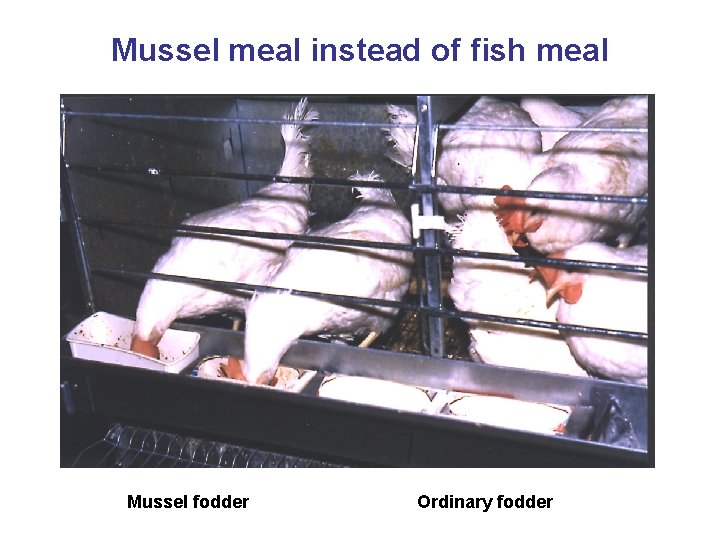
The Agro-Aqua recycling of nutrients 1/3 of total harvest consists of small and crushed mussels. Can be used for fodder or as fertilzer.
Mussel meal instead of fish meal Mussel fodder Ordinary fodder
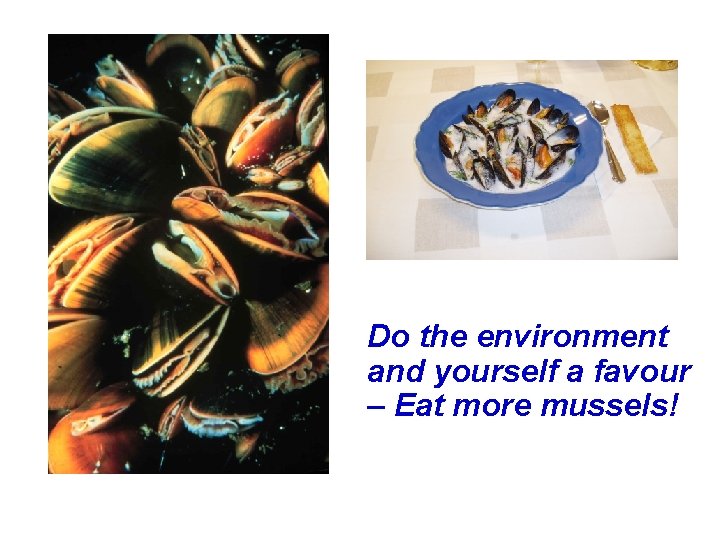
Do the environment and yourself a favour – Eat more mussels!
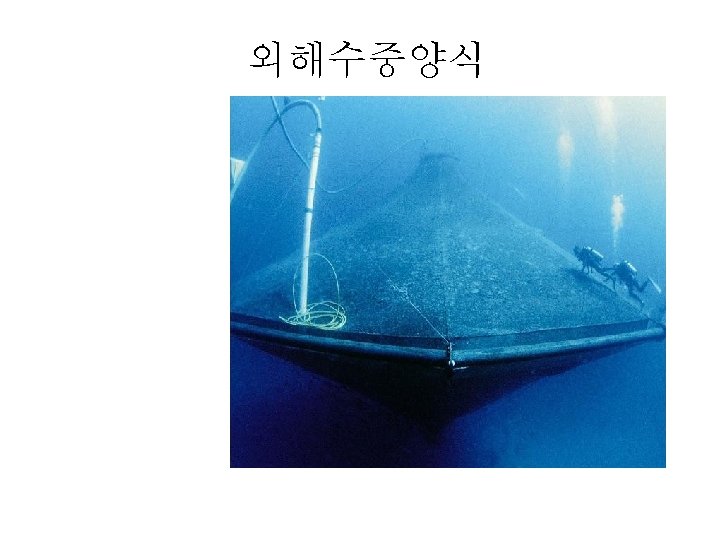
Submersible cage: Ocean Spar Sea Station 외해수중양식
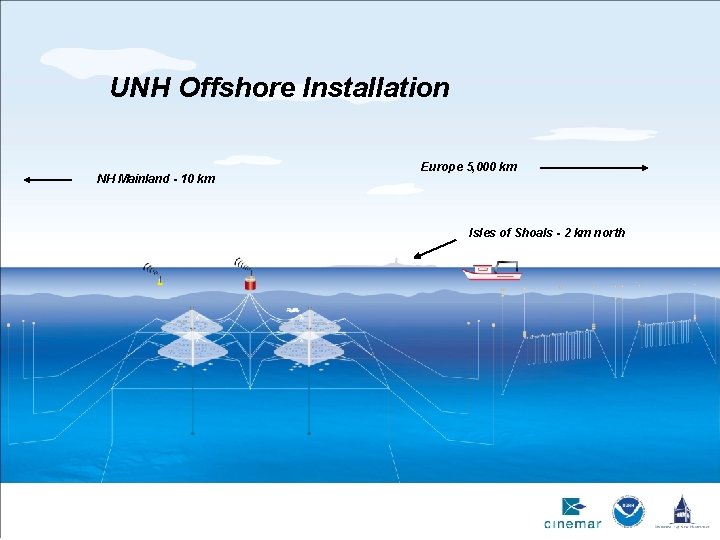
UNH Offshore Installation NH Mainland - 10 km Europe 5, 000 km Isles of Shoals - 2 km north
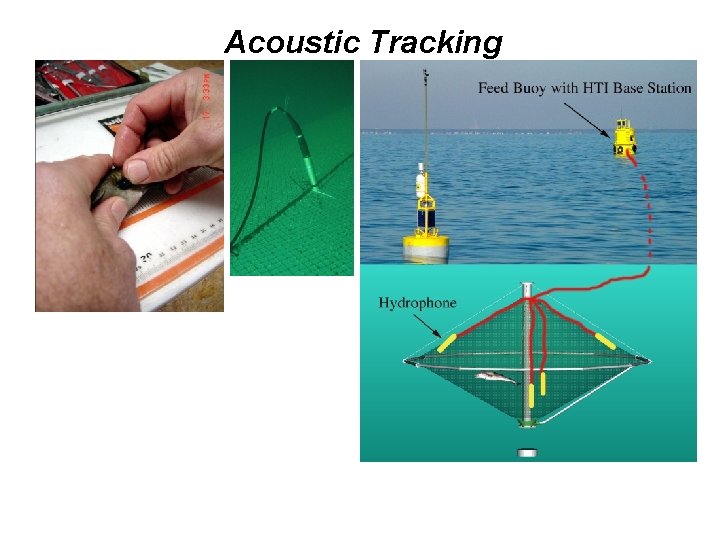
Acoustic Tracking • Continuous recording • Up to 16 fish at a time • Wireless comm with CPU in feed buoy • Continuous environmental monitoring • current meter • temperature recorders • UW video
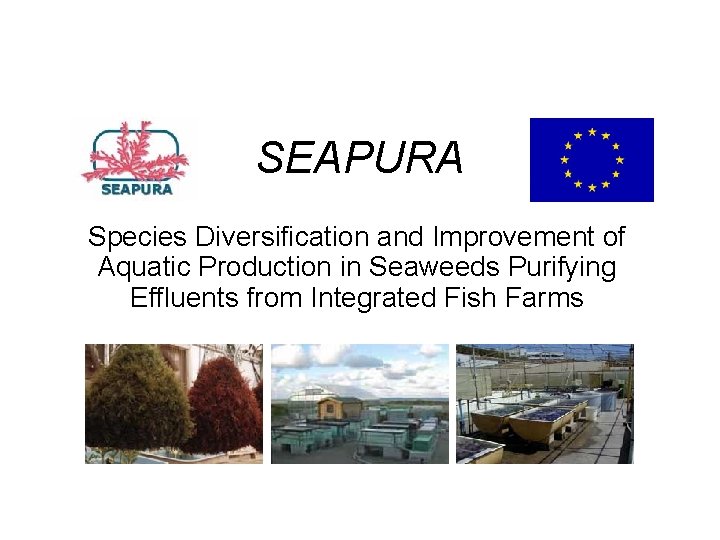
SEAPURA Species Diversification and Improvement of Aquatic Production in Seaweeds Purifying Effluents from Integrated Fish Farms
SEAPURA Species Diversification and Improvement of Aquatic Production in Seaweeds Purifying Effluents from Integrated Fish Farms Sustainable poly-aquaculture systems based on seaweeds (macroalgae) are tested, in which algal growth is integrated with fish farms, in conjunction with different enterprises (SME's), so that the environmental impact and the costs of fish farms in Europe are reduced. In other sites, seaweed cultures will be used to purify waste waters from domestic sewage works and eutrophicated inshore coastal waters. The project is innovative in the following respects: 1. High-value seaweed species not used before in poly-aquaculture will be grown as sources of cosmetics, pharmaceutical and fine chemicals, and as fish feed. 2. Seaweed production will be improved by controlling daylength to induce year-round growth, avoiding unwanted sporulation, seeding somatic cells, and the use of new tank and raceway designs. 3. Health assays will be developed for the farmed seaweeds, together with tests for the antibiotic activity of seaweeds against fishpathogenic bacteria.
Aqua. Net • Mission: To foster a sustainable aquaculture sector in Canada through high quality research and education. • Vision – Diversification, sustainability and stability of marine and fresh water resources and species being harvested, based on businesses that are drivers of innovation and economic growth. – Harmonisation of fisheries resources exploitation among all users, including commercial fisheries and First Nations, based on integrative and collaborative research and development and its application in the user community. – Integration of aquaculture with other industries • tourism, oil & gas, etc.
Development of a generic approach to sustainable integrated marine aquaculture for European environments and markets Total cost: 2 Million Euro Starting date: July 2001 Duration: 36 Months http: //genesis. ocean. org. il/main. htm
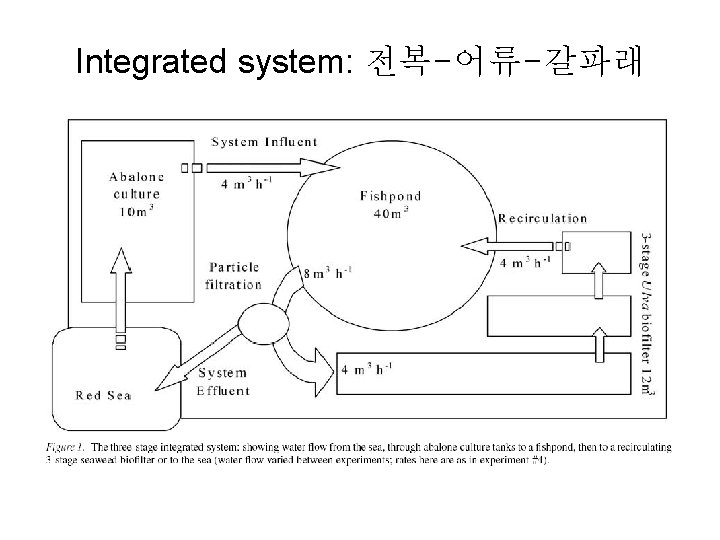
Integrated system: 전복-어류-갈파래