
6 5 Traits and Probability KEY CONCEPT The
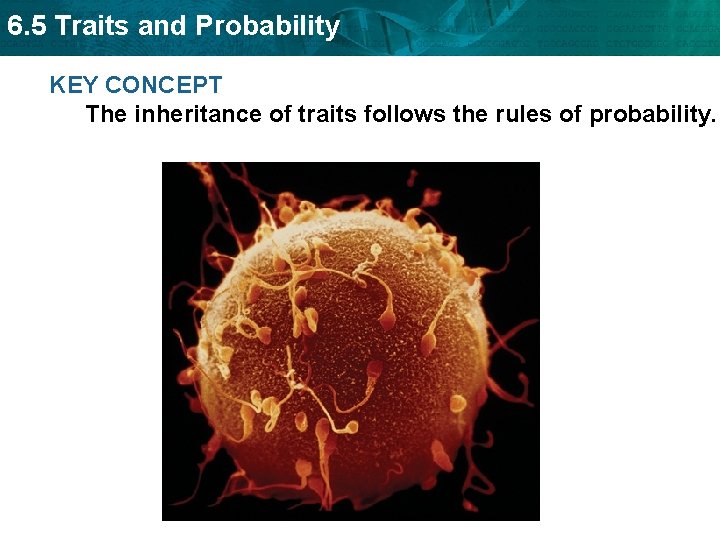
6. 5 Traits and Probability KEY CONCEPT The inheritance of traits follows the rules of probability.
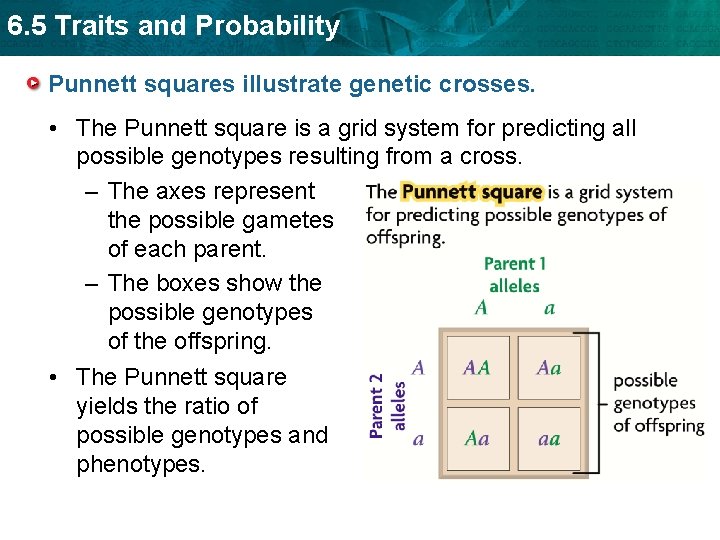
6. 5 Traits and Probability Punnett squares illustrate genetic crosses. • The Punnett square is a grid system for predicting all possible genotypes resulting from a cross. – The axes represent the possible gametes of each parent. – The boxes show the possible genotypes of the offspring. • The Punnett square yields the ratio of possible genotypes and phenotypes.
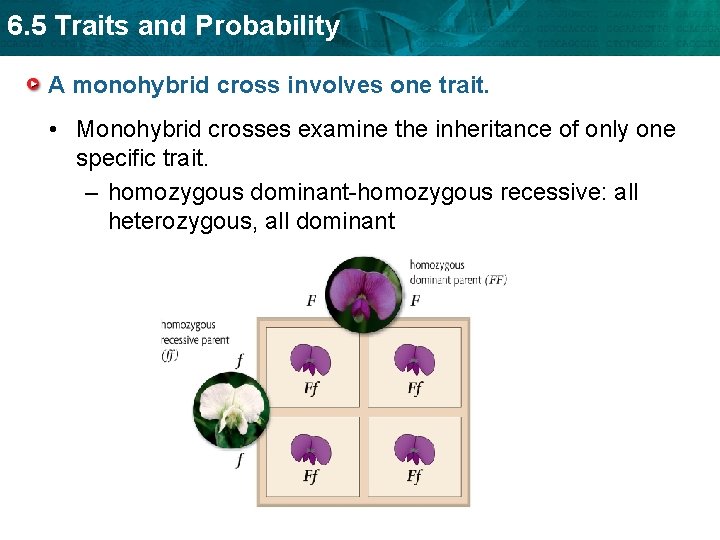
6. 5 Traits and Probability A monohybrid cross involves one trait. • Monohybrid crosses examine the inheritance of only one specific trait. – homozygous dominant-homozygous recessive: all heterozygous, all dominant
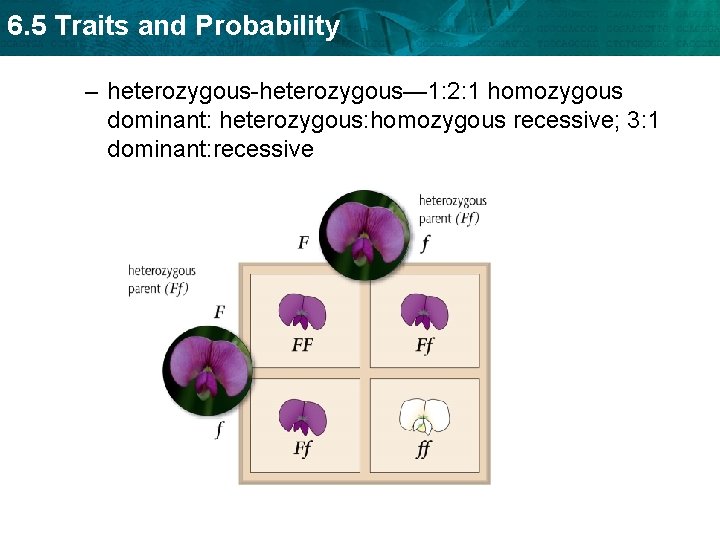
6. 5 Traits and Probability – heterozygous-heterozygous— 1: 2: 1 homozygous dominant: heterozygous: homozygous recessive; 3: 1 dominant: recessive
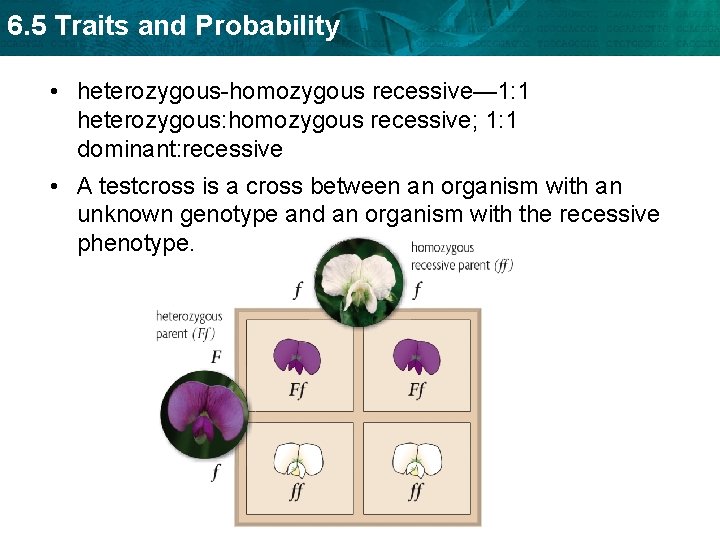
6. 5 Traits and Probability • heterozygous-homozygous recessive— 1: 1 heterozygous: homozygous recessive; 1: 1 dominant: recessive • A testcross is a cross between an organism with an unknown genotype and an organism with the recessive phenotype.
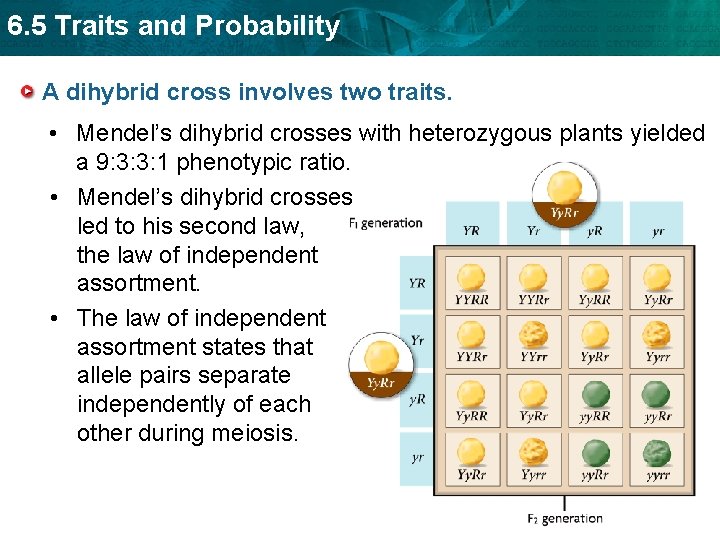
6. 5 Traits and Probability A dihybrid cross involves two traits. • Mendel’s dihybrid crosses with heterozygous plants yielded a 9: 3: 3: 1 phenotypic ratio. • Mendel’s dihybrid crosses led to his second law, the law of independent assortment. • The law of independent assortment states that allele pairs separate independently of each other during meiosis.

6. 5 Traits and Probability Heredity patterns can be calculated with probability. • Probability is the likelihood that something will happen. • Probability predicts an average number of occurrences, not an exact number of occurrences. number of ways a specific event can occur • Probability = number of total possible outcomes • Probability applies to random events such as meiosis and fertilization.
- Slides: 7