
6 5 SOLVING LINEAR INEQUALITIES 6 6 SOLVING
- Slides: 13
6. 5 SOLVING LINEAR INEQUALITIES 6. 6 SOLVING SYSTEMS OF INEQUALITIES
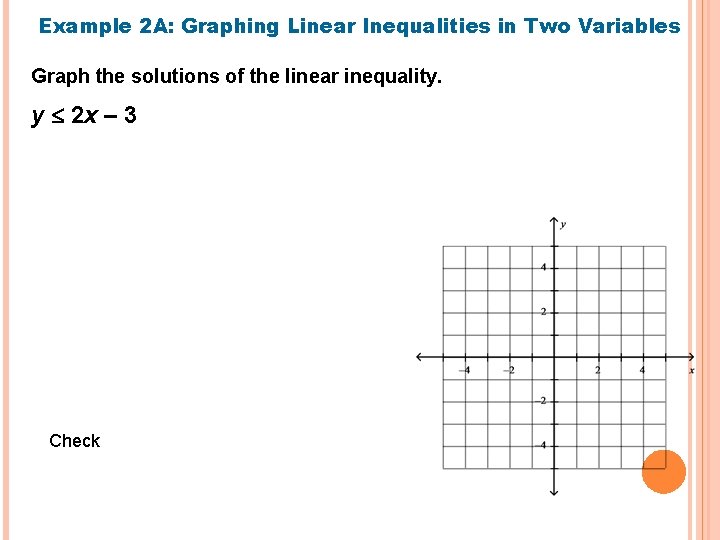
Example 2 A: Graphing Linear Inequalities in Two Variables Graph the solutions of the linear inequality. y 2 x – 3 Check
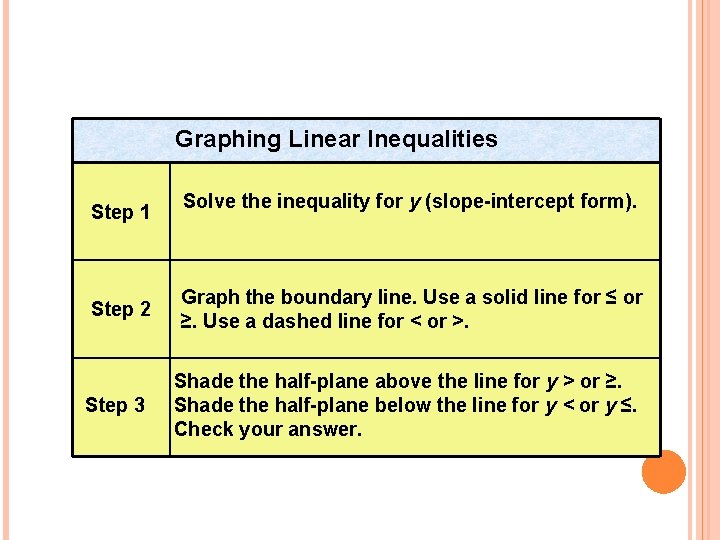
Graphing Linear Inequalities Step 1 Solve the inequality for y (slope-intercept form). Step 2 Graph the boundary line. Use a solid line for ≤ or ≥. Use a dashed line for < or >. Step 3 Shade the half-plane above the line for y > or ≥. Shade the half-plane below the line for y < or y ≤. Check your answer.
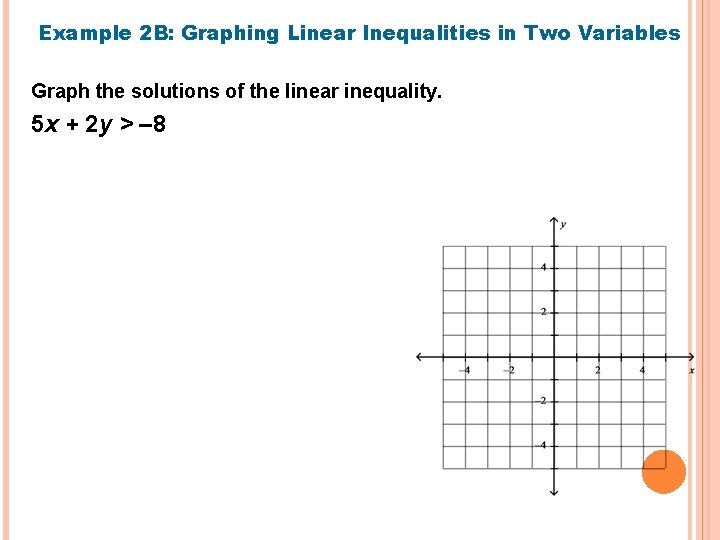
Example 2 B: Graphing Linear Inequalities in Two Variables Graph the solutions of the linear inequality. 5 x + 2 y > – 8
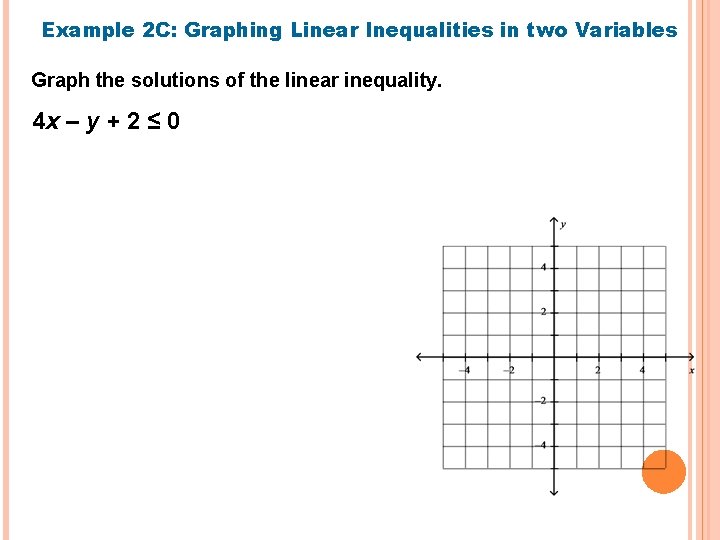
Example 2 C: Graphing Linear Inequalities in two Variables Graph the solutions of the linear inequality. 4 x – y + 2 ≤ 0
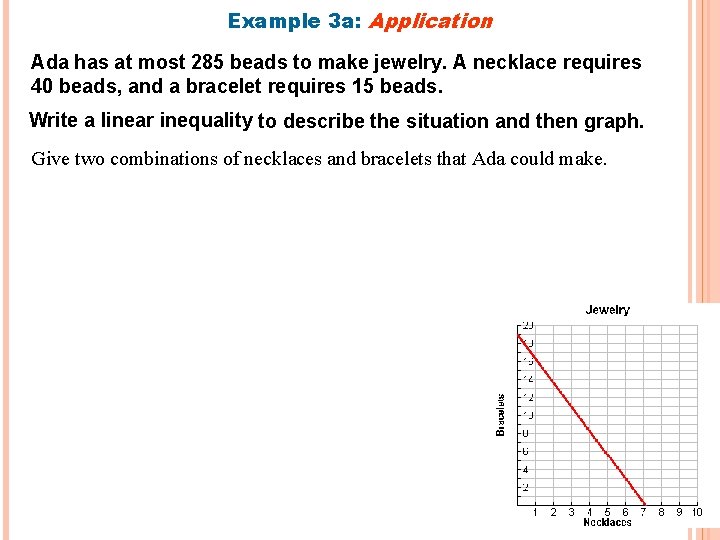
Example 3 a: Application Ada has at most 285 beads to make jewelry. A necklace requires 40 beads, and a bracelet requires 15 beads. Write a linear inequality to describe the situation and then graph. Give two combinations of necklaces and bracelets that Ada could make.
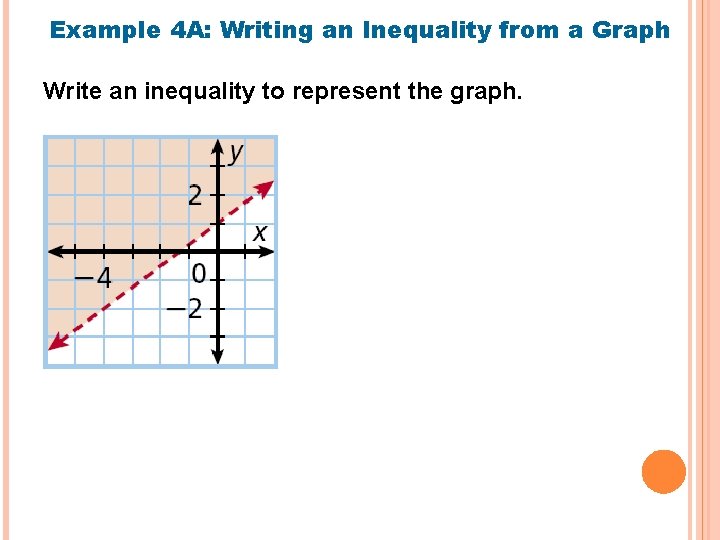
Example 4 A: Writing an Inequality from a Graph Write an inequality to represent the graph.
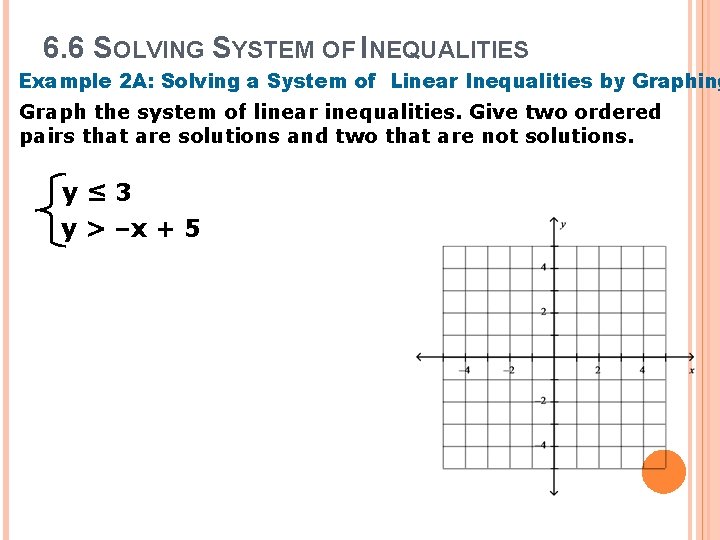
6. 6 SOLVING SYSTEM OF INEQUALITIES Example 2 A: Solving a System of Linear Inequalities by Graphing Graph the system of linear inequalities. Give two ordered pairs that are solutions and two that are not solutions. y≤ 3 y > –x + 5
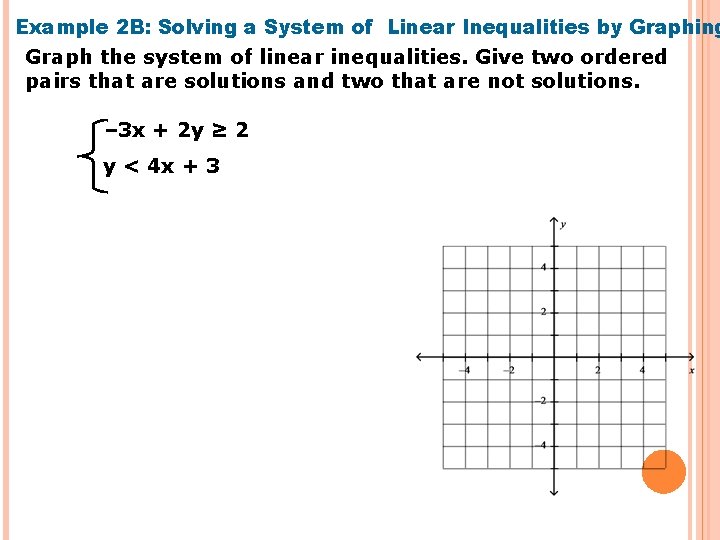
Example 2 B: Solving a System of Linear Inequalities by Graphing Graph the system of linear inequalities. Give two ordered pairs that are solutions and two that are not solutions. – 3 x + 2 y ≥ 2 y < 4 x + 3
In Lesson 6 -4, you saw that in systems of linear equations, if the lines are parallel, there are no solutions. With systems of linear inequalities, that is not always true.
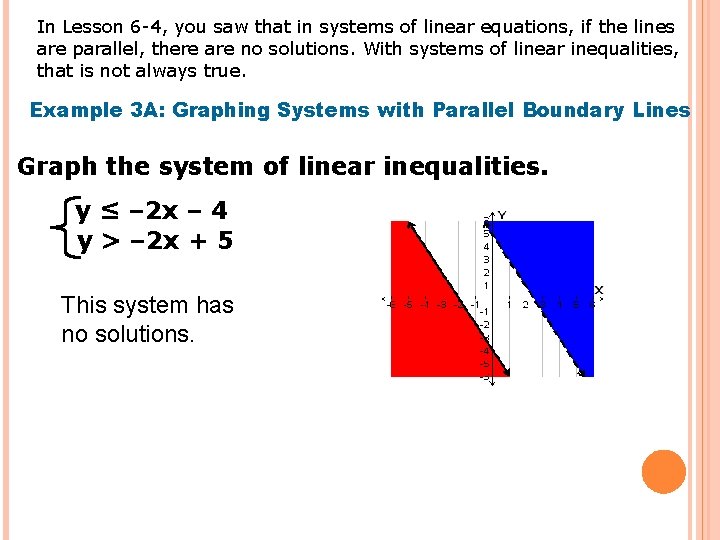
In Lesson 6 -4, you saw that in systems of linear equations, if the lines are parallel, there are no solutions. With systems of linear inequalities, that is not always true. Example 3 A: Graphing Systems with Parallel Boundary Lines Graph the system of linear inequalities. y ≤ – 2 x – 4 y > – 2 x + 5 This system has no solutions.
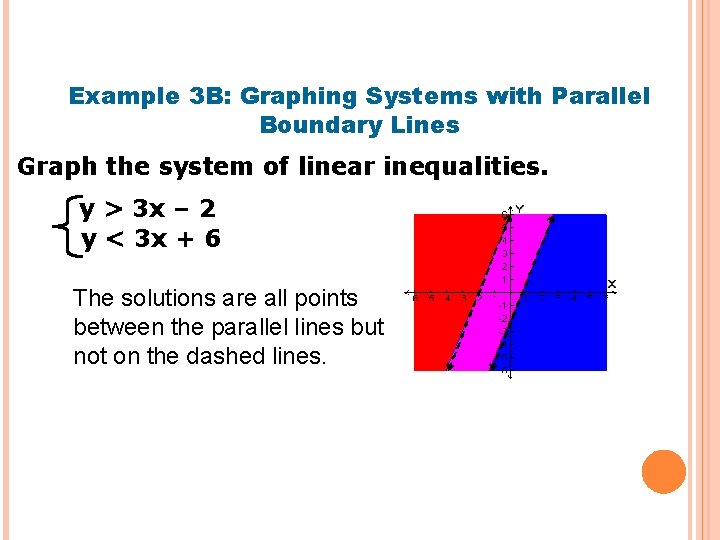
Example 3 B: Graphing Systems with Parallel Boundary Lines Graph the system of linear inequalities. y > 3 x – 2 y < 3 x + 6 The solutions are all points between the parallel lines but not on the dashed lines.
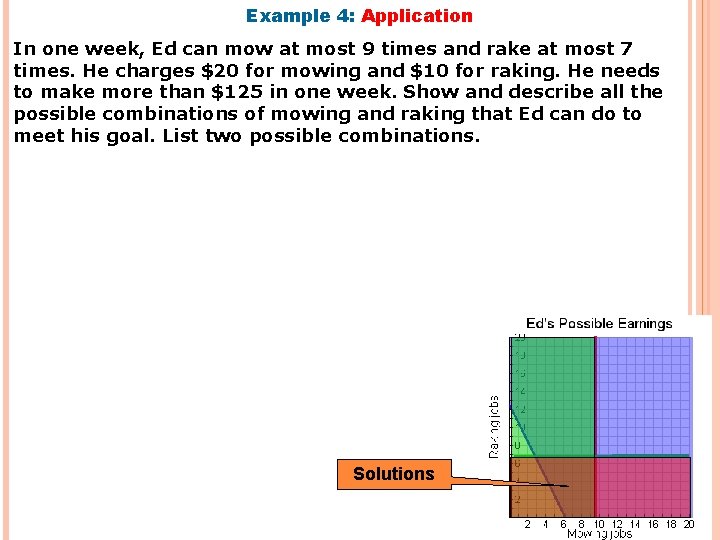
Example 4: Application In one week, Ed can mow at most 9 times and rake at most 7 times. He charges $20 for mowing and $10 for raking. He needs to make more than $125 in one week. Show and describe all the possible combinations of mowing and raking that Ed can do to meet his goal. List two possible combinations. Solutions