
6 5 Nerves hormones homeostasis 1 Submit hard
6. 5 Nerves, hormones, homeostasis 1. Submit hard copy of your lab. Make sure your lab is in turnitin. com by midnight. 2. IB students: ALL labs in the lab folder. 3. Announcements: Learning Log, Pre Mock Quiz Schedule
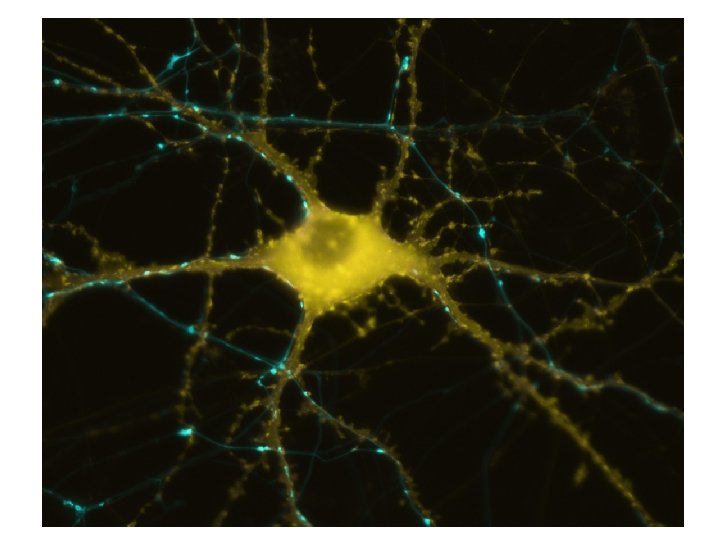
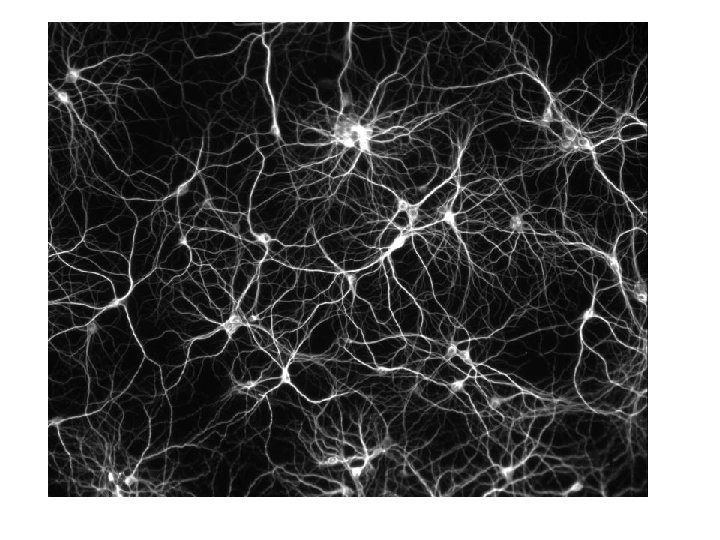
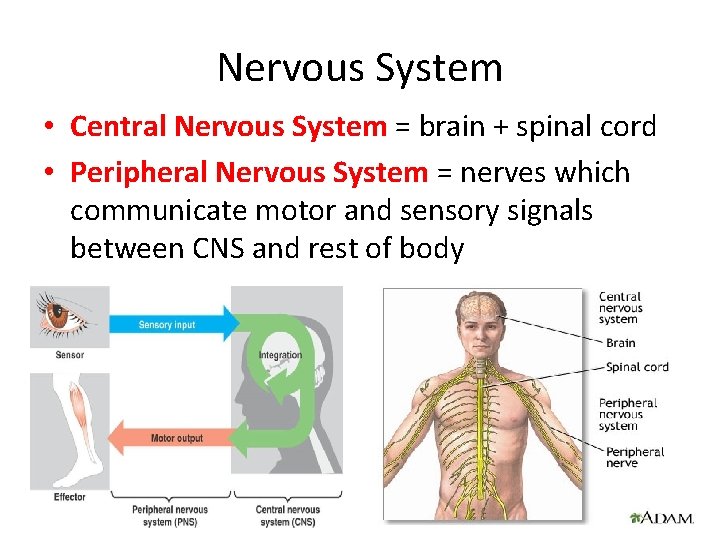
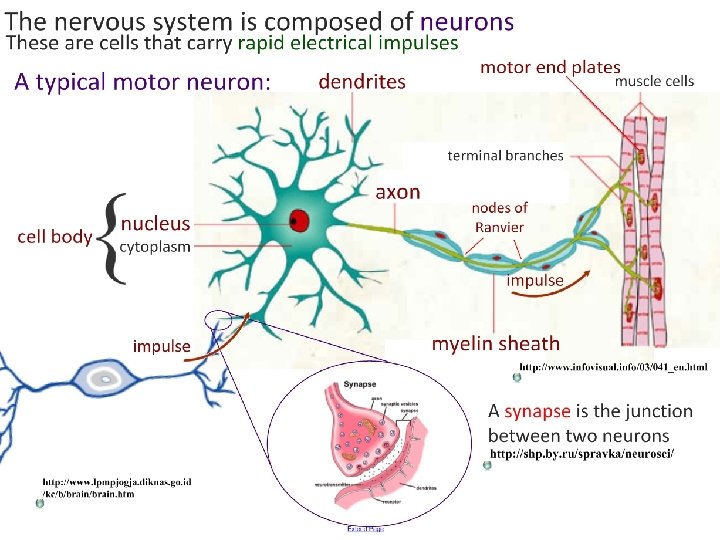
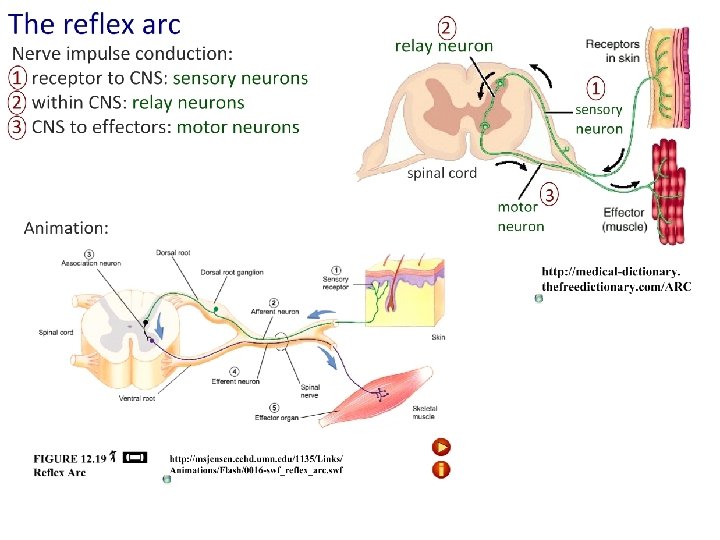
Nervous System • Central Nervous System = brain + spinal cord • Peripheral Nervous System = nerves which communicate motor and sensory signals between CNS and rest of body
How does nerve impulse travel through the cell? To do: • Work on simulation activity – Use textbook pages 176 – 179 to help you • Learning log 6. 1, 6. 5
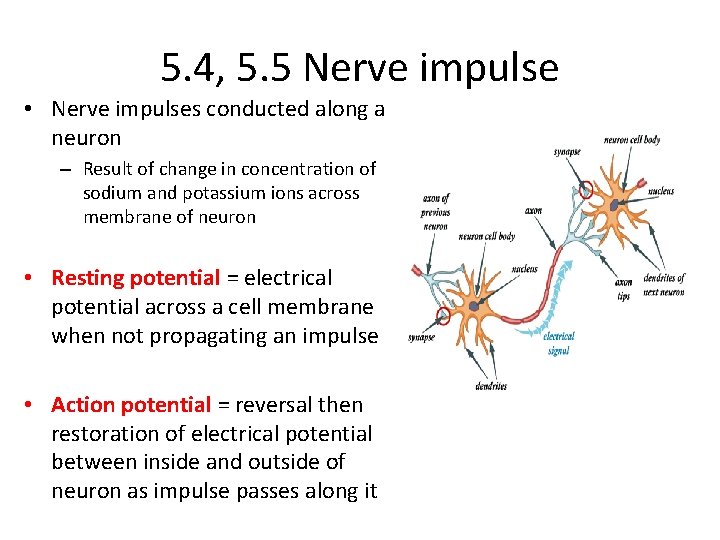
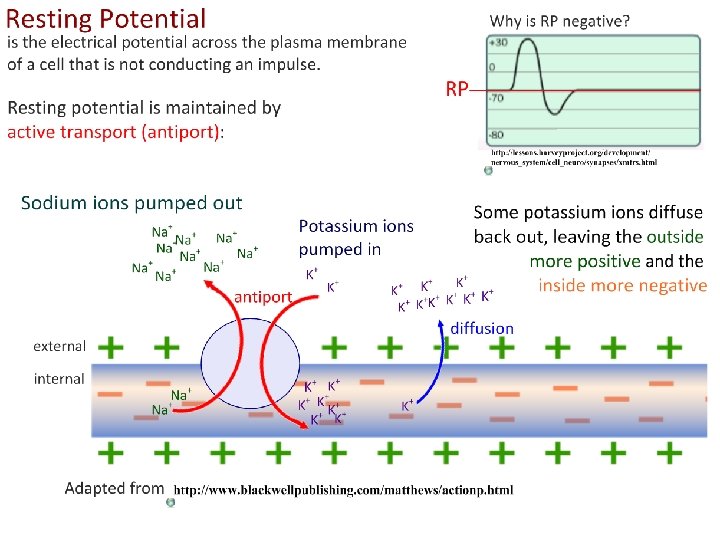
5. 4, 5. 5 Nerve impulse • Nerve impulses conducted along a neuron – Result of change in concentration of sodium and potassium ions across membrane of neuron • Resting potential = electrical potential across a cell membrane when not propagating an impulse • Action potential = reversal then restoration of electrical potential between inside and outside of neuron as impulse passes along it
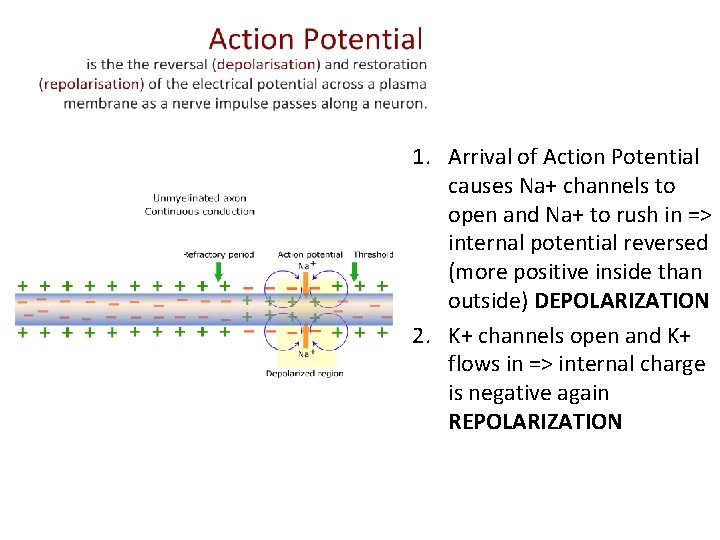
1. Arrival of Action Potential causes Na+ channels to open and Na+ to rush in => internal potential reversed (more positive inside than outside) DEPOLARIZATION 2. K+ channels open and K+ flows in => internal charge is negative again REPOLARIZATION
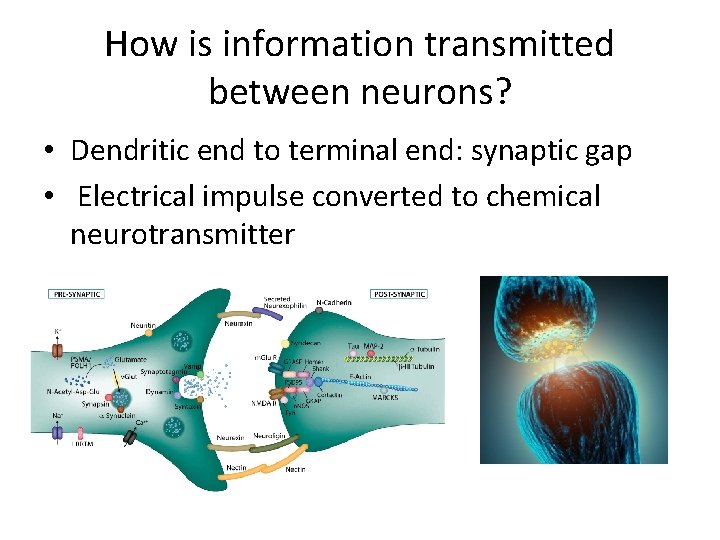
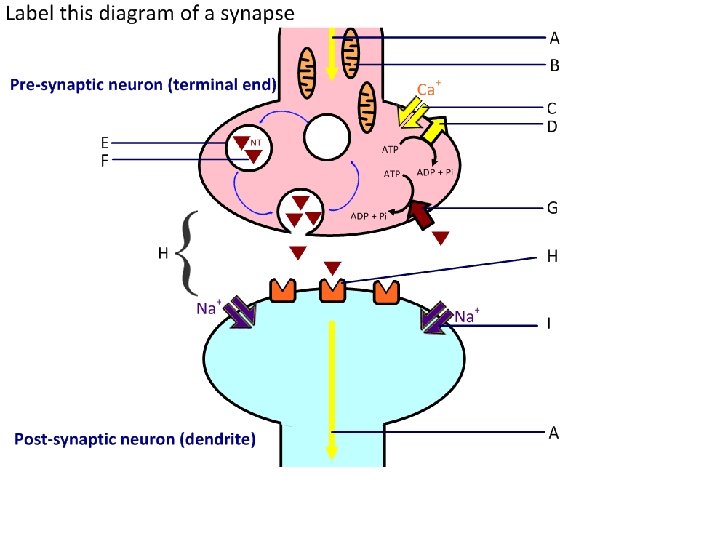
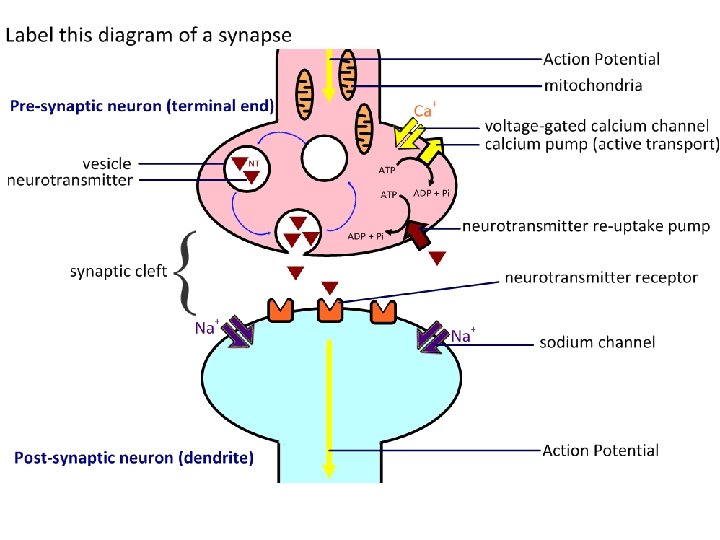
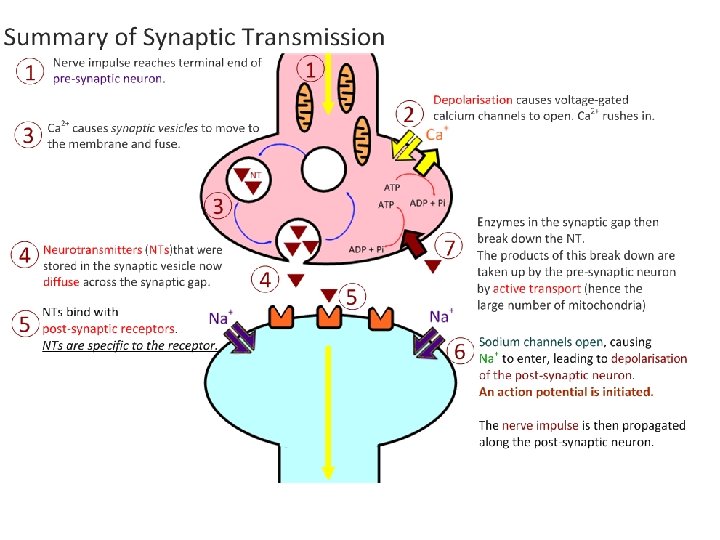
How is information transmitted between neurons? • Dendritic end to terminal end: synaptic gap • Electrical impulse converted to chemical neurotransmitter
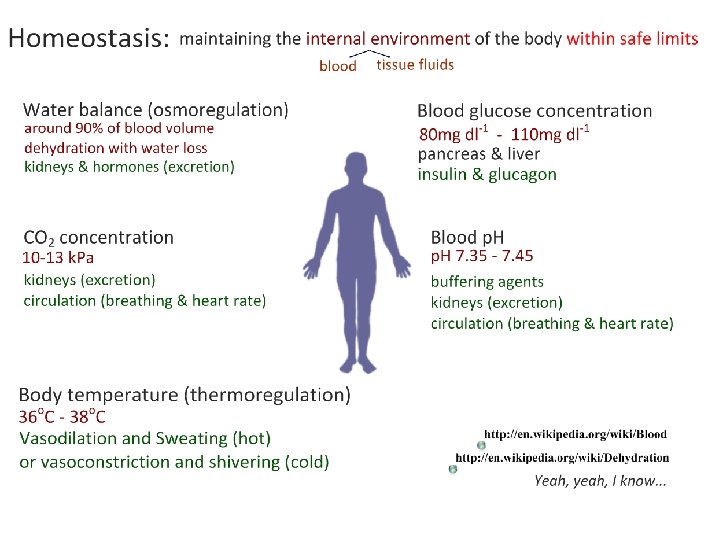
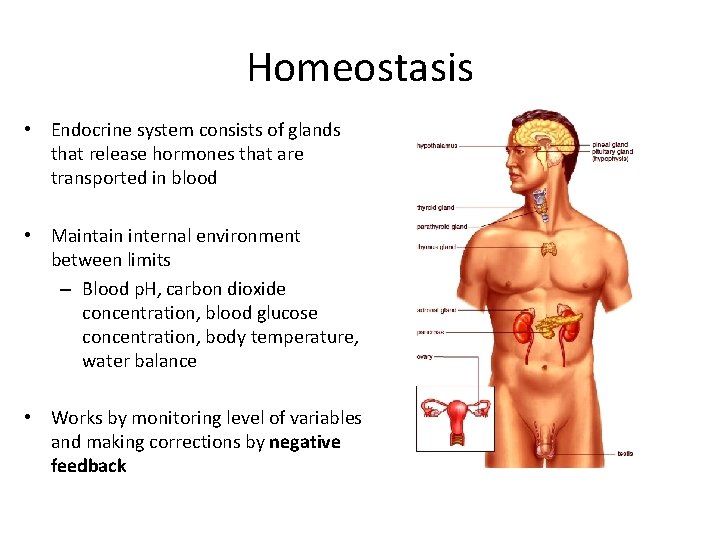
Homeostasis • Endocrine system consists of glands that release hormones that are transported in blood • Maintain internal environment between limits – Blood p. H, carbon dioxide concentration, blood glucose concentration, body temperature, water balance • Works by monitoring level of variables and making corrections by negative feedback
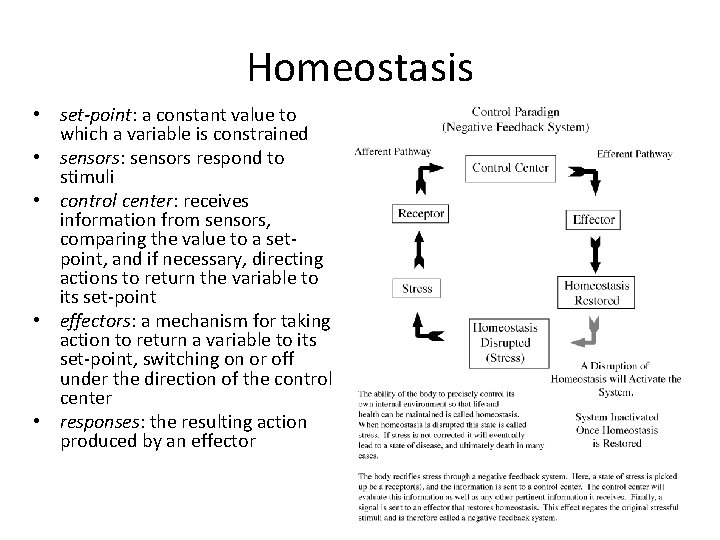
Homeostasis • set-point: a constant value to which a variable is constrained • sensors: sensors respond to stimuli • control center: receives information from sensors, comparing the value to a setpoint, and if necessary, directing actions to return the variable to its set-point • effectors: a mechanism for taking action to return a variable to its set-point, switching on or off under the direction of the control center • responses: the resulting action produced by an effector
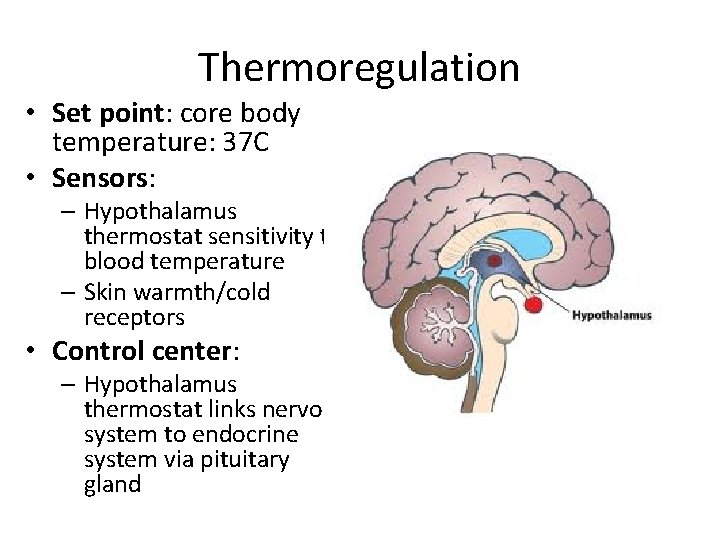
Thermoregulation • Set point: core body temperature: 37 C • Sensors: – Hypothalamus thermostat sensitivity to blood temperature – Skin warmth/cold receptors • Control center: – Hypothalamus thermostat links nervous system to endocrine system via pituitary gland
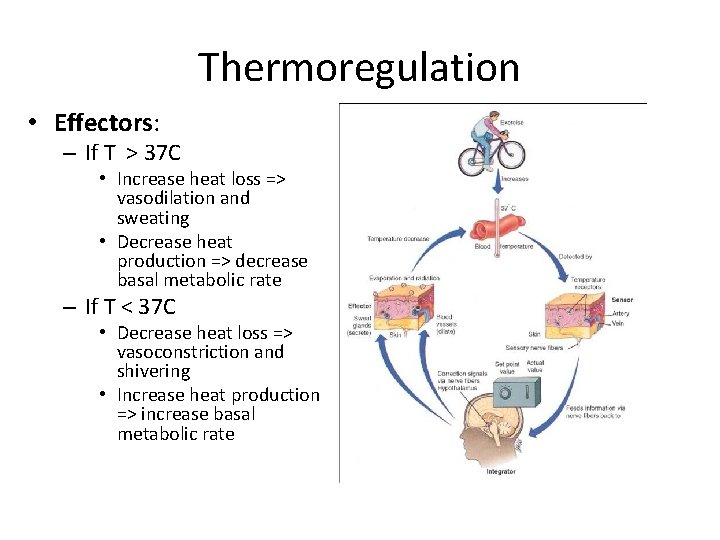
Thermoregulation • Effectors: – If T > 37 C • Increase heat loss => vasodilation and sweating • Decrease heat production => decrease basal metabolic rate – If T < 37 C • Decrease heat loss => vasoconstriction and shivering • Increase heat production => increase basal metabolic rate
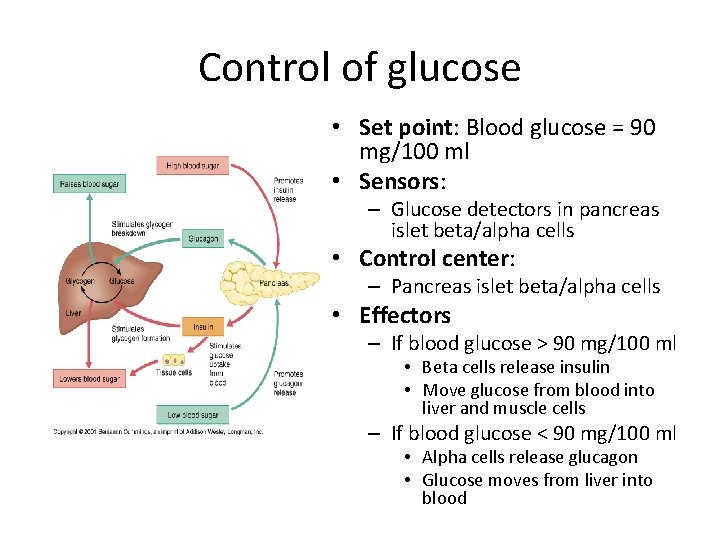
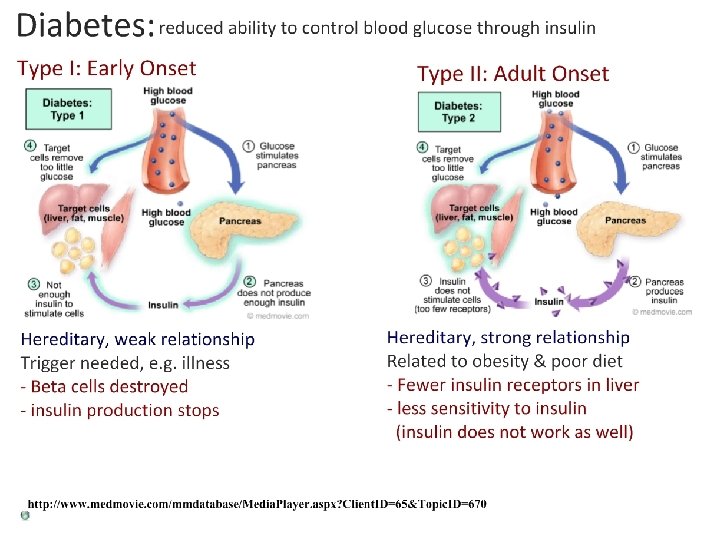
Control of glucose • Set point: Blood glucose = 90 mg/100 ml • Sensors: – Glucose detectors in pancreas islet beta/alpha cells • Control center: – Pancreas islet beta/alpha cells • Effectors – If blood glucose > 90 mg/100 ml • Beta cells release insulin • Move glucose from blood into liver and muscle cells – If blood glucose < 90 mg/100 ml • Alpha cells release glucagon • Glucose moves from liver into blood
- Slides: 21