
6 5 Collection and Preservation of Toxicological Evidence
- Slides: 11
6 -5 Collection and Preservation of Toxicological Evidence Unit 6: Toxicology April 22, 2015 Sanders 2: 56 PM
Testing for Toxins • To determine toxic drug substances the forensic toxicologist must devise an analytical scheme to • detect • isolate • identify January 16, 2022 Unit 6: Toxicology 2: 57 PM
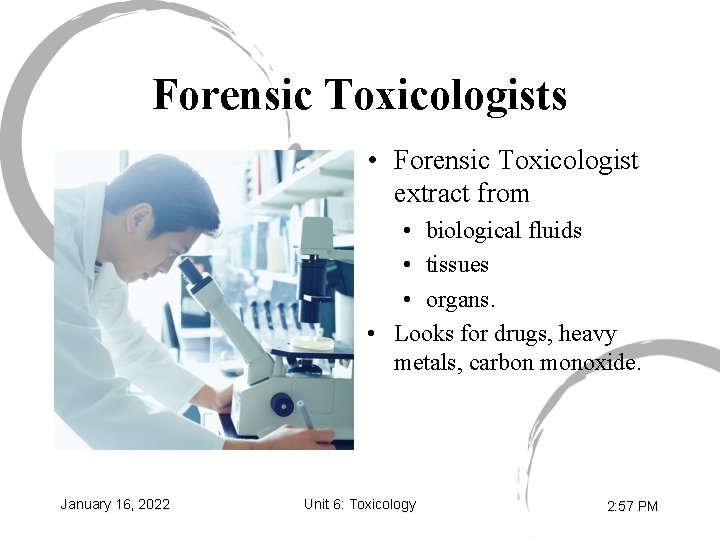
Forensic Toxicologists • Forensic Toxicologist extract from • biological fluids • tissues • organs. • Looks for drugs, heavy metals, carbon monoxide. January 16, 2022 Unit 6: Toxicology 2: 57 PM
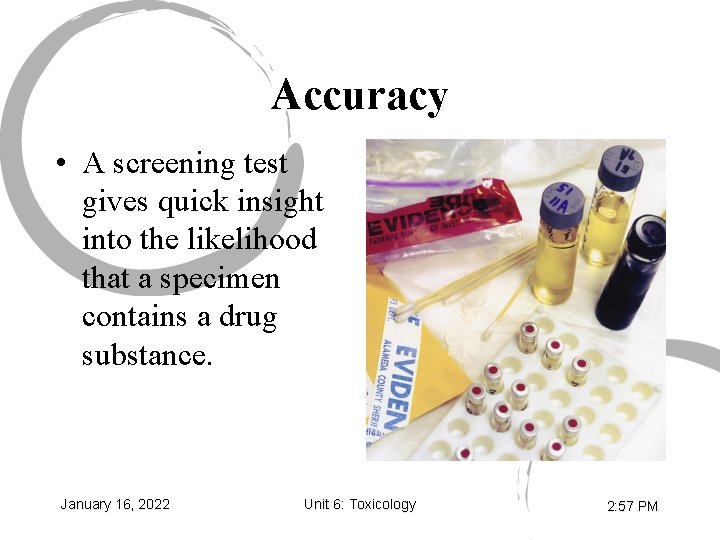
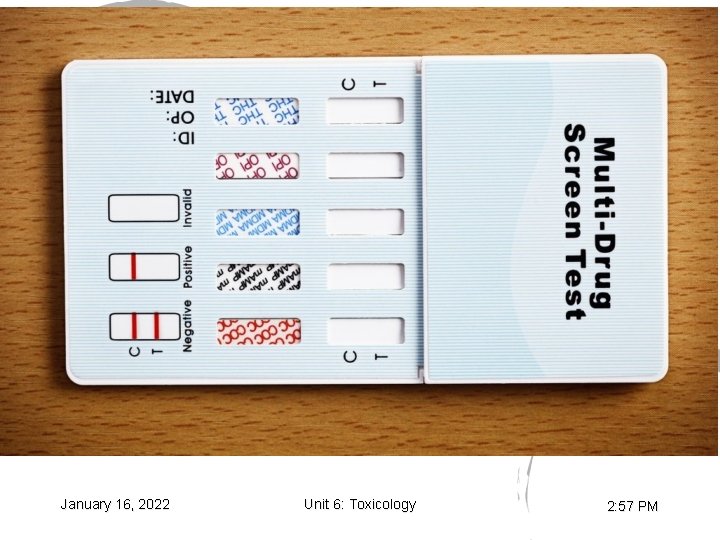
Accuracy • A screening test gives quick insight into the likelihood that a specimen contains a drug substance. January 16, 2022 Unit 6: Toxicology 2: 57 PM
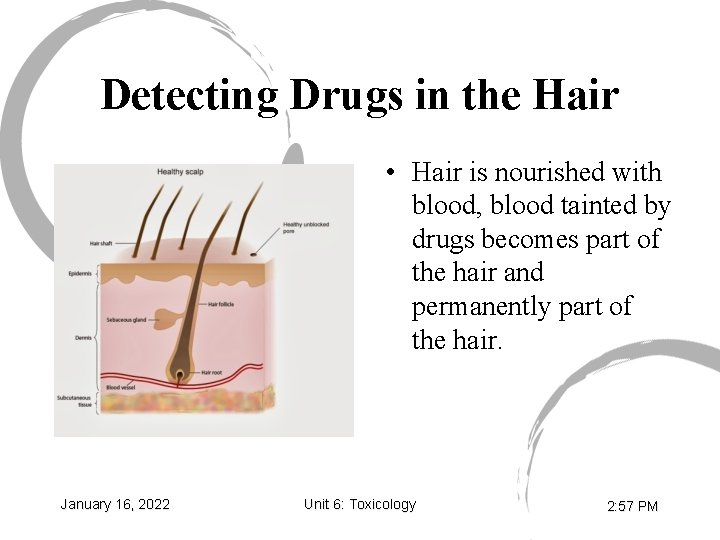
Detecting Drugs in the Hair • Hair is nourished with blood, blood tainted by drugs becomes part of the hair and permanently part of the hair. January 16, 2022 Unit 6: Toxicology 2: 57 PM
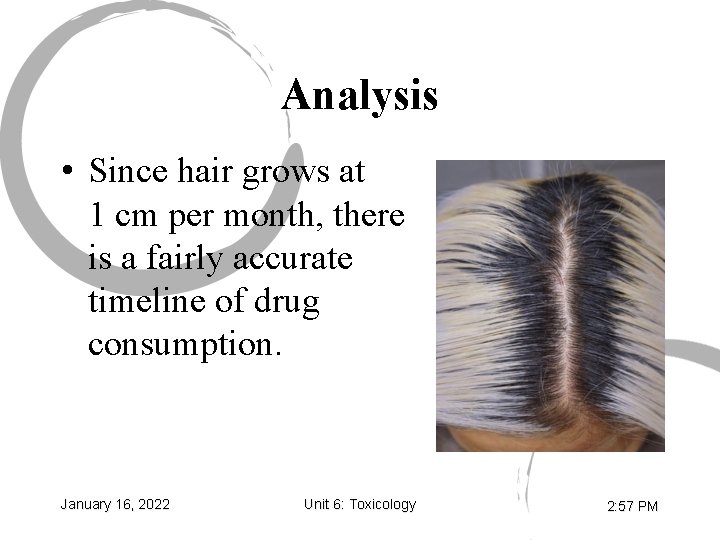
Analysis • Since hair grows at 1 cm per month, there is a fairly accurate timeline of drug consumption. January 16, 2022 Unit 6: Toxicology 2: 57 PM
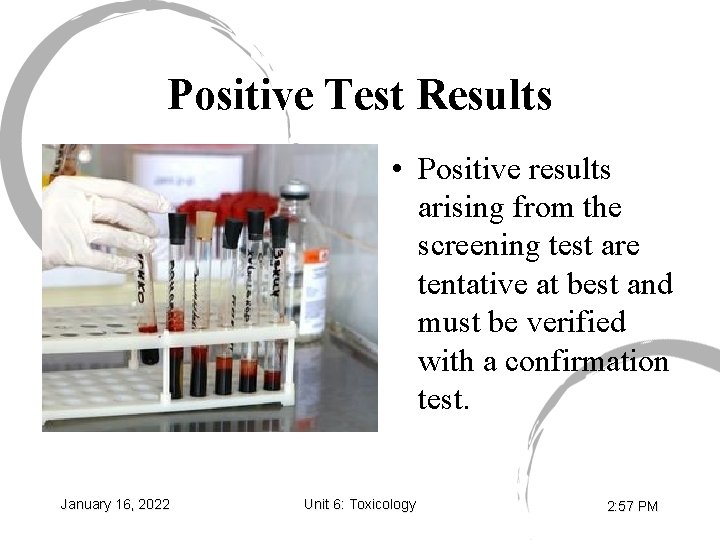
Positive Test Results • Positive results arising from the screening test are tentative at best and must be verified with a confirmation test. January 16, 2022 Unit 6: Toxicology 2: 57 PM
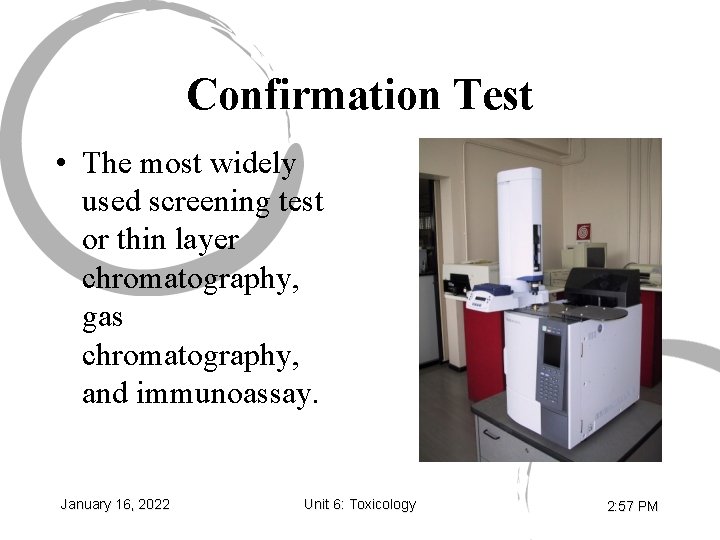
Confirmation Test • The most widely used screening test or thin layer chromatography, gas chromatography, and immunoassay. January 16, 2022 Unit 6: Toxicology 2: 57 PM
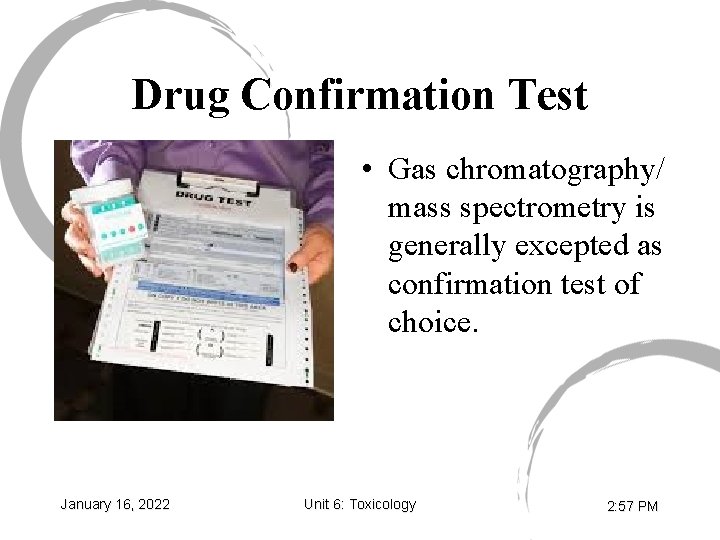
Drug Confirmation Test • Gas chromatography/ mass spectrometry is generally excepted as confirmation test of choice. January 16, 2022 Unit 6: Toxicology 2: 57 PM
Drug’s Effect • Once a drug is extracting identified, a toxicologist may be required to judge the drugs effect on an individual's natural performance or physical state. January 16, 2022 Unit 6: Toxicology 2: 57 PM
January 16, 2022 Unit 6: Toxicology 2: 57 PM