
6 4 Traits of Imperfect Competition Imperfect competitors
- Slides: 5
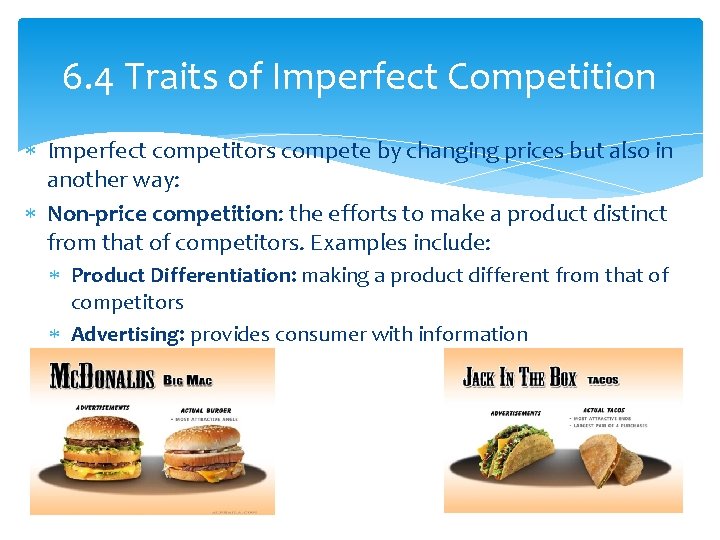
6. 4 Traits of Imperfect Competition Imperfect competitors compete by changing prices but also in another way: Non-price competition: the efforts to make a product distinct from that of competitors. Examples include: Product Differentiation: making a product different from that of competitors Advertising: provides consumer with information
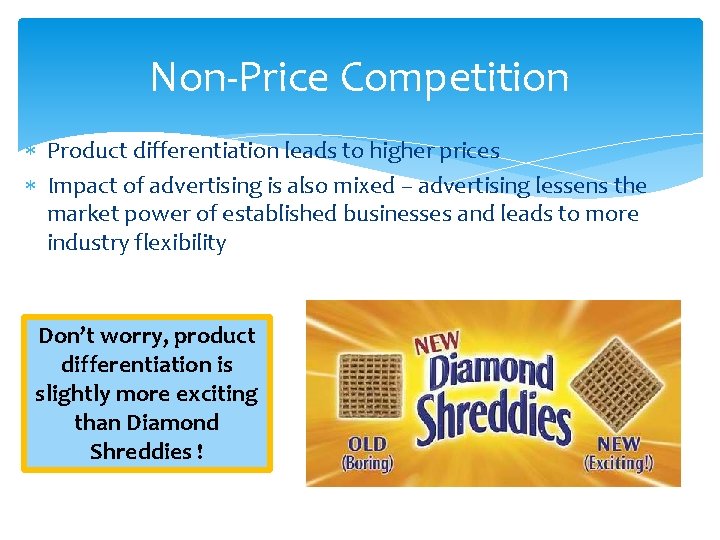
Non-Price Competition Product differentiation leads to higher prices Impact of advertising is also mixed – advertising lessens the market power of established businesses and leads to more industry flexibility Don’t worry, product differentiation is slightly more exciting than Diamond Shreddies !
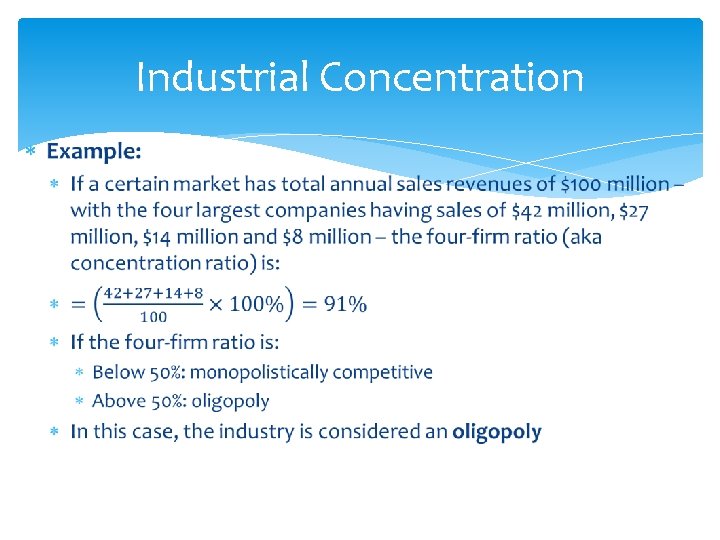
Industrial Concentration Most industries are either perfectly competitive or monopolistic When you have an imperfectly competitive industry, it is difficult to establish whether it is monopolistically competitive or an oligopoly Concentration Ratio: The percentage of total sales revenue in a market earned by the largest businesses in the market
Industrial Concentration
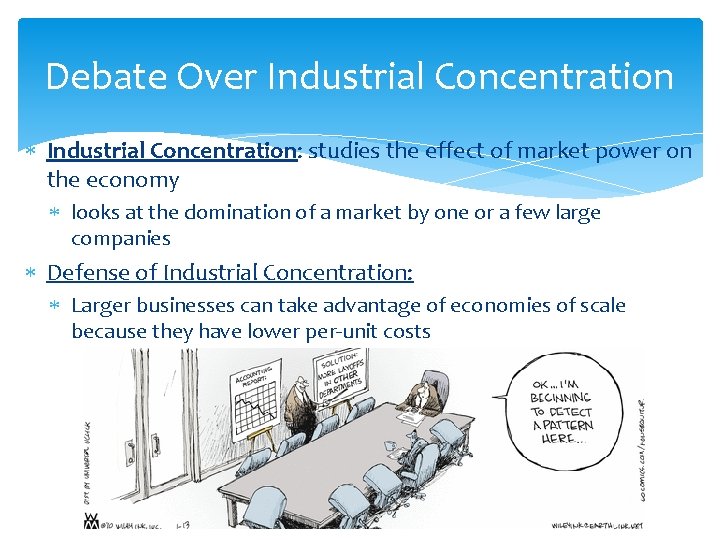
Debate Over Industrial Concentration: studies the effect of market power on the economy looks at the domination of a market by one or a few large companies Defense of Industrial Concentration: Larger businesses can take advantage of economies of scale because they have lower per-unit costs