
6 3 Photochemical Smog Types and Sources of

- Slides: 34
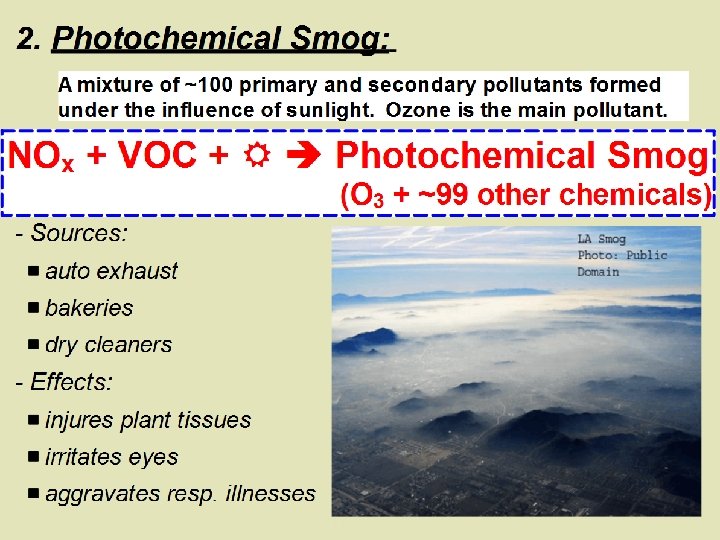
6. 3 Photochemical Smog
Types and Sources of Air Pollution = gases, liquids, or solids present in the atmosphere in high enough levels to harm humans, other organisms, or materials. • Natural pollution (lightning causes forest fires, volcanic eruptions) • Human-induced pollution (ANTHROPOGENIC) – Harmful for 2 reasons: • They precipitate & settle on Earth • They alter the chemistry of the atmosphere – Much of the air pollution released by humans is concentrated in densely populated urban areas
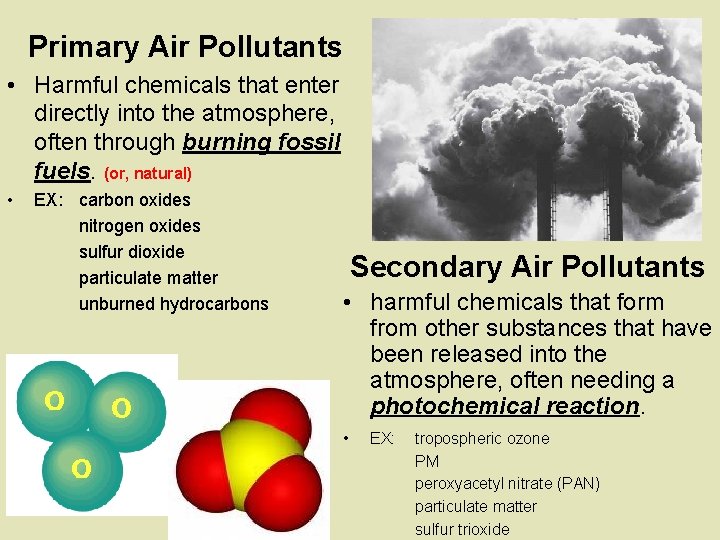
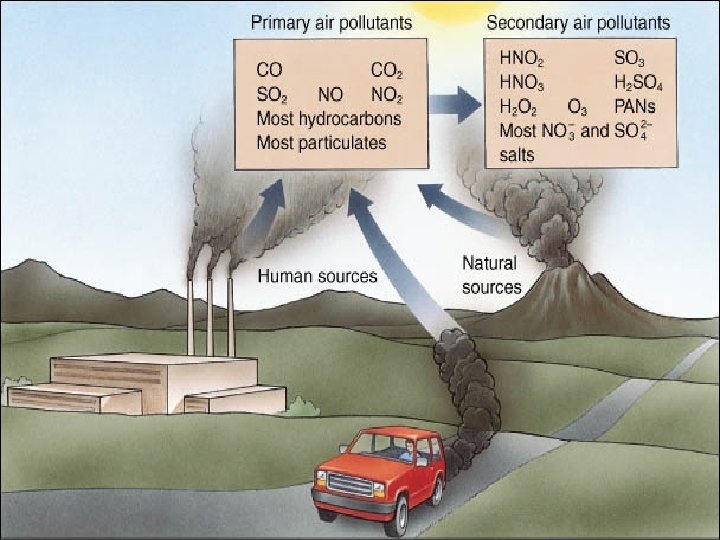
Primary Air Pollutants • Harmful chemicals that enter directly into the atmosphere, often through burning fossil fuels. (or, natural) • EX: carbon oxides nitrogen oxides sulfur dioxide particulate matter unburned hydrocarbons Secondary Air Pollutants • harmful chemicals that form from other substances that have been released into the atmosphere, often needing a photochemical reaction. • EX: tropospheric ozone PM peroxyacetyl nitrate (PAN) particulate matter sulfur trioxide
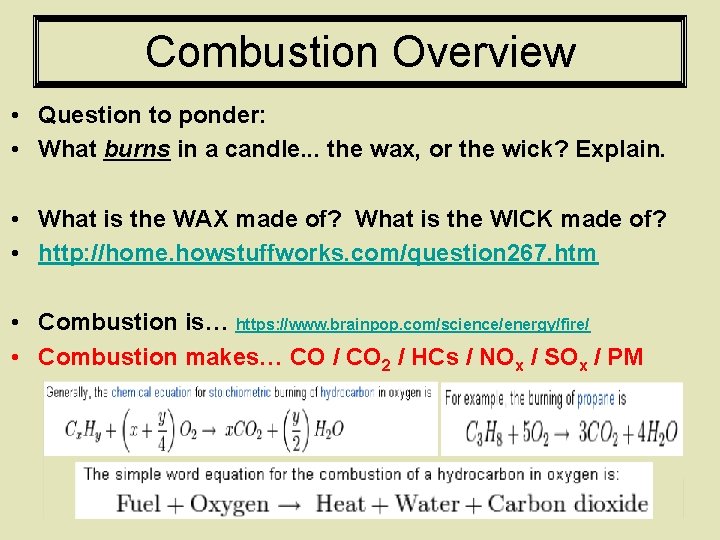
Combustion Overview • Question to ponder: • What burns in a candle. . . the wax, or the wick? Explain. • What is the WAX made of? What is the WICK made of? • http: //home. howstuffworks. com/question 267. htm • Combustion is… https: //www. brainpop. com/science/energy/fire/ • Combustion makes… CO / CO 2 / HCs / NOx / SOx / PM
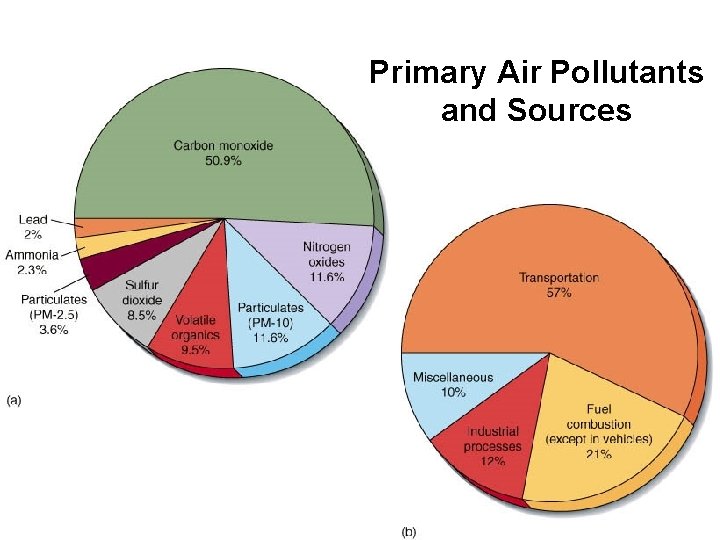
Primary Air Pollutants and Sources
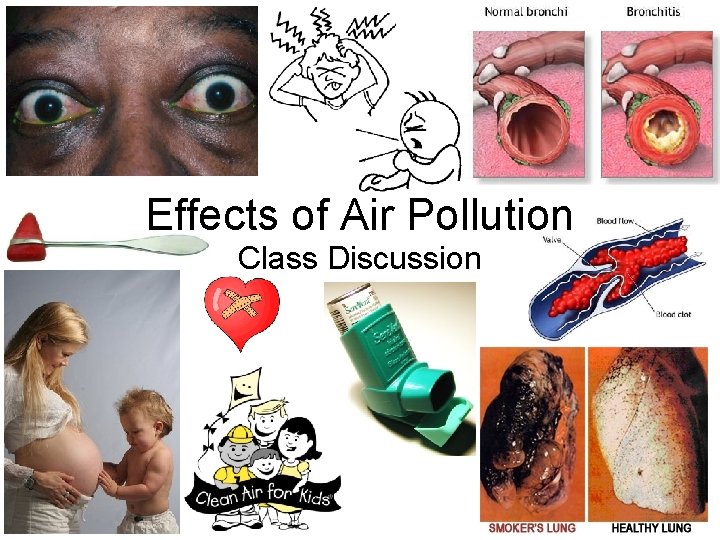
Effects of Air Pollution Class Discussion
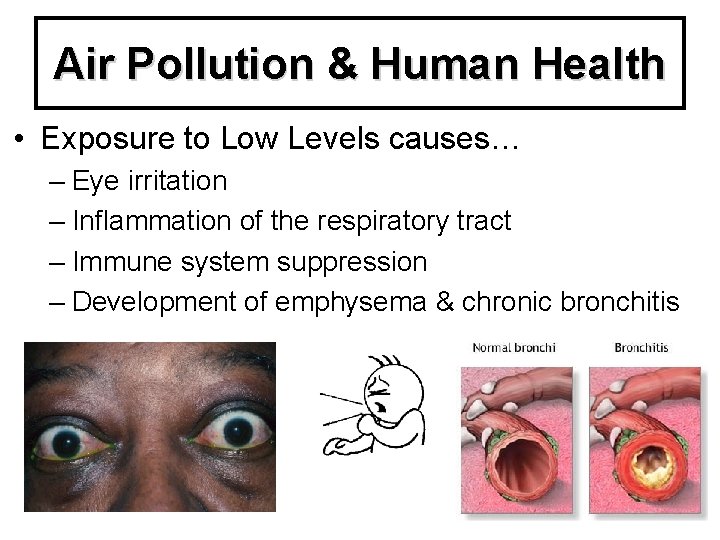
Air Pollution & Human Health • Exposure to Low Levels causes… – Eye irritation – Inflammation of the respiratory tract – Immune system suppression – Development of emphysema & chronic bronchitis
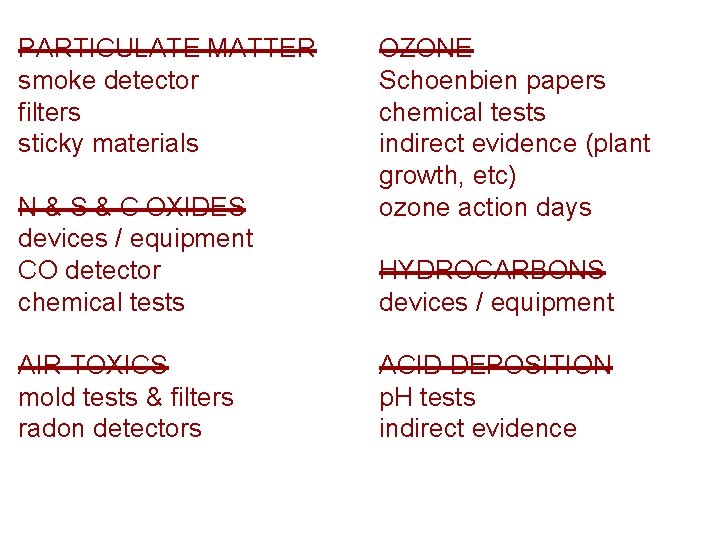
PARTICULATE MATTER smoke detector filters sticky materials N & S & C OXIDES devices / equipment CO detector chemical tests AIR TOXICS mold tests & filters radon detectors OZONE Schoenbien papers chemical tests indirect evidence (plant growth, etc) ozone action days HYDROCARBONS devices / equipment ACID DEPOSITION p. H tests indirect evidence
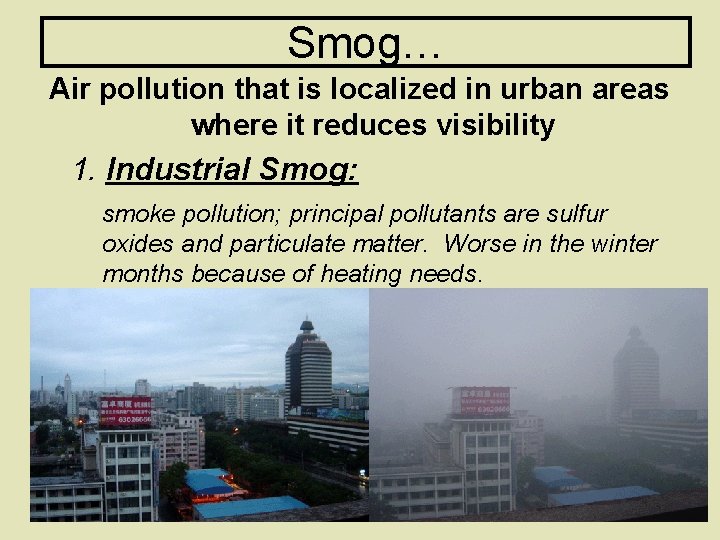
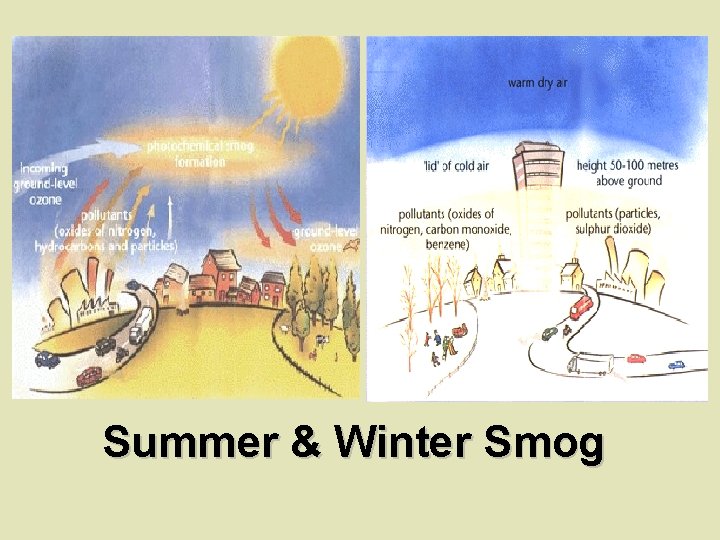
Smog… Air pollution that is localized in urban areas where it reduces visibility 1. Industrial Smog: smoke pollution; principal pollutants are sulfur oxides and particulate matter. Worse in the winter months because of heating needs.
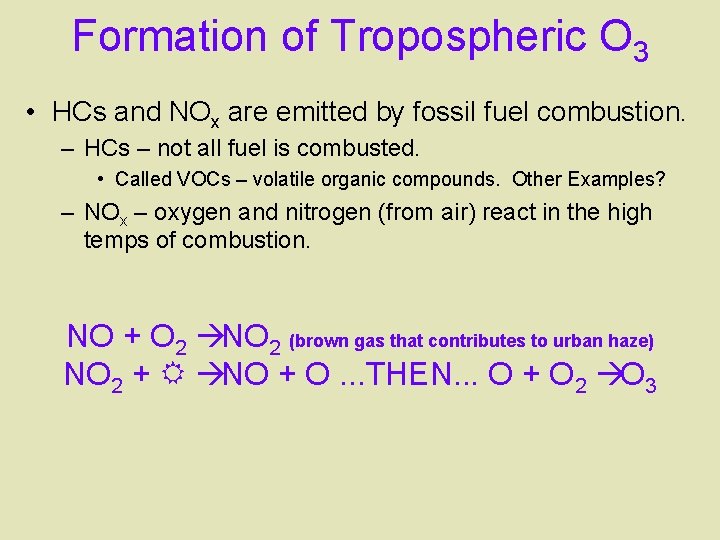
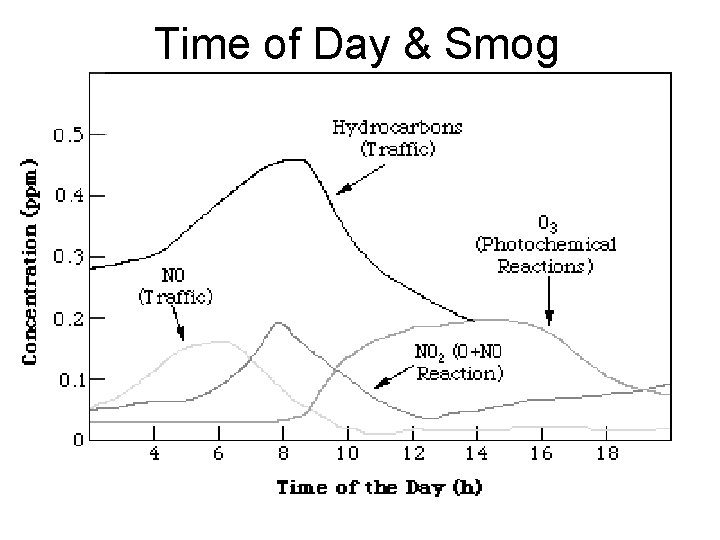
Formation of Tropospheric O 3 • HCs and NOx are emitted by fossil fuel combustion. – HCs – not all fuel is combusted. • Called VOCs – volatile organic compounds. Other Examples? – NOx – oxygen and nitrogen (from air) react in the high temps of combustion. NO + O 2 àNO 2 (brown gas that contributes to urban haze) NO 2 + R àNO + O. . . THEN. . . O + O 2 àO 3
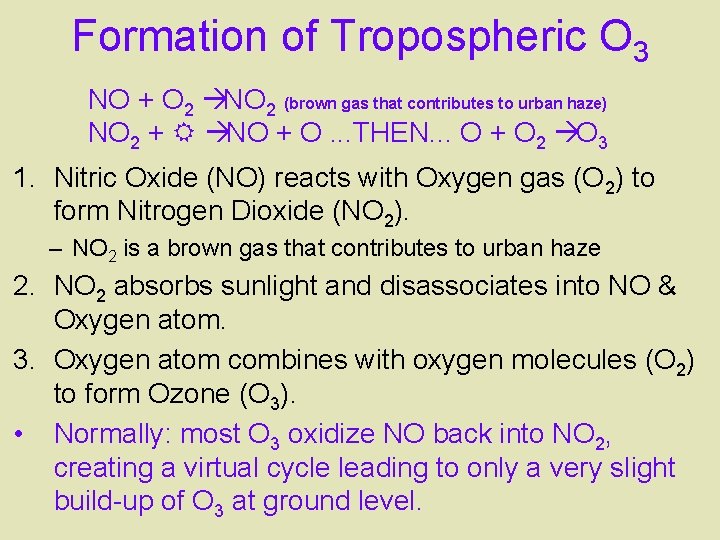
Formation of Tropospheric O 3 NO + O 2 àNO 2 (brown gas that contributes to urban haze) NO 2 + R àNO + O. . . THEN. . . O + O 2 àO 3 1. Nitric Oxide (NO) reacts with Oxygen gas (O 2) to form Nitrogen Dioxide (NO 2). – NO 2 is a brown gas that contributes to urban haze 2. NO 2 absorbs sunlight and disassociates into NO & Oxygen atom. 3. Oxygen atom combines with oxygen molecules (O 2) to form Ozone (O 3). • Normally: most O 3 oxidize NO back into NO 2, creating a virtual cycle leading to only a very slight build-up of O 3 at ground level.
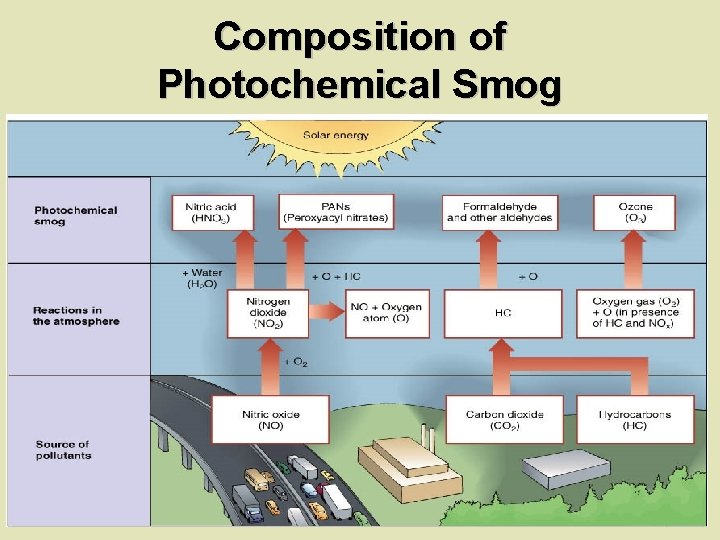
Composition of Photochemical Smog
Summer & Winter Smog
Time of Day & Smog
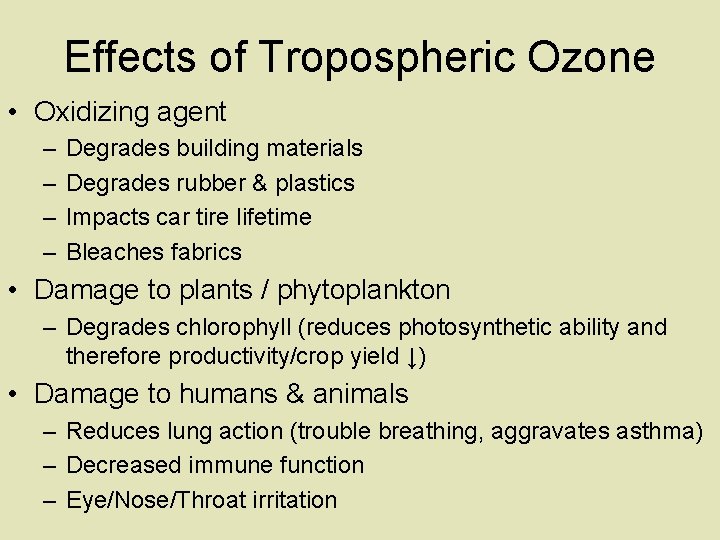
Effects of Tropospheric Ozone • Oxidizing agent – – Degrades building materials Degrades rubber & plastics Impacts car tire lifetime Bleaches fabrics • Damage to plants / phytoplankton – Degrades chlorophyll (reduces photosynthetic ability and therefore productivity/crop yield ↓) • Damage to humans & animals – Reduces lung action (trouble breathing, aggravates asthma) – Decreased immune function – Eye/Nose/Throat irritation
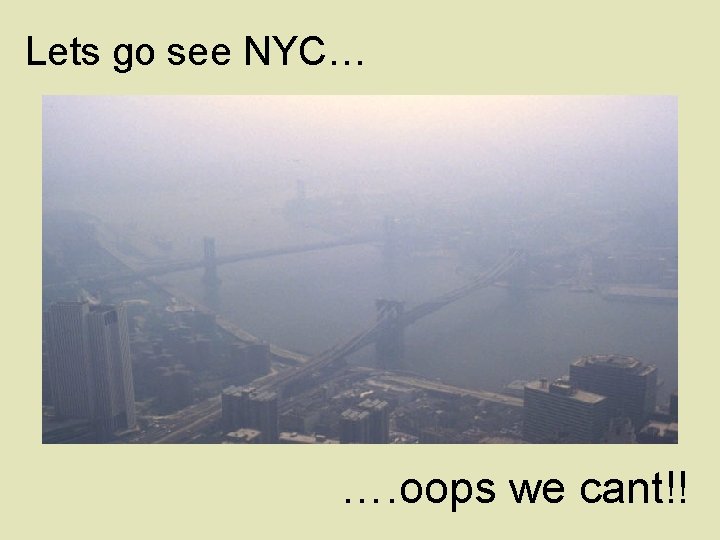
Lets go see NYC… …. oops we cant!!
REVIEW…. What causes smog?
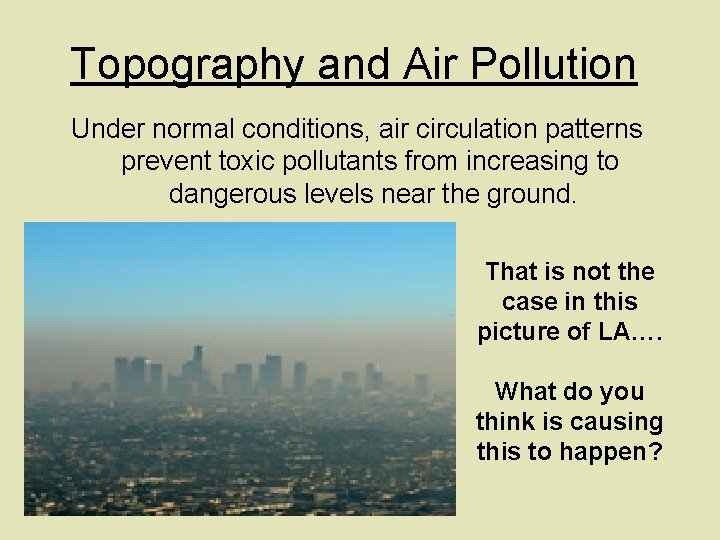
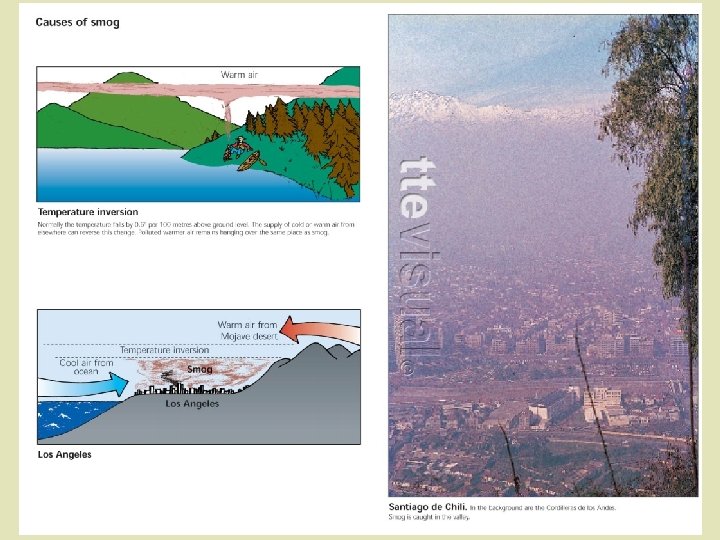
Topography and Air Pollution Under normal conditions, air circulation patterns prevent toxic pollutants from increasing to dangerous levels near the ground. That is not the case in this picture of LA…. What do you think is causing this to happen?
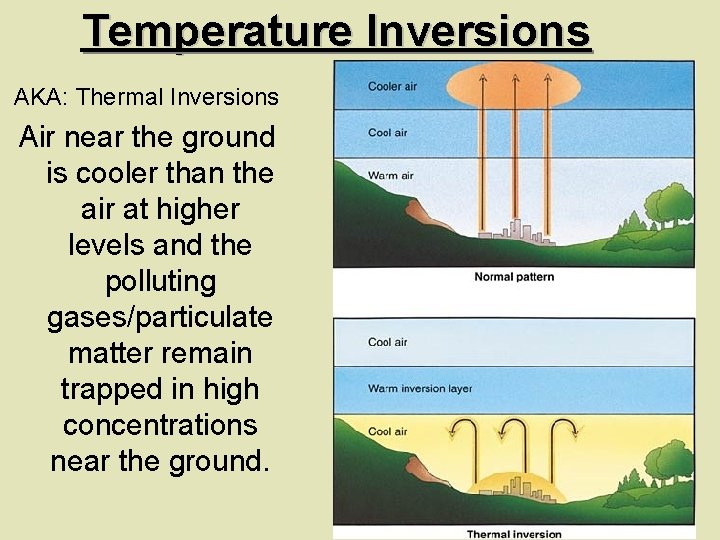
Temperature Inversions AKA: Thermal Inversions Air near the ground is cooler than the air at higher levels and the polluting gases/particulate matter remain trapped in high concentrations near the ground.
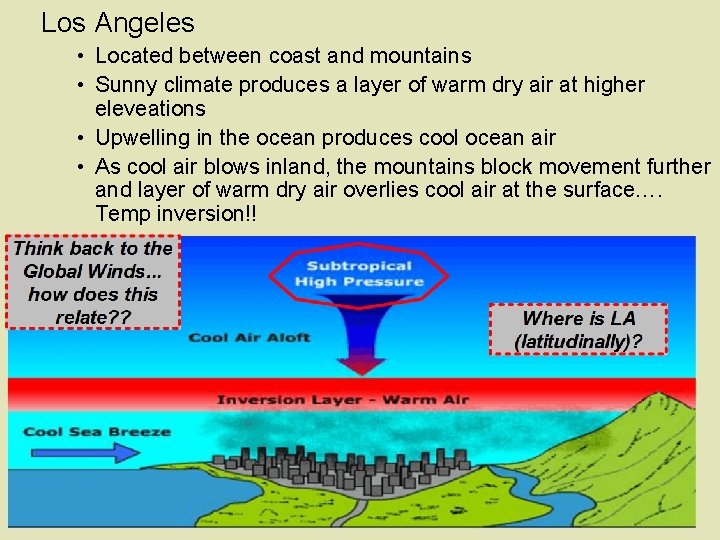
Los Angeles • Located between coast and mountains • Sunny climate produces a layer of warm dry air at higher eleveations • Upwelling in the ocean produces cool ocean air • As cool air blows inland, the mountains block movement further and layer of warm dry air overlies cool air at the surface…. Temp inversion!!
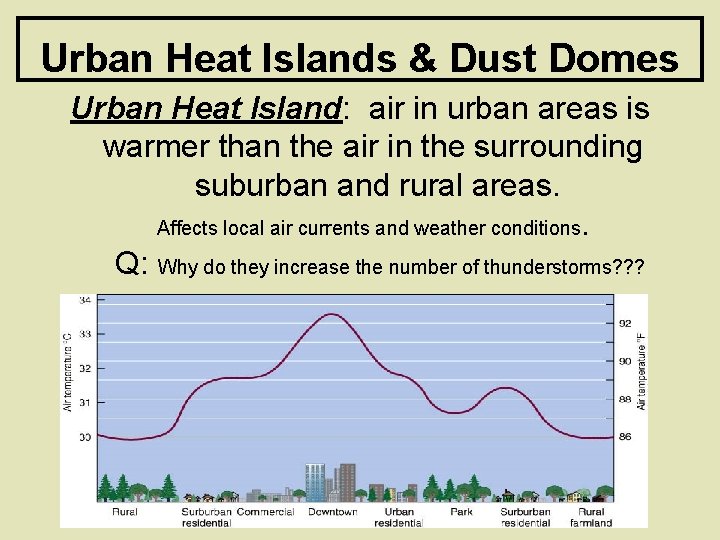
Urban Heat Islands & Dust Domes Urban Heat Island: air in urban areas is warmer than the air in the surrounding suburban and rural areas. Affects local air currents and weather conditions. Q: Why do they increase the number of thunderstorms? ? ?
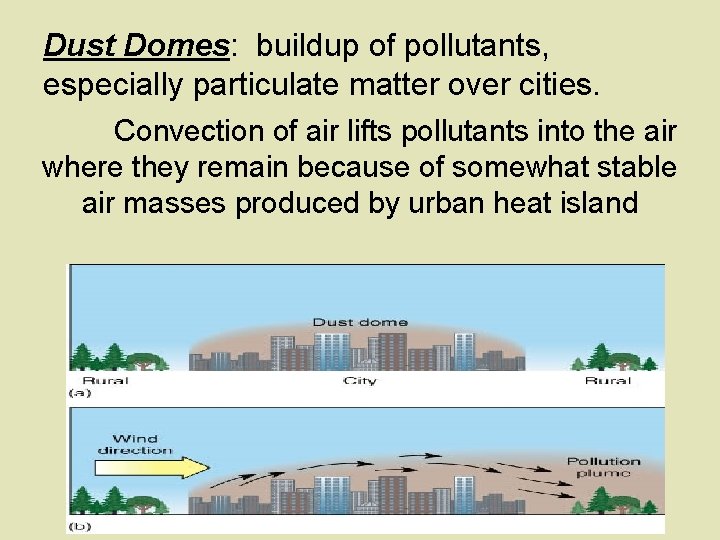
Dust Domes: buildup of pollutants, especially particulate matter over cities. Convection of air lifts pollutants into the air where they remain because of somewhat stable air masses produced by urban heat island
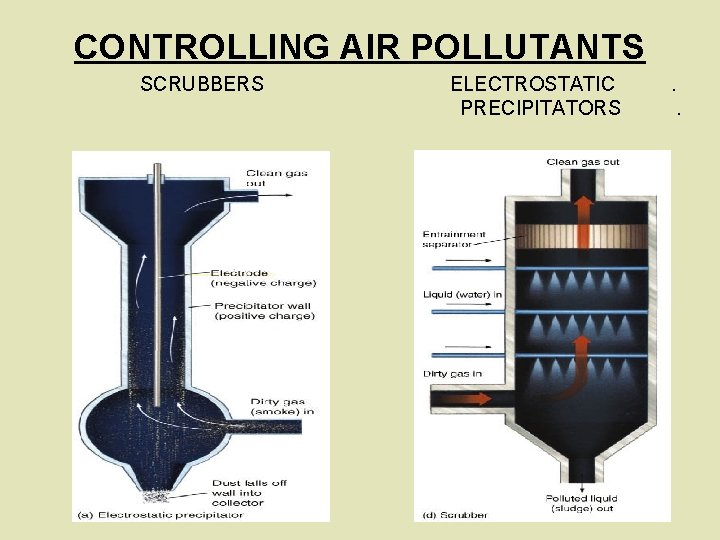
CONTROLLING AIR POLLUTANTS SCRUBBERS ELECTROSTATIC PRECIPITATORS . .
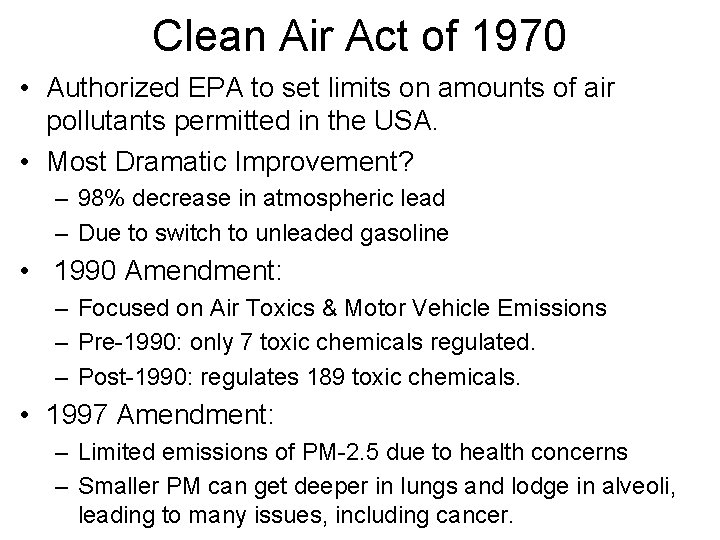
Clean Air Act of 1970 • Authorized EPA to set limits on amounts of air pollutants permitted in the USA. • Most Dramatic Improvement? – 98% decrease in atmospheric lead – Due to switch to unleaded gasoline • 1990 Amendment: – Focused on Air Toxics & Motor Vehicle Emissions – Pre-1990: only 7 toxic chemicals regulated. – Post-1990: regulates 189 toxic chemicals. • 1997 Amendment: – Limited emissions of PM-2. 5 due to health concerns – Smaller PM can get deeper in lungs and lodge in alveoli, leading to many issues, including cancer.
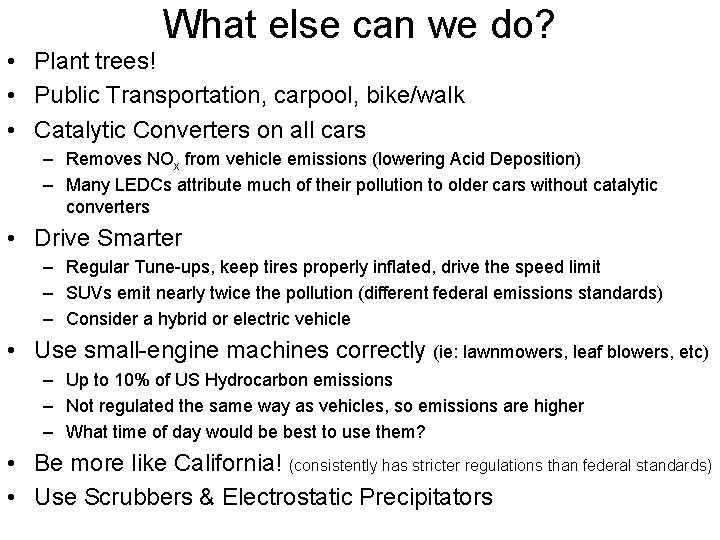
What else can we do? • Plant trees! • Public Transportation, carpool, bike/walk • Catalytic Converters on all cars – Removes NOx from vehicle emissions (lowering Acid Deposition) – Many LEDCs attribute much of their pollution to older cars without catalytic converters • Drive Smarter – Regular Tune-ups, keep tires properly inflated, drive the speed limit – SUVs emit nearly twice the pollution (different federal emissions standards) – Consider a hybrid or electric vehicle • Use small-engine machines correctly (ie: lawnmowers, leaf blowers, etc) – Up to 10% of US Hydrocarbon emissions – Not regulated the same way as vehicles, so emissions are higher – What time of day would be best to use them? • Be more like California! (consistently has stricter regulations than federal standards) • Use Scrubbers & Electrostatic Precipitators
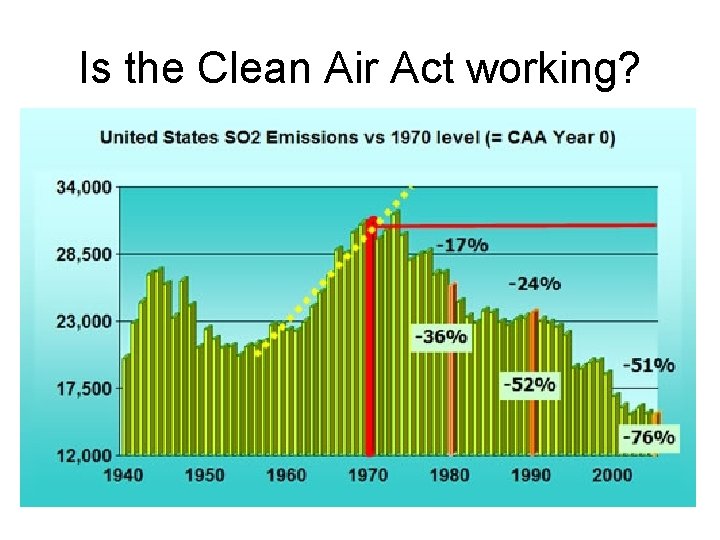
Is the Clean Air Act working?
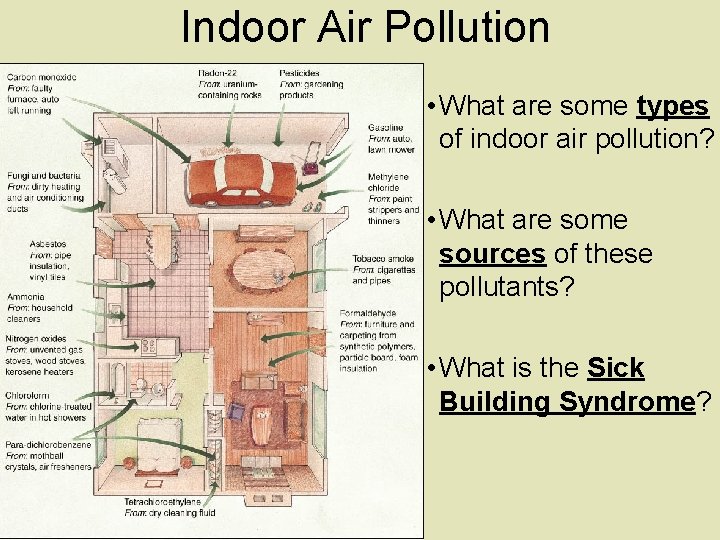
Indoor Air Pollution • What are some types of indoor air pollution? • What are some sources of these pollutants? • What is the Sick Building Syndrome?
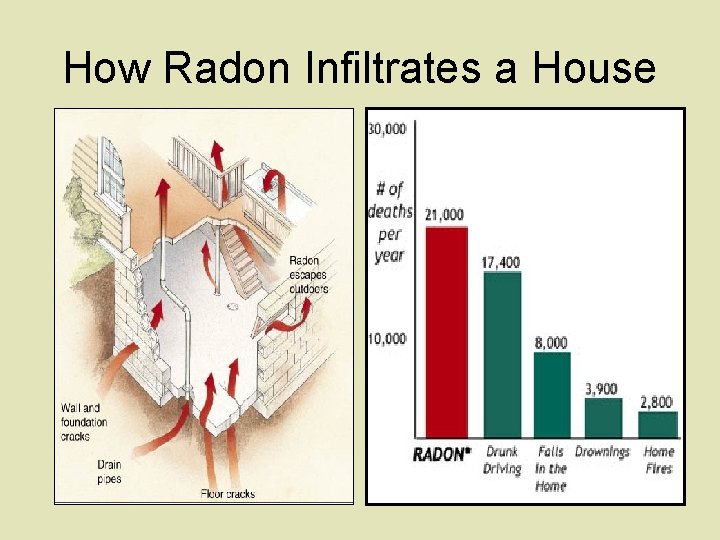
How Radon Infiltrates a House