
6 2 Process of Meiosis KEY CONCEPT Gametes
- Slides: 14
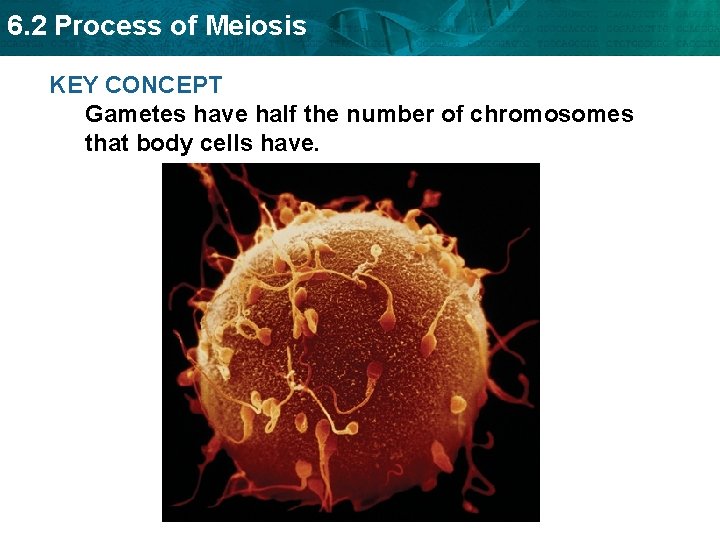
6. 2 Process of Meiosis KEY CONCEPT Gametes have half the number of chromosomes that body cells have.
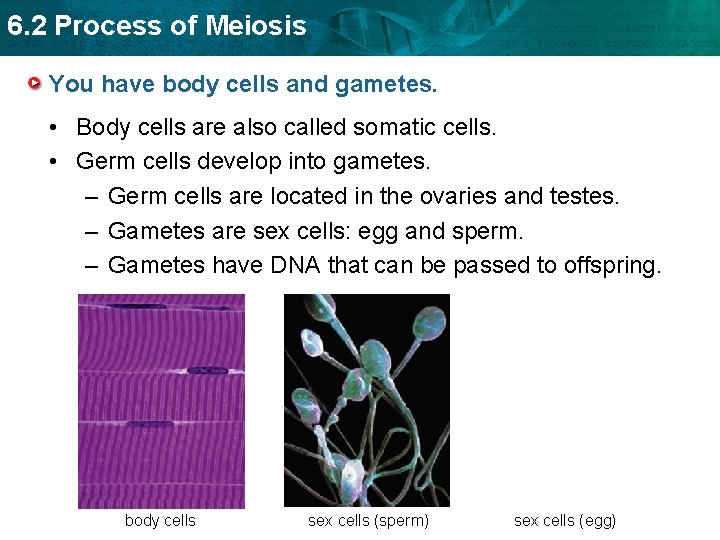
6. 2 Process of Meiosis You have body cells and gametes. • Body cells are also called somatic cells. • Germ cells develop into gametes. – Germ cells are located in the ovaries and testes. – Gametes are sex cells: egg and sperm. – Gametes have DNA that can be passed to offspring. body cells sex cells (sperm) sex cells (egg)
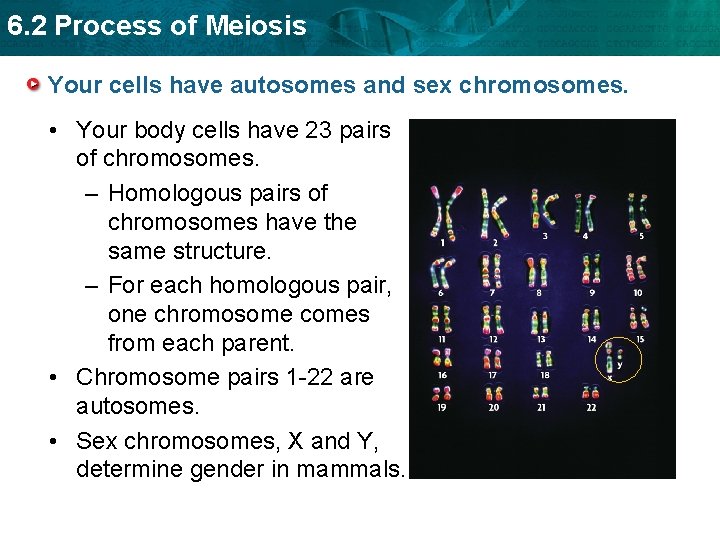
6. 2 Process of Meiosis Your cells have autosomes and sex chromosomes. • Your body cells have 23 pairs of chromosomes. – Homologous pairs of chromosomes have the same structure. – For each homologous pair, one chromosome comes from each parent. • Chromosome pairs 1 -22 are autosomes. • Sex chromosomes, X and Y, determine gender in mammals.
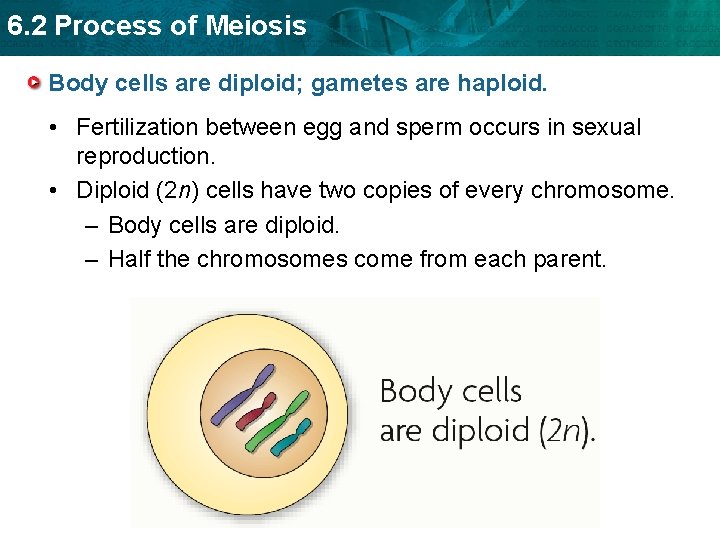
6. 2 Process of Meiosis Body cells are diploid; gametes are haploid. • Fertilization between egg and sperm occurs in sexual reproduction. • Diploid (2 n) cells have two copies of every chromosome. – Body cells are diploid. – Half the chromosomes come from each parent.
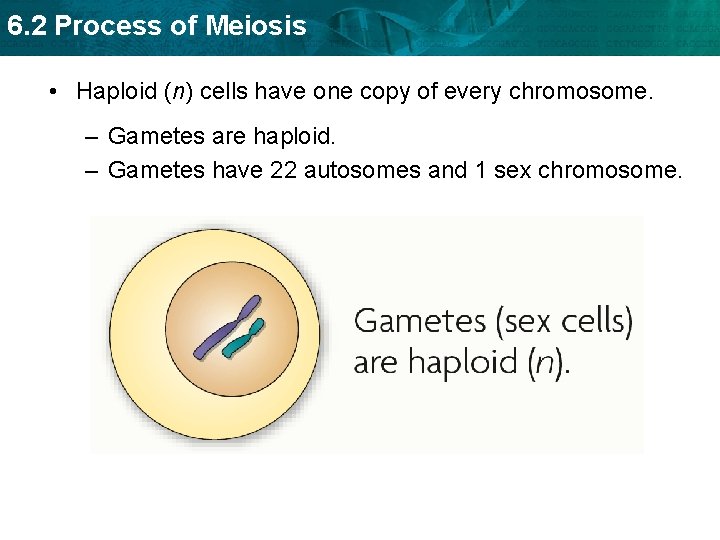
6. 2 Process of Meiosis • Haploid (n) cells have one copy of every chromosome. – Gametes are haploid. – Gametes have 22 autosomes and 1 sex chromosome.
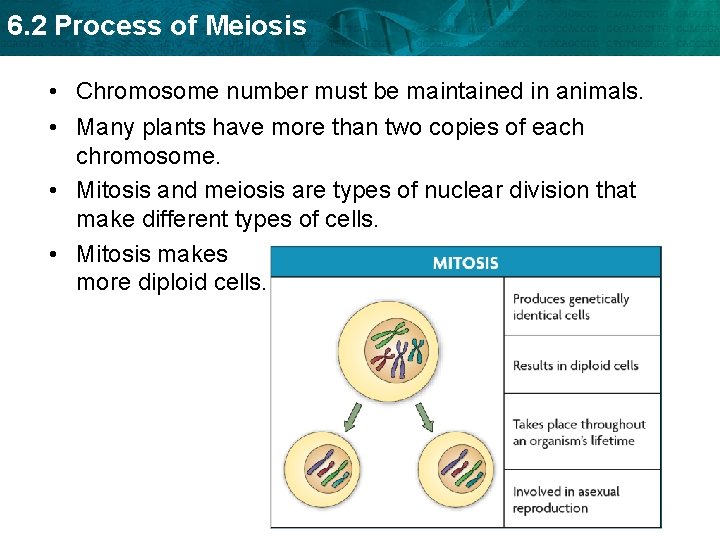
6. 2 Process of Meiosis • Chromosome number must be maintained in animals. • Many plants have more than two copies of each chromosome. • Mitosis and meiosis are types of nuclear division that make different types of cells. • Mitosis makes more diploid cells.
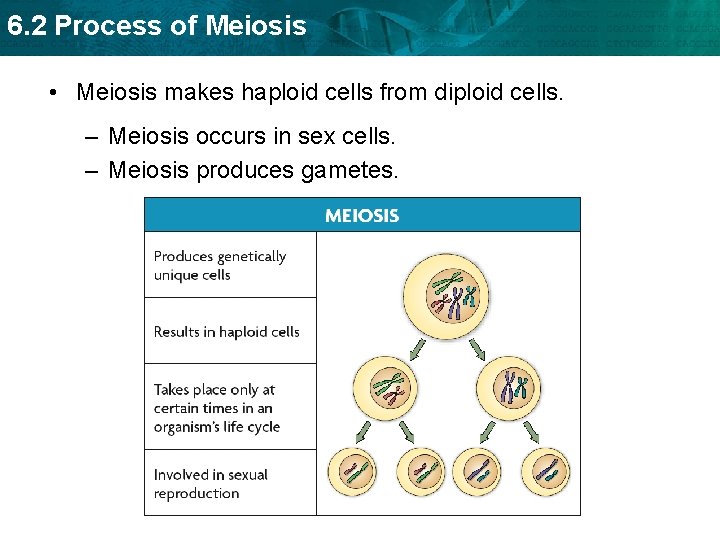
6. 2 Process of Meiosis • Meiosis makes haploid cells from diploid cells. – Meiosis occurs in sex cells. – Meiosis produces gametes.
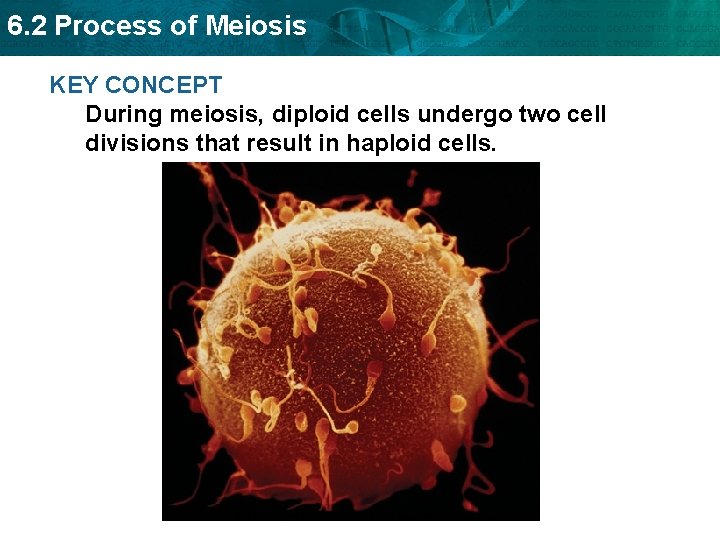
6. 2 Process of Meiosis KEY CONCEPT During meiosis, diploid cells undergo two cell divisions that result in haploid cells.
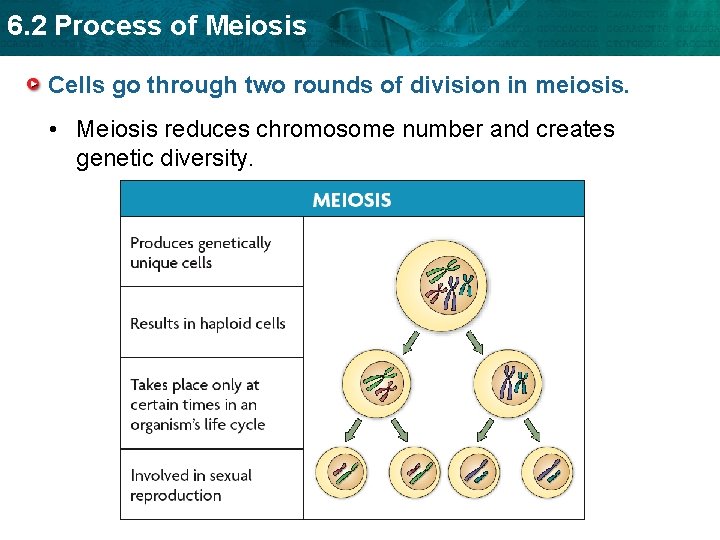
6. 2 Process of Meiosis Cells go through two rounds of division in meiosis. • Meiosis reduces chromosome number and creates genetic diversity.
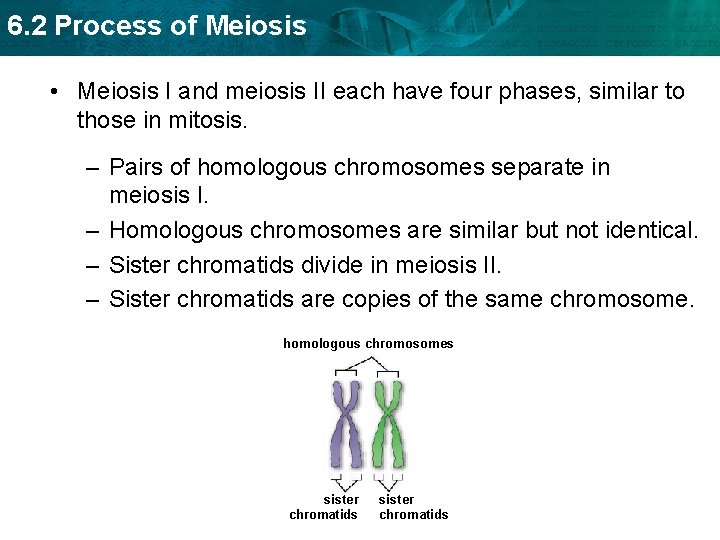
6. 2 Process of Meiosis • Meiosis I and meiosis II each have four phases, similar to those in mitosis. – Pairs of homologous chromosomes separate in meiosis I. – Homologous chromosomes are similar but not identical. – Sister chromatids divide in meiosis II. – Sister chromatids are copies of the same chromosome. homologous chromosomes sister chromatids
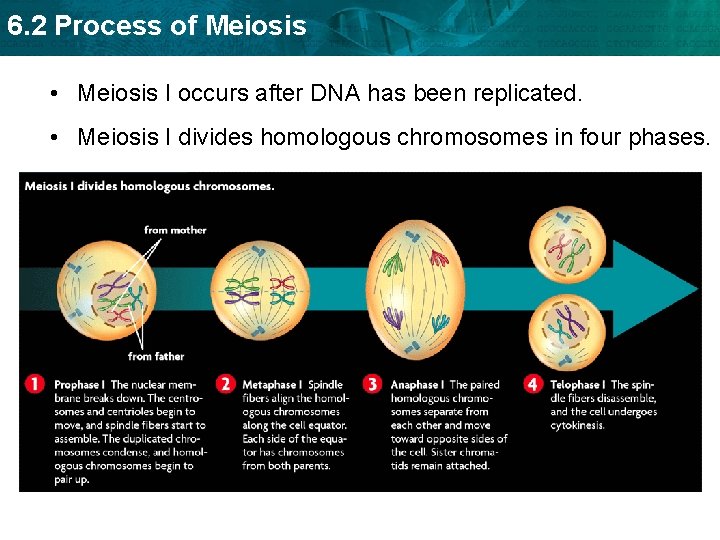
6. 2 Process of Meiosis • Meiosis I occurs after DNA has been replicated. • Meiosis I divides homologous chromosomes in four phases.
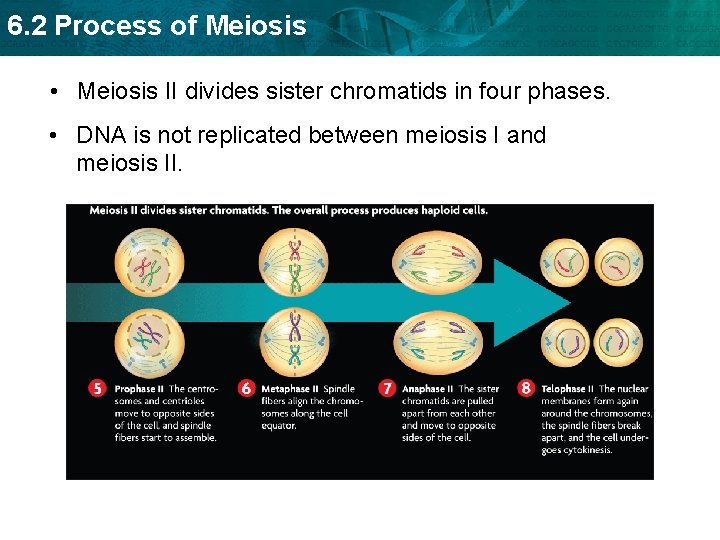
6. 2 Process of Meiosis • Meiosis II divides sister chromatids in four phases. • DNA is not replicated between meiosis I and meiosis II.
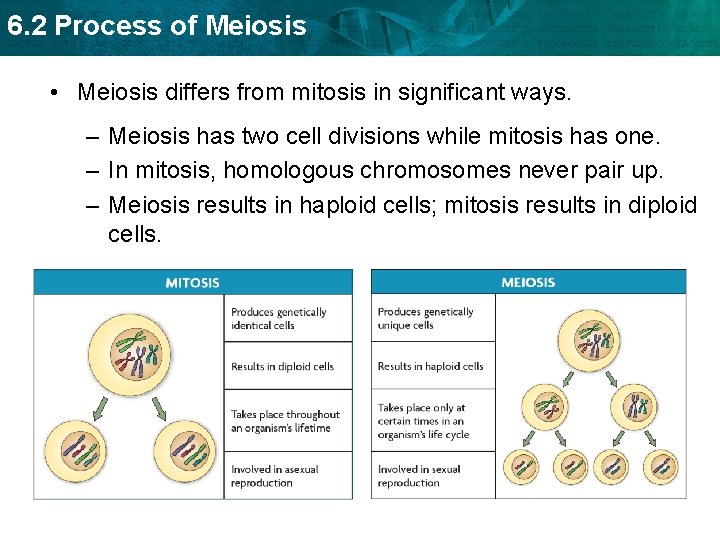
6. 2 Process of Meiosis • Meiosis differs from mitosis in significant ways. – Meiosis has two cell divisions while mitosis has one. – In mitosis, homologous chromosomes never pair up. – Meiosis results in haploid cells; mitosis results in diploid cells.
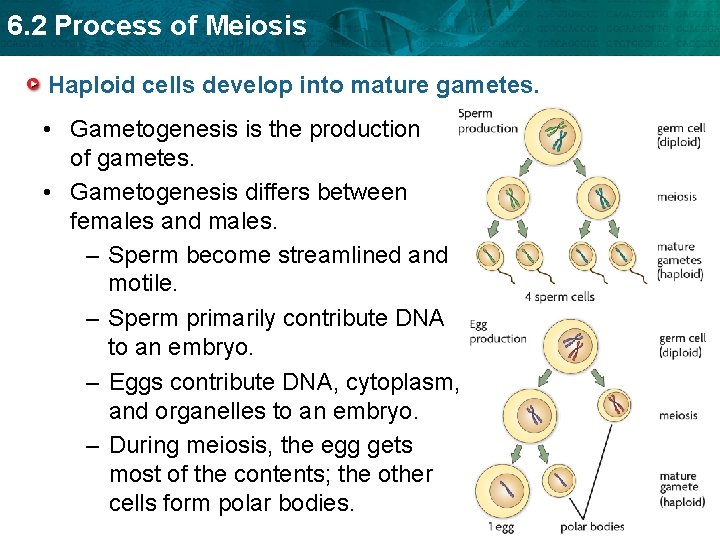
6. 2 Process of Meiosis Haploid cells develop into mature gametes. • Gametogenesis is the production of gametes. • Gametogenesis differs between females and males. – Sperm become streamlined and motile. – Sperm primarily contribute DNA to an embryo. – Eggs contribute DNA, cytoplasm, and organelles to an embryo. – During meiosis, the egg gets most of the contents; the other cells form polar bodies.