
6 1 Types of Rxns Synthesis reactions are

- Slides: 14
6. 1 Types of Rxns
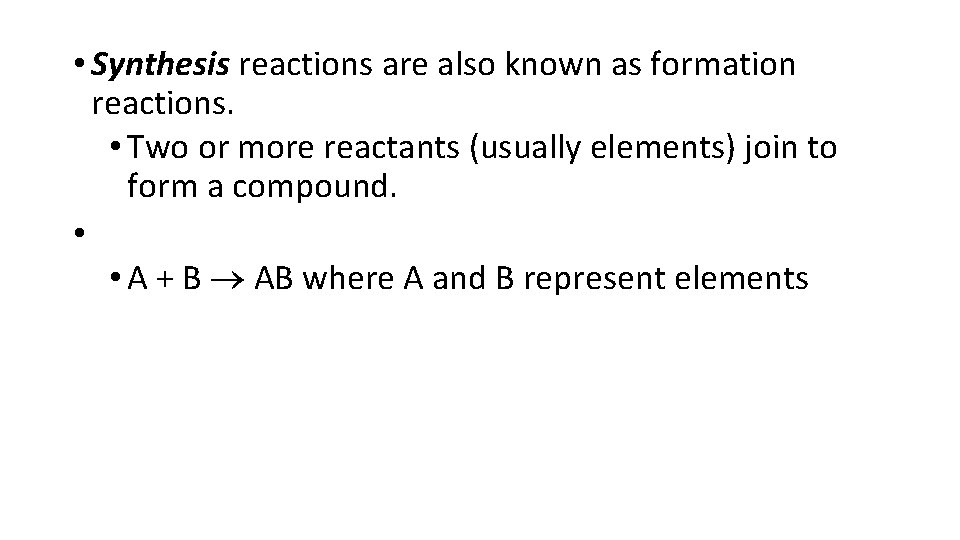
• Synthesis reactions are also known as formation reactions. • Two or more reactants (usually elements) join to form a compound. • • A + B AB where A and B represent elements
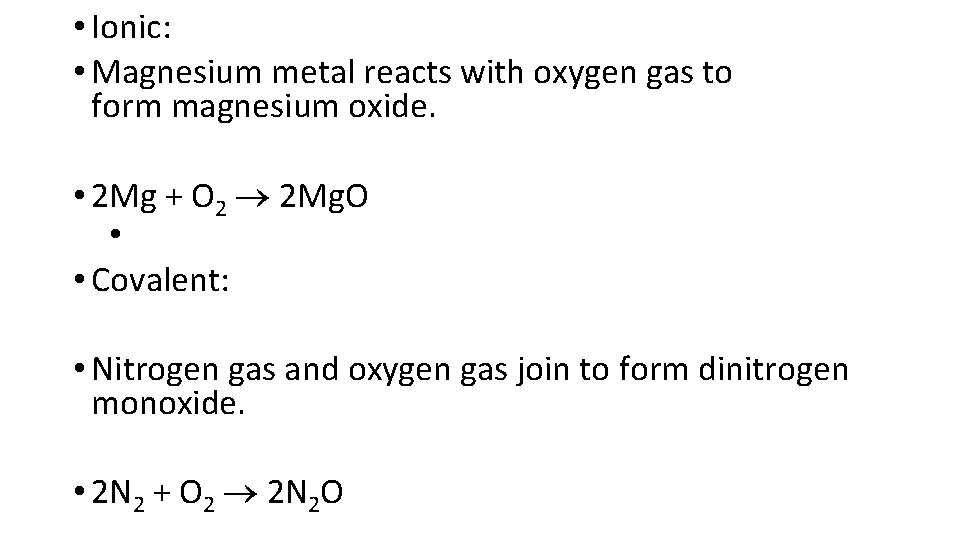
• Ionic: • Magnesium metal reacts with oxygen gas to form magnesium oxide. • 2 Mg + O 2 2 Mg. O • • Covalent: • Nitrogen gas and oxygen gas join to form dinitrogen monoxide. • 2 N 2 + O 2 2 N 2 O
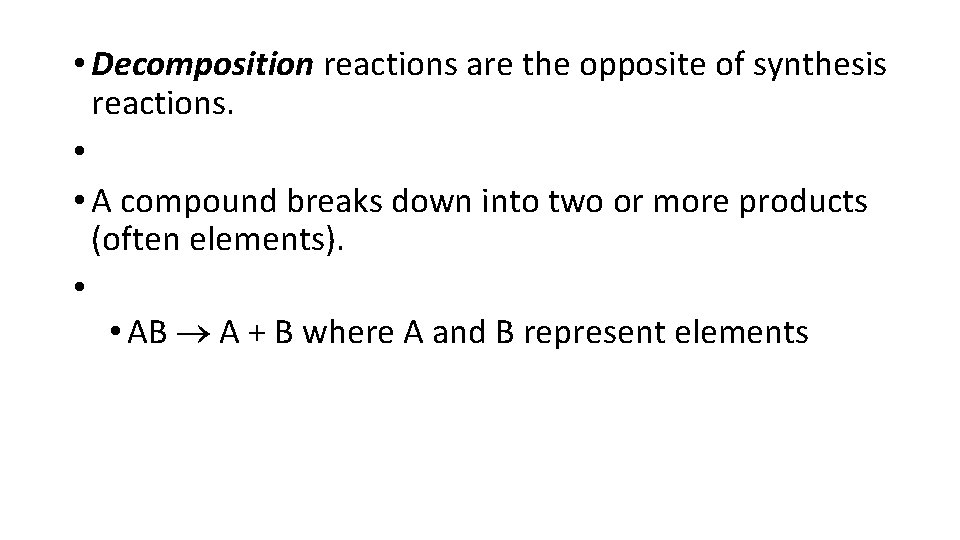
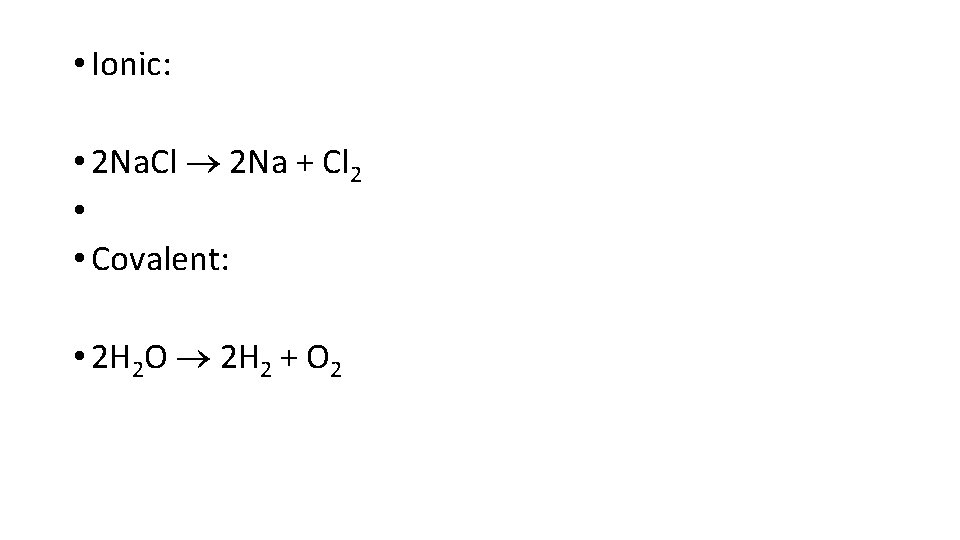
• Decomposition reactions are the opposite of synthesis reactions. • • A compound breaks down into two or more products (often elements). • • AB A + B where A and B represent elements
• Ionic: • 2 Na. Cl 2 Na + Cl 2 • • Covalent: • 2 H 2 O 2 H 2 + O 2
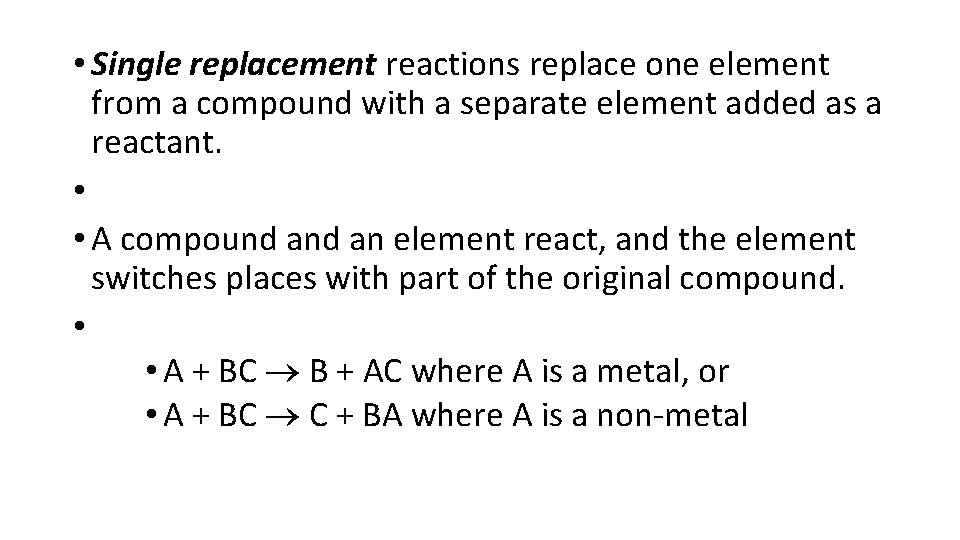
• Single replacement reactions replace one element from a compound with a separate element added as a reactant. • • A compound an element react, and the element switches places with part of the original compound. • • A + BC B + AC where A is a metal, or • A + BC C + BA where A is a non-metal
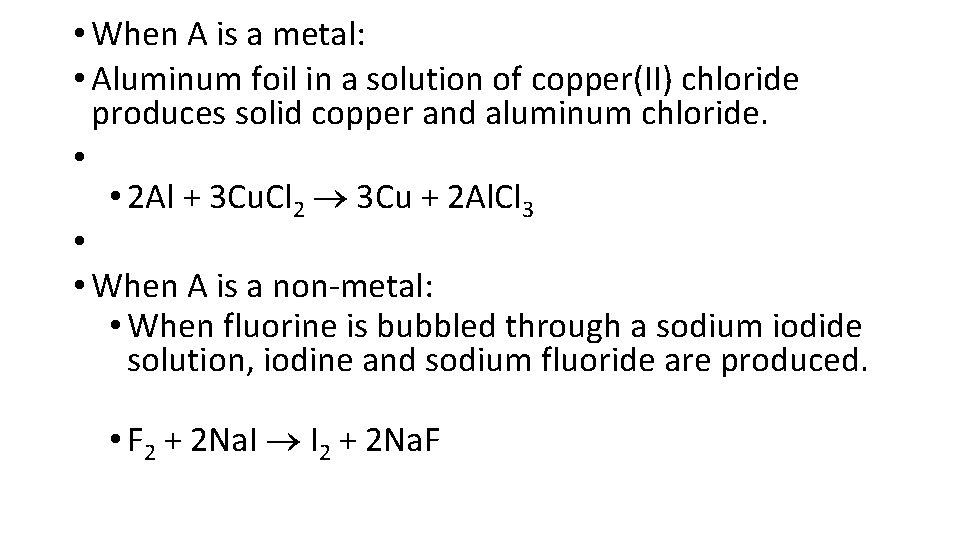
• When A is a metal: • Aluminum foil in a solution of copper(II) chloride produces solid copper and aluminum chloride. • • 2 Al + 3 Cu. Cl 2 3 Cu + 2 Al. Cl 3 • • When A is a non-metal: • When fluorine is bubbled through a sodium iodide solution, iodine and sodium fluoride are produced. • F 2 + 2 Na. I I 2 + 2 Na. F
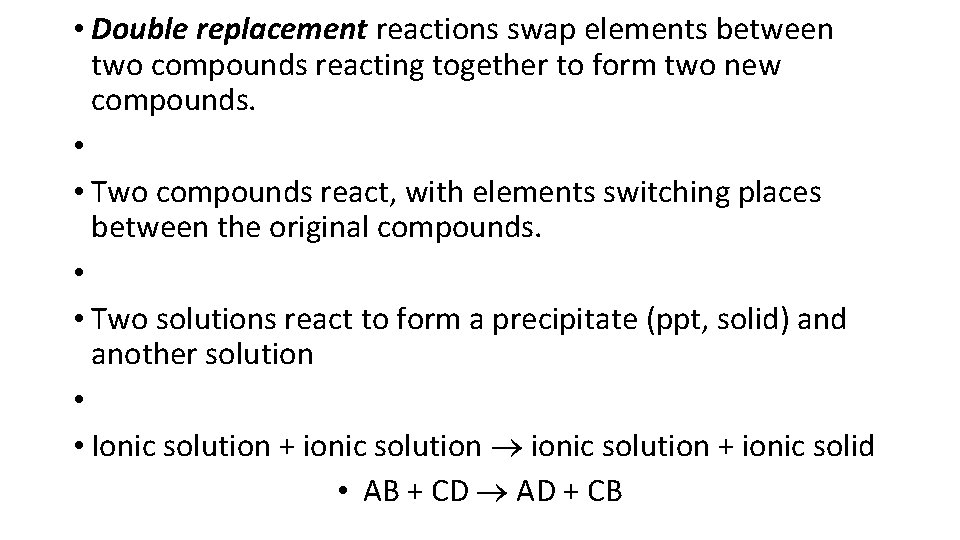
• Double replacement reactions swap elements between two compounds reacting together to form two new compounds. • • Two compounds react, with elements switching places between the original compounds. • • Two solutions react to form a precipitate (ppt, solid) and another solution • • Ionic solution + ionic solid • AB + CD AD + CB
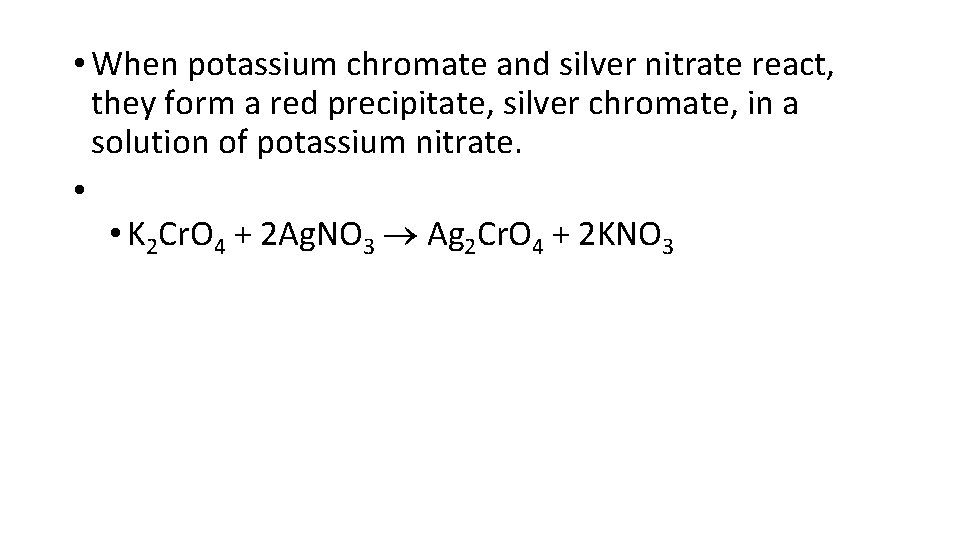
• When potassium chromate and silver nitrate react, they form a red precipitate, silver chromate, in a solution of potassium nitrate. • • K 2 Cr. O 4 + 2 Ag. NO 3 Ag 2 Cr. O 4 + 2 KNO 3
• Neutralization reactions occur when an acid (most compounds starting with H) and a base (most compounds ending in OH, or beginning with NH 4) react to form a salt and water.
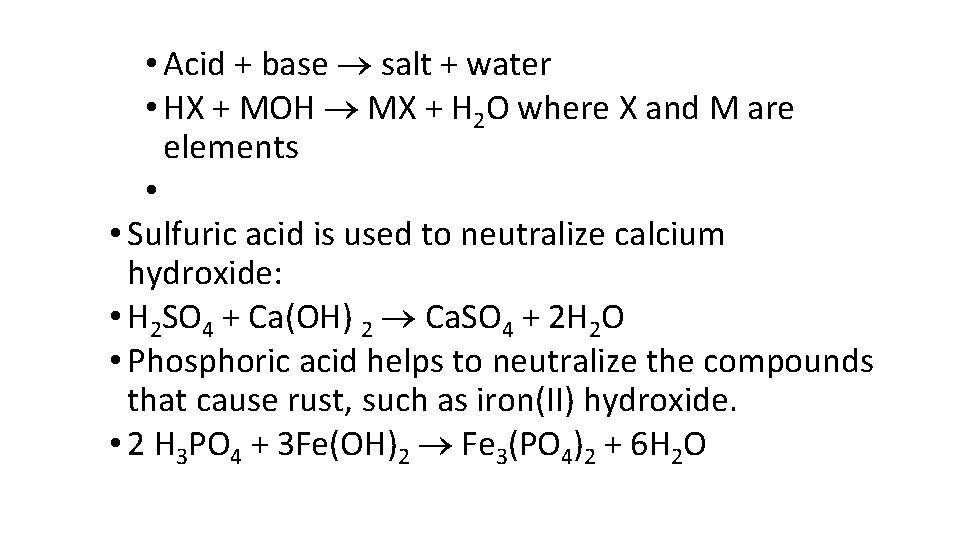
• Acid + base salt + water • HX + MOH MX + H 2 O where X and M are elements • • Sulfuric acid is used to neutralize calcium hydroxide: • H 2 SO 4 + Ca(OH) 2 Ca. SO 4 + 2 H 2 O • Phosphoric acid helps to neutralize the compounds that cause rust, such as iron(II) hydroxide. • 2 H 3 PO 4 + 3 Fe(OH)2 Fe 3(PO 4)2 + 6 H 2 O
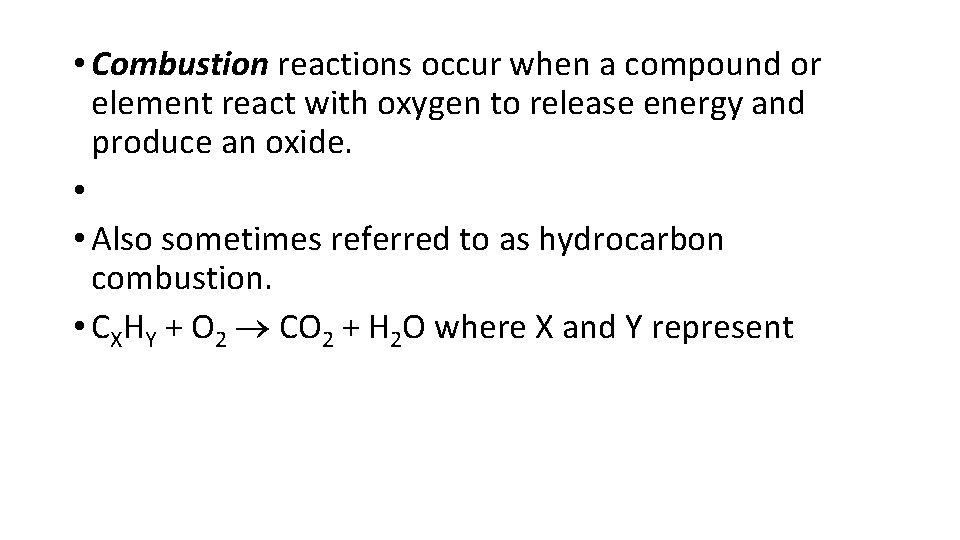
• Combustion reactions occur when a compound or element react with oxygen to release energy and produce an oxide. • • Also sometimes referred to as hydrocarbon combustion. • CXHY + O 2 CO 2 + H 2 O where X and Y represent
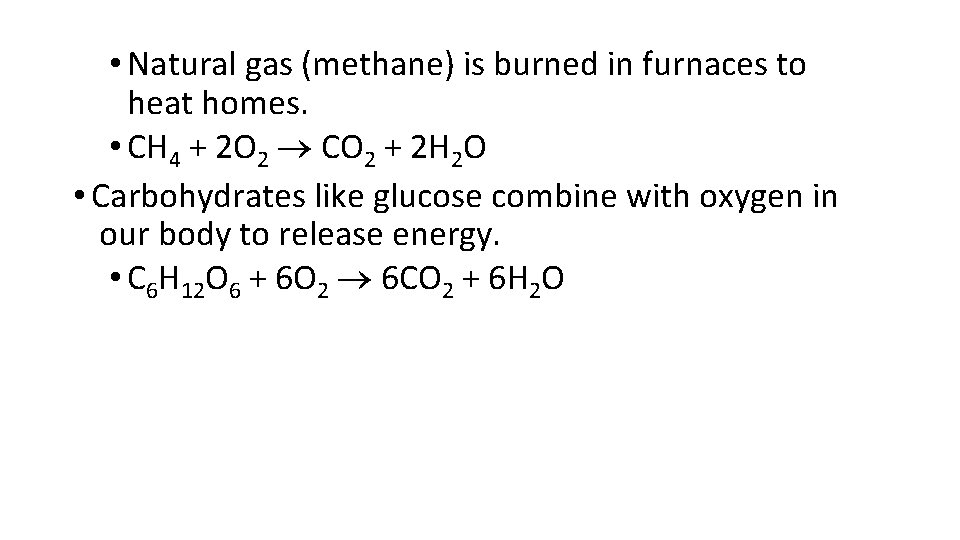
• Natural gas (methane) is burned in furnaces to heat homes. • CH 4 + 2 O 2 CO 2 + 2 H 2 O • Carbohydrates like glucose combine with oxygen in our body to release energy. • C 6 H 12 O 6 + 6 O 2 6 CO 2 + 6 H 2 O