
6 1 Types of Chemical Reactions Synthesis Synthesis
- Slides: 7
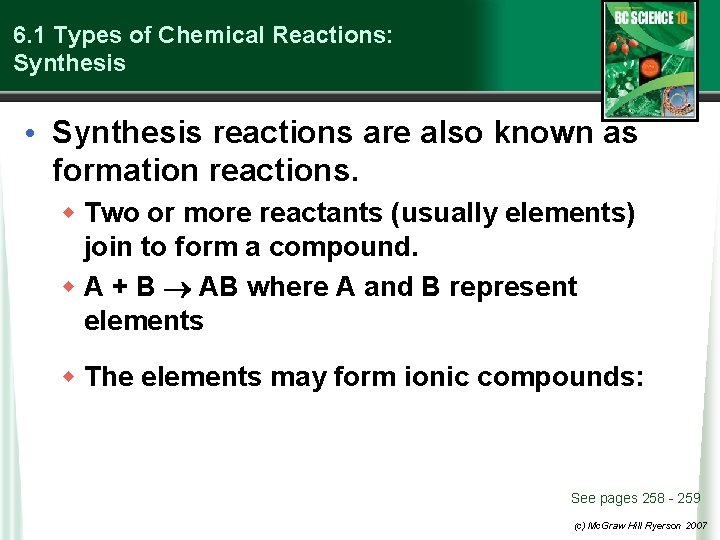
6. 1 Types of Chemical Reactions: Synthesis • Synthesis reactions are also known as formation reactions. w Two or more reactants (usually elements) join to form a compound. w A + B AB where A and B represent elements w The elements may form ionic compounds: See pages 258 - 259 (c) Mc. Graw Hill Ryerson 2007
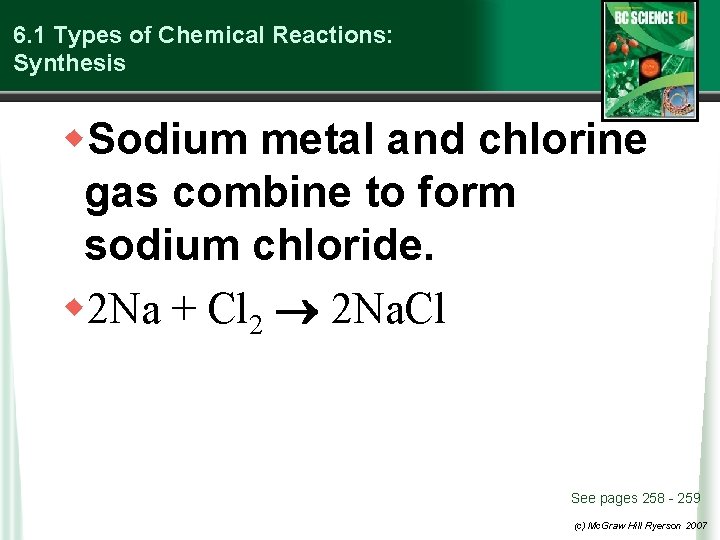
6. 1 Types of Chemical Reactions: Synthesis w. Sodium metal and chlorine gas combine to form sodium chloride. w 2 Na + Cl 2 2 Na. Cl See pages 258 - 259 (c) Mc. Graw Hill Ryerson 2007
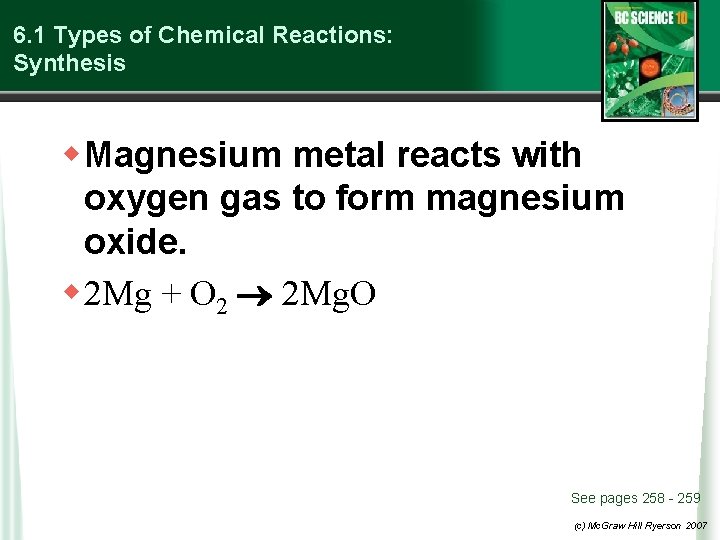
6. 1 Types of Chemical Reactions: Synthesis w Magnesium metal reacts with oxygen gas to form magnesium oxide. w 2 Mg + O 2 2 Mg. O See pages 258 - 259 (c) Mc. Graw Hill Ryerson 2007
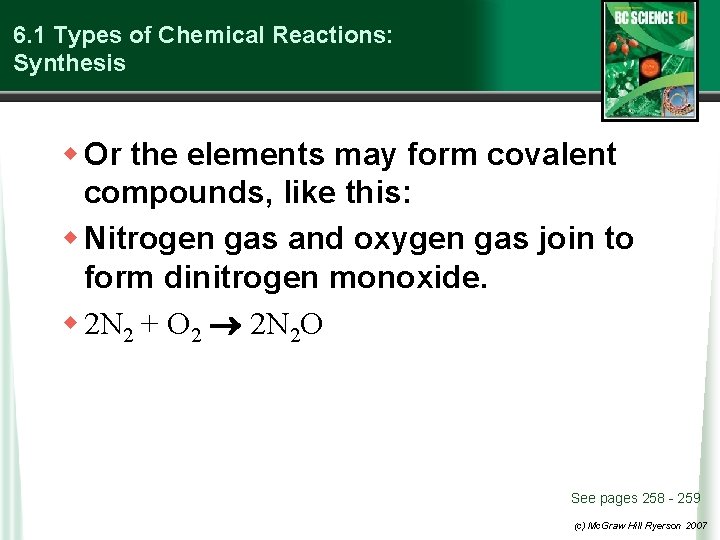
6. 1 Types of Chemical Reactions: Synthesis w Or the elements may form covalent compounds, like this: w Nitrogen gas and oxygen gas join to form dinitrogen monoxide. w 2 N 2 + O 2 2 N 2 O See pages 258 - 259 (c) Mc. Graw Hill Ryerson 2007
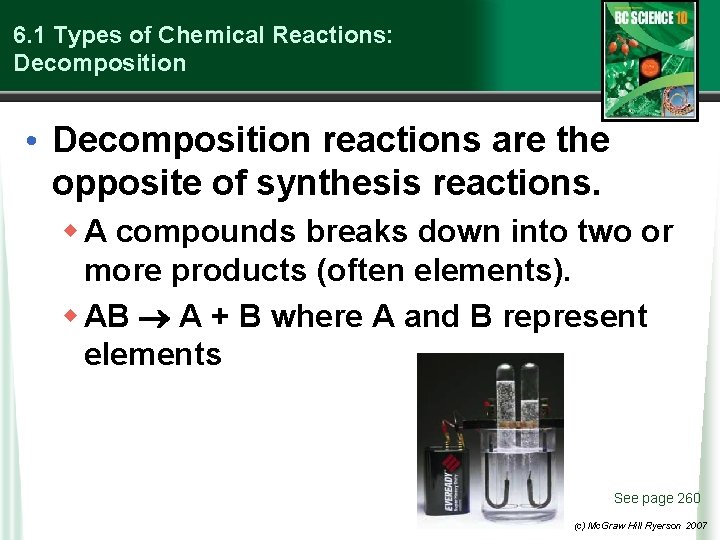
6. 1 Types of Chemical Reactions: Decomposition • Decomposition reactions are the opposite of synthesis reactions. w A compounds breaks down into two or more products (often elements). w AB A + B where A and B represent elements See page 260 (c) Mc. Graw Hill Ryerson 2007
6. 1 Types of Chemical Reactions: Decomposition w Ionic compounds may decompose to produce elements, like this: w Table salt, sodium chloride, can be broken down into sodium metal and chlorine gas by melting salt at 800ºC and running electricity through it. w 2 Na. Cl 2 Na + Cl 2 See page 260 (c) Mc. Graw Hill Ryerson 2007
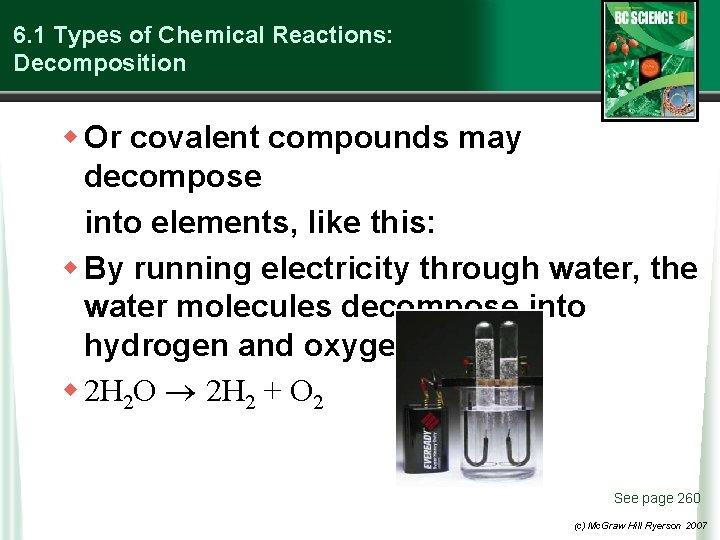
6. 1 Types of Chemical Reactions: Decomposition w Or covalent compounds may decompose into elements, like this: w By running electricity through water, the water molecules decompose into hydrogen and oxygen gases. w 2 H 2 O 2 H 2 + O 2 See page 260 (c) Mc. Graw Hill Ryerson 2007