
59 291 Section 3 Lecture 1 Antihypertensive Drugs

- Slides: 12
59 -291 Section 3, Lecture 1 Antihypertensive Drugs • 50 million people in the United States suffer from high blood pressure (hypertension) • Hypertension: Systolic BP >= 140 mm. Hg, Diastolic BP >= 90 mm. Hg • Untreated hypertension: – Damages blood vessels – Accelerates atherosclerosis – Left ventricular hypertrophy – Ischemic heart disease, stroke, heart failure and kidney failure 1
Hypertension • Primary; 95%: No underlying disease – risk factors • Obesity, Lack of exercise, Metabolic syndrome; (abdominal obesity, hyperlipidemia, insulin resistance), excessive dietary salt intake, excessive alcohol intake • Secondary; 5% caused by consequence of other disease; chronic kidney disease, pheochromocytoma, hyperaldosteronism 2
Classification of BP was presented in the Seventh Report of the Joint National Committee on the Prevention, Detection, and Treatment of High Blood Pressure; 2003 Table 10 -1. Classification of Blood Pressure for Adults and Follow -up Recommendations Blood Pressure Classification Normal SBP 1 mm Hg DBP 2 mm Hg Follow-up Recommendations <120 and <80 Check again in 2 years Prehypertension 120 -139 or 80 -90 Check again in 1 year Stage 1 hypertension 140 -159 or 90 -99 Confirm within 2 months Stage 2 hypertension >160 or >100 Evaluate within 1 week to 1 month 3 3
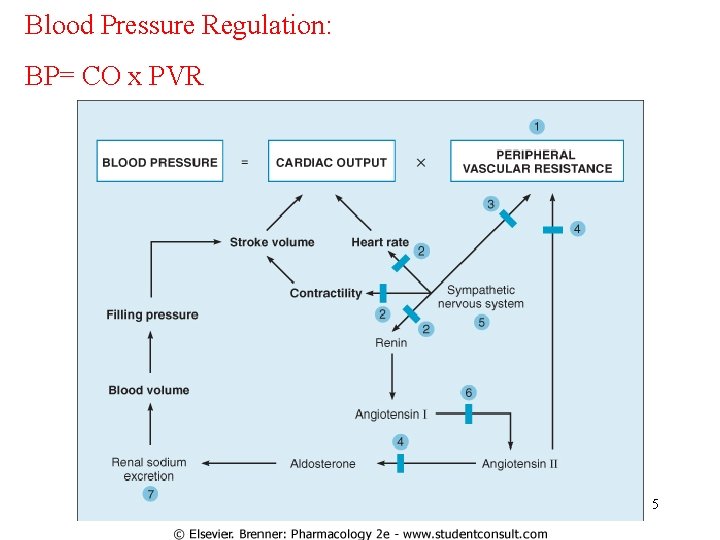
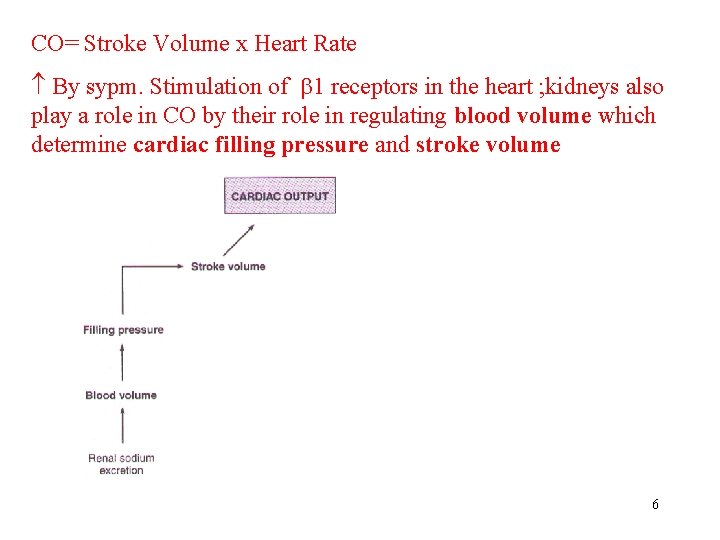
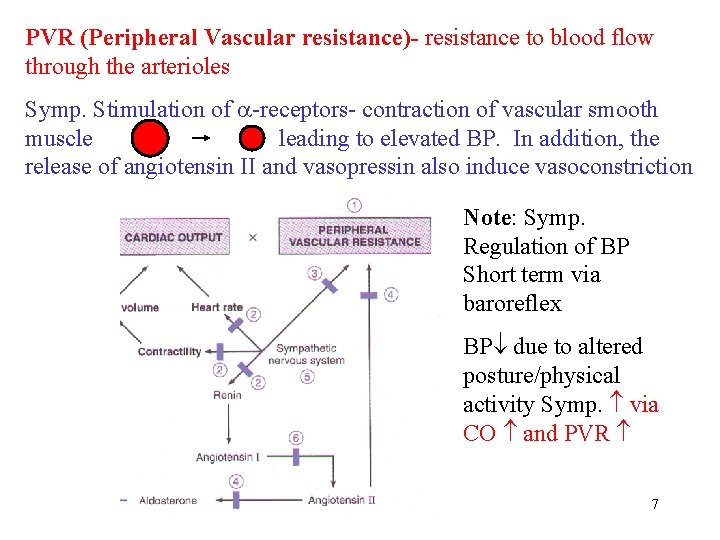
Blood Pressure Regulation • BP is influenced by cardiac output and peripheral vascular resistance and regulated by sympathetic nervous system (short term regulation) and kidneys (long term control) – BP=CO x PVR • Cardiac output: – CO = Stroke volume x heart rate – Increased by activation of 1 receptors – Kidneys regulate blood volume and CO • PVR: resistance to blood flow through arteriols; – Cross sectional area depends on arteriolar smooth muscle tone – Activation of 1 receptors causes vasoconstriction 4
Blood Pressure Regulation: BP= CO x PVR 5
CO= Stroke Volume x Heart Rate By sypm. Stimulation of 1 receptors in the heart ; kidneys also play a role in CO by their role in regulating blood volume which determine cardiac filling pressure and stroke volume 6
PVR (Peripheral Vascular resistance)- resistance to blood flow through the arterioles Symp. Stimulation of -receptors- contraction of vascular smooth muscle leading to elevated BP. In addition, the release of angiotensin II and vasopressin also induce vasoconstriction Note: Symp. Regulation of BP Short term via baroreflex BP due to altered posture/physical activity Symp. via CO and PVR 7
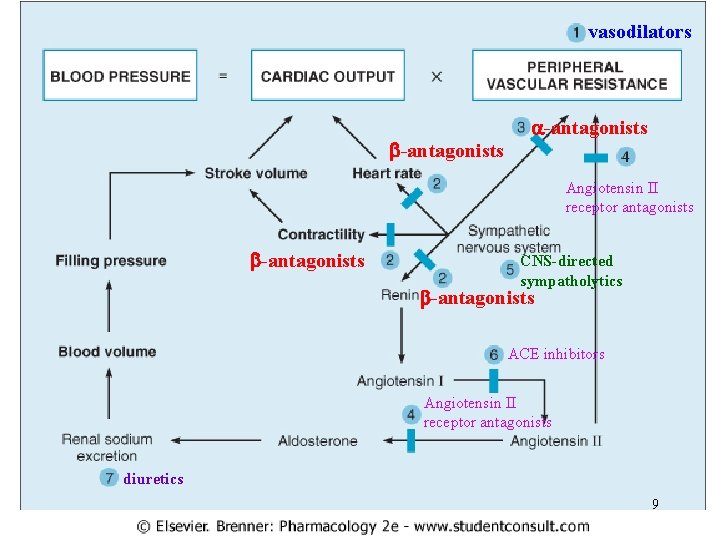
The Long term regulation of BP by the kidneys. -via regulation of plasma V and renin-angiotensin-aldosterone system Normotensive- BP excretion of Na+ H 2 O > BP normal Hypertensive- BP regulation is defective PVR is but it is unknown whether this is the cause or effect of hypertension. Sites of pharmaceutical intervention 4 - major categories of drugs: 1 - diuretics 2 -sympatholytics 3 - ACE inhibitors 4 - vasodialtors 8
vasodilators b-antagonists a-antagonists Angiotensin II receptor antagonists b-antagonists CNS-directed sympatholytics b-antagonists ACE inhibitors Angiotensin II receptor antagonists diuretics 9
Practice Questions • Explain how stimulation of 1 receptors increases BP. • Increase heart rate • increase CO • increase BP 10
• Explain “Prehypertension” condition and the follow up recommendation for this condition. • SBP 120 -139 or • DBP 80 -90 • Check again in 1 year 11
• • What type of drugs decrease PVR? Vasodilators Angiotensin II receptor antagonists blockers 12