
5508 BESG Services and Utilities Lecture 2 HOT
5508 BESG Services and Utilities Lecture 2 HOT WATER SUPPLY
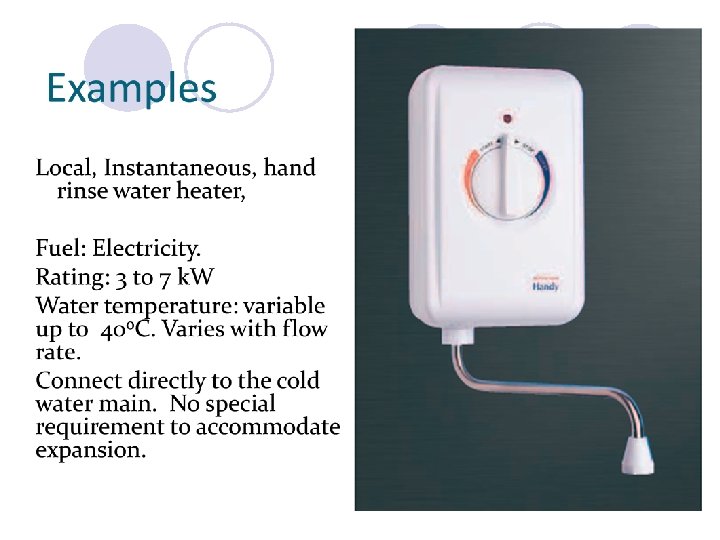
Domestic Hot Water Hot water for domestic purposes may be generated either: v Locally (at point of use) or v Centrally (in a plant room) Each of these may be either an instantaneous or a storage system.
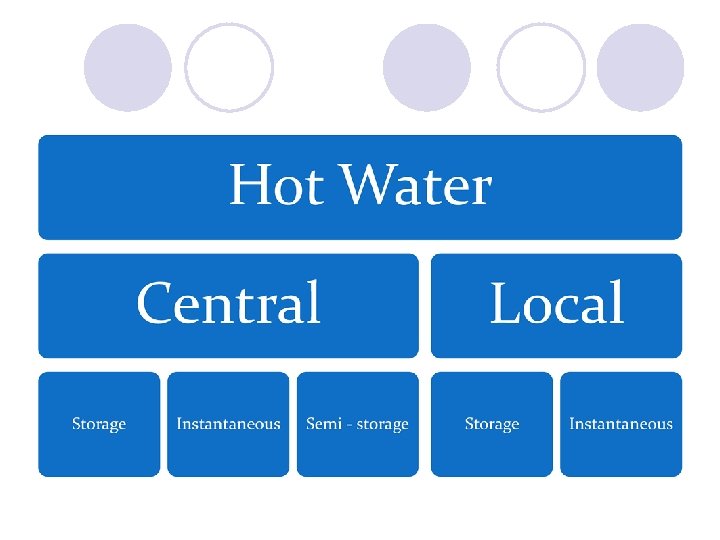
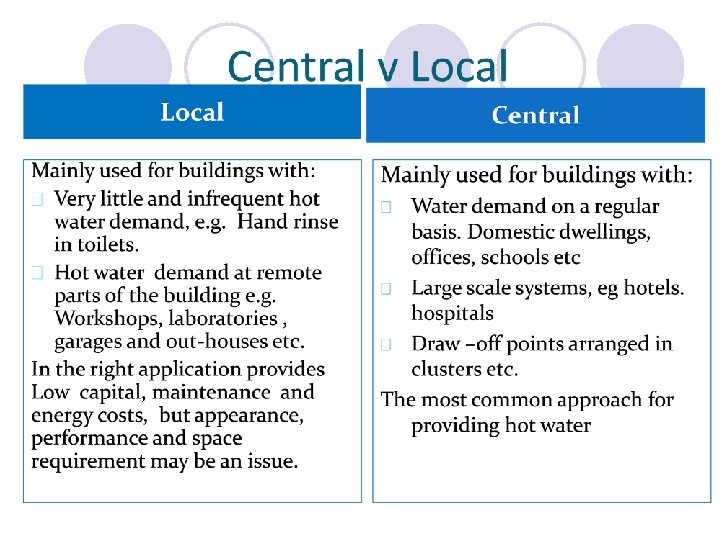
• Central: hot water is generated at a convenient point within the building and distributed via pipework to the draw off points. • Local: hot water is generated at or close to the point of consumption.
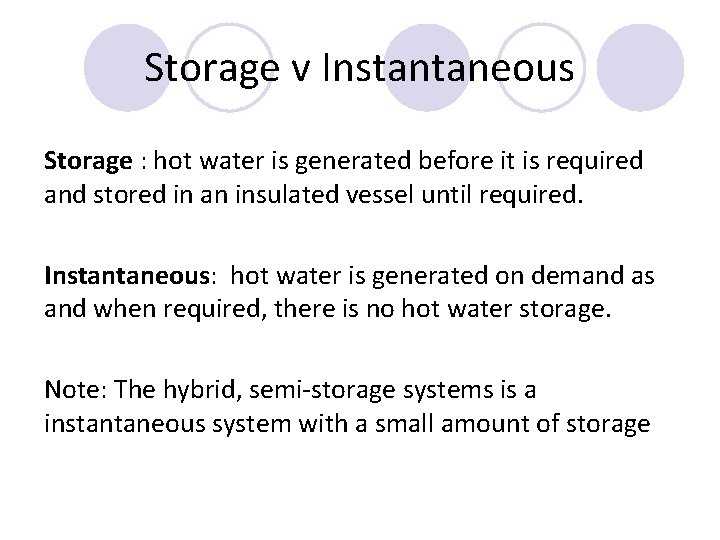
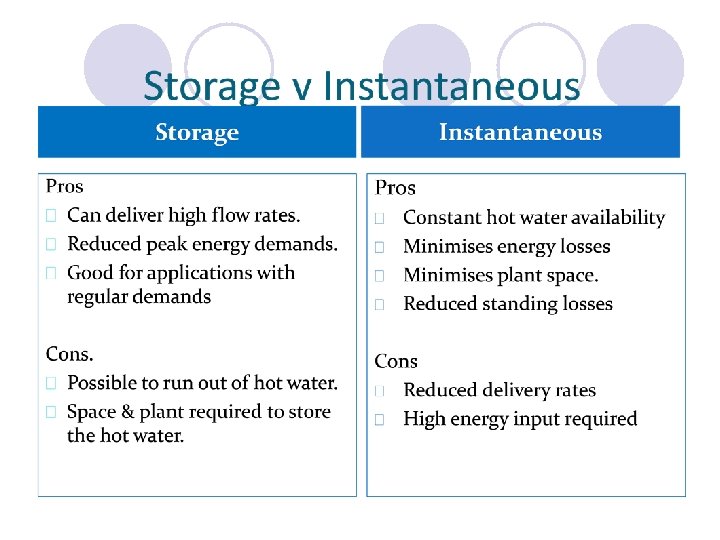
Storage v Instantaneous Storage : hot water is generated before it is required and stored in an insulated vessel until required. Instantaneous: hot water is generated on demand as and when required, there is no hot water storage. Note: The hybrid, semi-storage systems is a instantaneous system with a small amount of storage





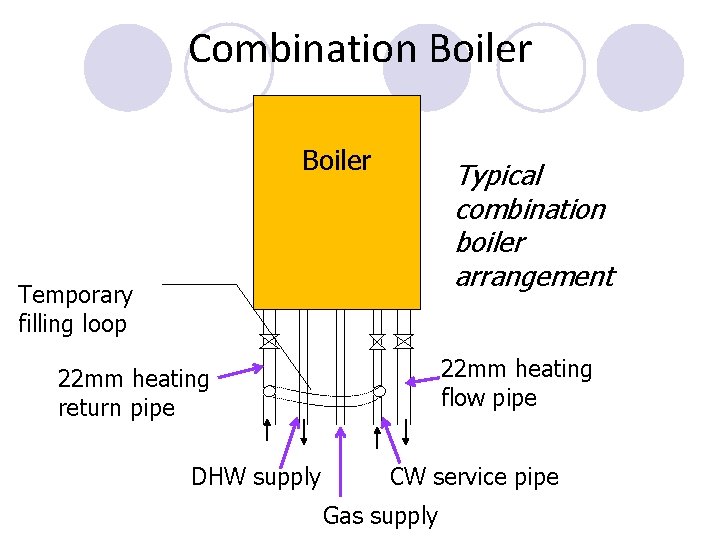
Combination Boiler Typical combination boiler arrangement Temporary filling loop 22 mm heating flow pipe 22 mm heating return pipe DHW supply CW service pipe Gas supply
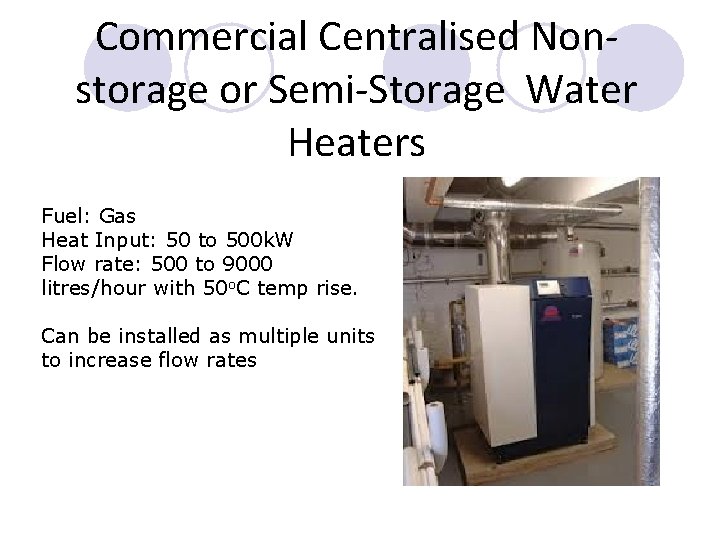
Commercial Centralised Nonstorage or Semi-Storage Water Heaters Fuel: Gas Heat Input: 50 to 500 k. W Flow rate: 500 to 9000 litres/hour with 50 o. C temp rise. Can be installed as multiple units to increase flow rates
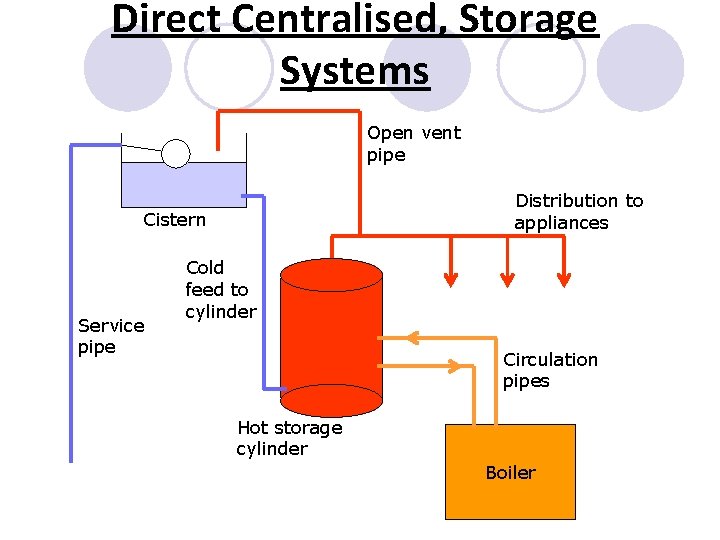
Direct Centralised, Storage Systems Open vent pipe Distribution to appliances Cistern Service pipe Cold feed to cylinder Circulation pipes Hot storage cylinder Boiler
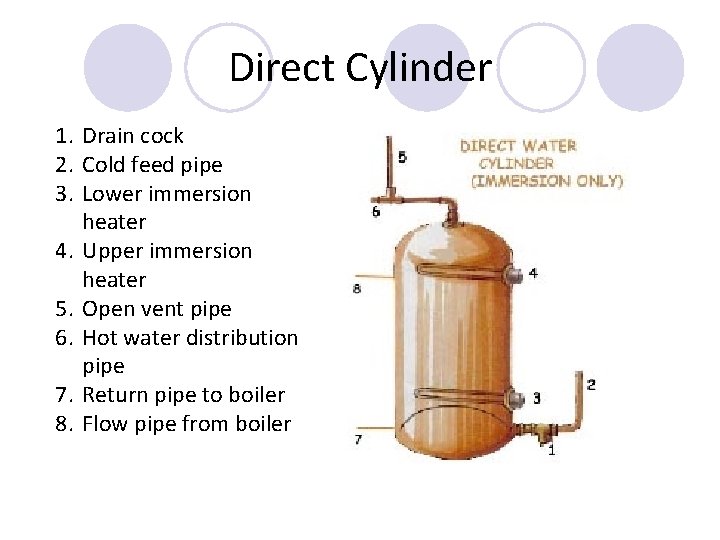
Direct Cylinder 1. Drain cock 2. Cold feed pipe 3. Lower immersion heater 4. Upper immersion heater 5. Open vent pipe 6. Hot water distribution pipe 7. Return pipe to boiler 8. Flow pipe from boiler
Direct System - Problems • Domestic hot water passes through boiler o Corrosion – dissimilar metals (copper cylinder and steel section boiler) o Furring – temporary hard water leaves deposits when water heated above 60 o. C o Cannot connect radiators to same system
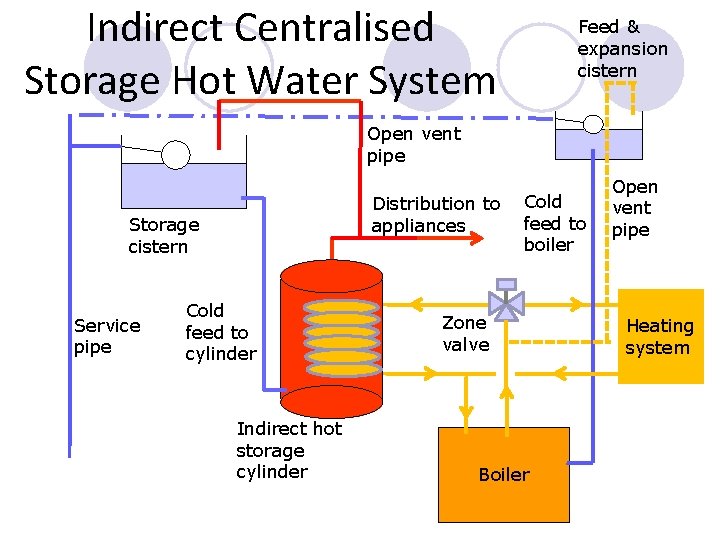
Indirect Centralised Storage Hot Water System Feed & expansion cistern Open vent pipe Distribution to appliances Storage cistern Service pipe Cold feed to cylinder Indirect hot storage cylinder Cold feed to boiler Zone valve Boiler Open vent pipe Heating system
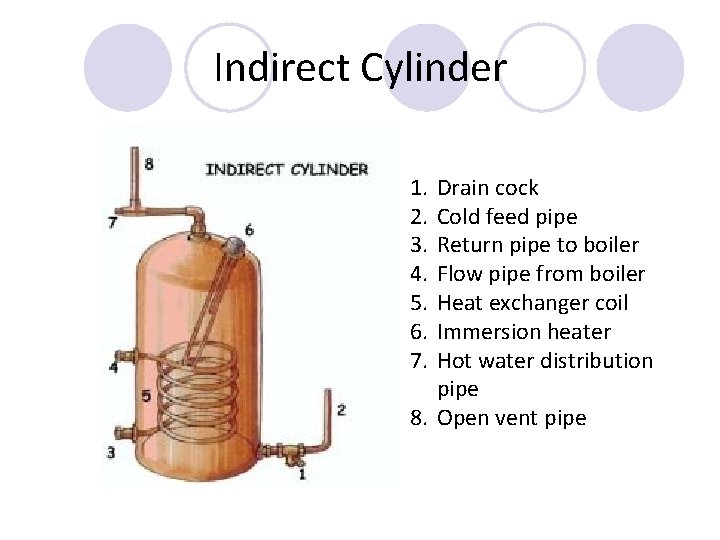
Indirect Cylinder 1. 2. 3. 4. 5. 6. 7. Drain cock Cold feed pipe Return pipe to boiler Flow pipe from boiler Heat exchanger coil Immersion heater Hot water distribution pipe 8. Open vent pipe



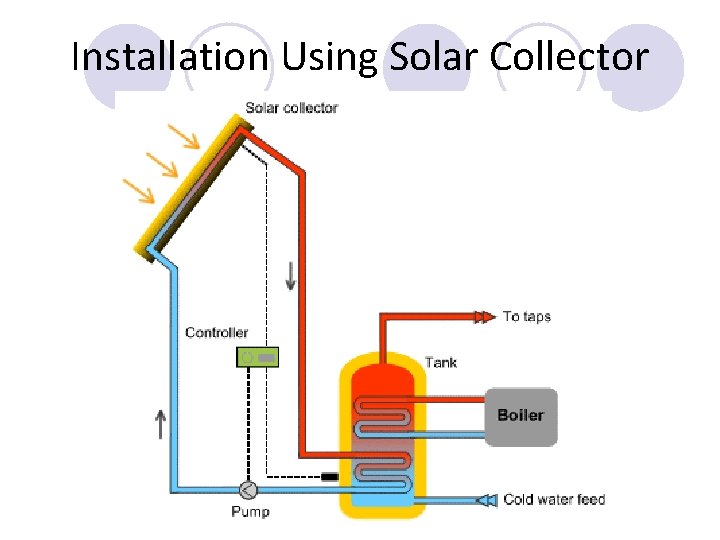
Installation Using Solar Collector



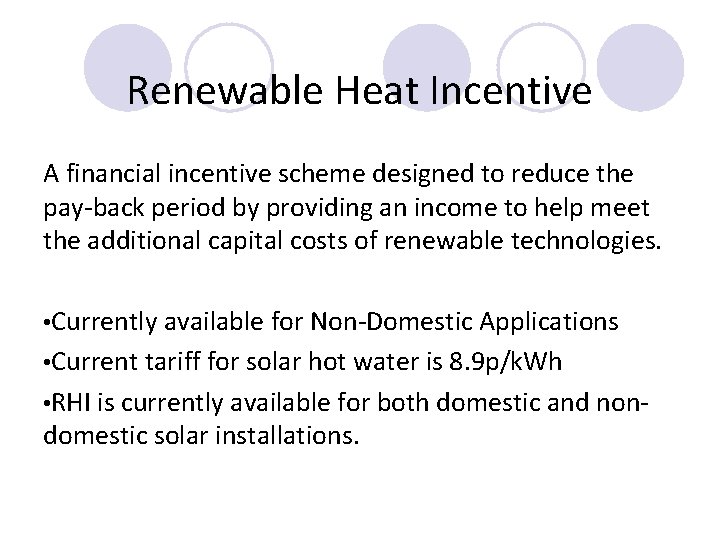
Renewable Heat Incentive A financial incentive scheme designed to reduce the pay-back period by providing an income to help meet the additional capital costs of renewable technologies. • Currently available for Non-Domestic Applications • Current tariff for solar hot water is 8. 9 p/k. Wh • RHI is currently available for both domestic and non- domestic solar installations.
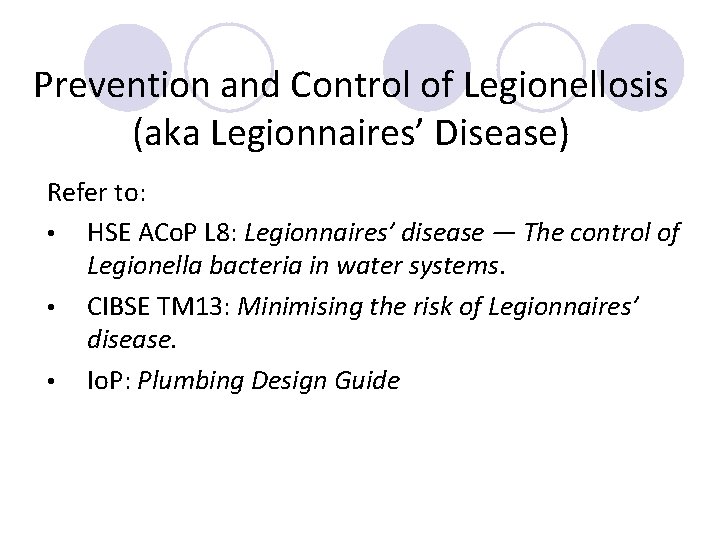
Prevention and Control of Legionellosis (aka Legionnaires’ Disease) Refer to: • HSE ACo. P L 8: Legionnaires’ disease — The control of Legionella bacteria in water systems. • CIBSE TM 13: Minimising the risk of Legionnaires’ disease. • Io. P: Plumbing Design Guide
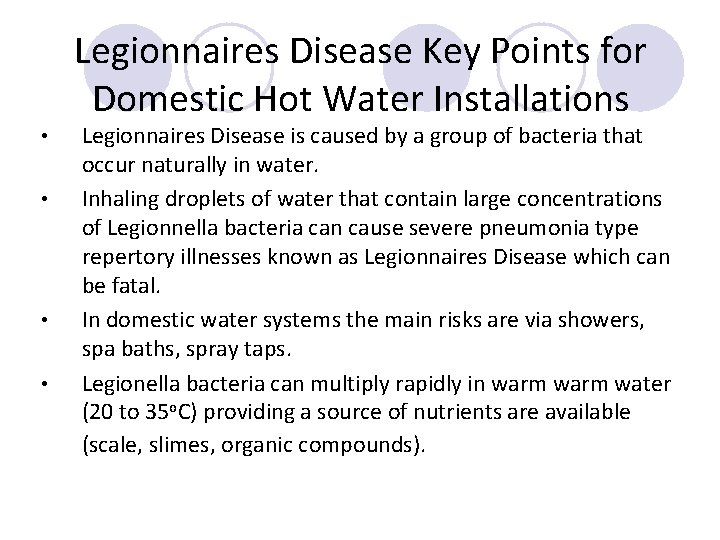
Legionnaires Disease Key Points for Domestic Hot Water Installations • • Legionnaires Disease is caused by a group of bacteria that occur naturally in water. Inhaling droplets of water that contain large concentrations of Legionnella bacteria can cause severe pneumonia type repertory illnesses known as Legionnaires Disease which can be fatal. In domestic water systems the main risks are via showers, spa baths, spray taps. Legionella bacteria can multiply rapidly in warm water (20 to 35 o. C) providing a source of nutrients are available (scale, slimes, organic compounds).
Legionnaires Disease (continued) • • The bacteria is dormant below 20 o. C and instantly killed at about 60 o. C. So keep cold water cold (less than 20 o. C) and hot water hot, (heated and stored at or above 60 o. C. ) Disinfect new installations. Keep systems clean Make sure all hot water has been heated to at least 60 o. C on a regular basis.
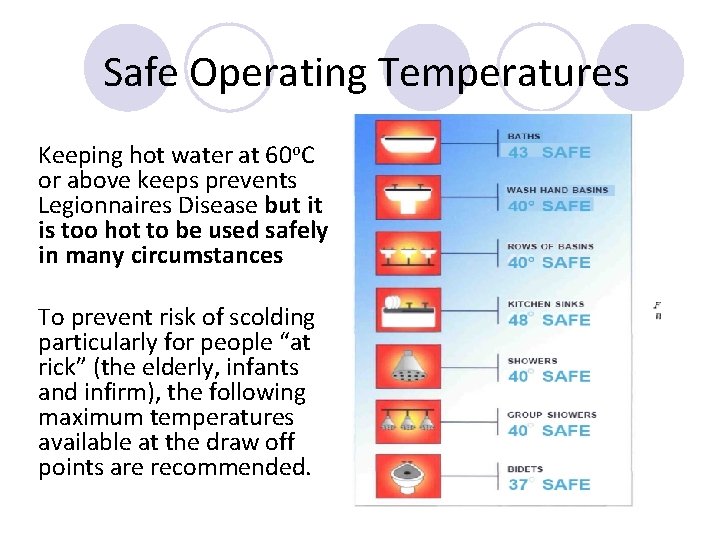
Safe Operating Temperatures Keeping hot water at 60 o. C or above keeps prevents Legionnaires Disease but it is too hot to be used safely in many circumstances To prevent risk of scolding particularly for people “at rick” (the elderly, infants and infirm), the following maximum temperatures available at the draw off points are recommended.
- Slides: 34