
5 TYPES OF CONFLICT STYLES CONFLICT The condition




- Slides: 41
5 TYPES OF CONFLICT STYLES
CONFLICT The condition in which two or more individual’s concerns appear to be incompatible
CONFLICT is a natural and healthy part of human personal and professional relationships.
CONFLICT is a natural and healthy part of human personal and professional relationships. CONFLICT becomes unhealthy when it is handled in an unproductive manner
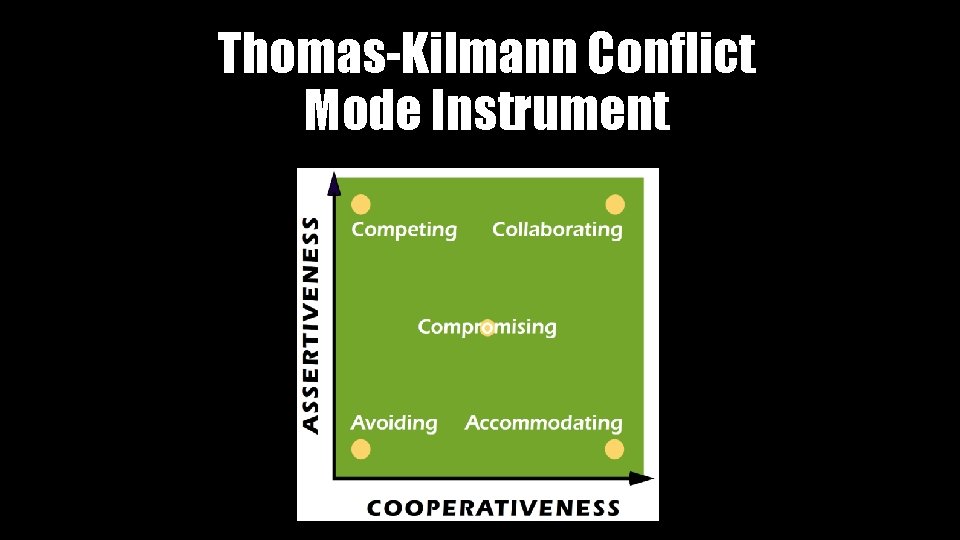
Thomas-Kilmann Conflict Mode Instrument
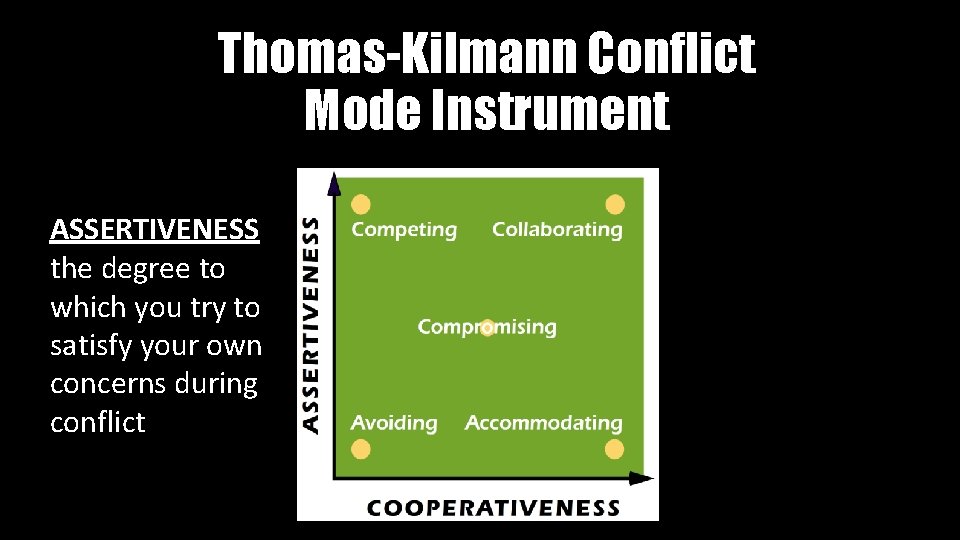
Thomas-Kilmann Conflict Mode Instrument ASSERTIVENESS the degree to which you try to satisfy your own concerns during conflict
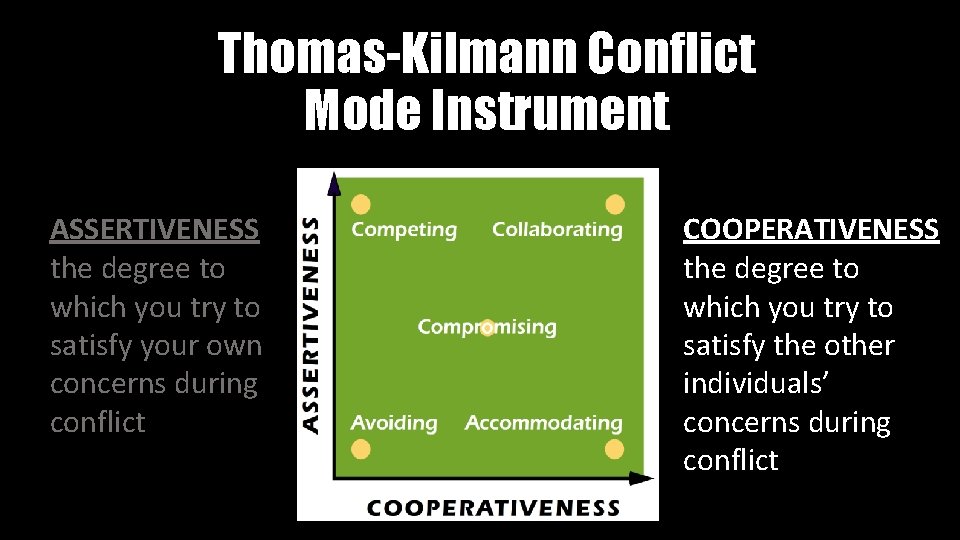
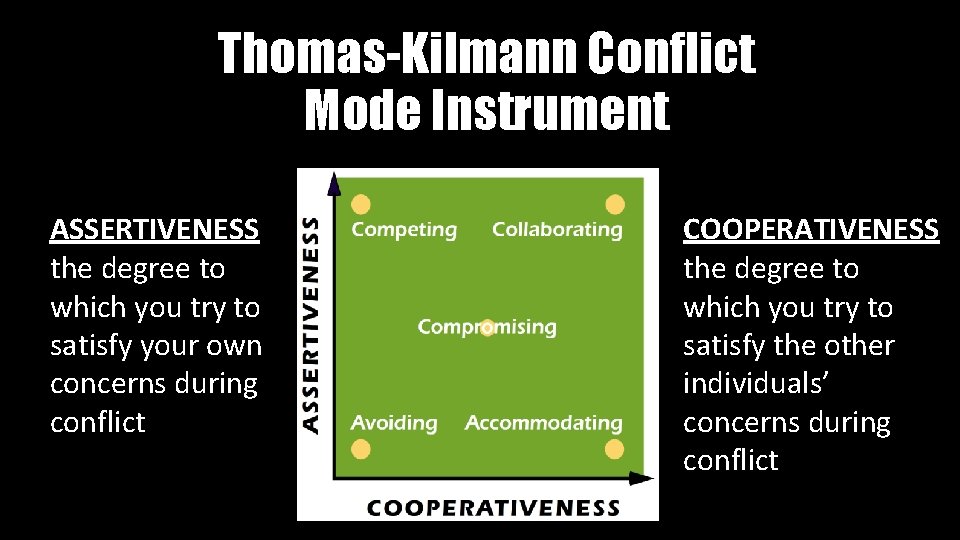
Thomas-Kilmann Conflict Mode Instrument ASSERTIVENESS the degree to which you try to satisfy your own concerns during conflict COOPERATIVENESS the degree to which you try to satisfy the other individuals’ concerns during conflict
Thomas-Kilmann Conflict Mode Instrument ASSERTIVENESS the degree to which you try to satisfy your own concerns during conflict COOPERATIVENESS the degree to which you try to satisfy the other individuals’ concerns during conflict
5 Types of Conflict Styles Competing Collaborating Compromising Avoiding Accommodating
COMPETING
COMPETING
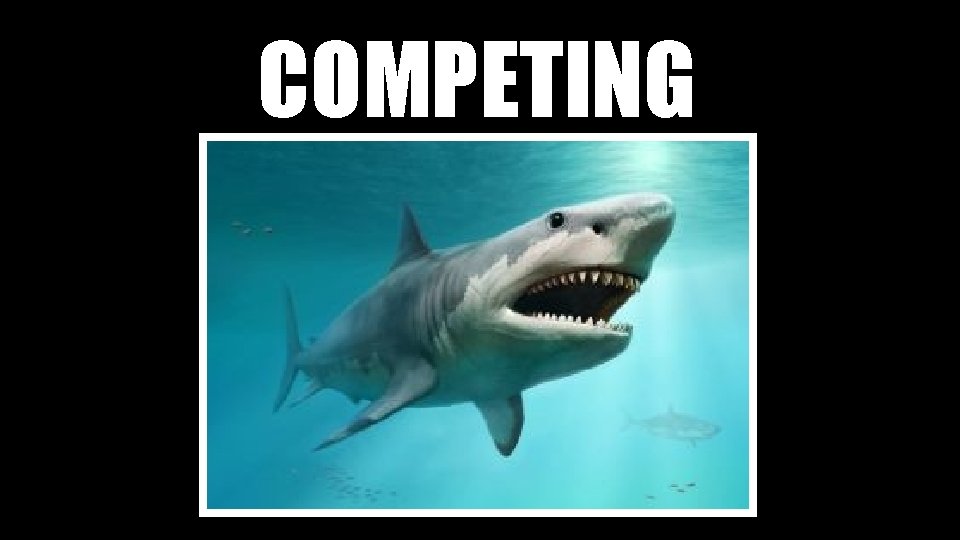
COMPETING “Might makes right” • Assertive & uncooperative, power-oriented mode to win his/her position • Standing up for your rights, defending a position you believe is correct, or simply trying to win
COMPETING • Benefits (USE VERY SPARINGLY!): • Required to make unpopular decisions (budget cuts or terminating employment) • Emergency situations (time is of the essence)
COMPETING • Benefits (USE VERY SPARINGLY!): • Required to make unpopular decisions (budget cuts or terminating employment) • Emergency situations (time is of the essence) • Costs: • Strained work relationships • Decreased initiative and motivation
COLLABORATING
COLLABORATING
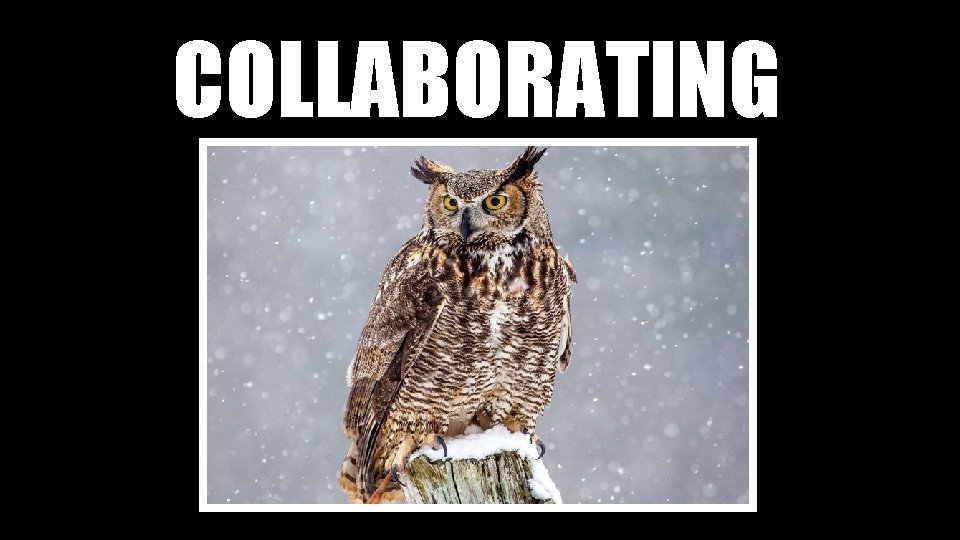
COLLABORATING “Two heads are better than one” • Works to find a solution that fully satisfies the concerns of both • Learns from the other’s insights and tries to find a creative solution
COLLABORATING • Benefits: • High-quality decisions • Learning and communication • Strengthens relationships
COLLABORATING • Benefits: • High-quality decisions • Learning and communication • Strengthens relationships • Costs: • Time and energy required • Psychological demands (open to new views)
COMPROMISING
COMPROMISING
COMPROMISING “Split the difference” • Find an expedient, mutually acceptable solution that partially satisfies both parties • Best suited for issues of intermediate importance
COMPROMISING • Benefits: • Speed and expediency • Fairness • Maintaining relationships – meeting halfway
COMPROMISING • Benefits: • Speed and expediency • Fairness • Maintaining relationships – meeting halfway • Costs: • Suboptimal decisions • Partially sacrificed concerns
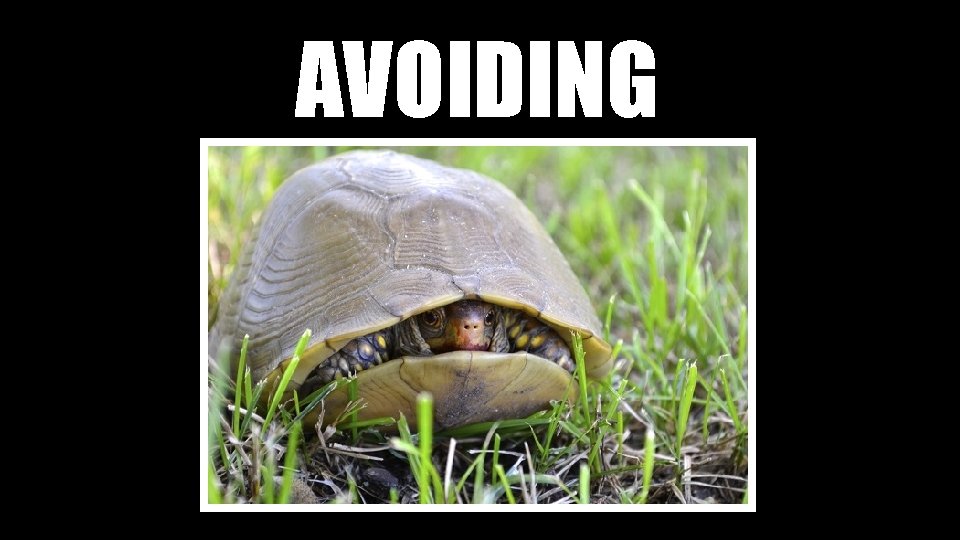
AVOIDING
AVOIDING
AVOIDING “Leave well enough alone” • Individual does not pursue his/her own concerns OR those of the other person • Does not address the conflict (sidestepping, postponing, withdrawing)
AVOIDING • Benefits: • Reducing stress (for the time being) • Steering clear of danger • Setting up more favorable conditions
AVOIDING • Benefits: • Reducing stress (for the time being) • Steering clear of danger • Setting up more favorable conditions • Costs: • Declining working relationships • Resentment, delays, and degrading decisions
ACCOMMODATING
ACCOMMODATING
ACCOMMODATING “Kill your enemies with kindness” • Individual neglects his/her concerns to satisfy the concerns of the other person • Self-sacrifice or yielding to another’s point of view
ACCOMMODATING • Benefits: • Restoring harmony & building relationships • Choosing a quick ending
ACCOMMODATING • Benefits: • Restoring harmony & building relationships • Choosing a quick ending • Costs: • Sacrificed concerns • Loss of respect • Loss of motivation
5 Types of Conflict Styles Each of us is capable of using all FIVE conflict styles. We use some better than others and therefore tend to rely on those styles.
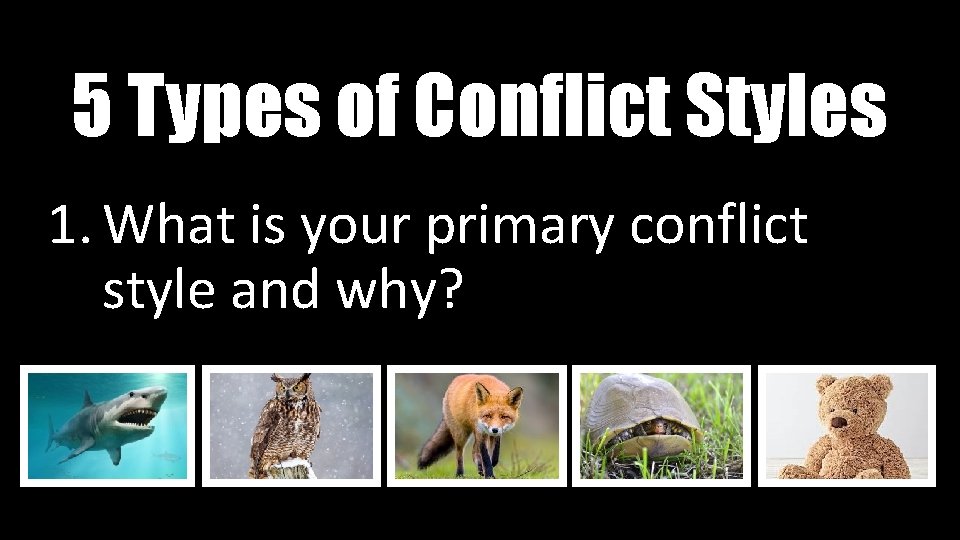
5 Types of Conflict Styles 1. What is your primary conflict style and why?
5 Types of Conflict Styles 1. What is your primary conflict style and why? 2. Which conflict style would you like to grow in? Why and how?
QUESTIONS?
Resources Chaplain Jonathan Alexander m: 202 -774 -8788 Jonathan. W. Alexander@ uscg. mil CG Support www. cgsuprt. com 855 -CG SUPRT Counseling Financial Health Legal Personal Growth