
5 TRANSDUCERS SIGNAL CONDITIONING 14 Marks INSTRUMENTATION SYSTEM
- Slides: 23
5. TRANSDUCERS & SIGNAL CONDITIONING 14 Marks
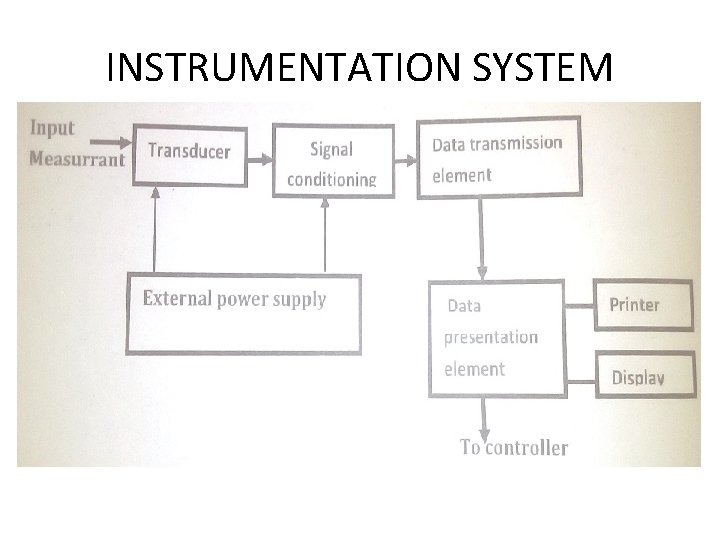
INSTRUMENTATION SYSTEM
TRANSDUCER • Definition: It is device which convert physical quantity which is to be measured in to an equivalent electrical signal (voltage or current). There are two types of transducers: 1) Active Transducer 2) Passive Transducer
Selection Criteria of Transducer • • • Linearity Accuracy Sensitivity Operating Range Minimum sensitivity Frequency responded
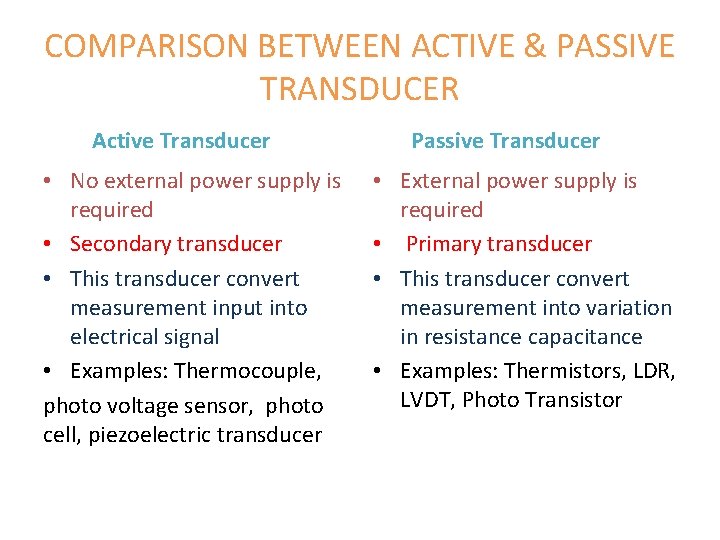
COMPARISON BETWEEN ACTIVE & PASSIVE TRANSDUCER Active Transducer • No external power supply is required • Secondary transducer • This transducer convert measurement input into electrical signal • Examples: Thermocouple, photo voltage sensor, photo cell, piezoelectric transducer Passive Transducer • External power supply is required • Primary transducer • This transducer convert measurement into variation in resistance capacitance • Examples: Thermistors, LDR, LVDT, Photo Transistor
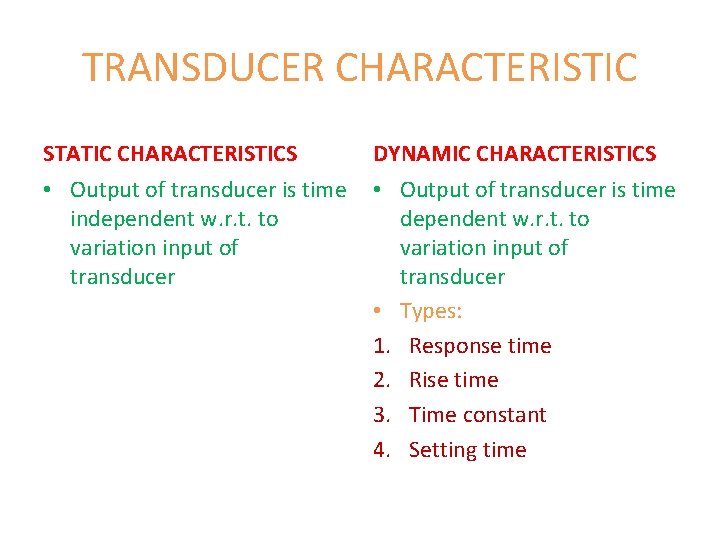
TRANSDUCER CHARACTERISTIC STATIC CHARACTERISTICS DYNAMIC CHARACTERISTICS • Output of transducer is time independent w. r. t. to variation input of transducer • Output of transducer is time dependent w. r. t. to variation input of transducer • Types: 1. Response time 2. Rise time 3. Time constant 4. Setting time
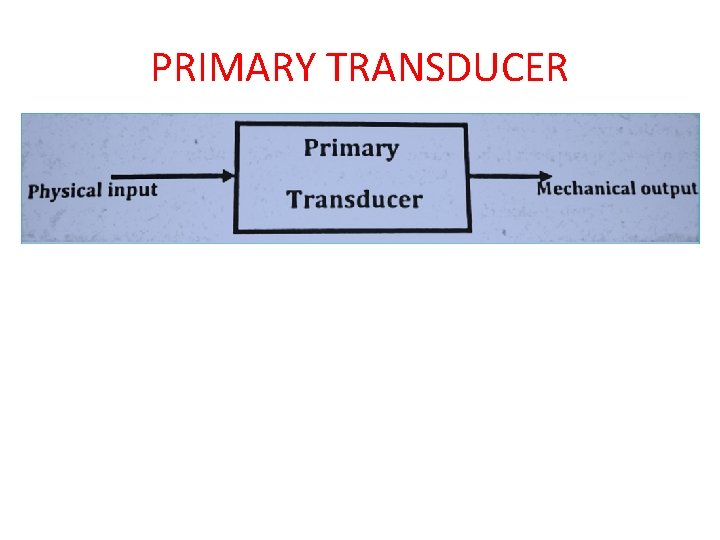
PRIMARY TRANSDUCER
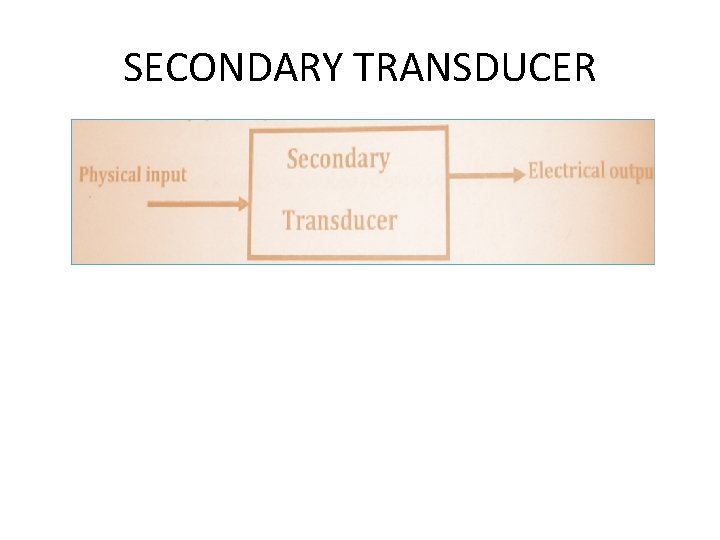
SECONDARY TRANSDUCER
ELECTRICAL TRANSDUCER • Definition: Transducer which convert physical quantity is to be measured in to electrical quantity. e. g. Thermistor : temperature to electrical LDR : light to electrical photo diode: light to electrical photo transistor: light to electrical
MECHANICAL TRANSDUCER • Definition: Transducer which convert physical quantity is to be measured in to mechanical quantity such as pressure, displacement etc. e. g. Diaphragms: pressure to displacement Bellows: pressure to displacement Bourdon tube: pressure to displacement Capsule: pressure to displacement
OPTICAL SENSOR • Definition: Transducer which convert physical quantity is to be measured in to proportional optical quantity. e. g. LED : electrical to optical LDR : electrical to optical photo diode: electrical to optical photo transistor: electrical to optical
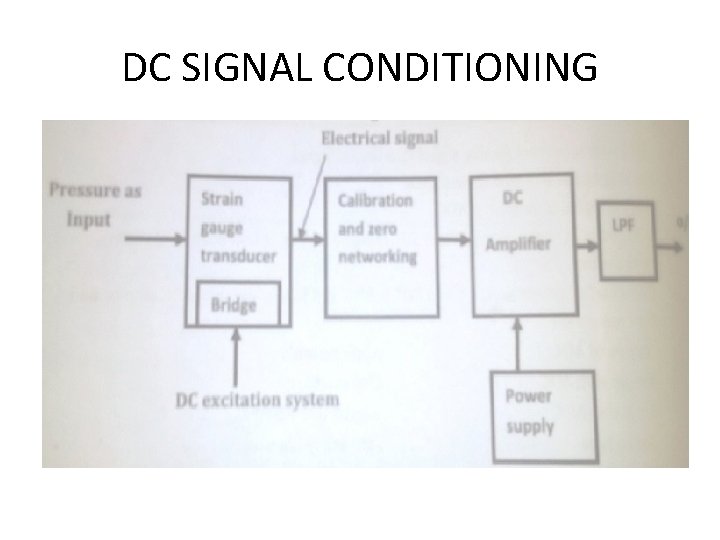
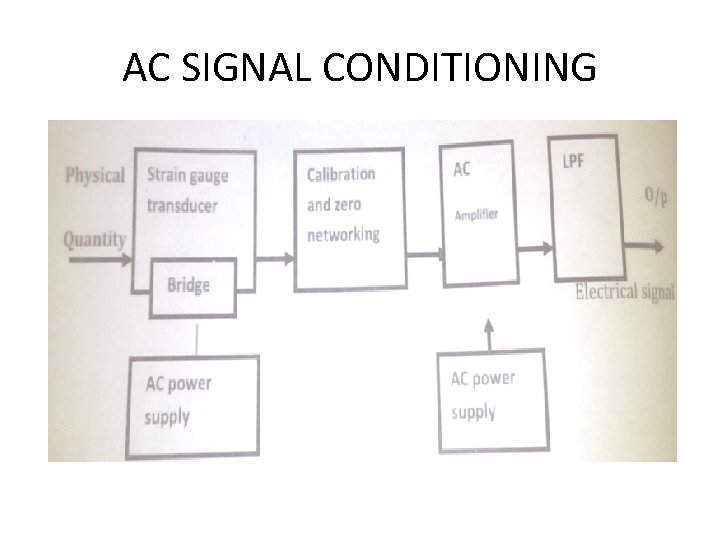
SIGNAL CONDITIONING • Signal Conditioner makes transducer output suitable or compatible for next stage. Using following functions: 1. Amplification 2. modulation 3. Filtering 4. ADC 5. Attenuation 6. Adding subtraction
TYPES OF SIGNAL CONDITIONING 1. DC Signal conditioning 2. AC Signal conditioning
DC SIGNAL CONDITIONING
AC SIGNAL CONDITIONING
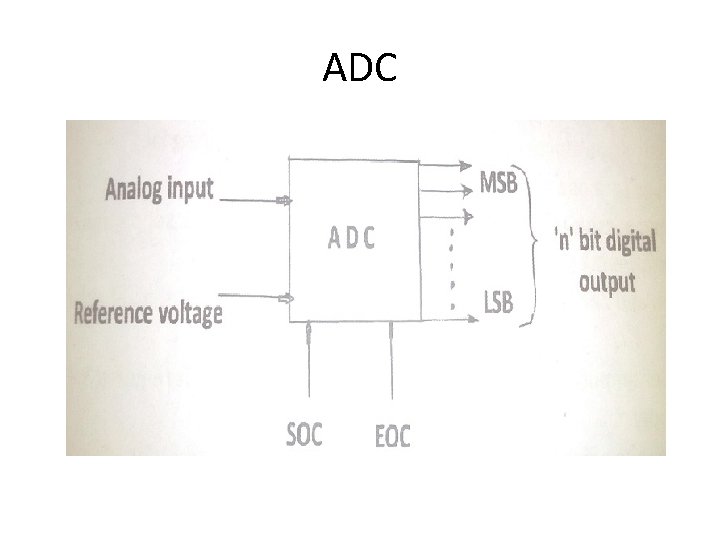
ADC
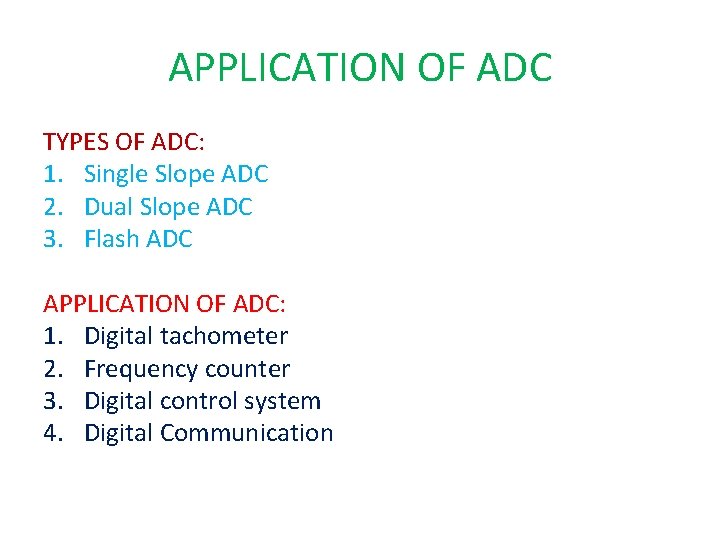
APPLICATION OF ADC TYPES OF ADC: 1. Single Slope ADC 2. Dual Slope ADC 3. Flash ADC APPLICATION OF ADC: 1. Digital tachometer 2. Frequency counter 3. Digital control system 4. Digital Communication
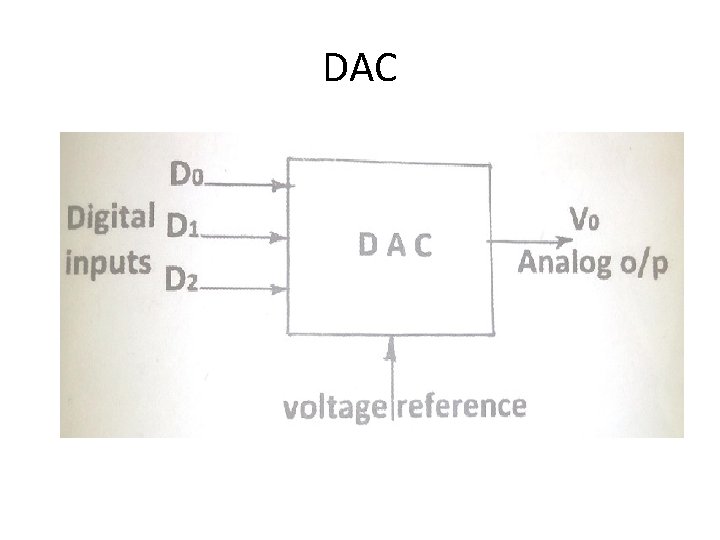
DAC
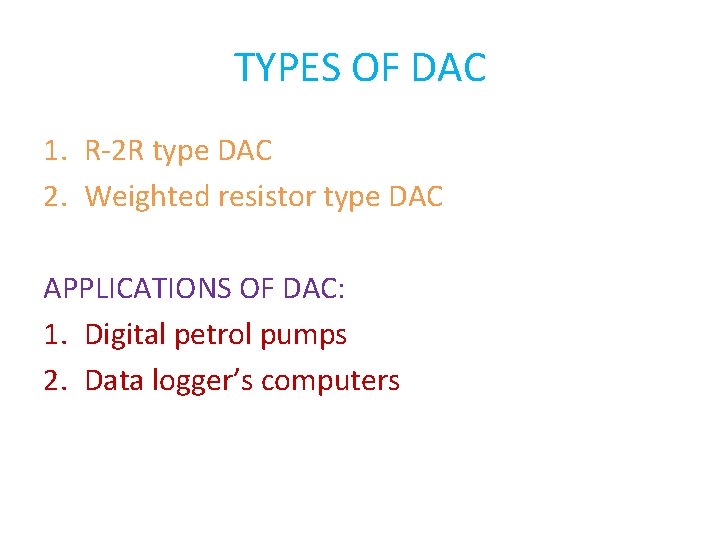
TYPES OF DAC 1. R-2 R type DAC 2. Weighted resistor type DAC APPLICATIONS OF DAC: 1. Digital petrol pumps 2. Data logger’s computers
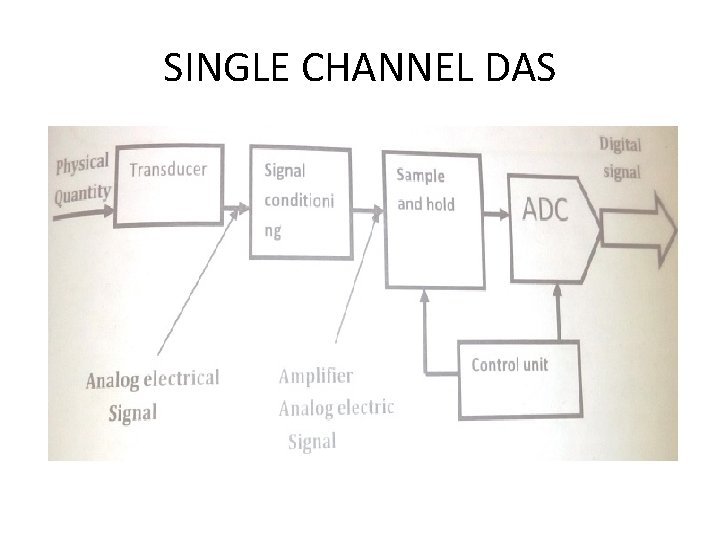
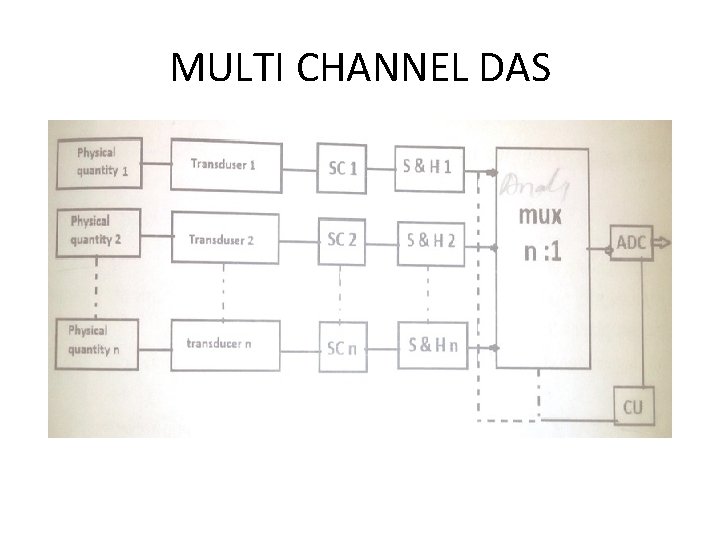
DAS It is the process of measuring an electrical or physical phenomenon such as voltage, current, temperature, pressure & sound with a computer DAS consist of : sensors, measurement hardware & computer with software.
SINGLE CHANNEL DAS
MULTI CHANNEL DAS
DATA LOGGER • It is application of DAS • Data loggers measured the data & record it very quickly with elimination of errors. Applications: Railway Signaling System Automatic vehicle control system Black box of aero plane