
5 to 1 Gottman Observing a Couple in
5 to 1 Gottman
Observing a Couple in Conflict: Signs that the Relationship Won’t Last • Harsh Startup • Four Horsemen – – Criticism Contempt Defensiveness Stonewalling • Flooding • Body Language – Experiencing stress (heart rate, sweating) • Failed Repair Attempts • Bad Memories

Four Horsemen https: //www. youtube. com/watch? v=1 o 30 Ps-_8 is#t=20

Emotionally Intelligent Relationships • • Enhance Your Love Maps Nurture Your Fondness and Admiration Turn toward Each Other Instead of Away Let Your Partner Influence You Solve Your Problems Overcome Gridlock (Honoring our Dreams) Create Shared Meaning
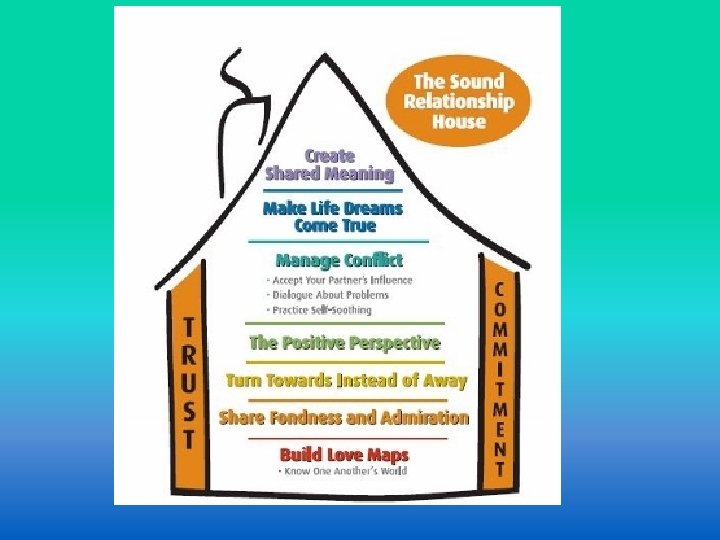
The Gottman Method for Healthy Relationships: 1. Build Love Maps: How well do you know your partner’s inner psychological world, his or her history, worries, stresses, joys, and hopes? 2. Share Fondness and Admiration: The antidote for contempt, this level focuses on the amount of affection and respect within a relationship. (To strengthen fondness and admiration, express appreciation and respect. ) 3. Turn Towards: State your needs, be aware of bids for connection and respond to (turn towards) them. The small moments of everyday life are actually the building blocks of relationship. 4. The Positive Perspective: The presence of a positive approach to problemsolving and the success of repair attempts. 5. Manage Conflict: We say “manage” conflict rather than “resolve” conflict, because relationship conflict is natural and has functional, positive aspects. Understand that there is a critical difference in handling perpetual problems and solvable problems.
Gottman Method 6. Make Life Dreams Come True: Create an atmosphere that encourages each person to talk honestly about his or her hopes, values, convictions and aspirations. 7. Create Shared Meaning: Understand important visions, narratives, myths, and metaphors about your relationship. 8. Trust: this is the state that occurs when a person knows that his or her partner acts and thinks to maximize that person’s best interests and benefits, not just the partner’s own interests and benefits. In other words, this means, “my partner has my back and is there for me. ” 9. Commitment: This means believing (and acting on the belief) that your relationship with this person is completely your lifelong journey, for better or for worse (meaning that if it gets worse you will both work to improve it). It implies cherishing your partner’s positive qualities and nurturing gratitude by comparing the partner favorably with real or imagined others, rather than trashing the partner by magnifying negative qualities, and nurturing resentment by comparing unfavorably with real or imagined others.
- Slides: 8