
5 The structure of matter Only 4 basic
5. The structure of matter • Only 4 basic interactions! • Gravity: between objects of mass • Electromagnetic: ”everyting” else! • Weak (nuclear): beta decay, neutrinos and other slow magic stuff • Strong (nuclear): keeps the nucleus together https: //youtu. be/DZGINa. RUEk. U
• The standard model: • 6 quarks • 6 leptons • 1 -8 exchange particles for each basic interaction • The Higgs to give the others mass
Standard model Quarks Leptons
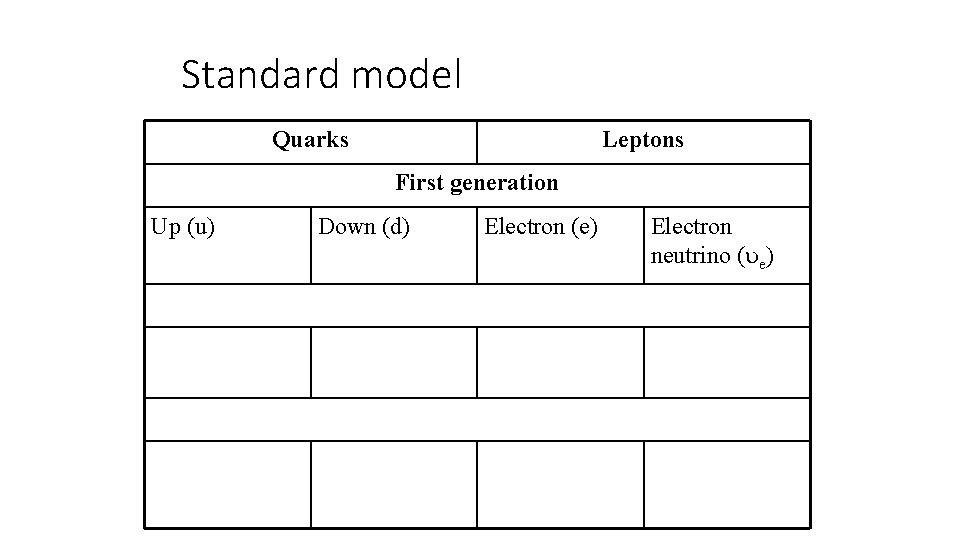
Standard model Quarks Leptons First generation Up (u) Down (d) Electron (e) Electron neutrino ( e)
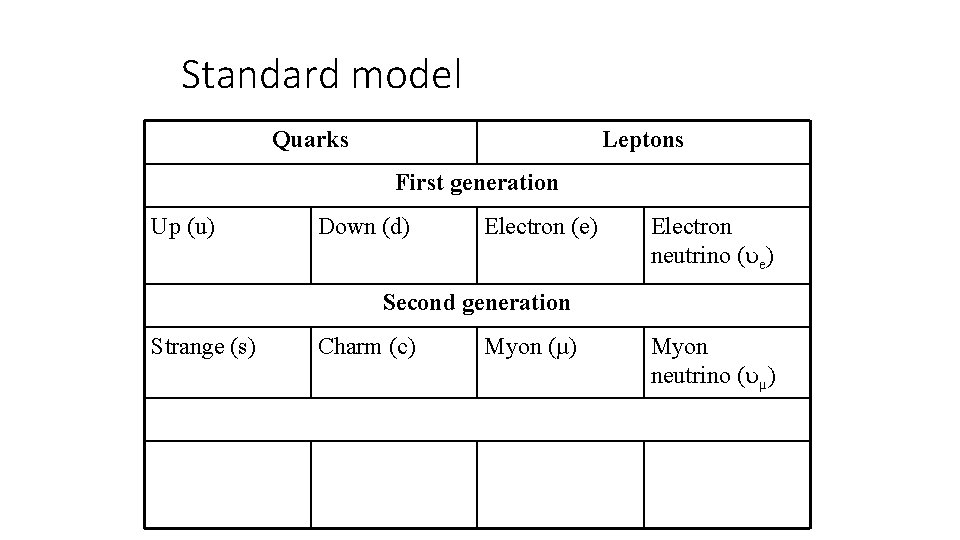
Standard model Quarks Leptons First generation Up (u) Down (d) Electron (e) Electron neutrino ( e) Second generation Strange (s) Charm (c) Myon (µ) Myon neutrino ( µ)
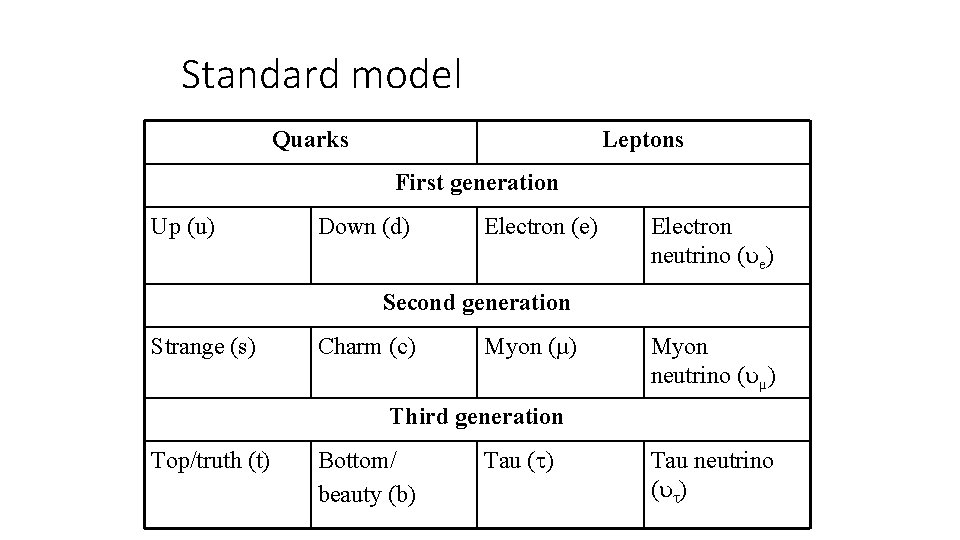
Standard model Quarks Leptons First generation Up (u) Down (d) Electron (e) Electron neutrino ( e) Second generation Strange (s) Charm (c) Myon (µ) Myon neutrino ( µ) Third generation Top/truth (t) Bottom/ beauty (b) Tau ( ) Tau neutrino ( )
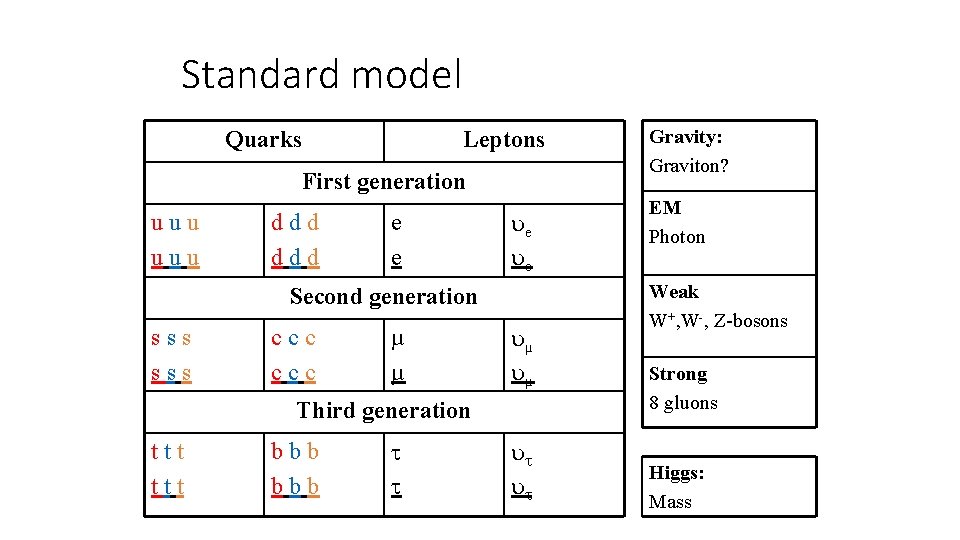
Standard model Quarks Leptons First generation uuu ddd e e Second generation sss ccc µ µ Third generation ttt bbb Gravity: Graviton? EM Photon Weak W+, W-, Z-bosons Strong 8 gluons Higgs: Mass
• Atomic models: Electron discovered 1897 by J. J. Thomson model (”plum pudding”), positive sphere containing electrons Nucleus discovered 1911 by E. Rutherford model (”planetary”), small positive nucleus orbited by electrons (physically impossible!) • Bohr model 1913, electrons in certain orbits (physically impossible, but works for H!) • Heisenberg/Schrödinger model 1926 (”electron cloud”), quantum mechanical probabilities • Neutron discovered 1932 by J. Chadwick. Now all 3000 isotopes could be constructed using p, n, e. Simple and beatiful! • • https: //youtu. be/thn. Dx. Fdkz. Zs
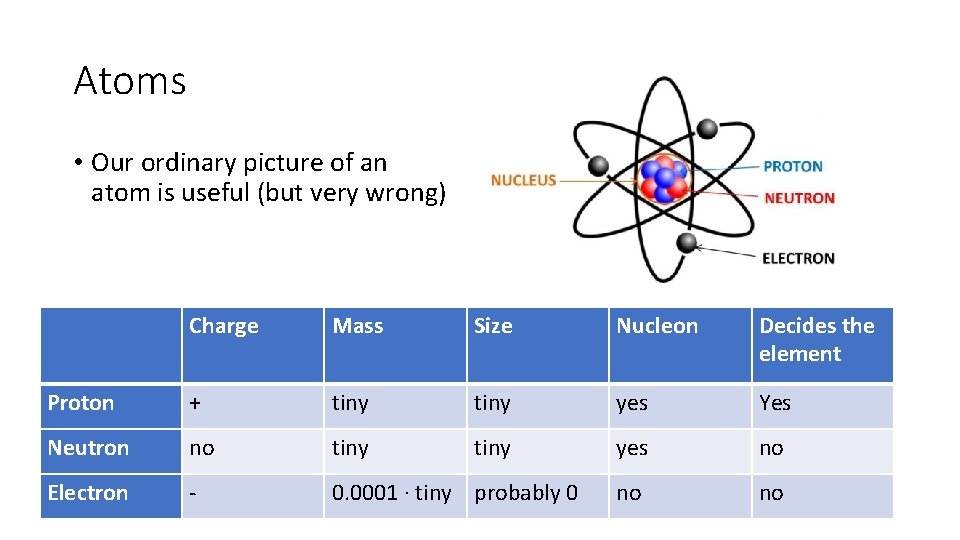
Atoms • Our ordinary picture of an atom is useful (but very wrong) Charge Mass Size Nucleon Decides the element Proton + tiny yes Yes Neutron no tiny yes no Electron - 0. 0001 ∙ tiny probably 0 no no
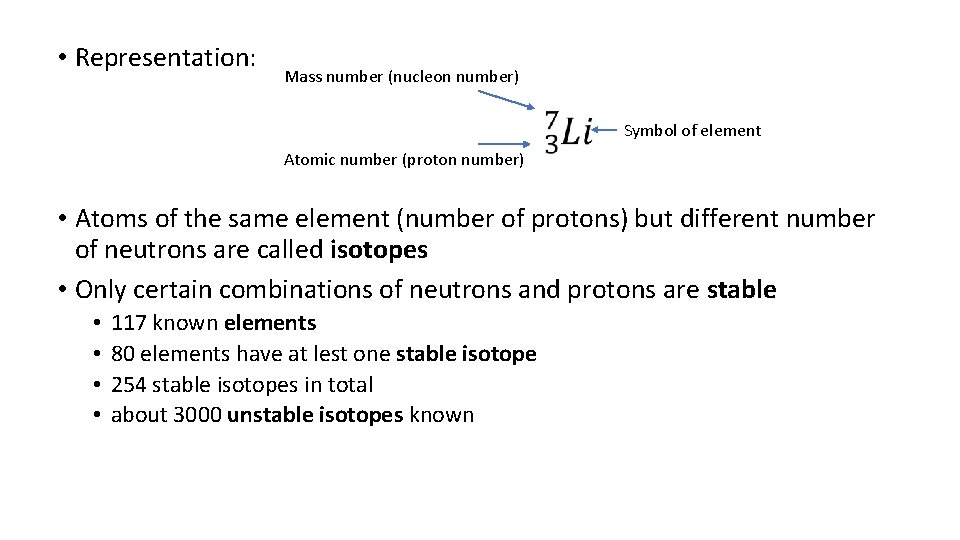
• Representation: Mass number (nucleon number) Symbol of element Atomic number (proton number) • Atoms of the same element (number of protons) but different number of neutrons are called isotopes • Only certain combinations of neutrons and protons are stable • • 117 known elements 80 elements have at lest one stable isotope 254 stable isotopes in total about 3000 unstable isotopes known
• Using phet build an atom • Build a stable neutral atom with 4 protons • Build a stable neutral atom with 6 neutrons • Build an ion with 6 electrons • Find 2 elements with 3 stable isotopes
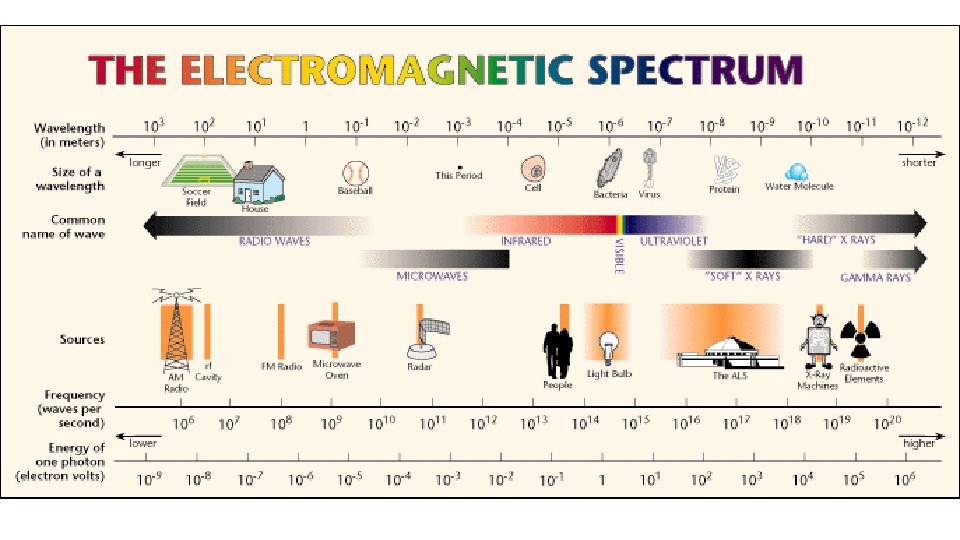
Radiation • Electromagnetic radiation: a wave phenomenon with different properties (and names) depending on the wavelenght • • Radio waves Microwaves Infrared radiation Visible light Ultraviolet light, UV (often divided into UVA, UVB, UVC) X-rays Gamma rays • Particle radiation: particles at high speed
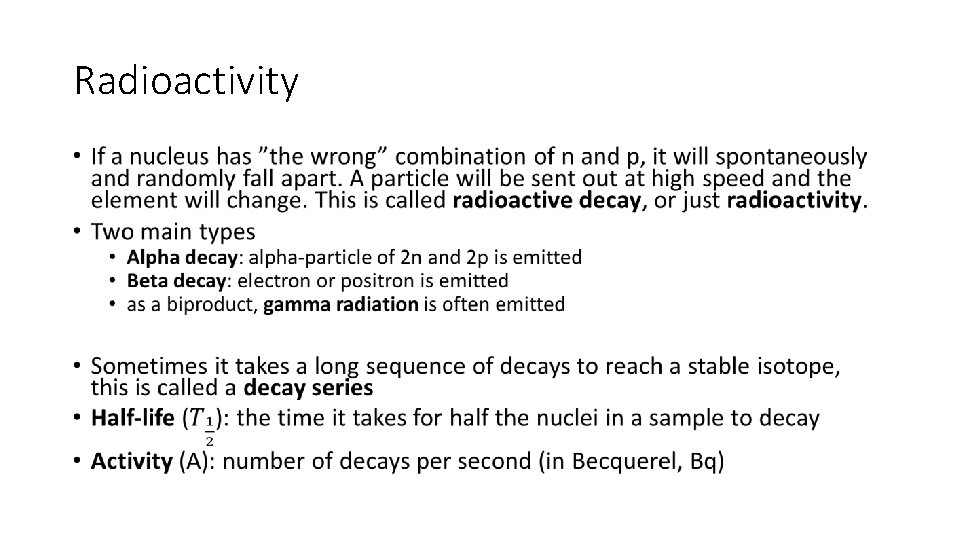
Radioactivity •
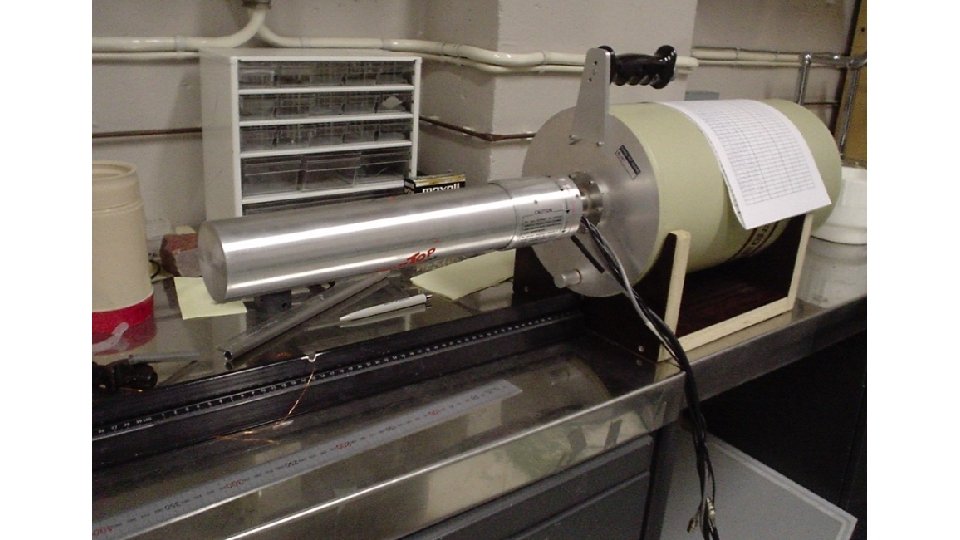
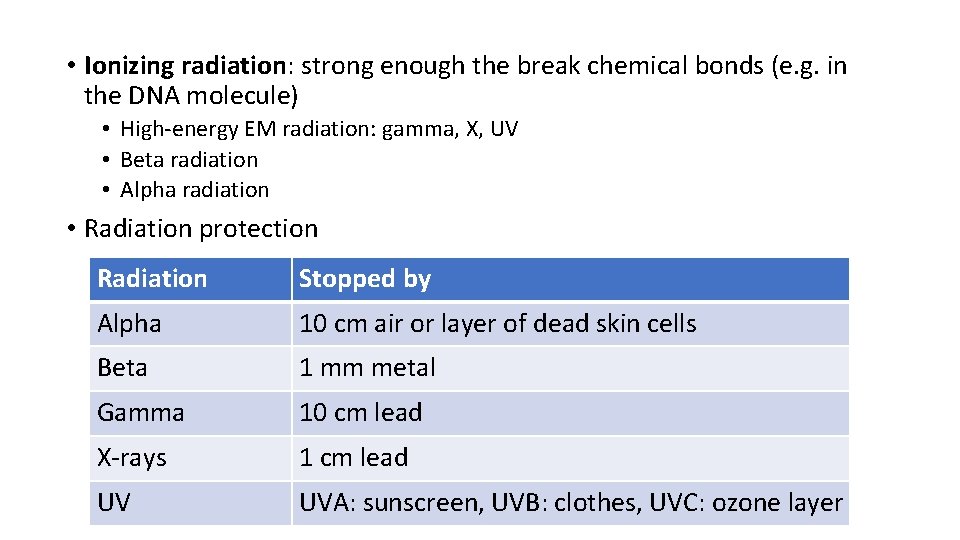
• Ionizing radiation: strong enough the break chemical bonds (e. g. in the DNA molecule) • High-energy EM radiation: gamma, X, UV • Beta radiation • Alpha radiation • Radiation protection Radiation Stopped by Alpha 10 cm air or layer of dead skin cells Beta 1 mm metal Gamma 10 cm lead X-rays 1 cm lead UV UVA: sunscreen, UVB: clothes, UVC: ozone layer
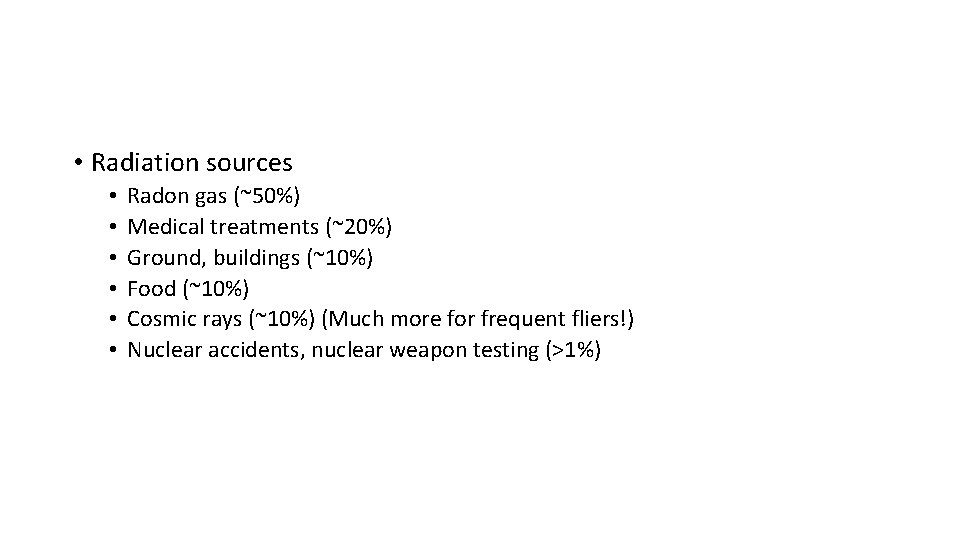
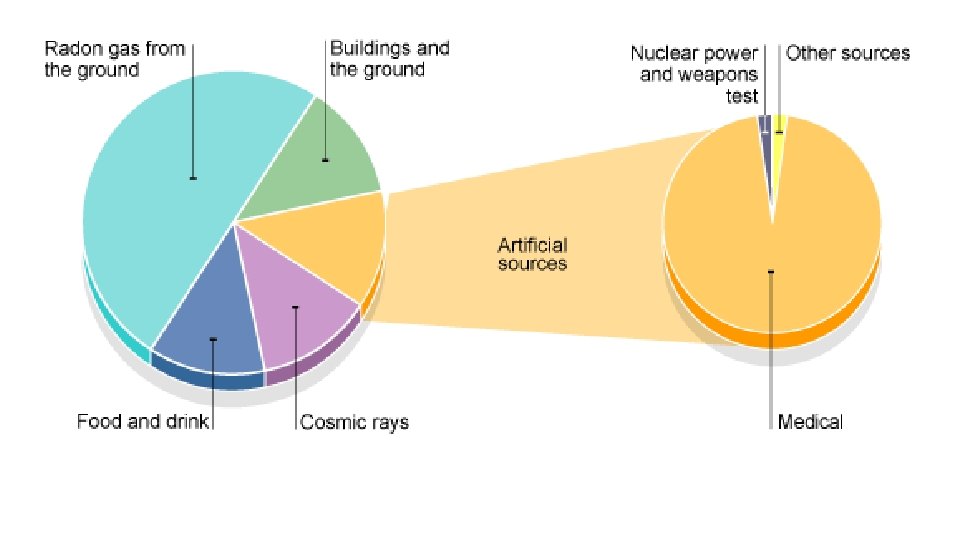
• Radiation sources • • • Radon gas (~50%) Medical treatments (~20%) Ground, buildings (~10%) Food (~10%) Cosmic rays (~10%) (Much more for frequent fliers!) Nuclear accidents, nuclear weapon testing (>1%)
- Slides: 19