
5 The Skeletal System PART A Power Point
- Slides: 25
5 The Skeletal System PART A Power. Point® Lecture Slide Presentation by Jerry L. Cook, Sam Houston University ESSENTIALS OF HUMAN ANATOMY & PHYSIOLOGY EIGHTH EDITION ELAINE N. MARIEB Copyright © 2006 Pearson Education, Inc. , publishing as Benjamin Cummings
The Skeletal System § Parts of the skeletal system § Bones (skeleton) § Joints § Cartilages § Ligaments § Divided into two divisions § Axial skeleton § Appendicular skeleton Copyright © 2006 Pearson Education, Inc. , publishing as Benjamin Cummings
Functions of Bones § Support of the body § Protection of soft organs § Movement due to attached skeletal muscles § Storage of minerals and fats § Blood cell formation Copyright © 2006 Pearson Education, Inc. , publishing as Benjamin Cummings
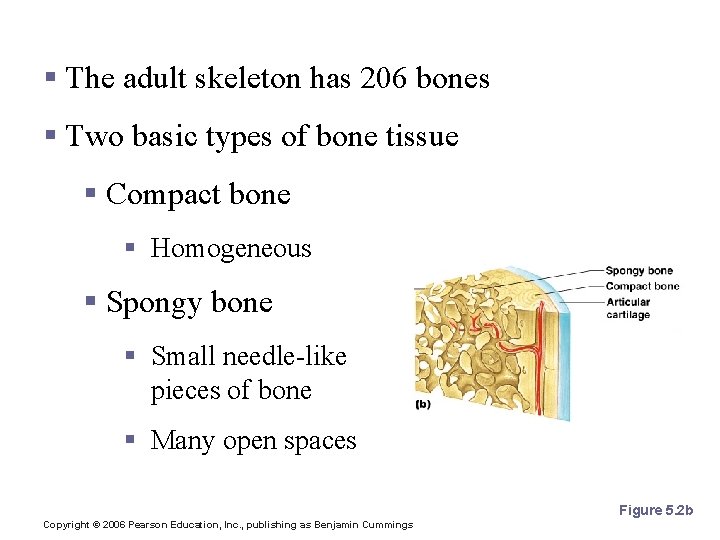
Bones of the Human Body § The adult skeleton has 206 bones § Two basic types of bone tissue § Compact bone § Homogeneous § Spongy bone § Small needle-like pieces of bone § Many open spaces Figure 5. 2 b Copyright © 2006 Pearson Education, Inc. , publishing as Benjamin Cummings
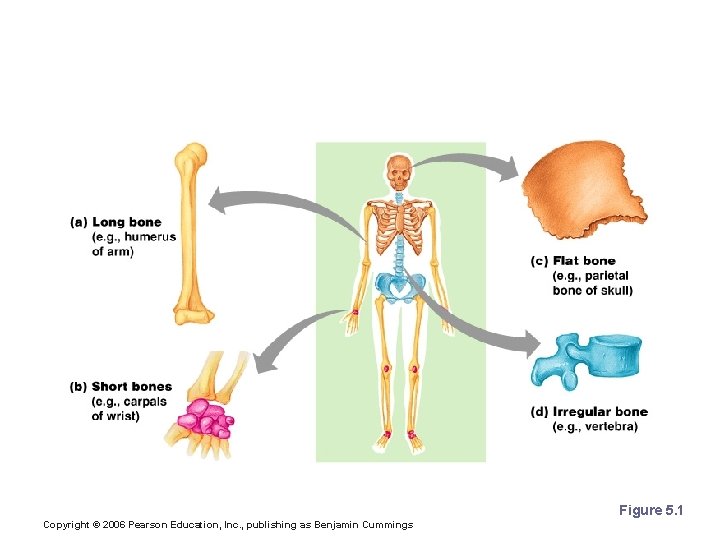
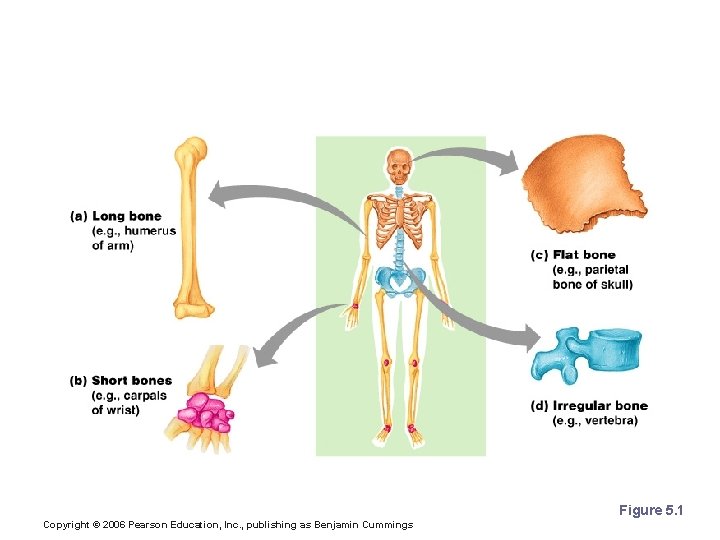
Classification of Bones on the Basis of Shape Figure 5. 1 Copyright © 2006 Pearson Education, Inc. , publishing as Benjamin Cummings
Classification of Bones § Long bones § Typically longer than wide § Have a shaft with heads at both ends § Contain mostly compact bone § Examples: Femur, humerus Copyright © 2006 Pearson Education, Inc. , publishing as Benjamin Cummings
Classification of Bones § Short bones § Generally cube-shape § Contain mostly spongy bone § Examples: Carpals, tarsals Copyright © 2006 Pearson Education, Inc. , publishing as Benjamin Cummings
Classification of Bones § Flat bones § Thin and flattened § Usually curved § Thin layers of compact bone around a layer of spongy bone § Examples: Skull, ribs, sternum Copyright © 2006 Pearson Education, Inc. , publishing as Benjamin Cummings
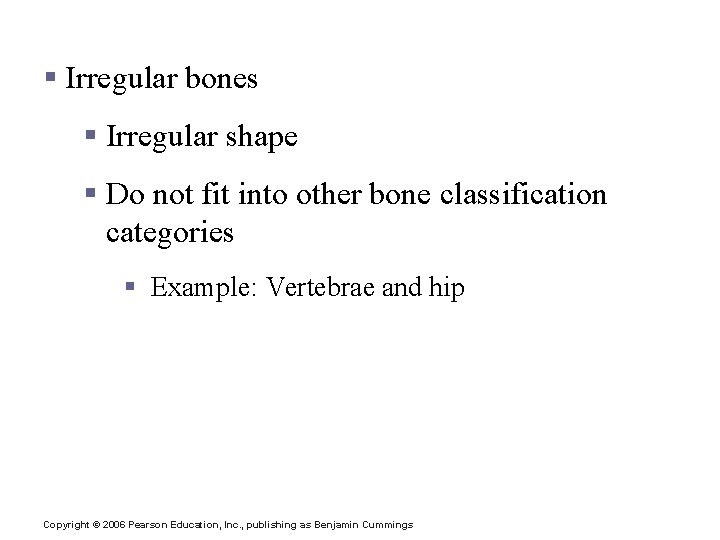
Classification of Bones § Irregular bones § Irregular shape § Do not fit into other bone classification categories § Example: Vertebrae and hip Copyright © 2006 Pearson Education, Inc. , publishing as Benjamin Cummings
Classification of Bones on the Basis of Shape Figure 5. 1 Copyright © 2006 Pearson Education, Inc. , publishing as Benjamin Cummings
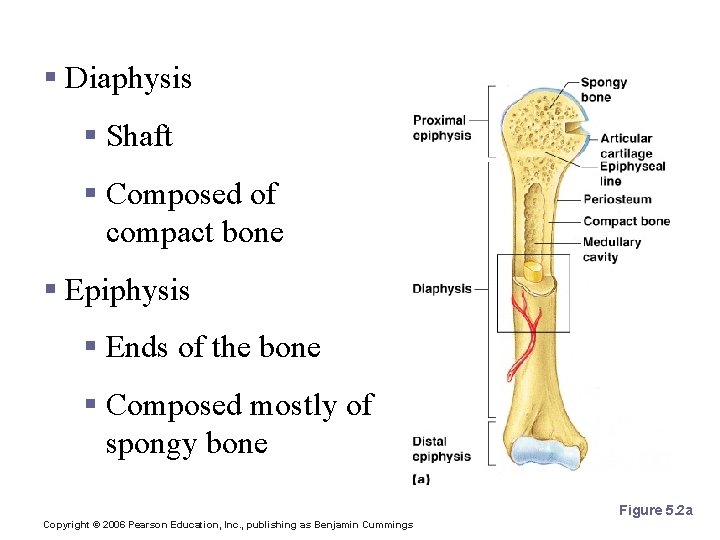
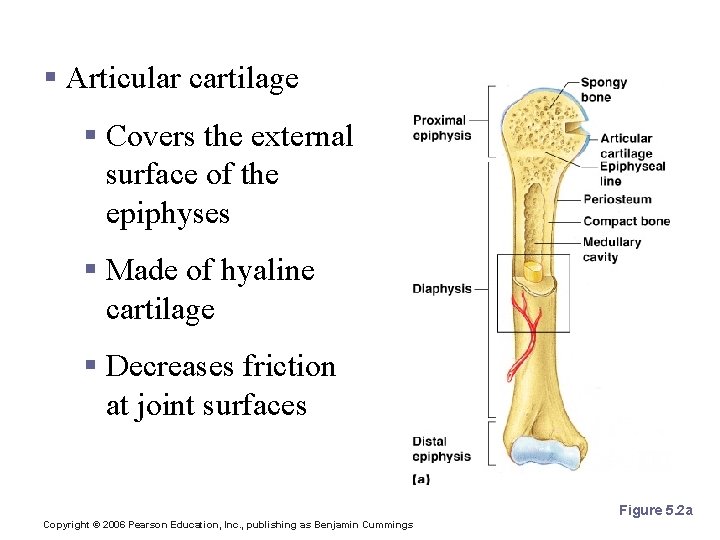
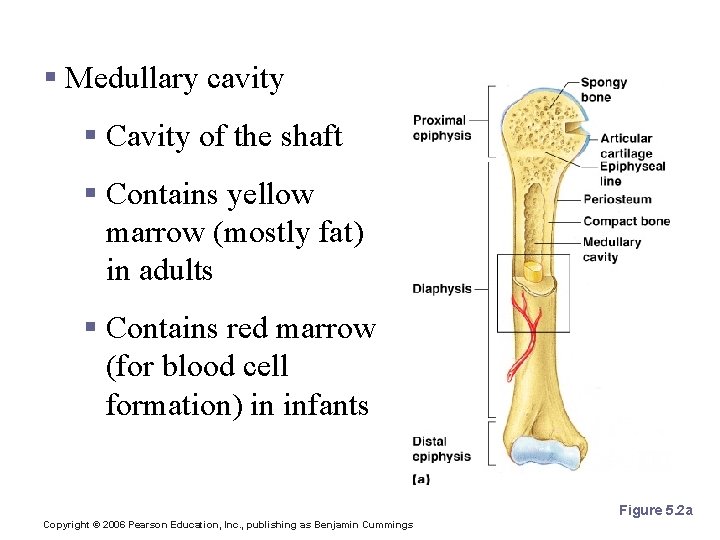
Gross Anatomy of a Long Bone § Diaphysis § Shaft § Composed of compact bone § Epiphysis § Ends of the bone § Composed mostly of spongy bone Figure 5. 2 a Copyright © 2006 Pearson Education, Inc. , publishing as Benjamin Cummings
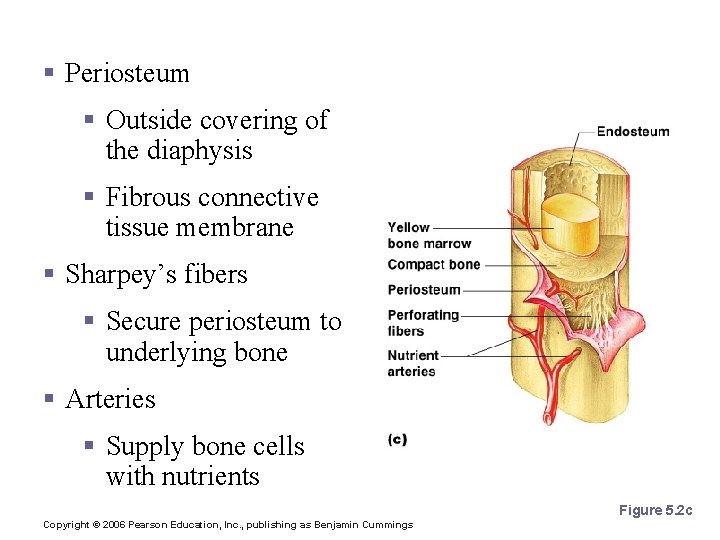
Structures of a Long Bone § Periosteum § Outside covering of the diaphysis § Fibrous connective tissue membrane § Sharpey’s fibers § Secure periosteum to underlying bone § Arteries § Supply bone cells with nutrients Figure 5. 2 c Copyright © 2006 Pearson Education, Inc. , publishing as Benjamin Cummings
Structures of a Long Bone § Articular cartilage § Covers the external surface of the epiphyses § Made of hyaline cartilage § Decreases friction at joint surfaces Figure 5. 2 a Copyright © 2006 Pearson Education, Inc. , publishing as Benjamin Cummings
Structures of a Long Bone § Medullary cavity § Cavity of the shaft § Contains yellow marrow (mostly fat) in adults § Contains red marrow (for blood cell formation) in infants Figure 5. 2 a Copyright © 2006 Pearson Education, Inc. , publishing as Benjamin Cummings
Bone Markings § Surface features of bones § Sites of attachments for muscles, tendons, and ligaments § Passages for nerves and blood vessels § Categories of bone markings § Projections and processes – grow out from the bone surface § Depressions or cavities – indentations Copyright © 2006 Pearson Education, Inc. , publishing as Benjamin Cummings
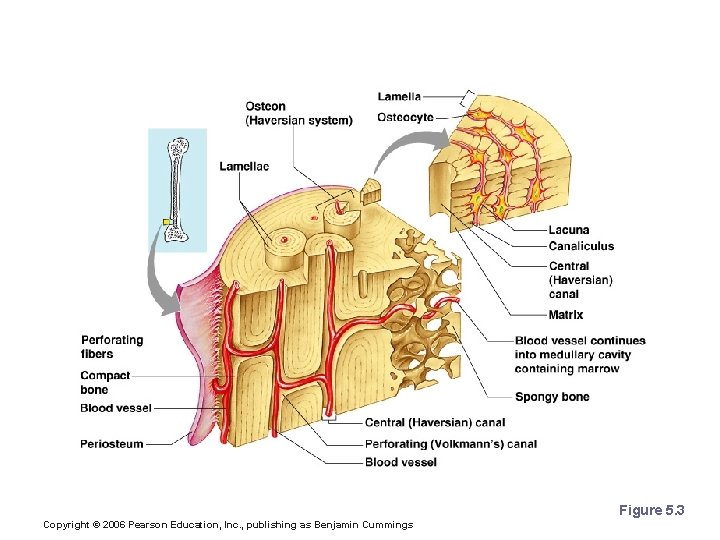
Microscopic Anatomy of Bone § Osteon (Haversian System) § A unit of bone § Central (Haversian) canal § Opening in the center of an osteon § Carries blood vessels and nerves § Perforating (Volkman’s) canal § Canal perpendicular to the central canal § Carries blood vessels and nerves Copyright © 2006 Pearson Education, Inc. , publishing as Benjamin Cummings
Microscopic Anatomy of Bone Figure 5. 3 Copyright © 2006 Pearson Education, Inc. , publishing as Benjamin Cummings
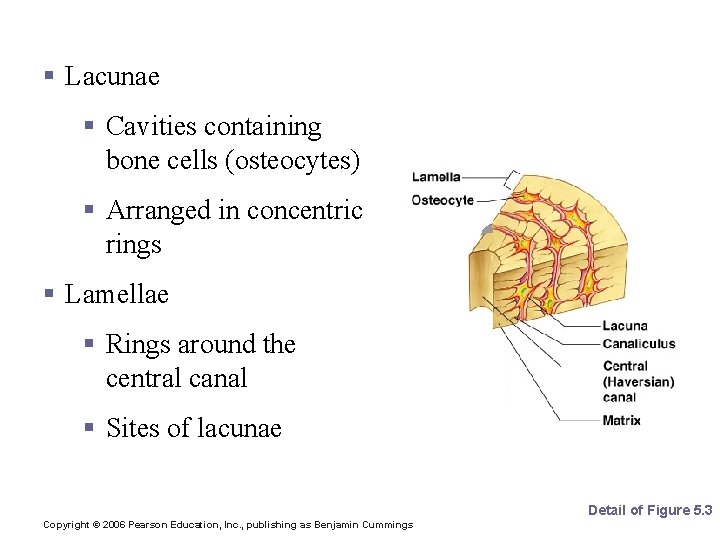
Microscopic Anatomy of Bone § Lacunae § Cavities containing bone cells (osteocytes) § Arranged in concentric rings § Lamellae § Rings around the central canal § Sites of lacunae Detail of Figure 5. 3 Copyright © 2006 Pearson Education, Inc. , publishing as Benjamin Cummings
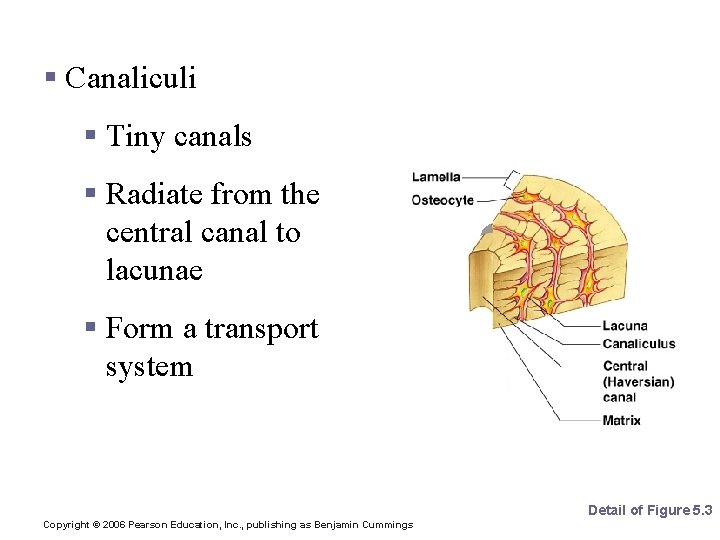
Microscopic Anatomy of Bone § Canaliculi § Tiny canals § Radiate from the central canal to lacunae § Form a transport system Detail of Figure 5. 3 Copyright © 2006 Pearson Education, Inc. , publishing as Benjamin Cummings
Changes in the Human Skeleton § In embryos, the skeleton is primarily hyaline cartilage § During development, much of this cartilage is replaced by bone § Cartilage remains in isolated areas § Bridge of the nose § Parts of ribs § Joints Copyright © 2006 Pearson Education, Inc. , publishing as Benjamin Cummings
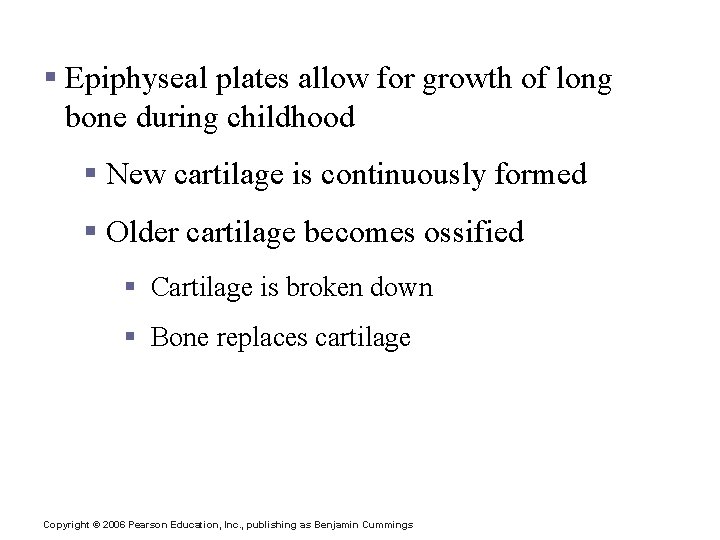
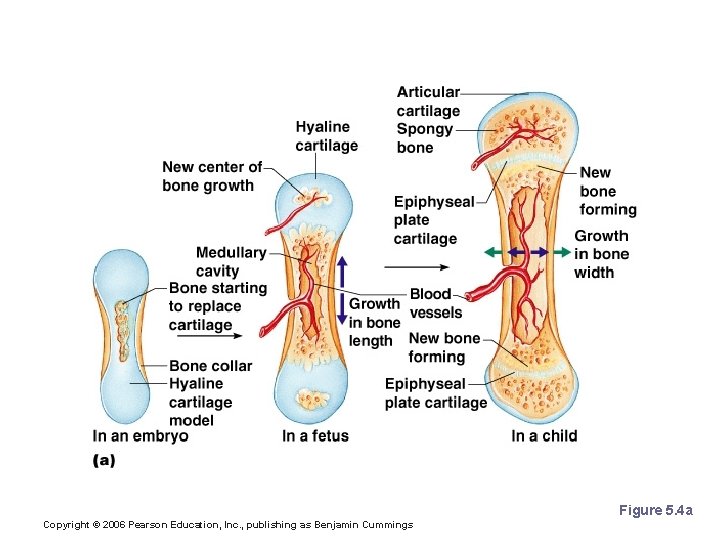
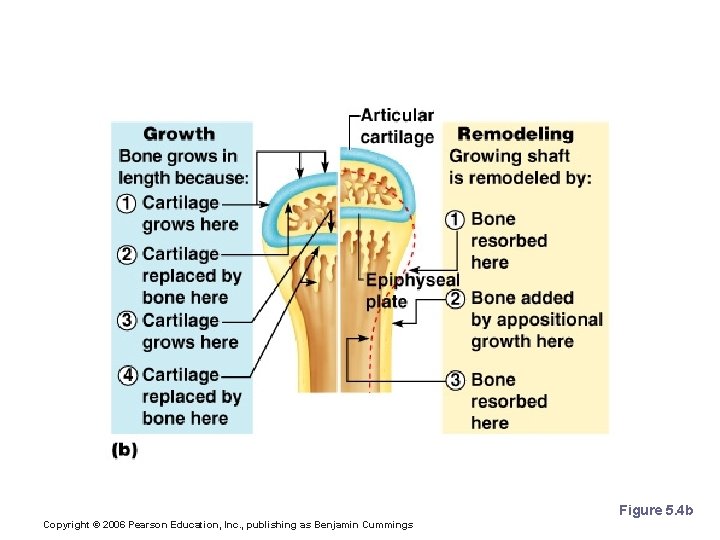
Bone Growth § Epiphyseal plates allow for growth of long bone during childhood § New cartilage is continuously formed § Older cartilage becomes ossified § Cartilage is broken down § Bone replaces cartilage Copyright © 2006 Pearson Education, Inc. , publishing as Benjamin Cummings
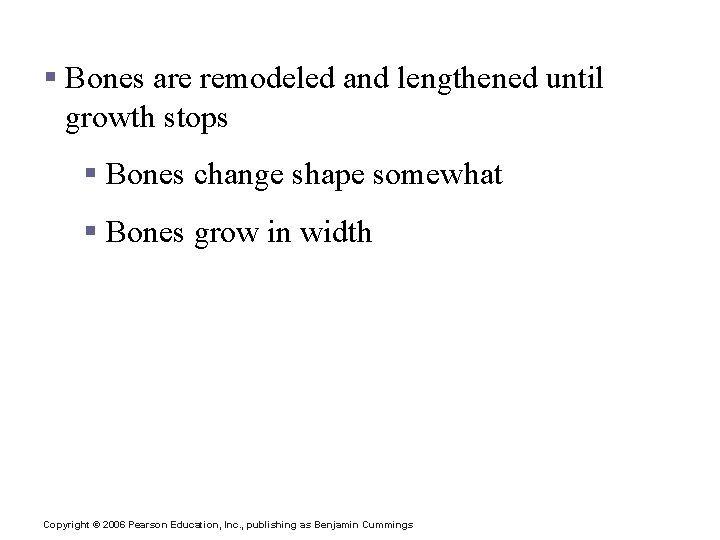
Bone Growth § Bones are remodeled and lengthened until growth stops § Bones change shape somewhat § Bones grow in width Copyright © 2006 Pearson Education, Inc. , publishing as Benjamin Cummings
Long Bone Formation and Growth Figure 5. 4 a Copyright © 2006 Pearson Education, Inc. , publishing as Benjamin Cummings
Long Bone Formation and Growth Figure 5. 4 b Copyright © 2006 Pearson Education, Inc. , publishing as Benjamin Cummings
Types of Bone Cells § Osteocytes § Mature bone cells § Osteoblasts § Bone-forming cells § Osteoclasts § Bone-destroying cells § Break down bone matrix for remodeling and release of calcium § Bone remodeling is a process by both osteoblasts and osteoclasts Copyright © 2006 Pearson Education, Inc. , publishing as Benjamin Cummings