
5 The Lipids Fats Oils Phospholipids and Sterols
- Slides: 41
5 The Lipids: Fats, Oils, Phospholipids, and Sterols Copyright © 2017 Cengage Learning. All Rights Reserved.
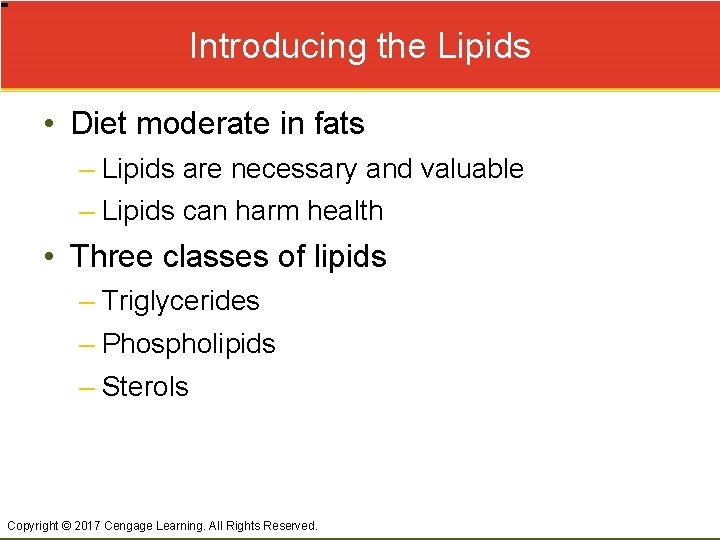
Introducing the Lipids • Diet moderate in fats – Lipids are necessary and valuable – Lipids can harm health • Three classes of lipids – Triglycerides – Phospholipids – Sterols Copyright © 2017 Cengage Learning. All Rights Reserved.
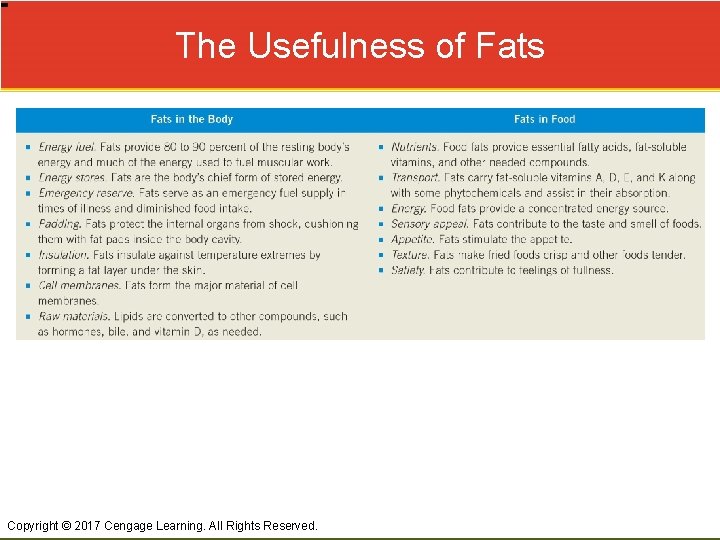
The Usefulness of Fats Copyright © 2017 Cengage Learning. All Rights Reserved.
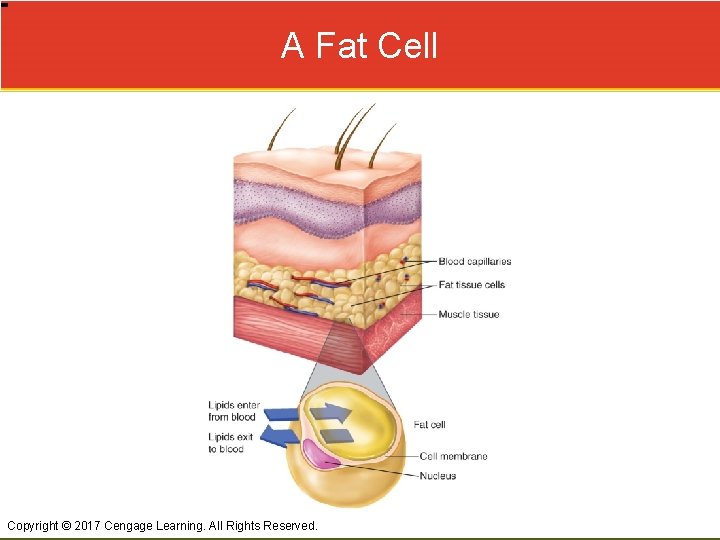
A Fat Cell Copyright © 2017 Cengage Learning. All Rights Reserved.
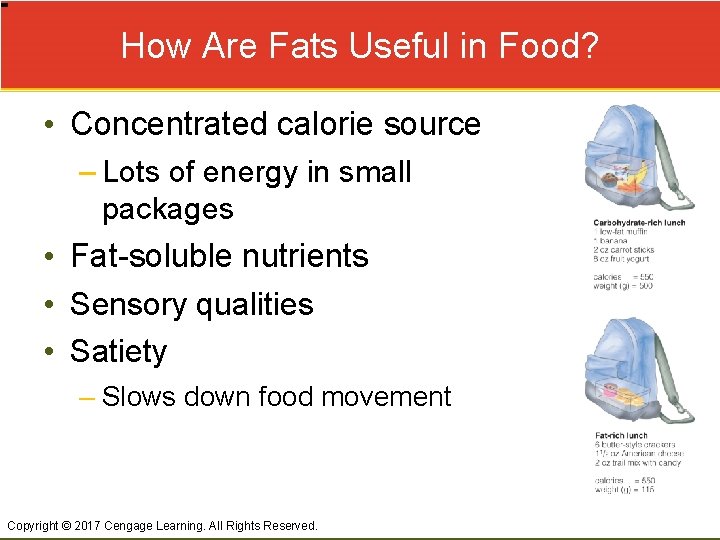
How Are Fats Useful in Food? • Concentrated calorie source – Lots of energy in small packages • Fat-soluble nutrients • Sensory qualities • Satiety – Slows down food movement Copyright © 2017 Cengage Learning. All Rights Reserved.
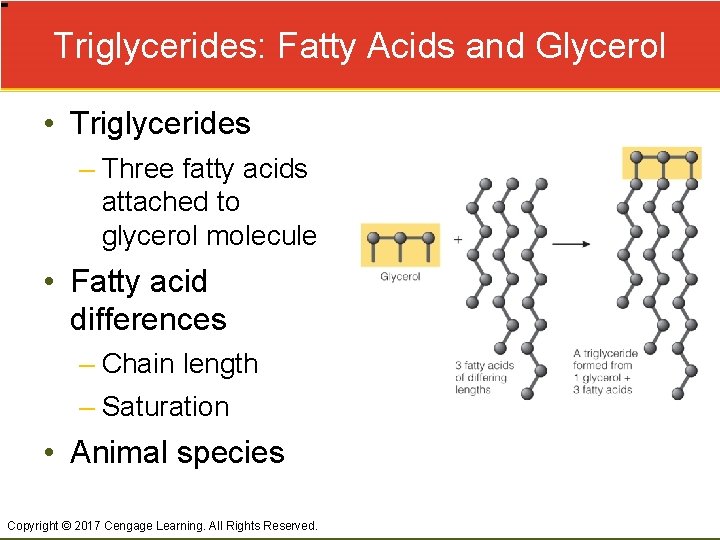
Triglycerides: Fatty Acids and Glycerol • Triglycerides – Three fatty acids attached to glycerol molecule • Fatty acid differences – Chain length – Saturation • Animal species Copyright © 2017 Cengage Learning. All Rights Reserved.
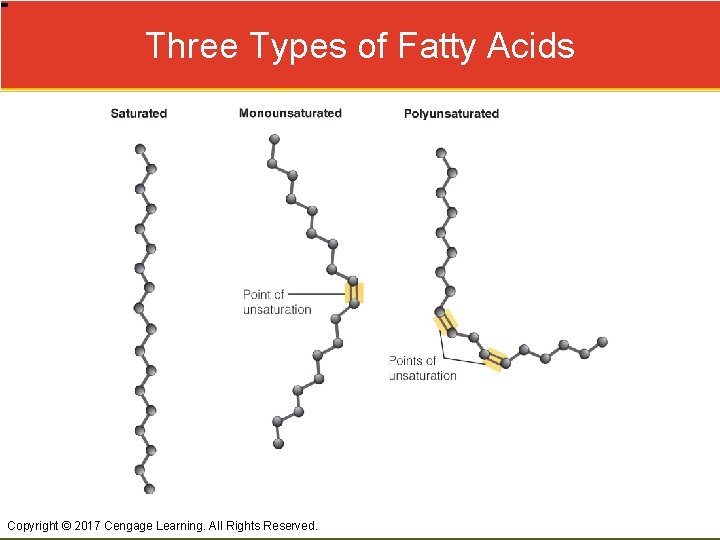
Three Types of Fatty Acids Copyright © 2017 Cengage Learning. All Rights Reserved.
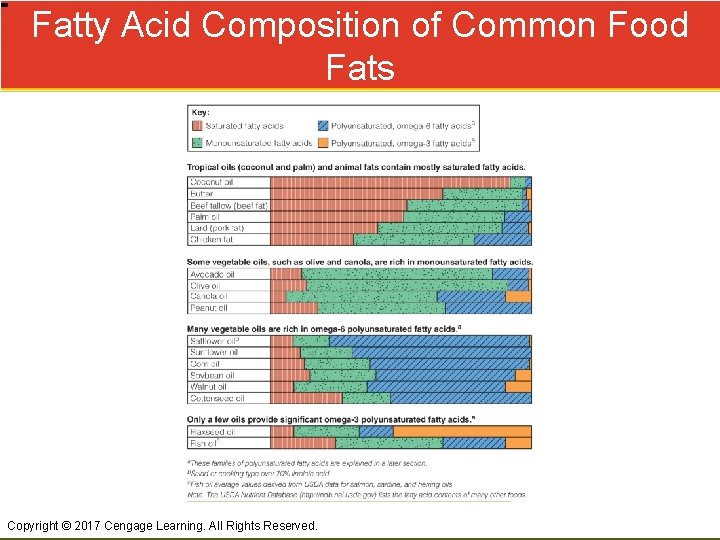
Fatty Acid Characteristics • Melting point – More unsaturated, more liquid • Fat hardness – Softer generally is healthier • Sources of fatty acids Copyright © 2017 Cengage Learning. All Rights Reserved.
Fatty Acid Composition of Common Food Fats Copyright © 2017 Cengage Learning. All Rights Reserved.
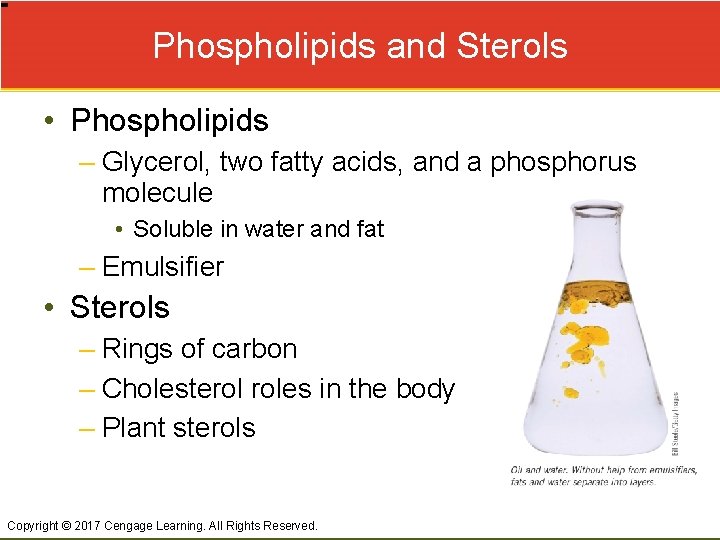
Phospholipids and Sterols • Phospholipids – Glycerol, two fatty acids, and a phosphorus molecule • Soluble in water and fat – Emulsifier • Sterols – Rings of carbon – Cholesterol roles in the body – Plant sterols Copyright © 2017 Cengage Learning. All Rights Reserved.
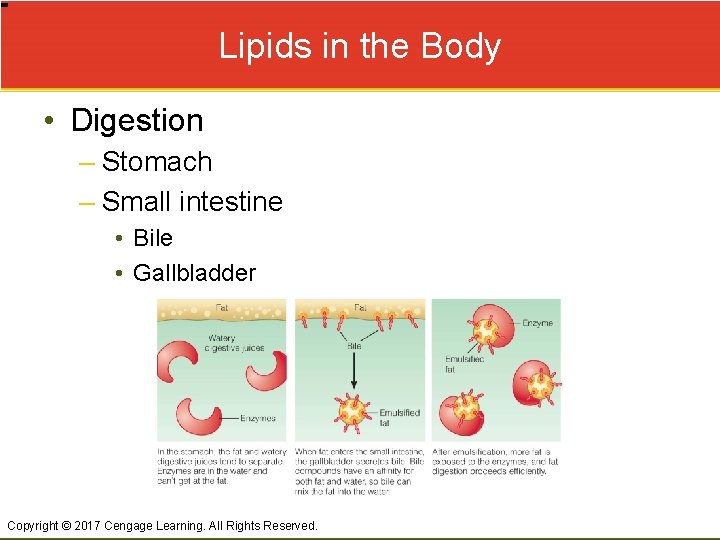
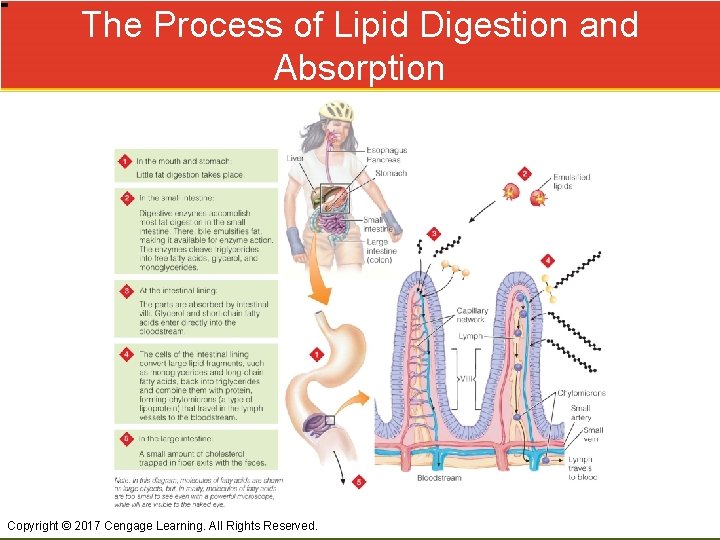
Lipids in the Body • Digestion – Stomach – Small intestine • Bile • Gallbladder Copyright © 2017 Cengage Learning. All Rights Reserved.
Lipids in the Body (cont’d. ) • Absorption – Fatty acids split from glycerol • Fatty acids, phospholipids, and monoglycerides – Bile shuttles lipids across mucus layer – Efficiency of absorption process • Speed of digestion Copyright © 2017 Cengage Learning. All Rights Reserved.
The Process of Lipid Digestion and Absorption Copyright © 2017 Cengage Learning. All Rights Reserved.
Transport of Fats • Glycerol and shorter-chain fatty acids – Pass through intestinal lining to bloodstream • Larger lipids – Protein carriers – Released into lymph – Chylomicrons Copyright © 2017 Cengage Learning. All Rights Reserved.
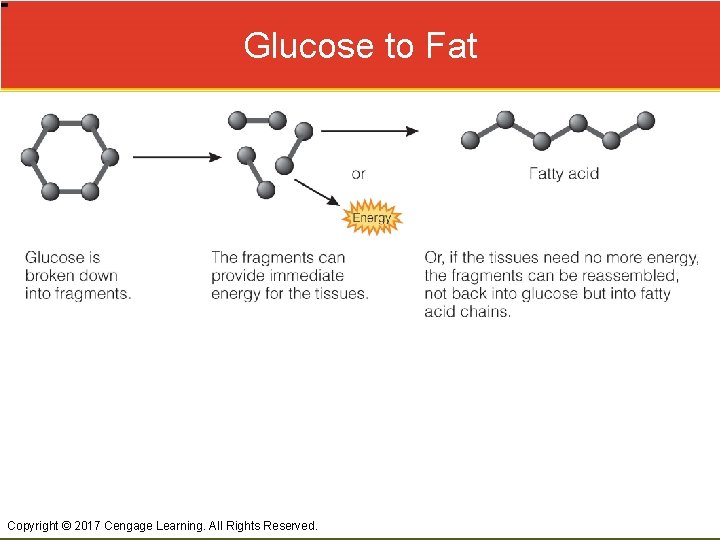
Storing and Using the Body’s Fat • Body conserves fat molecules – Fat depots – Excess carbohydrate • Call for energy – Dismantle stored triglycerides • Release fatty acids into blood – Carbohydrate’s role in fat breakdown Copyright © 2017 Cengage Learning. All Rights Reserved.
Glucose to Fat Copyright © 2017 Cengage Learning. All Rights Reserved.
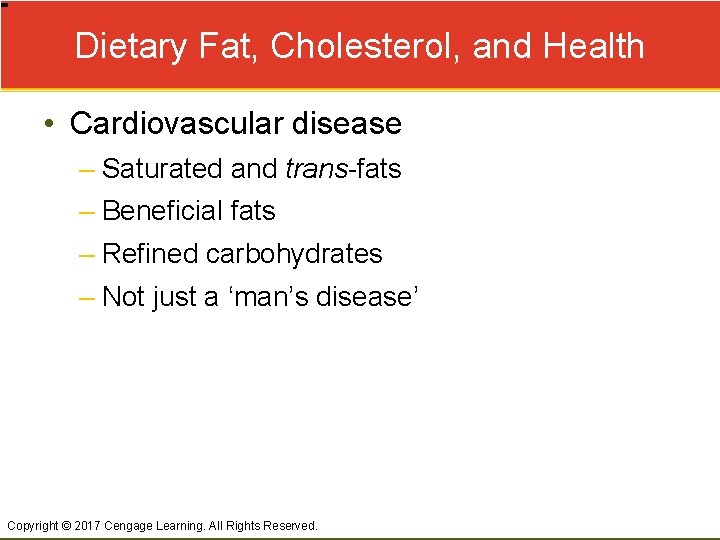
Dietary Fat, Cholesterol, and Health • Cardiovascular disease – Saturated and trans-fats – Beneficial fats – Refined carbohydrates – Not just a ‘man’s disease’ Copyright © 2017 Cengage Learning. All Rights Reserved.
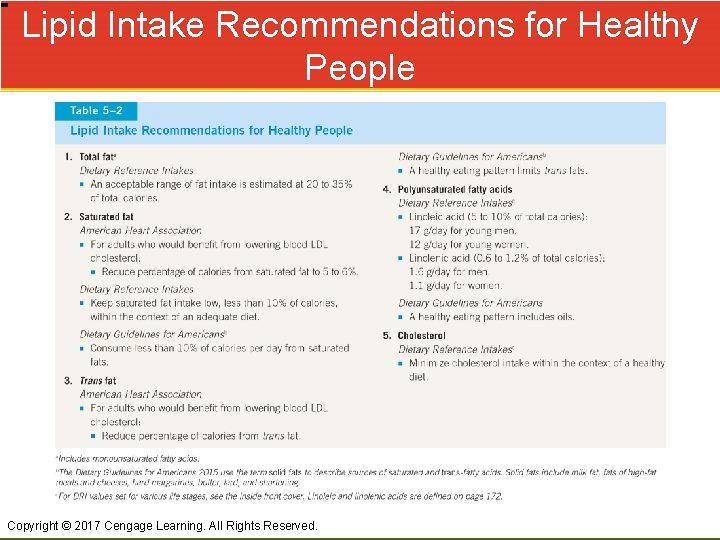
Lipid Intake Recommendations for Healthy People Copyright © 2017 Cengage Learning. All Rights Reserved.
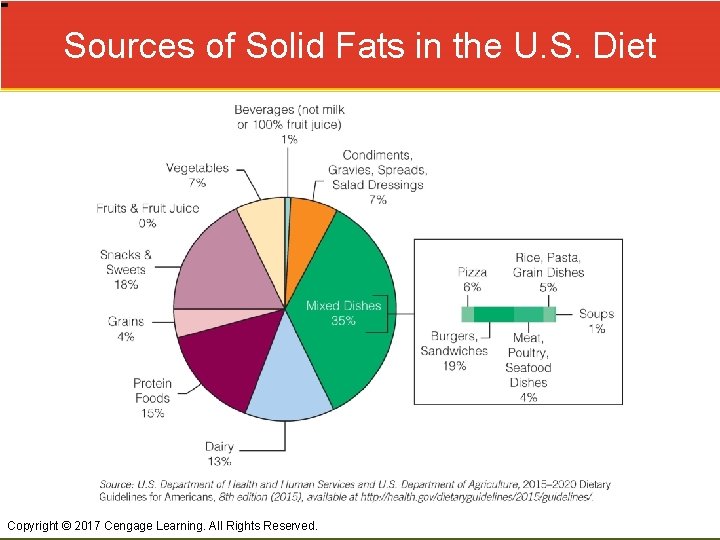
Sources of Solid Fats in the U. S. Diet Copyright © 2017 Cengage Learning. All Rights Reserved.
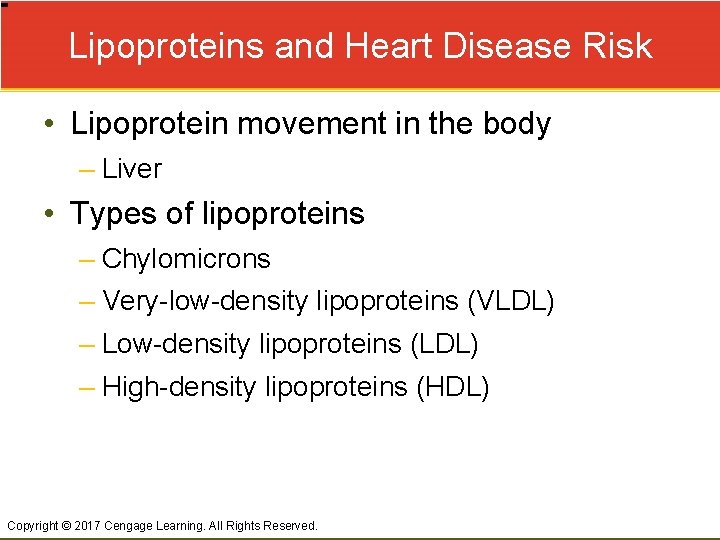
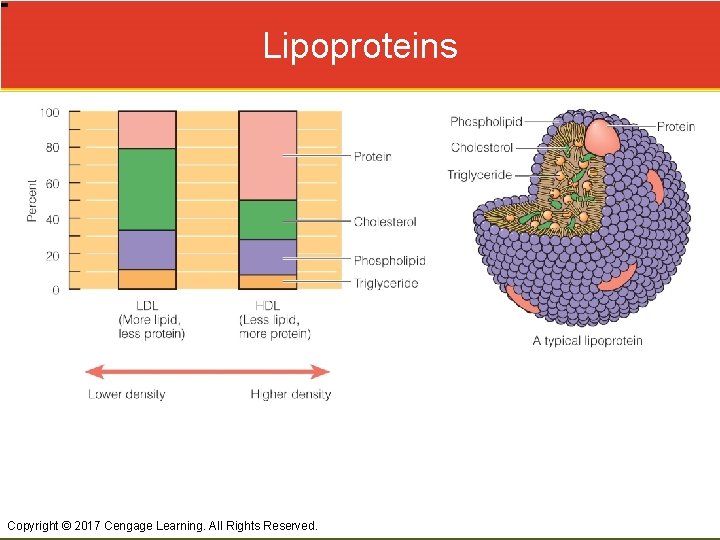
Lipoproteins and Heart Disease Risk • Lipoprotein movement in the body – Liver • Types of lipoproteins – Chylomicrons – Very-low-density lipoproteins (VLDL) – Low-density lipoproteins (LDL) – High-density lipoproteins (HDL) Copyright © 2017 Cengage Learning. All Rights Reserved.
Lipoproteins Copyright © 2017 Cengage Learning. All Rights Reserved.
LDL and HDL difference – Size and density – Delivery and scavenging – Inflammation – Heart attack risk Copyright © 2017 Cengage Learning. All Rights Reserved.
What Does Food Cholesterol Have to Do with Blood Cholesterol? • Most saturated and trans fats in foods raise blood cholesterol • Food cholesterol has little effect on blood cholesterol • History of guidelines • Genetic inheritance Copyright © 2017 Cengage Learning. All Rights Reserved.
Recommendations Applied • Trend: fewer people in U. S. have high blood cholesterol than in past decades – More than 25 percent still test too high for LDL • Lower LDL – Trim saturated and trans fats from diet • Raise HDL – Physical activity • Benefits for heart health Copyright © 2017 Cengage Learning. All Rights Reserved.
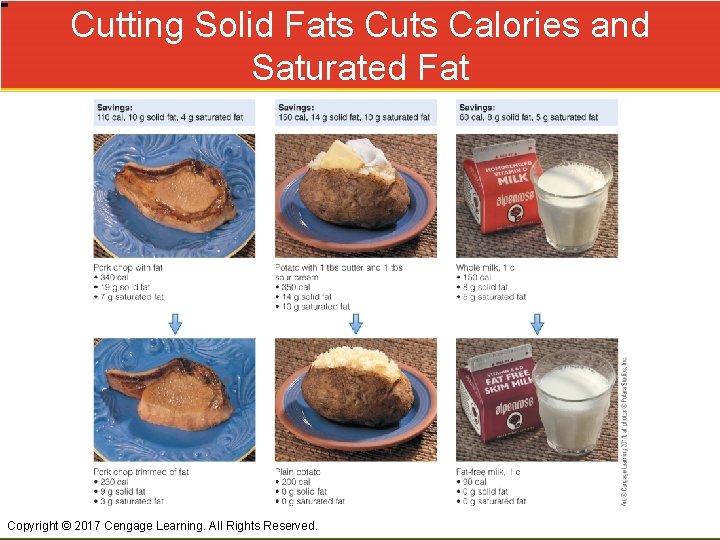
Cutting Solid Fats Cuts Calories and Saturated Fat Copyright © 2017 Cengage Learning. All Rights Reserved.
Essential Polyunsaturated Fatty Acids • Essential fatty acids – Linoleic acid and linolenic acid • Functions – Eicosanoids • Deficiencies Copyright © 2017 Cengage Learning. All Rights Reserved.
Omega-6 and Omega-3 Fatty Acid Families • Linoleic – Omega-6 fatty acid – Arachidonic acid • Linolenic acid – DHA and EPA • Heart disease • Cancer prevention • Cell membranes • Brain function and vision Copyright © 2017 Cengage Learning. All Rights Reserved.
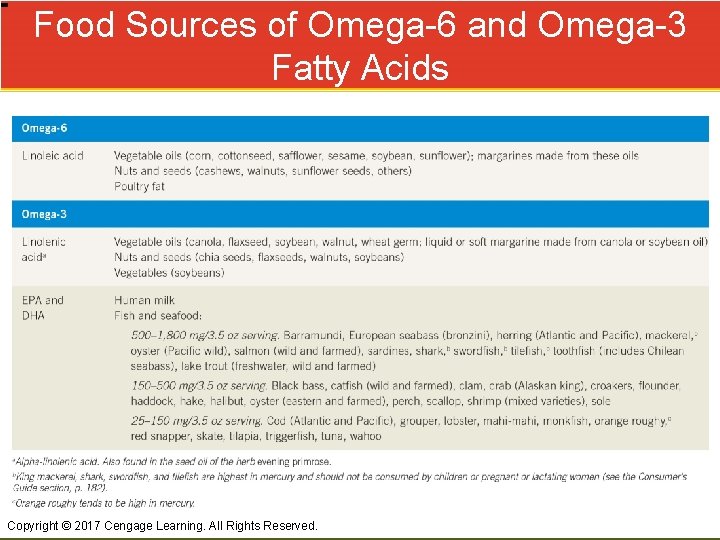
Food Sources of Omega-6 and Omega-3 Fatty Acids Copyright © 2017 Cengage Learning. All Rights Reserved.
Where Are the Omega-3 Fatty Acids in Foods? • Seafood – Recommendation: 8 to 12 ounces each week – Variety of types – Need for sustainable sources • Fish oil supplements • Omega-3 enriched foods Copyright © 2017 Cengage Learning. All Rights Reserved.
The Effects of Processing on Unsaturated Fats • Hydrogenation – Effects on fats • Oxygen damage of unsaturated oils • Hydrogenation of oils – Benefits of hydrogenation • Nutrient losses • Alternatives to hydrogenation Copyright © 2017 Cengage Learning. All Rights Reserved.
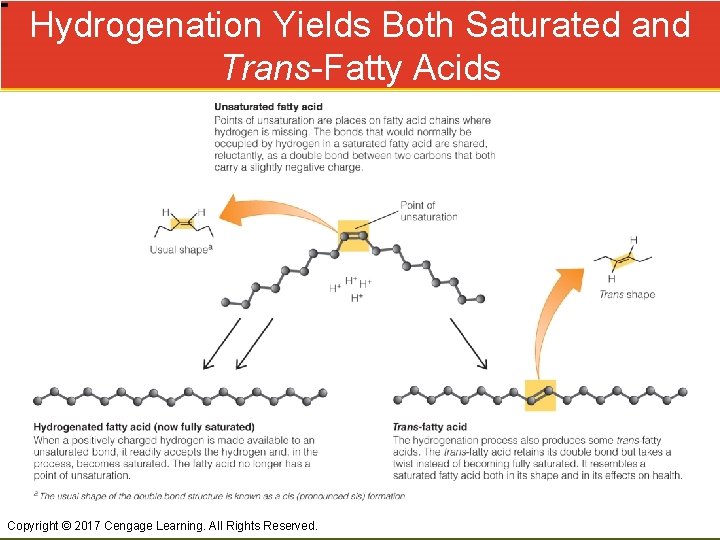
Hydrogenation Yields Both Saturated and Trans-Fatty Acids Copyright © 2017 Cengage Learning. All Rights Reserved.
Trans-Fatty Acids • Formation of trans-fatty acids – Polyunsaturated fats • Change in chemical structure • Health effects – LDL and HDL cholesterol – Similarities with saturated fat • Swapping trans fats for saturated fats – Trans fat in foods Copyright © 2017 Cengage Learning. All Rights Reserved.
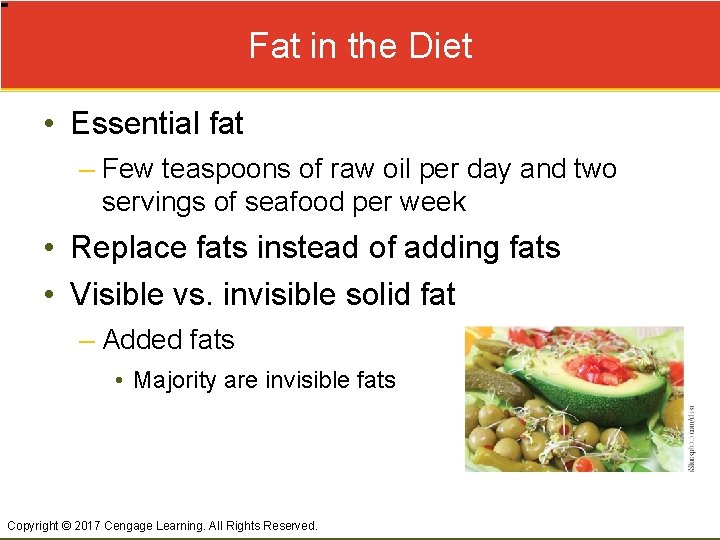
Fat in the Diet • Essential fat – Few teaspoons of raw oil per day and two servings of seafood per week • Replace fats instead of adding fats • Visible vs. invisible solid fat – Added fats • Majority are invisible fats Copyright © 2017 Cengage Learning. All Rights Reserved.
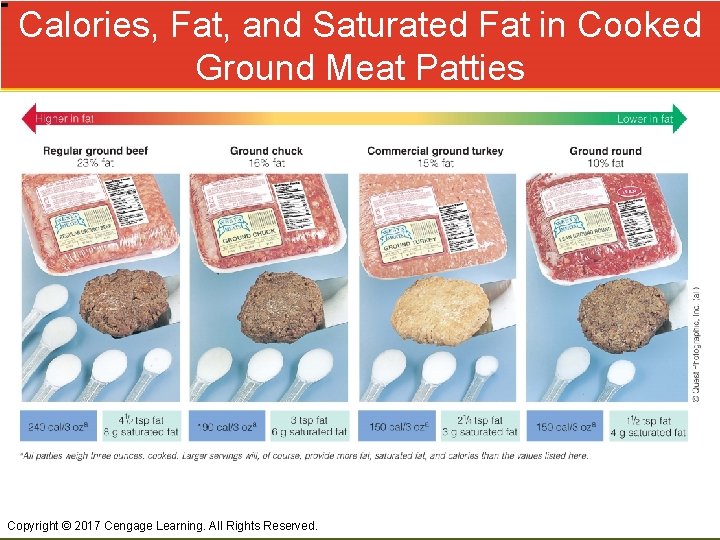
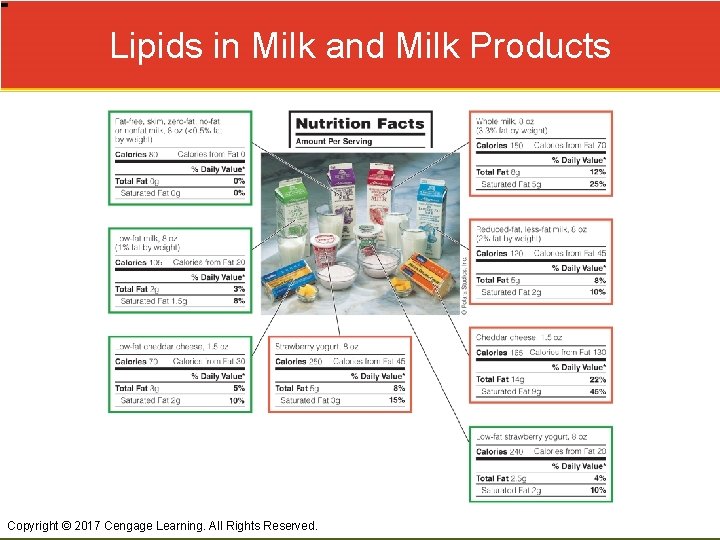
Fats in Protein Foods • Limit intake to 5 to 7 ounces per day • Choosing low-fat meats – Ground turkey or chicken vs. beef – Commercial processing adds solid fats • Milk and milk products – Cream and butter in fats category • Grains Copyright © 2017 Cengage Learning. All Rights Reserved.
Calories, Fat, and Saturated Fat in Cooked Ground Meat Patties Copyright © 2017 Cengage Learning. All Rights Reserved.
Lipids in Milk and Milk Products Copyright © 2017 Cengage Learning. All Rights Reserved.
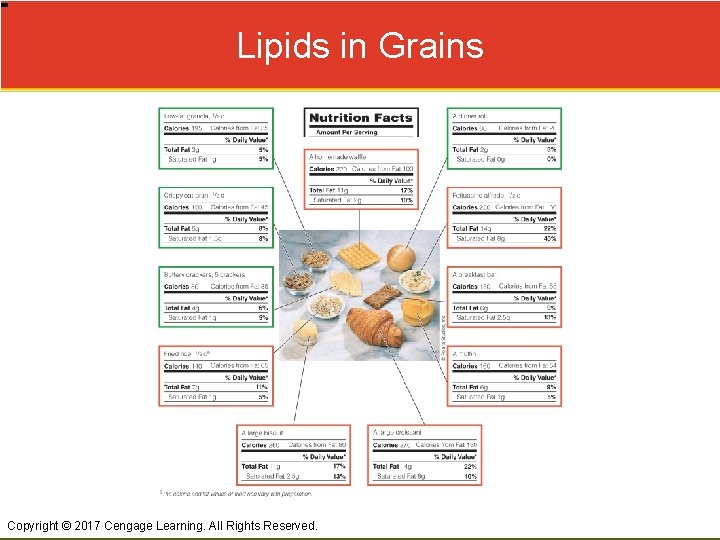
Lipids in Grains Copyright © 2017 Cengage Learning. All Rights Reserved.
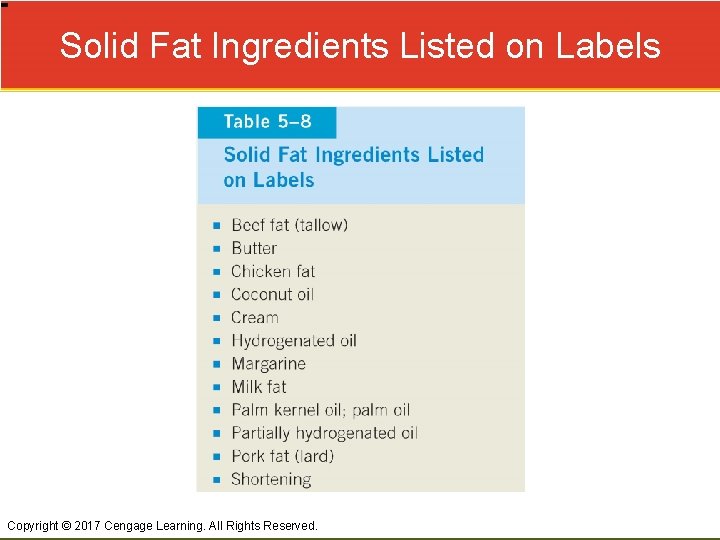
Defensive Dining • Reading ingredient lists • In grocery stores – Margarines – Unsaturated oils • Fat replacers and artificial fats – Olestra – “Fat-free” options • Revamp recipes Copyright © 2017 Cengage Learning. All Rights Reserved.
Solid Fat Ingredients Listed on Labels Copyright © 2017 Cengage Learning. All Rights Reserved.
Defensive Dining (cont’d. ) • Fast food choices • Change your habits – Suggested changes – Small changes reap big rewards Copyright © 2017 Cengage Learning. All Rights Reserved.
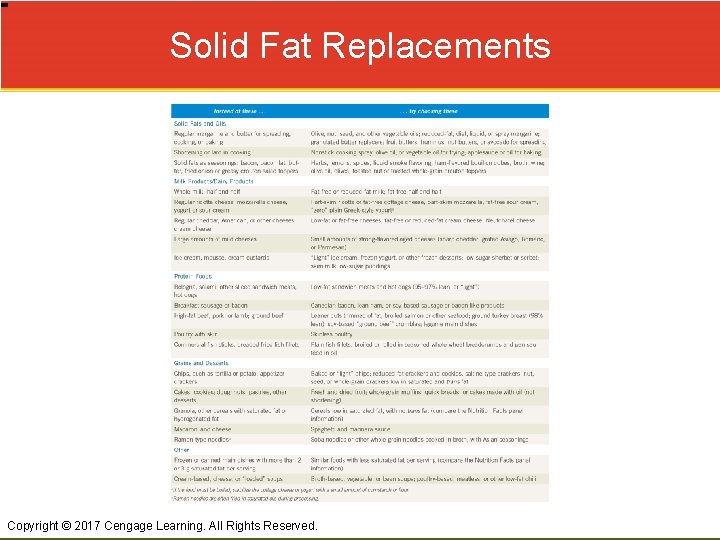
Solid Fat Replacements Copyright © 2017 Cengage Learning. All Rights Reserved.