
5 Lesson Checking Accounts Objectives After studying this
5 Lesson Checking Accounts
Objectives After studying this chapter you will be able to § list factors to consider when selecting a financial institution. § explain how to open a checking account and make a deposit. § demonstrate how to write a check and endorse it. § explain how to balance a checkbook. § describe four special types of checks.
Words to Know § § § check overdraw deposit slip endorse bank statement § § certified check cashier’s check money order traveler’s check
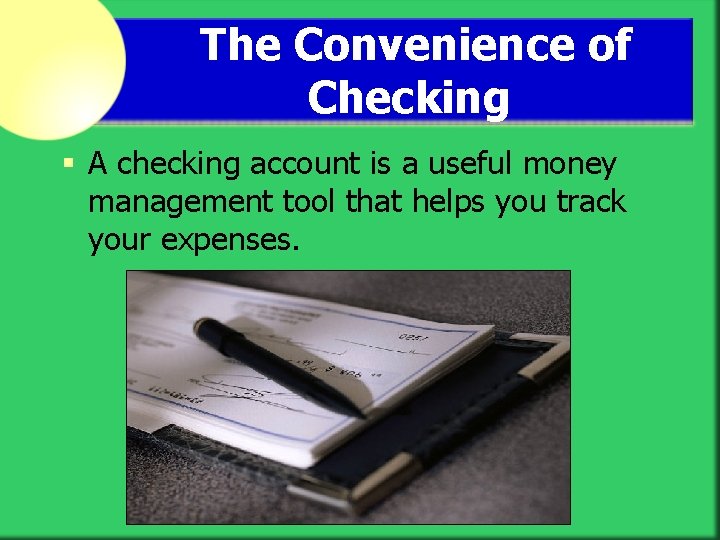
The Convenience of Checking § A checking account is a useful money management tool that helps you track your expenses.
The Convenience of Checking § Check – A written order instructing a bank to take a specified amount of money out of the account on which the check is drawn and give it to the person whose name appears on the check. § If a check is lost or stolen, you can stop payment on it, but it may cost a fee. § Never send cash through the mail.
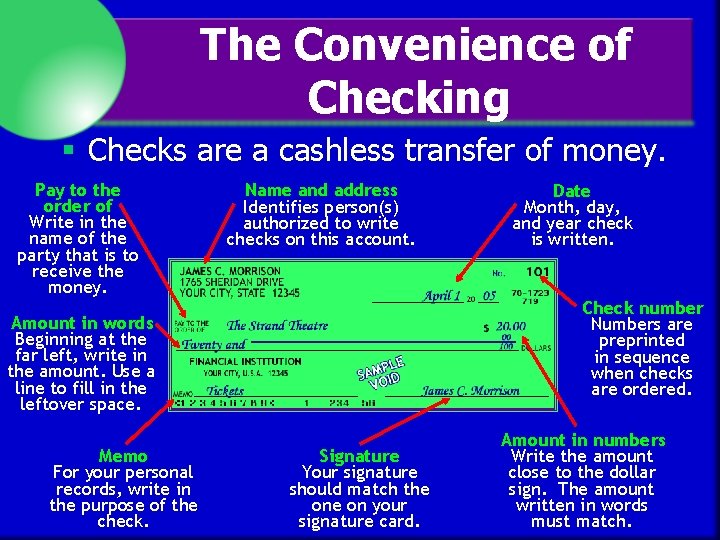
The Convenience of Checking § Checks are a cashless transfer of money. Pay to the order of Write in the name of the party that is to receive the money. Name and address Identifies person(s) authorized to write checks on this account. Check number Numbers are preprinted in sequence when checks are ordered. Amount in words Beginning at the far left, write in the amount. Use a line to fill in the leftover space. Memo For your personal records, write in the purpose of the check. Date Month, day, and year check is written. Signature Your signature should match the on your signature card. Amount in numbers Write the amount close to the dollar sign. The amount written in words must match.
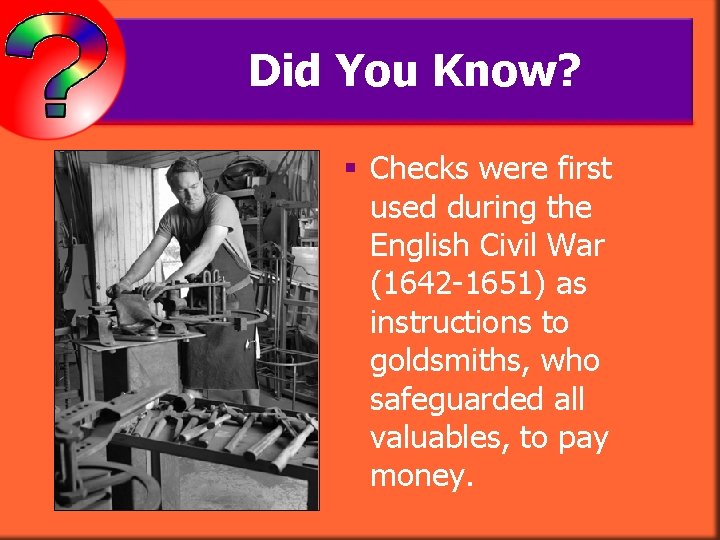
Did You Know? § Checks were first used during the English Civil War (1642 -1651) as instructions to goldsmiths, who safeguarded all valuables, to pay money.
Where to Open an Account § The first step in opening a checking account is selecting a financial institution. § Commercial banks offer services to individuals and corporations. § Savings and loan associations serve individuals only. § Credit unions serve certain groups of people such as employee groups.
Where to Open an Account § Consider these when choosing a financial institution: convenience § services § types of accounts § fees §
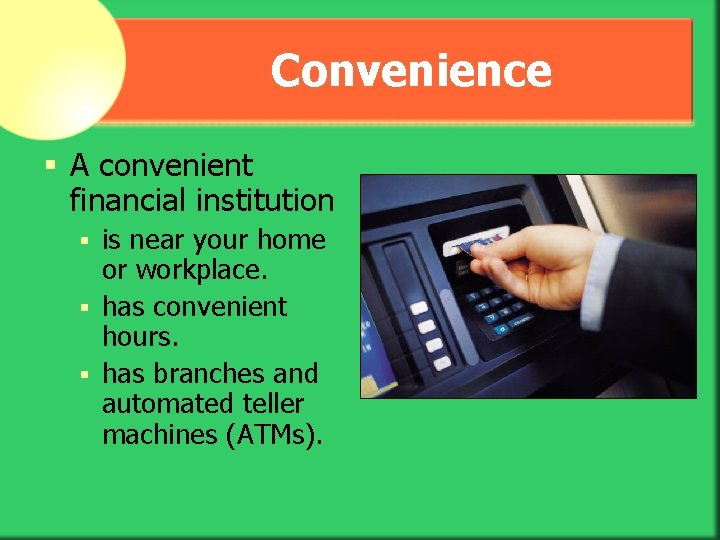
Convenience § A convenient financial institution is near your home or workplace. § has convenient hours. § has branches and automated teller machines (ATMs). §
Services § Compare services, which might include: § § § § overdraft protection for checking accounts cashier’s, traveler’s, and certified checks drive-up banking ATMs loans safe-deposit boxes money orders credit, debit, and cash cards
Services § Cash and debit cards allow quick access to the money in your account. § § Cash cards are used like cash. Debit cards allow money to be taken directly from your account when making a purchase. § These cards cause some to overspend. § Overdraw – To write a check for more money than is in the account.
Types of Accounts § An individual account requires your signature to authorize a check. § A joint account allows any of the account owners to authorize checks. § An interest-paying account is a checking account that works like a savings account by paying interest on the account balance.
Fees § Fees vary widely. § The best advice when comparing financial institutions is to carefully compare fees for the services you plan to use.
Did You Know? v Some banks charge a fee for opening an account or for each check written, while others offer free checking. v Some check designs are more expensive than others. v What costs are involved with opening a checking account at the bank nearest your home?
Opening a Checking Account § Once you select a financial institution, you will need to complete an application for a new account. § Be sure to bring your social security number and some form of identification with you.
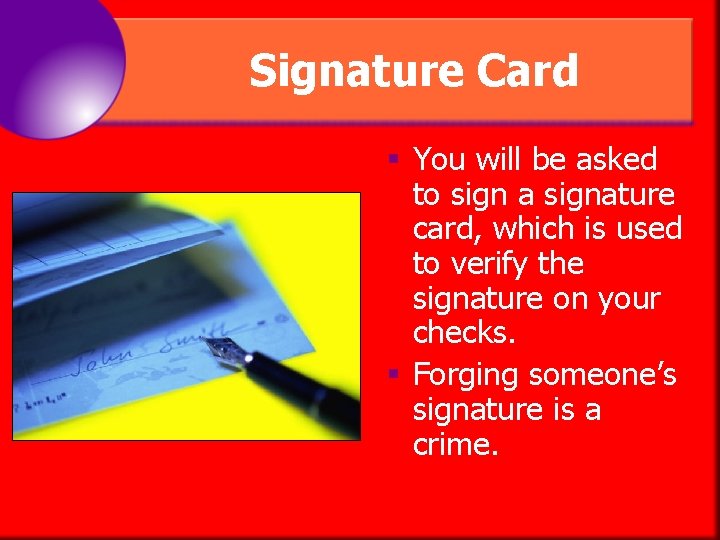
Signature Card § You will be asked to sign a signature card, which is used to verify the signature on your checks. § Forging someone’s signature is a crime.
Making a Deposit § Before you can write checks, you must deposit money into your checking account, either in person or electronically. § When making a deposit in person, you will need to complete a deposit slip. § Deposit slip – A form filled out before depositing money into a bank account.
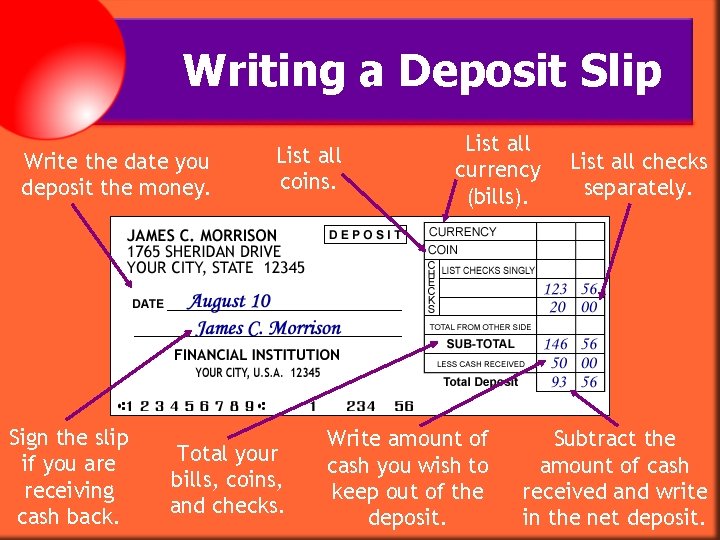
Writing a Deposit Slip Write the date you deposit the money. Sign the slip if you are receiving cash back. List all coins. Total your bills, coins, and checks. List all currency (bills). Write amount of cash you wish to keep out of the deposit. List all checks separately. Subtract the amount of cash received and write in the net deposit.
Endorsing a Check § When depositing a check made out to you, it must be endorsed first. § Endorse – To sign the back of a check in order to deposit or cash the amount specified. § Do not endorse a check until just before you cash or deposit it. § If your endorsed check is lost or stolen, your money is gone.
In Your Opinion v What do you see as the advantages and disadvantages of depositing money electronically? v Would you prefer receiving a paper paycheck or having your wages automatically deposited in your account?
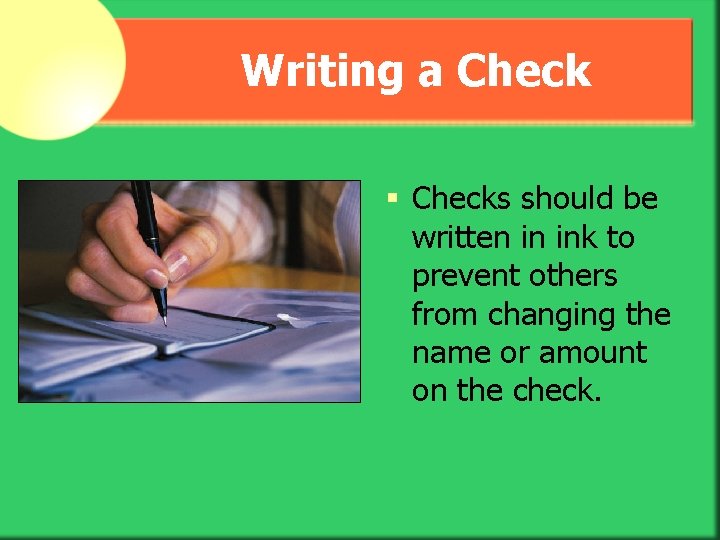
Writing a Check § Checks should be written in ink to prevent others from changing the name or amount on the check.
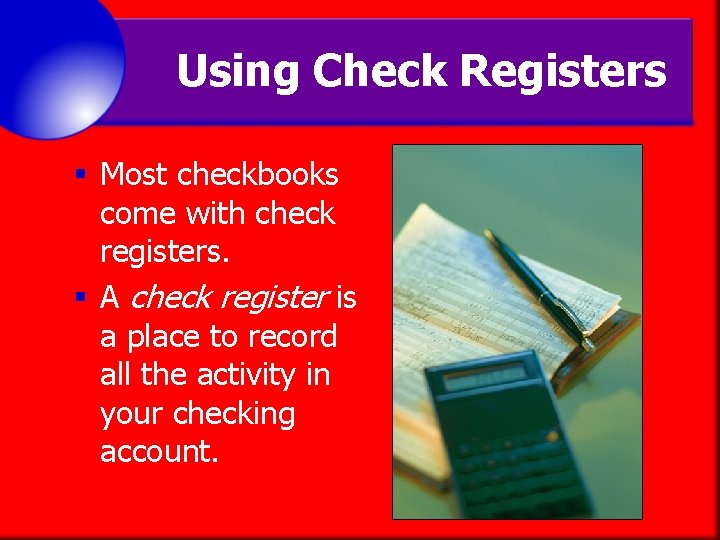
Using Check Registers § Most checkbooks come with check registers. § A check register is a place to record all the activity in your checking account.
Using Check Registers § Record all transactions and keep your register up to date. § Instead of a register, some checks come with stubs or duplicates. Both serve as records of the checks written. § Checks that bounce mean not enough money is in your account. § the checks are returned to you unpaid. § you will be charged a fee for each. §
Using Electronic Checking § Electronic checking allows you to pay bills and manage your account using a computer. § You can also set up automated debits on your account so regular bills are paid routinely. § Be sure to keep careful records to avoid overdrawing your account.
Balancing Your Checkbook § The bank will send periodic statements that you should compare to your check register. § Bank statement – A balance sheet listing deposits, withdrawals, service charges, and interest payments on an account with a financial institution. § The bank should be notified of any errors in its statement.
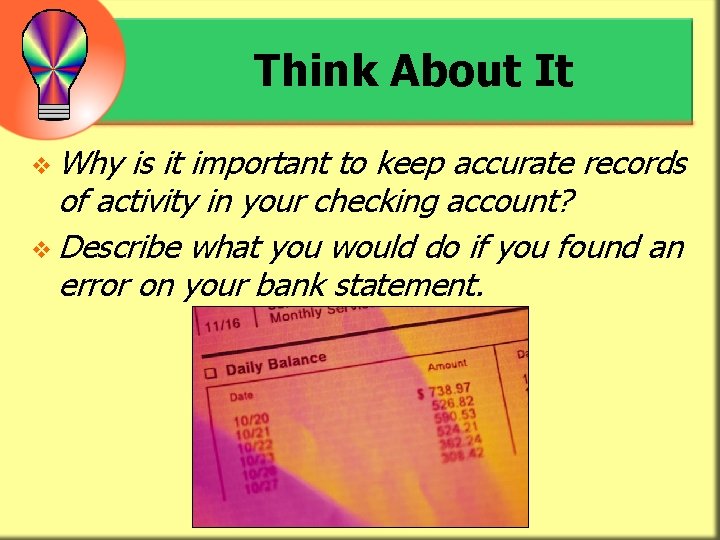
Think About It v Why is it important to keep accurate records of activity in your checking account? v Describe what you would do if you found an error on your bank statement.
Balancing Your Checkbook § You should compare each statement to your checkbook register, where you check off items that also appear in the statement (canceled checks, other withdrawals, and all deposits). § enter an addition for any interest shown in the statement. § enter a subtraction for any service charges shown in the statement. §
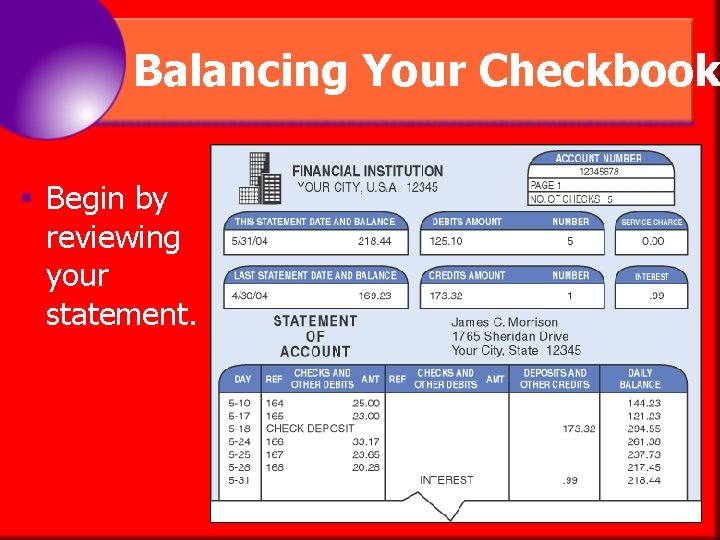
Balancing Your Checkbook § Begin by reviewing your statement.
Balancing Your Checkbook § Checks are processed at different times. § As you examine your statement, you may find that some checks do not yet appear in your account’s record. These are called outstanding checks. § When balancing your checkbook, list outstanding checks and subtract them from the balance shown on the bank’s statement.
Special Types of Checks § In addition to personal checks, there are other types of checks: certified checks § cashier’s checks § money orders § traveler’s checks § § Certified and cashier’s checks can only be purchased through a financial institution.
Certified Checks § Sellers of expensive items may require payment in the form of a certified check. § Certified check – A check for which a bank guarantees payment. § Your bank withdraws money from your account and certifies the check for a fee.
Did You Know? v Sellers of new homes almost always require certified checks as part of the transaction. v Why do you think that is?
Cashier’s Checks § Sellers may want a cashier’s check rather than a personal check. § Cashier’s check – A check drawn on a bank’s own funds and signed by an officer of the bank. § You pay the amount of the check and a small fee, but don’t need a checking account to obtain it.
Money Orders § If you have a checking account, you usually won’t need money orders. § Money order – Used like a check, this is an order purchased for a specific amount to be paid to a certain party. § They are purchased at U. S. post offices, Western Union offices, and other agencies as well as banks.
Traveler’s Checks § Vacationers often carry traveler’s checks instead of cash. § Traveler’s checks – Checks purchased in common denominations that are replaceable if lost or stolen. § You don’t need a bank account to purchase traveler’s checks. § They are available from banks and credit card companies for a fee.
Think About It v When would you probably use each of the following? certified check v cashier’s check v money order v traveler’s check v
Think About It v List factors to consider when selecting a financial institution. v Explain how to open a checking account. v write and endorse a check. v balance a checkbook. v v Describe the checks available besides personal checks.
Lesson 5: In the Know § Convenience, services, types of accounts available, and fees are important factors when selecting a financial institution. § A personal checking account is a safe method for money transactions. § Check registers should be balanced regularly against bank statements. § Special types of checks include certified, cashier’s, and traveler’s checks, and money orders.
Lesson 5: Think More About It v Under what circumstances would you prefer to pay for a product or service with a check rather than cash? v What is the likely outcome of not balancing your checking account against the bank’s records? v If online banking appeals to you, explain why.
- Slides: 40