
5 Internet Protocol IP Overview IPs roles IP
- Slides: 36
5강 Internet Protocol (IP)
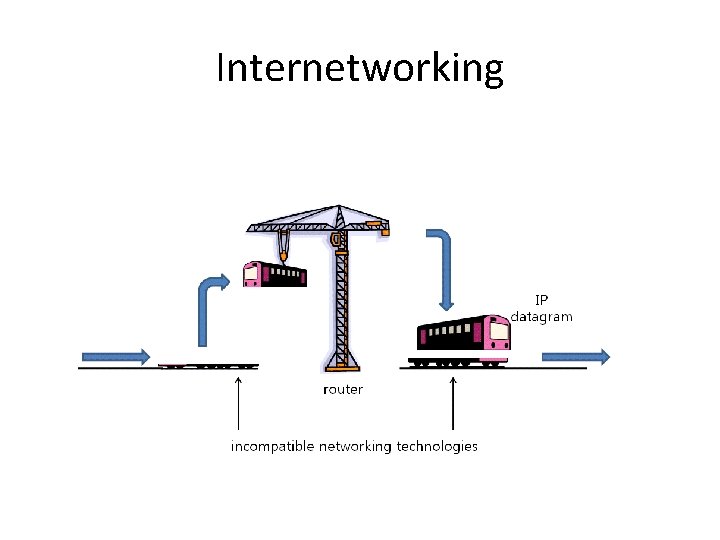
Overview – IP’s roles • IP is commissioned with two roles: • Overcome the incompatibility between the link layer technologies of the incoming interface and the outgoing interface (“internetworking”) • Determine the outgoing interface + next hop IP address, for an incoming IP datagram to reach the next hop (“forwarding”)
Internetworking
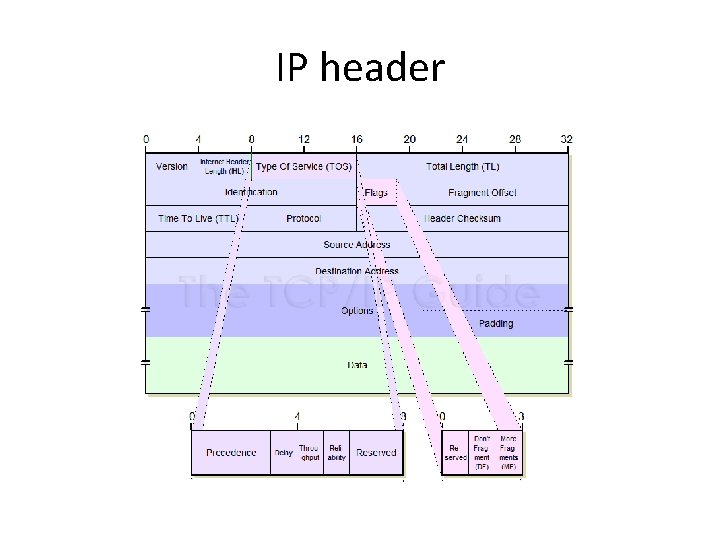
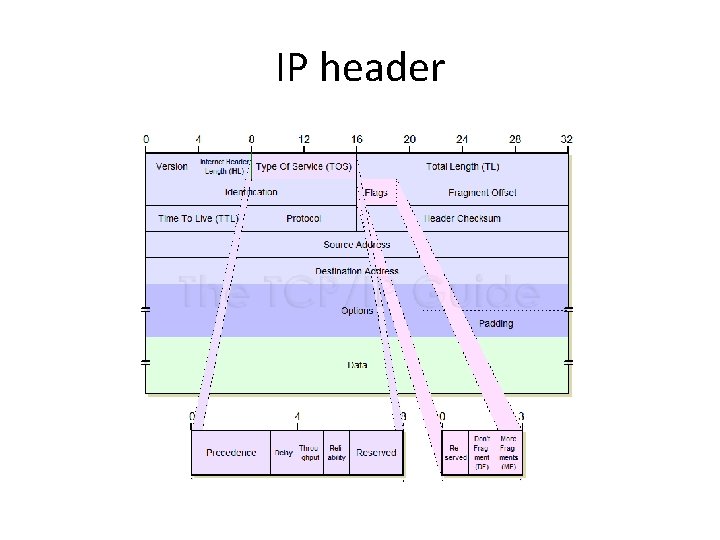
IP header
Some history of IP versions • “TCP” version 1 was designed in 1973 (RFC 675) • “TCP” version 2 was documented in March 1977 • In August 1977, Jon Postel realized it was violating the principle of layering • TCP and IP were split, with both being versioned number 3 in the spring of 1978 • Stability was added in the fourth revision and that is how we got to IPv 4 • As the idea of streaming video and other new media become a reality, RFC 1190 was submitted for a formal implementation of IPv 5. But IPv 4 Internet took off!
IP header • IHL : length in 4 -byte units – Should be aligned : may need padding bytes at the end of the header • Total length: in bytes • Max length = 65535
DS & ECN • DS: for Qo. S – No hope of this in the general Internet • ECN: Congestion control (more later …) • Rarely used today
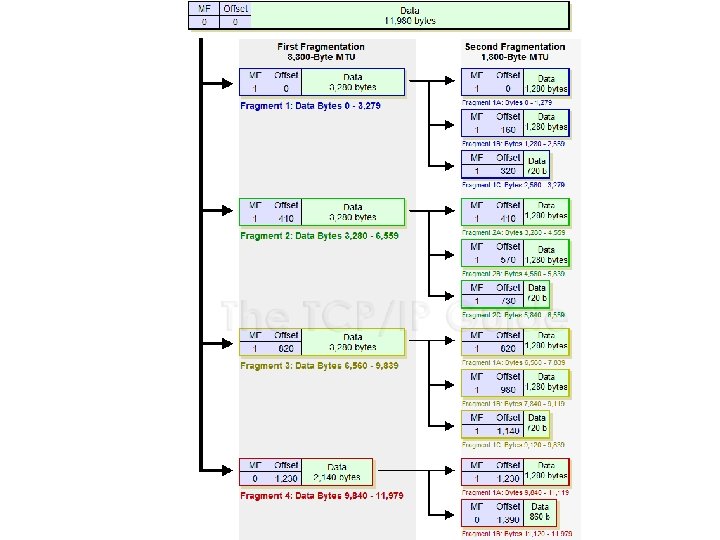
Fragmentation • Id increases by 1 for each datagram from the current host to a given destination IP • Flags: DF, MF • Fragment offset: in 8 -byte units
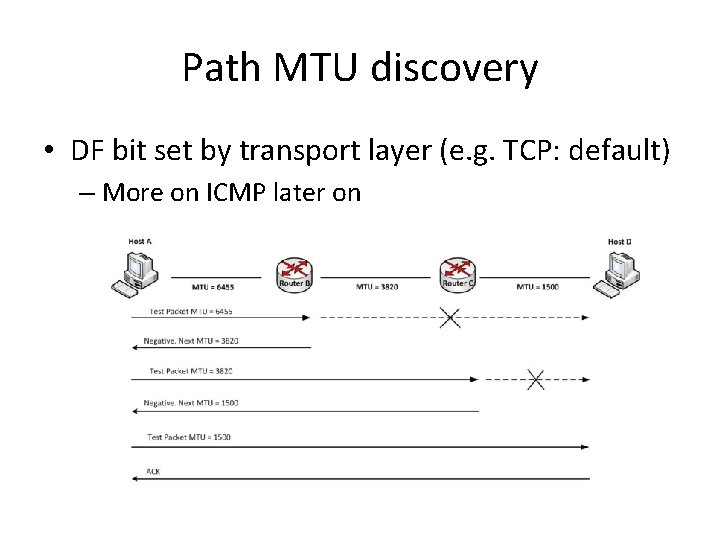
Path MTU discovery • DF bit set by transport layer (e. g. TCP: default) – More on ICMP later on
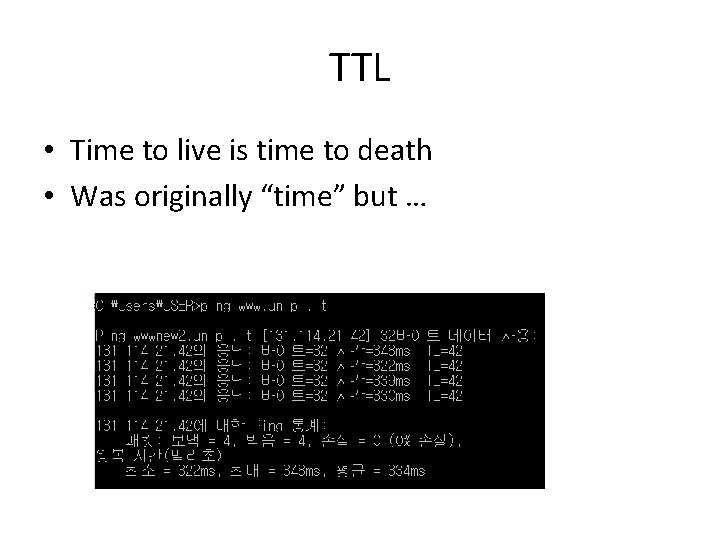
TTL • Time to live is time to death • Was originally “time” but …
TTL • Initial value depends on OS, protocol, and kernel version – Try “ping localhost” • Windows: 128 • Linux: 64 or 255 • Android: 64 (/proc/sys/net/ipv 4/ip_default_ttl)
Tracert/traceroute • Is exploiting TTL • When a router finds an incoming diagram with TTL=1 • ICMP error message is sent back to the source of the killed IP datagram • See Wireshark with displayfilter “ICMP”
IP header
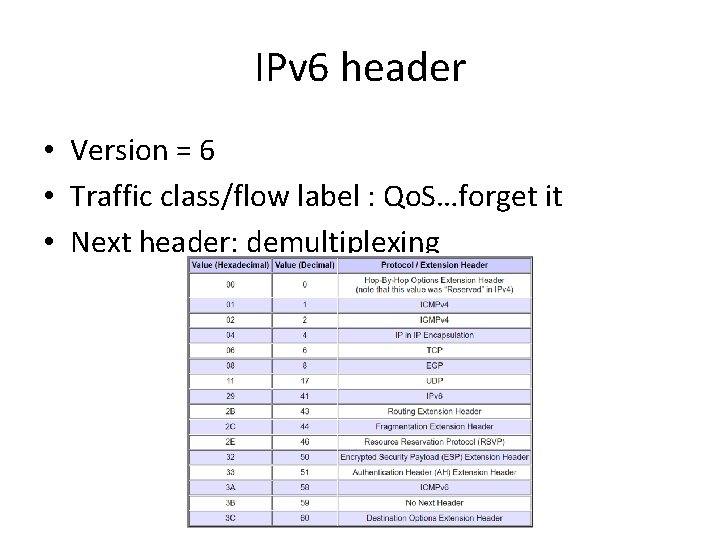
Protocol • Transport layer protocol that created this IP datagram • For demultiplexing • TCP=6, UDP=17, ICMP=1, IGMP=2, …
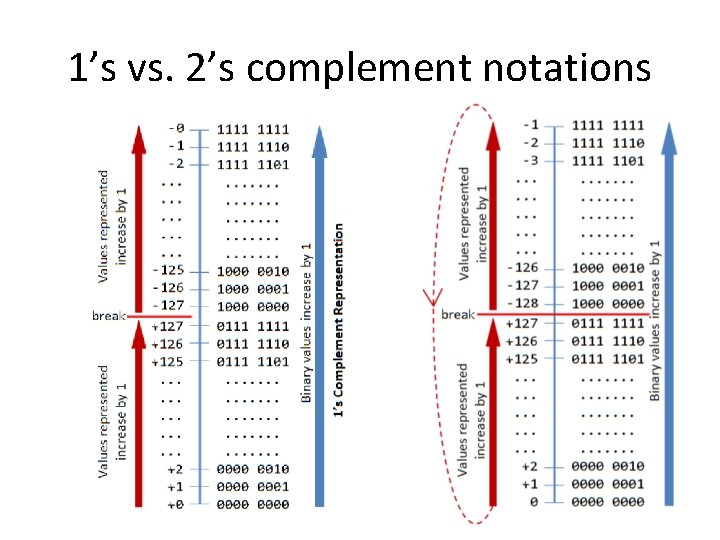
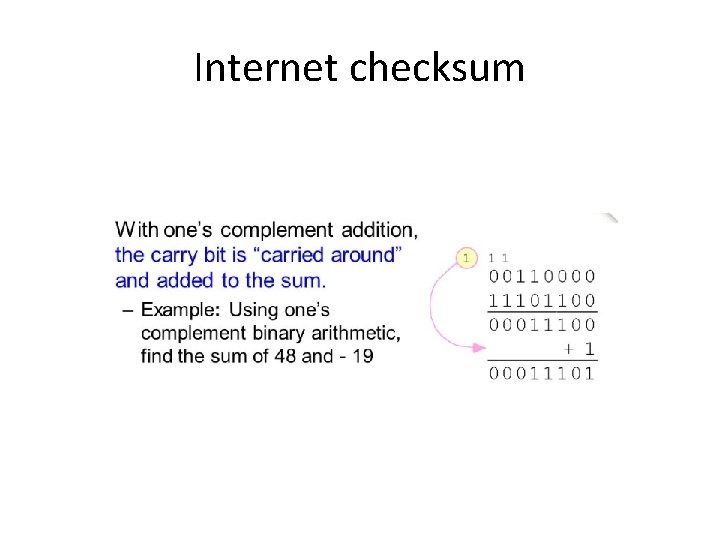
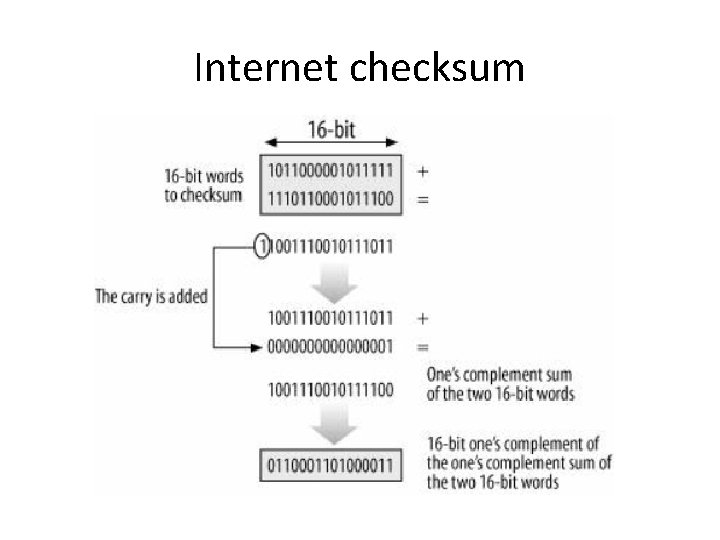
Internet checksum • Check, sum • 1’s complement of 1’s complement sum – Almost all Internet protocols use it • 1’s complement = sign change • S + (-S) = 0: check?
1’s vs. 2’s complement notations
Internet checksum
Internet checksum
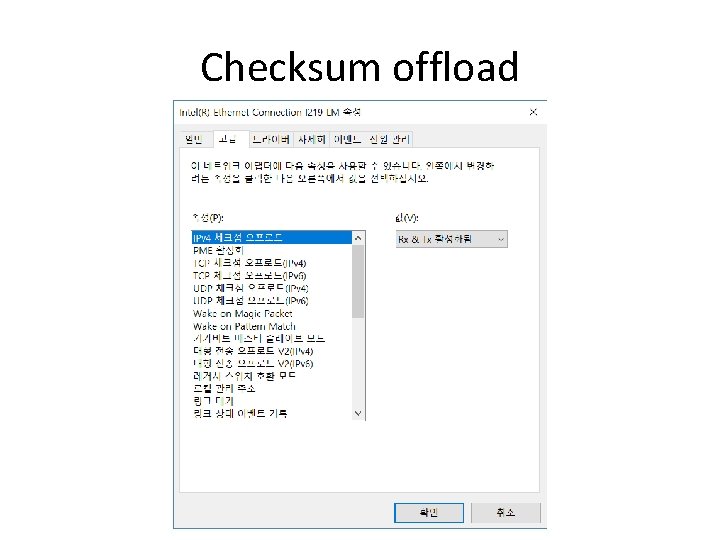
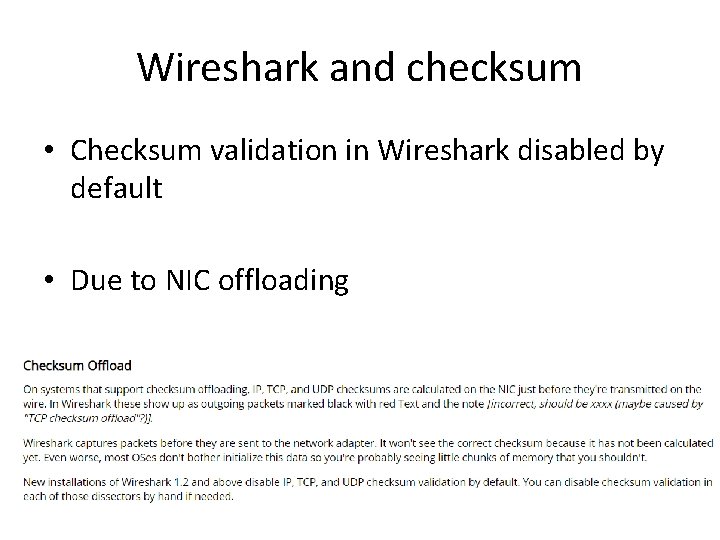
Checksum offload
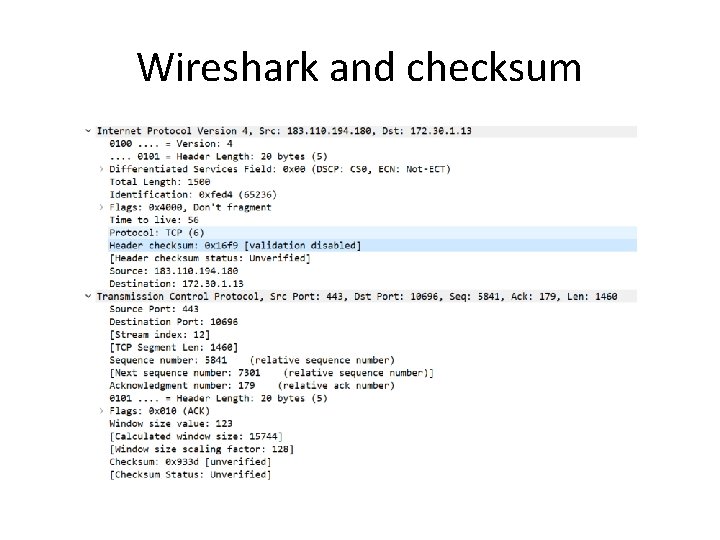
Wireshark and checksum • Checksum validation in Wireshark disabled by default • Due to NIC offloading
Wireshark and checksum
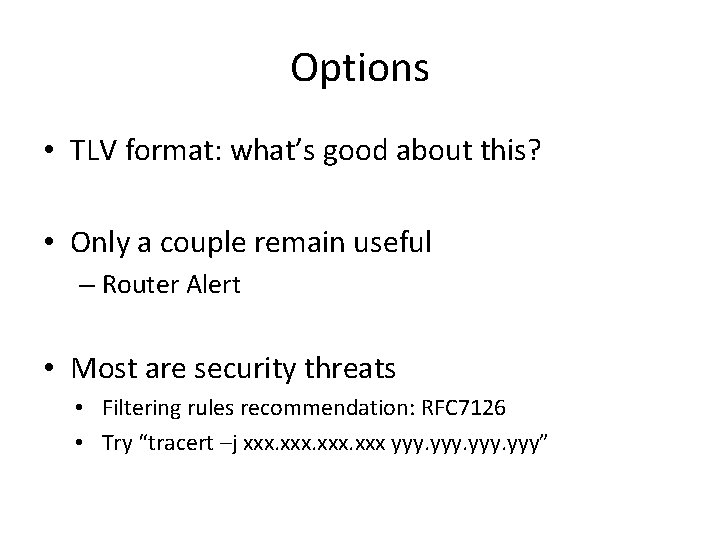
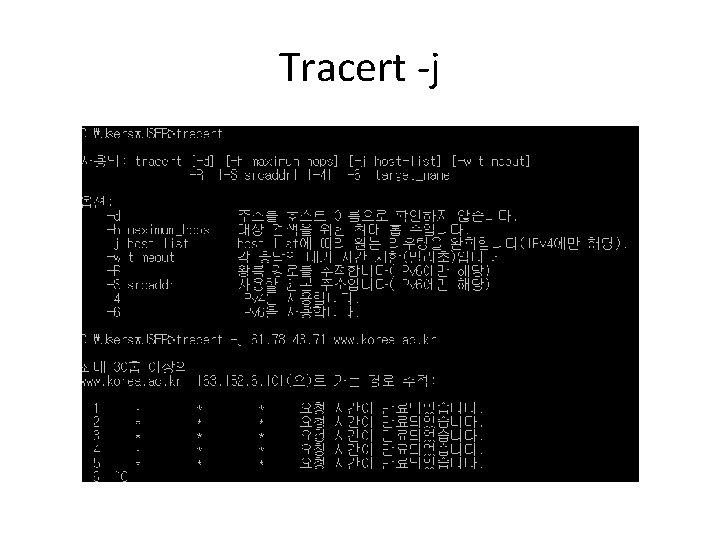
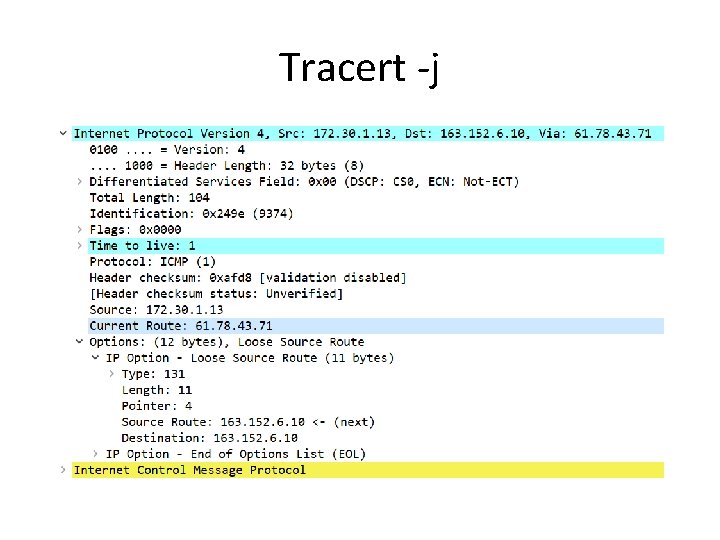
Options • TLV format: what’s good about this? • Only a couple remain useful – Router Alert • Most are security threats • Filtering rules recommendation: RFC 7126 • Try “tracert –j xxx yyy”
Tracert -j
Tracert -j
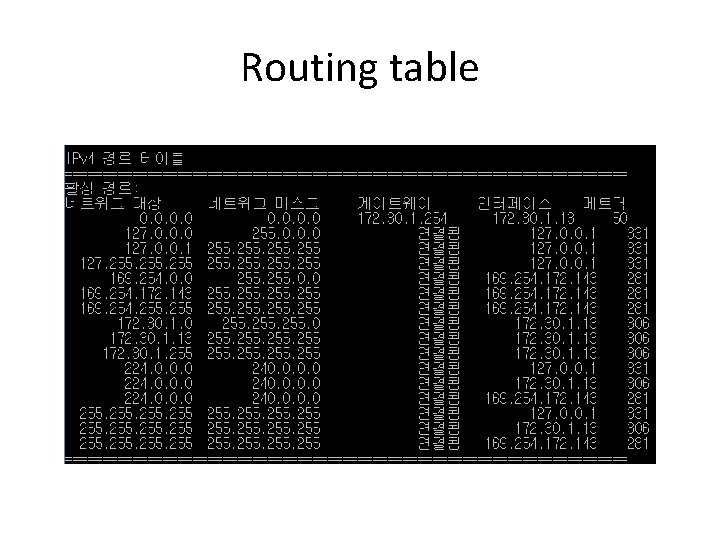
Routing table
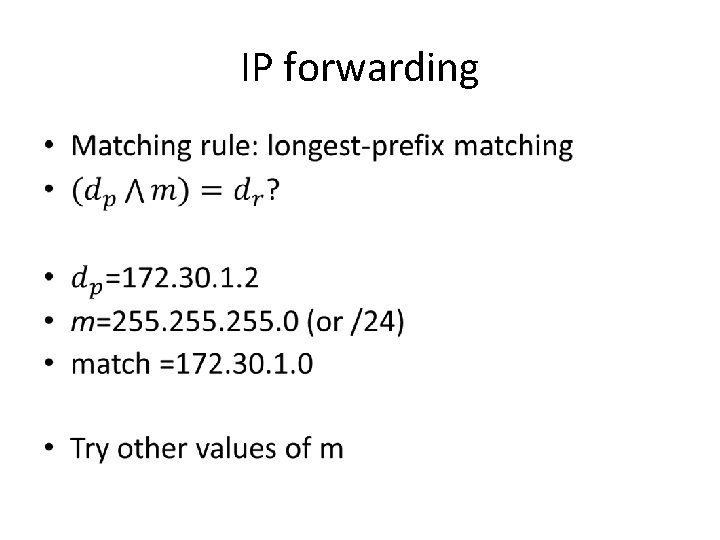
IP forwarding •
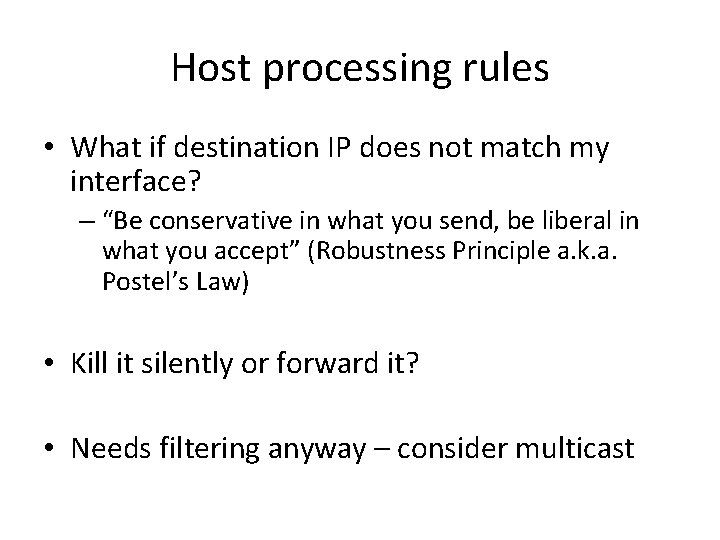
Host processing rules • What if destination IP does not match my interface? – “Be conservative in what you send, be liberal in what you accept” (Robustness Principle a. k. a. Postel’s Law) • Kill it silently or forward it? • Needs filtering anyway – consider multicast
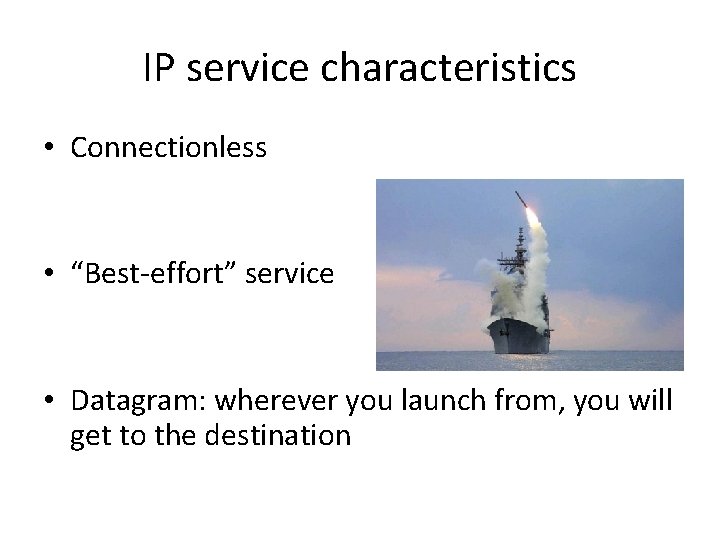
IP service characteristics • Connectionless • “Best-effort” service • Datagram: wherever you launch from, you will get to the destination
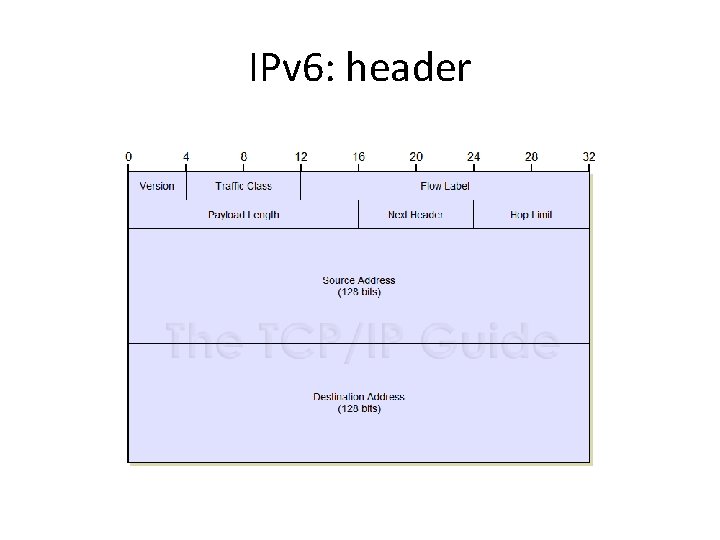
IPv 6: header
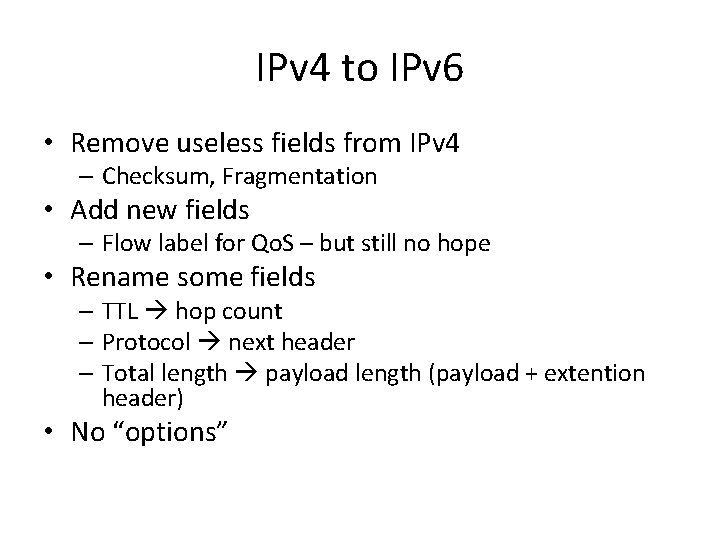
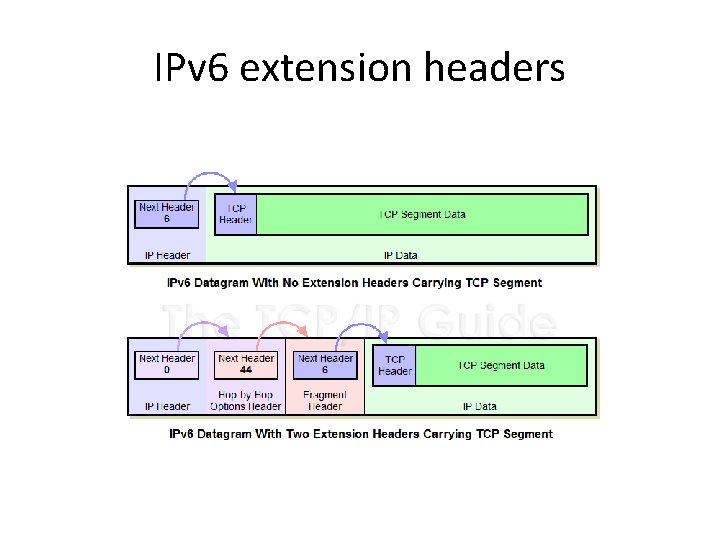
IPv 4 to IPv 6 • Remove useless fields from IPv 4 – Checksum, Fragmentation • Add new fields – Flow label for Qo. S – but still no hope • Rename some fields – TTL hop count – Protocol next header – Total length payload length (payload + extention header) • No “options”
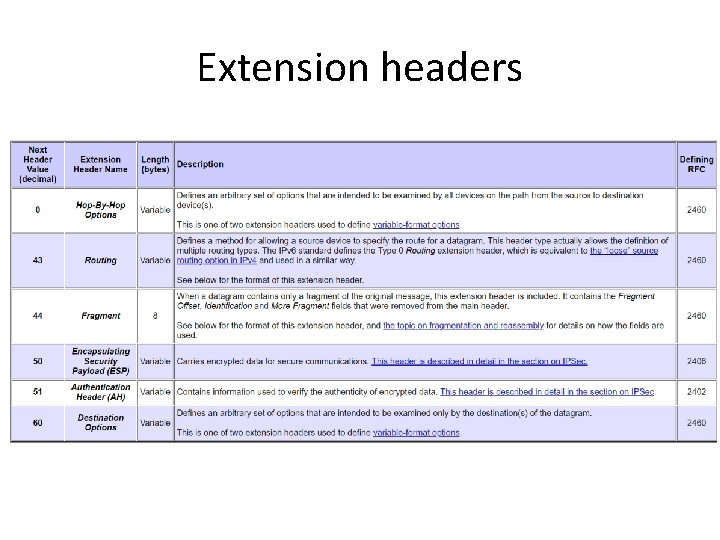
IPv 6 header • Version = 6 • Traffic class/flow label : Qo. S…forget it • Next header: demultiplexing
IPv 6 extension headers
Extension headers
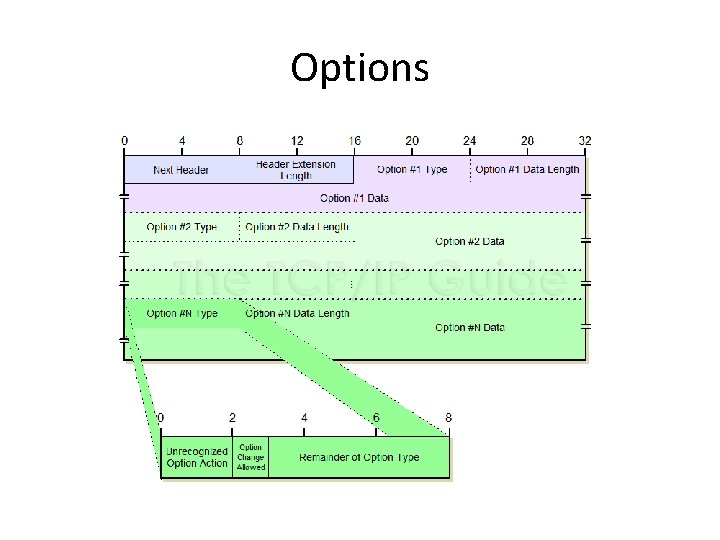
Options
Misc. • No ARP in IPv 6 world • No IGMP in IPv 6 world • They are done by ICMPv 6 • But the functionalities live!