
5 HT 1 Breceptor regulation by p GSK
5 -HT 1 B-receptor regulation by p. GSK 3 B due to acute ethanol exposure on mice Akhil Ramaswamy
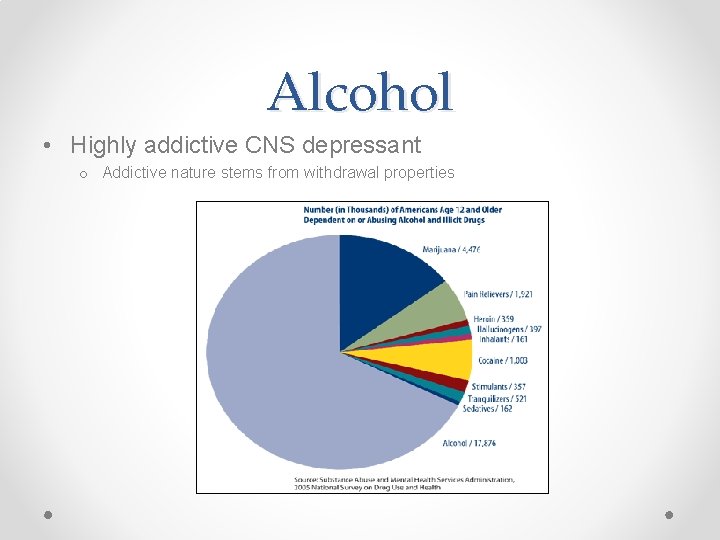
Alcohol • Highly addictive CNS depressant o Addictive nature stems from withdrawal properties
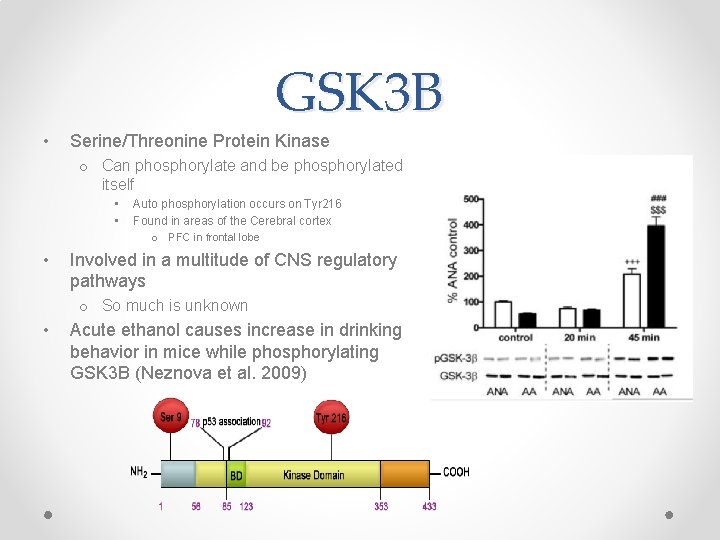
GSK 3 B • Serine/Threonine Protein Kinase o Can phosphorylate and be phosphorylated itself • • • Auto phosphorylation occurs on Tyr 216 Found in areas of the Cerebral cortex o PFC in frontal lobe Involved in a multitude of CNS regulatory pathways o So much is unknown • Acute ethanol causes increase in drinking behavior in mice while phosphorylating GSK 3 B (Neznova et al. 2009)
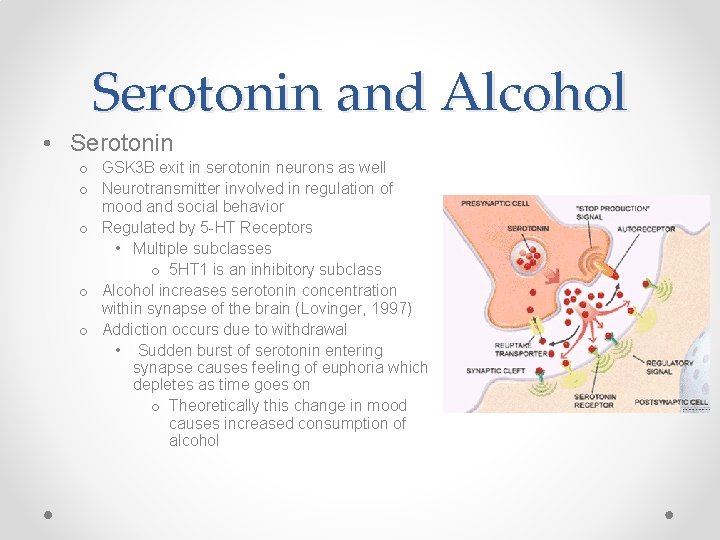
Serotonin and Alcohol • Serotonin o GSK 3 B exit in serotonin neurons as well o Neurotransmitter involved in regulation of mood and social behavior o Regulated by 5 -HT Receptors • Multiple subclasses o 5 HT 1 is an inhibitory subclass o Alcohol increases serotonin concentration within synapse of the brain (Lovinger, 1997) o Addiction occurs due to withdrawal • Sudden burst of serotonin entering synapse causes feeling of euphoria which depletes as time goes on o Theoretically this change in mood causes increased consumption of alcohol
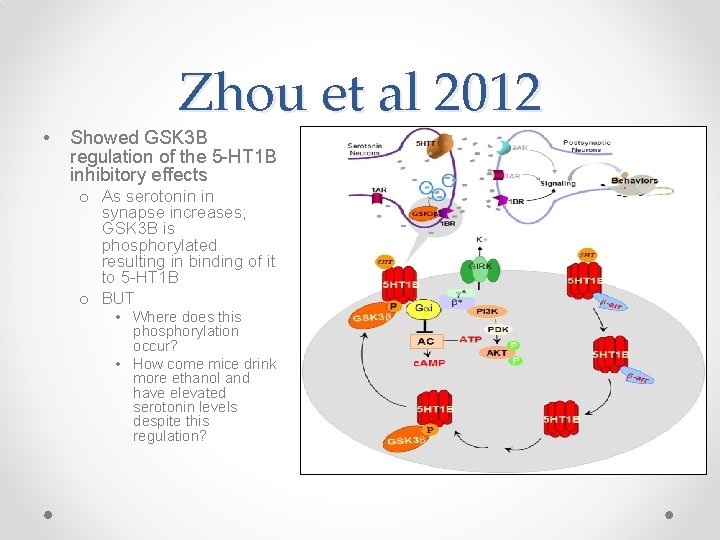
• Zhou et al 2012 Showed GSK 3 B regulation of the 5 -HT 1 B inhibitory effects o As serotonin in synapse increases; GSK 3 B is phosphorylated resulting in binding of it to 5 -HT 1 B o BUT • Where does this phosphorylation occur? • How come mice drink more ethanol and have elevated serotonin levels despite this regulation?
Does ethanol act to phosphorylate the tyrosine site of GSK 3 B causing an excitatory response and prevents binding with 5 -HT 1 B?
Overview of experiment • Three groups o Tyr 216 mutated o Ser 9 mutated o No mutation • All three will be given alcohol • Separate fourth group will be used to determine basal serotonin levels for comparison purposes
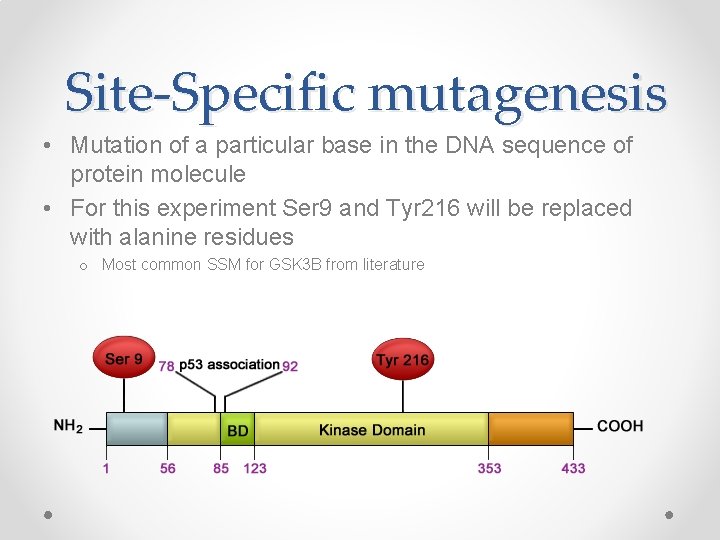
Site-Specific mutagenesis • Mutation of a particular base in the DNA sequence of protein molecule • For this experiment Ser 9 and Tyr 216 will be replaced with alanine residues o Most common SSM for GSK 3 B from literature
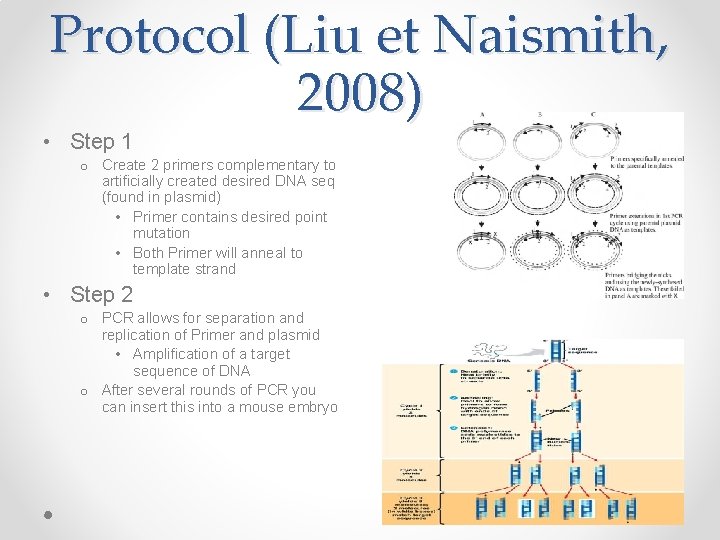
Protocol (Liu et Naismith, 2008) • Step 1 o Create 2 primers complementary to artificially created desired DNA seq (found in plasmid) • Primer contains desired point mutation • Both Primer will anneal to template strand • Step 2 o PCR allows for separation and replication of Primer and plasmid • Amplification of a target sequence of DNA o After several rounds of PCR you can insert this into a mouse embryo
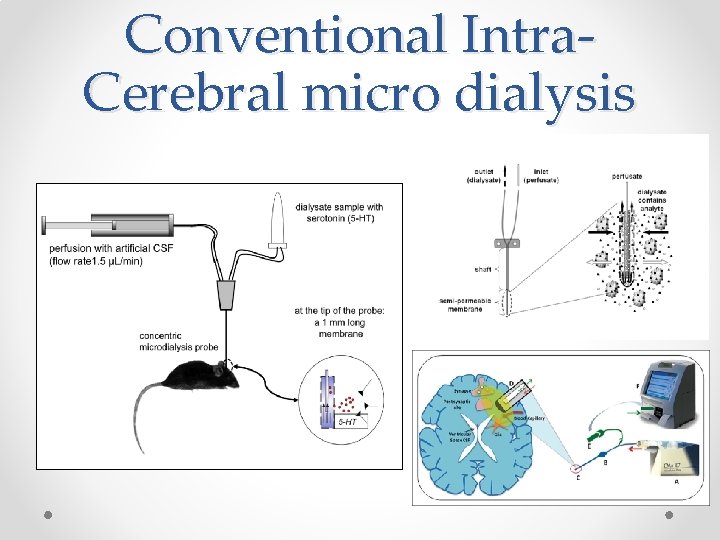
Conventional Intra. Cerebral micro dialysis
Results and Discussion • What to expect: o Ser 9 and control mutated mice should show high readings of serotonin • Ser 9 will have no Ser site for phosphorylation resulting in build up of serotonin o Tyr 216 mutated mice should show basal readings of serotonin • Ethanol cannot bind due to no Tyr 216 site so readings should be similar to basal levels
References • • • Polter, Abigail M. et al. “Functional Significance of Glycogen Synthase Kinase-3 Regulation by Serotonin. ” Cellular signalling 24. 1 (2012): 265– 271. PMC. Web. 10 Nov. Polter, Abigail M. , and Xiaohua Li. “Glycogen Synthase Kinase-3 Is an Intermediate Modulator of Serotonin Neurotransmission. ” Frontiers in Molecular Neuroscience 4 (2011): 31. PMC. Web. 14 Nov. 2017. Zhou W, Chen L, Paul J, Yang S, Li F, et al. (2012) The Effects of Glycogen Synthase Kinase-3 beta in Serotonin Neurons. PLo. S ONE 7(8): e 43262. doi: 10. 1371/journal. pone. 0043262 Liu, Huanting, and James H Naismith. “An Efficient One-Step Site-Directed Deletion, Insertion, Single and Multiple. Site Plasmid Mutagenesis Protocol. ” BMC Biotechnology, vol. 8, no. 91, 4 Dec. 2008, doi: 10. 1186/1472 -6750 -8 -91. Neznanova, O. et al. “Acute Ethanol Challenge Inhibits Glycogen Synthase Kinase-3 Beta in the Rat Prefrontal Cortex. ” The international journal of neuropsychopharmacology / official scientific journal of the Collegium Internationale Neuropsychopharmacologicum (CINP) 12. 2 (2009): 275– 280. PMC. Web. 26 Nov. 2017. Prescription Drug Abuse: A Fast-Growing Problem | NIH Medline. Plus the Magazine. " U. S National Library of Medicine. U. S. National Library of Medicine, n. d. Web. 05 June 2016. <https: //www. nlm. nih. gov/medlineplus/magazine/issues/fall 11/articles/fall 11 pg 21. html>. (Citation for Figure 1) Lovinger, D. M. (1997) Serotonin’s role in alcohol’s effects on the brain. Alcohol Health Res World 21, 114– 120. Gardier, Alain. (2013). Antidepressant activity: Contribution of brain microdialysis in knock-out mice to the understanding of BDNF/5 -HT transporter/5 -HT autoreceptor interactions. Frontiers in pharmacology. 4. 98. 10. 3389/fphar. 2013. 00098. Bax B et al. The structure of phosphorylated GSK-3 beta complexed with a peptide, FRATtide, that inhibits betacatenin phosphorylation. Structure 2001, 9, 1143– 115210. 1016/S 0969 -2126(01)00679 -7.
- Slides: 12