
5 HIGH IMPACT TEACHING PRACTICES Presentation by L
“ 5 HIGH IMPACT TEACHING PRACTICES” Presentation by: L. Dee Fink, Ph. D. Educational Consultant in Higher Education Author of: Creating Significant Learning Experiences University of Louisville Health Sciences Campus February 8, 2018
5 High Impact Teaching Practices Neither I nor members of my family have financial and/or commercial interest to disclose relating to the content of this presentation.
5 High Impact Teaching Practices Your Situation at Uof. L HSC: 2 Questions • All of you want to be good medical educators. • Ultimate Goal: Help your students… Ø Learn well Ø Complete their health professions training Ø Become competent health care providers and leaders within the profession 1. Your Professional Responsibility: • “How can I support these goals, in my own courses? ” 2. A Personal Question: “Your Life as a Teacher” • What also makes [or would make] teaching your courses fulfilling – for you?
5 High Impact Teaching Practices Your Situation Questions now: What can you do, in your own courses, to: a. Help your students learn well? b. Play your role in helping your health professions school fulfill its obligations? c. Teach in a way that will be fulfilling to you (as well as to your students)?
5 High Impact Teaching Practices Two Basic Perspectives: 1. Paradigm Shift: From “Teaching” to “Learning” 2. Continuous Improvement
5 High Impact Teaching Practices Basic Argument: Ø If we want BIG IMPROVEMENTS in STUDENT LEARNING, … Ø We must make BIG IMPROVEMENTS in OUR TEACHING!
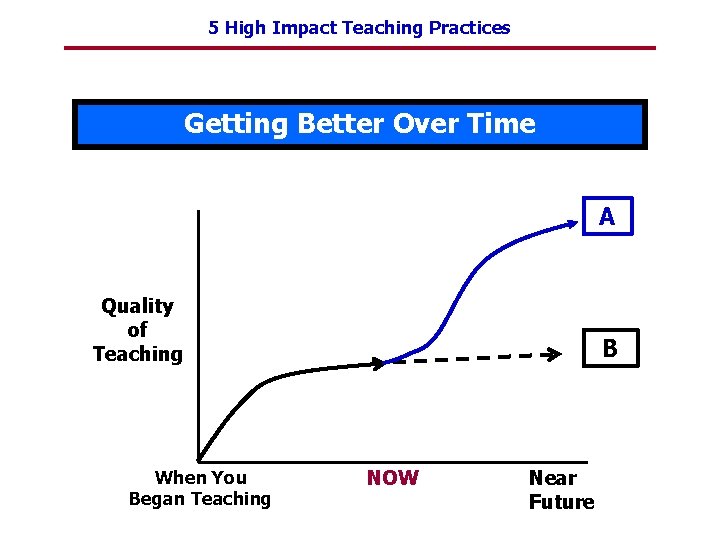
5 High Impact Teaching Practices Getting Better Over Time A Quality of Teaching When You Began Teaching B NOW Near Future
5 High Impact Teaching Practices GOOD NEWS: LOTS OF BOOKS WITH POWERFUL IDEAS ON TEACHING & LEARNING
5 High Impact Teaching Practices “New” Ideas, Best Practices in Teaching (Hi. Educ. ): • How students learn • Learning-centered teaching • Designing learning experiences • Identifying what students might learn • Using active learning • Using small groups • Assessing student learning • Motivating and enabling students to learn • Using powerful teaching strategies • Teaching large classes • Using instructional technology • Evaluating teaching • Reflecting on your work as a student [teacher]
5 High Impact Teaching Practices “ 5 HIGH IMPACT TEACHING PRACTICES” 1. Learning-Centered Course Design 2. Team-Based Learning 3. Help Students Become Self-Directing Learners 4. Engage Students in Service Learning 5. Be a Leader with Your Students
5 High Impact Teaching Practices “ 5 HIGH IMPACT TEACHING PRACTICES” 1. Learning-Centered Course Design
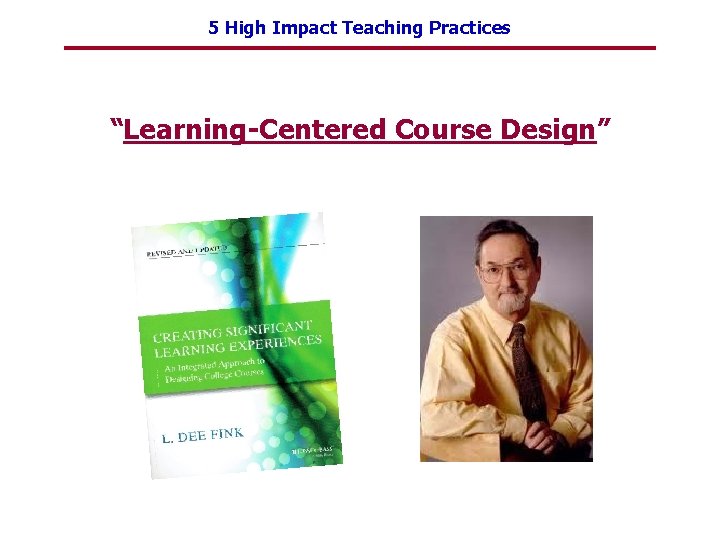
5 High Impact Teaching Practices “Learning-Centered Course Design”
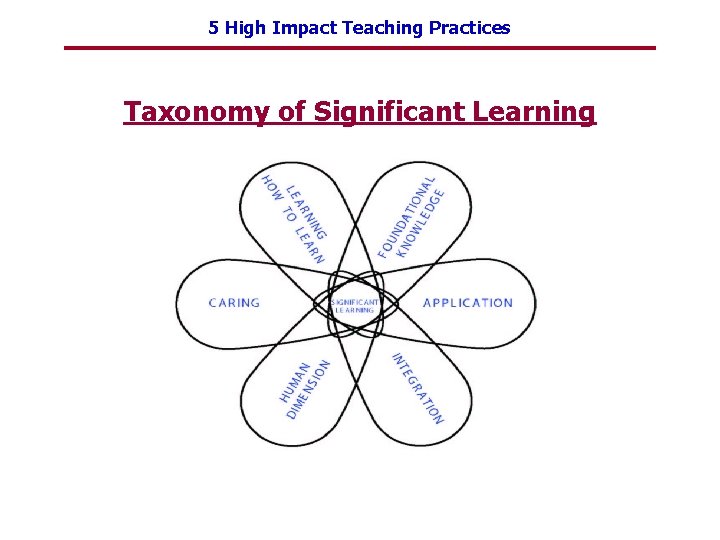
5 High Impact Teaching Practices Taxonomy of Significant Learning
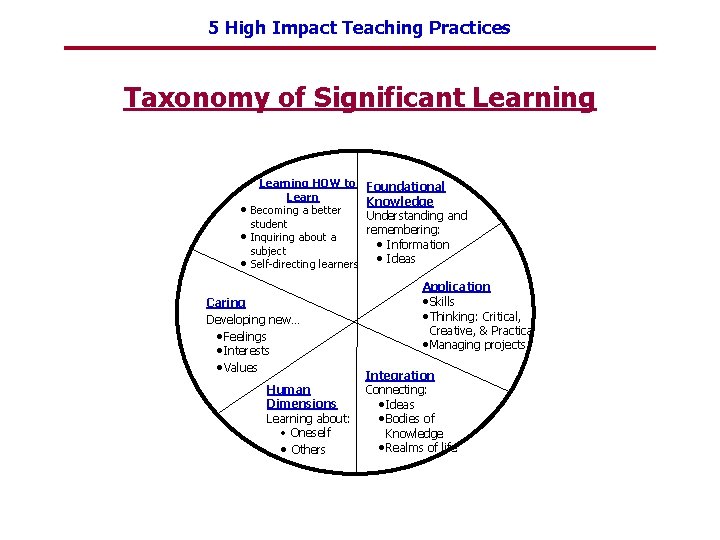
5 High Impact Teaching Practices Taxonomy of Significant Learning HOW to Learn · Becoming a better student · Inquiring about a subject · Self-directing learners Caring Developing new… · Feelings · Interests · Values Human Dimensions Learning about: · Oneself · Others Foundational Knowledge Understanding and remembering: · Information · Ideas Application · Skills · Thinking: Critical, Creative, & Practical · Managing projects Integration Connecting: ·Ideas ·Bodies of Knowledge ·Realms of life
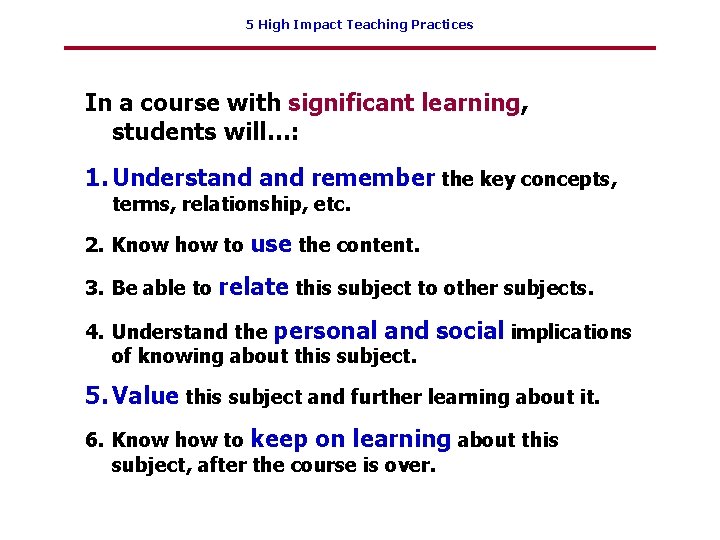
5 High Impact Teaching Practices In a course with significant learning, students will…: 1. Understand remember the key concepts, terms, relationship, etc. 2. Know how to use the content. 3. Be able to relate this subject to other subjects. 4. Understand the personal and social implications of knowing about this subject. 5. Value this subject and further learning about it. 6. Know how to keep on learning about this subject, after the course is over.
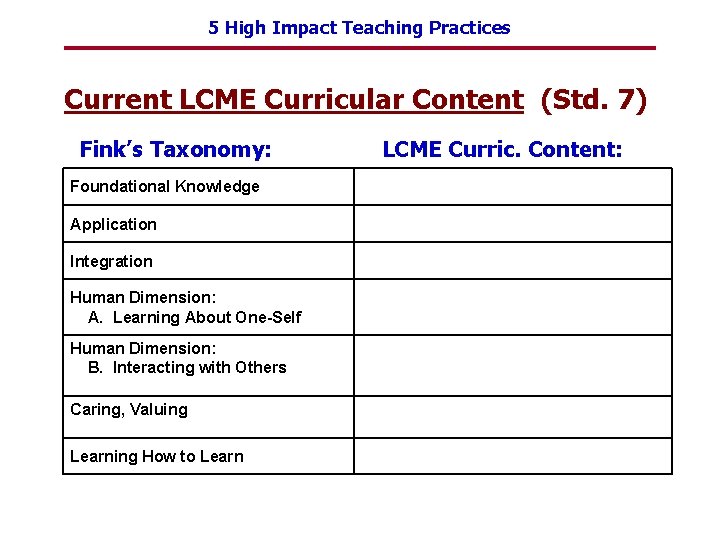
5 High Impact Teaching Practices Current LCME Curricular Content (Std. 7) Fink’s Taxonomy: Foundational Knowledge Application Integration Human Dimension: A. Learning About One-Self Human Dimension: B. Interacting with Others Caring, Valuing Learning How to Learn LCME Curric. Content:
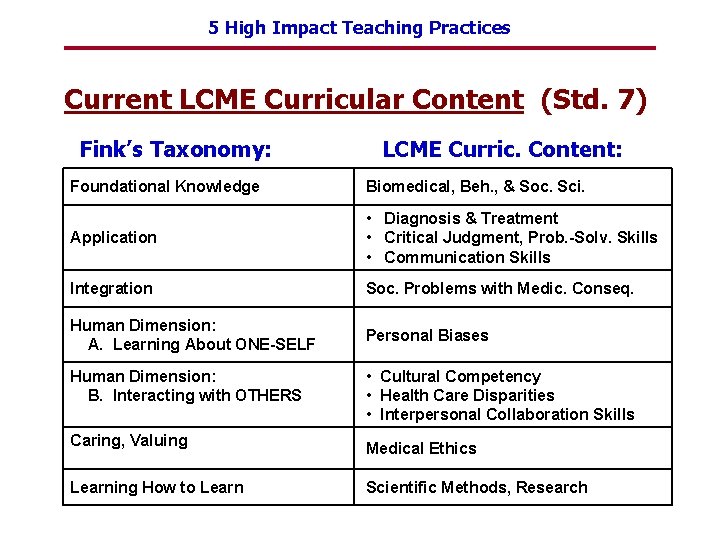
5 High Impact Teaching Practices Current LCME Curricular Content (Std. 7) Fink’s Taxonomy: LCME Curric. Content: Foundational Knowledge Biomedical, Beh. , & Soc. Sci. Application • Diagnosis & Treatment • Critical Judgment, Prob. -Solv. Skills • Communication Skills Integration Soc. Problems with Medic. Conseq. Human Dimension: A. Learning About ONE-SELF Personal Biases Human Dimension: B. Interacting with OTHERS • Cultural Competency • Health Care Disparities • Interpersonal Collaboration Skills Caring, Valuing Medical Ethics Learning How to Learn Scientific Methods, Research
5 High Impact Teaching Practices Current ACGME Core Competencies Fink’s Taxonomy: Foundational Knowledge Application Integration Human Dimension: Interacting with Others • Human Dimension: Learning about One-Self • Learning How to Learn Caring, Values ACGME Competencies:
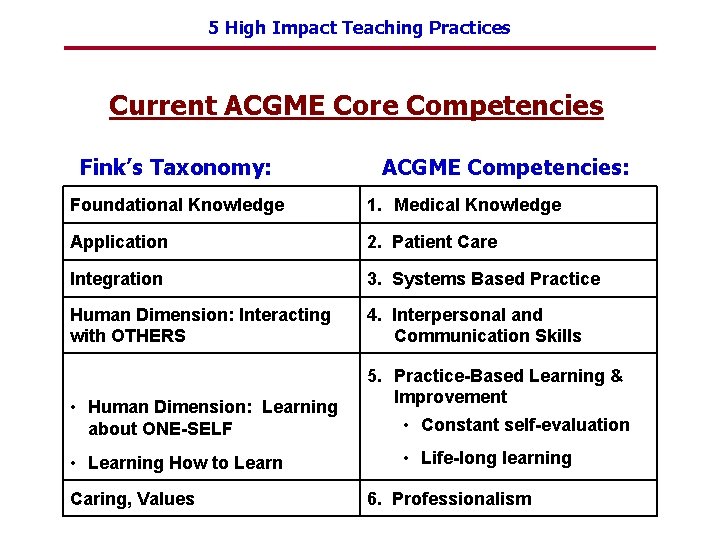
5 High Impact Teaching Practices Current ACGME Core Competencies Fink’s Taxonomy: ACGME Competencies: Foundational Knowledge 1. Medical Knowledge Application 2. Patient Care Integration 3. Systems Based Practice Human Dimension: Interacting with OTHERS 4. Interpersonal and Communication Skills • Human Dimension: Learning about ONE-SELF 5. Practice-Based Learning & Improvement • Constant self-evaluation • Learning How to Learn Caring, Values • Life-long learning 6. Professionalism
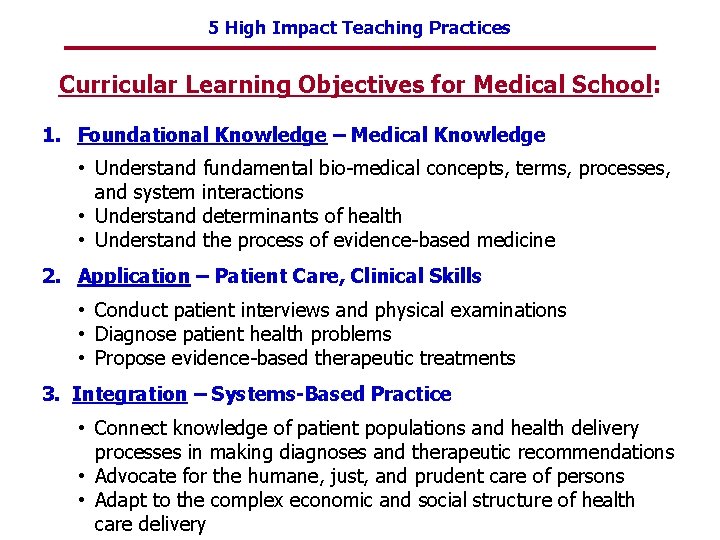
5 High Impact Teaching Practices Curricular Learning Objectives for Medical School: 1. Foundational Knowledge – Medical Knowledge • Understand fundamental bio-medical concepts, terms, processes, and system interactions • Understand determinants of health • Understand the process of evidence-based medicine 2. Application – Patient Care, Clinical Skills • Conduct patient interviews and physical examinations • Diagnose patient health problems • Propose evidence-based therapeutic treatments 3. Integration – Systems-Based Practice • Connect knowledge of patient populations and health delivery processes in making diagnoses and therapeutic recommendations • Advocate for the humane, just, and prudent care of persons • Adapt to the complex economic and social structure of health care delivery
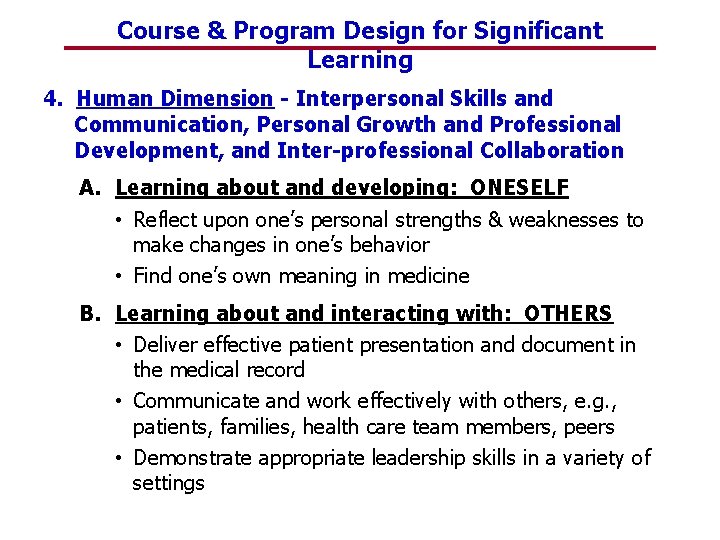
Course & Program Design for Significant Learning 4. Human Dimension - Interpersonal Skills and Communication, Personal Growth and Professional Development, and Inter-professional Collaboration A. Learning about and developing: ONESELF • Reflect upon one’s personal strengths & weaknesses to make changes in one’s behavior • Find one’s own meaning in medicine B. Learning about and interacting with: OTHERS • Deliver effective patient presentation and document in the medical record • Communicate and work effectively with others, e. g. , patients, families, health care team members, peers • Demonstrate appropriate leadership skills in a variety of settings
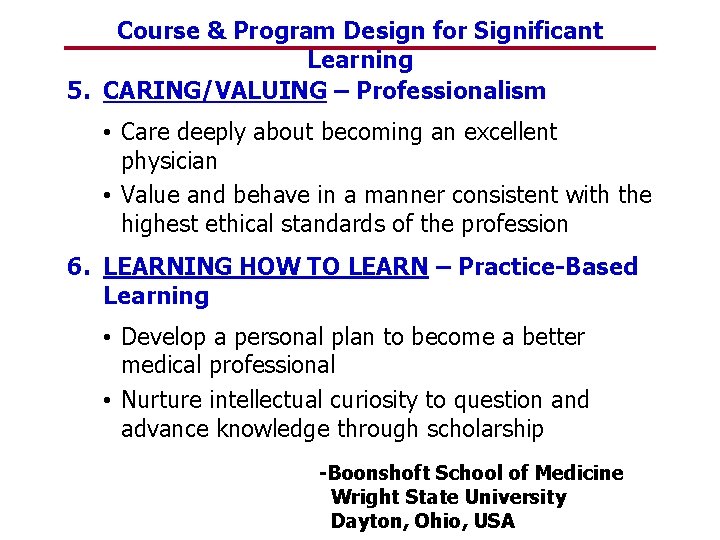
Course & Program Design for Significant Learning 5. CARING/VALUING – Professionalism • Care deeply about becoming an excellent physician • Value and behave in a manner consistent with the highest ethical standards of the profession 6. LEARNING HOW TO LEARN – Practice-Based Learning • Develop a personal plan to become a better medical professional • Nurture intellectual curiosity to question and advance knowledge through scholarship -Boonshoft School of Medicine Wright State University Dayton, Ohio, USA
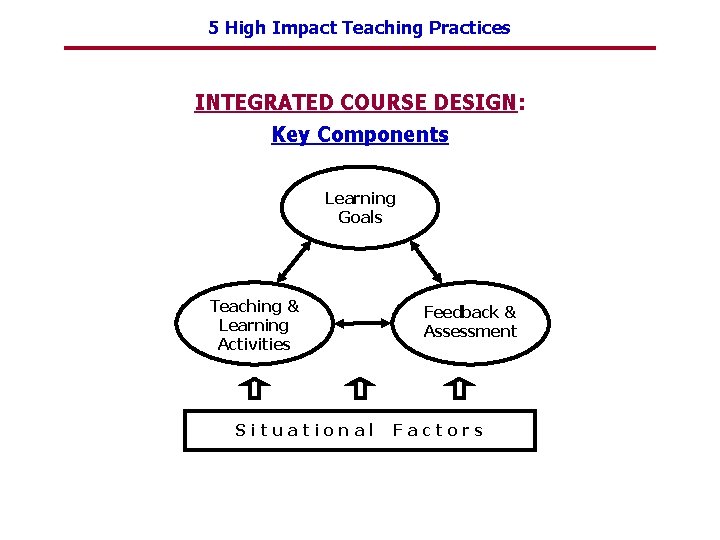
5 High Impact Teaching Practices INTEGRATED COURSE DESIGN: Key Components Learning Goals Teaching & Learning Activities Situational Feedback & Assessment Factors
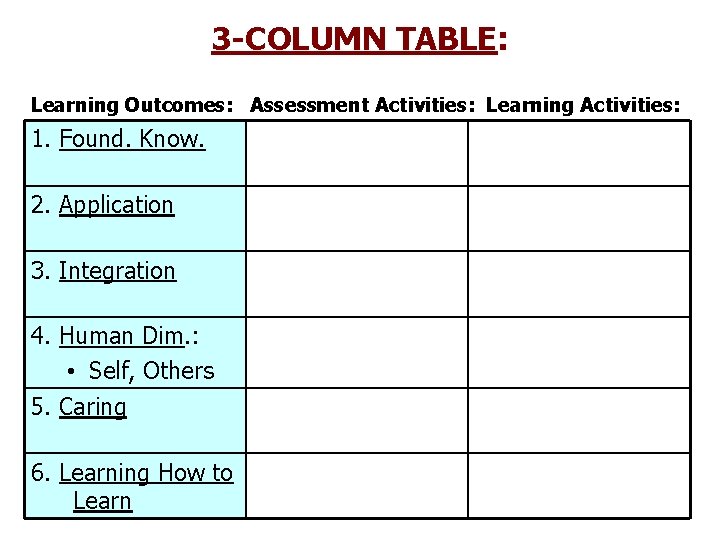
3 -COLUMN TABLE: Learning Outcomes: Assessment Activities: Learning Activities: 1. Found. Know. 2. Application 3. Integration 4. Human Dim. : • Self, Others 5. Caring 6. Learning How to Learn
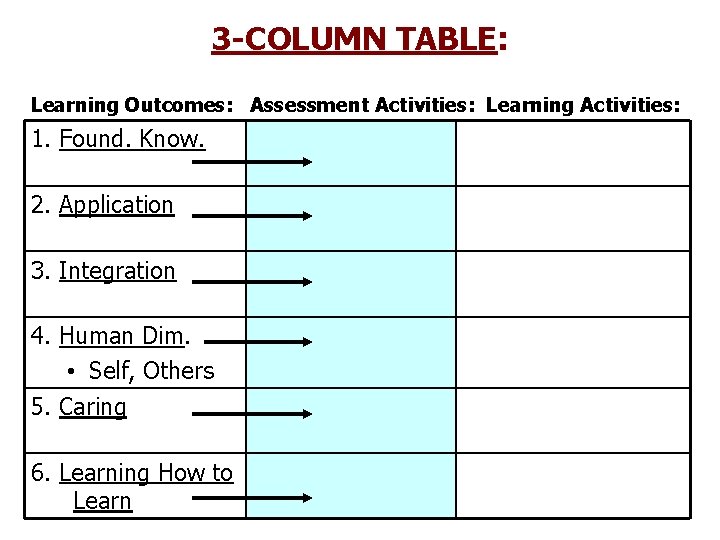
3 -COLUMN TABLE: Learning Outcomes: Assessment Activities: Learning Activities: 1. Found. Know. 2. Application 3. Integration 4. Human Dim. • Self, Others 5. Caring 6. Learning How to Learn
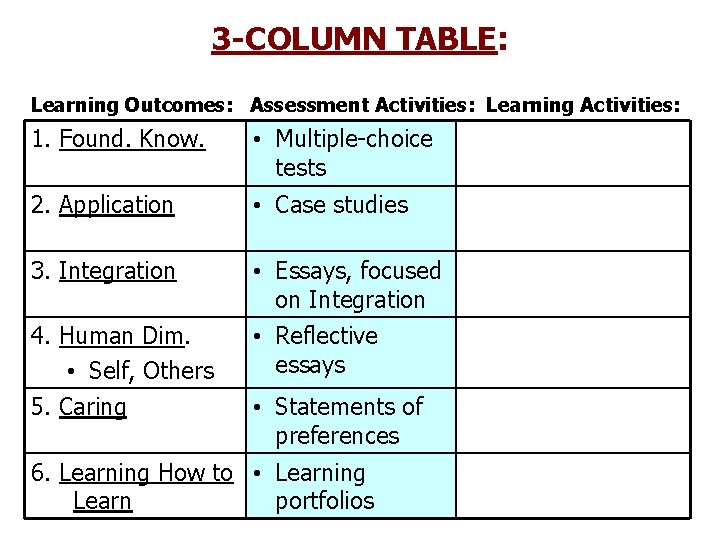
3 -COLUMN TABLE: Learning Outcomes: Assessment Activities: Learning Activities: 1. Found. Know. • Multiple-choice tests 2. Application • Case studies 3. Integration • Essays, focused on Integration 4. Human Dim. • Self, Others 5. Caring • Reflective essays • Statements of preferences 6. Learning How to • Learning Learn portfolios
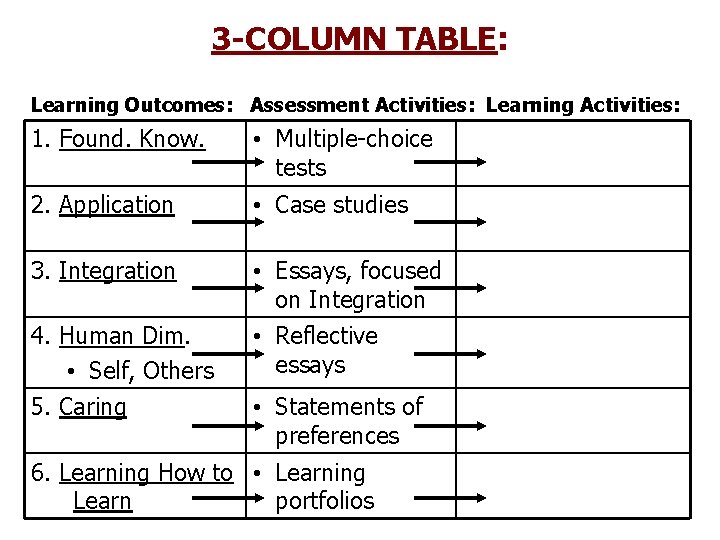
3 -COLUMN TABLE: Learning Outcomes: Assessment Activities: Learning Activities: 1. Found. Know. • Multiple-choice tests 2. Application • Case studies 3. Integration • Essays, focused on Integration 4. Human Dim. • Self, Others 5. Caring • Reflective essays • Statements of preferences 6. Learning How to • Learning Learn portfolios
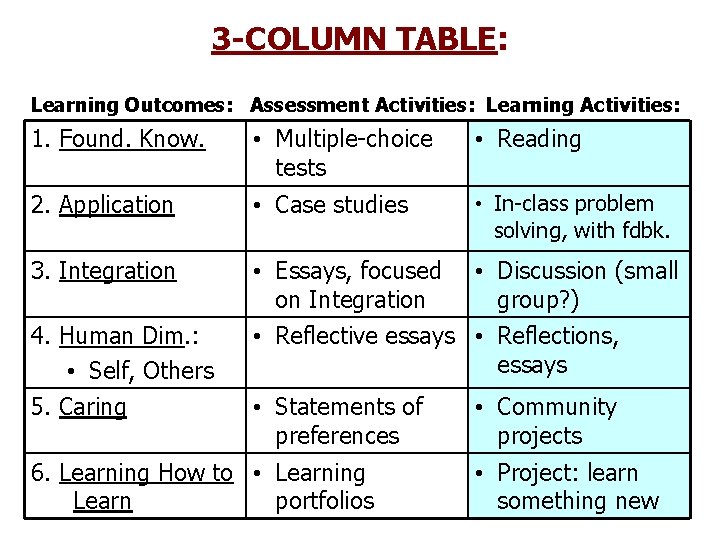
3 -COLUMN TABLE: Learning Outcomes: Assessment Activities: Learning Activities: 1. Found. Know. • Multiple-choice tests • Reading 2. Application • Case studies • In-class problem solving, with fdbk. 3. Integration • Essays, focused on Integration • Discussion (small group? ) 4. Human Dim. : • Self, Others 5. Caring • Reflective essays • Reflections, essays • Statements of preferences 6. Learning How to • Learning Learn portfolios • Community projects • Project: learn something new
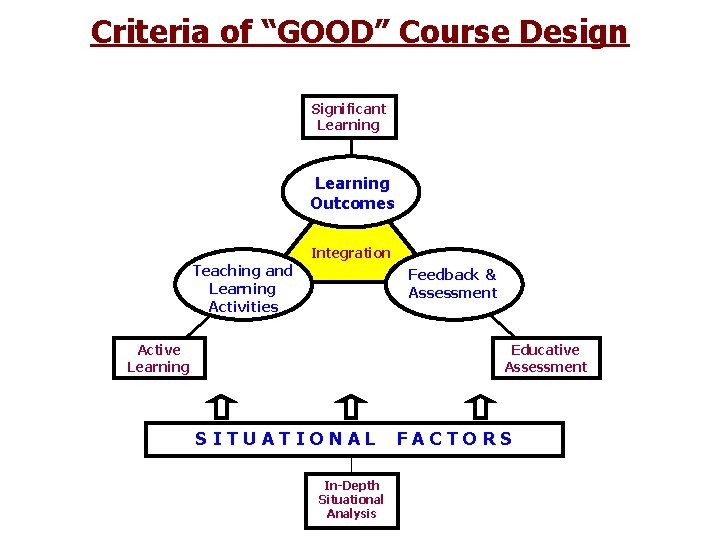
Criteria of “GOOD” Course Design Significant Learning Outcomes Integration Teaching and Learning Activities Feedback & Assessment Active Learning Educative Assessment SITUATIONAL In-Depth Situational Analysis FACTORS
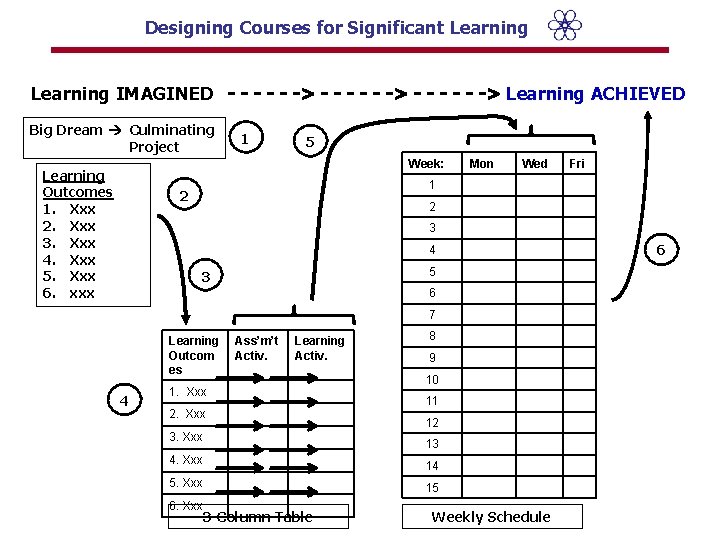
Designing Courses for Significant Learning IMAGINED - - -> - - -> Learning ACHIEVED Big Dream Culminating Project 1 5 Week: Learning Outcomes 1. Xxx 2. Xxx 3. Xxx 4. Xxx 5. Xxx 6. xxx Mon Wed Fri 1 2 2 3 4 5 3 6 7 Learning Outcom es 4 Ass’m’t Activ. Learning Activ. 1. Xxx 2. Xxx 3. Xxx 8 9 10 11 12 13 4. Xxx 14 5. Xxx 15 6. Xxx 3 -Column Table Weekly Schedule 6
Designing Courses for Significant Learning “ 5 HIGH IMPACT TEACHING PRACTICES” 1. Learning-Centered Course Design 2. Team-Based Learning
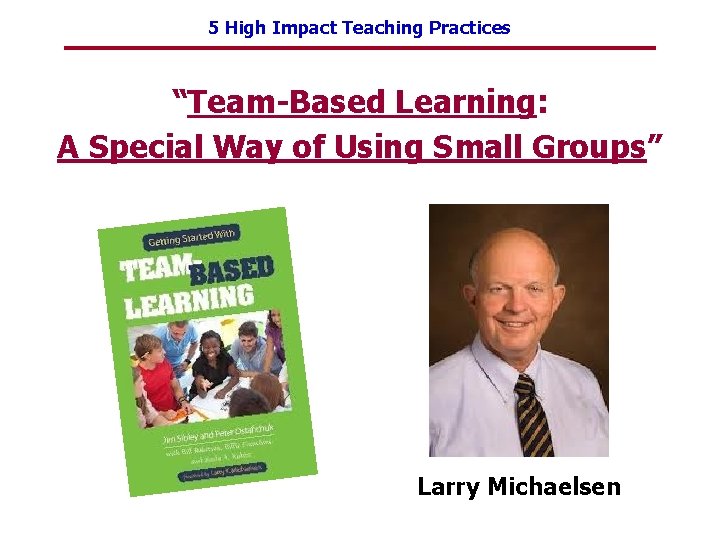
5 High Impact Teaching Practices “Team-Based Learning: A Special Way of Using Small Groups” Larry Michaelsen
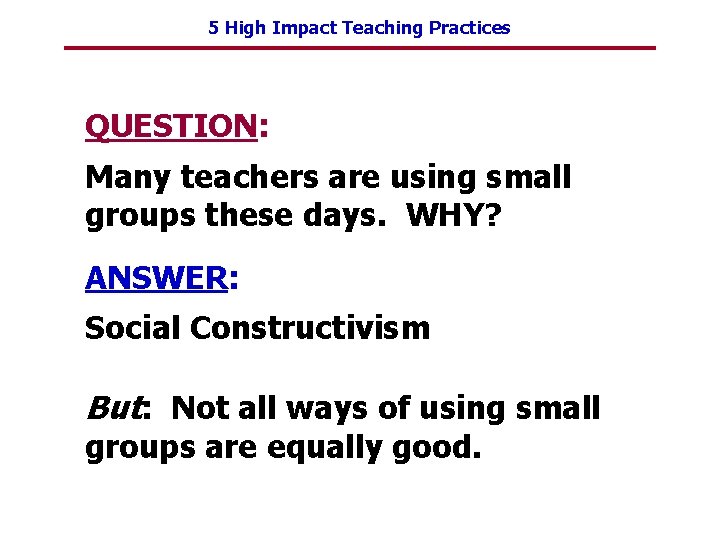
5 High Impact Teaching Practices QUESTION: Many teachers are using small groups these days. WHY? ANSWER: Social Constructivism But: Not all ways of using small groups are equally good.
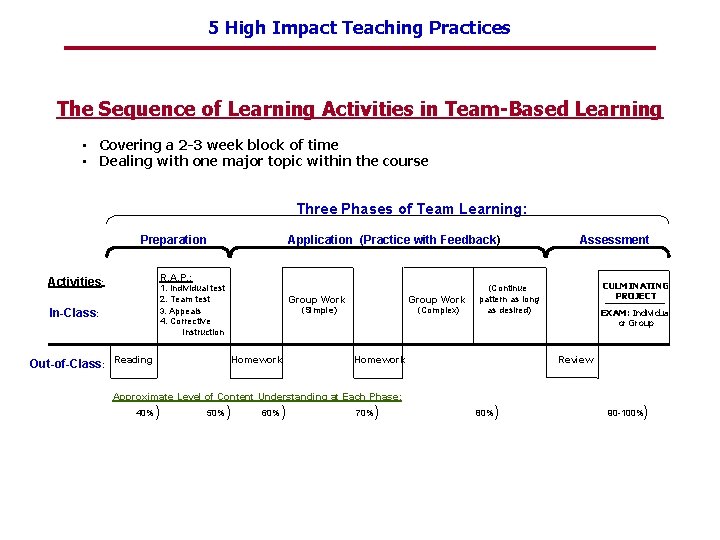
5 High Impact Teaching Practices The Sequence of Learning Activities in Team-Based Learning • Covering a 2 -3 week block of time • Dealing with one major topic within the course Three Phases of Team Learning: Preparation Application (Practice with Feedback) R. A. P. : Activities: 1. Individual test 2. Team test 3. Appeals 4. Corrective Instruction In-Class: Group Work (Simple) Out-of-Class: Reading Homework (Complex) Assessment CULMINATING PROJECT (Continue pattern as long as desired) Homework EXAM: Individual or Group Review Approximate Level of Content Understanding at Each Phase: 40% ) 50% ) 60% ) ) 70% ) 80% ) 90 -100%
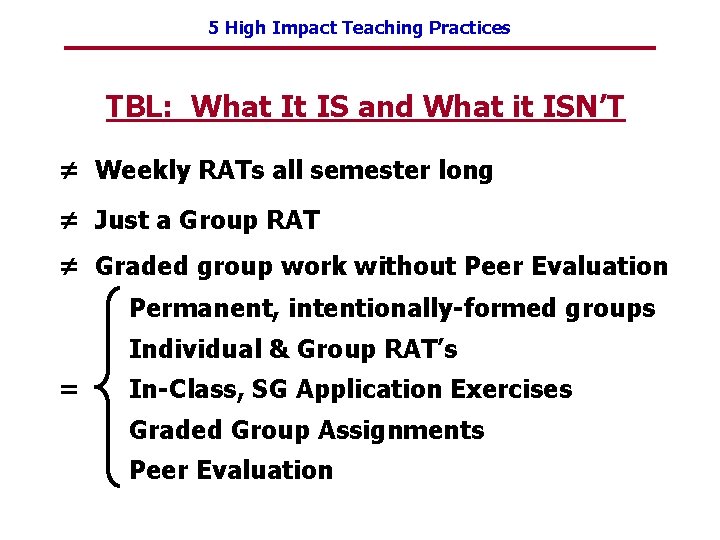
5 High Impact Teaching Practices TBL: What It IS and What it ISN’T ≠ Weekly RATs all semester long ≠ Just a Group RAT ≠ Graded group work without Peer Evaluation Permanent, intentionally-formed groups Individual & Group RAT’s = In-Class, SG Application Exercises Graded Group Assignments Peer Evaluation
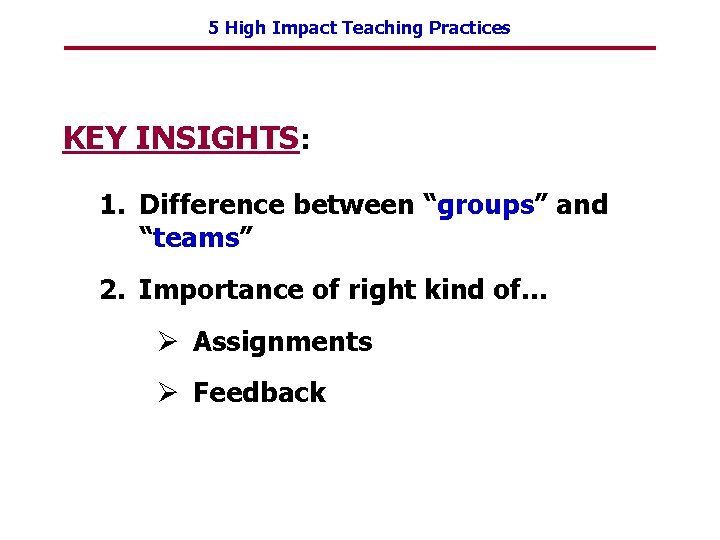
5 High Impact Teaching Practices KEY INSIGHTS: 1. Difference between “groups” and “teams” 2. Importance of right kind of… Ø Assignments Ø Feedback
5 High Impact Teaching Practices Question: What do professors and students think about TBL? Video from Duke University: http: //www. youtube. com/watch? v=WFd. Vfy c. AWg 4
5 High Impact Teaching Practices Student Reaction • Comments from a student in a course using TBL • Course: “Preparing for College-Level Teaching” – for graduate students in Engineering and the Sciences
5 High Impact Teaching Practices 1. NEED • “An engineering professional is almost always a part of a team. Engineering projects of any significant size are simply too much work or too much responsibility for one person to handle. ”
![5 High Impact Teaching Practices 1. NEED 2. RESULTS • “[Students] learn the material](http://slidetodoc.com/presentation_image_h/1a8b224ce43dbc4e86e624b4507c0de2/image-40.jpg "5 High Impact Teaching Practices 1. NEED 2. RESULTS • “[Students] learn the material")
5 High Impact Teaching Practices 1. NEED 2. RESULTS • “[Students] learn the material better, which is the obvious reason for using TBL. • “But there are so many other positives that emerge from the process, namely: v social, writing, speaking, presenting and thinking skills all get improved during TBL. v Students can learn more about scheduling, time management, working with difficult people, and organizing collective work through TBL. ”
5 High Impact Teaching Practices 1. NEED 2. RESULTS 3. IMPLICATIONS • “Without at least some TBL in their curriculum, they are significantly underprepared for what is waiting for them in industry. ”
5 High Impact Teaching Practices “ 5 HIGH IMPACT TEACHING PRACTICES” 1. Learning-Centered Course Design 2. Team-Based Learning 3. Help Students Become Self-Directing Learners
5 High Impact Teaching Practices Engage Students in REFLECTIVE Writing: “We learn not from experience – but from reflecting on experience. ” -Quote attributed to John Dewey
5 High Impact Teaching Practices Engage Students in REFLECTIVE Writing: Ø These Reflections can occur in the form of: ü One-minute papers ü Learning journals ü Learning portfolios
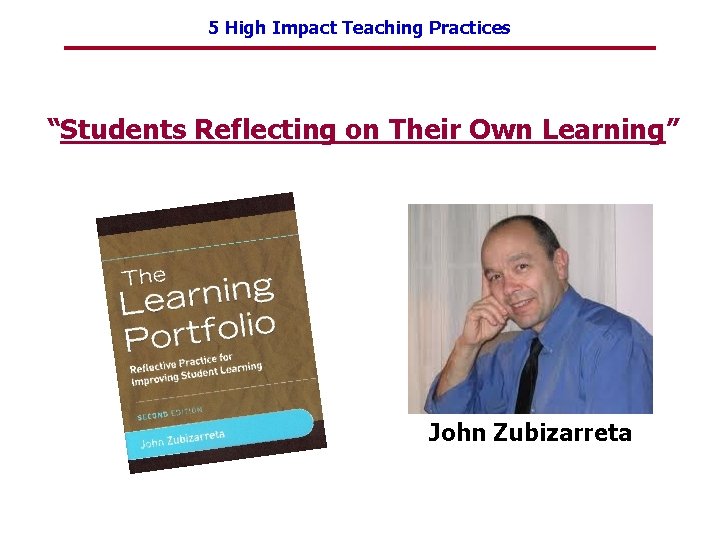
5 High Impact Teaching Practices “Students Reflecting on Their Own Learning” John Zubizarreta
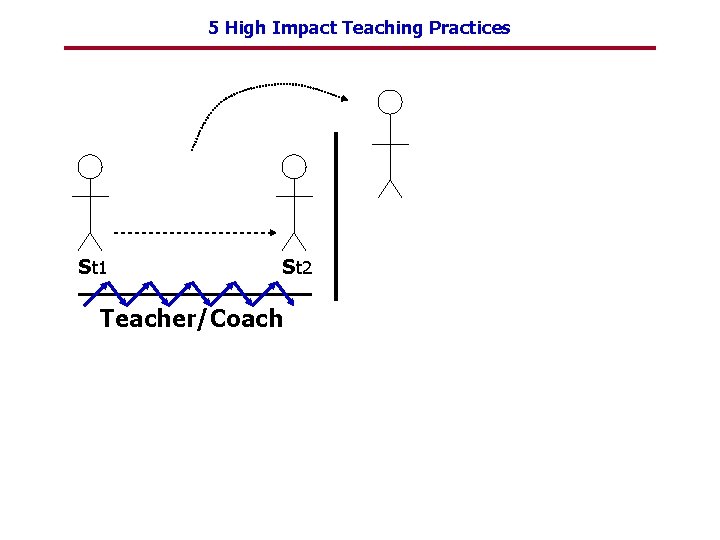
5 High Impact Teaching Practices St 1 St 2 Teacher/Coach
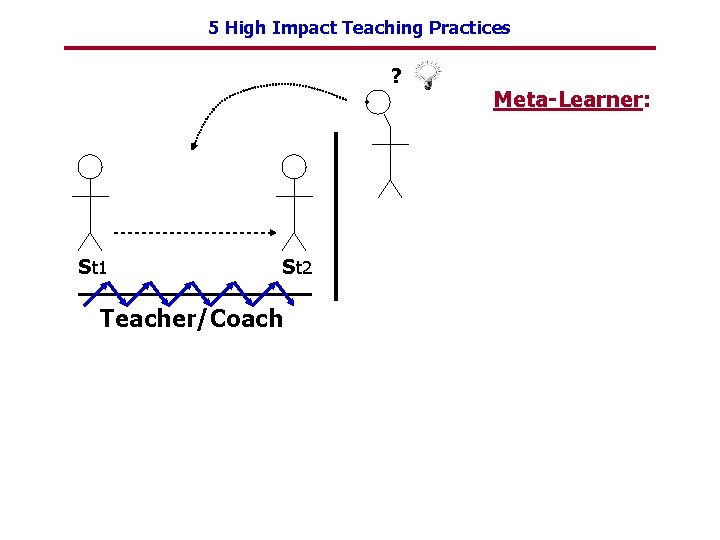
5 High Impact Teaching Practices ? • St 1 St 2 Teacher/Coach Meta-Learner:
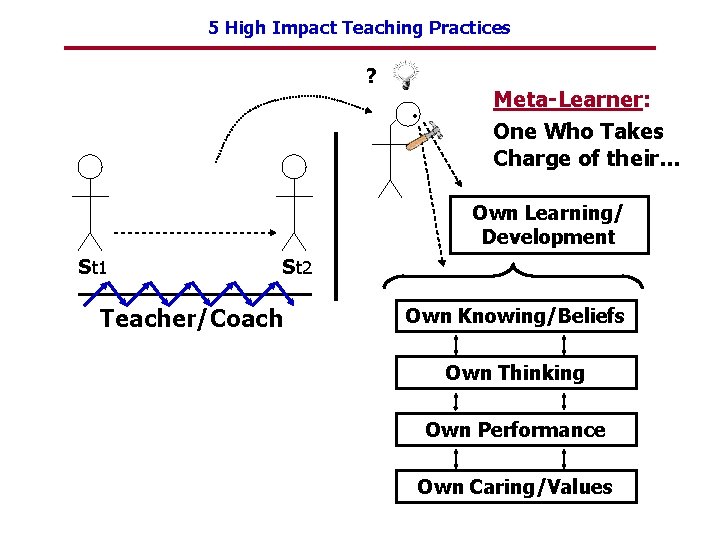
5 High Impact Teaching Practices ? • Meta-Learner: One Who Takes Charge of their… Own Learning/ Development St 1 St 2 Teacher/Coach Own Knowing/Beliefs Own Thinking Own Performance Own Caring/Values
5 High Impact Teaching Practices Learning Portfolios: KEY QUESTIONS 1. WHAT did you learn? 2. HOW did you learn? • What helped and didn’t help you learn? • What does this tell you about: YOURSELF AS A LEARNER? About the NATURE OF LEARNING? 3. SIGNIFICANCE FOR YOU, of what you learned? 4. Plan for FUTURE LEARNING: • WHAT ELSE do you want or plan to learn? • HOW will you learn that? 49
5 High Impact Teaching Practices “ 5 HIGH IMPACT TEACHING PRACTICES” 1. Learning-Centered Course Design 2. Team-Based Learning 3. Help Students Become Self-Directing Learners 4. Engage Students in Service Learning
5 High Impact Teaching Practices Engage Students in SERVICE: “Service Learning”, “Civic Engagement”: What does that mean? v Link courses [or curriculum] to activities in which students provide SERVICE to a community group or organization. v Possible Activities? ?
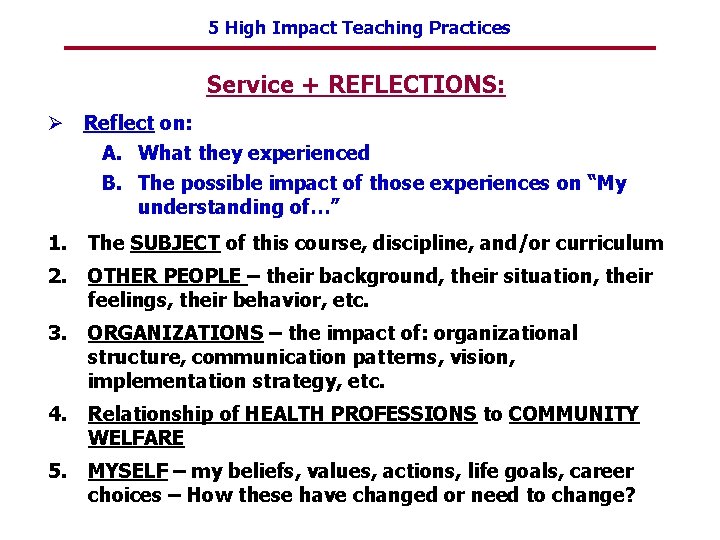
5 High Impact Teaching Practices Service + REFLECTIONS: Ø Reflect on: A. What they experienced B. The possible impact of those experiences on “My understanding of…” 1. The SUBJECT of this course, discipline, and/or curriculum 2. OTHER PEOPLE – their background, their situation, their feelings, their behavior, etc. 3. ORGANIZATIONS – the impact of: organizational structure, communication patterns, vision, implementation strategy, etc. 4. Relationship of HEALTH PROFESSIONS to COMMUNITY WELFARE 5. MYSELF – my beliefs, values, actions, life goals, career choices – How these have changed or need to change?
5 High Impact Teaching Practices Service Learning: EXAMPLES at Louisville? ? 1. Review their CONTENT KNOWLEDGE? 2. Learn more about specific kinds of OTHER PEOPLE? 3. Learn how to assess and work within DIFFERENT ORGANIZATIONS? 4. Learn about the relationship of HEALTH CARE to COMMUNITY WELFARE? 5. Learn about THEMSELVES?
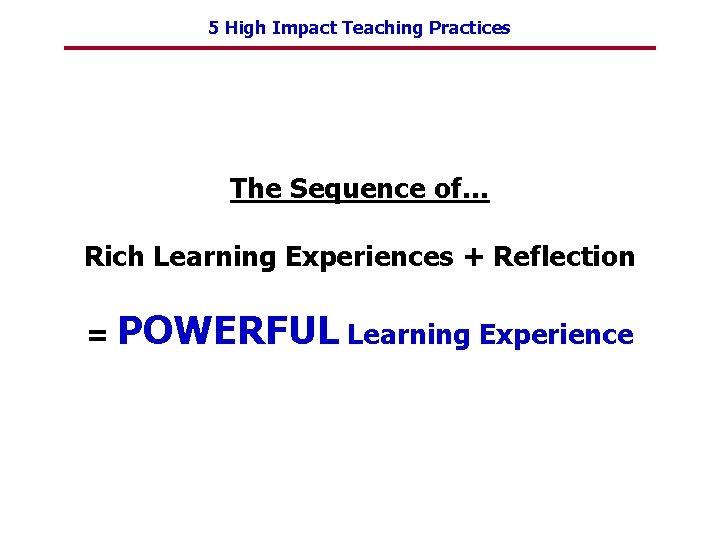
5 High Impact Teaching Practices The Sequence of… Rich Learning Experiences + Reflection = POWERFUL Learning Experience
5 High Impact Teaching Practices “ 5 HIGH IMPACT TEACHING PRACTICES” 1. Learning-Centered Course Design 2. Team-Based Learning 3. Help Students Become Self-Directing Learners 4. Engage Students in Service Learning 5. Be a Leader with Your Students
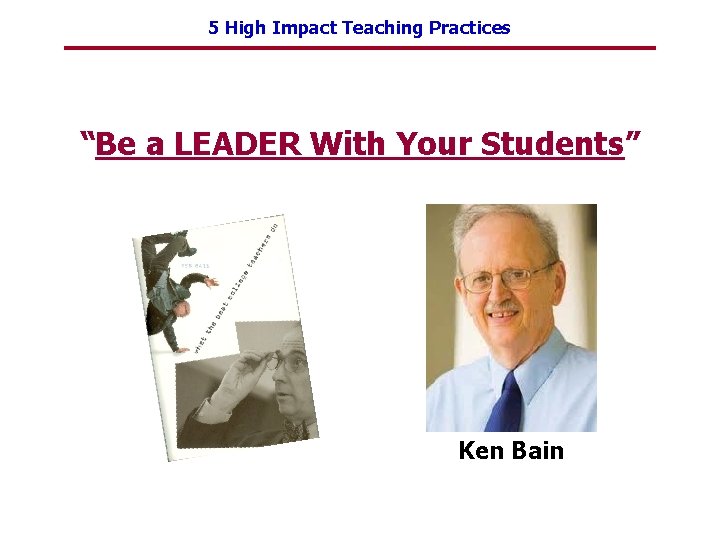
5 High Impact Teaching Practices “Be a LEADER With Your Students” Ken Bain
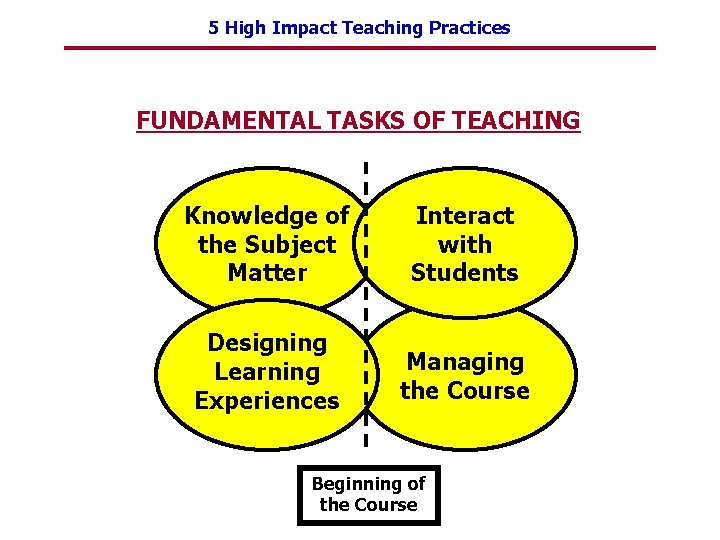
5 High Impact Teaching Practices FUNDAMENTAL TASKS OF TEACHING Knowledge of the Subject Matter Interact with Students Designing Learning Experiences Managing the Course Beginning of the Course
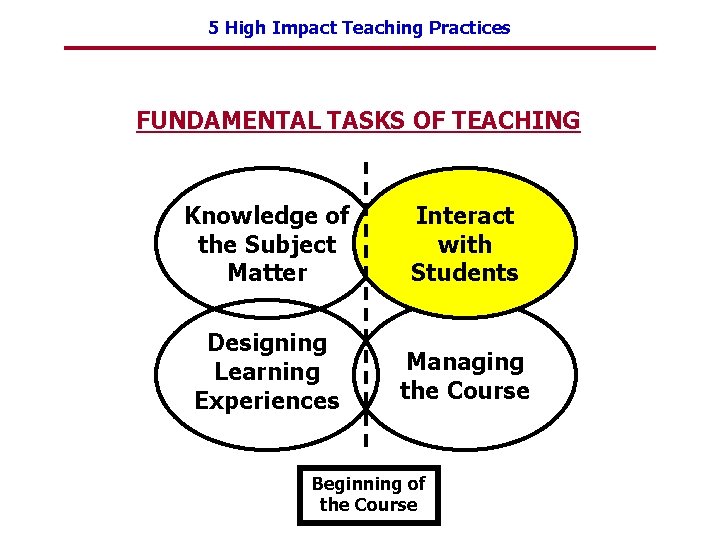
5 High Impact Teaching Practices FUNDAMENTAL TASKS OF TEACHING Knowledge of the Subject Matter Interact with Students Designing Learning Experiences Managing the Course Beginning of the Course
5 High Impact Teaching Practices LEADERSHIP: “Motivating and enabling others to do something important well. ” Question: What can teachers do, to LEAD students? General Answer: Create the right kind of RELATIONSHIP with students – caring, respectful, collaborative
5 High Impact Teaching Practices Creating the Right RELATIONSHIP with Students: (Based on Bain) 1. Interact in a way that shows YOU CARE! 2. Interact in a way that MOTIVATES students. 3. Dynamic COMMUNICATION SKILLS 4. TRUSTWORTHY – in Power: Trust issues
5 High Impact Teaching Practices Creating the Right RELATIONSHIP with Students: 1. Interact in a way that shows YOU CARE! • About… Ø Students themselves, Ø Their learning, Ø The teaching-learning process, Ø The subject of the course
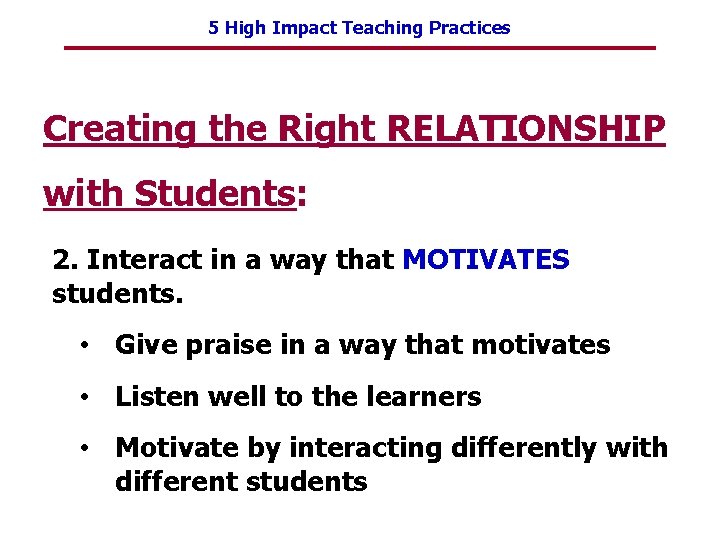
5 High Impact Teaching Practices Creating the Right RELATIONSHIP with Students: 2. Interact in a way that MOTIVATES students. • Give praise in a way that motivates • Listen well to the learners • Motivate by interacting differently with different students
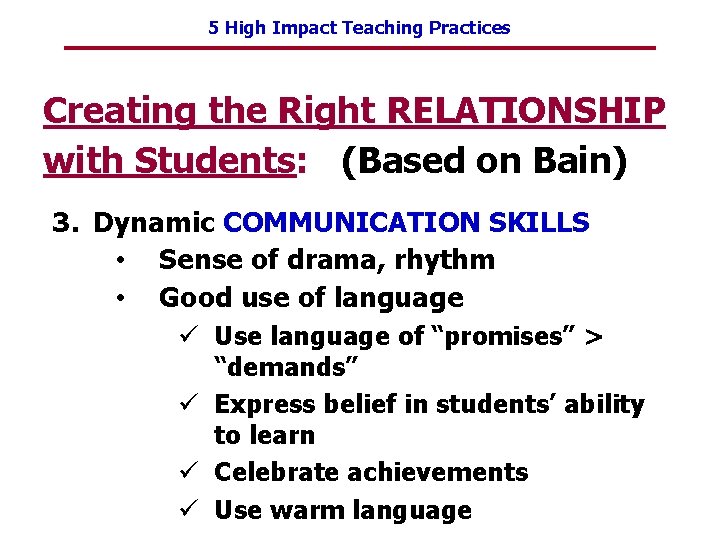
5 High Impact Teaching Practices Creating the Right RELATIONSHIP with Students: (Based on Bain) 3. Dynamic COMMUNICATION SKILLS • Sense of drama, rhythm • Good use of language ü Use language of “promises” > “demands” ü Express belief in students’ ability to learn ü Celebrate achievements ü Use warm language
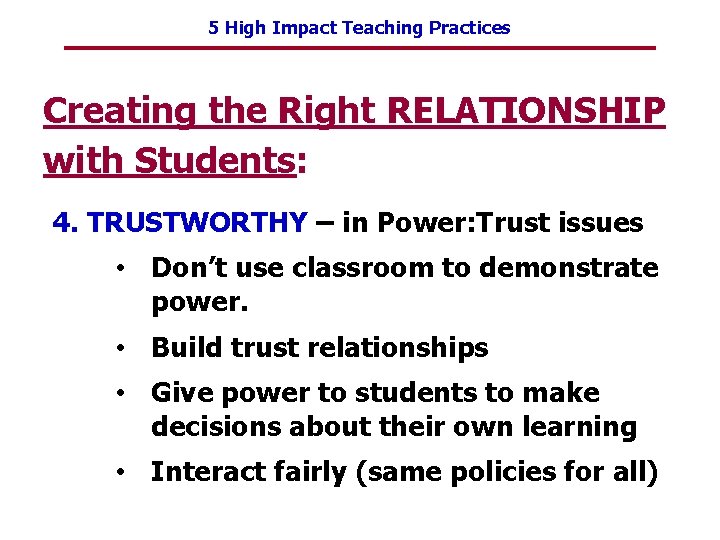
5 High Impact Teaching Practices Creating the Right RELATIONSHIP with Students: 4. TRUSTWORTHY – in Power: Trust issues • Don’t use classroom to demonstrate power. • Build trust relationships • Give power to students to make decisions about their own learning • Interact fairly (same policies for all)
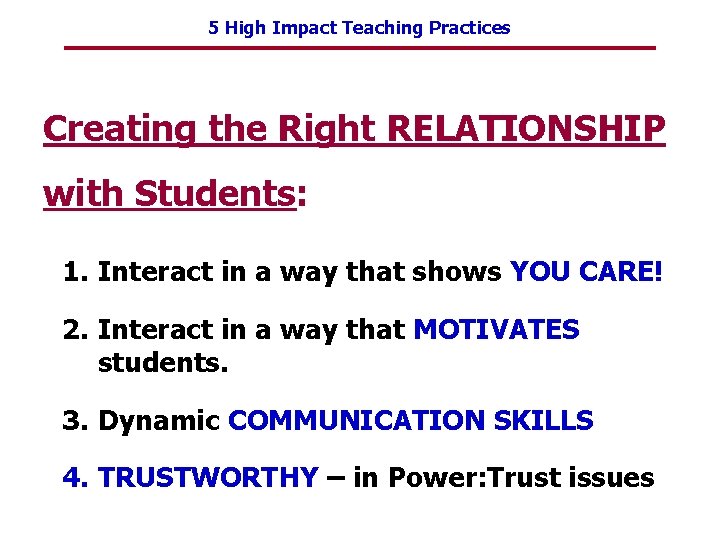
5 High Impact Teaching Practices Creating the Right RELATIONSHIP with Students: 1. Interact in a way that shows YOU CARE! 2. Interact in a way that MOTIVATES students. 3. Dynamic COMMUNICATION SKILLS 4. TRUSTWORTHY – in Power: Trust issues
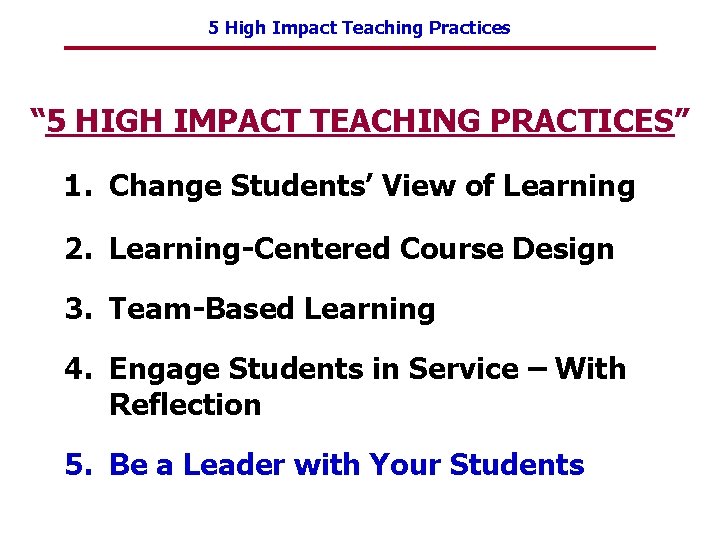
5 High Impact Teaching Practices “ 5 HIGH IMPACT TEACHING PRACTICES” 1. Change Students’ View of Learning 2. Learning-Centered Course Design 3. Team-Based Learning 4. Engage Students in Service – With Reflection 5. Be a Leader with Your Students
5 High Impact Teaching Practices SUMMARY
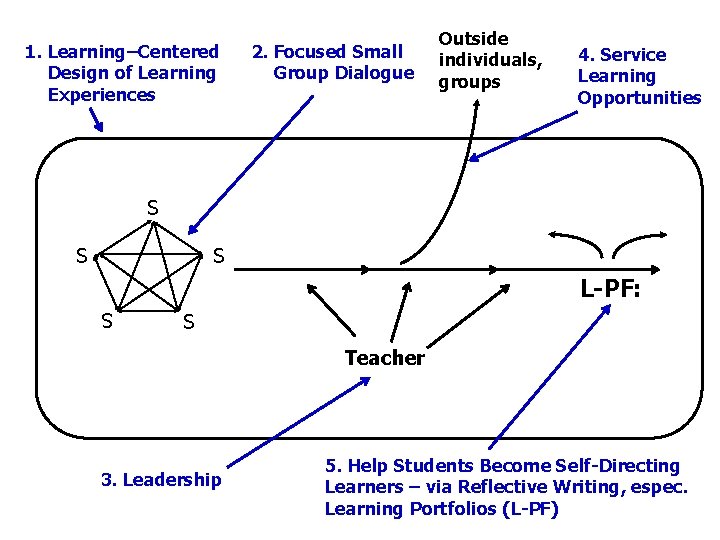
1. Learning–Centered Design of Learning Experiences 2. Focused Small Group Dialogue Outside individuals, groups 4. Service Learning Opportunities S S S L-PF: S S Teacher 3. Leadership 5. Help Students Become Self-Directing Learners – via Reflective Writing, espec. Learning Portfolios (L-PF)
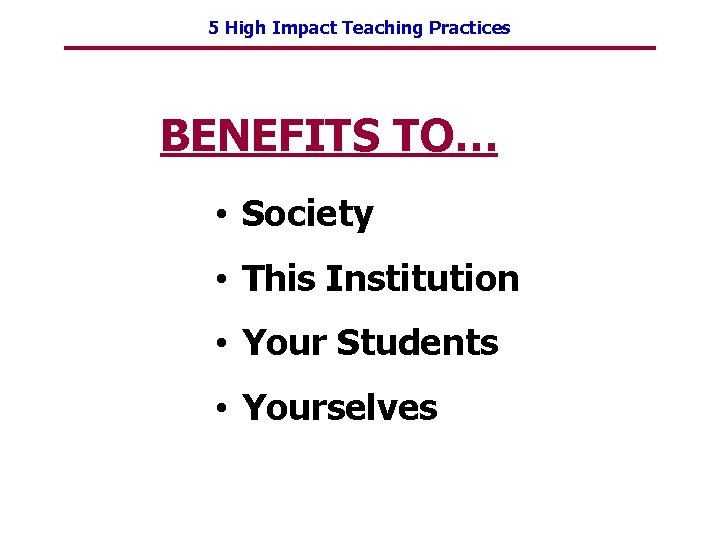
5 High Impact Teaching Practices BENEFITS TO… • Society • This Institution • Your Students • Yourselves
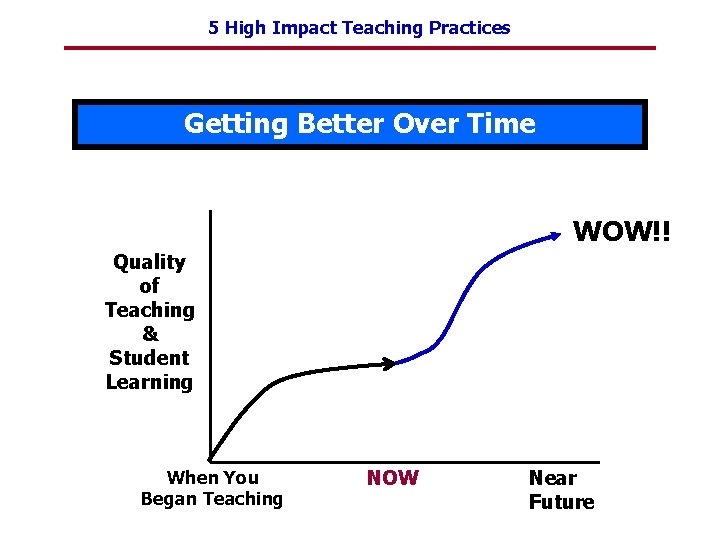
5 High Impact Teaching Practices Getting Better Over Time WOW!! Quality of Teaching & Student Learning When You Began Teaching NOW Near Future
5 High Impact Teaching Practices THE END! ? ? Higher Education: Let’s make it all that it can be and needs to
5 High Impact Teaching Practices OR, A NEW START? ? Teaching for the 21 st Century. . . Let’s Get Started!!
- Slides: 72