
5 G Use Case Configuration with NETCONF Nov

- Slides: 15
5 G Use Case Configuration with NETCONF Nov 22, 2018 Ericsson
Links • 5 G UC – Configuration with NETCONF: - https: //wiki. onap. org/display/DW/5 G+-+Configuration+with+NETCONF • 5 G UC – PNF Pn. P: - https: //wiki. onap. org/display/DW/5 G+-+PNF+Plug+and+Play
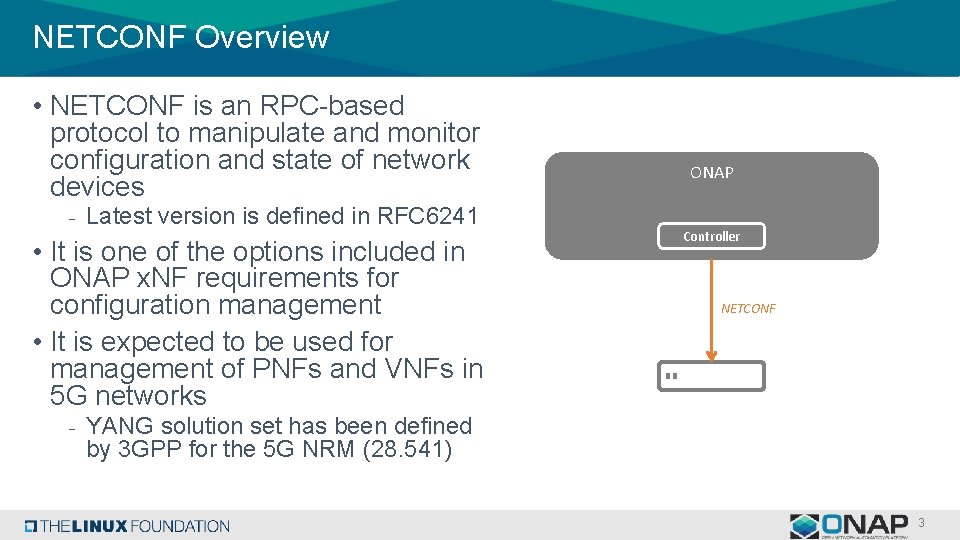
NETCONF Overview • NETCONF is an RPC-based protocol to manipulate and monitor configuration and state of network devices - Latest version is defined in RFC 6241 • It is one of the options included in ONAP x. NF requirements for configuration management • It is expected to be used for management of PNFs and VNFs in 5 G networks ONAP Controller NETCONF - YANG solution set has been defined by 3 GPP for the 5 G NRM (28. 541) 3
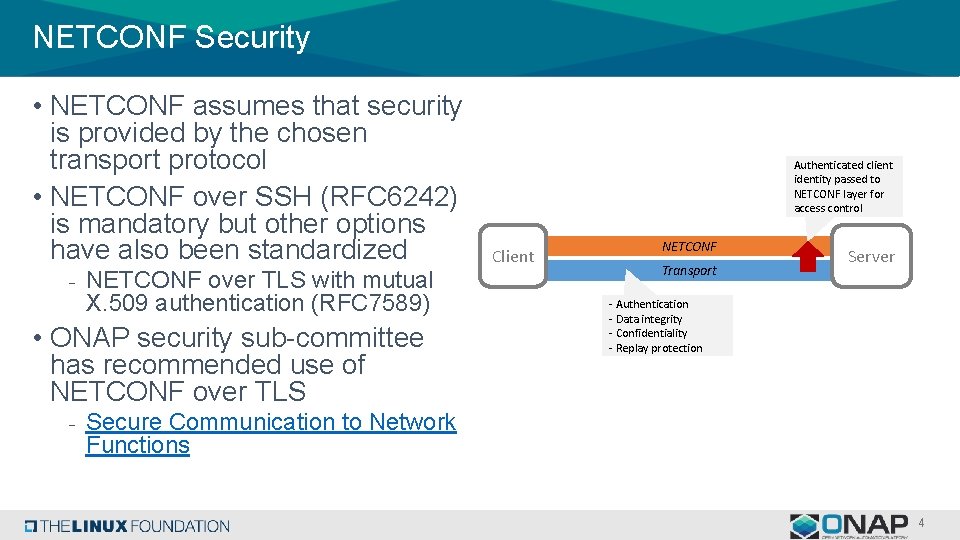
NETCONF Security • NETCONF assumes that security is provided by the chosen transport protocol • NETCONF over SSH (RFC 6242) is mandatory but other options have also been standardized - NETCONF over TLS with mutual X. 509 authentication (RFC 7589) • ONAP security sub-committee has recommended use of NETCONF over TLS Authenticated client identity passed to NETCONF layer for access control Client NETCONF Transport Server - Authentication - Data integrity - Confidentiality - Replay protection - Secure Communication to Network Functions 4
YANG Overview • YANG is a data modeling language intended for use with network management protocols such as NETCONF - Can describe configuration data, state data, RPCs and notifications • The latest version is YANG 1. 1 described in RFC 7950 - But this RFC doesn’t obsolete YANG 1. 0 described in RFC 6020 • A NETCONF server can support a mix of YANG 1. 0 and 1. 1 modules, subject to some constraints listed in RFC 7950 • ONAP currently mandates use of YANG 1. 0 - But in the future modules defined both by SDOs and vendors will increasingly use the latest version 5
Proposed Use Cases and Requirements • Proposed UC to focus on in Dublin for configuration with NETCONF • Post-instantiation (triggered by SO) • Including final configuration step (36/37) in the PNF Pn. P UC • Configuration modification (e g triggered by Policy) • Specific requirements on NETCONF support in ONAP - Officially support both PNFs and VNFs for north-bound controller APIs in the use cases - Support for NETCONF over TLS (RFC 7589) - Support for YANG 1. 1 (RFC 7950) modules in addition to YANG 1. 0 6
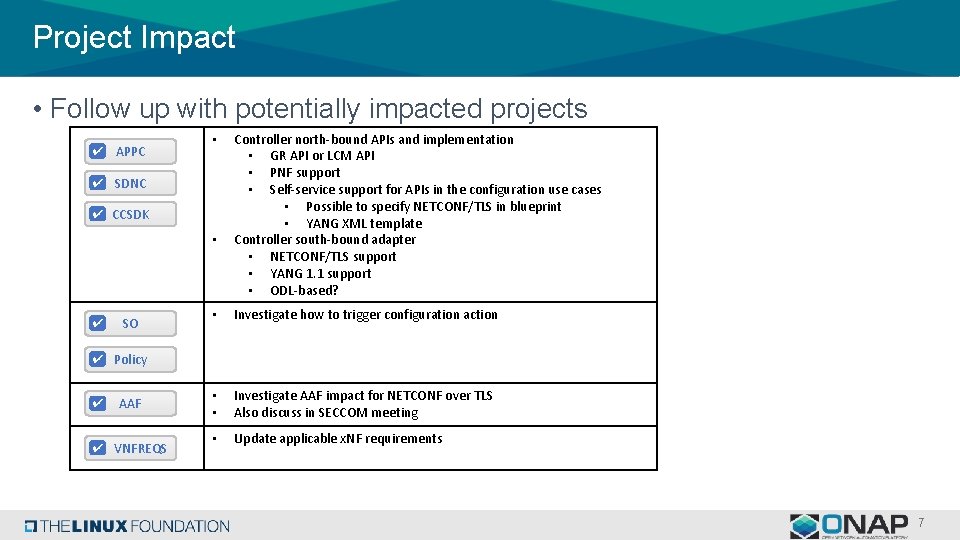
Project Impact • Follow up with potentially impacted projects ✔ APPC • ✔ SDNC ✔ CCSDK • ✔ SO Controller north-bound APIs and implementation • GR API or LCM API • PNF support • Self-service support for APIs in the configuration use cases • Possible to specify NETCONF/TLS in blueprint • YANG XML template Controller south-bound adapter • NETCONF/TLS support • YANG 1. 1 support • ODL-based? • Investigate how to trigger configuration action • • Investigate AAF impact for NETCONF over TLS Also discuss in SECCOM meeting • Update applicable x. NF requirements ✔ Policy ✔ AAF ✔ VNFREQS 7
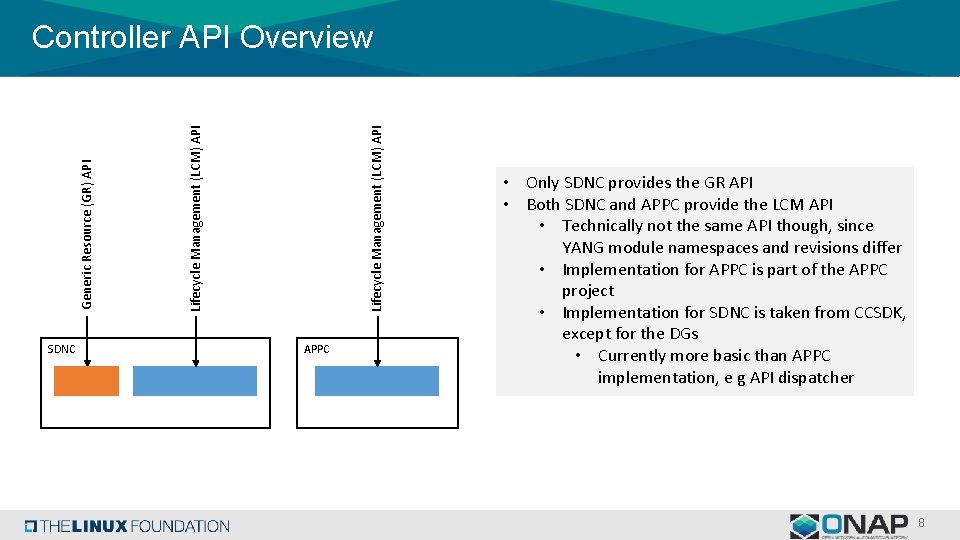
SDNC Lifecycle Management (LCM) API Generic Resource (GR) API Controller API Overview APPC • Only SDNC provides the GR API • Both SDNC and APPC provide the LCM API • Technically not the same API though, since YANG module namespaces and revisions differ • Implementation for APPC is part of the APPC project • Implementation for SDNC is taken from CCSDK, except for the DGs • Currently more basic than APPC implementation, e g API dispatcher 8
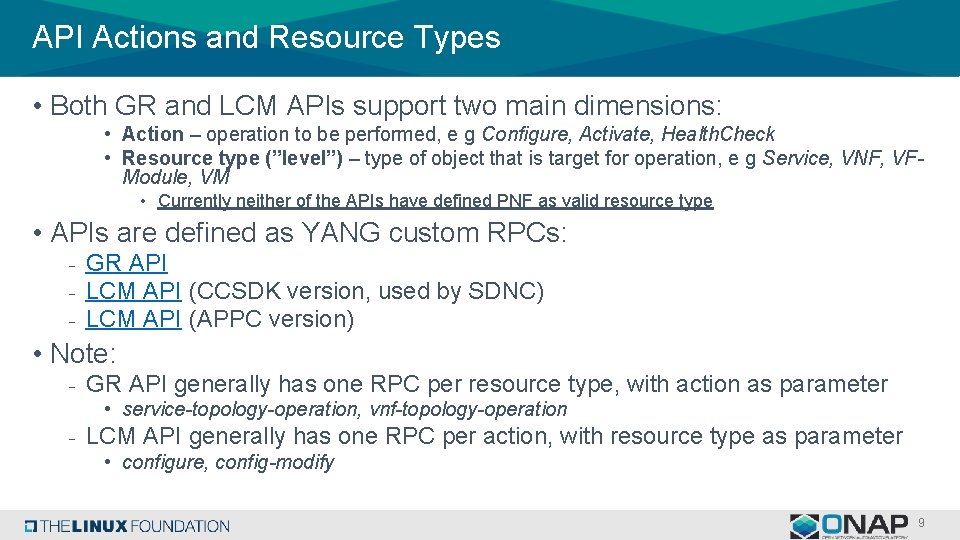
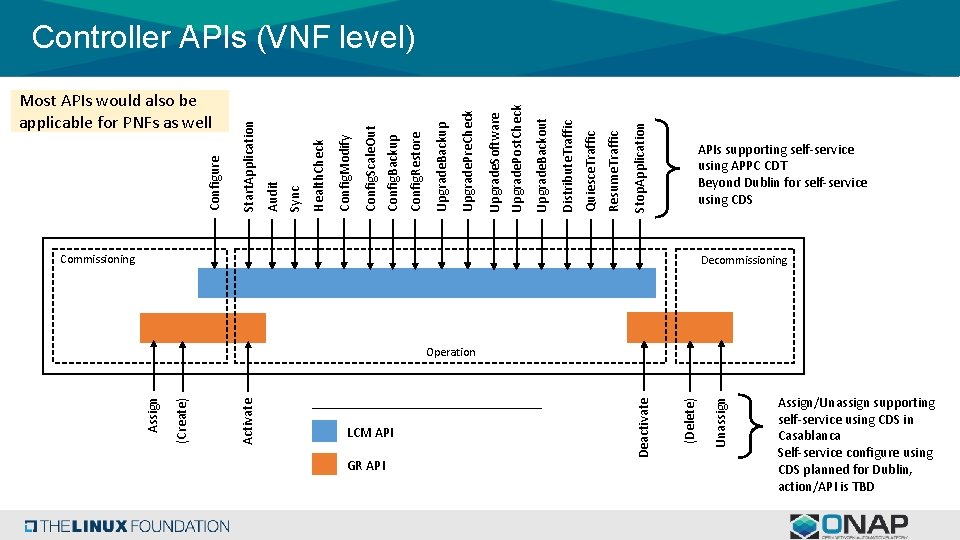
API Actions and Resource Types • Both GR and LCM APIs support two main dimensions: • Action – operation to be performed, e g Configure, Activate, Health. Check • Resource type (”level”) – type of object that is target for operation, e g Service, VNF, VFModule, VM • Currently neither of the APIs have defined PNF as valid resource type • APIs are defined as YANG custom RPCs: - GR API - LCM API (CCSDK version, used by SDNC) - LCM API (APPC version) • Note: - GR API generally has one RPC per resource type, with action as parameter • service-topology-operation, vnf-topology-operation - LCM API generally has one RPC per action, with resource type as parameter • configure, config-modify 9
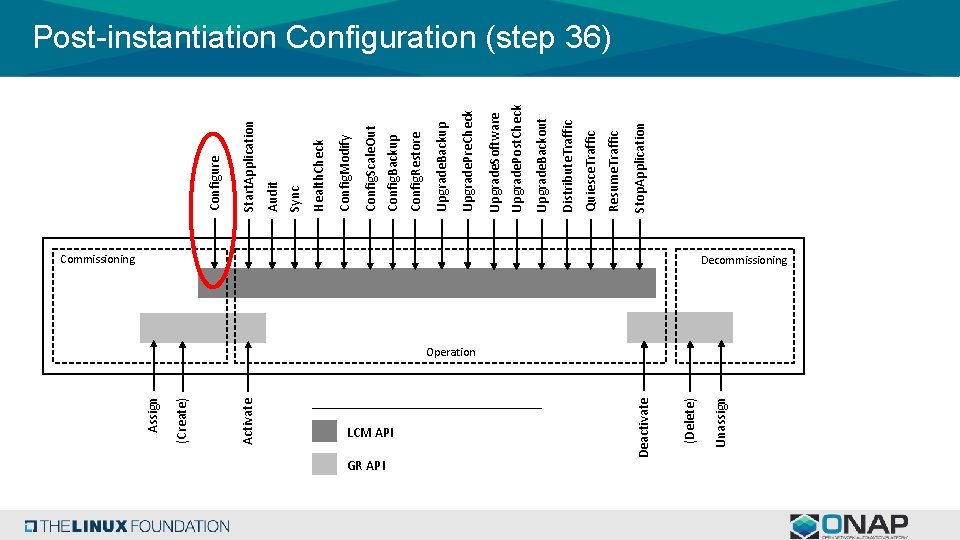
Stop. Application Resume. Traffic Quiesce. Traffic Distribute. Traffic Upgrade. Backout Upgrade. Post. Check Upgrade. Software Upgrade. Pre. Check Upgrade. Backup Config. Restore Config. Backup Config. Scale. Out Config. Modify Health. Check Sync Audit Configure Most APIs would also be applicable for PNFs as well Start. Application Controller APIs (VNF level) APIs supporting self-service using APPC CDT Beyond Dublin for self-service using CDS Commissioning Decommissioning GR API Unassign (Delete) LCM API Deactivate Activate (Create) Assign Operation Assign/Unassign supporting self-service using CDS in Casablanca Self-service configure using CDS planned for Dublin, action/API is TBD
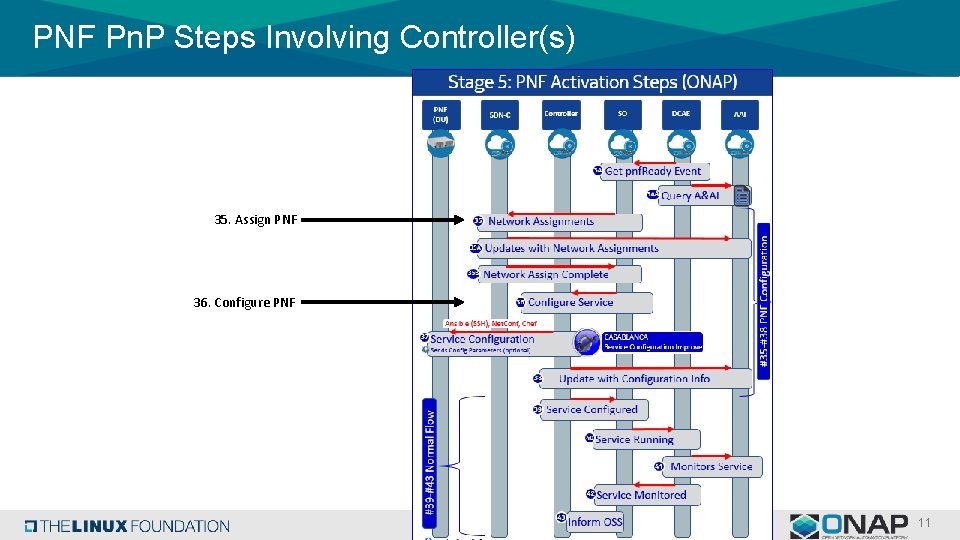
PNF Pn. P Steps Involving Controller(s) 35. Assign PNF 36. Configure PNF 11
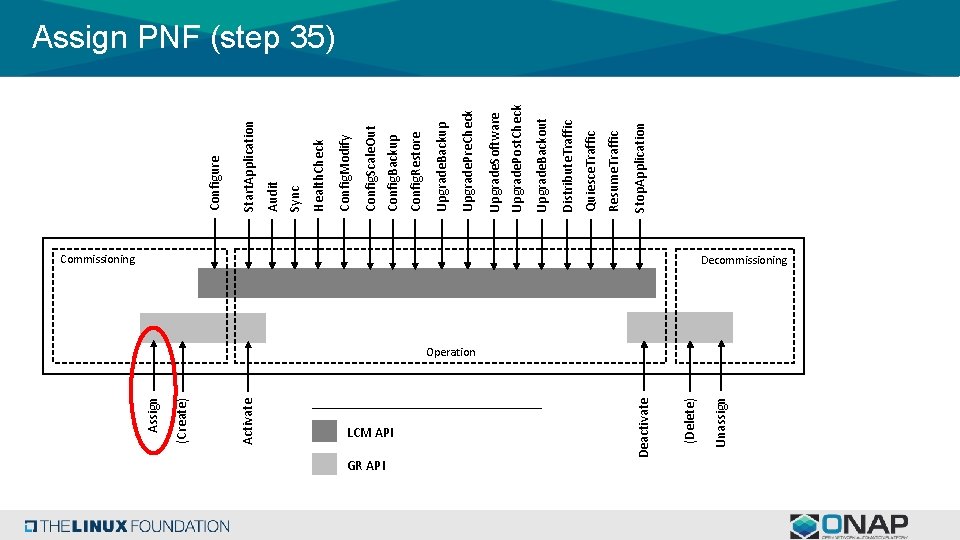
Activate (Create) Assign GR API Commissioning Unassign (Delete) Deactivate LCM API Stop. Application Resume. Traffic Quiesce. Traffic Distribute. Traffic Upgrade. Backout Upgrade. Post. Check Upgrade. Software Upgrade. Pre. Check Upgrade. Backup Config. Restore Config. Backup Config. Scale. Out Config. Modify Health. Check Sync Audit Start. Application Configure Assign PNF (step 35) Decommissioning Operation
Activate (Create) Assign GR API Commissioning Unassign (Delete) Deactivate LCM API Stop. Application Resume. Traffic Quiesce. Traffic Distribute. Traffic Upgrade. Backout Upgrade. Post. Check Upgrade. Software Upgrade. Pre. Check Upgrade. Backup Config. Restore Config. Backup Config. Scale. Out Config. Modify Health. Check Sync Audit Start. Application Configure Post-instantiation Configuration (step 36) Decommissioning Operation
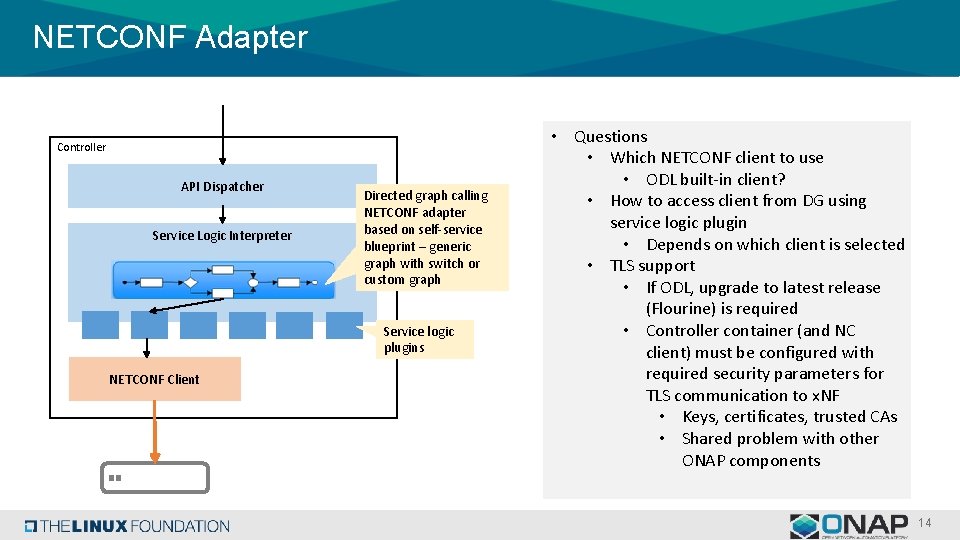
NETCONF Adapter Controller API Dispatcher Service Logic Interpreter Directed graph calling NETCONF adapter based on self-service blueprint – generic graph with switch or custom graph Service logic plugins NETCONF Client • Questions • Which NETCONF client to use • ODL built-in client? • How to access client from DG using service logic plugin • Depends on which client is selected • TLS support • If ODL, upgrade to latest release (Flourine) is required • Controller container (and NC client) must be configured with required security parameters for TLS communication to x. NF • Keys, certificates, trusted CAs • Shared problem with other ONAP components 14
s Thank You!