
5 Functions of the Skeletal System 1 Movement
- Slides: 26
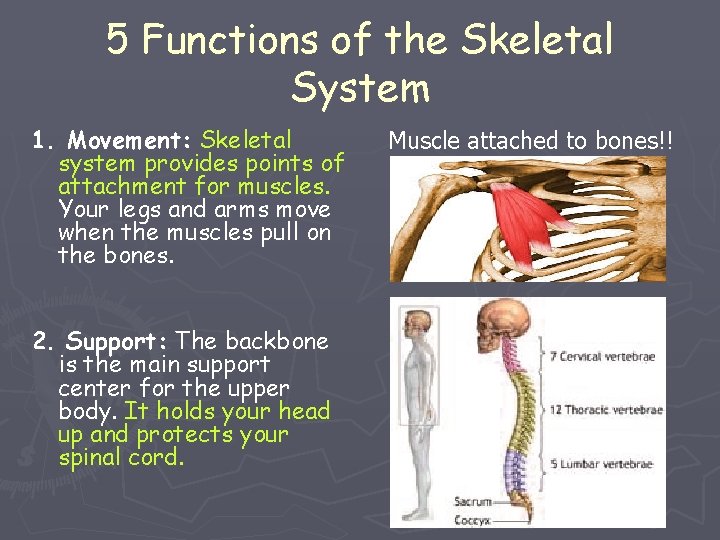
5 Functions of the Skeletal System 1. Movement: Skeletal system provides points of attachment for muscles. Your legs and arms move when the muscles pull on the bones. 2. Support: The backbone is the main support center for the upper body. It holds your head up and protects your spinal cord. Muscle attached to bones!!
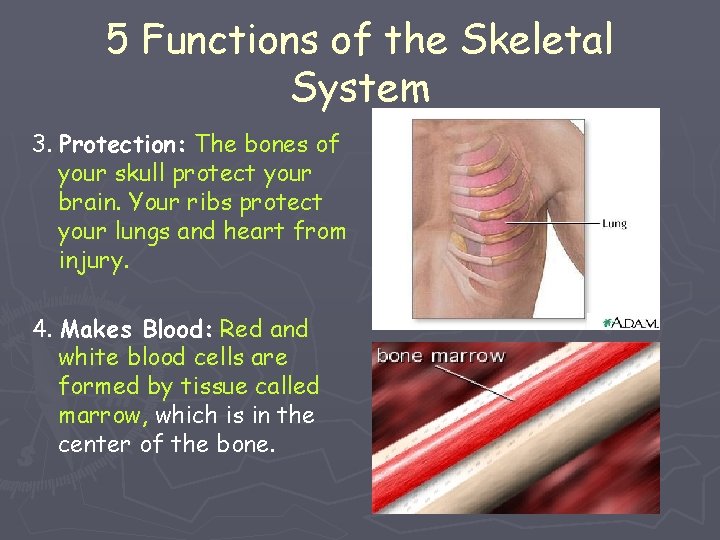
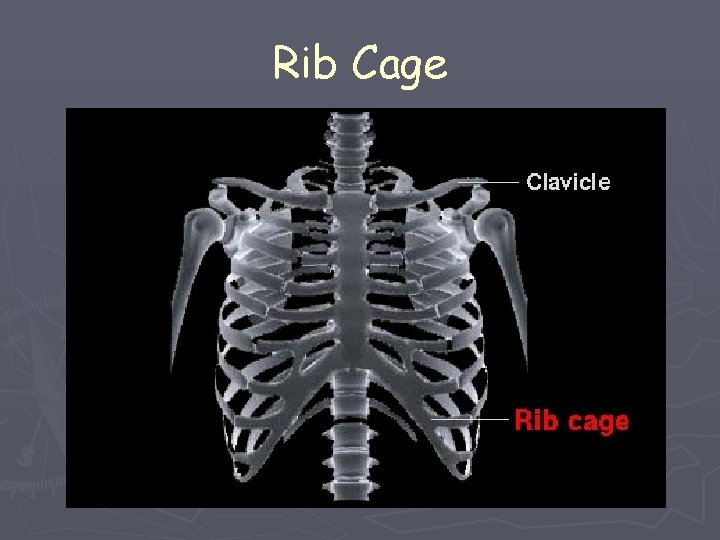
5 Functions of the Skeletal System 3. Protection: The bones of your skull protect your brain. Your ribs protect your lungs and heart from injury. 4. Makes Blood: Red and white blood cells are formed by tissue called marrow, which is in the center of the bone.
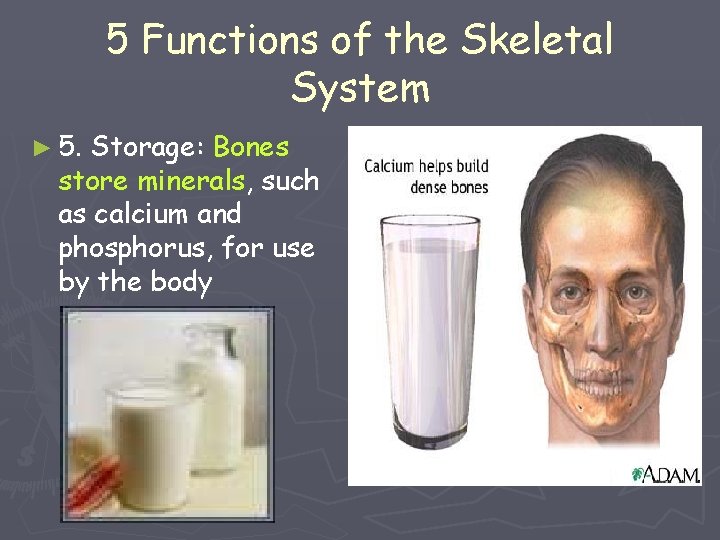
5 Functions of the Skeletal System ► 5. Storage: Bones store minerals, such as calcium and phosphorus, for use by the body
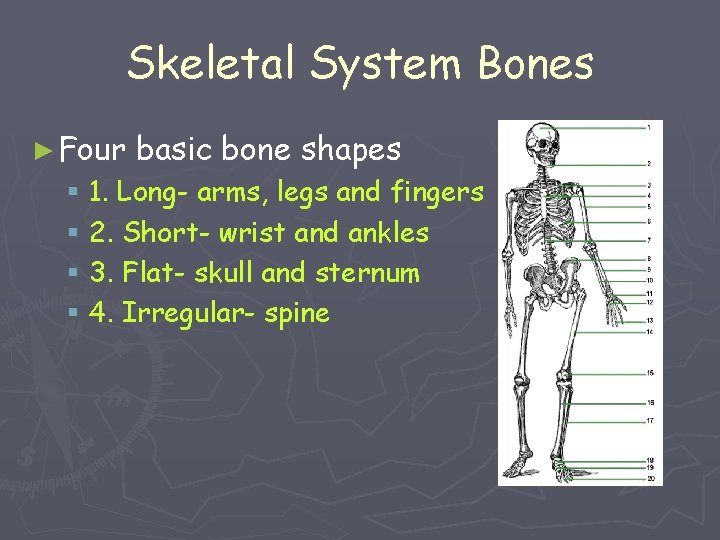
Skeletal System Bones ► Four basic bone shapes § 1. Long- arms, legs and fingers § 2. Short- wrist and ankles § 3. Flat- skull and sternum § 4. Irregular- spine
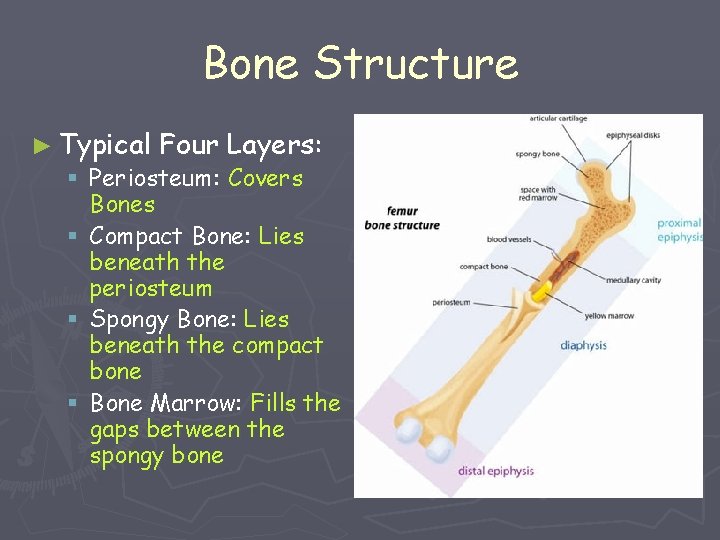
Bone Structure ► Typical Four Layers: § Periosteum: Covers Bones § Compact Bone: Lies beneath the periosteum § Spongy Bone: Lies beneath the compact bone § Bone Marrow: Fills the gaps between the spongy bone
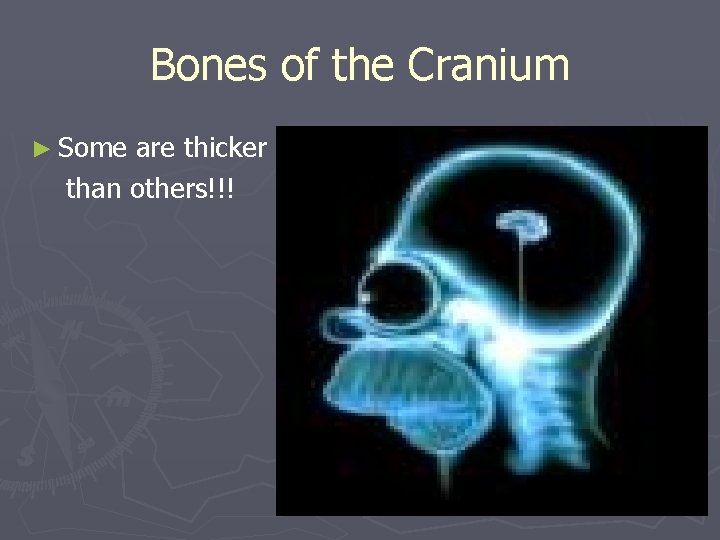
Bones of the Cranium ► Some are thicker than others!!!
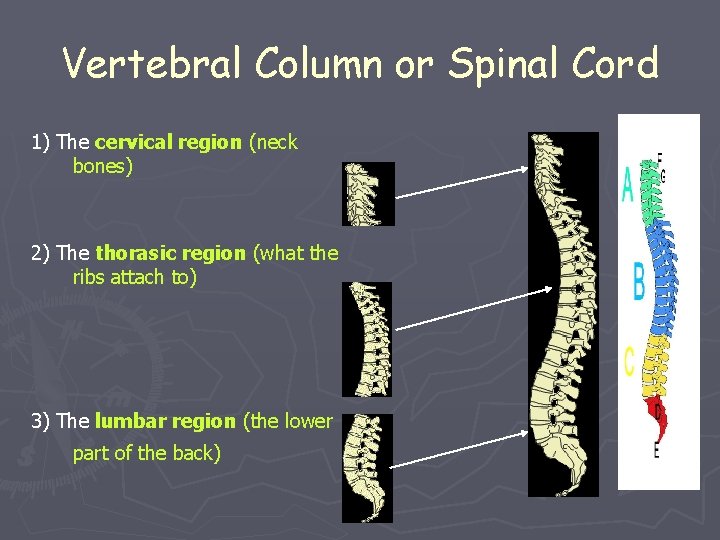
Vertebral Column or Spinal Cord 1) The cervical region (neck bones) 2) The thorasic region (what the ribs attach to) 3) The lumbar region (the lower part of the back)
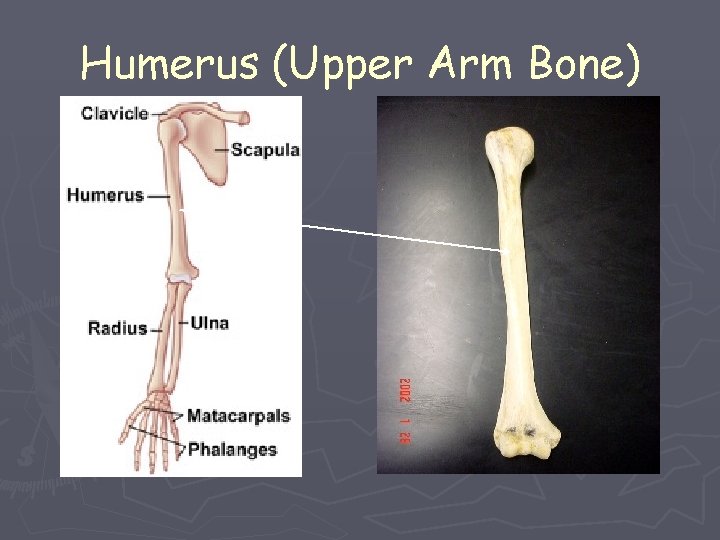
Humerus (Upper Arm Bone)
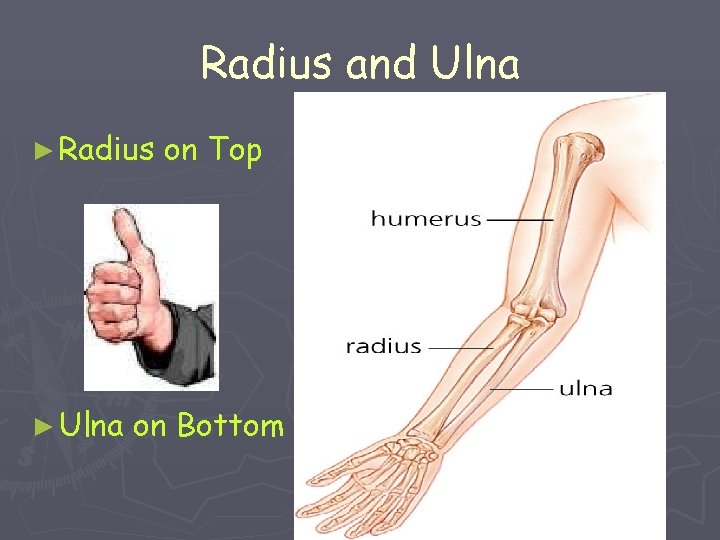
Radius and Ulna ► Radius ► Ulna on Top on Bottom
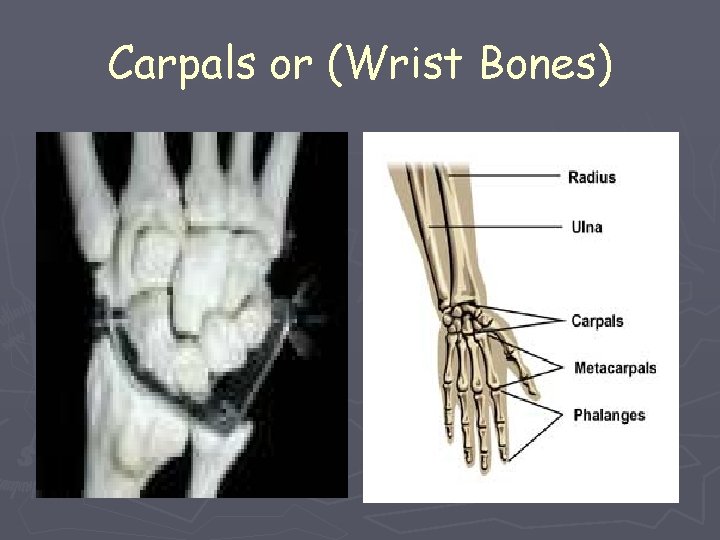
Carpals or (Wrist Bones)
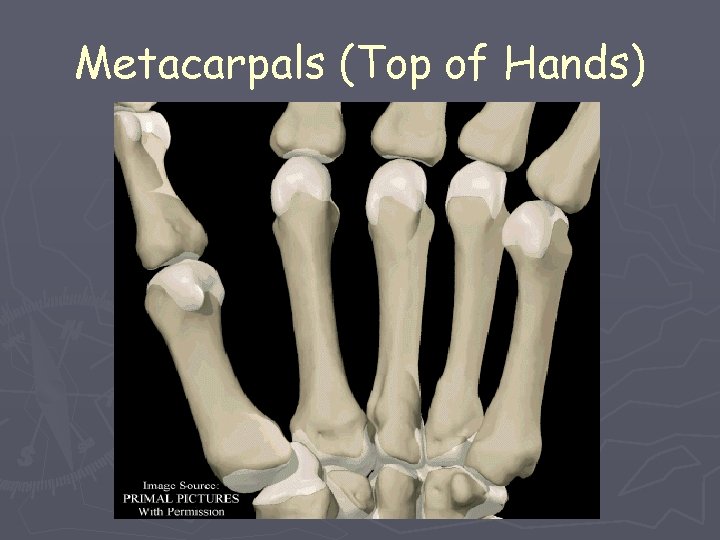
Metacarpals (Top of Hands)
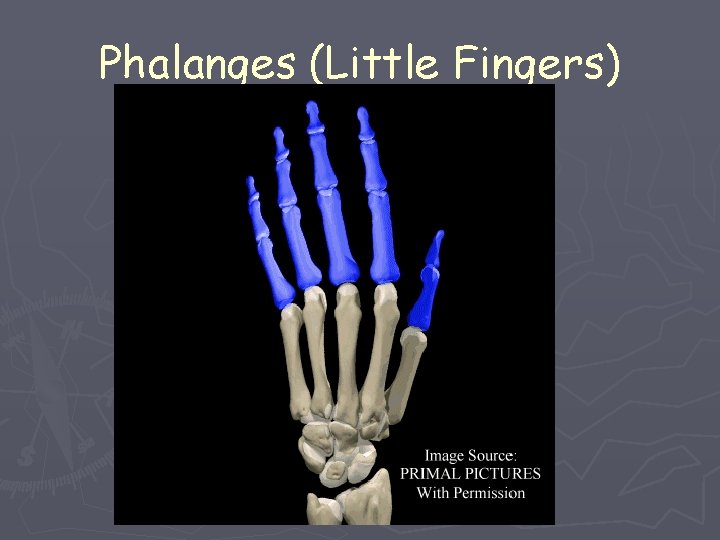
Phalanges (Little Fingers)
Rib Cage
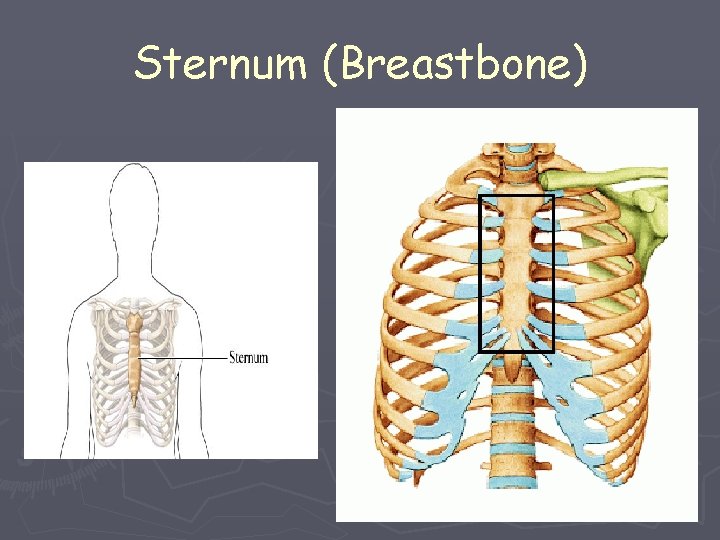
Sternum (Breastbone)
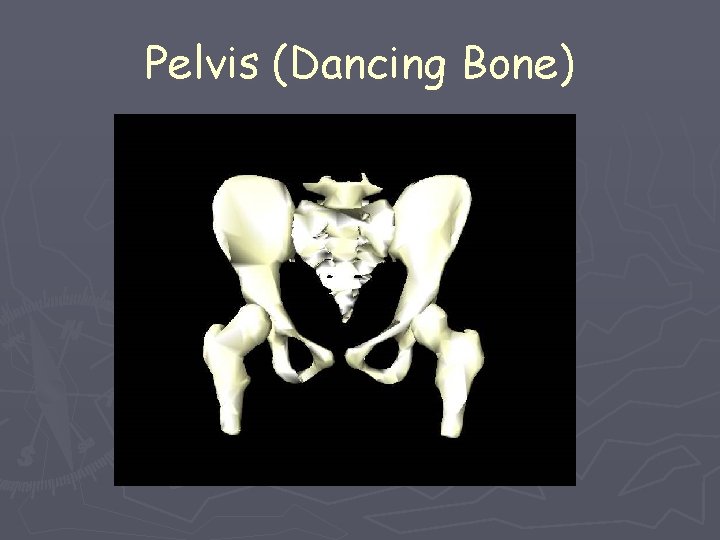
Pelvis (Dancing Bone)
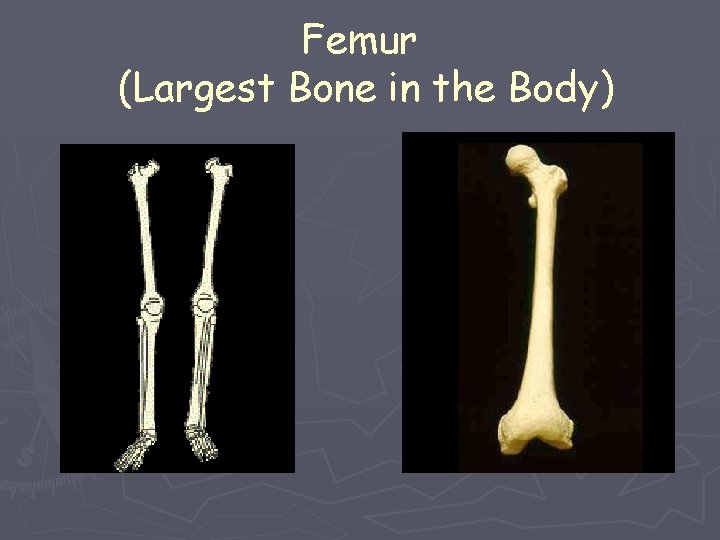
Femur (Largest Bone in the Body)
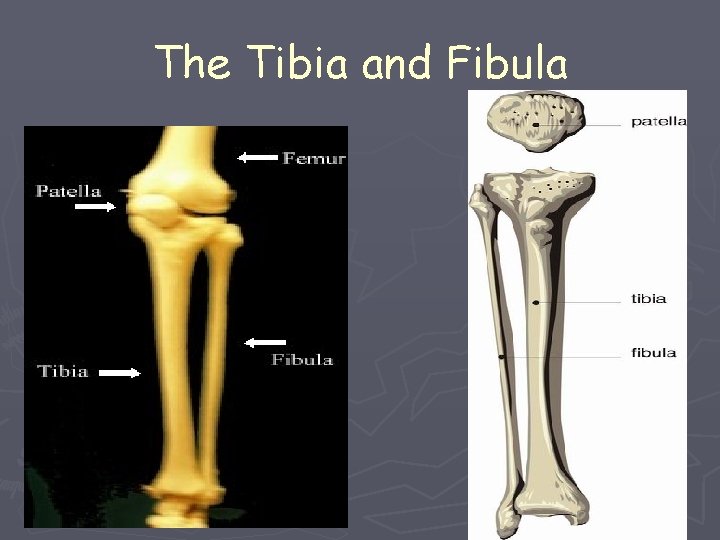
The Tibia and Fibula
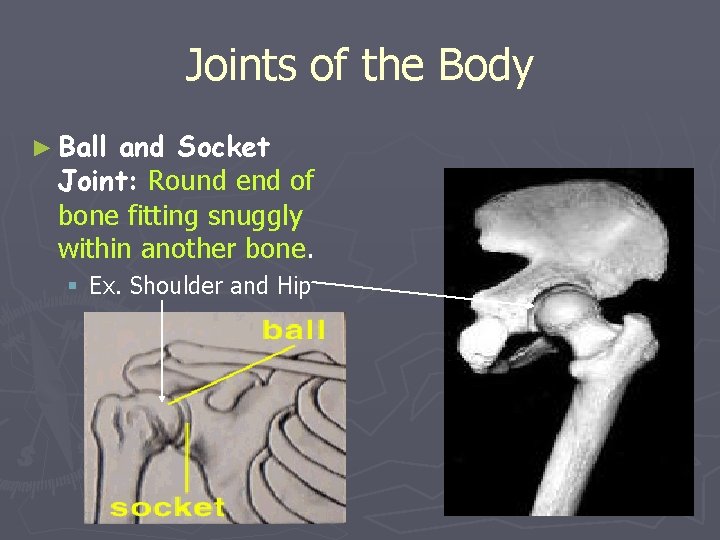
Joints of the Body ► Ball and Socket Joint: Round end of bone fitting snuggly within another bone. § Ex. Shoulder and Hip
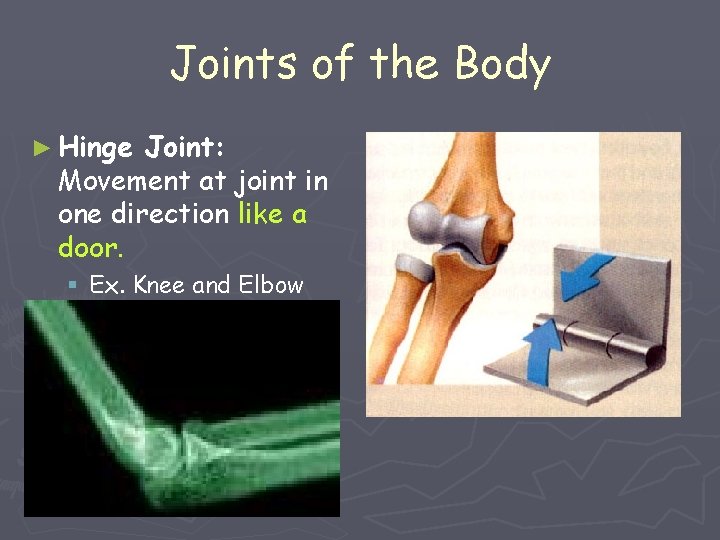
Joints of the Body ► Hinge Joint: Movement at joint in one direction like a door. § Ex. Knee and Elbow
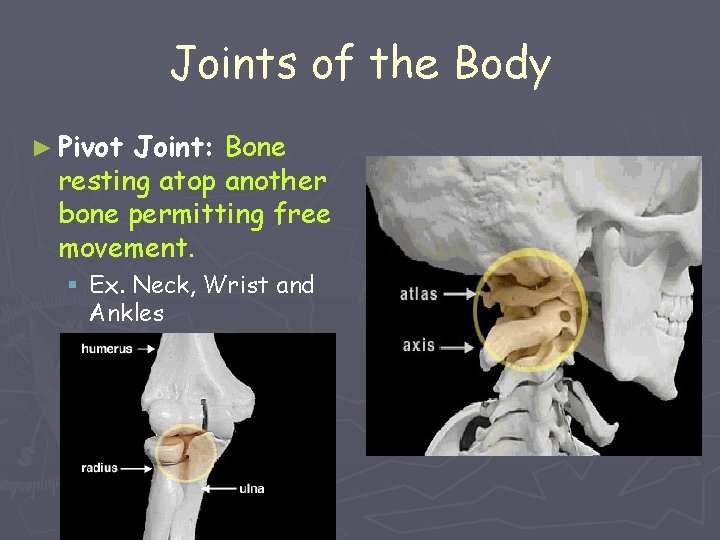
Joints of the Body ► Pivot Joint: Bone resting atop another bone permitting free movement. § Ex. Neck, Wrist and Ankles
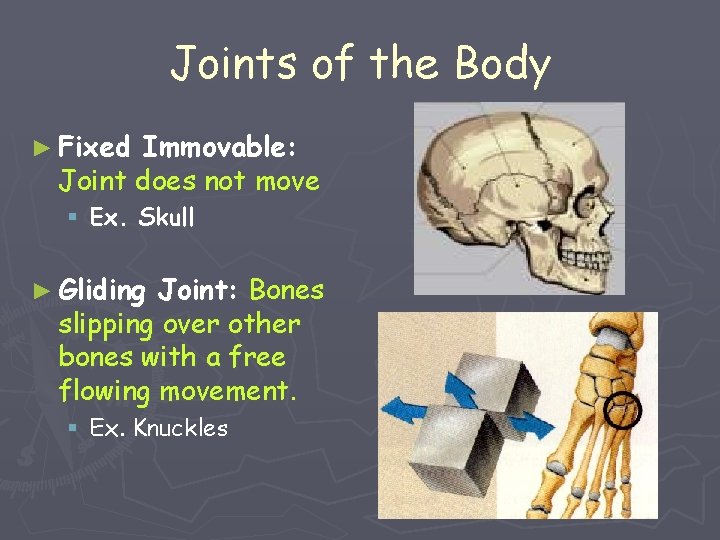
Joints of the Body ► Fixed Immovable: Joint does not move § Ex. Skull ► Gliding Joint: Bones slipping over other bones with a free flowing movement. § Ex. Knuckles
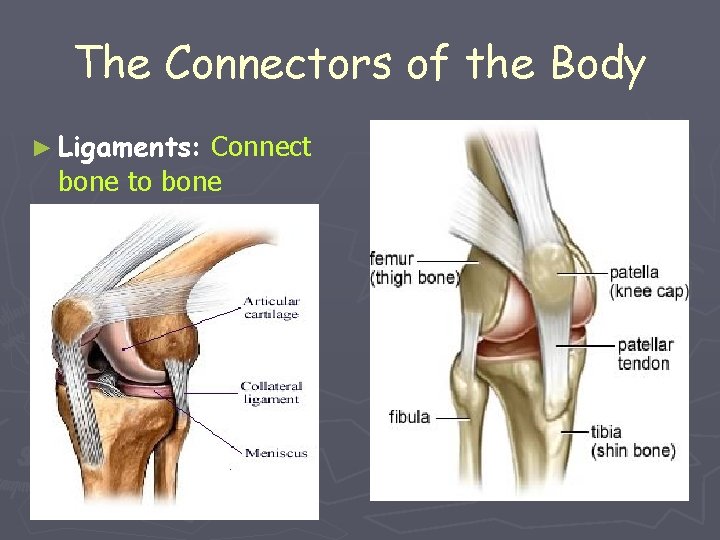
The Connectors of the Body ► Ligaments: Connect bone to bone
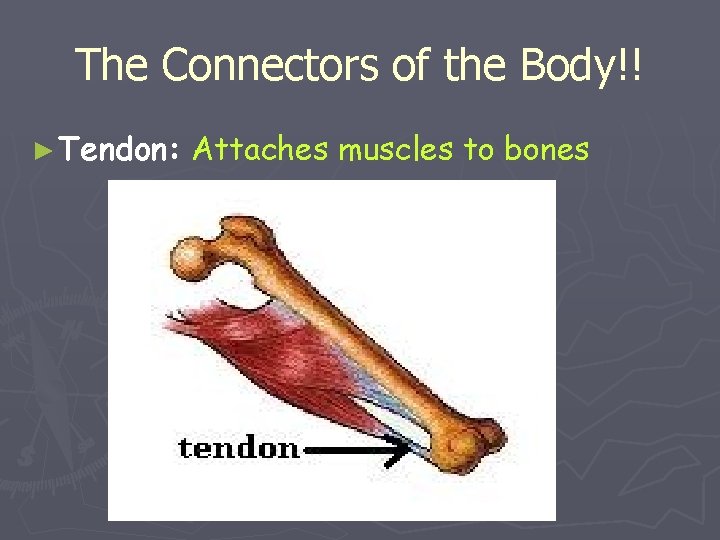
The Connectors of the Body!! ► Tendon: Attaches muscles to bones
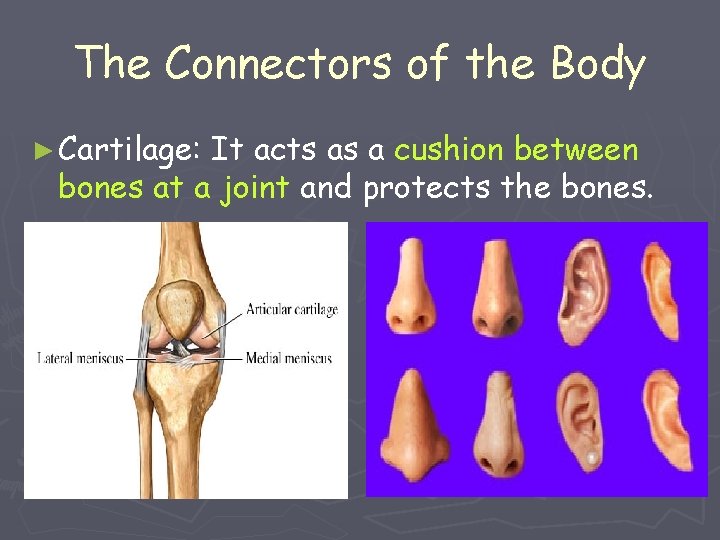
The Connectors of the Body ► Cartilage: It acts as a cushion between bones at a joint and protects the bones.
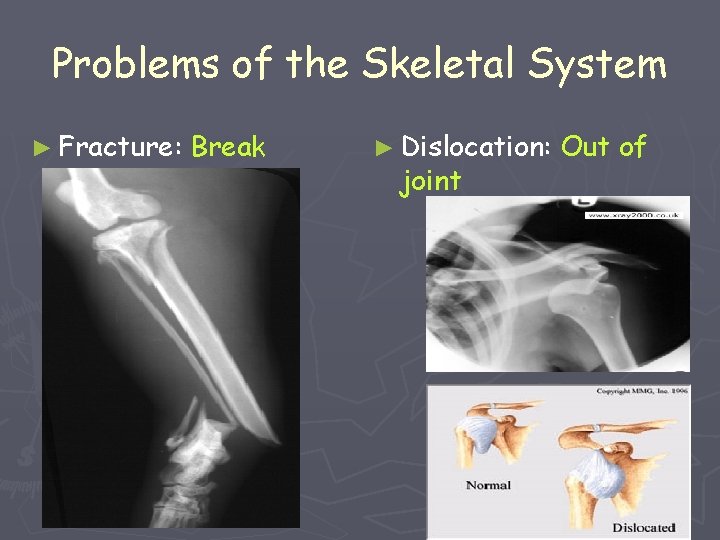
Problems of the Skeletal System ► Fracture: Break ► Dislocation: joint Out of
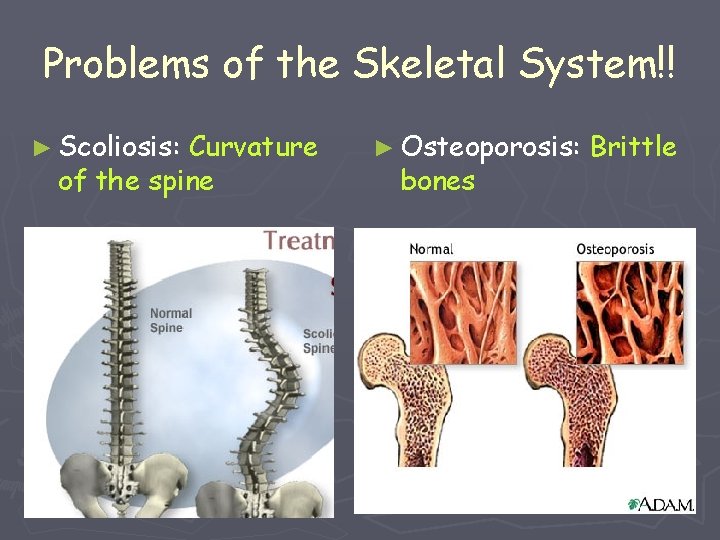
Problems of the Skeletal System!! ► Scoliosis: Curvature of the spine ► Osteoporosis: bones Brittle