
5 EBUSINESS STRATEGY Slide 5 2 LEARNING OUTCOMES

5. E-BUSINESS STRATEGY
Slide 5. 2 LEARNING OUTCOMES Follow an appropriate strategy process model for e-business Produce and select e-business strategies Outline alternative strategic approaches to achieve e-business goals. Dave Chaffey, E-Business and E-Commerce Management, 4 th Edition, © Marketing Insights Limited 2009
Slide 5. 3 MANAGEMENT ISSUES How does e-business strategy differ from traditional business strategy? How should we integrate e-business strategy with existing business and IS strategy? How should we evaluate our investment priorities and returns from e-business? Dave Chaffey, E-Business and E-Commerce Management, 4 th Edition, © Marketing Insights Limited 2009
Slide 5. 4 MICHAEL PORTER ON THE INTERNET The key question is not whether to deploy Internet technology – companies have no choice if they want to stay competitive – but how to deploy it Porter, M. (2001) Strategy and the Internet, Harvard Business Review, March 2001, 62– 78. Dave Chaffey, E-Business and E-Commerce Management, 4 th Edition, © Marketing Insights Limited 2009
Slide 5. 5 DEFINITIONS OF STRATEGY What is strategy? A plan of action designed to achieve a particular goal. wikipedia ‘Defines how we will meet our objectives’ ‘Sets allocation of resources to meet goals’ ‘Selects preferred strategic option to compete within a market’ ‘Provides a long-term plan for the development of the organization’ Dave Chaffey, E-Business and E-Commerce Management, 4 th Edition, © Marketing Insights Limited 2009
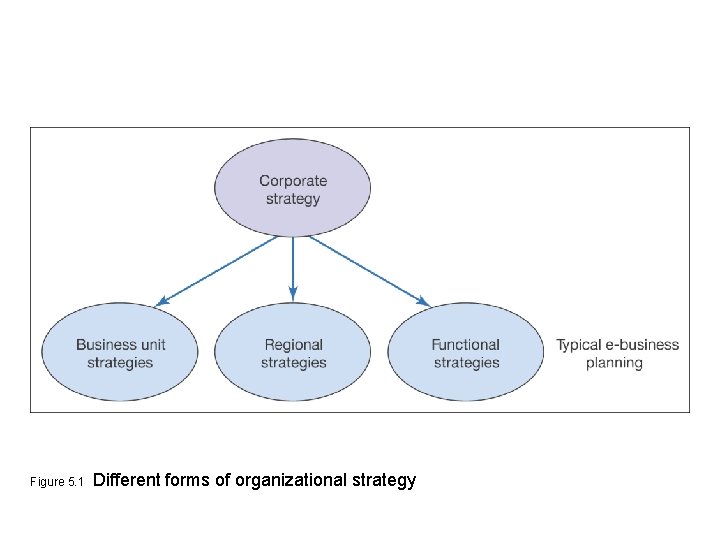
Figure 5. 1 Different forms of organizational strategy
Slide 5. 7 SELL-SIDE ECOMMERCE STRATEGY (CHAPTERS 8 & 9) Sell-side e-commerce is a channel strategy Objectives for online contribution percentage should drive our strategy Our e-commerce strategy defines how we should Hit our channel leads and sales targets Acquisition, Conversion, Retention, Service, Profitability Communicate benefits of using this channel Prioritize products available through channel Prioritize audiences targeted through channel Select partners for this channel Channel strategy thrives on differentials BUT, need to manage channel integration Dave Chaffey, E-Business and E-Commerce Management, 4 th Edition, © Marketing Insights Limited 2009
Slide 5. 8 BUY-SIDE E-COMMERCE STRATEGY (CHAPTERS 6 & 7) OR E-SUPPLY CHAIN MANAGEMENT STRATEGY Buy-side e-commerce strategy is about maximizing operational efficiencies while improving customer service quality Operational efficiency KPIs should drive our strategy Our buy-side e-commerce strategy defines how we should Automate internal processes Link internal resource management systems with external purchasing systems Prioritize suppliers / partners collaborating using this channel Prioritize applications for E-SCM – create a roadmap Involves selection of appropriate strategic partners Dave Chaffey, E-Business and E-Commerce Management, 4 th Edition, © Marketing Insights Limited 2009
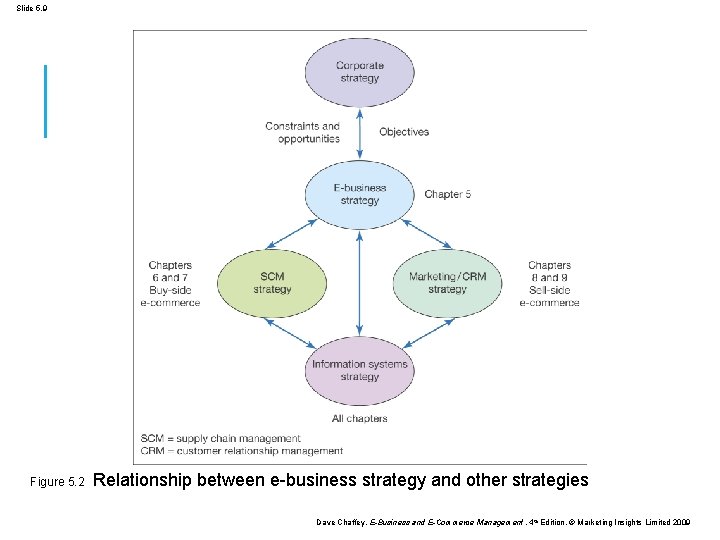
Slide 5. 9 Figure 5. 2 Relationship between e-business strategy and other strategies Dave Chaffey, E-Business and E-Commerce Management, 4 th Edition, © Marketing Insights Limited 2009
Slide 5. 10 WHAT HAPPENS WHERE THERE IS NO E-BUSINESS STRATEGY? Missed opportunities for additional sales on the sell-side and for more efficient purchasing on the buy-side Fall-behind competitors in delivering online services – may become difficult to catch-up, for example, Tesco, Dell Poor customer experience from poorly integrated channels Dave Chaffey, E-Business and E-Commerce Management, 4 th Edition, © Marketing Insights Limited 2009
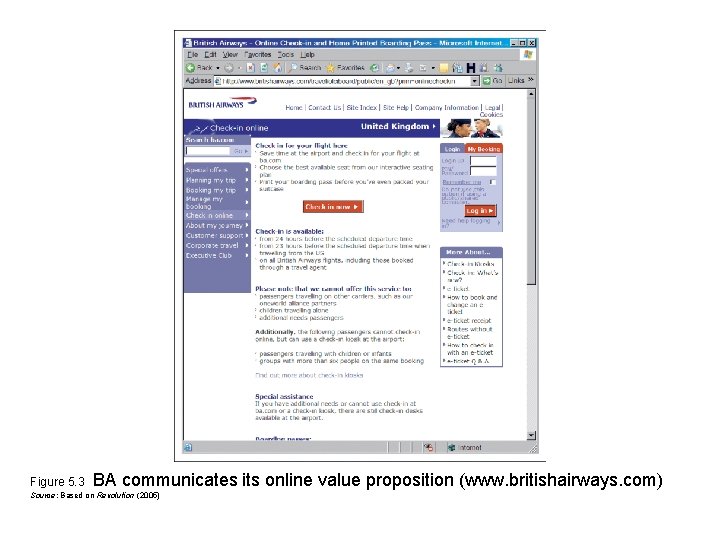
Figure 5. 3 BA communicates its online value proposition (www. britishairways. com) Source: Based on Revolution (2005)
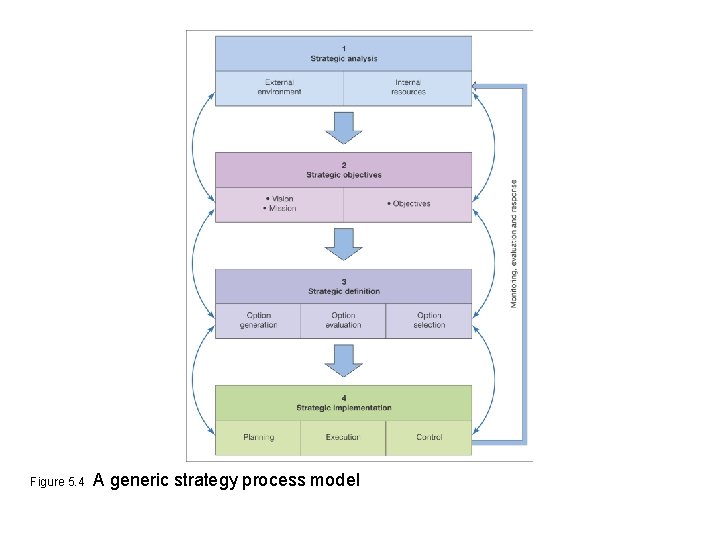
Figure 5. 4 A generic strategy process model
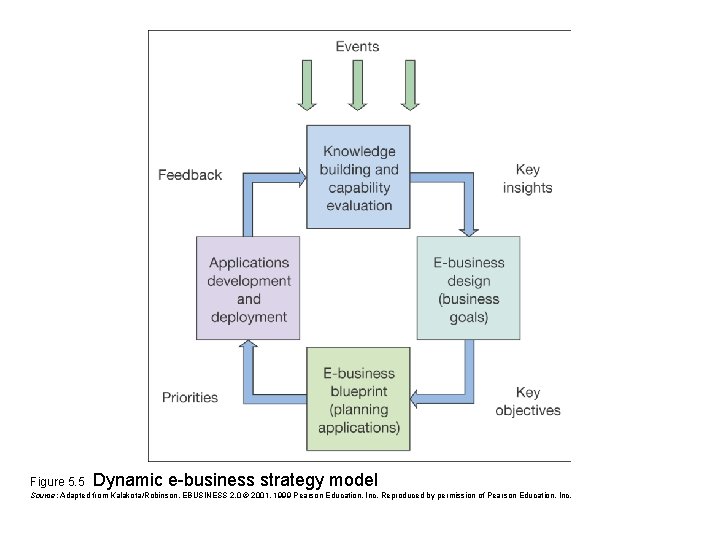
Figure 5. 5 Dynamic e-business strategy model Source: Adapted from Kalakota/Robinson, EBUSINESS 2. 0 © 2001, 1999 Pearson Education, Inc. Reproduced by permission of Pearson Education, Inc.
Slide 5. 14 STRATEGIC ANALYSIS Collection and review of information about the external environment and internal resources Immediate competition Wider environment Internal resources Dave Chaffey, E-Business and E-Commerce Management, 4 th Edition, © Marketing Insights Limited 2009
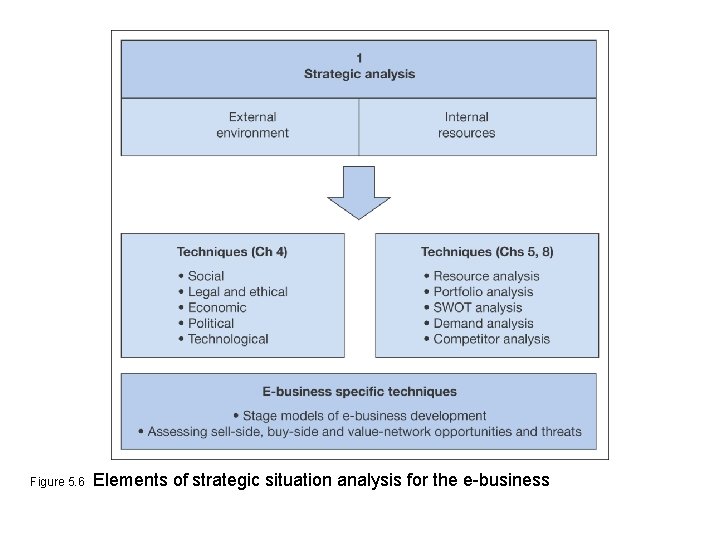
Figure 5. 6 Elements of strategic situation analysis for the e-business
Slide 5. 16 STAGE MODELS OF EBUSINESS DEVELOPMENT Earlier in chapter 1 a stage model was presented, which could be helpful in assessing the business’s position and resources Dave Chaffey, E-Business and E-Commerce Management, 4 th Edition, © Marketing Insights Limited 2009
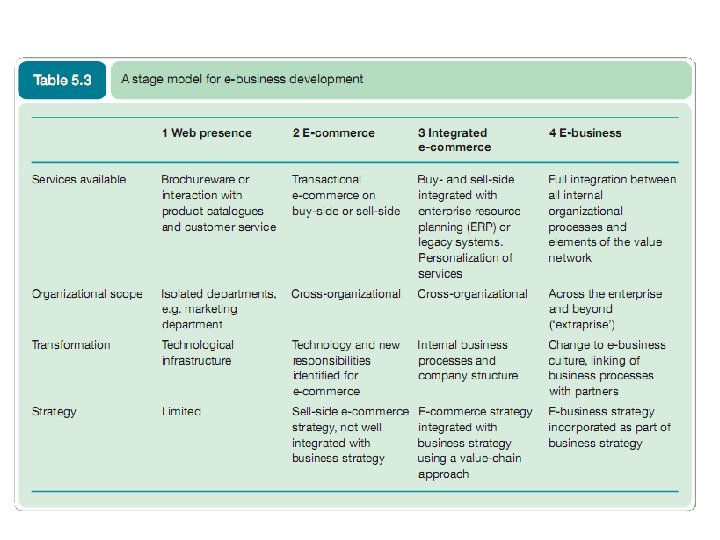
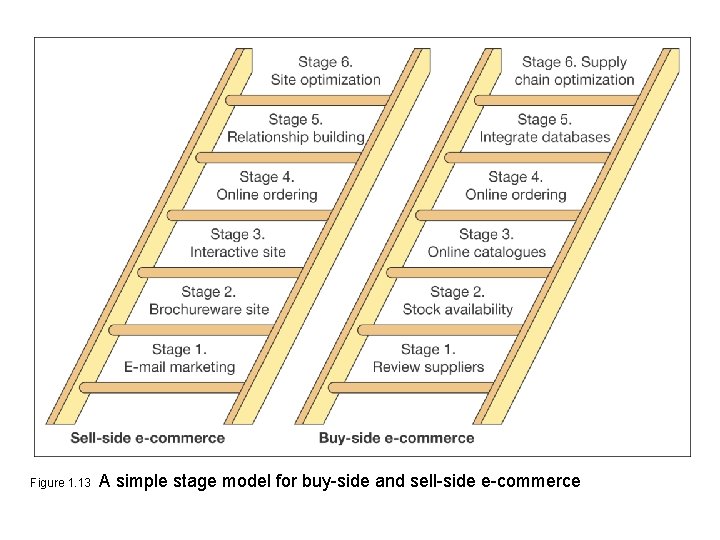
Figure 1. 13 A simple stage model for buy-side and sell-side e-commerce
Slide 5. 19 PORTFOLIO ANALYSIS Portfolio analysis is helpful for assessing current e-business capability and future e-business strategies The next slide show an example for B 2 B case Dave Chaffey, E-Business and E-Commerce Management, 4 th Edition, © Marketing Insights Limited 2009
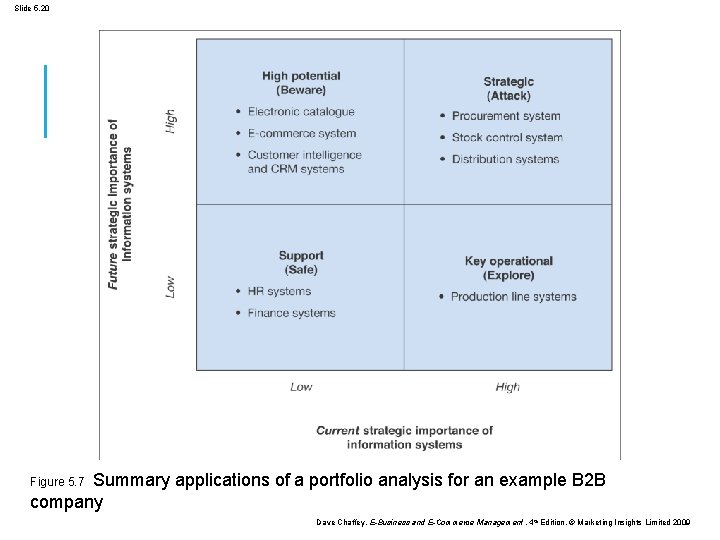
Slide 5. 20 Summary applications of a portfolio analysis for an example B 2 B company Figure 5. 7 Dave Chaffey, E-Business and E-Commerce Management, 4 th Edition, © Marketing Insights Limited 2009
Slide 5. 21 SWOT ANALYSIS Strengths, weaknesses, opportunities, and Threats analysis is a useful tool for analyzing the current situation and formulating strategies Next slide shows an example of e-business SWOT analysis Dave Chaffey, E-Business and E-Commerce Management, 4 th Edition, © Marketing Insights Limited 2009
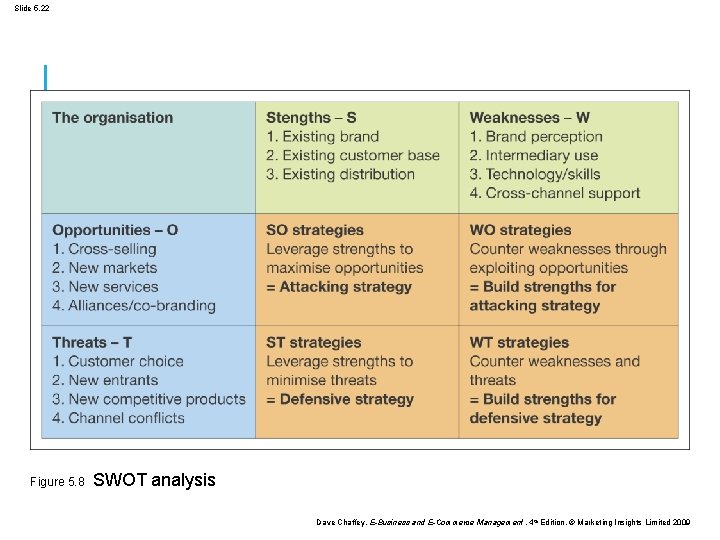
Slide 5. 22 Figure 5. 8 SWOT analysis Dave Chaffey, E-Business and E-Commerce Management, 4 th Edition, © Marketing Insights Limited 2009
Slide 5. 23 BALANCE INTERNAL AND EXTERNAL A e-Business strategy must be based on the balance between internal capability and external forces Next slide presents different options based on such a balance Dave Chaffey, E-Business and E-Commerce Management, 4 th Edition, © Marketing Insights Limited 2009
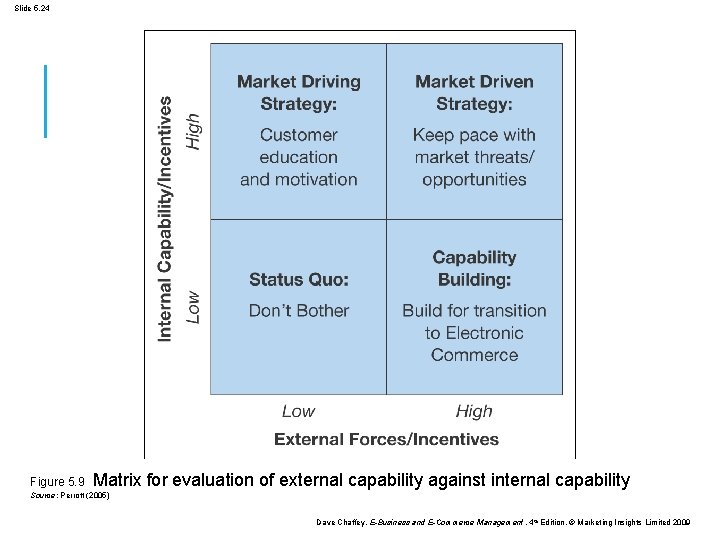
Slide 5. 24 Figure 5. 9 Matrix for evaluation of external capability against internal capability Source: Perrott (2005) Dave Chaffey, E-Business and E-Commerce Management, 4 th Edition, © Marketing Insights Limited 2009
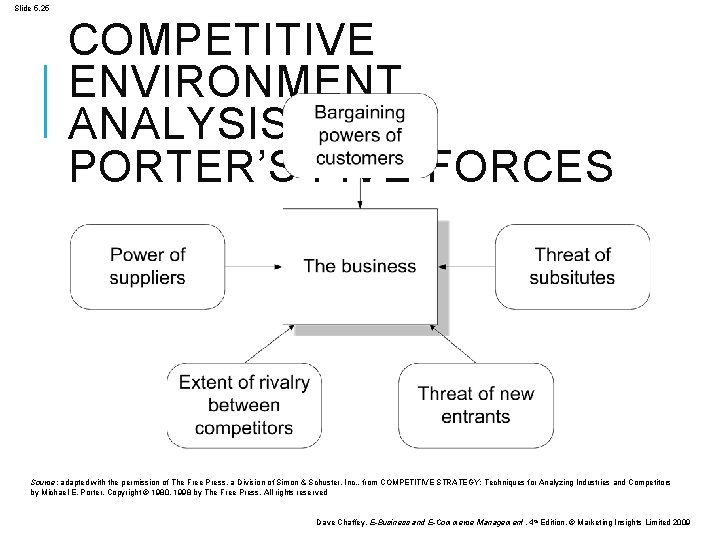
Slide 5. 25 COMPETITIVE ENVIRONMENT ANALYSIS PORTER’S FIVE FORCES Source: adapted with the permission of The Free Press, a Division of Simon & Schuster, Inc. , from COMPETITIVE STRATEGY: Techniques for Analyzing Industries and Competitors by Michael E. Porter. Copyright © 1980, 1998 by The Free Press. All rights reserved Dave Chaffey, E-Business and E-Commerce Management, 4 th Edition, © Marketing Insights Limited 2009
Slide 5. 26 ACTIVITY – IMPACT OF INTERNET For one of the industries below, assess how the Internet has changed the competitive forces, for example, has it increased or decreased power of suppliers and customers? Industries: Banking Supermarkets Retail Travel Oil industry Rail industry Dave Chaffey, E-Business and E-Commerce Management, 4 th Edition, © Marketing Insights Limited 2009
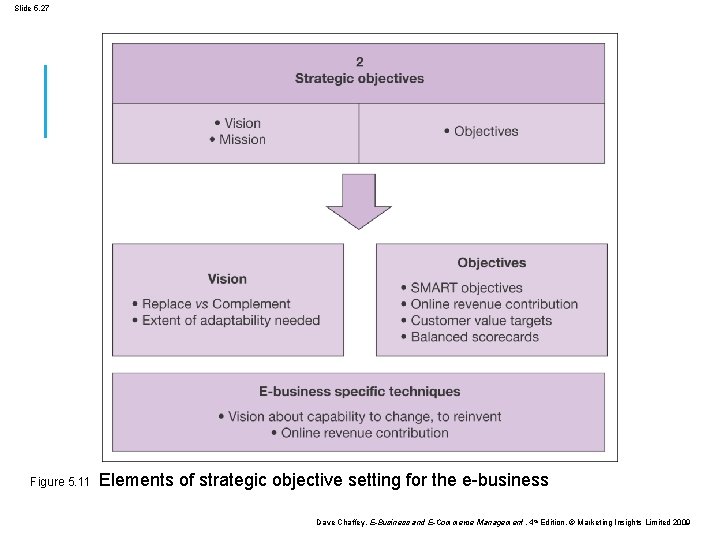
Slide 5. 27 Figure 5. 11 Elements of strategic objective setting for the e-business Dave Chaffey, E-Business and E-Commerce Management, 4 th Edition, © Marketing Insights Limited 2009
Slide 5. 28 HOW CAN E-BUSINESS CREATE VALUE Following methods were proposed Adding values—better quality products and services Reducing cost—making the business process more efficient Managing risks—improve information flow and availability Creating new reality—create new way that products and or services Dave Chaffey, E-Business and E-Commerce Management, 4 th Edition, © Marketing Insights Limited 2009
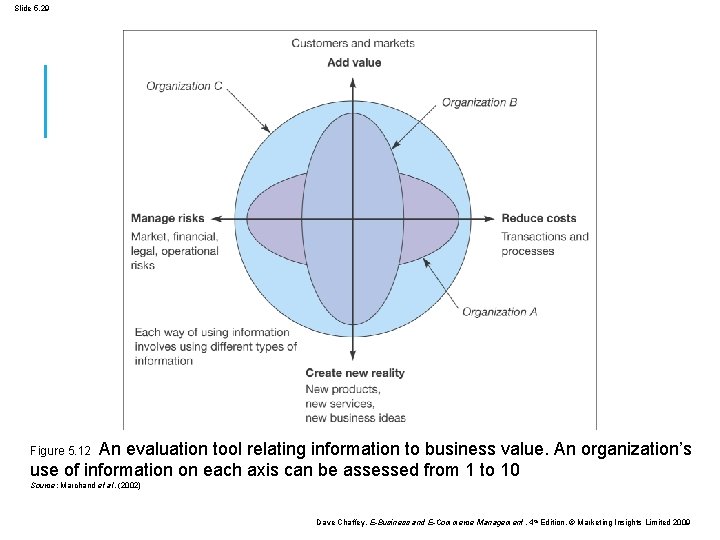
Slide 5. 29 An evaluation tool relating information to business value. An organization’s use of information on each axis can be assessed from 1 to 10 Figure 5. 12 Source: Marchand et al. (2002) Dave Chaffey, E-Business and E-Commerce Management, 4 th Edition, © Marketing Insights Limited 2009
Slide 5. 30 E-BUSINESS AND COMPETITIVE ADVANTAGE Read Case Study 5. 1 on pages 286 -287 Discuss questions on p. 287 Dave Chaffey, E-Business and E-Commerce Management, 4 th Edition, © Marketing Insights Limited 2009
Slide 5. 31 SMART OBJECTIVES The 2 nd phase of strategy development process will produce objectives. The objectives should be SMART Specific Measurable—both efficient and effective Actionable Relevant Time-Related Example—ref. p. 289, table 5. 6 Dave Chaffey, E-Business and E-Commerce Management, 4 th Edition, © Marketing Insights Limited 2009
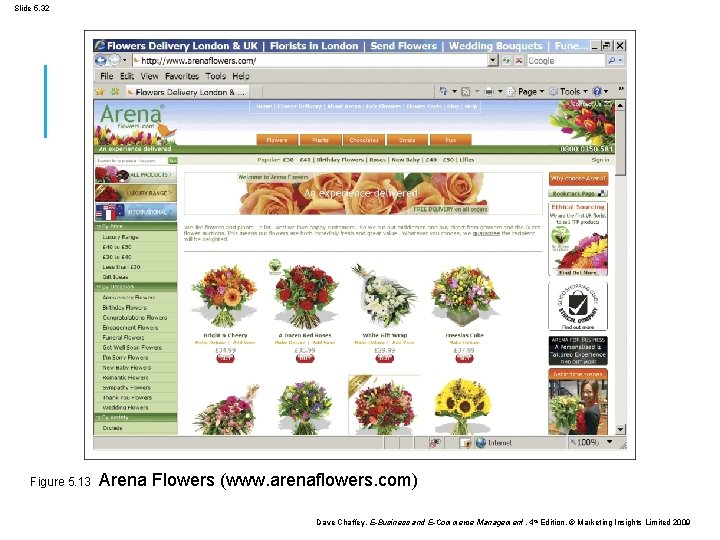
Slide 5. 32 Figure 5. 13 Arena Flowers (www. arenaflowers. com) Dave Chaffey, E-Business and E-Commerce Management, 4 th Edition, © Marketing Insights Limited 2009
Slide 5. 33 SMART OBJECTIVES Online Revenue Contribution--% of company revenue directly generated through online transactions B 2 B should consider indirect revenue Conversion Modeling for B 2 C Using various conversion rates to measure the effectiveness of e-marketing Ref. p. 291 Box 5. 5 Dave Chaffey, E-Business and E-Commerce Management, 4 th Edition, © Marketing Insights Limited 2009
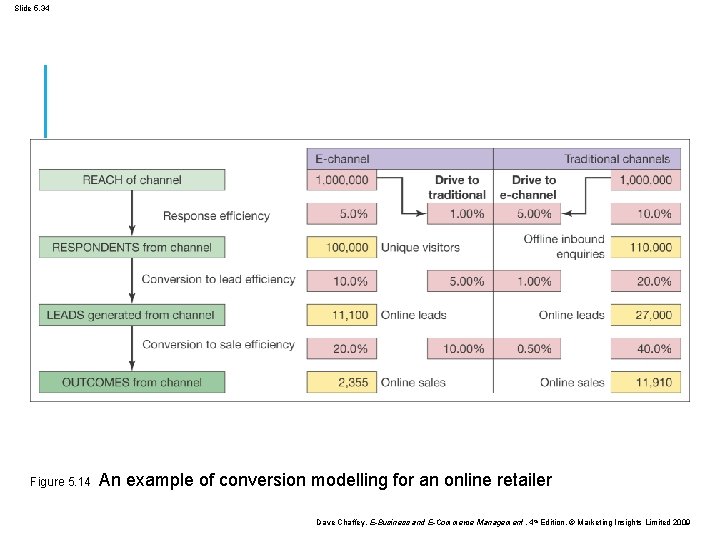
Slide 5. 34 Figure 5. 14 An example of conversion modelling for an online retailer Dave Chaffey, E-Business and E-Commerce Management, 4 th Edition, © Marketing Insights Limited 2009
Slide 5. 35 CASE STUDY Read page 292 -293 Case study 5. 2 Answer the questions on page 293 Activity 5. 2, pages 293 Dave Chaffey, E-Business and E-Commerce Management, 4 th Edition, © Marketing Insights Limited 2009
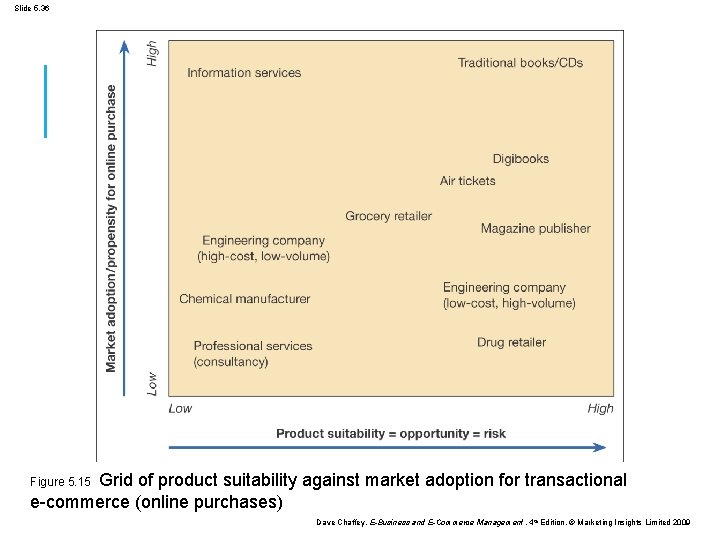
Slide 5. 36 Grid of product suitability against market adoption for transactional e-commerce (online purchases) Figure 5. 15 Dave Chaffey, E-Business and E-Commerce Management, 4 th Edition, © Marketing Insights Limited 2009
Slide 5. 37 SCORECARD FOR OBJECTIVE SETTING Scorecard is a comprehensive framework for setting and monitoring business performance. Metrics includes Customer issues Internal efficiency Financial, and Innovation Example—p. 295, table 5. 8 Dave Chaffey, E-Business and E-Commerce Management, 4 th Edition, © Marketing Insights Limited 2009
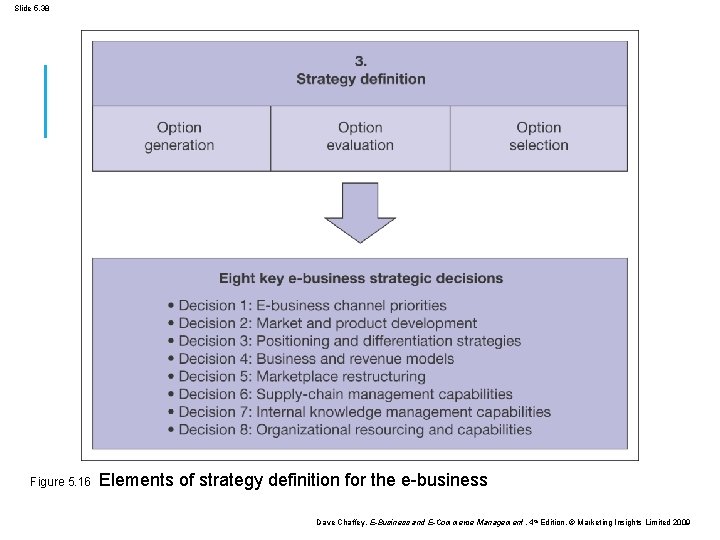
Slide 5. 38 Figure 5. 16 Elements of strategy definition for the e-business Dave Chaffey, E-Business and E-Commerce Management, 4 th Edition, © Marketing Insights Limited 2009
Slide 5. 39 STRATEGY DEFINITION Various models were suggested for defining e-business strategies Ref. pp. 296 -297 The next slide shows a strategy selection model based on portfolio analysis proposed by EConsultancy Dave Chaffey, E-Business and E-Commerce Management, 4 th Edition, © Marketing Insights Limited 2009
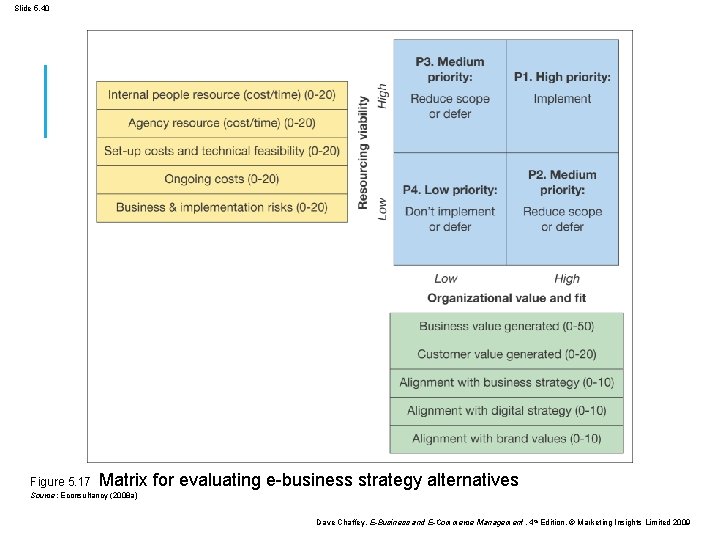
Slide 5. 40 Figure 5. 17 Matrix for evaluating e-business strategy alternatives Source: Econsultancy (2008 a) Dave Chaffey, E-Business and E-Commerce Management, 4 th Edition, © Marketing Insights Limited 2009
Slide 5. 41 D. 1 CHANNEL PRIORITY “Getting the right mix of bricks and clicks” The next slide shows various options Dave Chaffey, E-Business and E-Commerce Management, 4 th Edition, © Marketing Insights Limited 2009
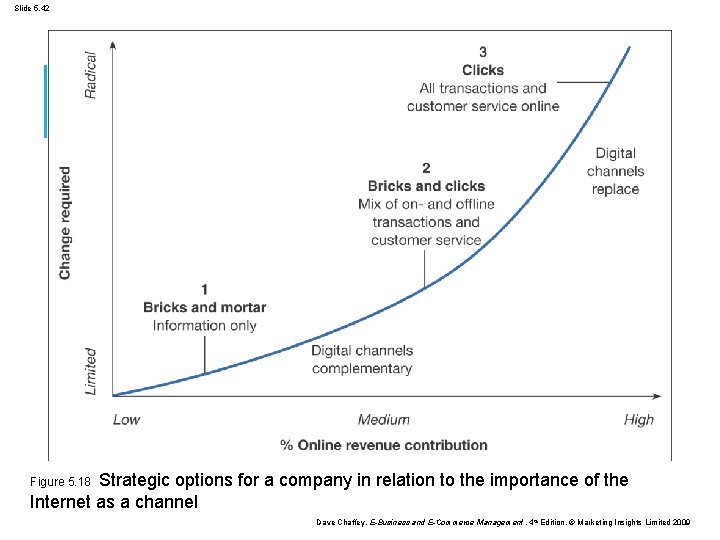
Slide 5. 42 Strategic options for a company in relation to the importance of the Internet as a channel Figure 5. 18 Dave Chaffey, E-Business and E-Commerce Management, 4 th Edition, © Marketing Insights Limited 2009
Slide 5. 43 D. 1 CHANNEL PRIORITY Right-Channeling Integrate different channels to reach the right person at the right time using the right channel with a relevant offer, product or message Right-channeling example Ref. pp. 299 -300, table 5. 9 Dave Chaffey, E-Business and E-Commerce Management, 4 th Edition, © Marketing Insights Limited 2009
Slide 5. 44 D. 2 MARKET AND PRODUCT DEVELOPMENT A key strategic considering is which market to target and using what products The next slide shows a matrix with different options to grow market and product development Dave Chaffey, E-Business and E-Commerce Management, 4 th Edition, © Marketing Insights Limited 2009
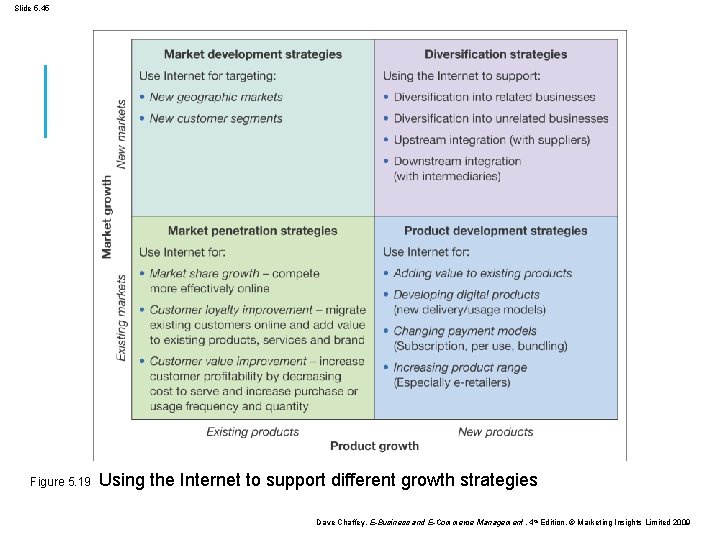
Slide 5. 45 Figure 5. 19 Using the Internet to support different growth strategies Dave Chaffey, E-Business and E-Commerce Management, 4 th Edition, © Marketing Insights Limited 2009
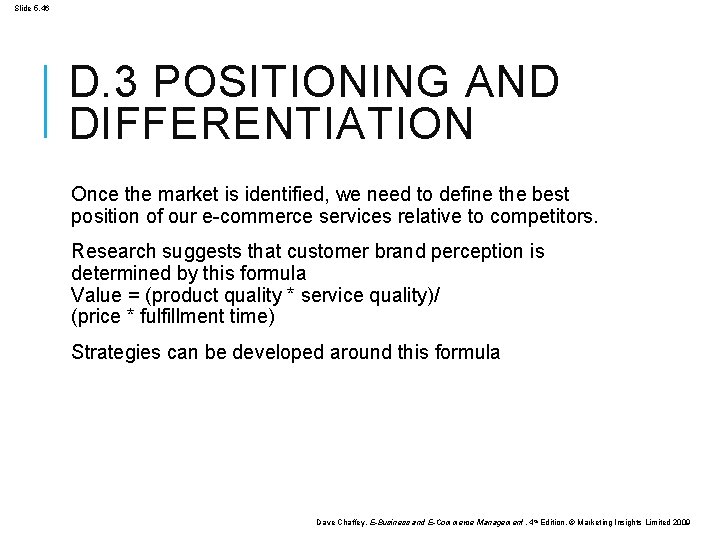
Slide 5. 46 D. 3 POSITIONING AND DIFFERENTIATION Once the market is identified, we need to define the best position of our e-commerce services relative to competitors. Research suggests that customer brand perception is determined by this formula Value = (product quality * service quality)/ (price * fulfillment time) Strategies can be developed around this formula Dave Chaffey, E-Business and E-Commerce Management, 4 th Edition, © Marketing Insights Limited 2009
Slide 5. 47 D. 3 POSITIONING AND DIFFERENTIATION Commonly used Criteria that customers use to benchmark etailor performance is presented in table 5. 10 on p. 304 Dave Chaffey, E-Business and E-Commerce Management, 4 th Edition, © Marketing Insights Limited 2009
Slide 5. 48 ACTIVITY Read Activity 5. 3 on pages 305 -306 Discuss the questions 1 and 2 on page 305 Dave Chaffey, E-Business and E-Commerce Management, 4 th Edition, © Marketing Insights Limited 2009
Slide 5. 49 D. 4 BUSINESS, SERVICE AND REVENUE MODEL Review business model (ch 2) This decision is closely related or similar to D 3. However, here it emphasizes new models, e. g. , Amazon “Only the paranoid will survive” (Andy Grove) Also need to notice that many companies are successful by sticking to a single business model not far from their original vision Dave Chaffey, E-Business and E-Commerce Management, 4 th Edition, © Marketing Insights Limited 2009
Slide 5. 50 D. 5 MARKETPLACE RESTRUCTURING Companies should also look at the new opportunities created by Internet in this regard Disintermediation Re-intermediation Counter-mediation Mini Case Study 5. 4 3 M on pp. 308 -309 What did 3 M do in taking advantages of market restructuring? Dave Chaffey, E-Business and E-Commerce Management, 4 th Edition, © Marketing Insights Limited 2009
Slide 5. 51 D. 6 SCM CAPABILITIES This might be considered together with decision 5 but could be examined on its own How to interact more closely with suppliers? What to be covered in this e-relationship? Participate in marketplace to reduce cost? Dave Chaffey, E-Business and E-Commerce Management, 4 th Edition, © Marketing Insights Limited 2009
Slide 5. 52 D. 7 INTERNAL KM CAPABILITIES What is knowledge? Patterns, rules, and contexts that provide a framework for creating, evaluating, and using information. Can be tacit (undocumented) or explicit (documented) knowledge What is knowledge management? Set of processes to create, store, transfer, and apply knowledge Dave Chaffey, E-Business and E-Commerce Management, 4 th Edition, © Marketing Insights Limited 2009
Slide 5. 53 D. 8 ORGANIZATIONAL RESOURCES AND CAPABILITIES What changes does the organization need to make? Available options In-house division (integration) Joint venture (mixed) Strategic partnership (mixed) Spin-off (separation) Dave Chaffey, E-Business and E-Commerce Management, 4 th Edition, © Marketing Insights Limited 2009
Slide 5. 54 D. 8 ORGANIZATIONAL RESOURCES AND CAPABILITIES Questions & Discussion What are the pros and cons for in-house option? When the separation option would be a good choice? Dave Chaffey, E-Business and E-Commerce Management, 4 th Edition, © Marketing Insights Limited 2009
Slide 5. 55 D. 8 ORGANIZATIONAL RESOURCES AND CAPABILITIES Other changes to be examined Strategy process and performance improvement E-commerce infrastructure Senior management support Market integration Online market focus An e-commerce capability maturity model Ref. p. 311, Table 5. 11 Dave Chaffey, E-Business and E-Commerce Management, 4 th Edition, © Marketing Insights Limited 2009
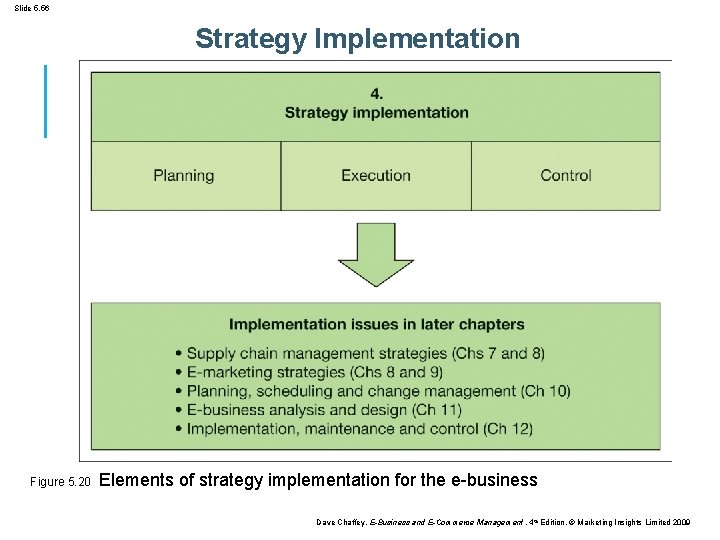
Slide 5. 56 Strategy Implementation Figure 5. 20 Elements of strategy implementation for the e-business Dave Chaffey, E-Business and E-Commerce Management, 4 th Edition, © Marketing Insights Limited 2009
Slide 5. 57 FAILED E-BUSINESS STRATEGIES Some reasons were articulated Overestimate the speed that the marketplace adopts the dot. com innovation Timing errors Lack of creativity Free services Over ambition Dave Chaffey, E-Business and E-Commerce Management, 4 th Edition, © Marketing Insights Limited 2009
Slide 5. 58 FAILED E-BUSINESS STRATEGIES Usually there are more fundamental problems than surfaced Major problems occurred at the strategy development and implementation process Situation Analysis—insufficient research on demand completive forces Object setting—no objectives or unrealistic Strategy definition—poor business models Implementation—problems with customer services and product quality, etc. Dave Chaffey, E-Business and E-Commerce Management, 4 th Edition, © Marketing Insights Limited 2009
Slide 5. 59 IMPLEMENTATION SUCCESS FACTORS FOR SMES Content—effective presentation Convenience—usability Control—manageable and under control Interaction Community Price sensitivity Brand image Commitment Partnership Process Improvement Integration Dave Chaffey, E-Business and E-Commerce Management, 4 th Edition, © Marketing Insights Limited 2009
Slide 5. 60 CASE STUDY Read the case study on pages 316 -318 Answer the questions on page 318 Dave Chaffey, E-Business and E-Commerce Management, 4 th Edition, © Marketing Insights Limited 2009
Slide 5. 61 IS STRATEGY AND EBUSINESS STRATEGY These two are closely related. Business-alignment approach—top down. Start with business strategy and make IS strategy so that it aligns with business strategy Business-impact approach—bottom up. Examine new IS opportunities to see if they can bring positive impact to business strategy Dave Chaffey, E-Business and E-Commerce Management, 4 th Edition, © Marketing Insights Limited 2009
Slide 5. 62 THE PRODUCTIVITY PARADOX Research indicates that there is a week or poor correlation between IS investment and business performance It’s agreed that IT investment has a strong positive relationship with sales, assets and equity but not with net income. Investment on IT staff and user training does show positive relationship on income It’s strongly recommended that more attention should be paid to business process change when implementing e-business strategy Dave Chaffey, E-Business and E-Commerce Management, 4 th Edition, © Marketing Insights Limited 2009
Slide 5. 63 NEXT CLASS Read the Econsultancy interview on pages 606 -608 of chapter 11 Answer the following questions What is Arena Flowers’ business model? How competitive is Arena Flowers on the market and Why? Is this a business of bricks & mortar, bricks & clicks, or pure play? Are they planning to change that soon and why? Do they do cross-selling? How successful and why? Is their site developed and maintained in-house or outsourced? Dave Chaffey, E-Business and E-Commerce Management, 4 th Edition, © Marketing Insights Limited 2009
Slide 5. 64 NEXT CLASS Econsultancy interview (Continues) Is their site developed and maintained in-house or outsourced? What’s the pros and cons of their approach? What else can we learn from this interview? Dave Chaffey, E-Business and E-Commerce Management, 4 th Edition, © Marketing Insights Limited 2009
- Slides: 64