
5 Different Observational Datasets Pros Cons Jay Giri
5 Different Observational Datasets: Pros & Cons Jay Giri, MD MPH Assistant Professor of Medicine Director, Peripheral Intervention Associate Director, Penn Cardiovascular Quality, Outcomes, & Evaluative Research Center Hospital of the University of Pennsylvania 1

Disclosure Statement of Financial Interest I, Jay Giri DO NOT have a financial interest/arrangement or affiliation with one or more organizations that could be perceived as a real or apparent conflict of interest in the context of the subject of this presentation.

Observational vs. RCT w External validity vs. internal validity w RCT – controls for treatment-selection bias 3
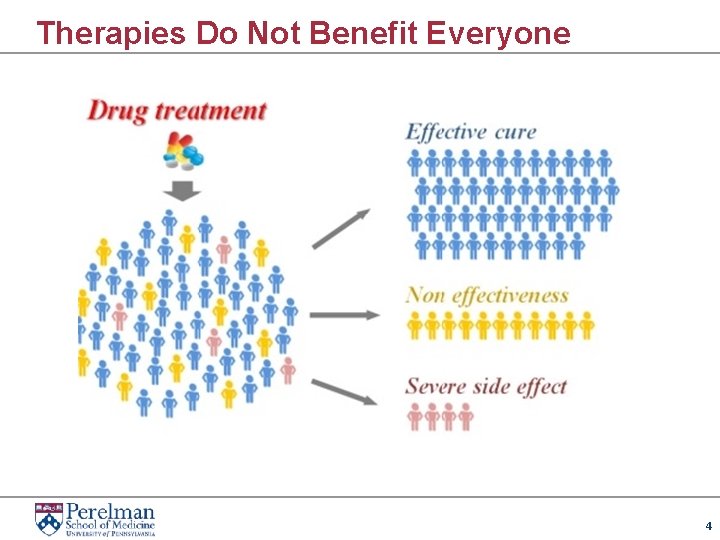
Therapies Do Not Benefit Everyone 4
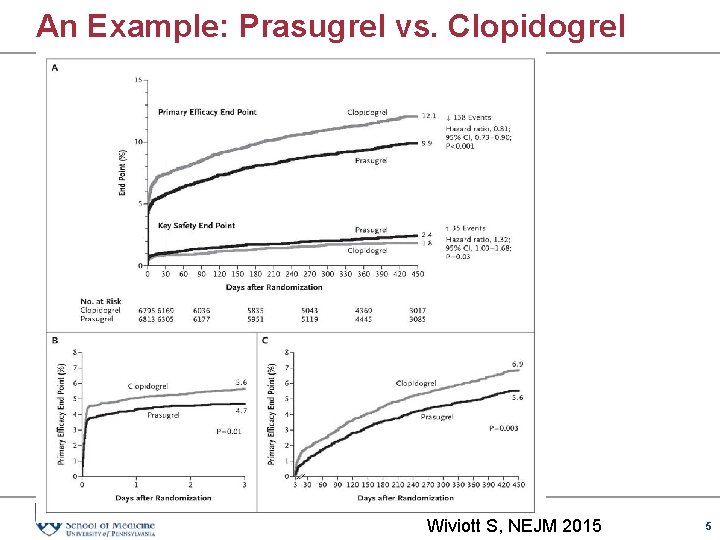
An Example: Prasugrel vs. Clopidogrel Wiviott S, NEJM 2015 5
Why Outcomes? w Direct relationship with quality assessment and continuous quality improvement w Increasing interest in Big Data w Close synergies with clinical care w Possible (but not easy) to be an expert clinician and productive outcomes researcher 6
Datasets w Administrative Database w Registry w Sub-Analysis of Randomized Trial w DIY w Meta-Analysis • Cohort Level • Patient-Level 7
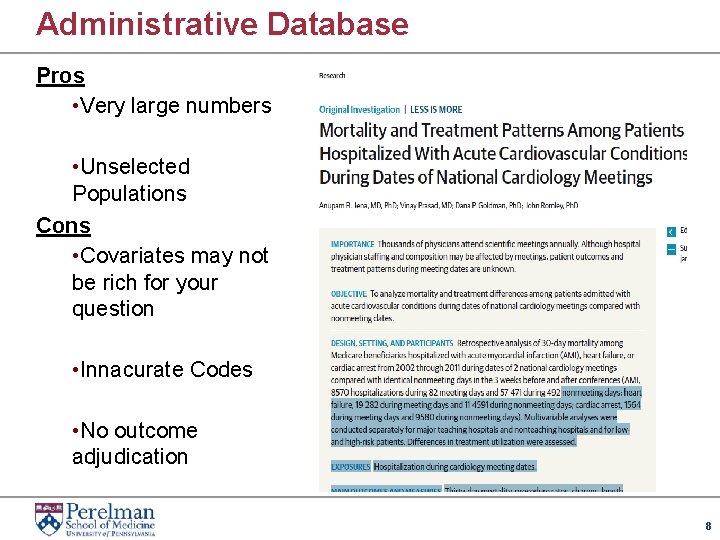
Administrative Database Pros • Very large numbers • Unselected Populations Cons • Covariates may not be rich for your question • Innacurate Codes • No outcome adjudication 8
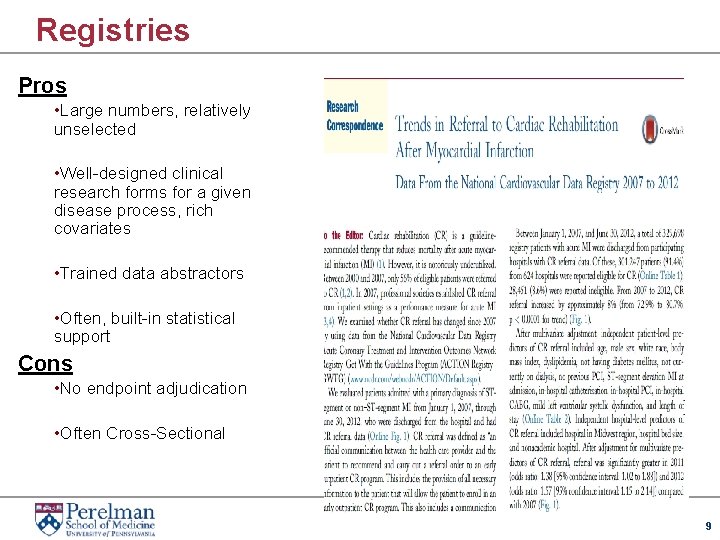
Registries Pros • Large numbers, relatively unselected • Well-designed clinical research forms for a given disease process, rich covariates • Trained data abstractors • Often, built-in statistical support Cons • No endpoint adjudication • Often Cross-Sectional 9
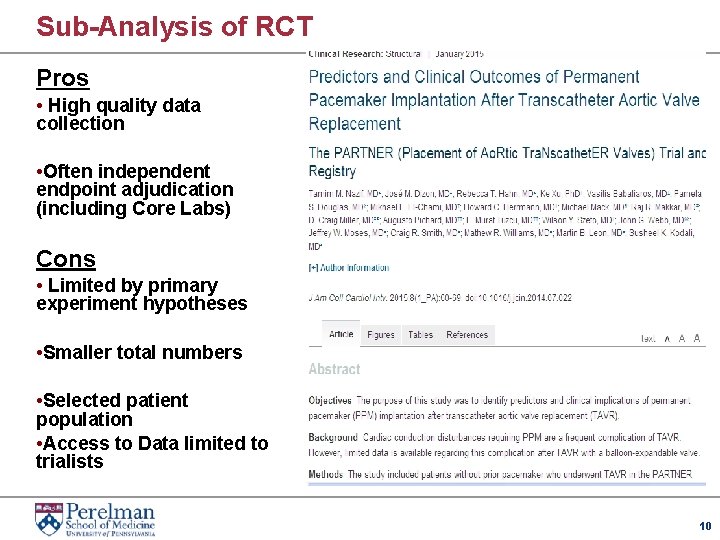
Sub-Analysis of RCT Pros • High quality data collection • Often independent endpoint adjudication (including Core Labs) Cons • Limited by primary experiment hypotheses • Smaller total numbers • Selected patient population • Access to Data limited to trialists 10
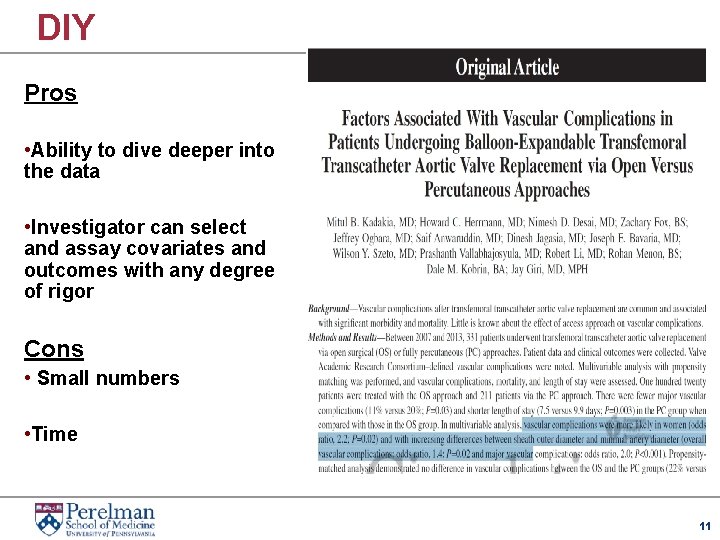
DIY Pros • Ability to dive deeper into the data • Investigator can select and assay covariates and outcomes with any degree of rigor Cons • Small numbers • Time 11
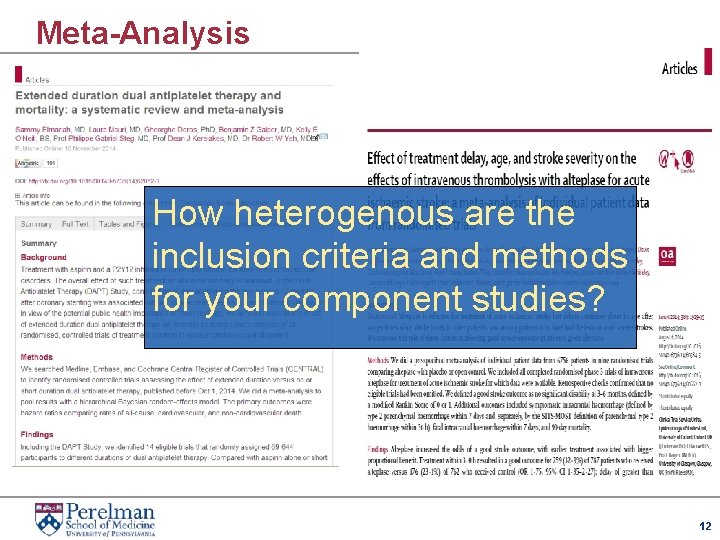
Meta-Analysis How heterogenous are the inclusion criteria and methods for your component studies? 12
Thank You! w Peter Groeneveld, MD, MS w Robert Yeh, MD, MS w Penn Center for Cardiovascular Outcomes, Quality & Evaluative Research (CAVOQER) 13
- Slides: 13