
5 CPU Scheduling Operating System Concepts 8 th
- Slides: 55
ﺯﻣﺎﻧﺒﻨﺪی پﺮﺩﺍﺯﻧﺪﻩ : 5 ﻓﺼﻞ (CPU Scheduling) Operating System Concepts – 8 th Edition, Silberschatz, Galvin and Gagne © 2009
) ﺯﻣﺎﻧﺒﻨﺪی پﺮﺩﺍﺯﻧﺪﻩ : 5 ﻓﺼﻞ CPU Scheduling( n Basic Concepts n Scheduling Criteria n Scheduling Algorithms n Thread Scheduling n Multiple-Processor Scheduling n Operating Systems Examples n Algorithm Evaluation Operating System Concepts – 8 th Edition 5. 2 Silberschatz, Galvin and Gagne © 2009
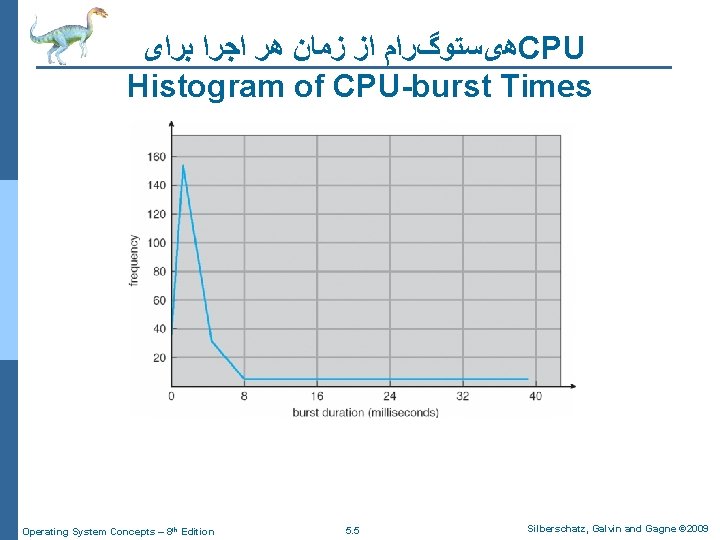
ﻫیﺴﺘﻮگﺮﺍﻡ ﺍﺯ ﺯﻣﺎﻥ ﻫﺮ ﺍﺟﺮﺍ ﺑﺮﺍی CPU Histogram of CPU-burst Times Operating System Concepts – 8 th Edition 5. 5 Silberschatz, Galvin and Gagne © 2009
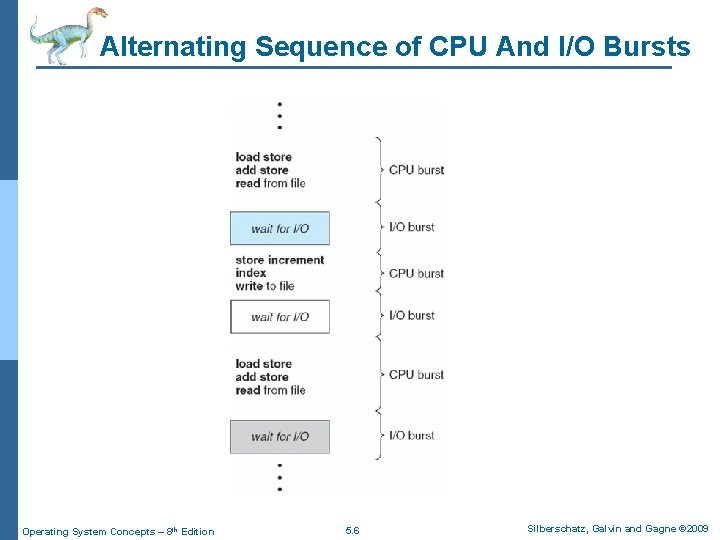
Alternating Sequence of CPU And I/O Bursts Operating System Concepts – 8 th Edition 5. 6 Silberschatz, Galvin and Gagne © 2009
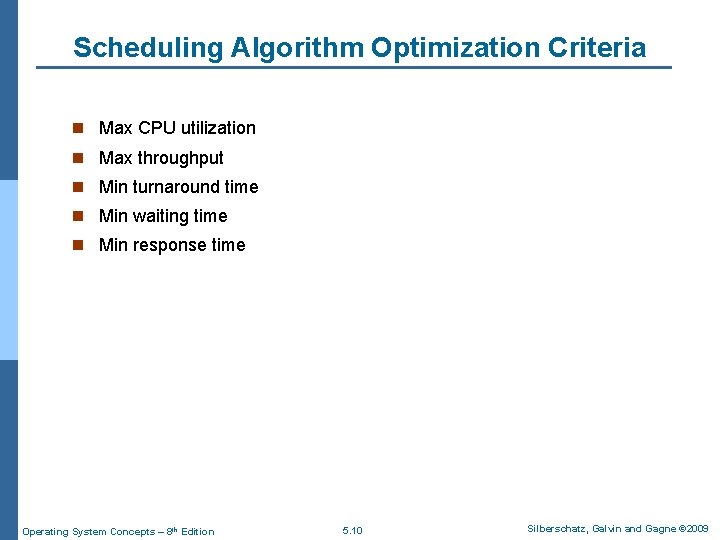
Scheduling Algorithm Optimization Criteria n Max CPU utilization n Max throughput n Min turnaround time n Min waiting time n Min response time Operating System Concepts – 8 th Edition 5. 10 Silberschatz, Galvin and Gagne © 2009
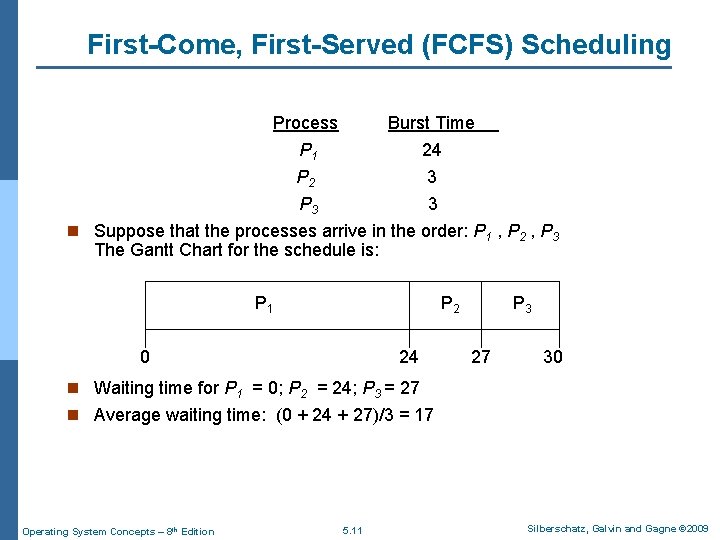
First-Come, First-Served (FCFS) Scheduling Process Burst Time P 1 24 P 2 3 P 3 3 n Suppose that the processes arrive in the order: P 1 , P 2 , P 3 The Gantt Chart for the schedule is: P 1 P 2 0 24 P 3 27 30 n Waiting time for P 1 = 0; P 2 = 24; P 3 = 27 n Average waiting time: (0 + 24 + 27)/3 = 17 Operating System Concepts – 8 th Edition 5. 11 Silberschatz, Galvin and Gagne © 2009
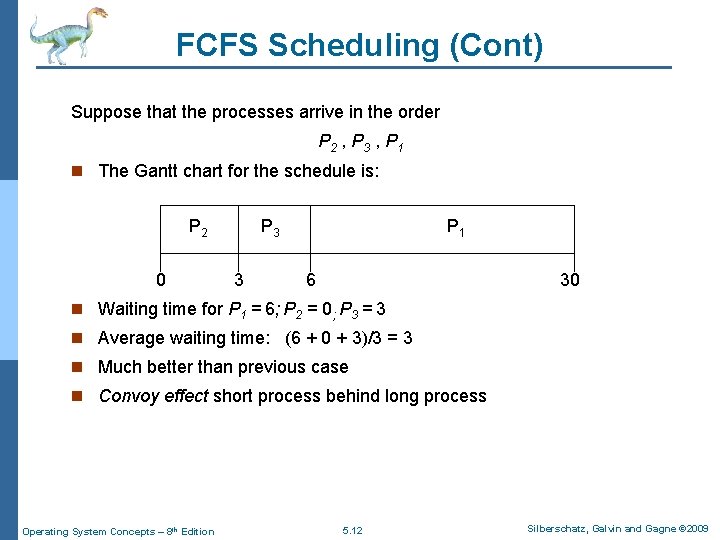
FCFS Scheduling (Cont) Suppose that the processes arrive in the order P 2 , P 3 , P 1 n The Gantt chart for the schedule is: P 2 0 P 3 3 P 1 6 30 n Waiting time for P 1 = 6; P 2 = 0; P 3 = 3 n Average waiting time: (6 + 0 + 3)/3 = 3 n Much better than previous case n Convoy effect short process behind long process Operating System Concepts – 8 th Edition 5. 12 Silberschatz, Galvin and Gagne © 2009
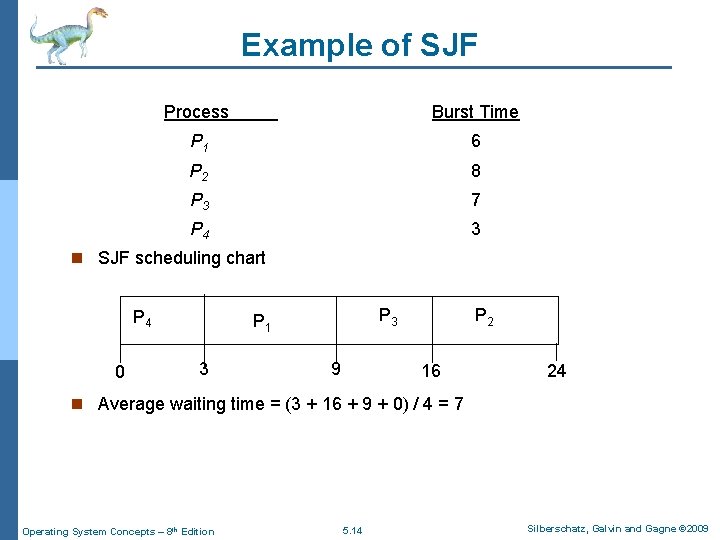
Example of SJF Process Arrival Time Burst Time P 1 0. 0 6 P 2 2. 0 8 P 3 4. 0 7 P 4 5. 0 3 n SJF scheduling chart P 4 0 P 3 P 1 3 9 P 2 16 24 n Average waiting time = (3 + 16 + 9 + 0) / 4 = 7 Operating System Concepts – 8 th Edition 5. 14 Silberschatz, Galvin and Gagne © 2009
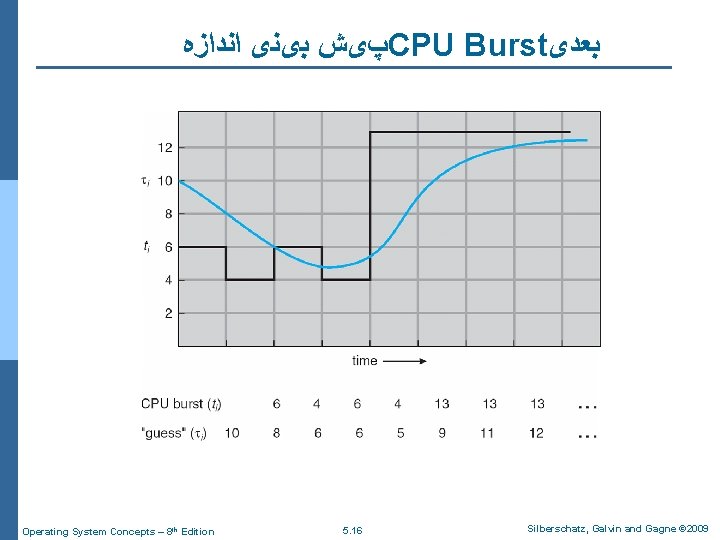
پیﺶ ﺑیﻨی ﺍﻧﺪﺍﺯﻩ CPU Burst ﺑﻌﺪی Operating System Concepts – 8 th Edition 5. 16 Silberschatz, Galvin and Gagne © 2009
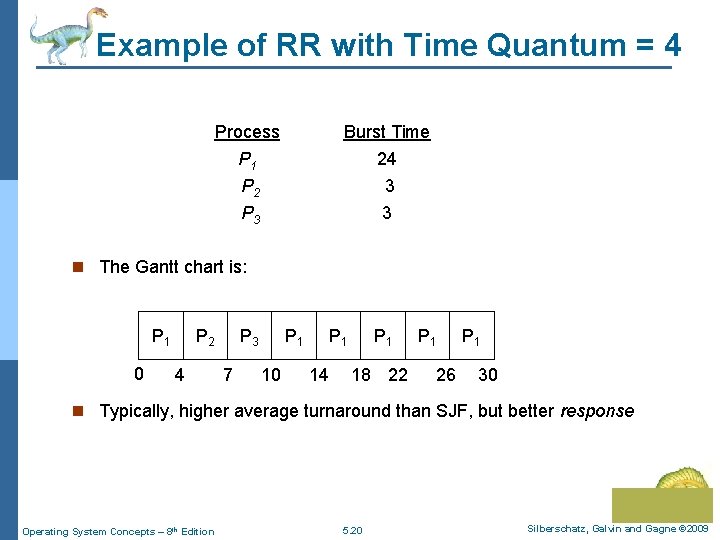
Example of RR with Time Quantum = 4 Process Burst Time P 1 P 2 P 3 24 3 3 n The Gantt chart is: P 1 0 P 2 4 P 3 7 P 1 10 P 1 14 P 1 18 22 P 1 26 P 1 30 n Typically, higher average turnaround than SJF, but better response Operating System Concepts – 8 th Edition 5. 20 Silberschatz, Galvin and Gagne © 2009
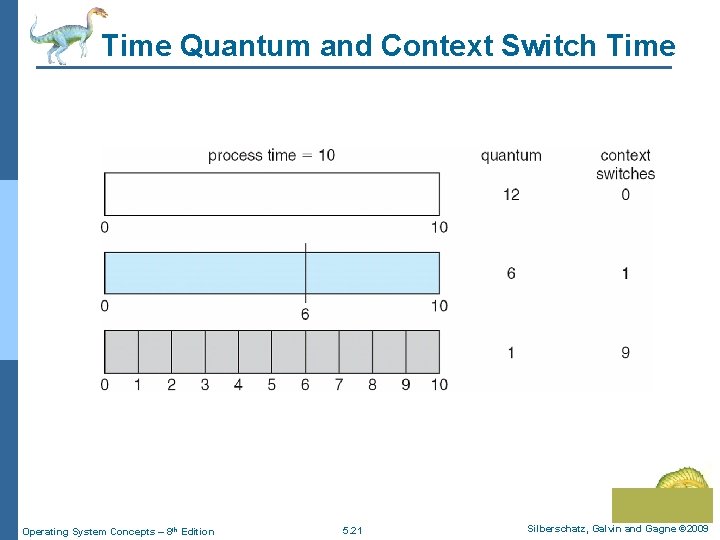
Time Quantum and Context Switch Time Operating System Concepts – 8 th Edition 5. 21 Silberschatz, Galvin and Gagne © 2009
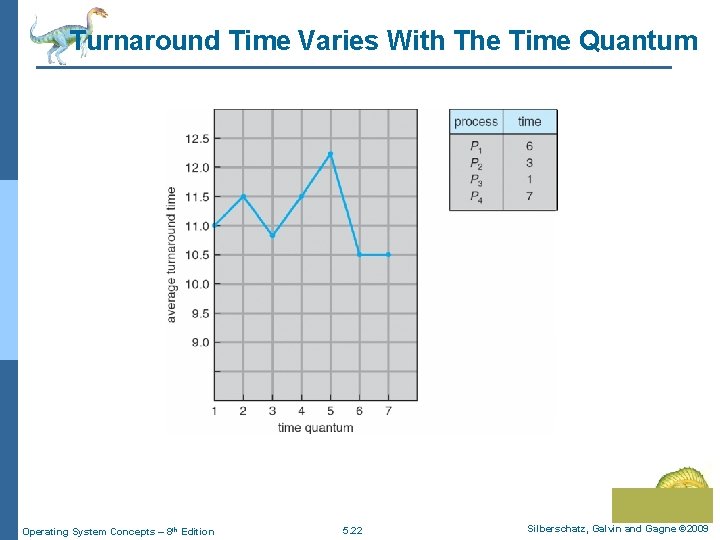
Turnaround Time Varies With The Time Quantum Operating System Concepts – 8 th Edition 5. 22 Silberschatz, Galvin and Gagne © 2009
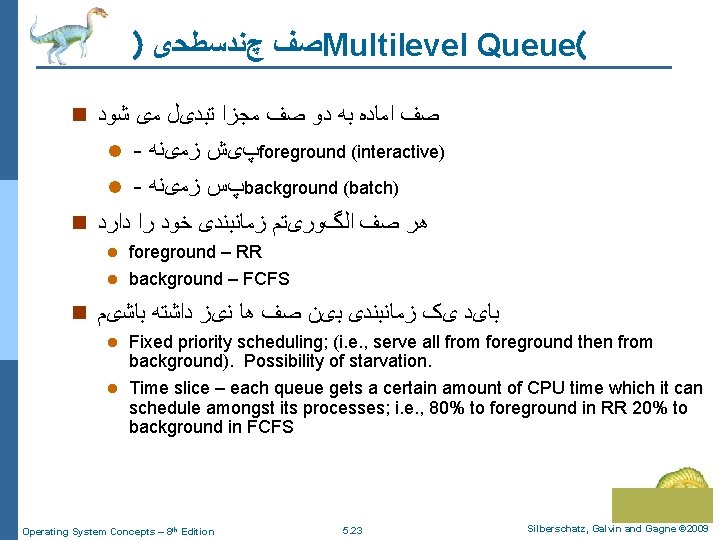
) ﺻﻒ چﻨﺪﺳﻄﺤی Multilevel Queue( n ﺻﻒ ﺍﻣﺎﺩﻩ ﺑﻪ ﺩﻭ ﺻﻒ ﻣﺠﺰﺍ ﺗﺒﺪیﻞ ﻣی ﺷﻮﺩ - پیﺶ ﺯﻣیﻨﻪ foreground (interactive) l - پﺲ ﺯﻣیﻨﻪ background (batch) l n ﻫﺮ ﺻﻒ ﺍﻟگﻮﺭیﺘﻢ ﺯﻣﺎﻧﺒﻨﺪی ﺧﻮﺩ ﺭﺍ ﺩﺍﺭﺩ foreground – RR l background – FCFS l n ﺑﺎیﺪ یک ﺯﻣﺎﻧﺒﻨﺪی ﺑیﻦ ﺻﻒ ﻫﺎ ﻧیﺰ ﺩﺍﺷﺘﻪ ﺑﺎﺷیﻢ Fixed priority scheduling; (i. e. , serve all from foreground then from background). Possibility of starvation. l Time slice – each queue gets a certain amount of CPU time which it can schedule amongst its processes; i. e. , 80% to foreground in RR 20% to background in FCFS l Operating System Concepts – 8 th Edition 5. 23 Silberschatz, Galvin and Gagne © 2009
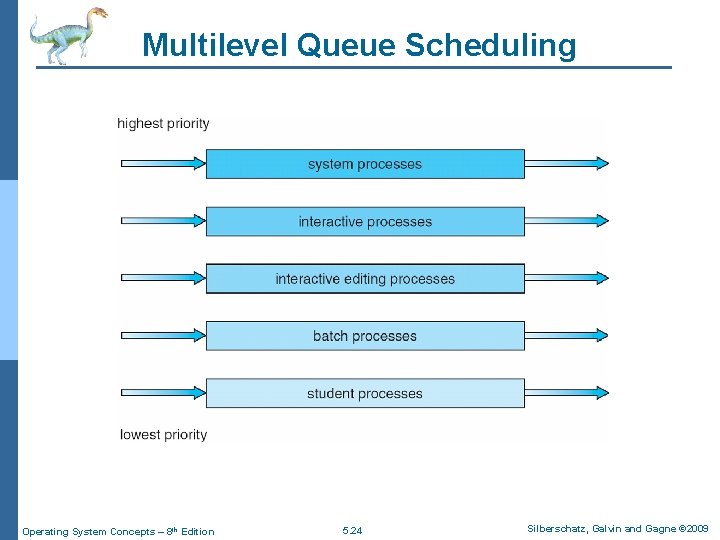
Multilevel Queue Scheduling Operating System Concepts – 8 th Edition 5. 24 Silberschatz, Galvin and Gagne © 2009
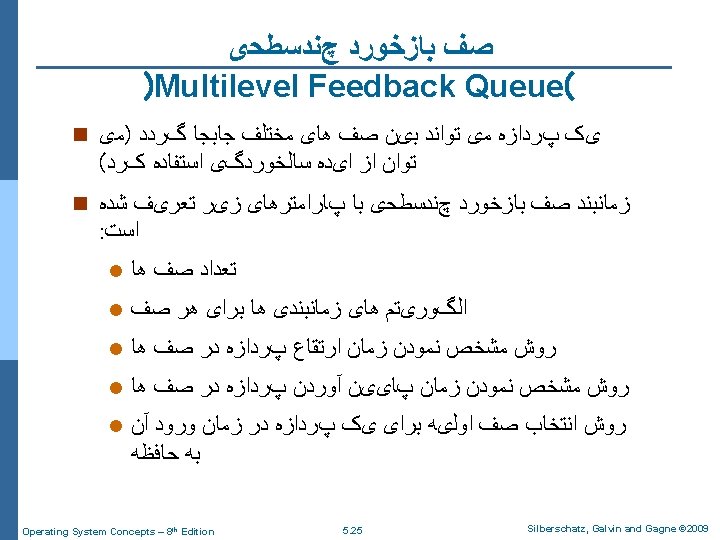
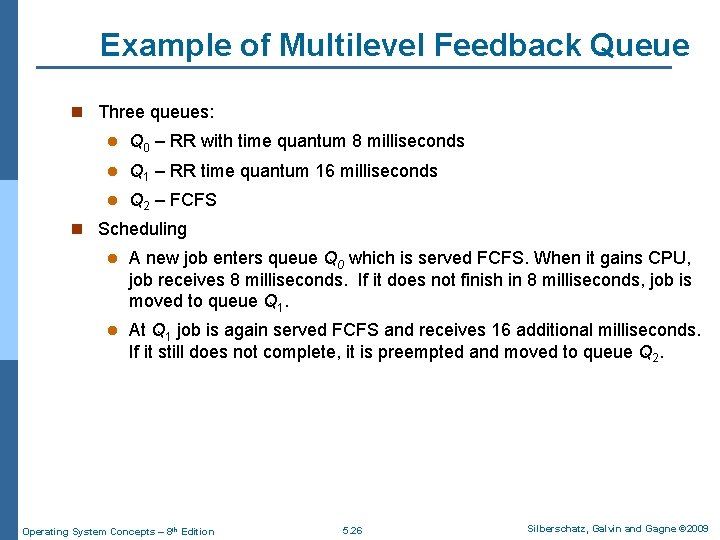
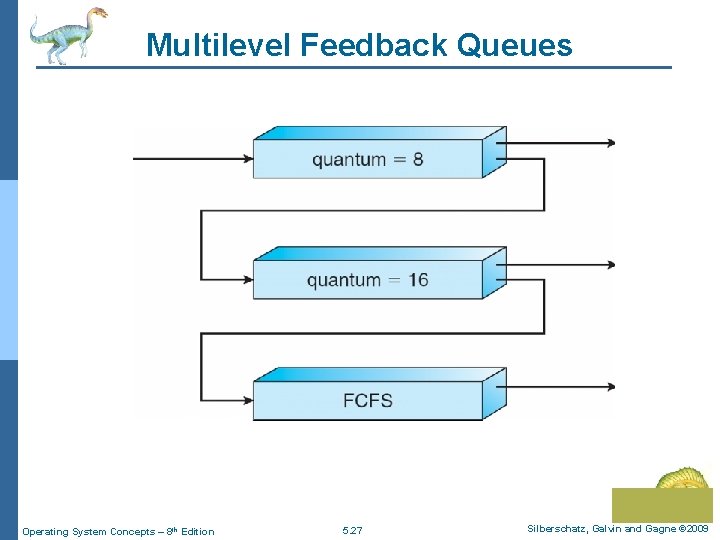
Example of Multilevel Feedback Queue n Three queues: l Q 0 – RR with time quantum 8 milliseconds l Q 1 – RR time quantum 16 milliseconds l Q 2 – FCFS n Scheduling l A new job enters queue Q 0 which is served FCFS. When it gains CPU, job receives 8 milliseconds. If it does not finish in 8 milliseconds, job is moved to queue Q 1. l At Q 1 job is again served FCFS and receives 16 additional milliseconds. If it still does not complete, it is preempted and moved to queue Q 2. Operating System Concepts – 8 th Edition 5. 26 Silberschatz, Galvin and Gagne © 2009
Multilevel Feedback Queues Operating System Concepts – 8 th Edition 5. 27 Silberschatz, Galvin and Gagne © 2009
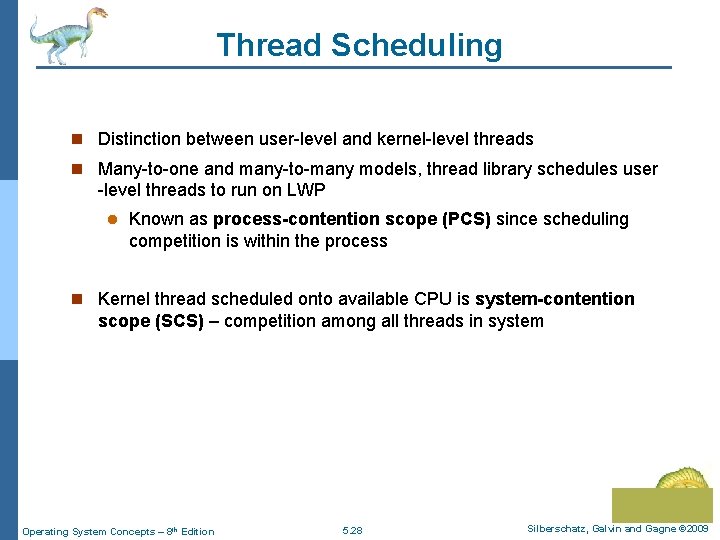
Thread Scheduling n Distinction between user-level and kernel-level threads n Many-to-one and many-to-many models, thread library schedules user -level threads to run on LWP l Known as process-contention scope (PCS) since scheduling competition is within the process n Kernel thread scheduled onto available CPU is system-contention scope (SCS) – competition among all threads in system Operating System Concepts – 8 th Edition 5. 28 Silberschatz, Galvin and Gagne © 2009
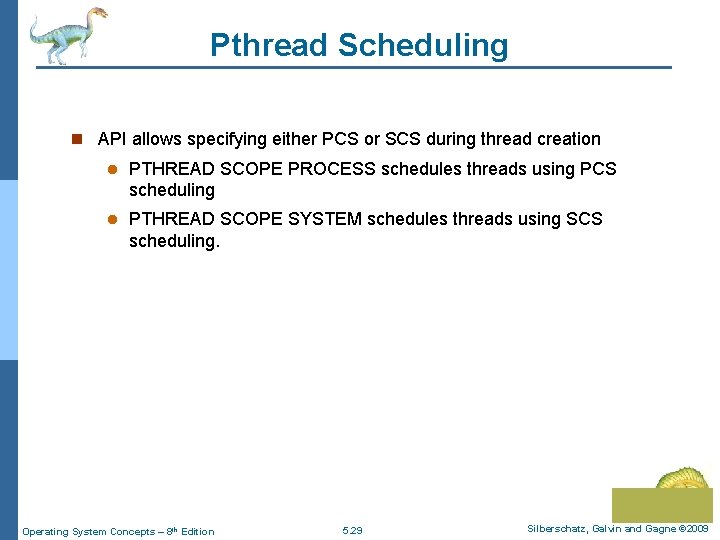
Pthread Scheduling n API allows specifying either PCS or SCS during thread creation l PTHREAD SCOPE PROCESS schedules threads using PCS scheduling l PTHREAD SCOPE SYSTEM schedules threads using SCS scheduling. Operating System Concepts – 8 th Edition 5. 29 Silberschatz, Galvin and Gagne © 2009
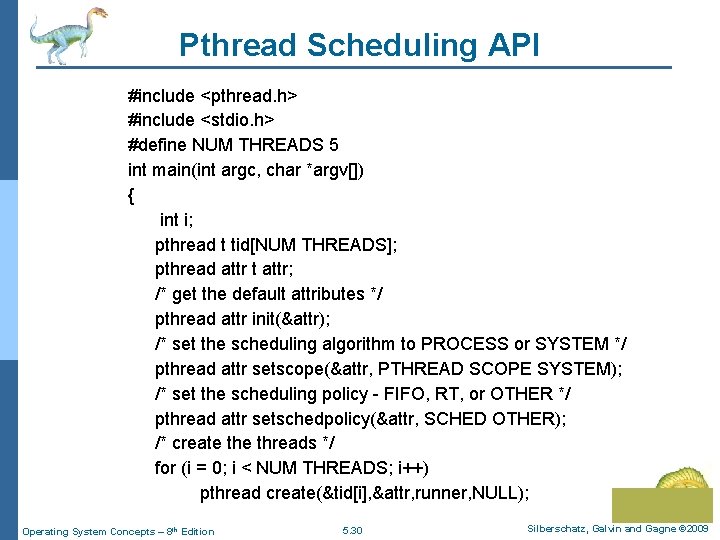
Pthread Scheduling API #include <pthread. h> #include <stdio. h> #define NUM THREADS 5 int main(int argc, char *argv[]) { int i; pthread t tid[NUM THREADS]; pthread attr t attr; /* get the default attributes */ pthread attr init(&attr); /* set the scheduling algorithm to PROCESS or SYSTEM */ pthread attr setscope(&attr, PTHREAD SCOPE SYSTEM); /* set the scheduling policy - FIFO, RT, or OTHER */ pthread attr setschedpolicy(&attr, SCHED OTHER); /* create threads */ for (i = 0; i < NUM THREADS; i++) pthread create(&tid[i], &attr, runner, NULL); Operating System Concepts – 8 th Edition 5. 30 Silberschatz, Galvin and Gagne © 2009
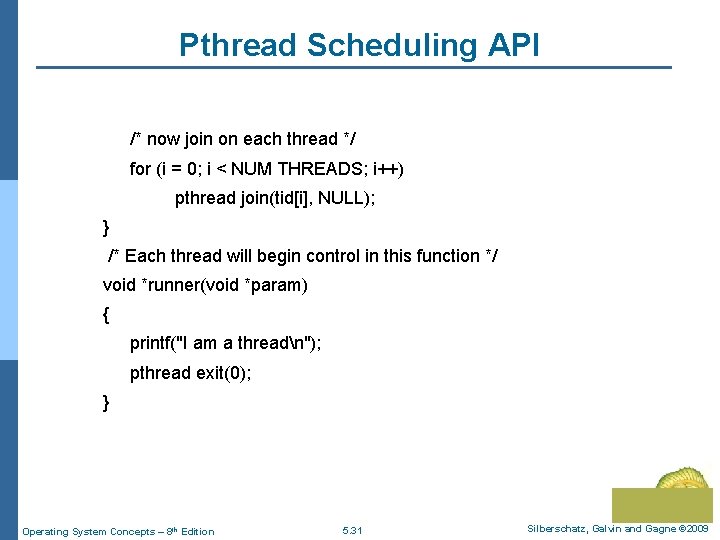
Pthread Scheduling API /* now join on each thread */ for (i = 0; i < NUM THREADS; i++) pthread join(tid[i], NULL); } /* Each thread will begin control in this function */ void *runner(void *param) { printf("I am a threadn"); pthread exit(0); } Operating System Concepts – 8 th Edition 5. 31 Silberschatz, Galvin and Gagne © 2009
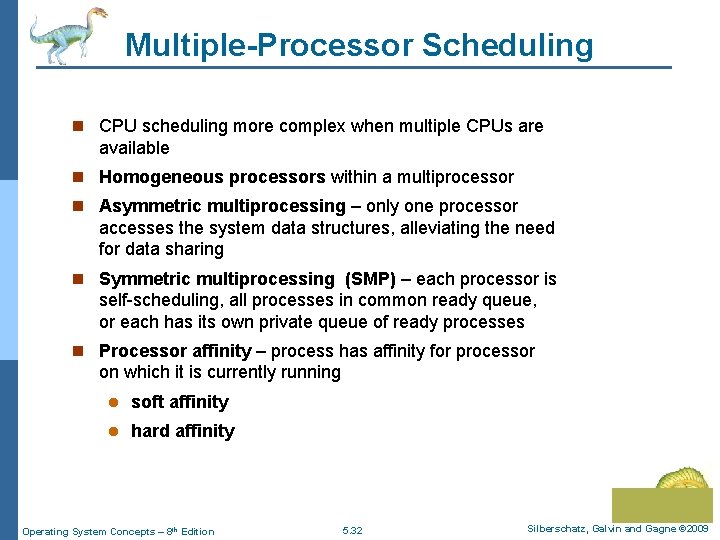
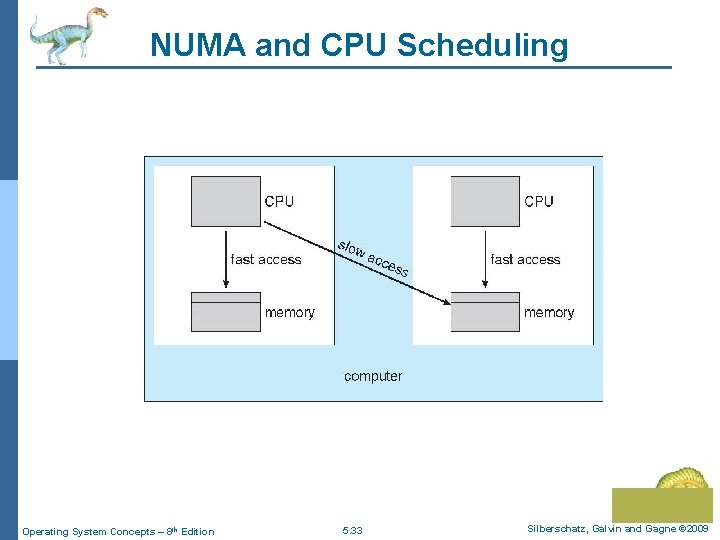
Multiple-Processor Scheduling n CPU scheduling more complex when multiple CPUs are available n Homogeneous processors within a multiprocessor n Asymmetric multiprocessing – only one processor accesses the system data structures, alleviating the need for data sharing n Symmetric multiprocessing (SMP) – each processor is self-scheduling, all processes in common ready queue, or each has its own private queue of ready processes n Processor affinity – process has affinity for processor on which it is currently running l soft affinity l hard affinity Operating System Concepts – 8 th Edition 5. 32 Silberschatz, Galvin and Gagne © 2009
NUMA and CPU Scheduling Operating System Concepts – 8 th Edition 5. 33 Silberschatz, Galvin and Gagne © 2009
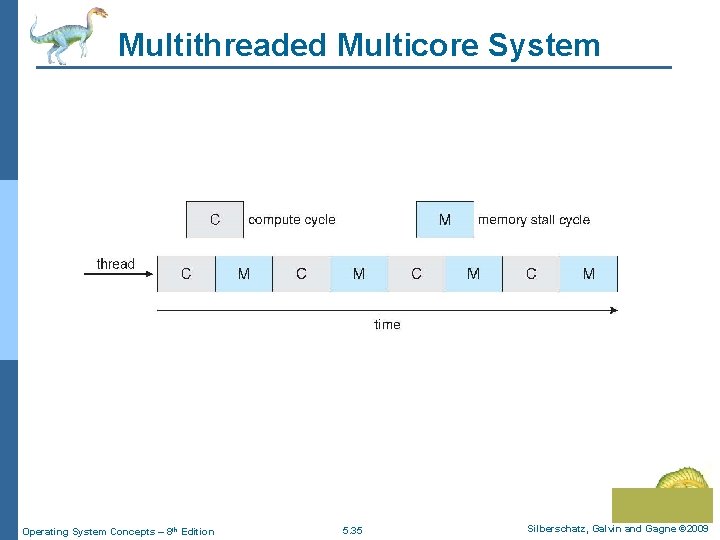
Multicore Processors n Recent trend to place multiple processor cores on same physical chip n Faster and consume less power n Multiple threads per core also growing l Takes advantage of memory stall to make progress on another thread while memory retrieve happens Operating System Concepts – 8 th Edition 5. 34 Silberschatz, Galvin and Gagne © 2009
Multithreaded Multicore System Operating System Concepts – 8 th Edition 5. 35 Silberschatz, Galvin and Gagne © 2009
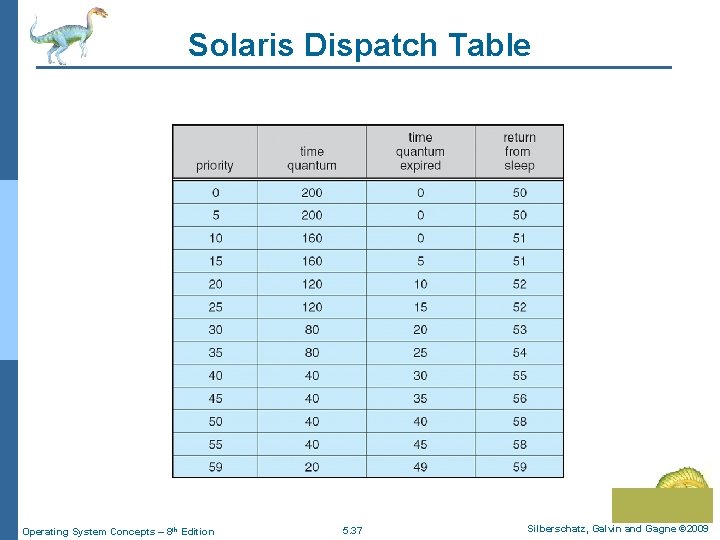
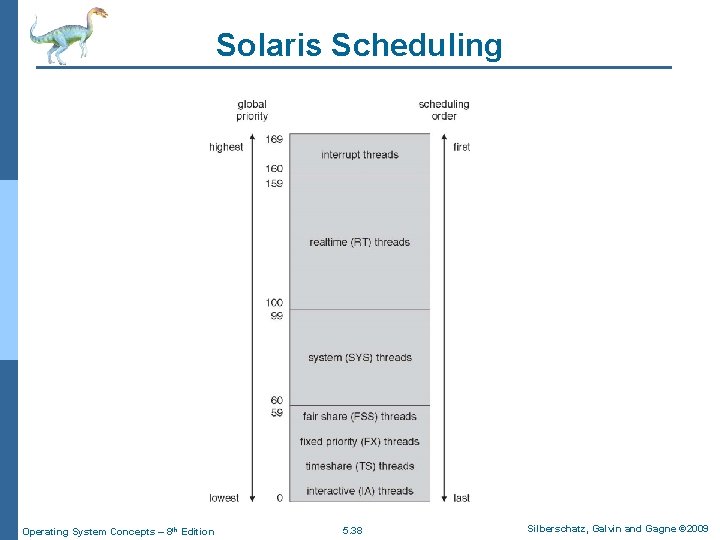
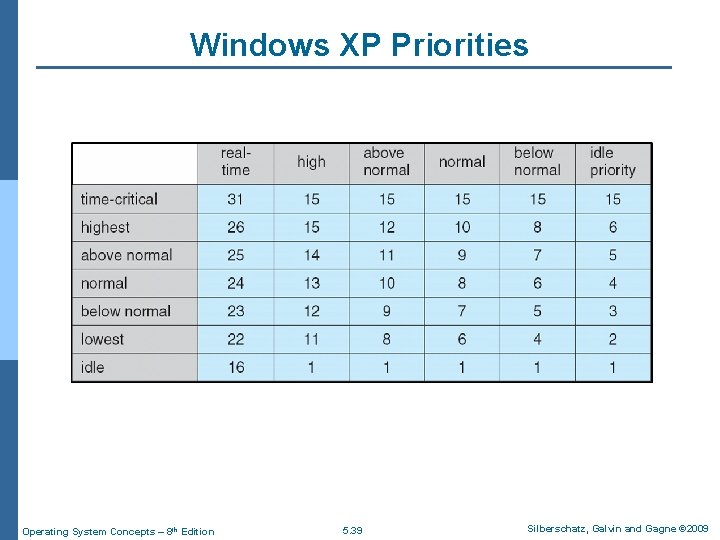
Operating System Examples n Solaris scheduling n Windows XP scheduling n Linux scheduling Operating System Concepts – 8 th Edition 5. 36 Silberschatz, Galvin and Gagne © 2009
Solaris Dispatch Table Operating System Concepts – 8 th Edition 5. 37 Silberschatz, Galvin and Gagne © 2009
Solaris Scheduling Operating System Concepts – 8 th Edition 5. 38 Silberschatz, Galvin and Gagne © 2009
Windows XP Priorities Operating System Concepts – 8 th Edition 5. 39 Silberschatz, Galvin and Gagne © 2009
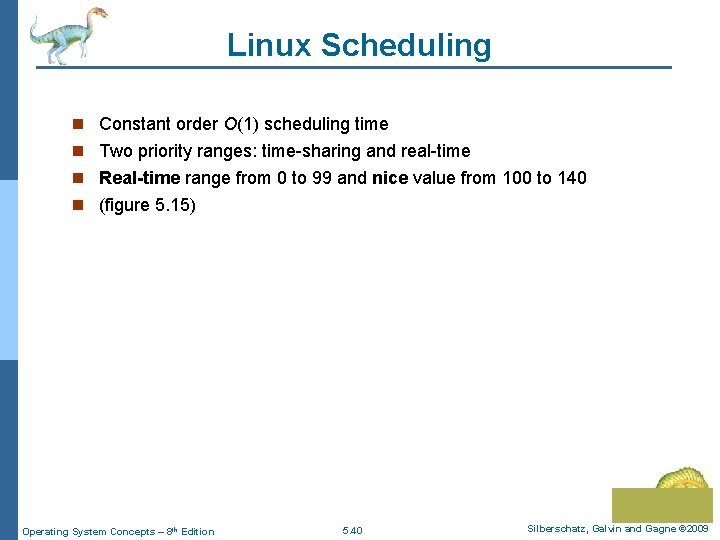
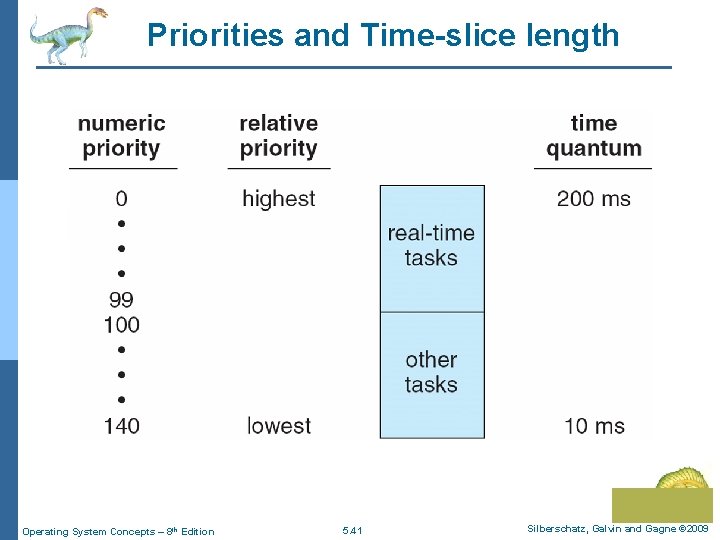
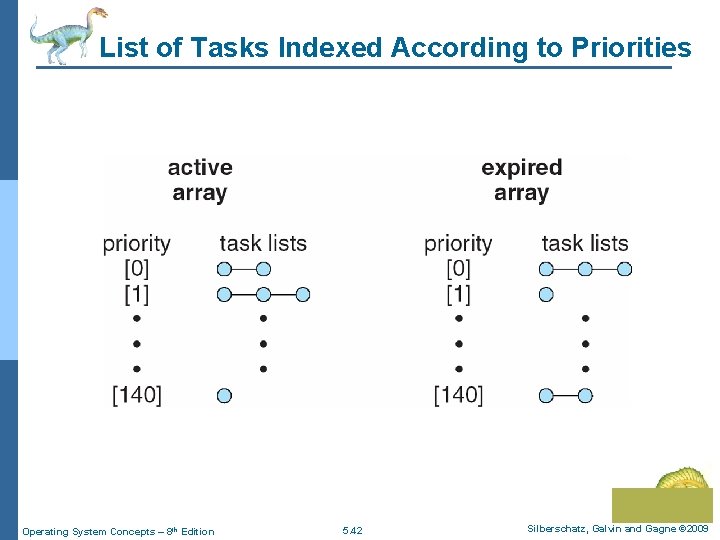
Linux Scheduling n Constant order O(1) scheduling time n Two priority ranges: time-sharing and real-time n Real-time range from 0 to 99 and nice value from 100 to 140 n (figure 5. 15) Operating System Concepts – 8 th Edition 5. 40 Silberschatz, Galvin and Gagne © 2009
Priorities and Time-slice length Operating System Concepts – 8 th Edition 5. 41 Silberschatz, Galvin and Gagne © 2009
List of Tasks Indexed According to Priorities Operating System Concepts – 8 th Edition 5. 42 Silberschatz, Galvin and Gagne © 2009
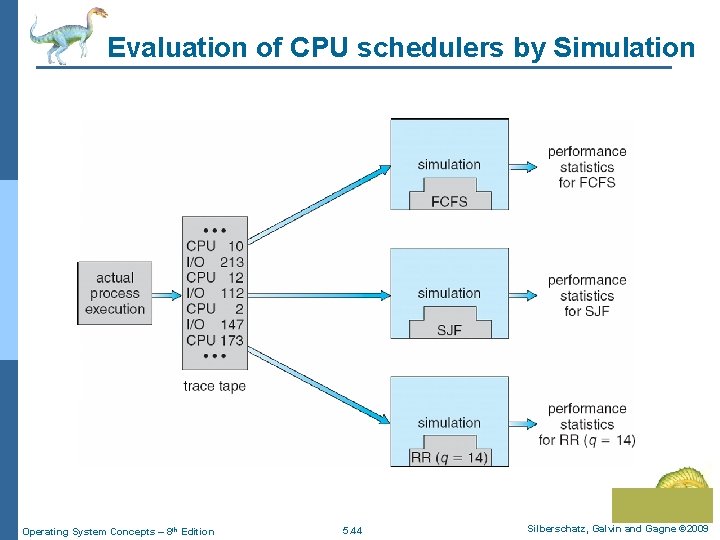
Algorithm Evaluation n Deterministic modeling – takes a particular predetermined workload and defines the performance of each algorithm for that workload n Queueing models n Implementation (simulation) Operating System Concepts – 8 th Edition 5. 43 Silberschatz, Galvin and Gagne © 2009
Evaluation of CPU schedulers by Simulation Operating System Concepts – 8 th Edition 5. 44 Silberschatz, Galvin and Gagne © 2009
5 پﺎیﺎﻥ ﻓﺼﻞ Operating System Concepts – 8 th Edition, Silberschatz, Galvin and Gagne © 2009
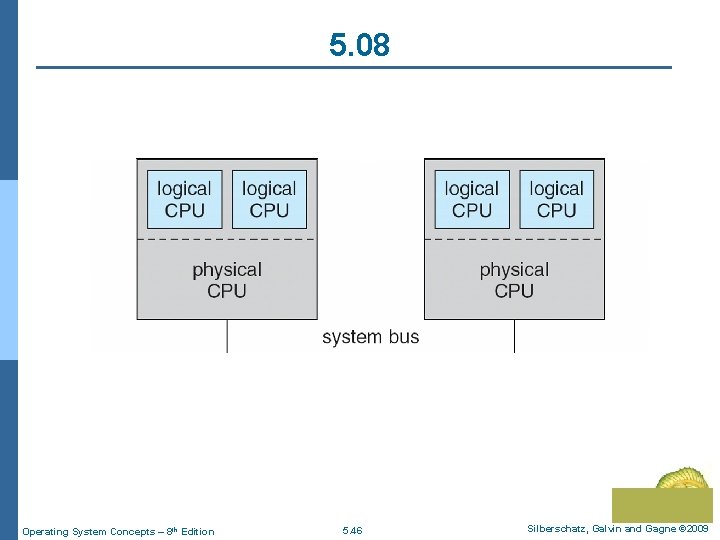
5. 08 Operating System Concepts – 8 th Edition 5. 46 Silberschatz, Galvin and Gagne © 2009
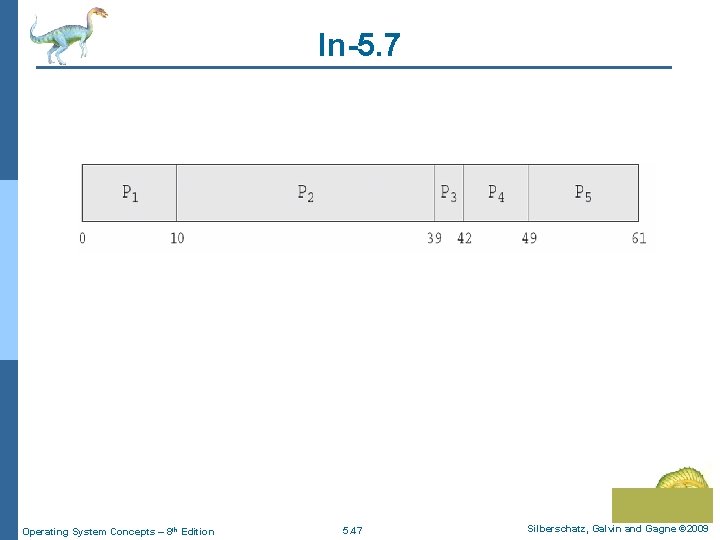
In-5. 7 Operating System Concepts – 8 th Edition 5. 47 Silberschatz, Galvin and Gagne © 2009
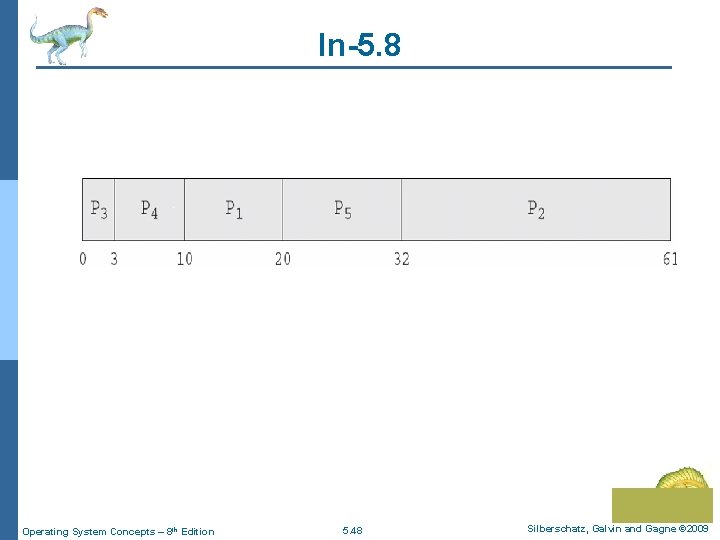
In-5. 8 Operating System Concepts – 8 th Edition 5. 48 Silberschatz, Galvin and Gagne © 2009
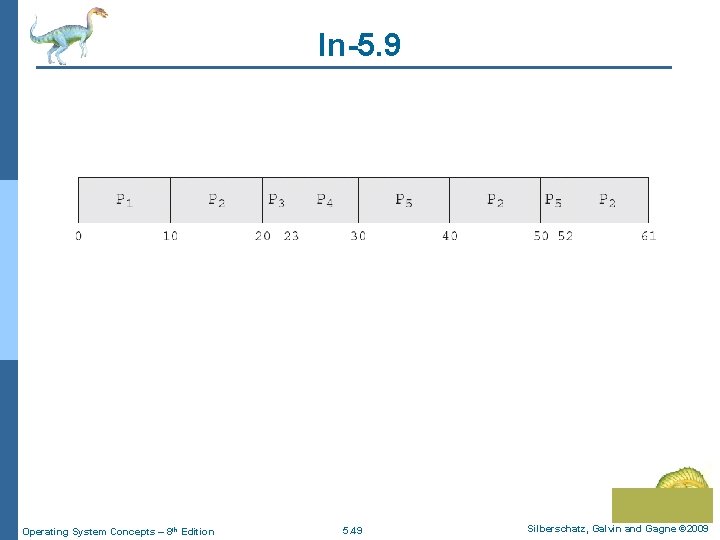
In-5. 9 Operating System Concepts – 8 th Edition 5. 49 Silberschatz, Galvin and Gagne © 2009
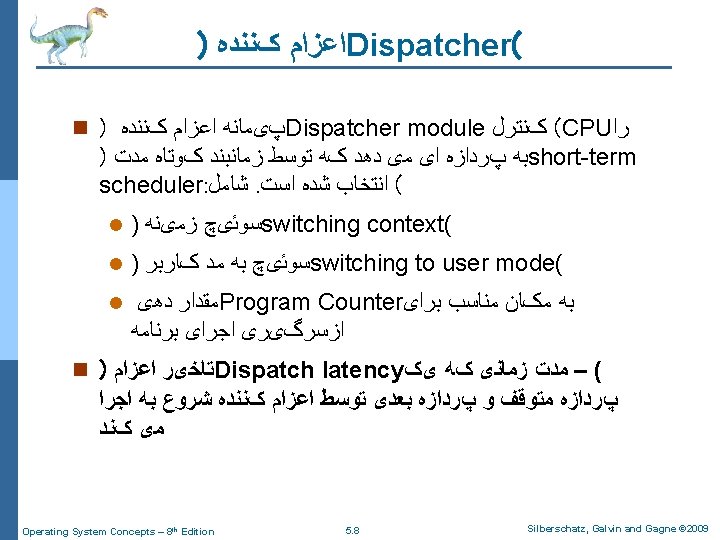
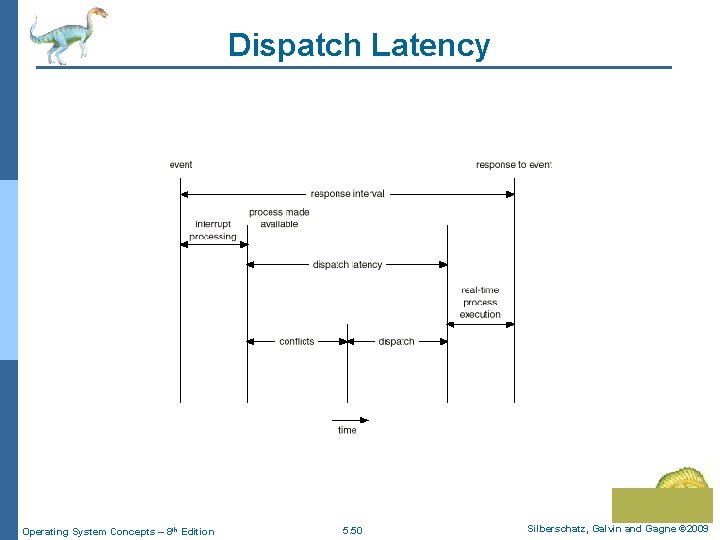
Dispatch Latency Operating System Concepts – 8 th Edition 5. 50 Silberschatz, Galvin and Gagne © 2009
Java Thread Scheduling n JVM Uses a Preemptive, Priority-Based Scheduling Algorithm n FIFO Queue is Used if There Are Multiple Threads With the Same Priority Operating System Concepts – 8 th Edition 5. 51 Silberschatz, Galvin and Gagne © 2009
Java Thread Scheduling (cont) JVM Schedules a Thread to Run When: 1. The Currently Running Thread Exits the Runnable State 2. A Higher Priority Thread Enters the Runnable State * Note – the JVM Does Not Specify Whether Threads are Time-Sliced or Not Operating System Concepts – 8 th Edition 5. 52 Silberschatz, Galvin and Gagne © 2009
Time-Slicing Since the JVM Doesn’t Ensure Time-Slicing, the yield() Method May Be Used: while (true) { // perform CPU-intensive task. . . Thread. yield(); } This Yields Control to Another Thread of Equal Priority Operating System Concepts – 8 th Edition 5. 53 Silberschatz, Galvin and Gagne © 2009
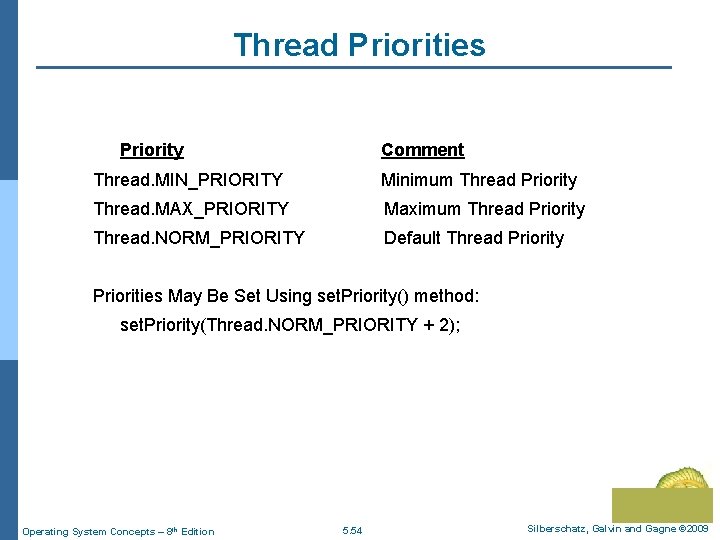
Thread Priorities Priority Comment Thread. MIN_PRIORITY Minimum Thread Priority Thread. MAX_PRIORITY Maximum Thread Priority Thread. NORM_PRIORITY Default Thread Priority Priorities May Be Set Using set. Priority() method: set. Priority(Thread. NORM_PRIORITY + 2); Operating System Concepts – 8 th Edition 5. 54 Silberschatz, Galvin and Gagne © 2009
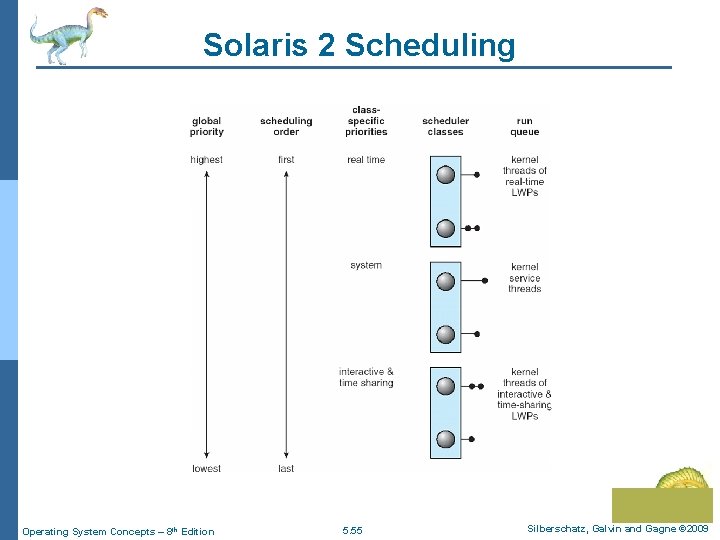
Solaris 2 Scheduling Operating System Concepts – 8 th Edition 5. 55 Silberschatz, Galvin and Gagne © 2009