
5 Connecting strokes How are capital letters connect




- Slides: 23
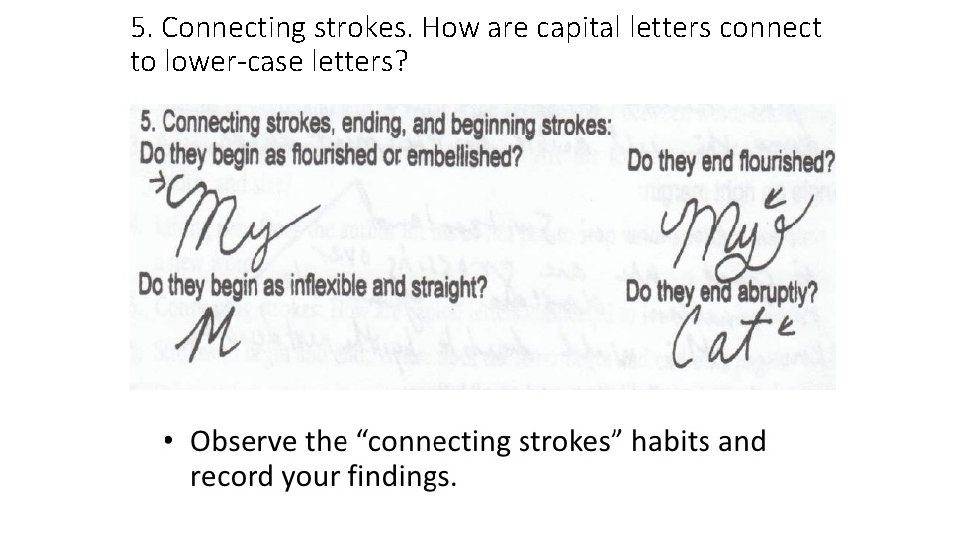
5. Connecting strokes. How are capital letters connect to lower-case letters?
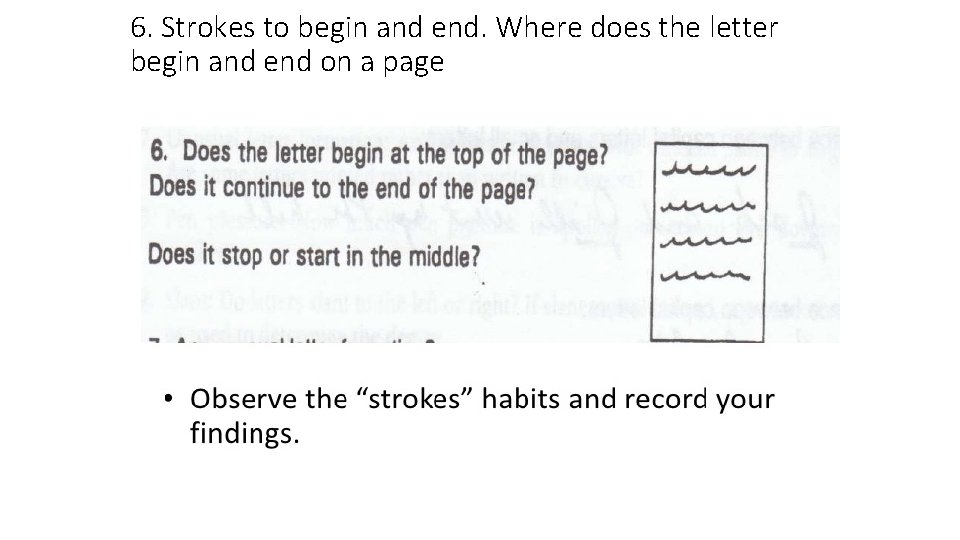
6. Strokes to begin and end. Where does the letter begin and end on a page
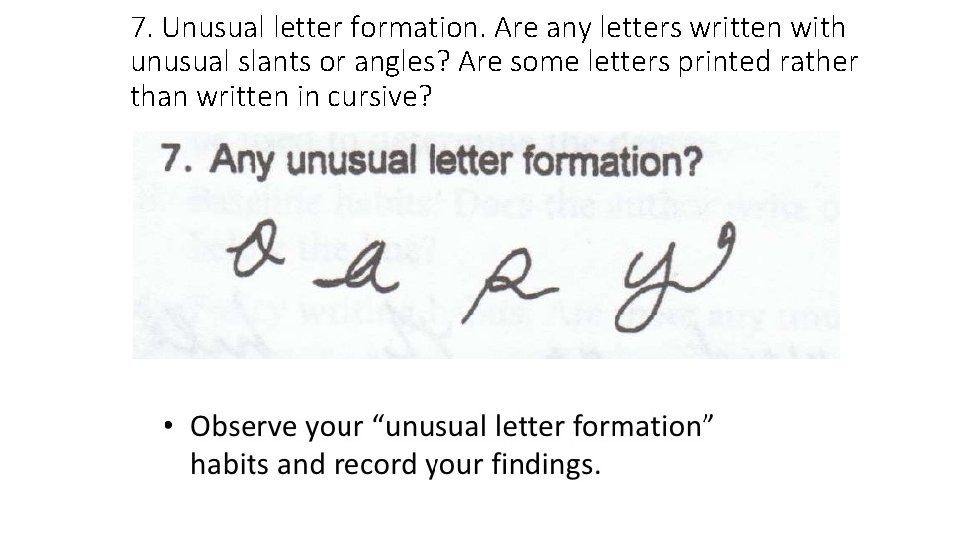
7. Unusual letter formation. Are any letters written with unusual slants or angles? Are some letters printed rather than written in cursive?
8. Pen pressure: How much pressure is applied on upward and downward strokes?
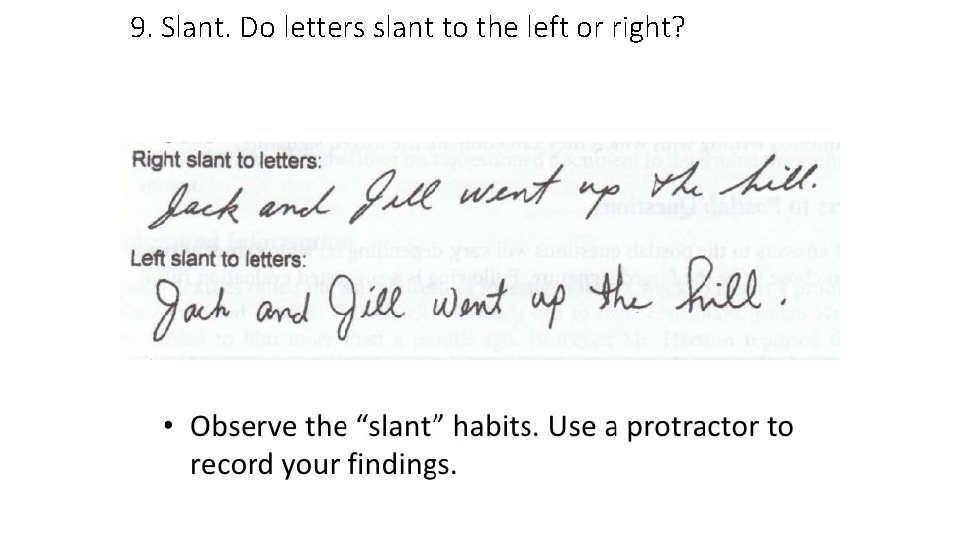
9. Slant. Do letters slant to the left or right?
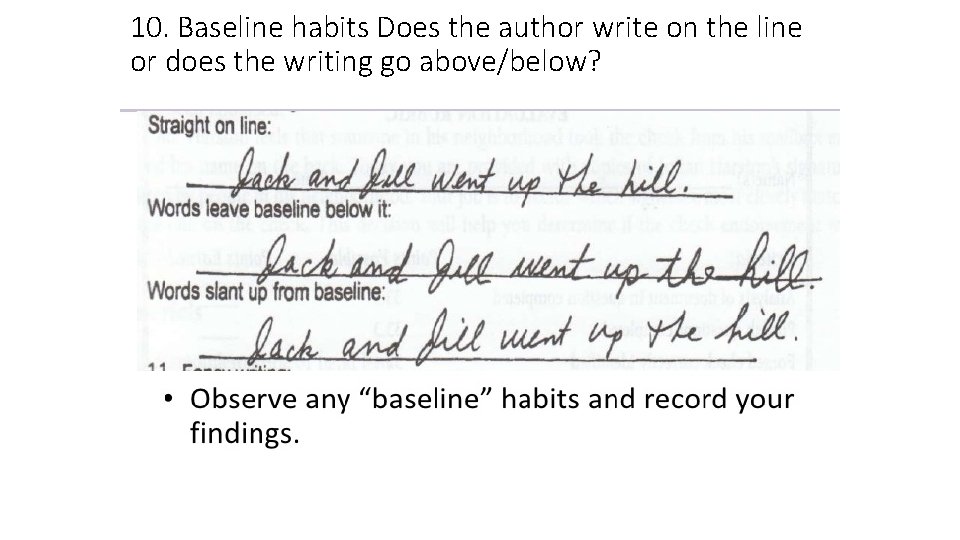
10. Baseline habits Does the author write on the line or does the writing go above/below?
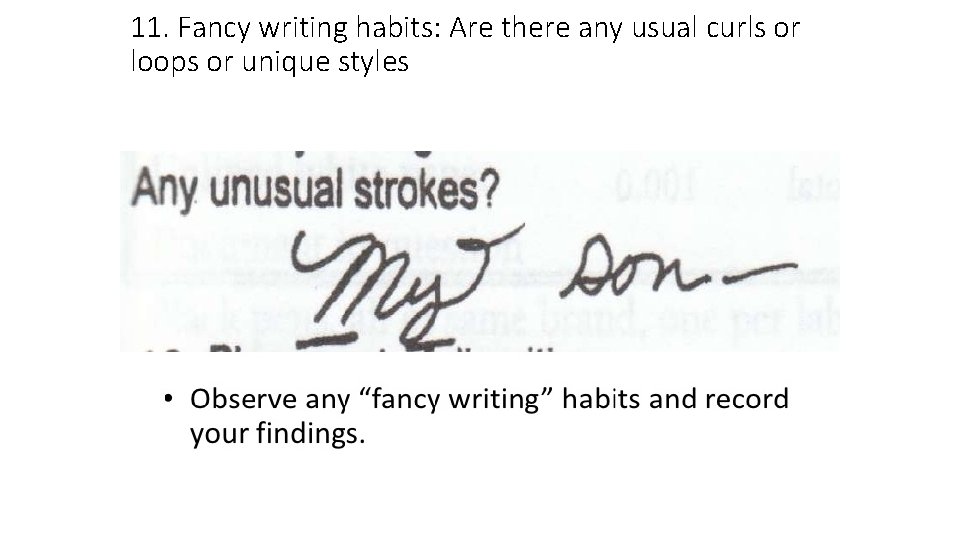
11. Fancy writing habits: Are there any usual curls or loops or unique styles
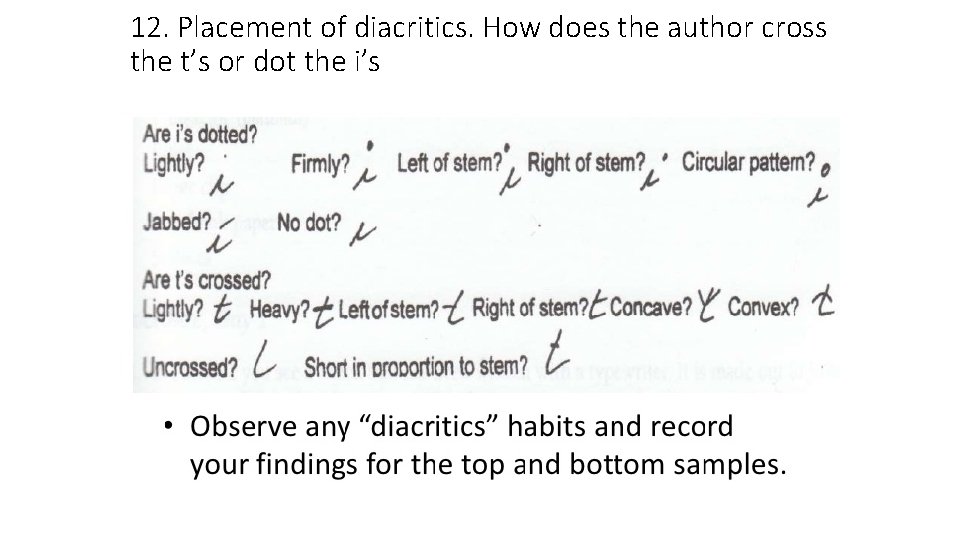
12. Placement of diacritics. How does the author cross the t’s or dot the i’s
Fabric
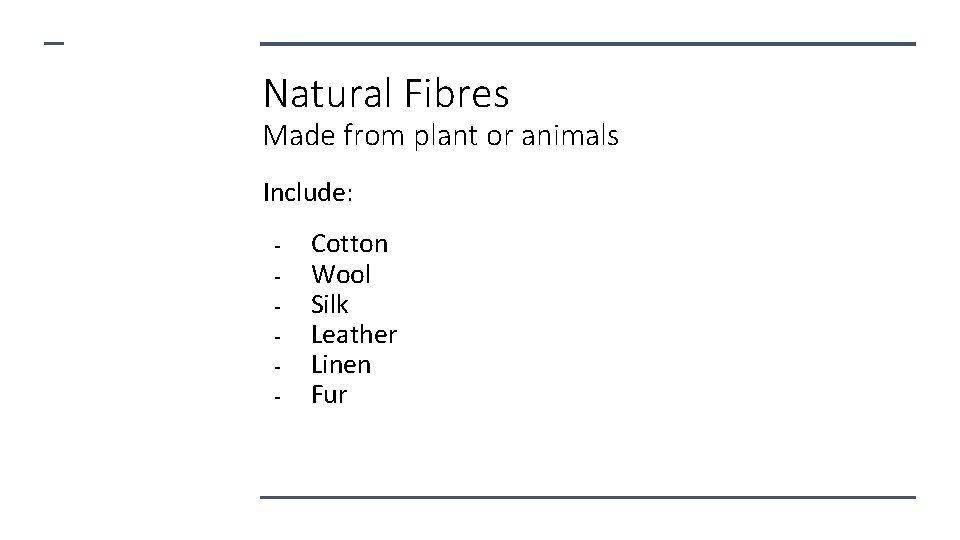
Natural Fibres Made from plant or animals Include: - Cotton Wool Silk Leather Linen Fur
Synthetic Fibres Man-made using petroleum or other chemicals Include: - Polyester Spandex Lycra Nylon Plastic
Tests done to fabrics: Absorbency Test - Natural fibres will absorb water (think of a cotton tshirt) Synthetic fibres will cause water to bead, and slide off (think of a rain coat)
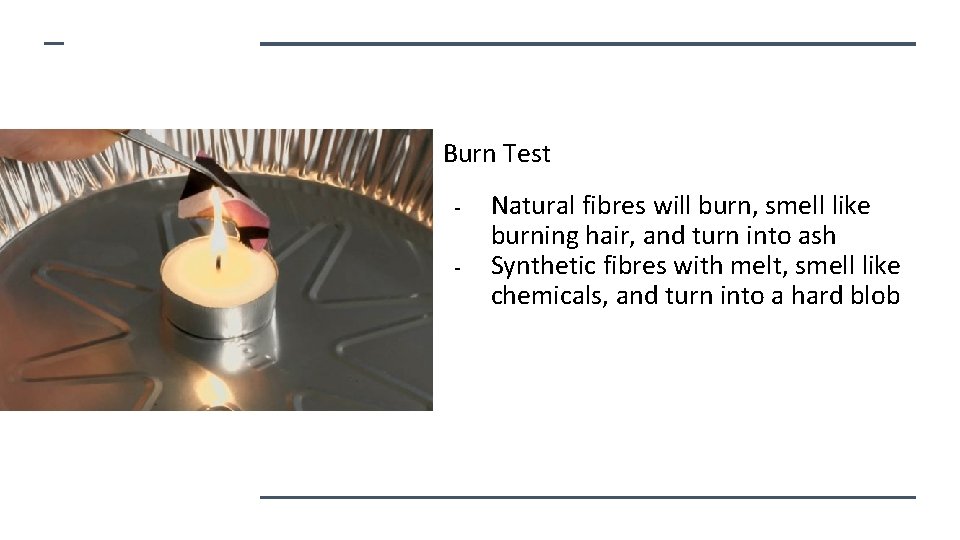
Burn Test - Natural fibres will burn, smell like burning hair, and turn into ash Synthetic fibres with melt, smell like chemicals, and turn into a hard blob
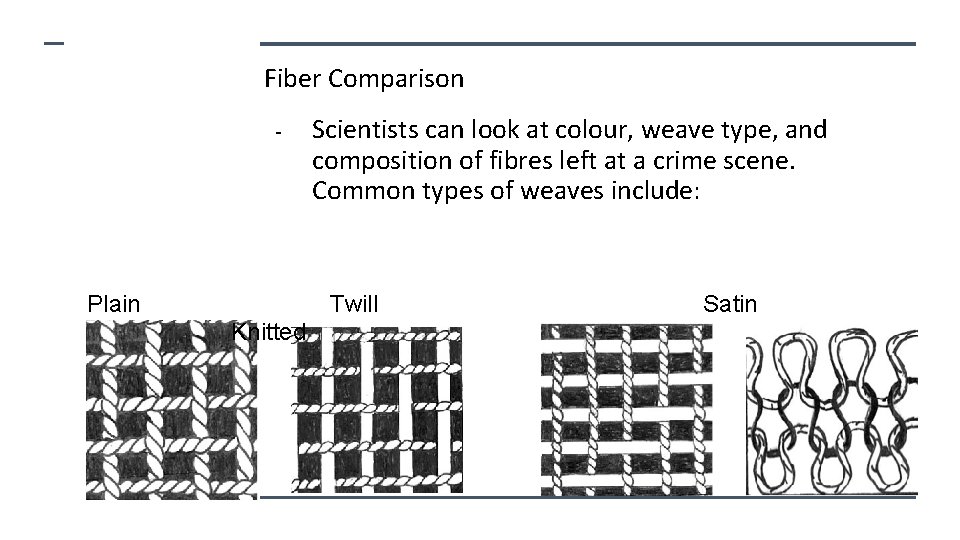
Fiber Comparison - Plain Scientists can look at colour, weave type, and composition of fibres left at a crime scene. Common types of weaves include: Twill Knitted Satin
Chromatography
Chromatography is: - A technique used to separate mixtures like ink It is when a test substance is placed in a medium, and then a solvent is passed through This causes some of the materials to separate, which can help scientists to determine a type of pen used to write a note at a crime scene, or if a forgery has taken place
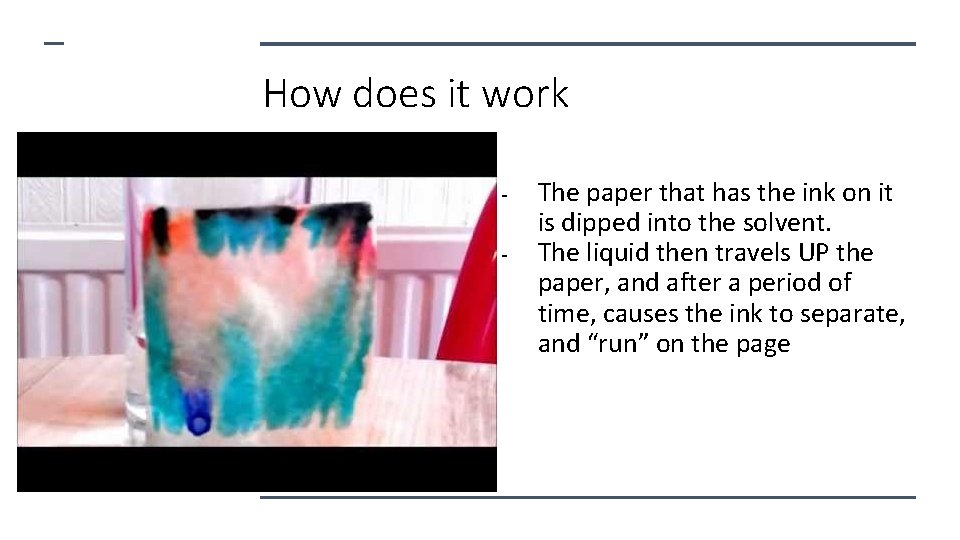
How does it work - The paper that has the ink on it is dipped into the solvent. The liquid then travels UP the paper, and after a period of time, causes the ink to separate, and “run” on the page
What you need to know - - Chromatography is an experiment The ink should not be in the liquid. Instead, the liquid should travel up the page and pass through the ink Chromatography can help us to identify a type of ink
Variables Controlled Manipulated Responding
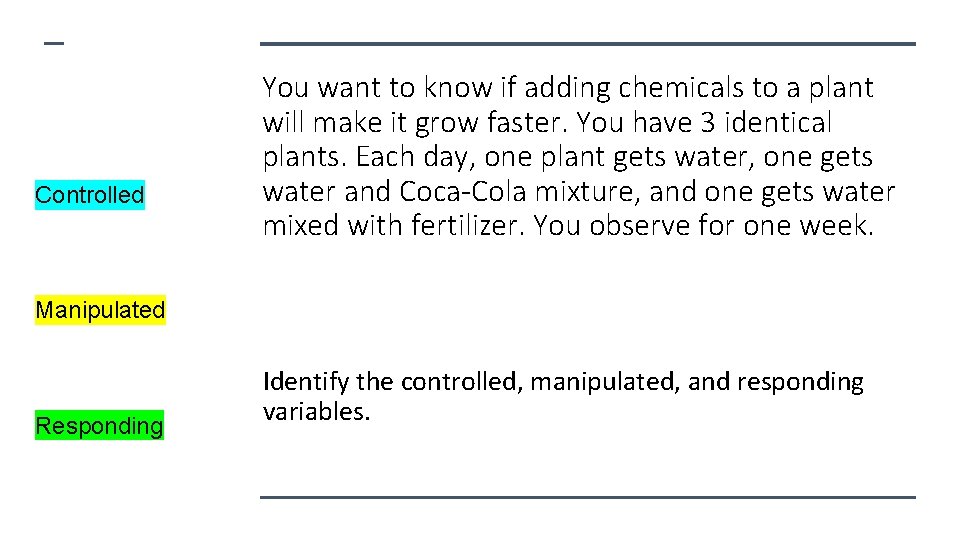
Controlled You want to know if adding chemicals to a plant will make it grow faster. You have 3 identical plants. Each day, one plant gets water, one gets water and Coca-Cola mixture, and one gets water mixed with fertilizer. You observe for one week. Manipulated Responding Identify the controlled, manipulated, and responding variables.
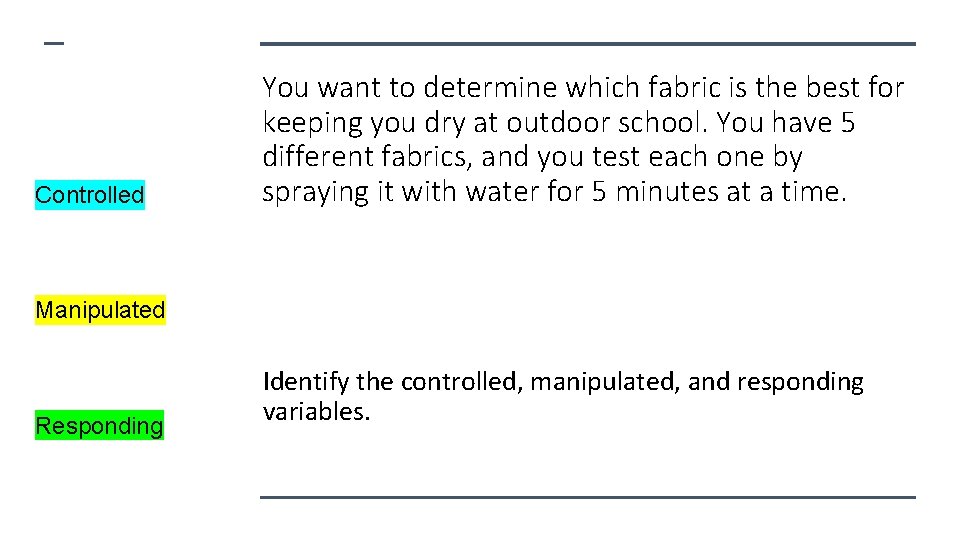
Controlled You want to determine which fabric is the best for keeping you dry at outdoor school. You have 5 different fabrics, and you test each one by spraying it with water for 5 minutes at a time. Manipulated Responding Identify the controlled, manipulated, and responding variables.
You want to determine which pen was used to write a ransom note. You do a chromatography test on three different pens. Controlled Manipulated Responding Identify the controlled, manipulated, and responding variables.
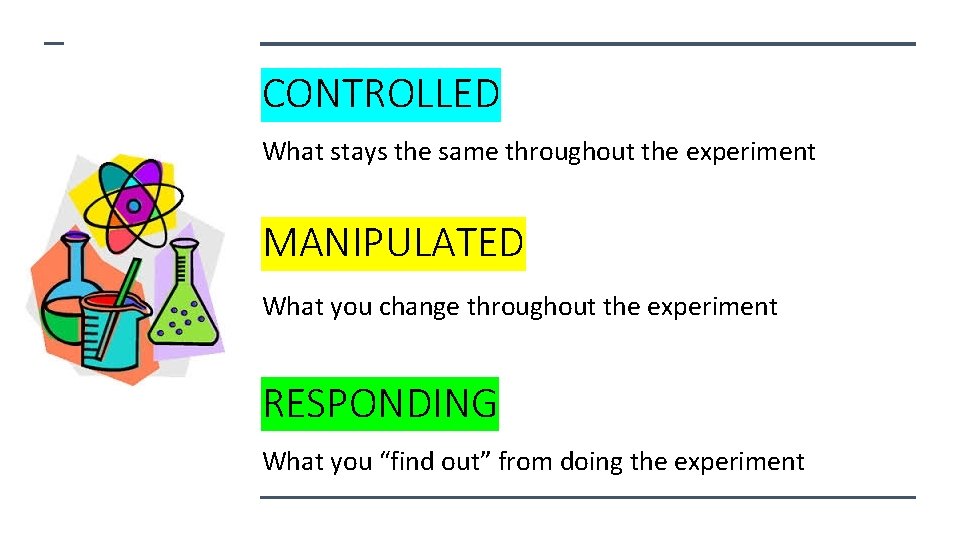
CONTROLLED What stays the same throughout the experiment MANIPULATED What you change throughout the experiment RESPONDING What you “find out” from doing the experiment