
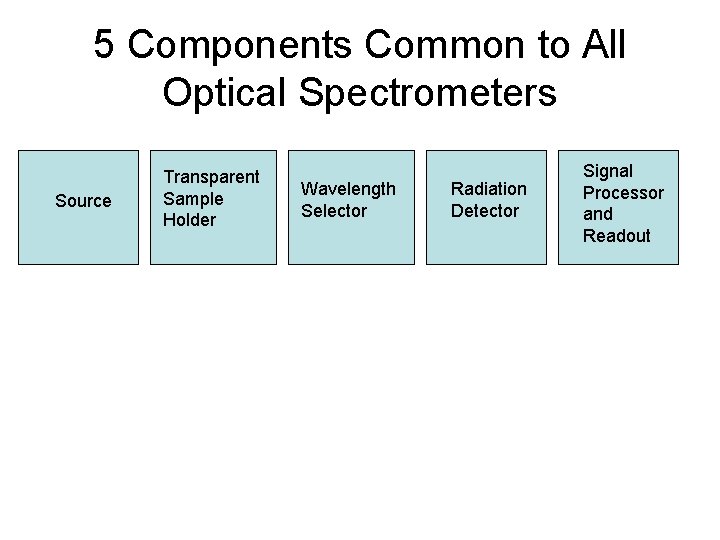
5 Components Common to All Optical Spectrometers Source
- Slides: 20
5 Components Common to All Optical Spectrometers Source Transparent Sample Holder Wavelength Selector Radiation Detector Signal Processor and Readout
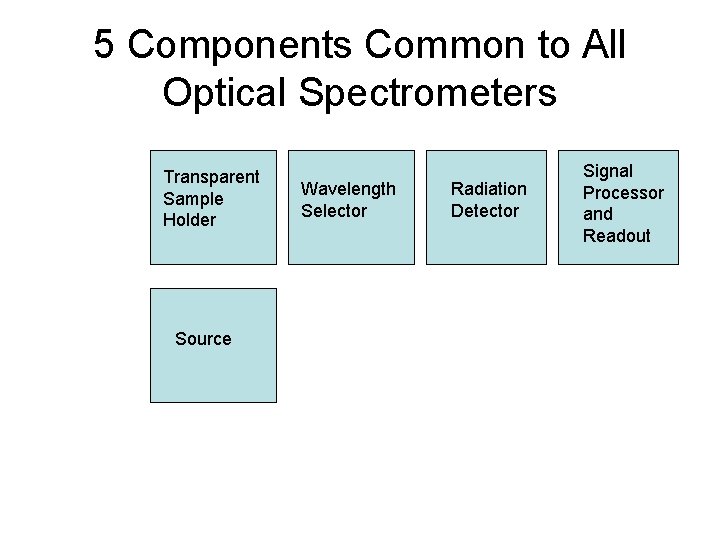
5 Components Common to All Optical Spectrometers Transparent Sample Holder Source Wavelength Selector Radiation Detector Signal Processor and Readout
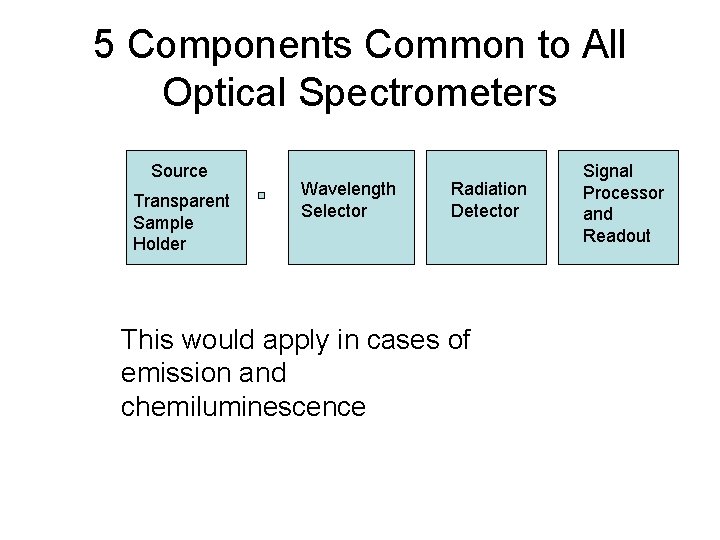
5 Components Common to All Optical Spectrometers Source Transparent Sample Holder Wavelength Selector Radiation Detector This would apply in cases of emission and chemiluminescence Signal Processor and Readout
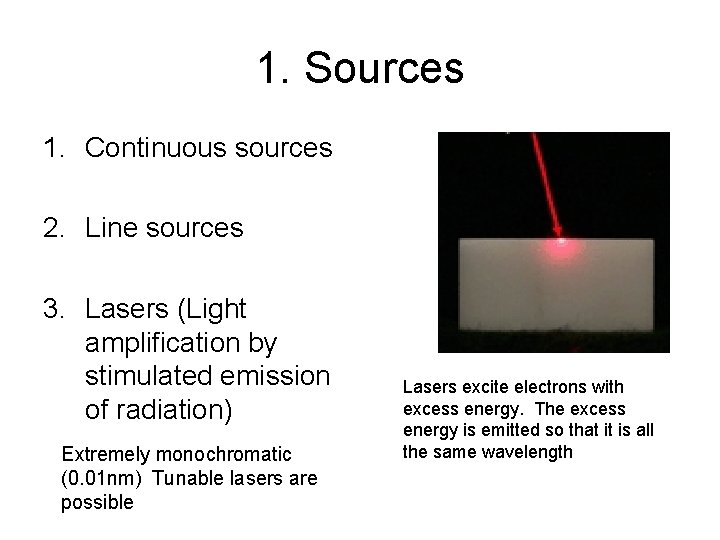
1. Sources 1. Continuous sources 2. Line sources 3. Lasers (Light amplification by stimulated emission of radiation) Extremely monochromatic (0. 01 nm) Tunable lasers are possible Lasers excite electrons with excess energy. The excess energy is emitted so that it is all the same wavelength
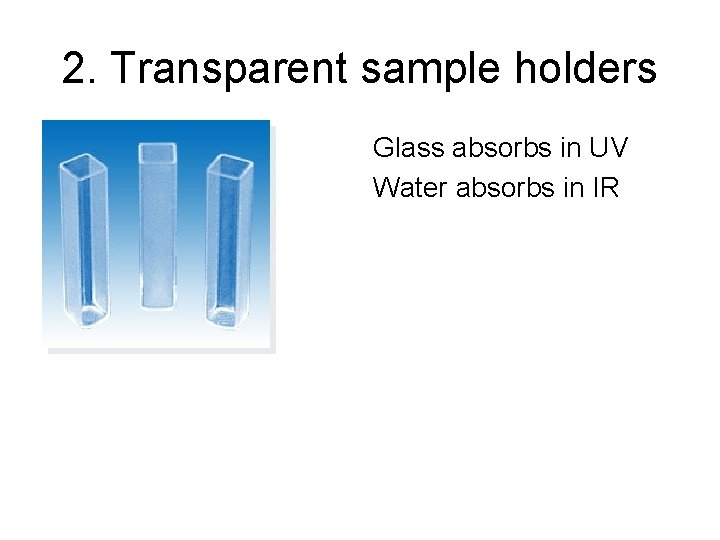
2. Transparent sample holders Glass absorbs in UV Water absorbs in IR
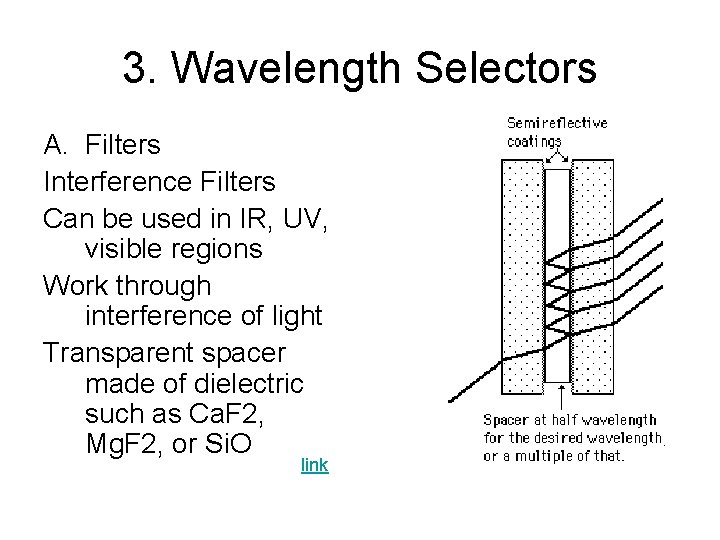
3. Wavelength Selectors A. Filters Interference Filters Can be used in IR, UV, visible regions Work through interference of light Transparent spacer made of dielectric such as Ca. F 2, Mg. F 2, or Si. O link
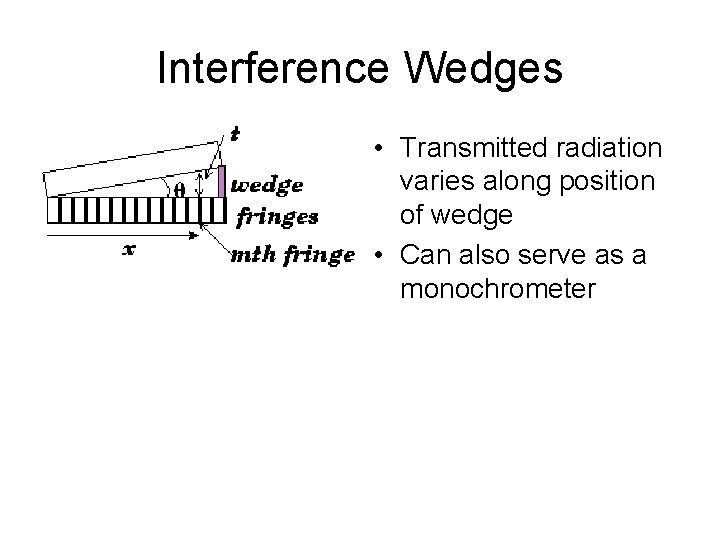
Interference Wedges • Transmitted radiation varies along position of wedge • Can also serve as a monochrometer
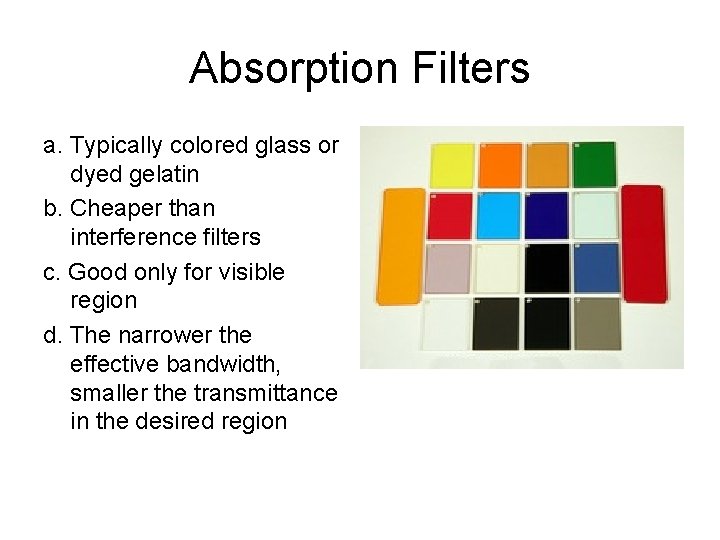
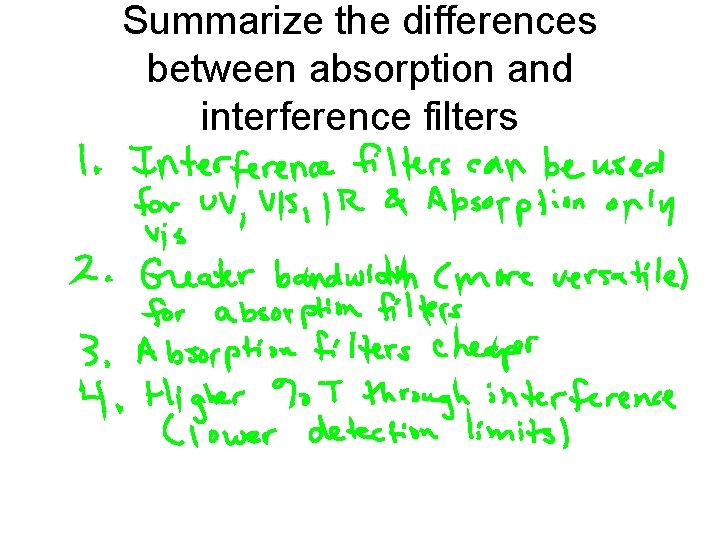
Absorption Filters a. Typically colored glass or dyed gelatin b. Cheaper than interference filters c. Good only for visible region d. The narrower the effective bandwidth, smaller the transmittance in the desired region
Summarize the differences between absorption and interference filters
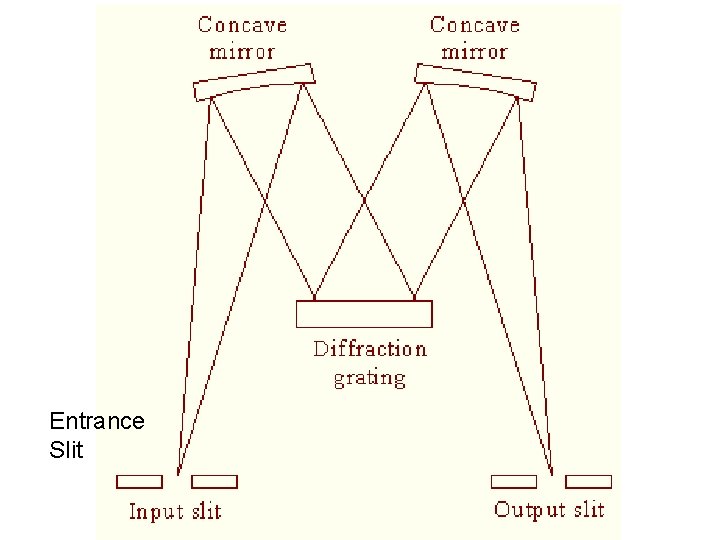
Entrance Slit
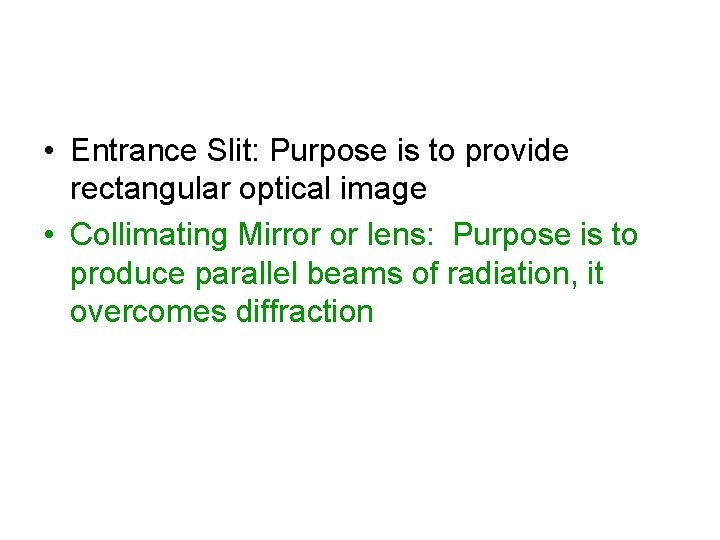
• Entrance Slit: Purpose is to provide rectangular optical image
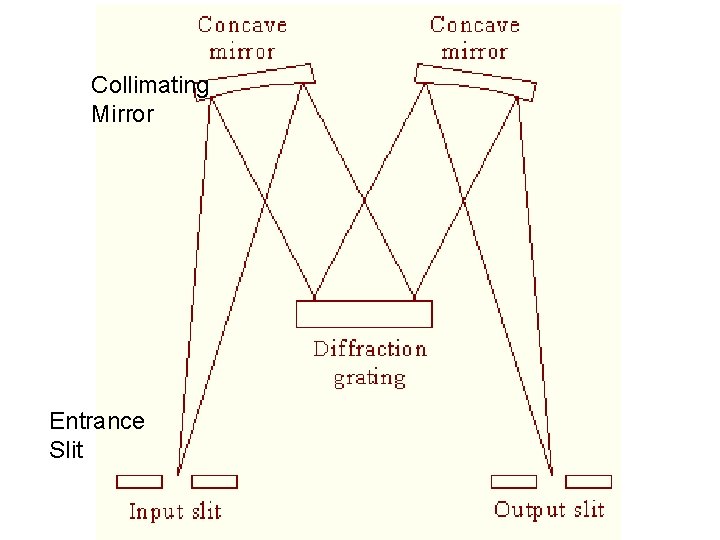
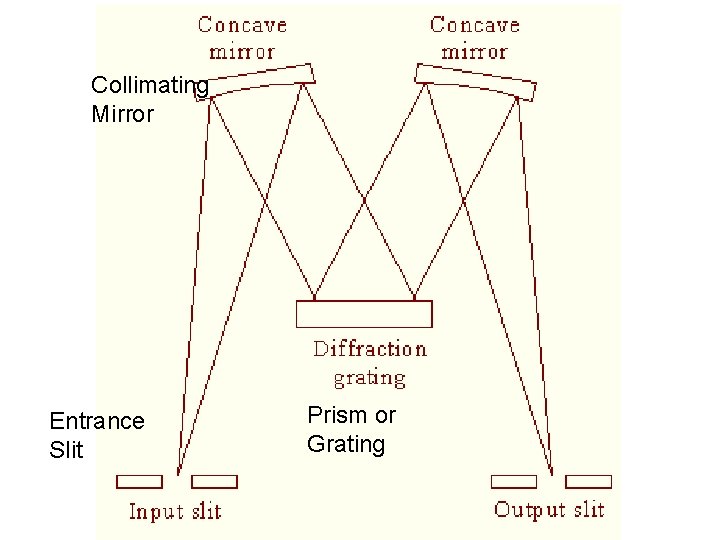
Collimating Mirror Entrance Slit
• Entrance Slit: Purpose is to provide rectangular optical image • Collimating Mirror or lens: Purpose is to produce parallel beams of radiation, it overcomes diffraction
Collimating Mirror Entrance Slit Prism or Grating
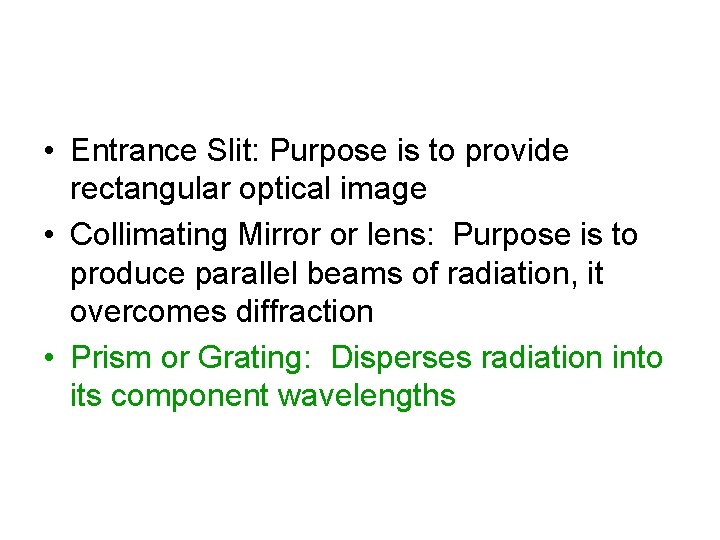
• Entrance Slit: Purpose is to provide rectangular optical image • Collimating Mirror or lens: Purpose is to produce parallel beams of radiation, it overcomes diffraction • Prism or Grating: Disperses radiation into its component wavelengths
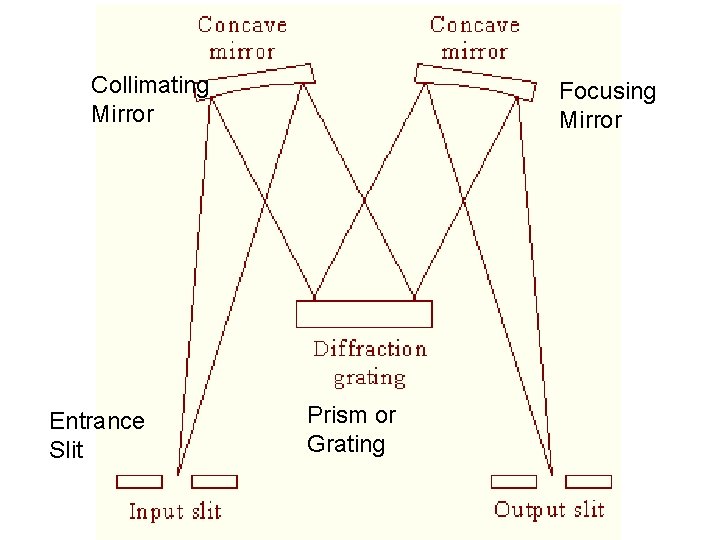
Collimating Mirror Entrance Slit Focusing Mirror Prism or Grating
• Entrance Slit: Purpose is to provide rectangular optical image • Collimating Mirror or lens: Purpose is to produce parallel beams of radiation, it overcomes diffraction • Prism or Grating: Disperses radiation into its component wavelengths • Focusing Mirror: Reforms image from slit onto focal plane
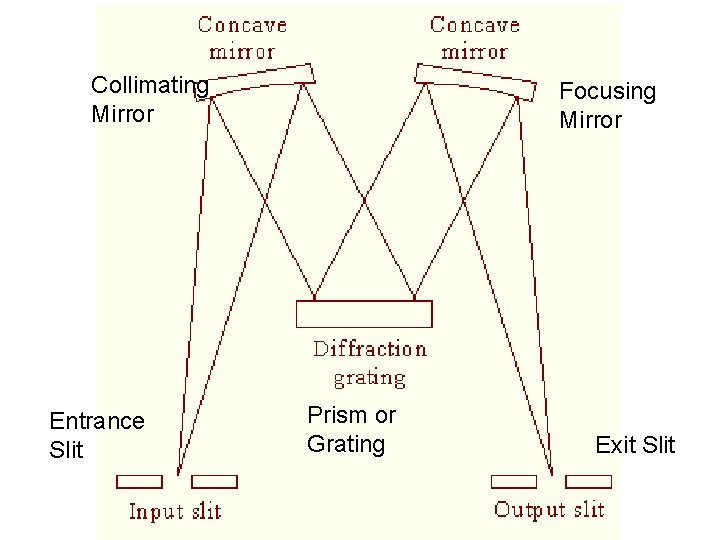
Collimating Mirror Entrance Slit Focusing Mirror Prism or Grating Exit Slit
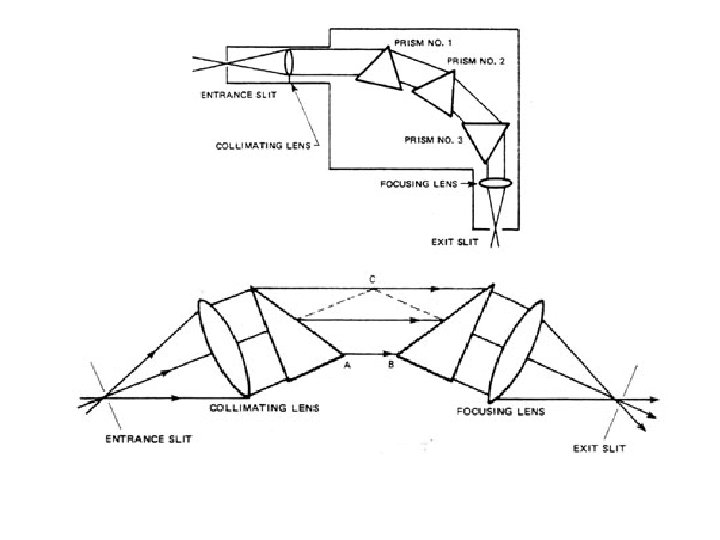
• • • All Monochrometers contain these components Entrance Slit: Purpose is to provide rectangular optical image Collimating Mirror or lens: Purpose is to produce parallel beams of radiation, it overcomes diffraction Prism or Grating: Disperses radiation into its component wavelengths Focusing Mirror: Reforms image from slit onto focal plane Exit Slit: Isolates Spectral Band