
5 Chapter Organizational Structure and Culture Copyright 2011
- Slides: 34
5 Chapter Organizational Structure and Culture Copyright © 2011 Pearson Education
Learning Objectives • Describe six key elements in organizational design • Identify the contingency factors that favor the mechanistic model or the organic model • Compare and contrast traditional and contemporary organizational designs • Discuss the characteristics and importance • of organizational culture Copyright © 2011 Pearson Education 5 -2
What Is Organizing? • Organizing – The function of management that creates the organization’s structure • Organizational Design – When managers develop or change the organization’s structure • Work Specialization – Dividing work activities into separate job tasks; also called division of labor Copyright © 2011 Pearson Education 5 -3
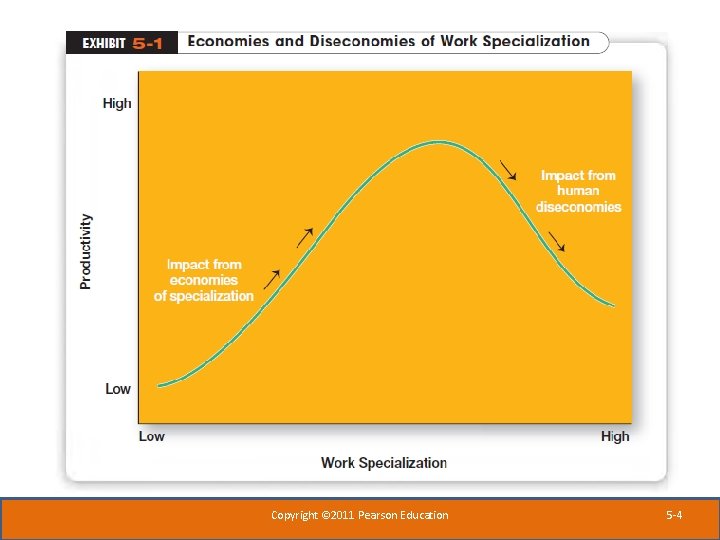
Copyright © 2011 Pearson Education 5 -4
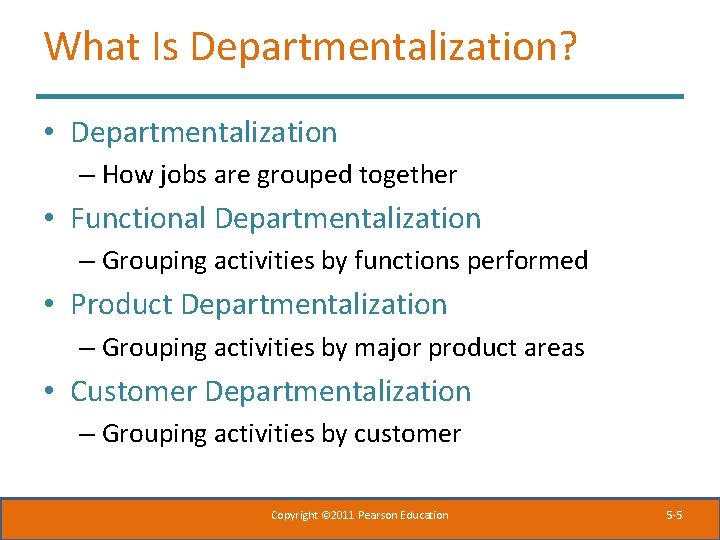
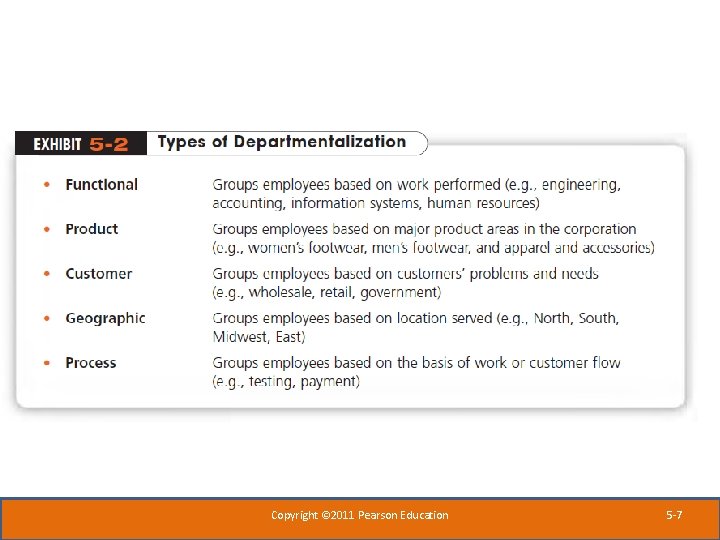
What Is Departmentalization? • Departmentalization – How jobs are grouped together • Functional Departmentalization – Grouping activities by functions performed • Product Departmentalization – Grouping activities by major product areas • Customer Departmentalization – Grouping activities by customer Copyright © 2011 Pearson Education 5 -5
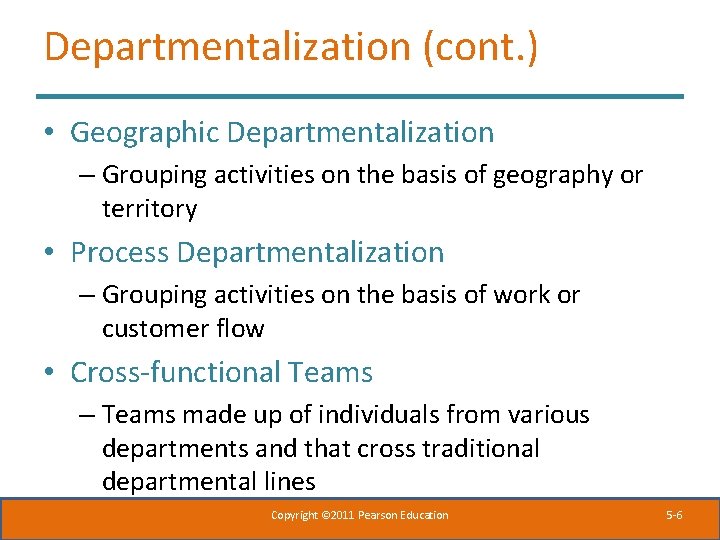
Departmentalization (cont. ) • Geographic Departmentalization – Grouping activities on the basis of geography or territory • Process Departmentalization – Grouping activities on the basis of work or customer flow • Cross-functional Teams – Teams made up of individuals from various departments and that cross traditional departmental lines Copyright © 2011 Pearson Education 5 -6
Copyright © 2011 Pearson Education 5 -7
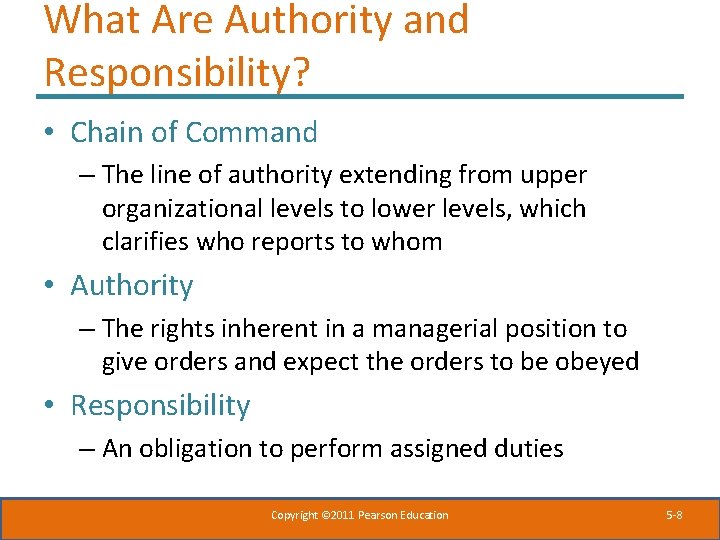
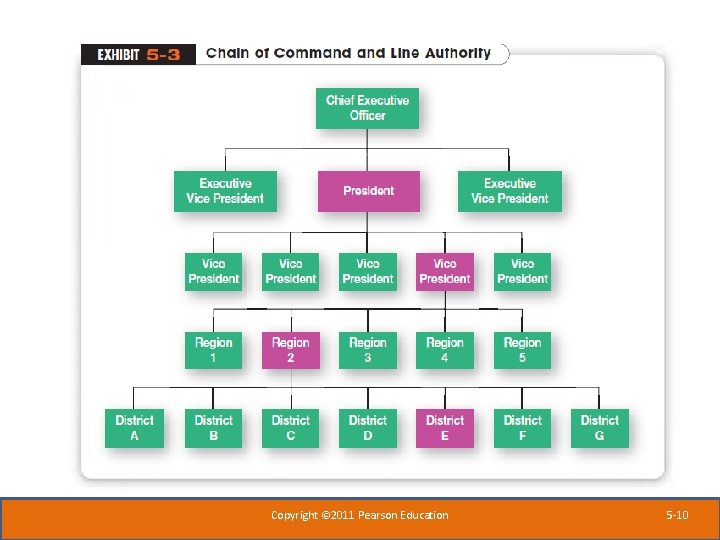
What Are Authority and Responsibility? • Chain of Command – The line of authority extending from upper organizational levels to lower levels, which clarifies who reports to whom • Authority – The rights inherent in a managerial position to give orders and expect the orders to be obeyed • Responsibility – An obligation to perform assigned duties Copyright © 2011 Pearson Education 5 -8
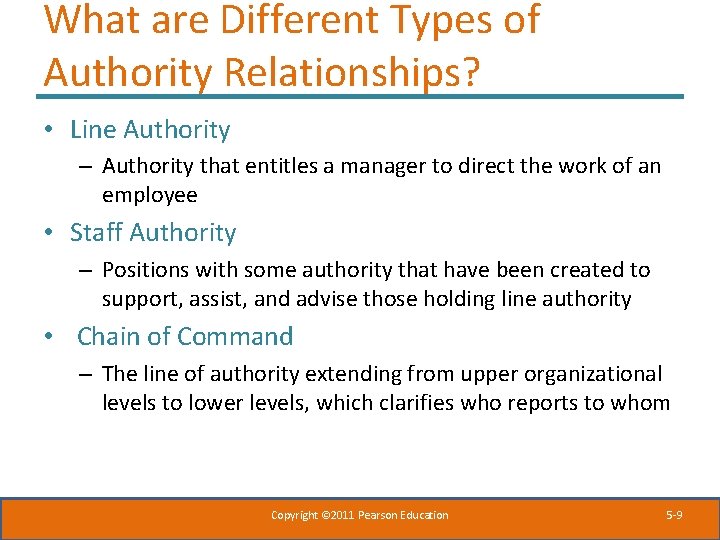
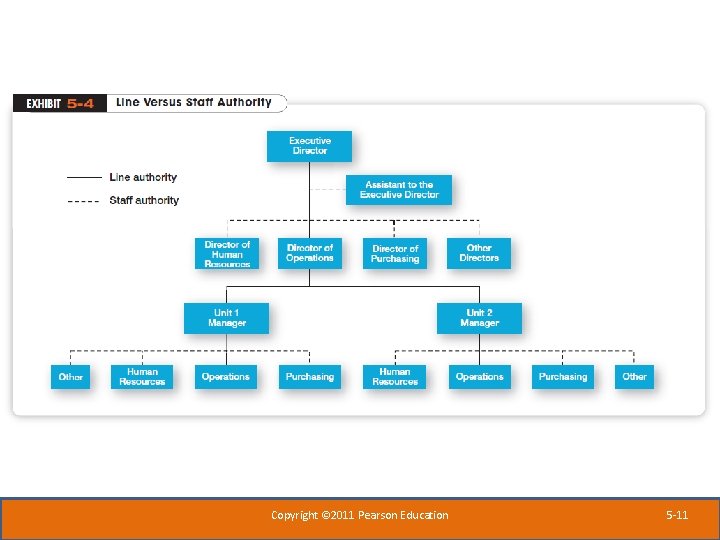
What are Different Types of Authority Relationships? • Line Authority – Authority that entitles a manager to direct the work of an employee • Staff Authority – Positions with some authority that have been created to support, assist, and advise those holding line authority • Chain of Command – The line of authority extending from upper organizational levels to lower levels, which clarifies who reports to whom Copyright © 2011 Pearson Education 5 -9
Copyright © 2011 Pearson Education 5 -10
Copyright © 2011 Pearson Education 5 -11
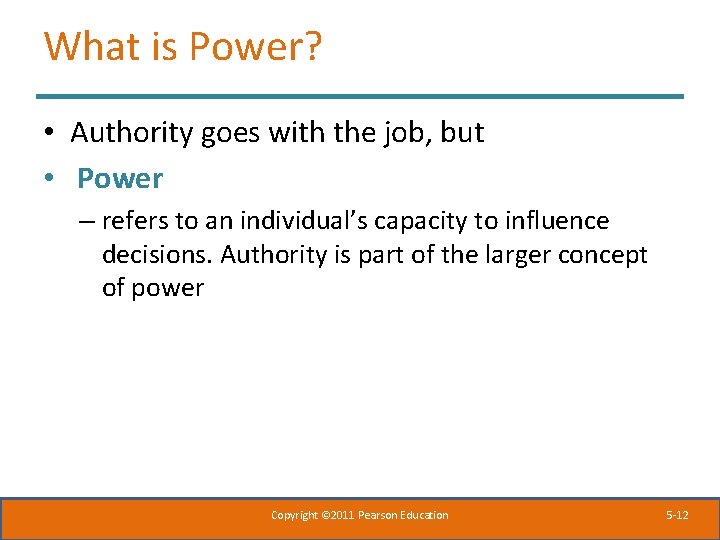
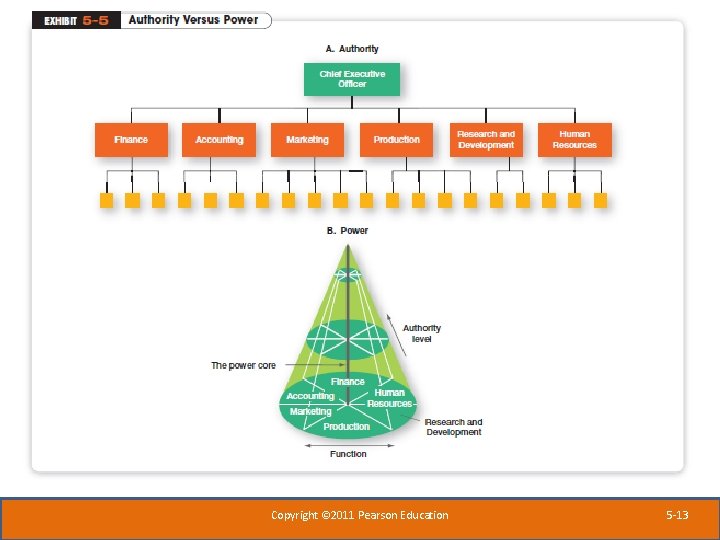
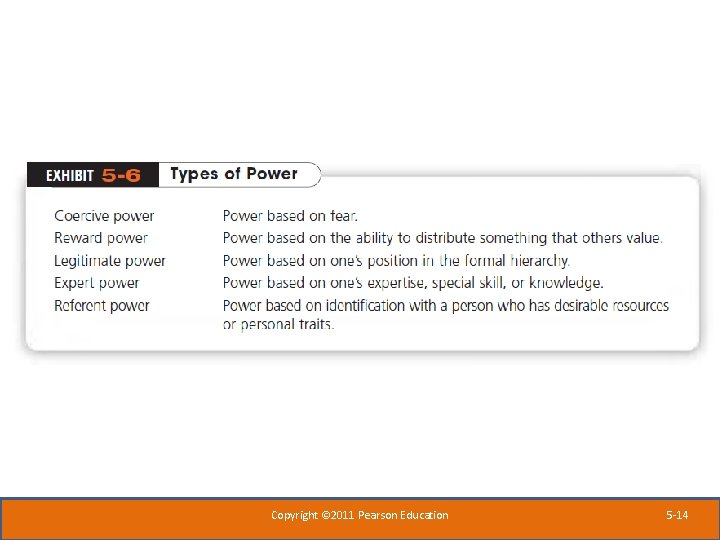
What is Power? • Authority goes with the job, but • Power – refers to an individual’s capacity to influence decisions. Authority is part of the larger concept of power Copyright © 2011 Pearson Education 5 -12
Copyright © 2011 Pearson Education 5 -13
Copyright © 2011 Pearson Education 5 -14
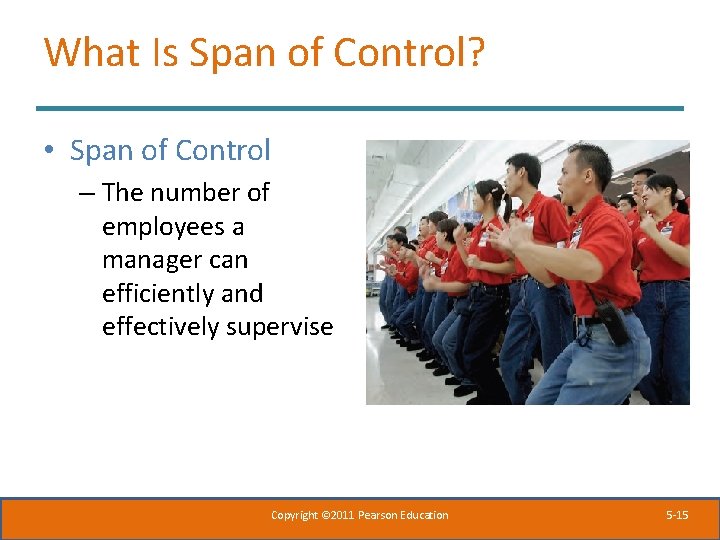
What Is Span of Control? • Span of Control – The number of employees a manager can efficiently and effectively supervise Copyright © 2011 Pearson Education 5 -15
What Is Formalization? • Formalization – How standardized an organization’s jobs are and the extent to which employee behavior is guided by rules and procedures • Centralization – The degree to which decision making takes place at upper levels of the organization • Decentralization – The degree to which lower-level managers provide input or actually make decisions Copyright © 2011 Pearson Education 5 -16
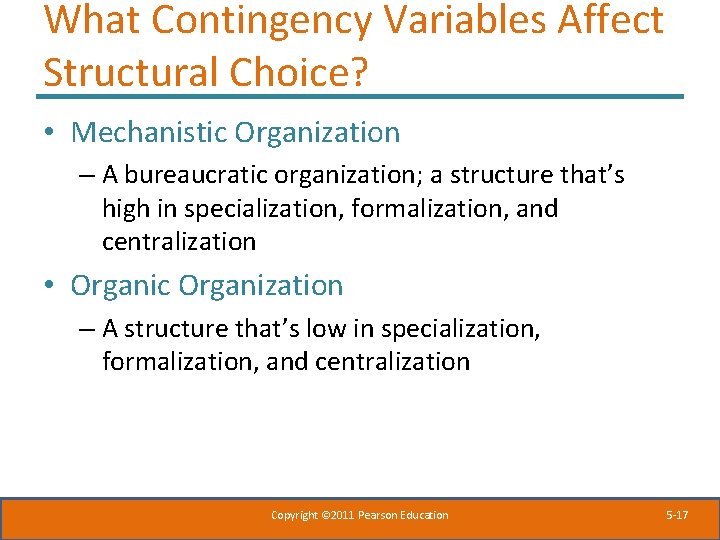
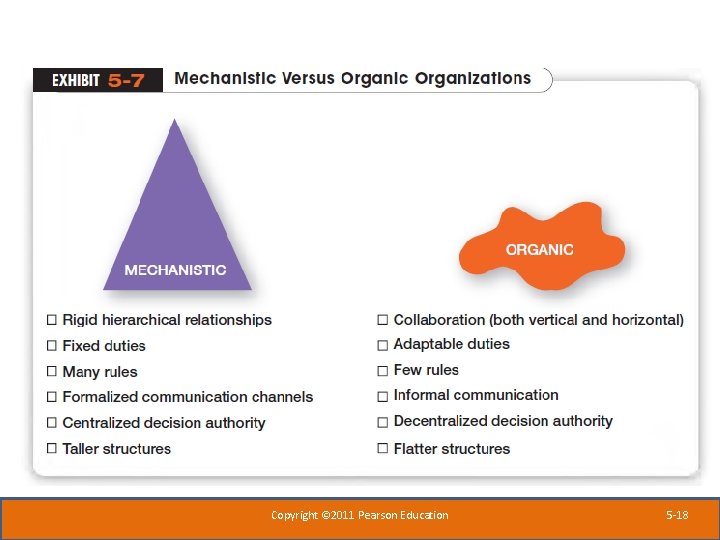
What Contingency Variables Affect Structural Choice? • Mechanistic Organization – A bureaucratic organization; a structure that’s high in specialization, formalization, and centralization • Organic Organization – A structure that’s low in specialization, formalization, and centralization Copyright © 2011 Pearson Education 5 -17
Copyright © 2011 Pearson Education 5 -18
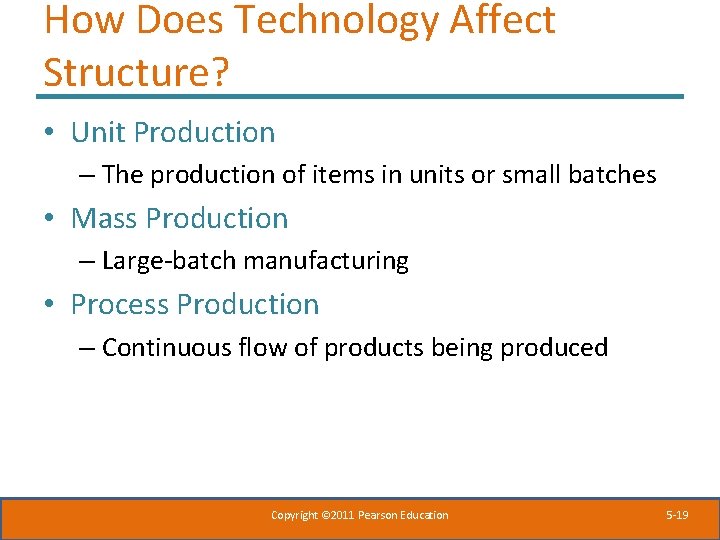
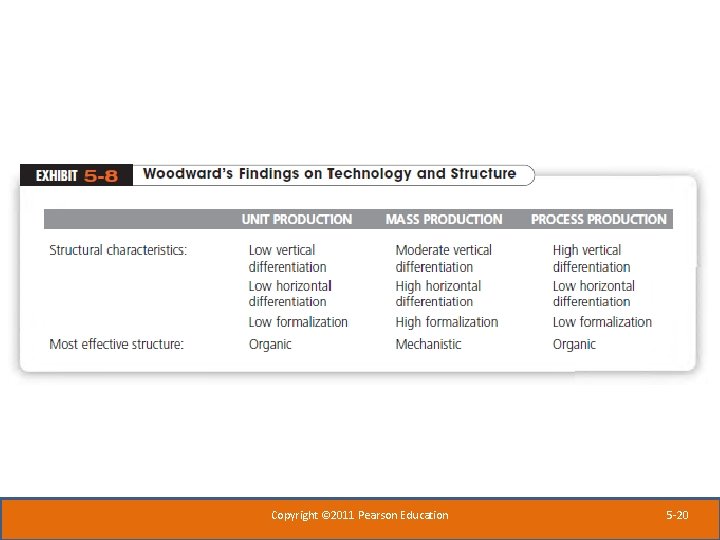
How Does Technology Affect Structure? • Unit Production – The production of items in units or small batches • Mass Production – Large-batch manufacturing • Process Production – Continuous flow of products being produced Copyright © 2011 Pearson Education 5 -19
Copyright © 2011 Pearson Education 5 -20
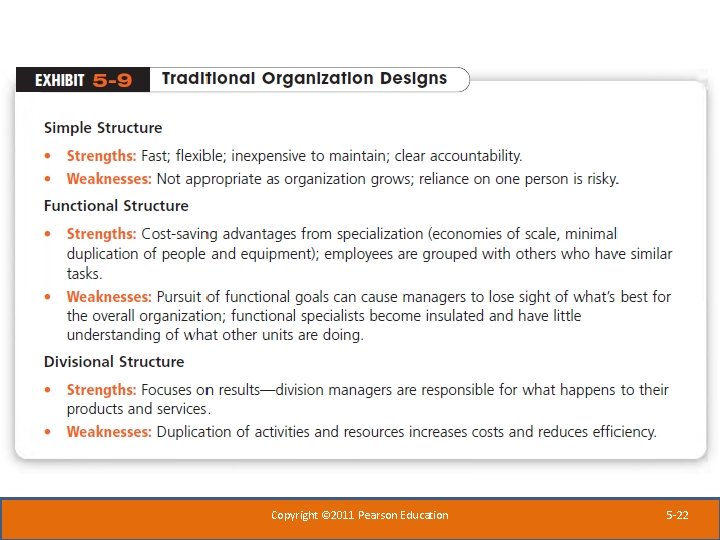
What is the Simple Structure? • Simple Structure – An organizational design with low departmentalization, wide spans of control, authority centralized in a single person, and little formalization Copyright © 2011 Pearson Education 5 -21
Copyright © 2011 Pearson Education 5 -22
Traditional Organizational Designs • Functional Structure – An organizational design that groups similar or related occupational specialties together • Divisional Structure – An organizational structure made up of separate business units or divisions Copyright © 2011 Pearson Education 5 -23
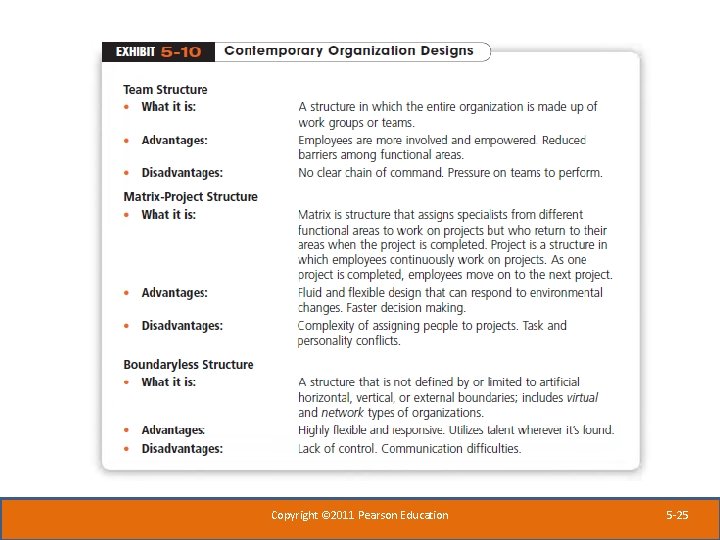
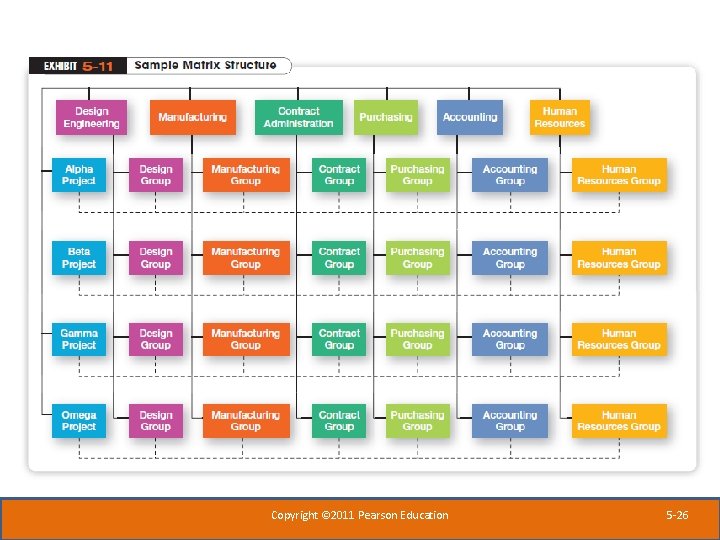
Contemporary Organizational Structures • Team Structure – A structure in which the entire organization is made up of work teams • Matrix Structure – A structure in which specialists from different functional departments are assigned to work on projects led by a project manager • Project Structure – A structure in which employees continuously work on projects Copyright © 2011 Pearson Education 5 -24
Copyright © 2011 Pearson Education 5 -25
Copyright © 2011 Pearson Education 5 -26
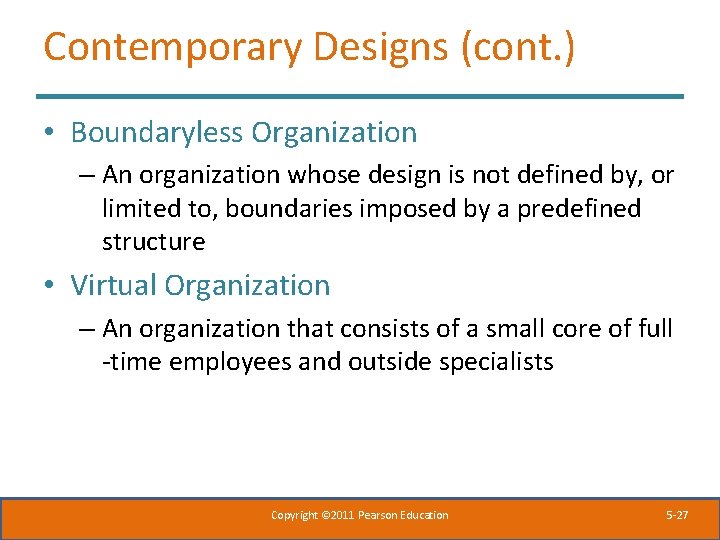
Contemporary Designs (cont. ) • Boundaryless Organization – An organization whose design is not defined by, or limited to, boundaries imposed by a predefined structure • Virtual Organization – An organization that consists of a small core of full -time employees and outside specialists Copyright © 2011 Pearson Education 5 -27
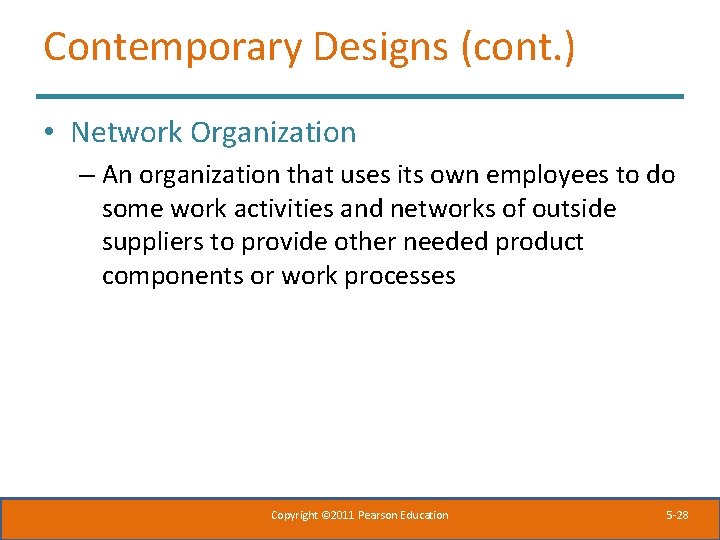
Contemporary Designs (cont. ) • Network Organization – An organization that uses its own employees to do some work activities and networks of outside suppliers to provide other needed product components or work processes Copyright © 2011 Pearson Education 5 -28
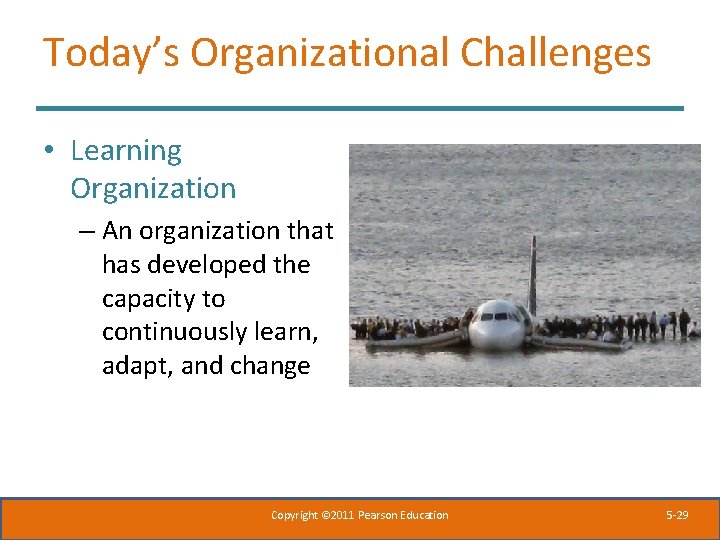
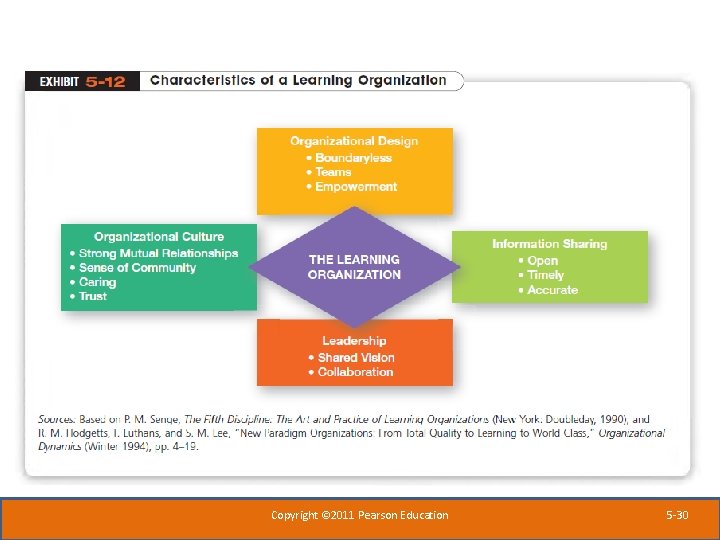
Today’s Organizational Challenges • Learning Organization – An organization that has developed the capacity to continuously learn, adapt, and change Copyright © 2011 Pearson Education 5 -29
Copyright © 2011 Pearson Education 5 -30
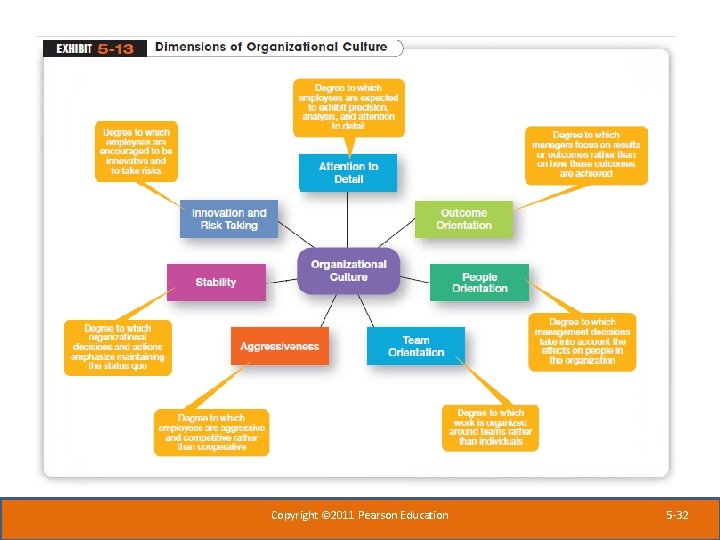
What is Organizational Culture? • Organizational Culture – The shared values, principles, traditions, and ways of doing things that influence the way organizational members act Copyright © 2011 Pearson Education 5 -31
Copyright © 2011 Pearson Education 5 -32
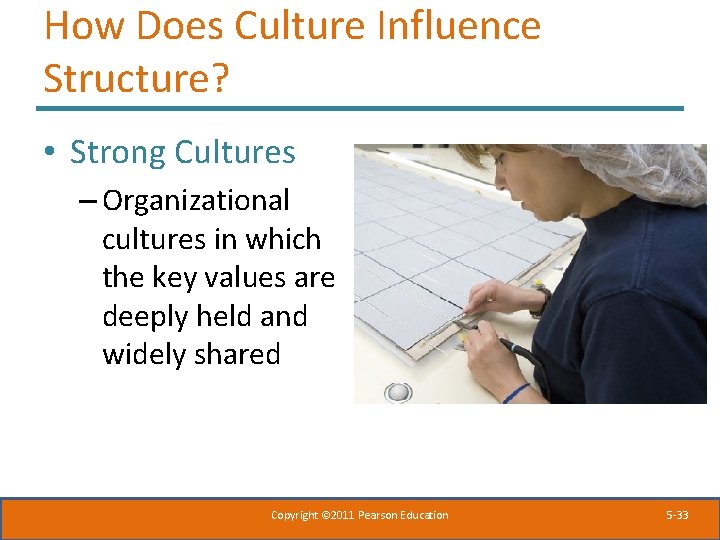
How Does Culture Influence Structure? • Strong Cultures – Organizational cultures in which the key values are deeply held and widely shared Copyright © 2011 Pearson Education 5 -33
Copyright © 2011 Pearson Education 5 -34