
5 Basic Principles Popular Sovereignty Limited Government Rule
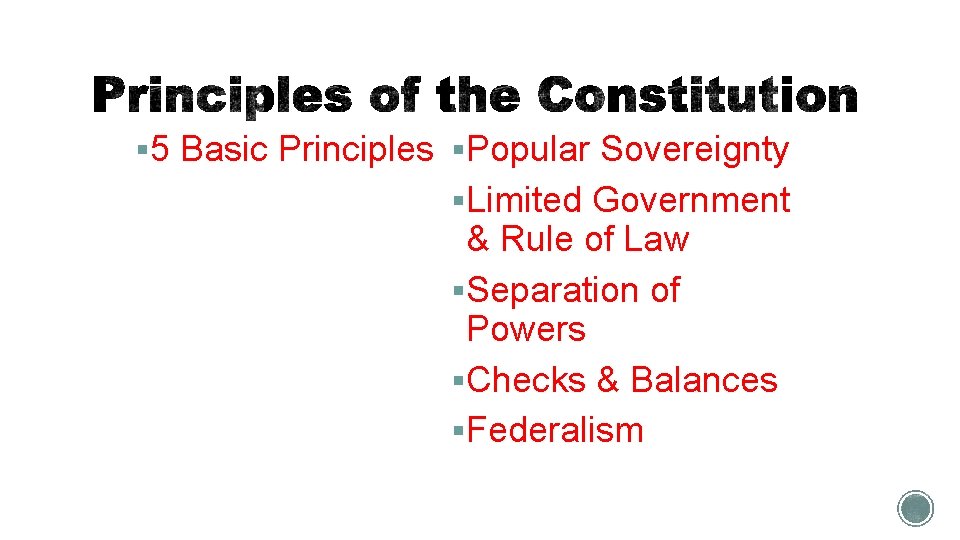
§ 5 Basic Principles §Popular Sovereignty §Limited Government & Rule of Law §Separation of Powers §Checks & Balances §Federalism
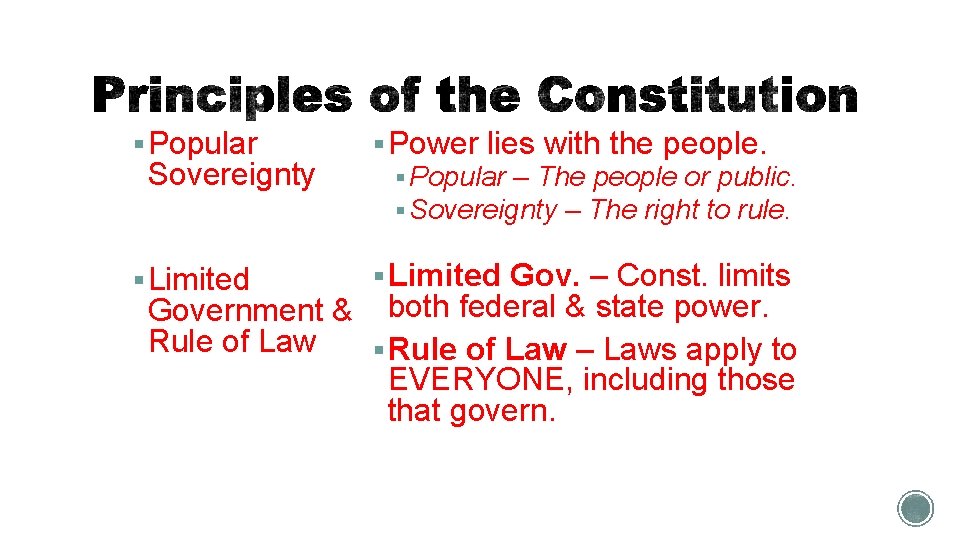
§ Popular § Power lies with the people. § Popular – The people or public. § Sovereignty – The right to rule. § Limited Gov. – Const. limits Sovereignty Government & both federal & state power. Rule of Law § Rule of Law – Laws apply to EVERYONE, including those that govern.
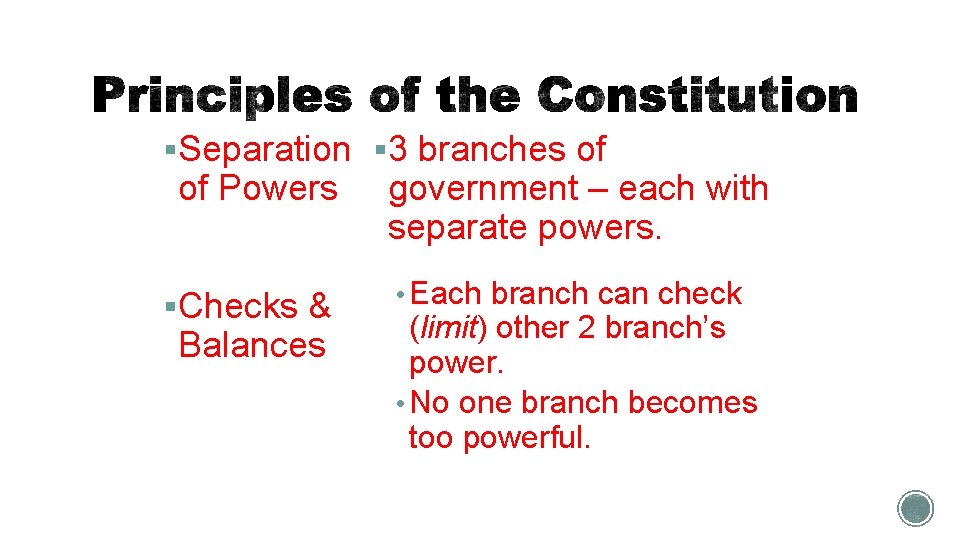
§Separation § 3 branches of of Powers §Checks & Balances government – each with separate powers. • Each branch can check (limit) other 2 branch’s power. • No one branch becomes too powerful.
§Federalism is the idea that the states and the National (also called the Federal) government share power. §This limits the power of the federal government by giving powers to the states.
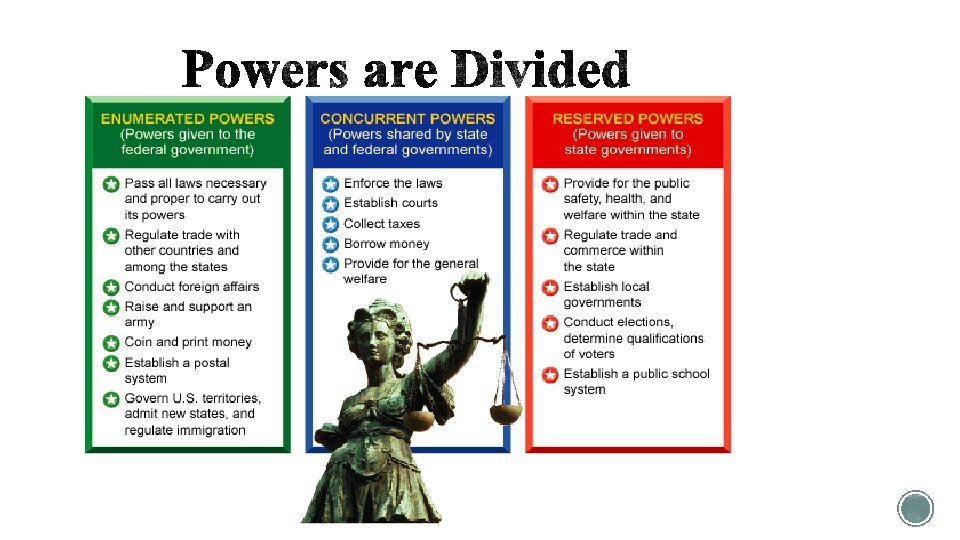
Expressed or enumerated or delegated Powers are specifically given only to the federal (national) government. These are listed (written) in the Constitution.
§ Regulating trade § Conducting foreign affairs § Raise & support armies § Coin or print money § Create post offices § Govern U. S. territories § Regulate immigration
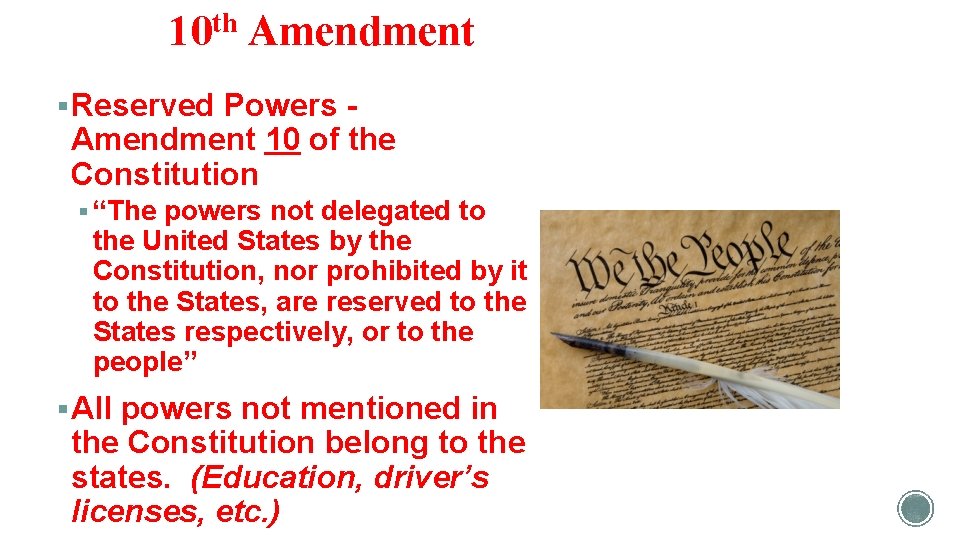
10 th Amendment § Reserved Powers - Amendment 10 of the Constitution § “The powers not delegated to the United States by the Constitution, nor prohibited by it to the States, are reserved to the States respectively, or to the people” § All powers not mentioned in the Constitution belong to the states. (Education, driver’s licenses, etc. )
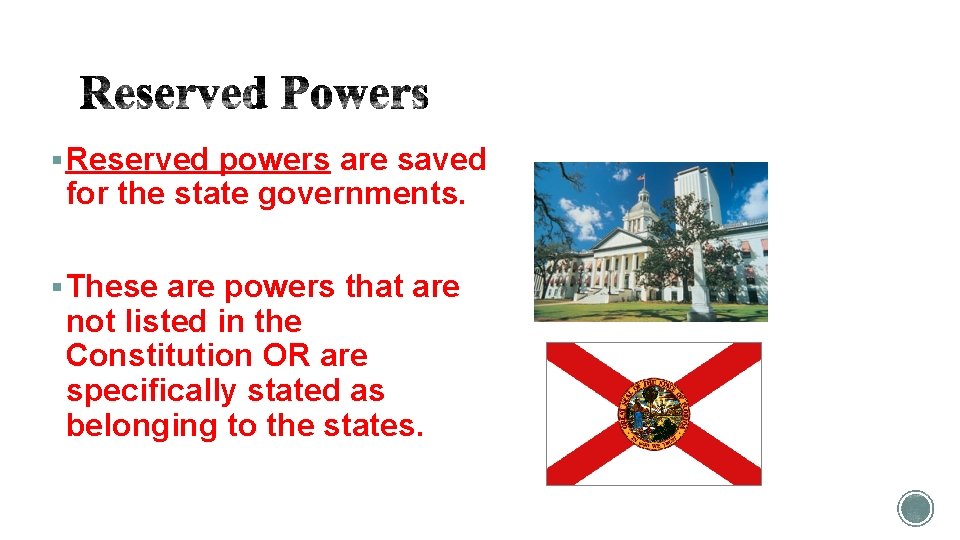
§ Reserved powers are saved for the state governments. § These are powers that are not listed in the Constitution OR are specifically stated as belonging to the states.
§ Provide for public safety, health, welfare within state § Regulate trade within the state § Create local governments in the state § Conduct elections in the state § Establish public school systems in the state
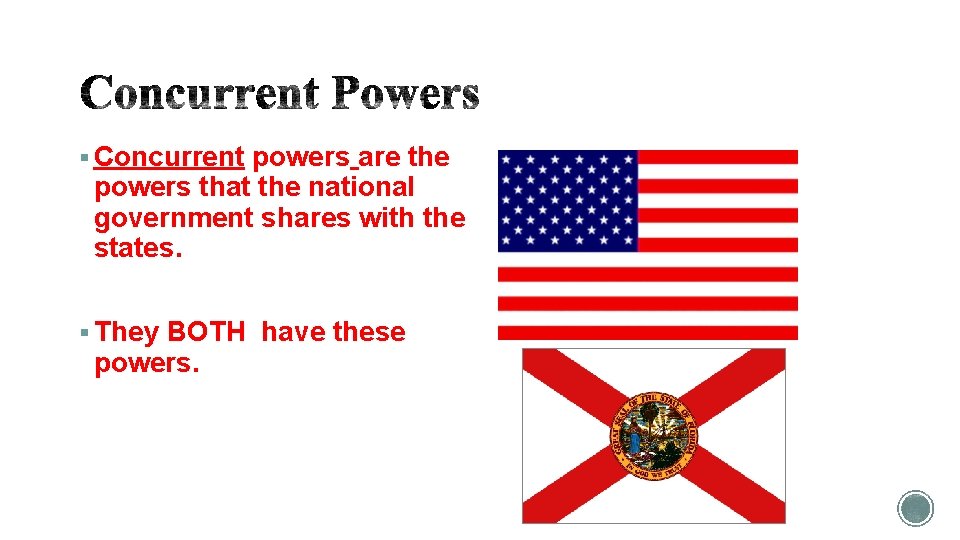
§ Concurrent powers are the powers that the national government shares with the states. § They BOTH have these powers.
§ Enforce the laws § Establish courts § Collect taxes § Borrow money § Provide for the general welfare § Prisons § Roads
§ The Amendment process is a slow and difficult one. § Why did the Framers make it difficult? In order to avoid frequent changes to the structure of our government. § Amending is a TWO step process § 1 – Proposing § 2 - Ratifying
§ All amendments must begin by being “proposed” (suggested) § To propose an amendment, it requires either a § (1) vote of 2/3 rds of members of both houses of Congress OR § (2) national convention called by state legislatures proposes it with a 2/3 rds vote.
§All amendments must end by being “ratified” (approved) §To ratify an amendment, it requires either a § (1) 3/4 ths of all state legislatures approval OR § (2) 3/4 ths of state ratifying conventions.
(Otherwise known as: PROPAGANDA) PROPAGANDA: techniques used to influence opinions, emotions, attitudes or behavior.
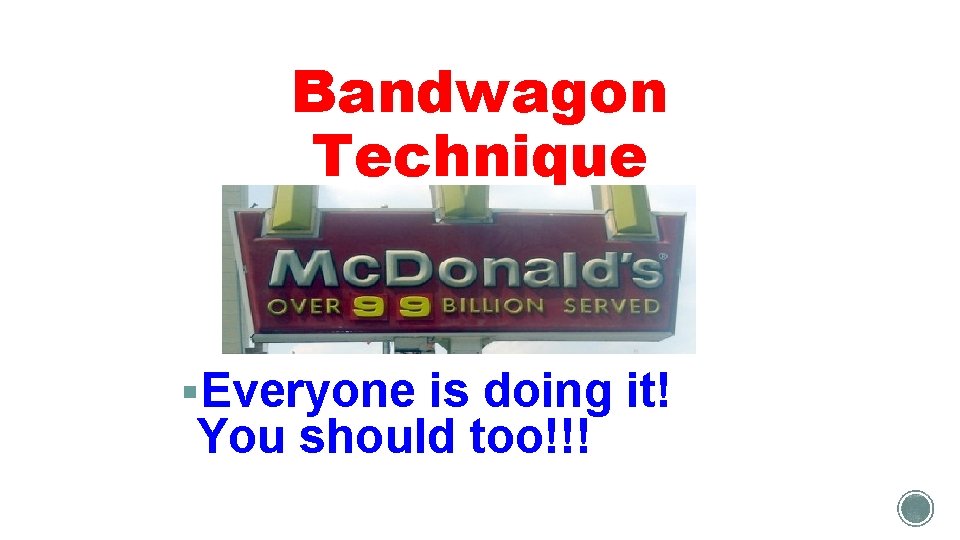
Bandwagon Technique §Everyone is doing it! You should too!!!
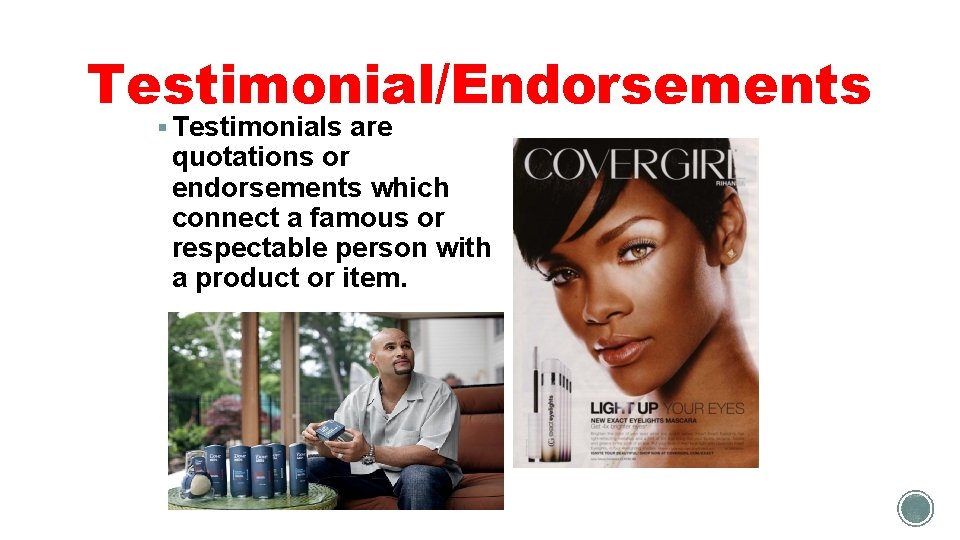
Testimonial/Endorsements § Testimonials are quotations or endorsements which connect a famous or respectable person with a product or item.
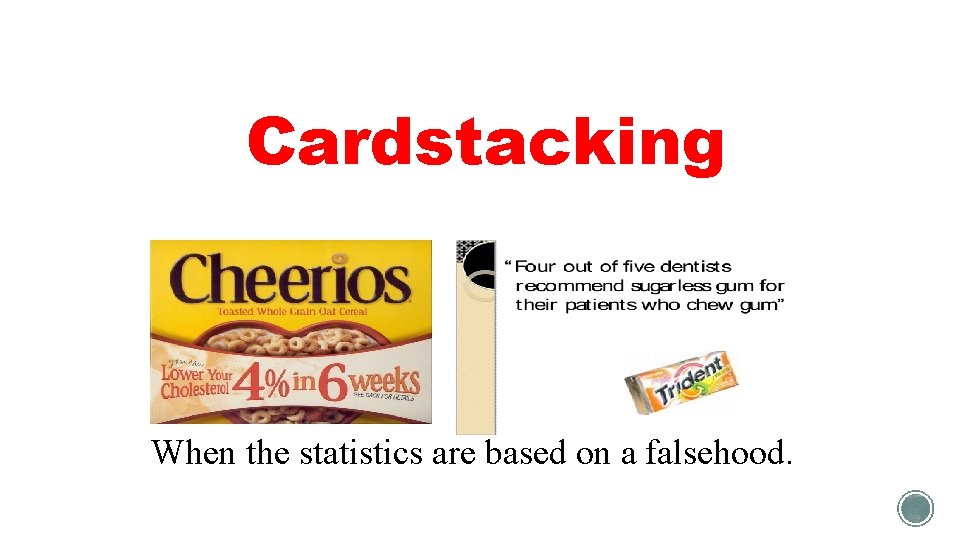
Cardstacking When the statistics are based on a falsehood.
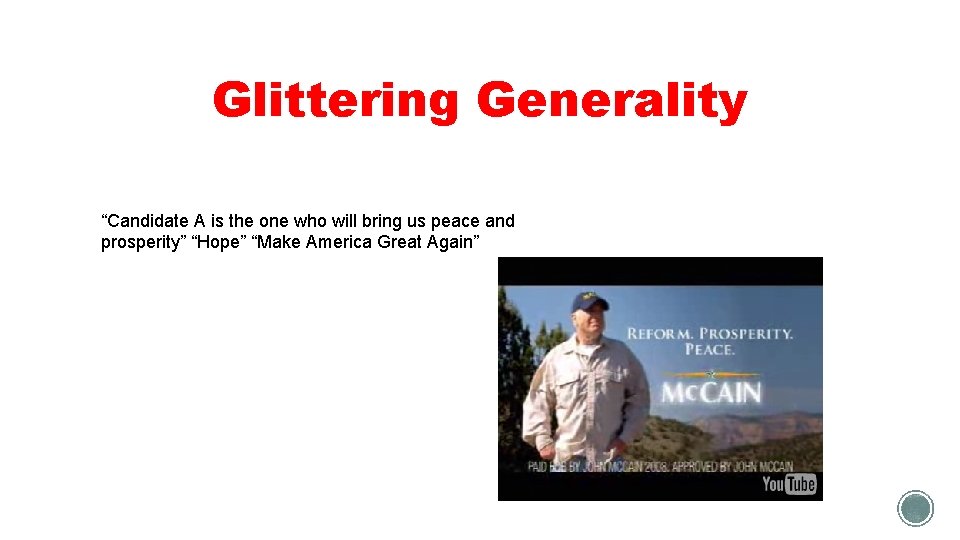
Glittering Generality “Candidate A is the one who will bring us peace and prosperity” “Hope” “Make America Great Again”
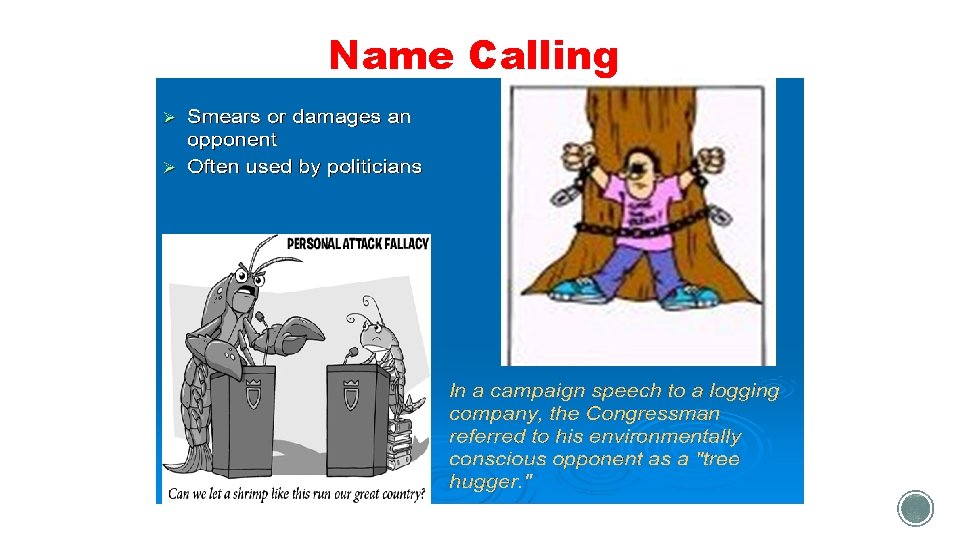
Name Calling
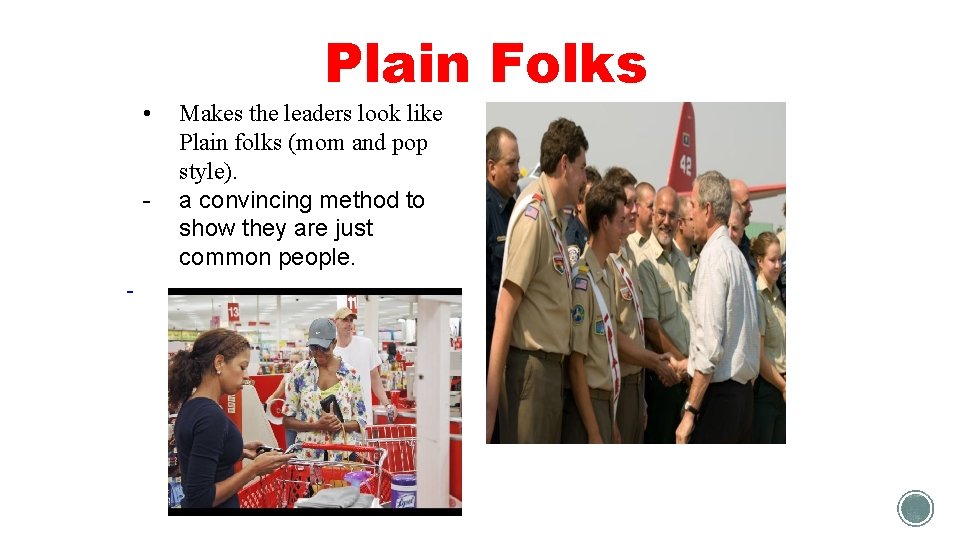
Plain Folks • - Makes the leaders look like Plain folks (mom and pop style). a convincing method to show they are just common people.
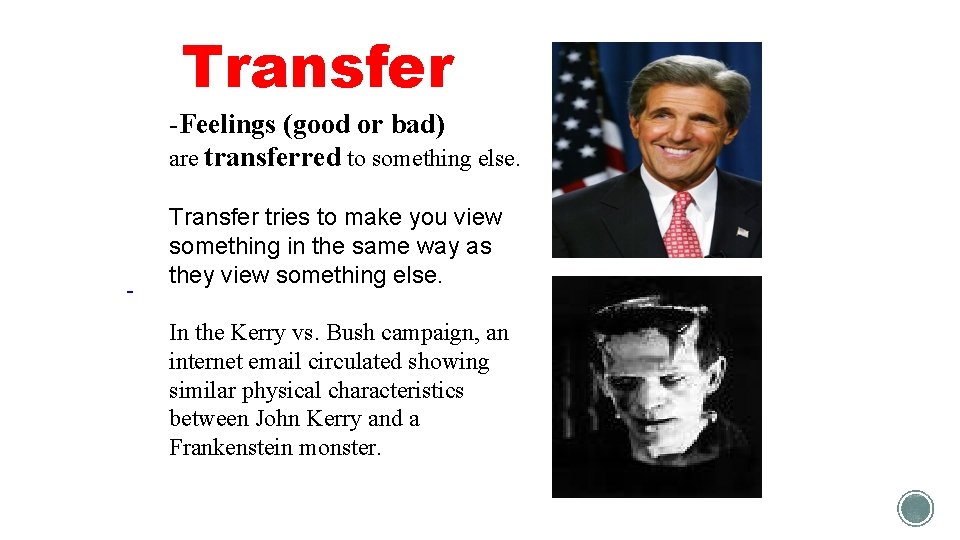
Transfer -Feelings (good or bad) are transferred to something else. Transfer tries to make you view something in the same way as they view something else. In the Kerry vs. Bush campaign, an internet email circulated showing similar physical characteristics between John Kerry and a Frankenstein monster.
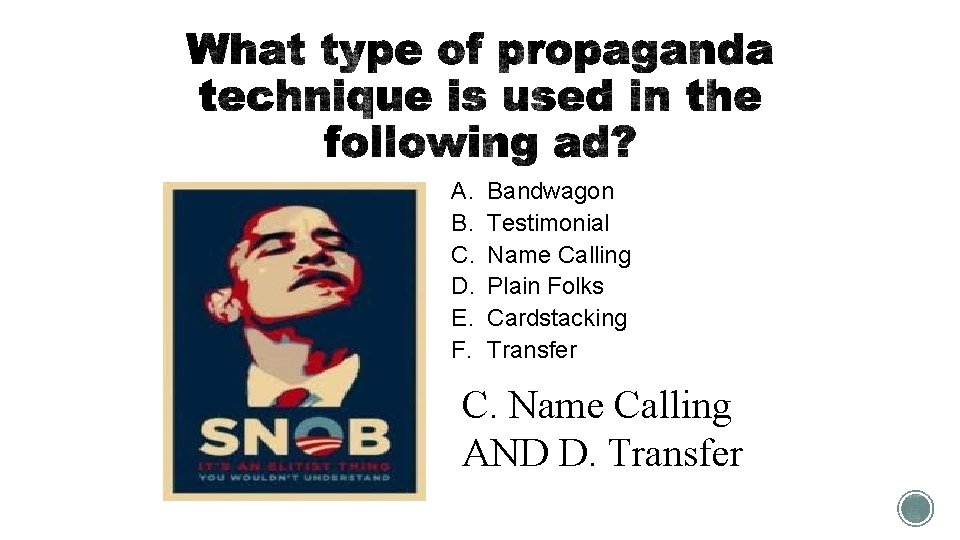
A. B. C. D. E. F. Bandwagon Testimonial Name Calling Plain Folks Cardstacking Transfer C. Name Calling AND D. Transfer
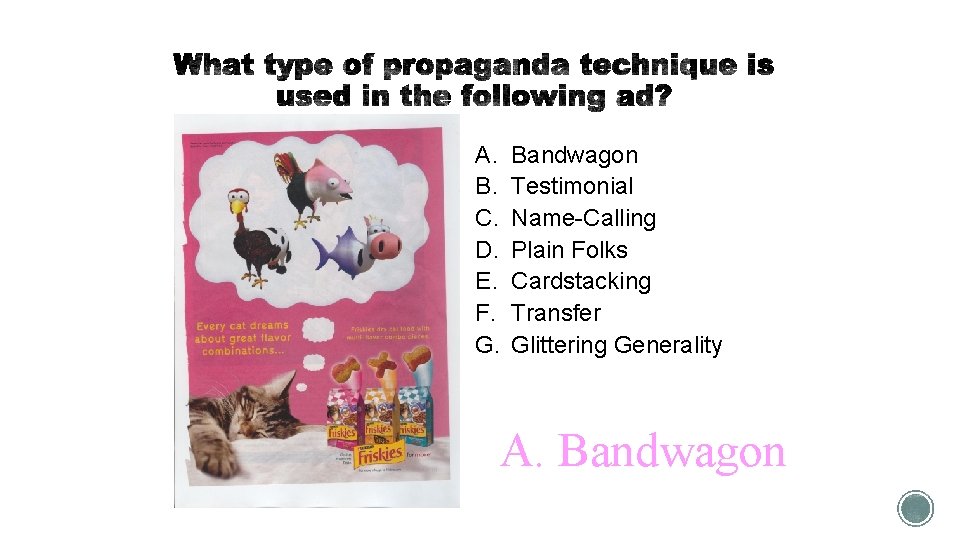
A. B. C. D. E. F. G. Bandwagon Testimonial Name-Calling Plain Folks Cardstacking Transfer Glittering Generality A. Bandwagon
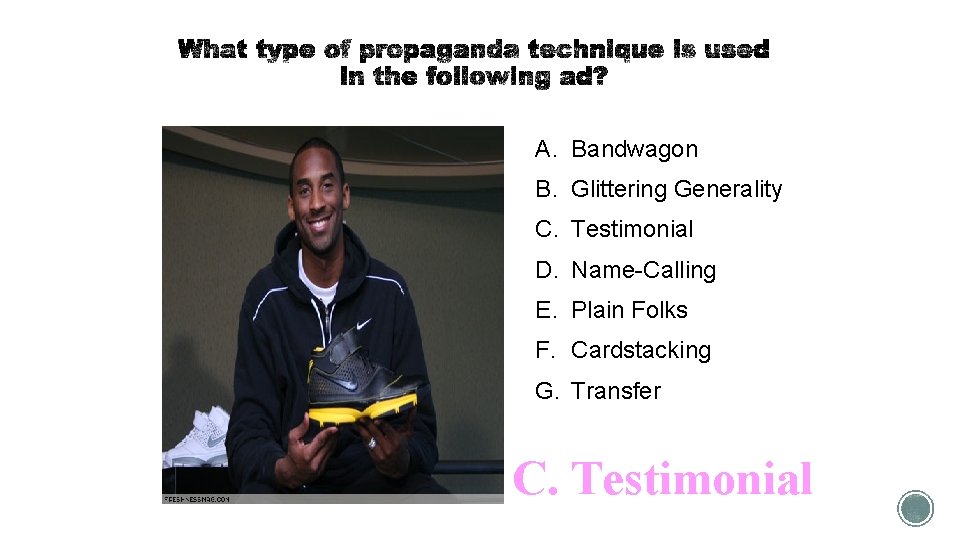
A. Bandwagon B. Glittering Generality C. Testimonial D. Name-Calling E. Plain Folks F. Cardstacking G. Transfer C. Testimonial
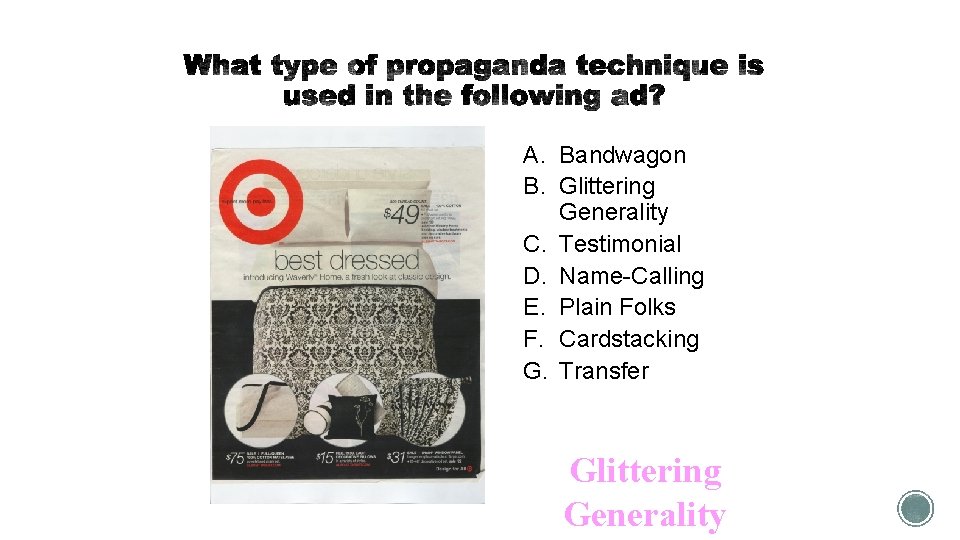
A. Bandwagon B. Glittering Generality C. Testimonial D. Name-Calling E. Plain Folks F. Cardstacking G. Transfer Glittering Generality
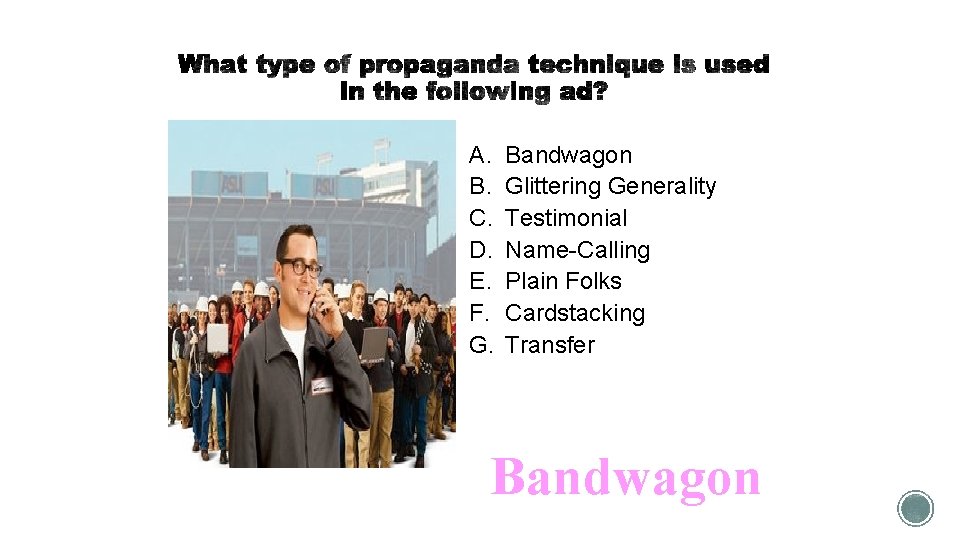
A. B. C. D. E. F. G. Bandwagon Glittering Generality Testimonial Name-Calling Plain Folks Cardstacking Transfer Bandwagon
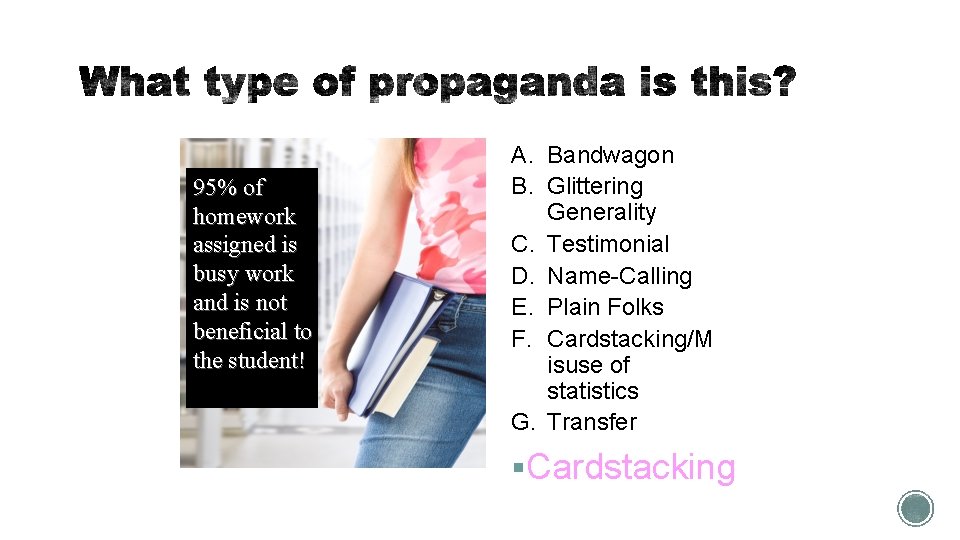
95% of homework assigned is busy work and is not beneficial to the student! A. Bandwagon B. Glittering Generality C. Testimonial D. Name-Calling E. Plain Folks F. Cardstacking/M isuse of statistics G. Transfer §Cardstacking
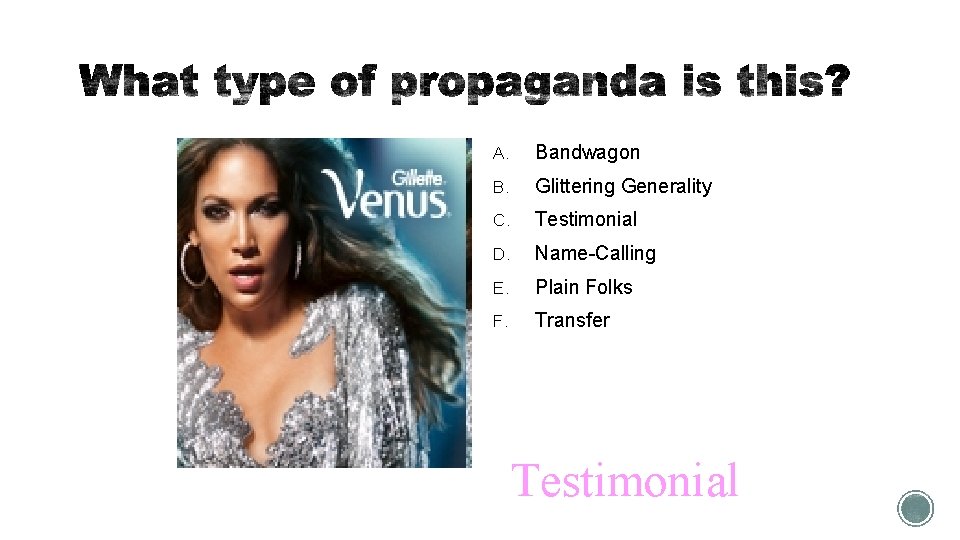
A. Bandwagon B. Glittering Generality C. Testimonial D. Name-Calling E. Plain Folks F. Transfer Testimonial
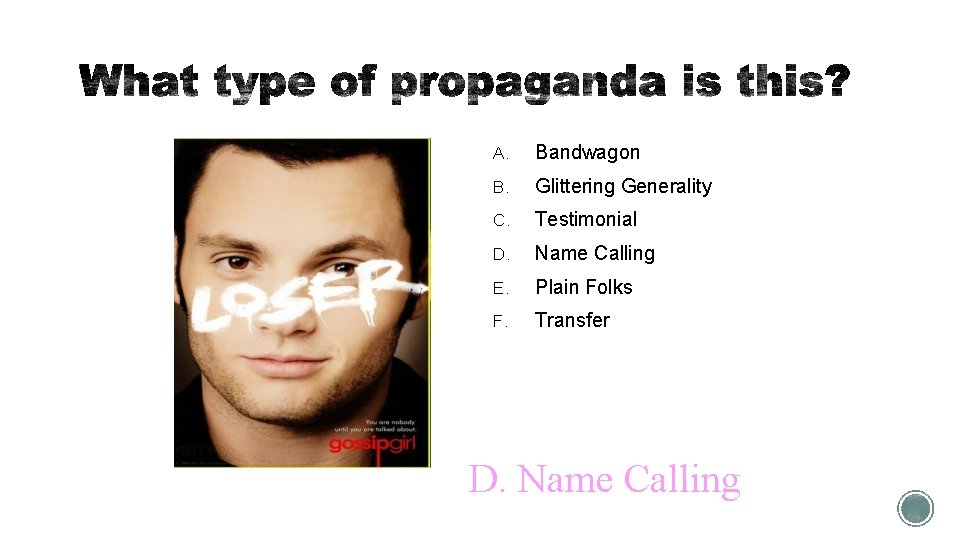
A. Bandwagon B. Glittering Generality C. Testimonial D. Name Calling E. Plain Folks F. Transfer D. Name Calling
Individuals can influence the government in 4 ways… • 1. Contributing to or working on campaigns • 2. Running for political office • 3. Voting in elections. • 4. Petitioning the government for change. • For example: Writing a letter to a representative, attending civic meetings (town hall, city council, school board), or attending a rally to protest or support an issue.
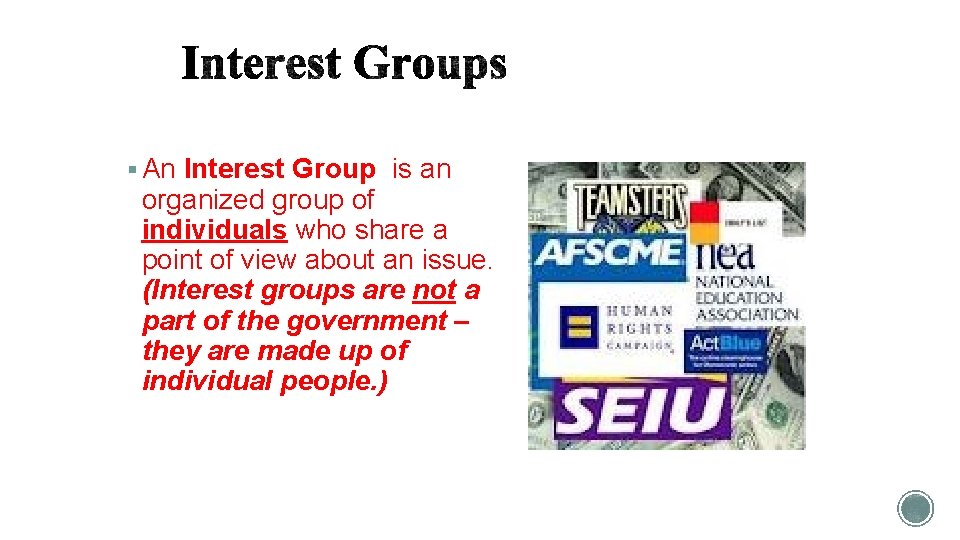
§ An Interest Group is an organized group of individuals who share a point of view about an issue. (Interest groups are not a part of the government – they are made up of individual people. )
Participate In Election Activities • Interest groups often supply workers/money to election campaigns. • Political Action Committees (PACs) are organizations set up by interest groups primarily to collect money to support favored candidates.
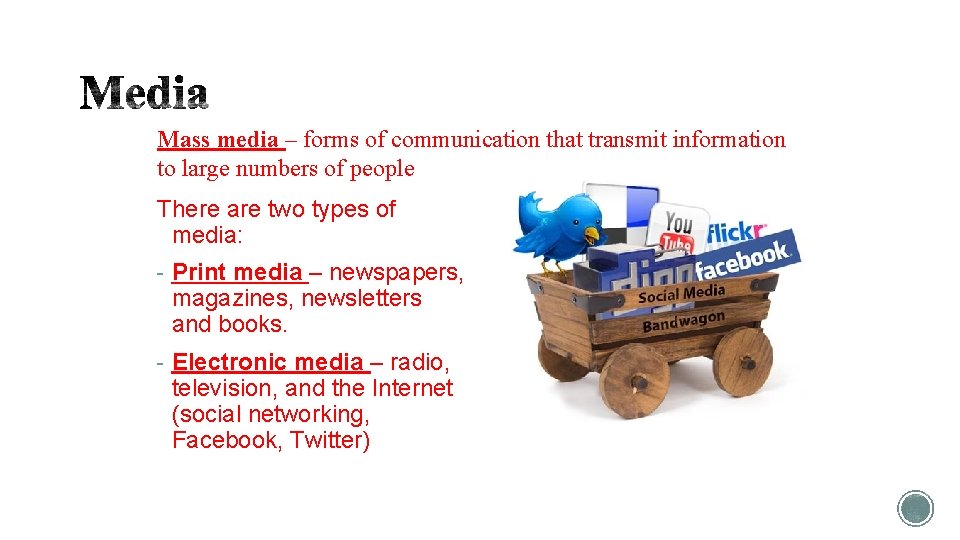
Mass media – forms of communication that transmit information to large numbers of people There are two types of media: - Print media – newspapers, magazines, newsletters and books. - Electronic media – radio, television, and the Internet (social networking, Facebook, Twitter)
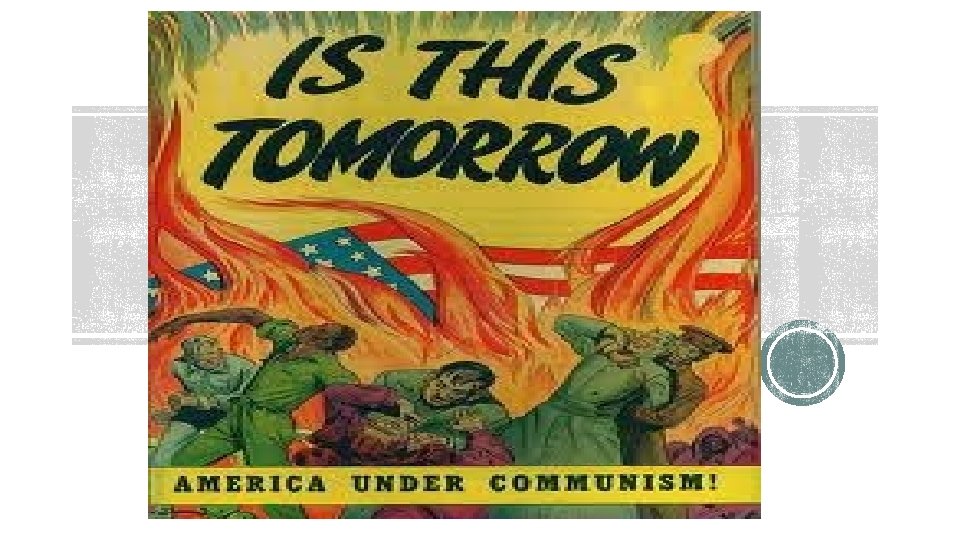
Shapes Public Opinion § Individuals and groups use the media to shape public opinion, or the total of the opinions held concerning a particular issue. § Ideas that are spread to influence people are called propaganda.
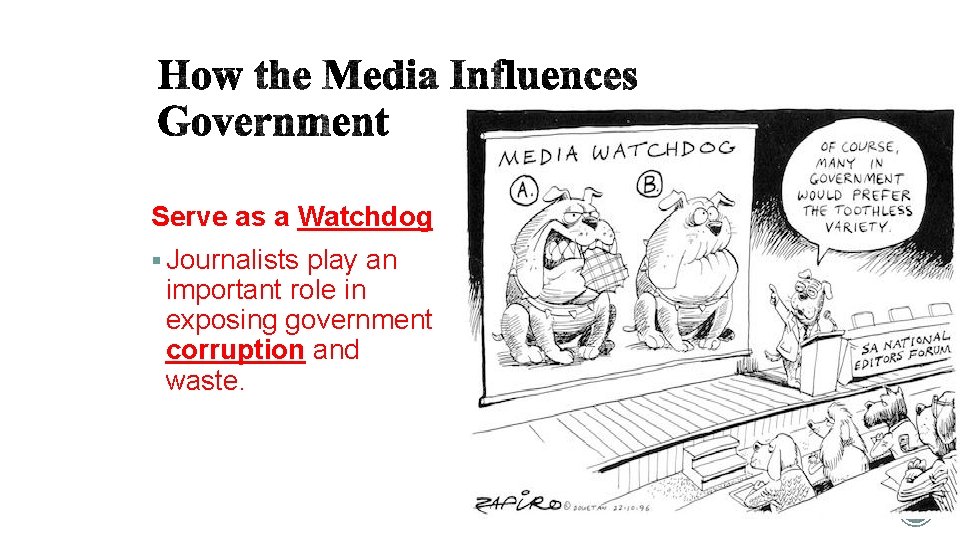
Serve as a Watchdog § Journalists play an important role in exposing government corruption and waste.
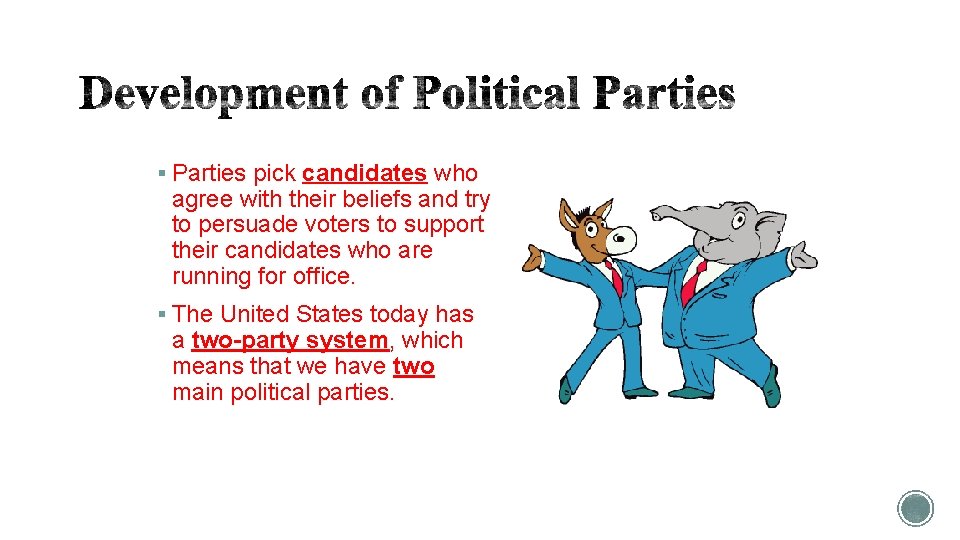
§ Parties pick candidates who agree with their beliefs and try to persuade voters to support their candidates who are running for office. § The United States today has a two-party system, which means that we have two main political parties.
§ Democrats are generally said to be more liberal. § They favor more government programs that offer services in housing, education, healthcare, and economics. § These programs would be funded through taxes.
§ Republicans are generally said to be more conservative. § Republicans tend to believe that they can help the nation’s economy grow by reducing the amount of taxes that people have to pay. § They favor less government regulation of the economy. § They are opposed to raising taxes. § Want more funding for military and defense.
The Communist Party supports the rights of the workers and economic equality. Want to take power from the wealthy few and divide it equally amongst the people.
§ The Socialist Party supports government ownership/allocation of resources.
l The Libertarian Party would like to increase individual freedoms by cutting the size of the U. S. government.
Primary elections occur first and help narrow the field of candidates for each Political Party. Allows each party to officially nominate their candidate.
§General Election – Voters choose leaders for various offices such as President, Congress members, and state and local positions.
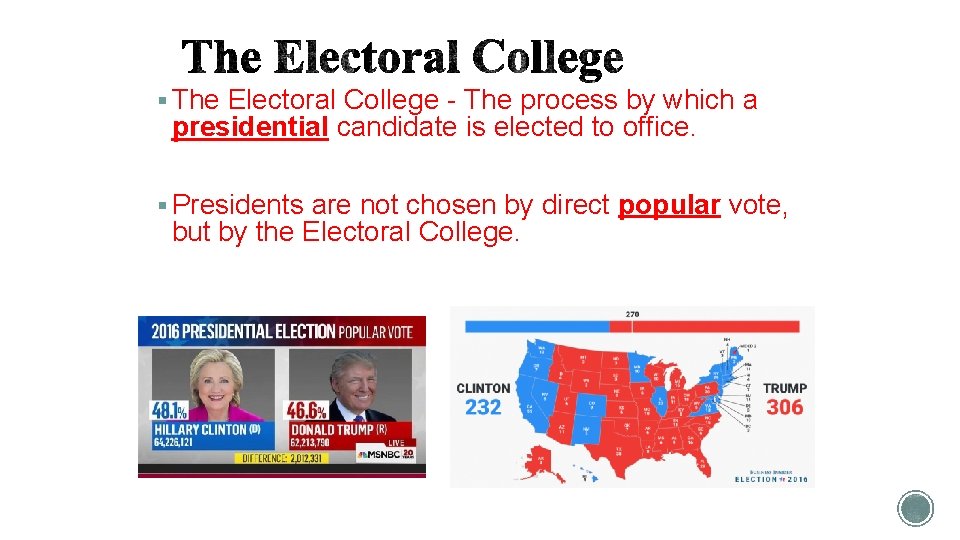
§ The Electoral College - The process by which a presidential candidate is elected to office. § Presidents are not chosen by direct popular vote, but by the Electoral College.
§ In order to register in the state of Florida you must: § Be a citizen of the United States § Be a legal resident of both the state of Florida and of the county in which you are registering § Be 18 years old (you may pre-register if you are 17) § Be mentally capable of making decisions § Not have been convicted of a violent felony (unless the governor has restored your rights) § Register at least 29 days before the election takes place
- Slides: 49