
5 Agents of Evolutionary Change 1 Mutation p

- Slides: 15
5 Agents of Evolutionary Change
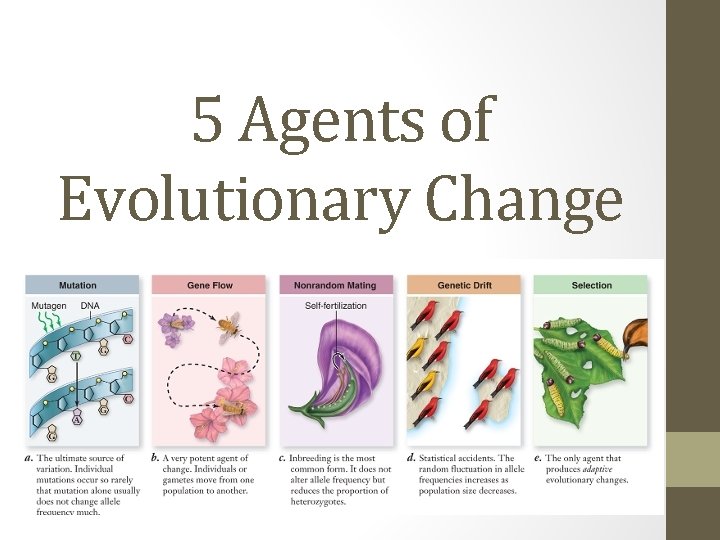
1. Mutation p. 212 -214 = sudden, inheritable change to DNA • Caused by: 1. Radiation – alpha, beta, gamma, x-ray, UV 2. Chemicals – food additives, pesticides, herbicides, nicotine 3. Spontaneously through DNA replication • Can be positive, negative, or neutral • Creates genetic variation
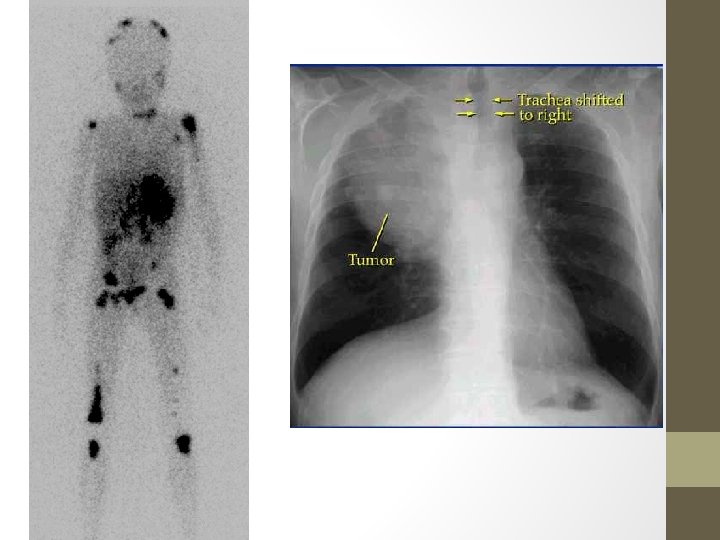
• Location of mutation: 1. Germline (aka. Germinal) mutations § Occur in sperm and/or egg § Passed onto offspring § Examples: Cystic fibrosis, Tay-Sachs, hemophilia, certain breast cancers, retinoblastomas? , neuroblastomas? 2. Somatic mutations • Occur in cells other than gametes • Change is passed onto cells of that type • Example: cancers like melanoma, liver cancer, lung cancer
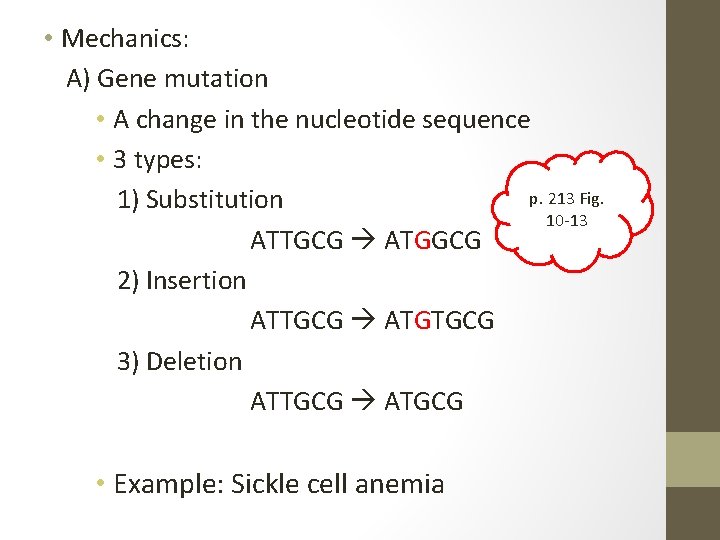
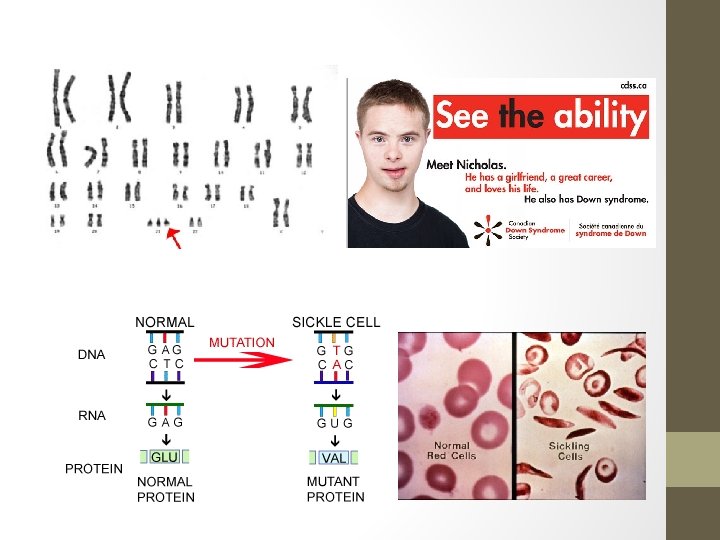
• Mechanics: A) Gene mutation • A change in the nucleotide sequence • 3 types: p. 213 Fig. 1) Substitution 10 -13 ATTGCG ATGGCG 2) Insertion ATTGCG ATGTGCG 3) Deletion ATTGCG ATGCG • Example: Sickle cell anemia
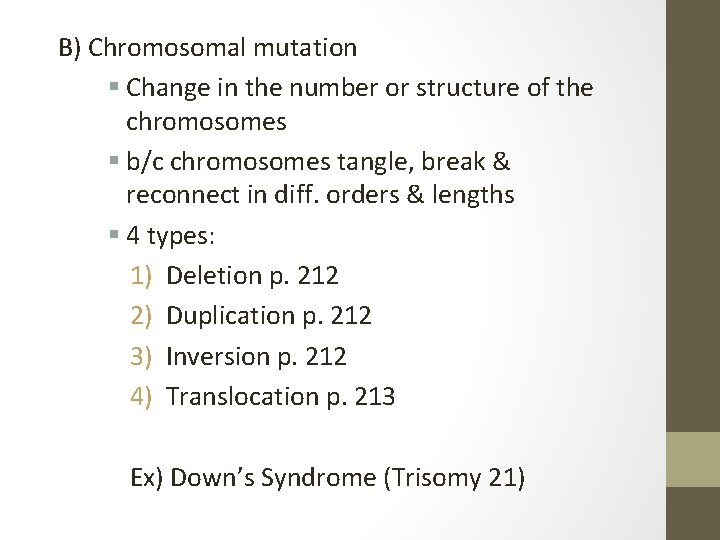
B) Chromosomal mutation § Change in the number or structure of the chromosomes § b/c chromosomes tangle, break & reconnect in diff. orders & lengths § 4 types: 1) Deletion p. 212 2) Duplication p. 212 3) Inversion p. 212 4) Translocation p. 213 Ex) Down’s Syndrome (Trisomy 21)
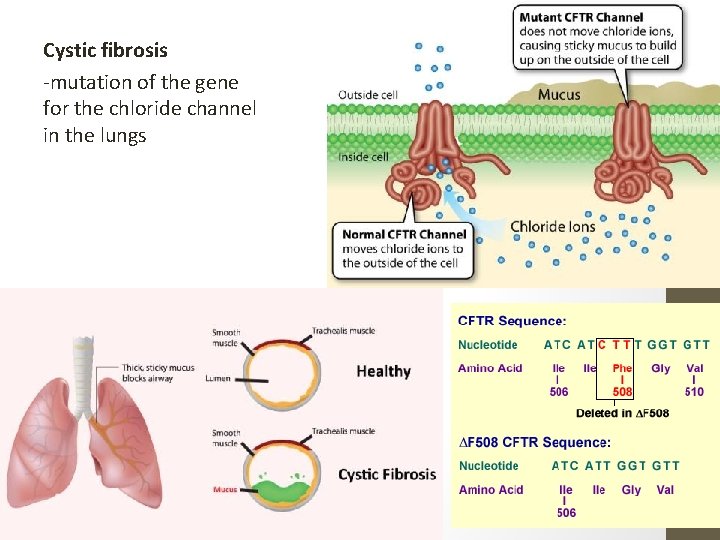
Cystic fibrosis -mutation of the gene for the chloride channel in the lungs
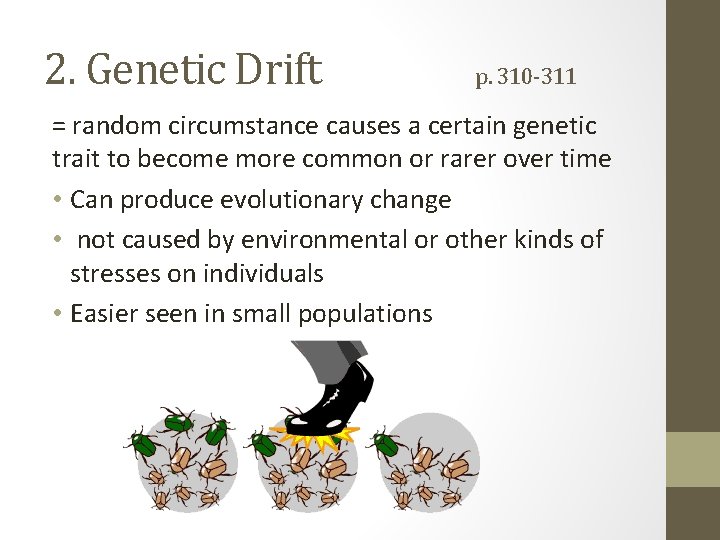
2. Genetic Drift p. 310 -311 = random circumstance causes a certain genetic trait to become more common or rarer over time • Can produce evolutionary change • not caused by environmental or other kinds of stresses on individuals • Easier seen in small populations
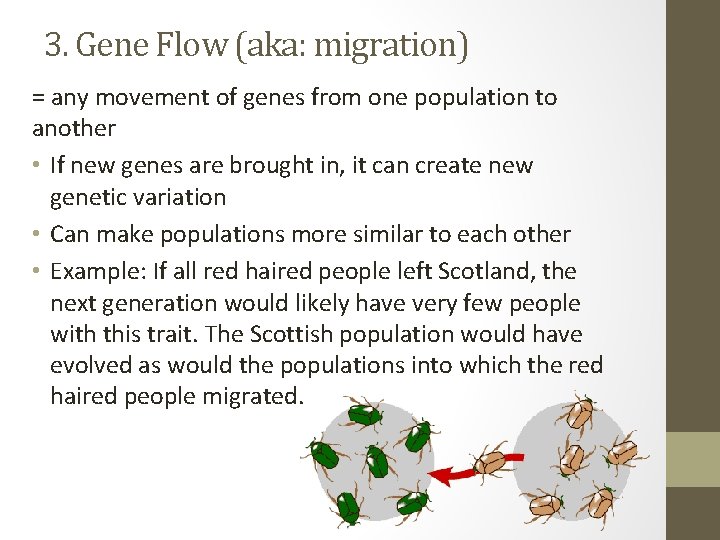
3. Gene Flow (aka: migration) = any movement of genes from one population to another • If new genes are brought in, it can create new genetic variation • Can make populations more similar to each other • Example: If all red haired people left Scotland, the next generation would likely have very few people with this trait. The Scottish population would have evolved as would the populations into which the red haired people migrated.
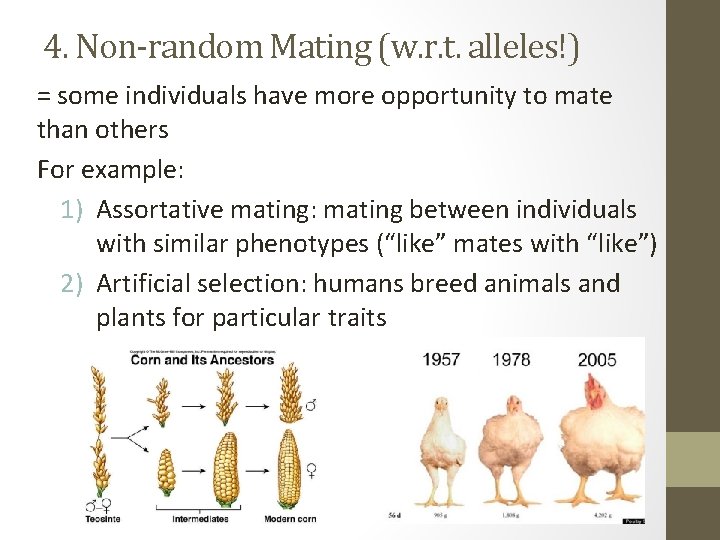
4. Non-random Mating (w. r. t. alleles!) = some individuals have more opportunity to mate than others For example: 1) Assortative mating: mating between individuals with similar phenotypes (“like” mates with “like”) 2) Artificial selection: humans breed animals and plants for particular traits
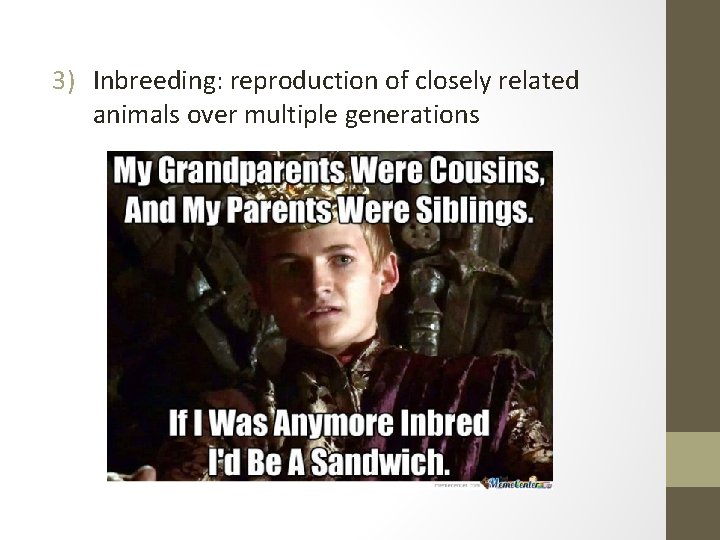
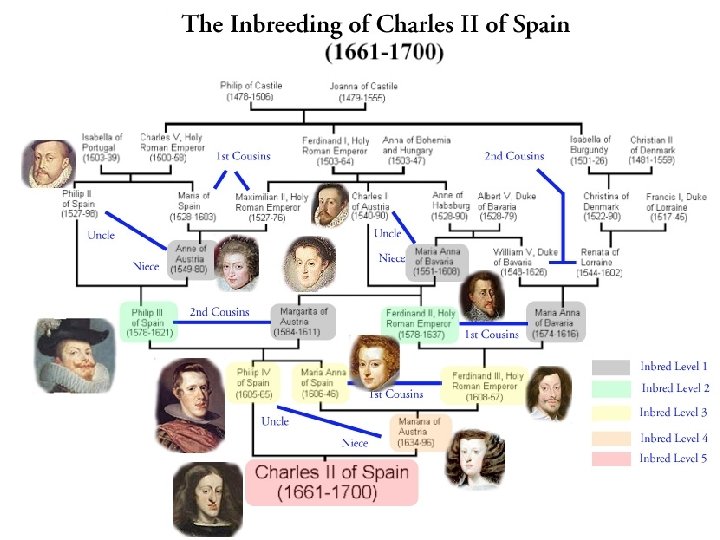
3) Inbreeding: reproduction of closely related animals over multiple generations
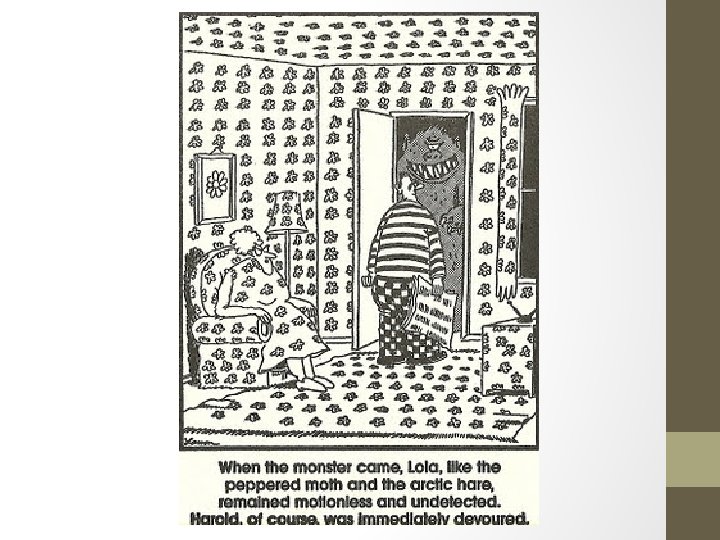
5. Natural Selection • Affects variation in a population as the better adapted (more fit) individuals survive and reproduce, passing on their genes to the successive generations. • Acts only upon an organisms phenotype. • Preserves favourable traits & eliminates unfavourable ones