
5 9 15 16 17 habitual entrepreneur Robert
5
9
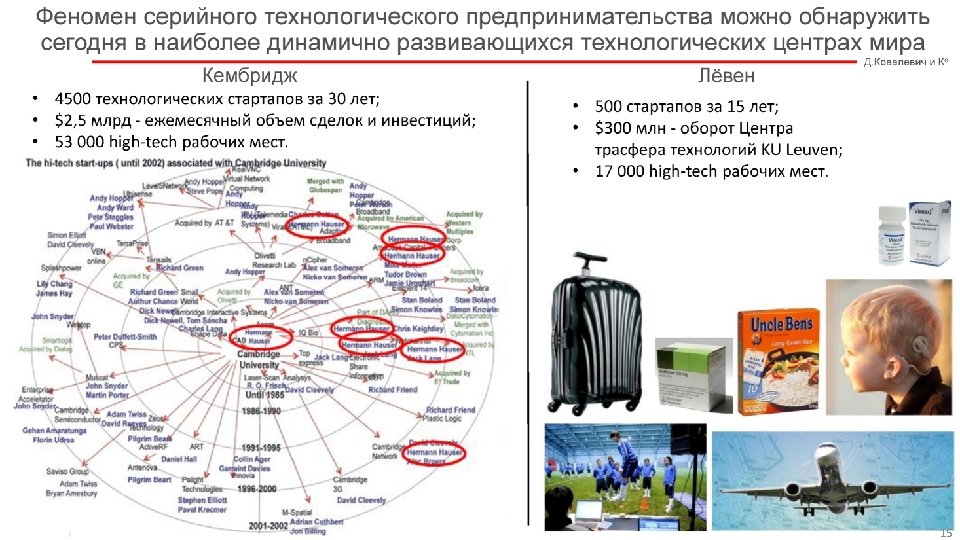
15
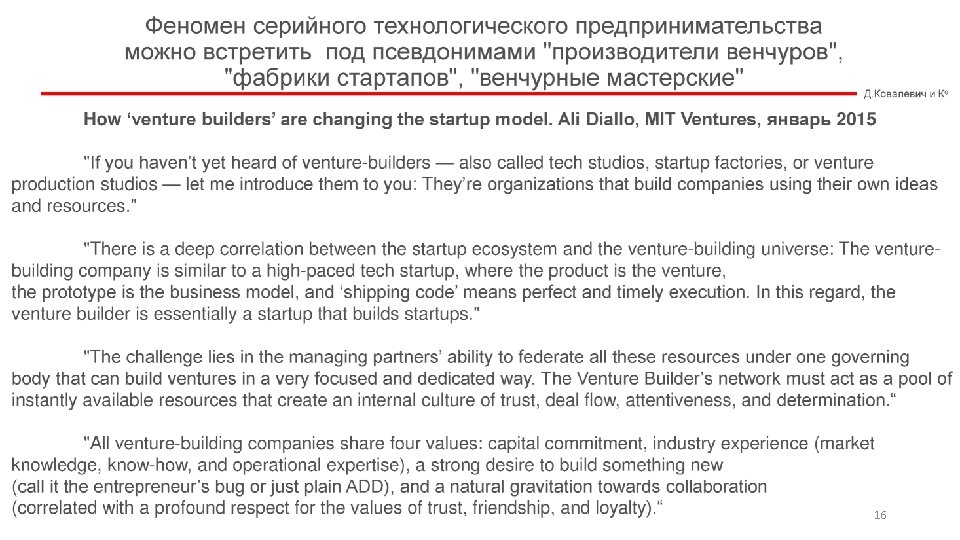
16
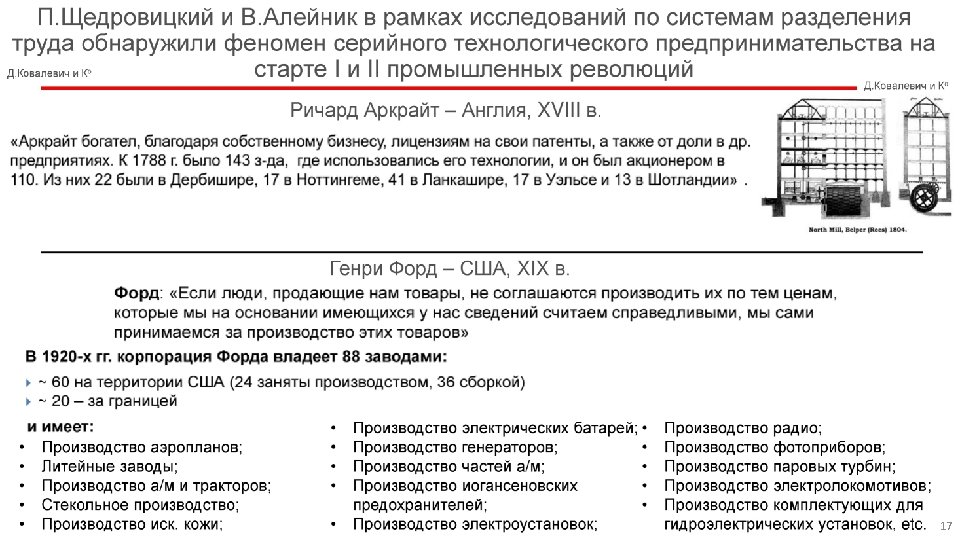
17
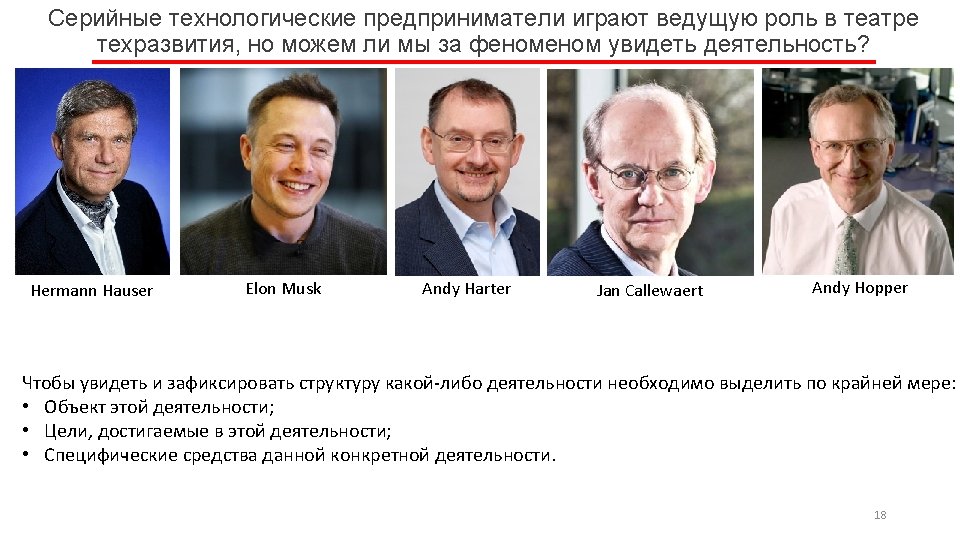
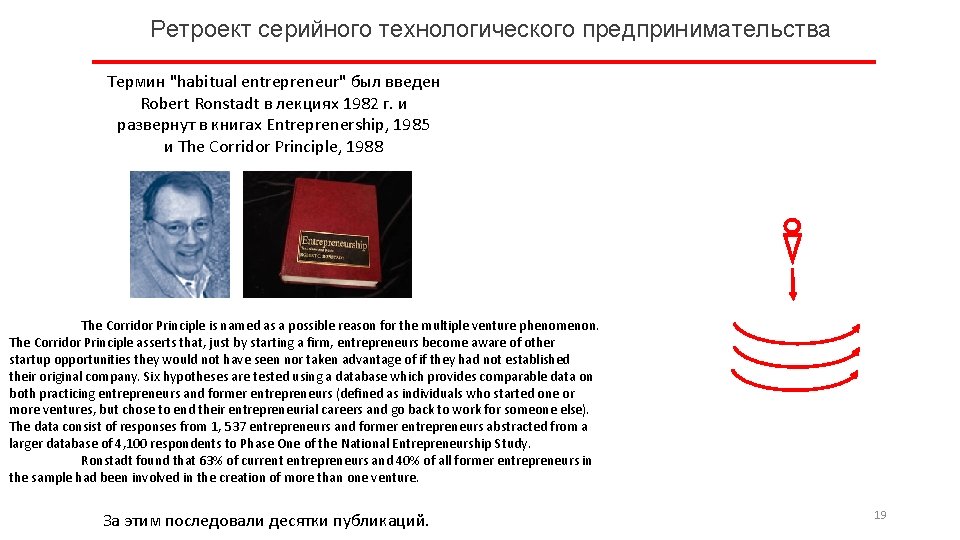
Ретроект серийного технологического предпринимательства Термин "habitual entrepreneur" был введен Robert Ronstadt в лекциях 1982 г. и развернут в книгах Entreprenership, 1985 и The Corridor Principle, 1988 The Corridor Principle is named as a possible reason for the multiple venture phenomenon. The Corridor Principle asserts that, just by starting a firm, entrepreneurs become aware of other startup opportunities they would not have seen nor taken advantage of if they had not established their original company. Six hypotheses are tested using a database which provides comparable data on both practicing entrepreneurs and former entrepreneurs (defined as individuals who started one or more ventures, but chose to end their entrepreneurial careers and go back to work for someone else). The data consist of responses from 1, 537 entrepreneurs and former entrepreneurs abstracted from a larger database of 4, 100 respondents to Phase One of the National Entrepreneurship Study. Ronstadt found that 63% of current entrepreneurs and 40% of all former entrepreneurs in the sample had been involved in the creation of more than one venture. За этим последовали десятки публикаций. 19
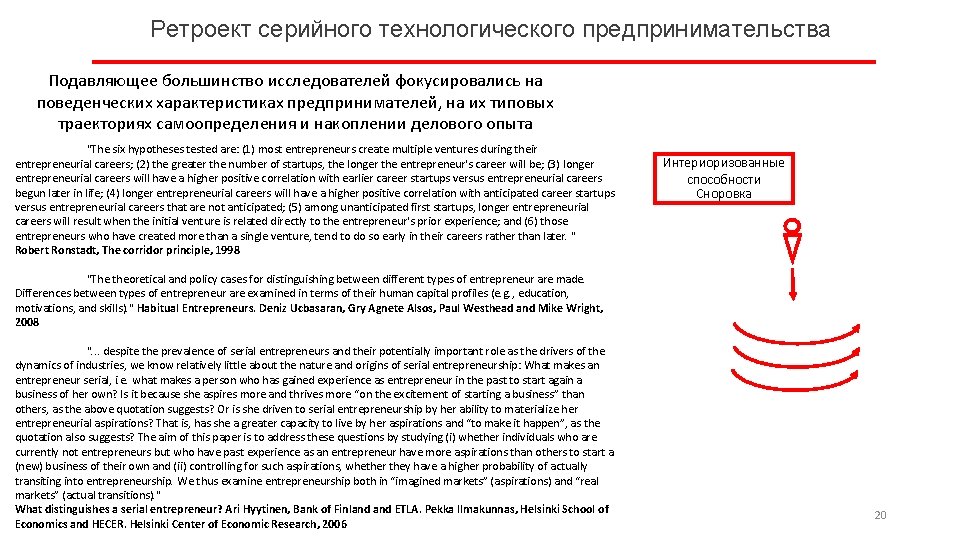
Ретроект серийного технологического предпринимательства Подавляющее большинство исследователей фокусировались на поведенческих характеристиках предпринимателей, на их типовых траекториях самоопределения и накоплении делового опыта "The six hypotheses tested are: (1) most entrepreneurs create multiple ventures during their entrepreneurial careers; (2) the greater the number of startups, the longer the entrepreneur's career will be; (3) longer entrepreneurial careers will have a higher positive correlation with earlier career startups versus entrepreneurial careers begun later in life; (4) longer entrepreneurial careers will have a higher positive correlation with anticipated career startups versus entrepreneurial careers that are not anticipated; (5) among unanticipated first startups, longer entrepreneurial careers will result when the initial venture is related directly to the entrepreneur's prior experience; and (6) those entrepreneurs who have created more than a single venture, tend to do so early in their careers rather than later. " Robert Ronstadt, The corridor principle, 1998 Интериоризованные способности Сноровка "The theoretical and policy cases for distinguishing between different types of entrepreneur are made. Differences between types of entrepreneur are examined in terms of their human capital profiles (e. g. , education, motivations, and skills). " Habitual Entrepreneurs. Deniz Ucbasaran, Gry Agnete Alsos, Paul Westhead and Mike Wright, 2008 ". . . despite the prevalence of serial entrepreneurs and their potentially important role as the drivers of the dynamics of industries, we know relatively little about the nature and origins of serial entrepreneurship: What makes an entrepreneur serial, i. e. what makes a person who has gained experience as entrepreneur in the past to start again a business of her own? Is it because she aspires more and thrives more “on the excitement of starting a business” than others, as the above quotation suggests? Or is she driven to serial entrepreneurship by her ability to materialize her entrepreneurial aspirations? That is, has she a greater capacity to live by her aspirations and “to make it happen”, as the quotation also suggests? The aim of this paper is to address these questions by studying (i) whether individuals who are currently not entrepreneurs but who have past experience as an entrepreneur have more aspirations than others to start a (new) business of their own and (ii) controlling for such aspirations, whether they have a higher probability of actually transiting into entrepreneurship. We thus examine entrepreneurship both in “imagined markets” (aspirations) and “real markets” (actual transitions). " What distinguishes a serial entrepreneur? Ari Hyytinen, Bank of Finland ETLA. Pekka Ilmakunnas, Helsinki School of Economics and HECER. Helsinki Center of Economic Research, 2006 20
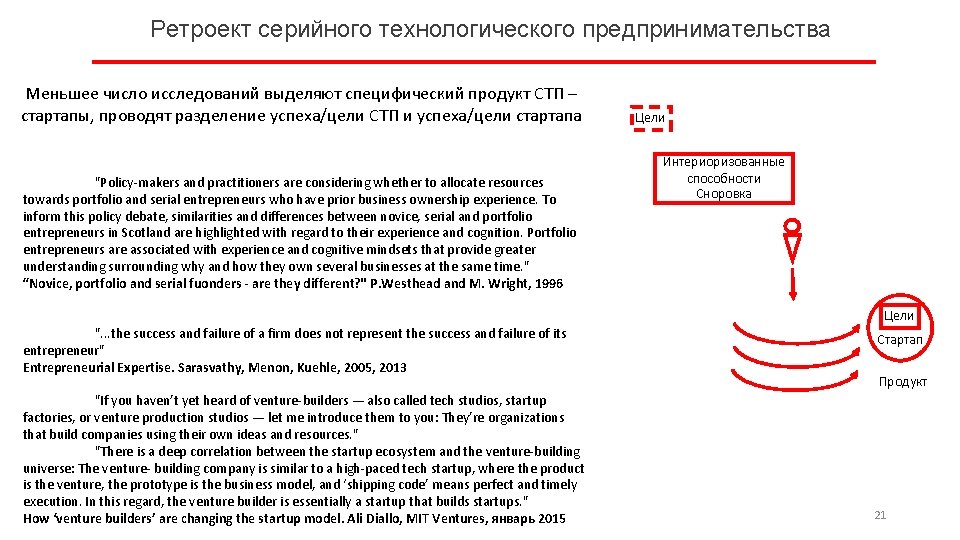
Ретроект серийного технологического предпринимательства Меньшее число исследований выделяют специфический продукт СТП – стартапы, проводят разделение успеха/цели СТП и успеха/цели стартапа "Policy-makers and practitioners are considering whether to allocate resources towards portfolio and serial entrepreneurs who have prior business ownership experience. To inform this policy debate, similarities and differences between novice, serial and portfolio entrepreneurs in Scotland are highlighted with regard to their experience and cognition. Portfolio entrepreneurs are associated with experience and cognitive mindsets that provide greater understanding surrounding why and how they own several businesses at the same time. " “Novice, portfolio and serial fuonders - are they different? " P. Westhead and M. Wright, 1996 Цели Интериоризованные способности Сноровка Цели ". . . the success and failure of a firm does not represent the success and failure of its entrepreneur" Entrepreneurial Expertise. Sarasvathy, Menon, Kuehle, 2005, 2013 "If you haven’t yet heard of venture-builders — also called tech studios, startup factories, or venture production studios — let me introduce them to you: They’re organizations that build companies using their own ideas and resources. " "There is a deep correlation between the startup ecosystem and the venture-building universe: The venture- building company is similar to a high-paced tech startup, where the product is the venture, the prototype is the business model, and ‘shipping code’ means perfect and timely execution. In this regard, the venture builder is essentially a startup that builds startups. " How ‘venture builders’ are changing the startup model. Ali Diallo, MIT Ventures, январь 2015 Стартап Продукт 21
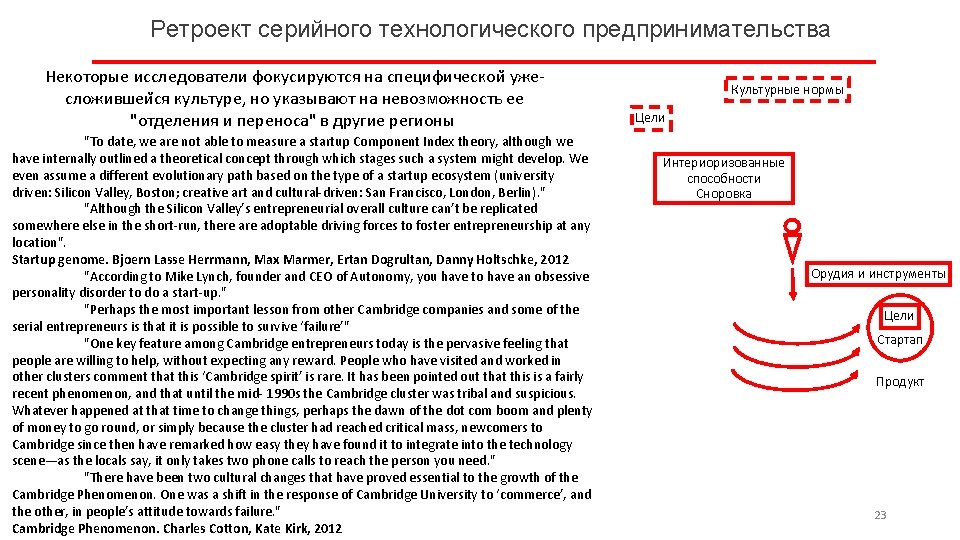
Ретроект серийного технологического предпринимательства Некоторые исследователи фокусируются на специфическои ужесложившеи ся культуре, но указывают на невозможность ее "отделения и переноса" в другие регионы "To date, we are not able to measure a startup Component Index theory, although we have internally outlined a theoretical concept through which stages such a system might develop. We even assume a different evolutionary path based on the type of a startup ecosystem (university driven: Silicon Valley, Boston; creative art and cultural-driven: San Francisco, London, Berlin). " "Although the Silicon Valley’s entrepreneurial overall culture can’t be replicated somewhere else in the short-run, there adoptable driving forces to foster entrepreneurship at any location". Startup genome. Bjoern Lasse Herrmann, Max Marmer, Ertan Dogrultan, Danny Holtschke, 2012 "According to Mike Lynch, founder and CEO of Autonomy, you have to have an obsessive personality disorder to do a start-up. " "Perhaps the most important lesson from other Cambridge companies and some of the serial entrepreneurs is that it is possible to survive ‘failure’" "One key feature among Cambridge entrepreneurs today is the pervasive feeling that people are willing to help, without expecting any reward. People who have visited and worked in other clusters comment that this ‘Cambridge spirit’ is rare. It has been pointed out that this is a fairly recent phenomenon, and that until the mid- 1990 s the Cambridge cluster was tribal and suspicious. Whatever happened at that time to change things, perhaps the dawn of the dot com boom and plenty of money to go round, or simply because the cluster had reached critical mass, newcomers to Cambridge since then have remarked how easy they have found it to integrate into the technology scene—as the locals say, it only takes two phone calls to reach the person you need. " "There have been two cultural changes that have proved essential to the growth of the Cambridge Phenomenon. One was a shift in the response of Cambridge University to ‘commerce’, and the other, in people’s attitude towards failure. " Cambridge Phenomenon. Charles Cotton, Kate Kirk, 2012 Культурные нормы Цели Интериоризованные способности Сноровка Орудия и инструменты Цели Стартап Продукт 23
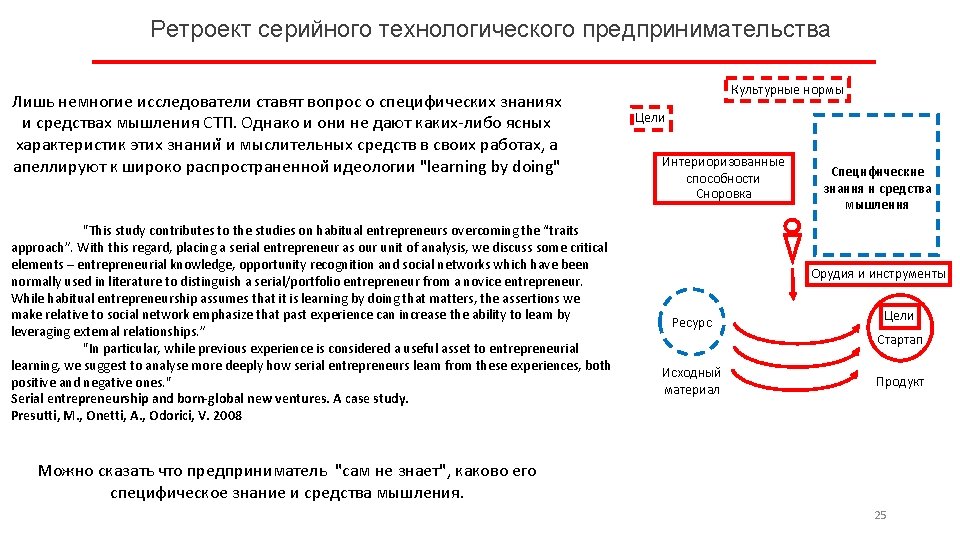
Ретроект серийного технологического предпринимательства Лишь немногие исследователи ставят вопрос о специфических знаниях и средствах мышления СТП. Однако и они не дают каких-либо ясных характеристик этих знании и мыслительных средств в своих работах, а апеллируют к широко распространеннои идеологии "learning by doing" "This study contributes to the studies on habitual entrepreneurs overcoming the “traits approach”. With this regard, placing a serial entrepreneur as our unit of analysis, we discuss some critical elements – entrepreneurial knowledge, opportunity recognition and social networks which have been normally used in literature to distinguish a serial/portfolio entrepreneur from a novice entrepreneur. While habitual entrepreneurship assumes that it is learning by doing that matters, the assertions we make relative to social network emphasize that past experience can increase the ability to learn by leveraging external relationships. ” "In particular, while previous experience is considered a useful asset to entrepreneurial learning, we suggest to analyse more deeply how serial entrepreneurs learn from these experiences, both positive and negative ones. " Serial entrepreneurship and born-global new ventures. A case study. Presutti, M. , Onetti, A. , Odorici, V. 2008 Культурные нормы Цели Интериоризованные способности Сноровка Специфические знания и средства мышления Орудия и инструменты Ресурс Цели Стартап Исходный материал Продукт Можно сказать что предприниматель "сам не знает", каково его специфическое знание и средства мышления. 25
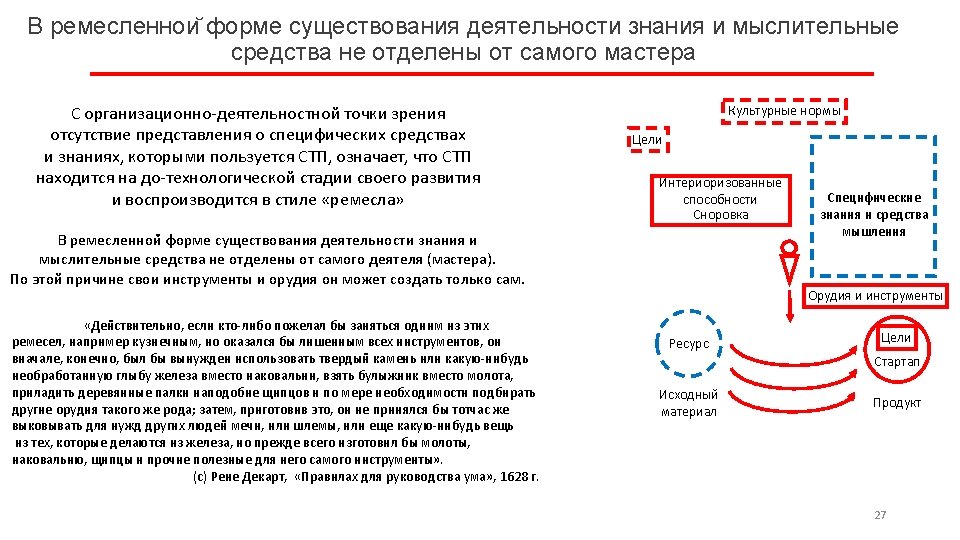
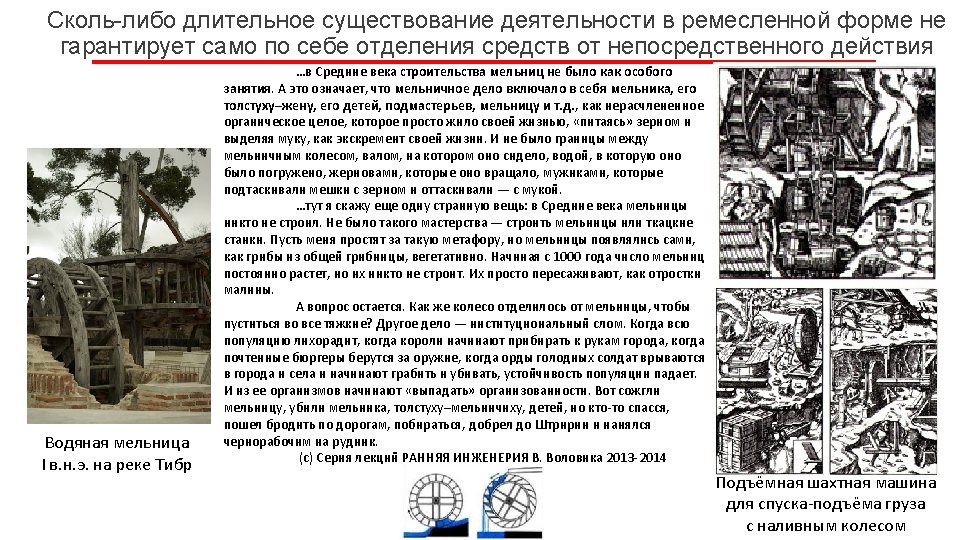
33
34
35
36
37
- Slides: 39