
5 5 Parallel Perpendicular Lines Essential Question How
- Slides: 15
5. 5 Parallel & Perpendicular Lines Essential Question: How do you determine whether lines are parallel or perpendicular?
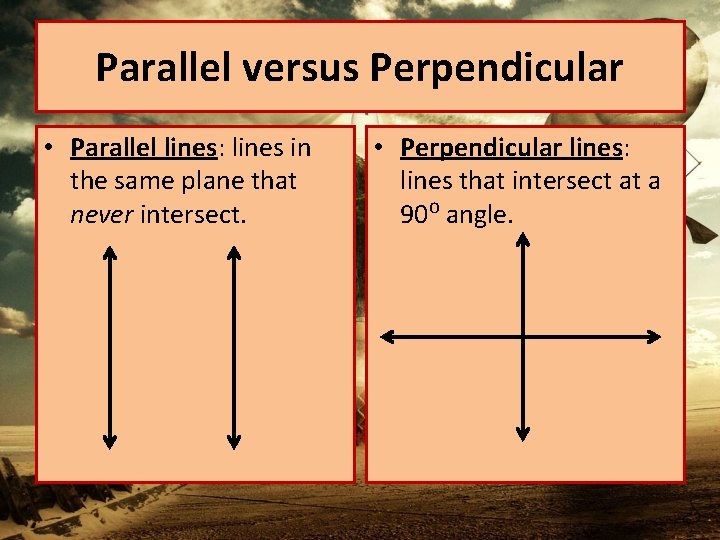
Parallel versus Perpendicular • Parallel lines: lines in the same plane that never intersect. • Perpendicular lines: lines that intersect at a 90⁰ angle.
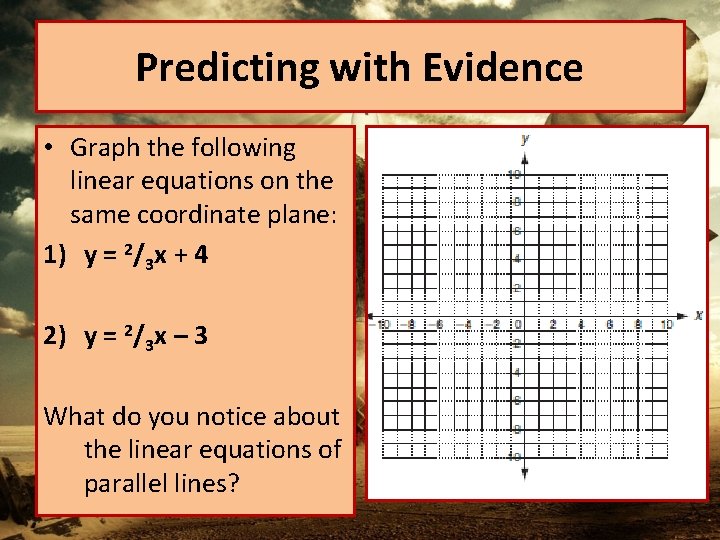
Predicting with Evidence • Graph the following linear equations on the same coordinate plane: 1) y = 2/3 x + 4 2) y = 2/3 x – 3 What do you notice about the linear equations of parallel lines?
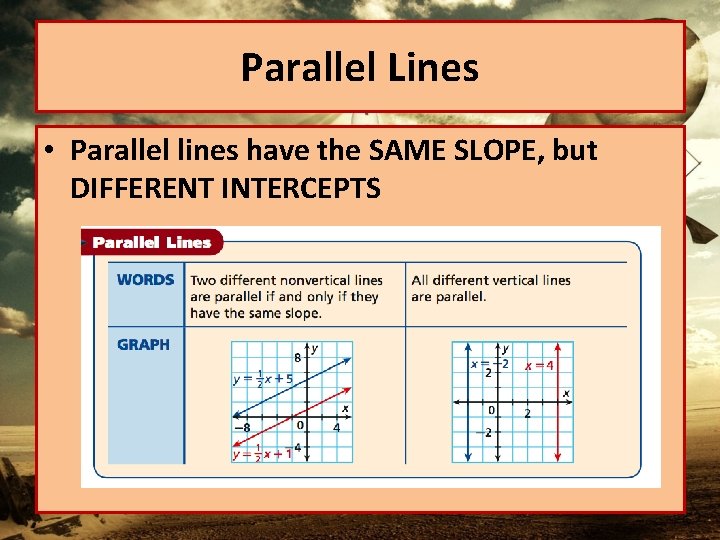
Parallel Lines • Parallel lines have the SAME SLOPE, but DIFFERENT INTERCEPTS
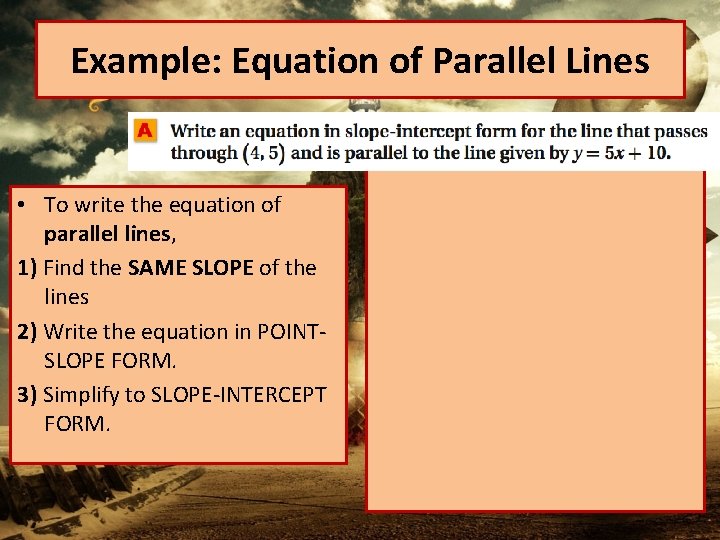
Example: Equation of Parallel Lines • To write the equation of parallel lines, 1) Find the SAME SLOPE of the lines 2) Write the equation in POINTSLOPE FORM. 3) Simplify to SLOPE-INTERCEPT FORM.
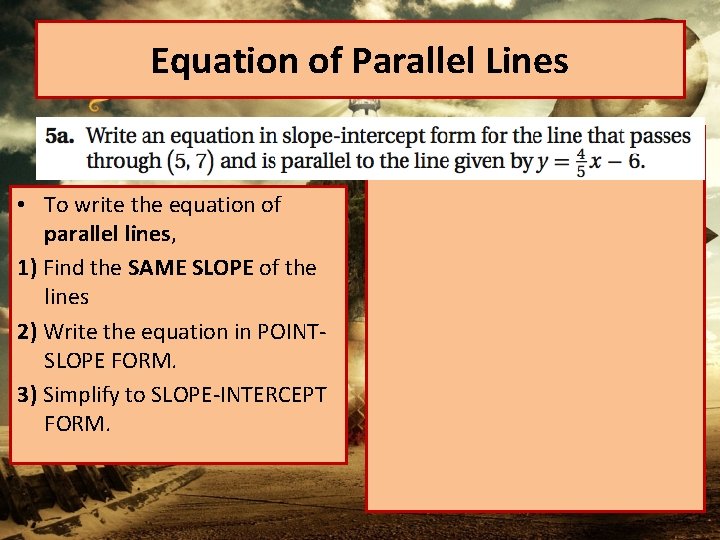
Equation of Parallel Lines • To write the equation of parallel lines, 1) Find the SAME SLOPE of the lines 2) Write the equation in POINTSLOPE FORM. 3) Simplify to SLOPE-INTERCEPT FORM.
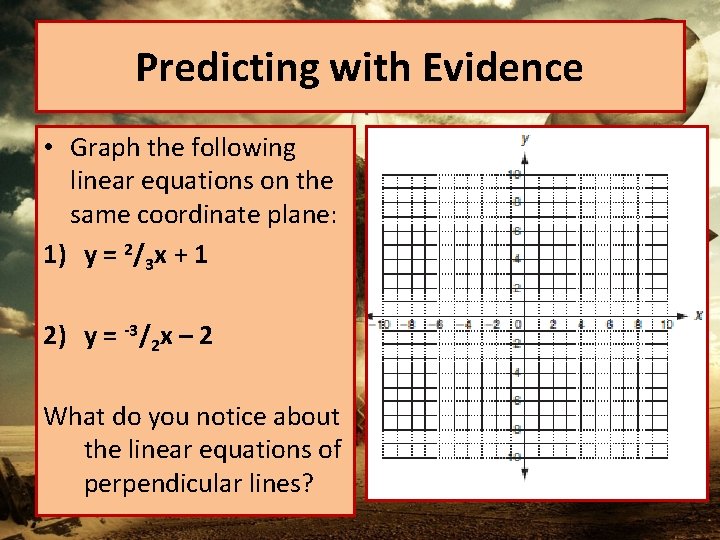
Predicting with Evidence • Graph the following linear equations on the same coordinate plane: 1) y = 2/3 x + 1 2) y = -3/2 x – 2 What do you notice about the linear equations of perpendicular lines?
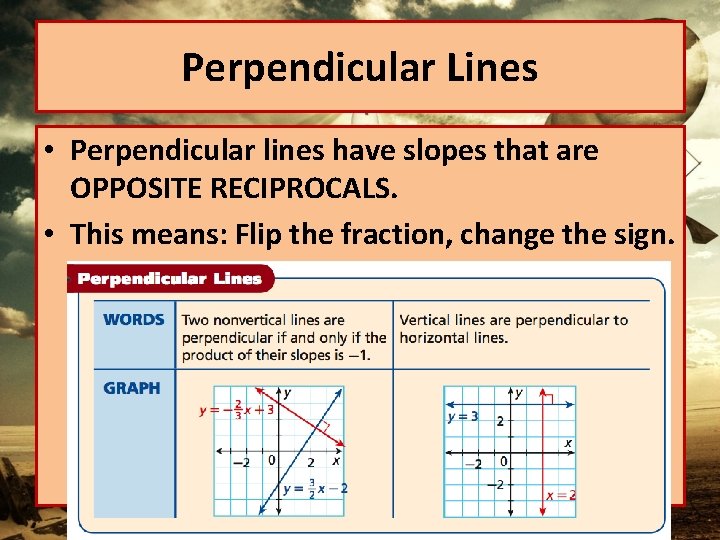
Perpendicular Lines • Perpendicular lines have slopes that are OPPOSITE RECIPROCALS. • This means: Flip the fraction, change the sign.
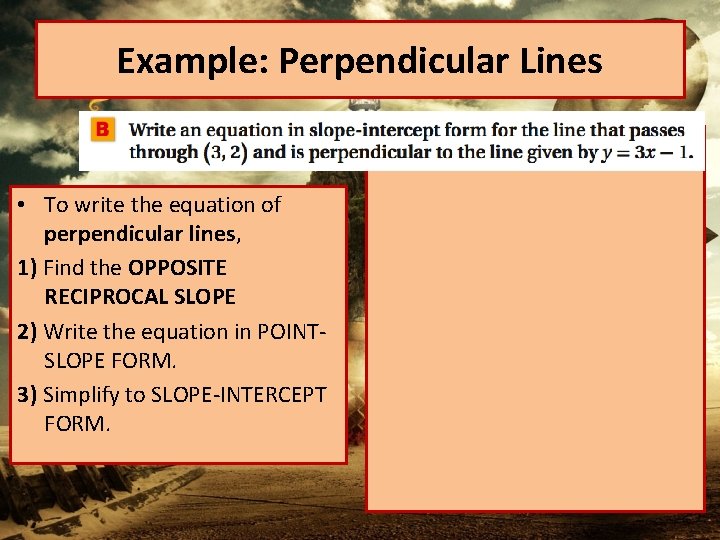
Example: Perpendicular Lines • To write the equation of perpendicular lines, 1) Find the OPPOSITE RECIPROCAL SLOPE 2) Write the equation in POINTSLOPE FORM. 3) Simplify to SLOPE-INTERCEPT FORM.
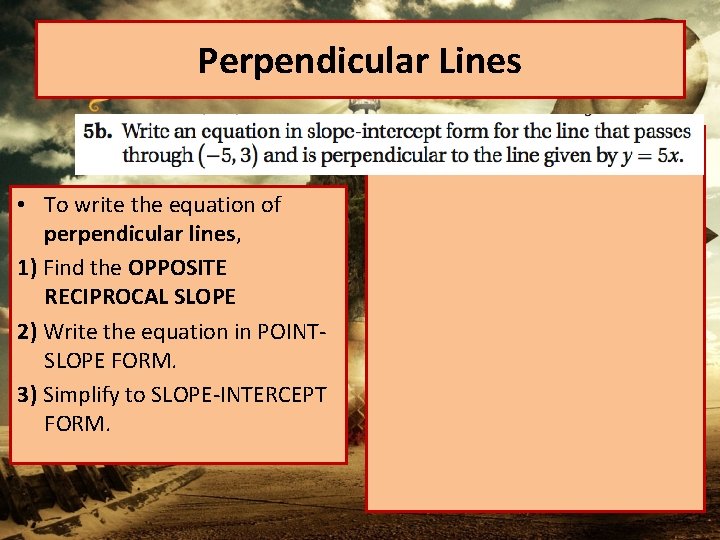
Perpendicular Lines • To write the equation of perpendicular lines, 1) Find the OPPOSITE RECIPROCAL SLOPE 2) Write the equation in POINTSLOPE FORM. 3) Simplify to SLOPE-INTERCEPT FORM.
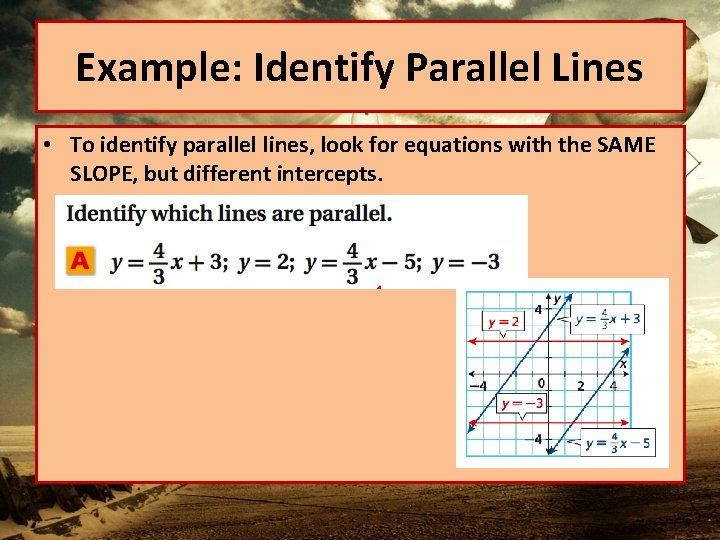
Example: Identify Parallel Lines • To identify parallel lines, look for equations with the SAME SLOPE, but different intercepts.
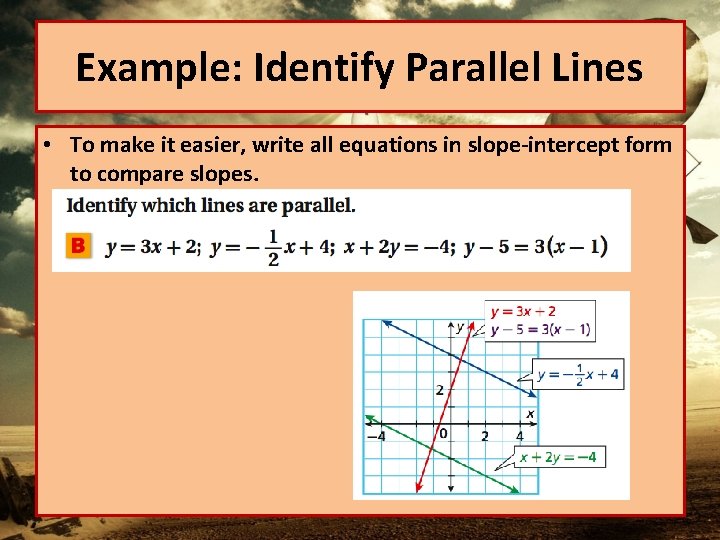
Example: Identify Parallel Lines • To make it easier, write all equations in slope-intercept form to compare slopes.
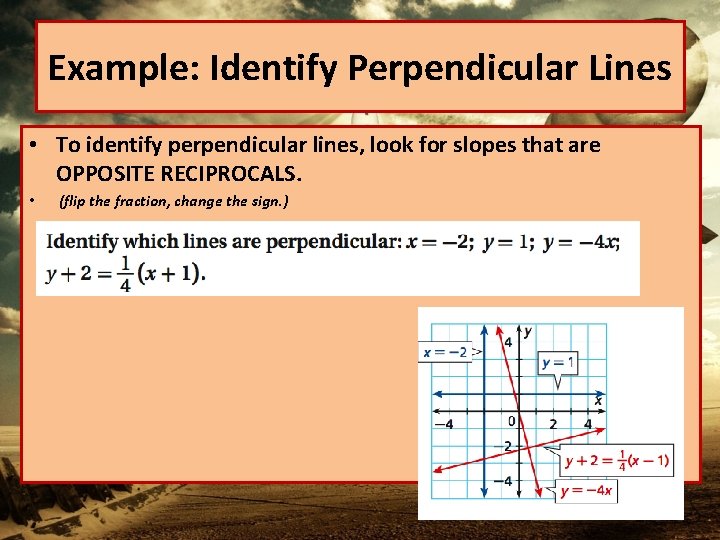
Example: Identify Perpendicular Lines • To identify perpendicular lines, look for slopes that are OPPOSITE RECIPROCALS. • (flip the fraction, change the sign. )
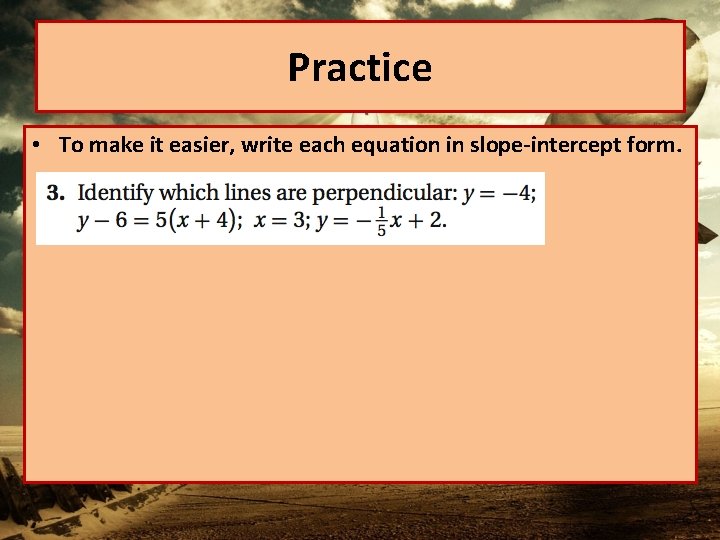
Practice • To make it easier, write each equation in slope-intercept form.
Summary • Answer the essential question in detailed, complete sentences. • How do you determine whether lines are parallel or perpendicular? • Write 2 -4 study questions in the left column to correspond with the notes.