
5 4 Muscle Tissues General Characteristics Generate force
- Slides: 13
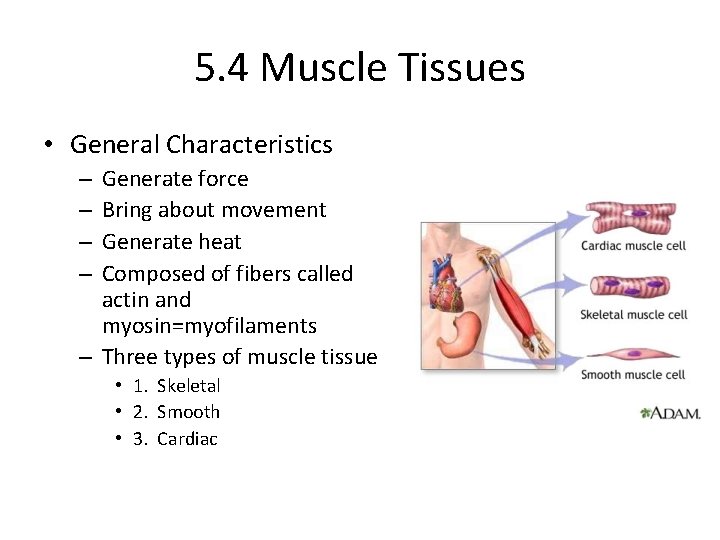
5. 4 Muscle Tissues • General Characteristics Generate force Bring about movement Generate heat Composed of fibers called actin and myosin=myofilaments – Three types of muscle tissue – – • 1. Skeletal • 2. Smooth • 3. Cardiac
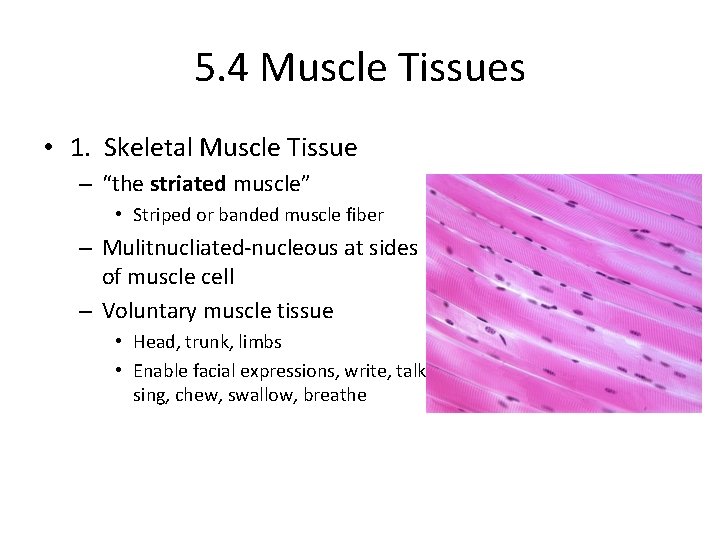
5. 4 Muscle Tissues • 1. Skeletal Muscle Tissue – “the striated muscle” • Striped or banded muscle fiber – Mulitnucliated-nucleous at sides of muscle cell – Voluntary muscle tissue • Head, trunk, limbs • Enable facial expressions, write, talk, sing, chew, swallow, breathe
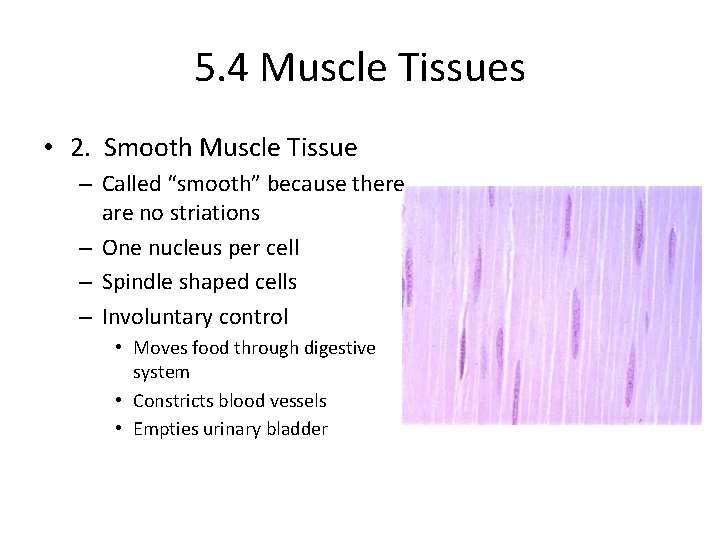
5. 4 Muscle Tissues • 2. Smooth Muscle Tissue – Called “smooth” because there are no striations – One nucleus per cell – Spindle shaped cells – Involuntary control • Moves food through digestive system • Constricts blood vessels • Empties urinary bladder
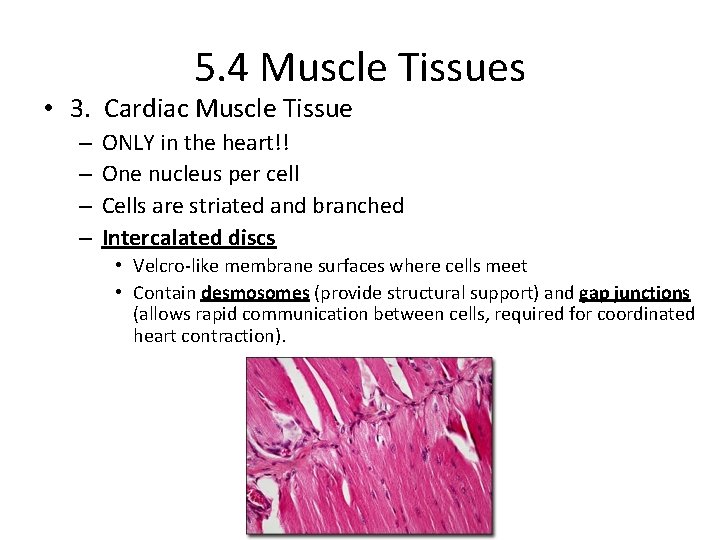
5. 4 Muscle Tissues • 3. Cardiac Muscle Tissue – – ONLY in the heart!! One nucleus per cell Cells are striated and branched Intercalated discs • Velcro-like membrane surfaces where cells meet • Contain desmosomes (provide structural support) and gap junctions (allows rapid communication between cells, required for coordinated heart contraction).
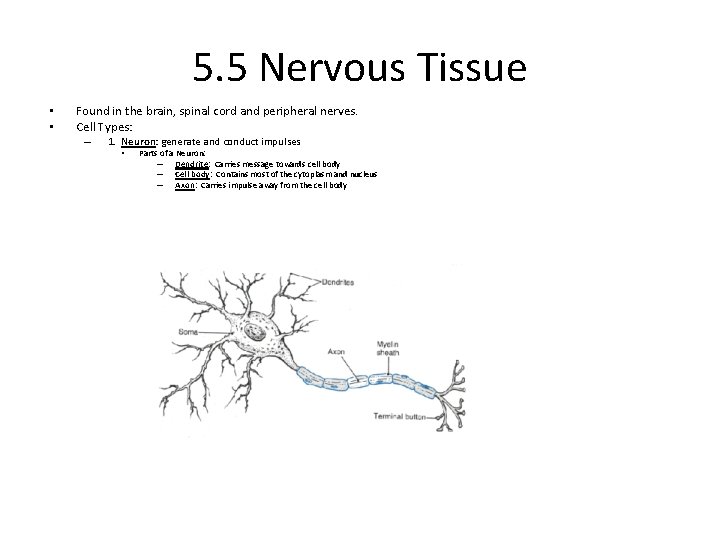
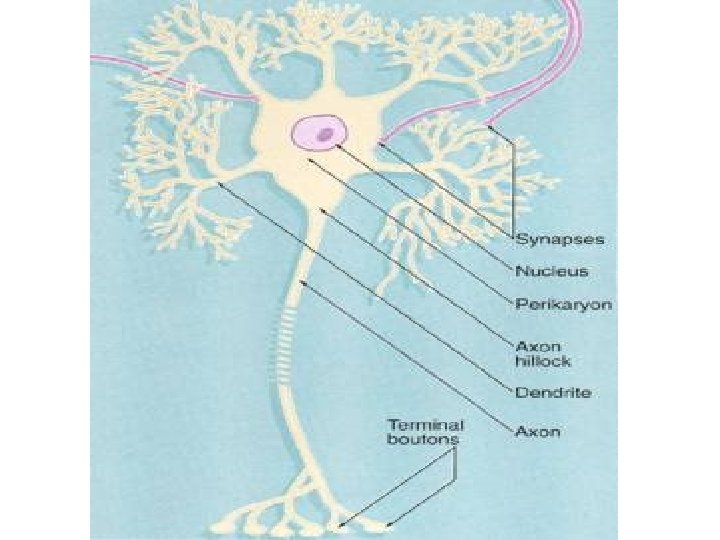
5. 5 Nervous Tissue • • Found in the brain, spinal cord and peripheral nerves. Cell Types: – 1. Neuron: generate and conduct impulses • Parts of a Neuron: – Dendrite: Carries message towards cell body – Cell body: Contains most of the cytoplasm and nucleus – Axon: Carries impulse away from the cell body
5. 5 Nervous Tissue • Cell Types (continued) – 2. Neuroglial Cells: Support and protect neurons • Parts of Neuroglial Cells: – Shwann Cells: produce myelin sheath around the PNS. – Synapse: gap between neurons – Neurotransmitter: chemical released by neuron to communicate with neuron across the synapse *Myelin sheath=insulates nerve fibers for maximun rate of nerve impulse transmission
5. 6 Types of Membranes • Made up of groups of tissues • 1. Epithelial Membrane Tissues – Consist of epithelial tissue and underlying connective tissue – Three Types: • 1. Mucous Membranes • 2. Serous Membranes • 3. Cutaneous Membranes
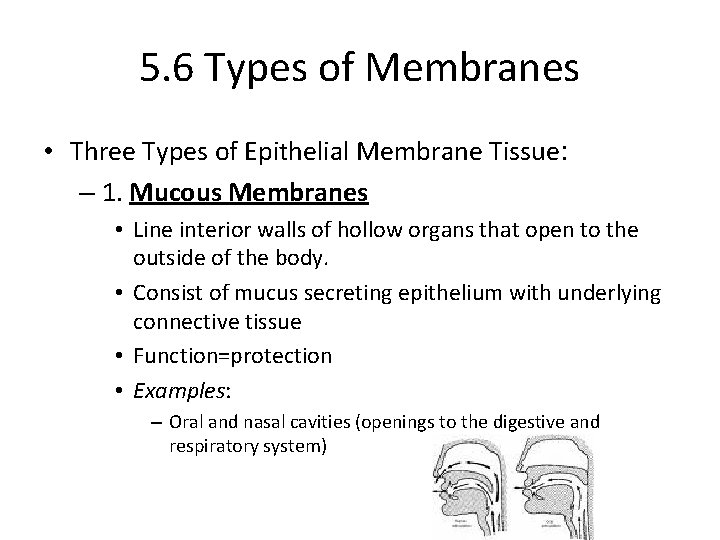
5. 6 Types of Membranes • Three Types of Epithelial Membrane Tissue: – 1. Mucous Membranes • Line interior walls of hollow organs that open to the outside of the body. • Consist of mucus secreting epithelium with underlying connective tissue • Function=protection • Examples: – Oral and nasal cavities (openings to the digestive and respiratory system)
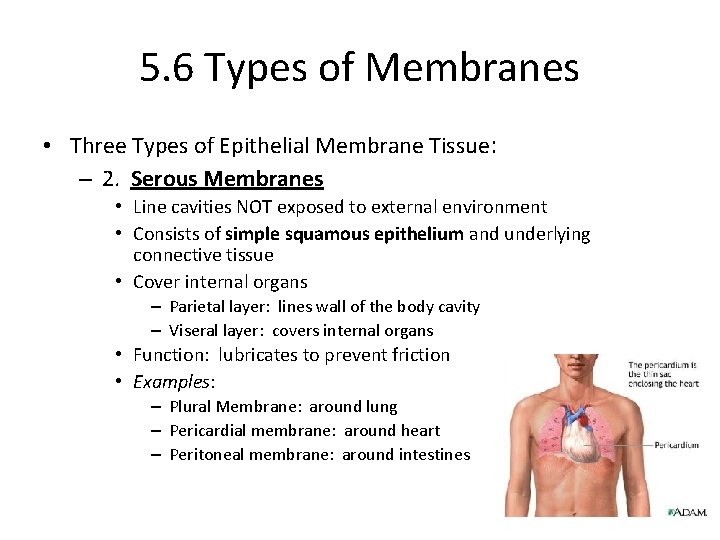
5. 6 Types of Membranes • Three Types of Epithelial Membrane Tissue: – 2. Serous Membranes • Line cavities NOT exposed to external environment • Consists of simple squamous epithelium and underlying connective tissue • Cover internal organs – Parietal layer: lines wall of the body cavity – Viseral layer: covers internal organs • Function: lubricates to prevent friction • Examples: – Plural Membrane: around lung – Pericardial membrane: around heart – Peritoneal membrane: around intestines
5. 6 Types of Membranes • Three Types of Epithelial Membrane Tissue: – 3. Cutaneous Membranes • SKIN • Consist of stratified squamous epithelium and underlying connective tissue
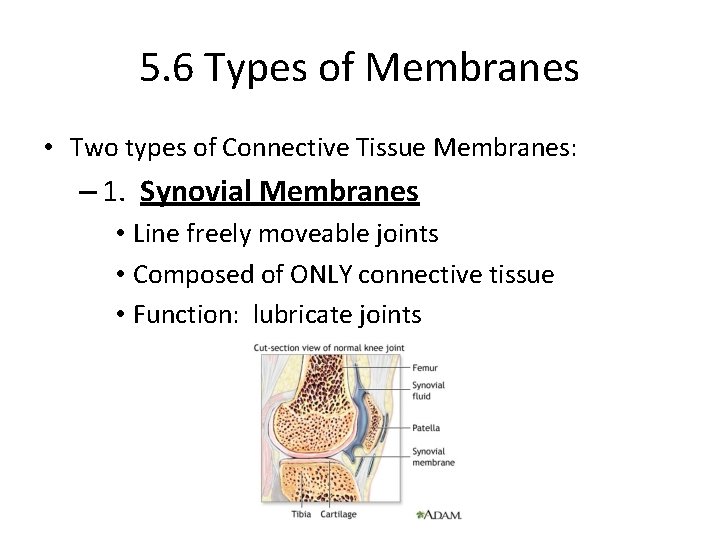
5. 6 Types of Membranes • Two types of Connective Tissue Membranes: – 1. Synovial Membranes • Line freely moveable joints • Composed of ONLY connective tissue • Function: lubricate joints
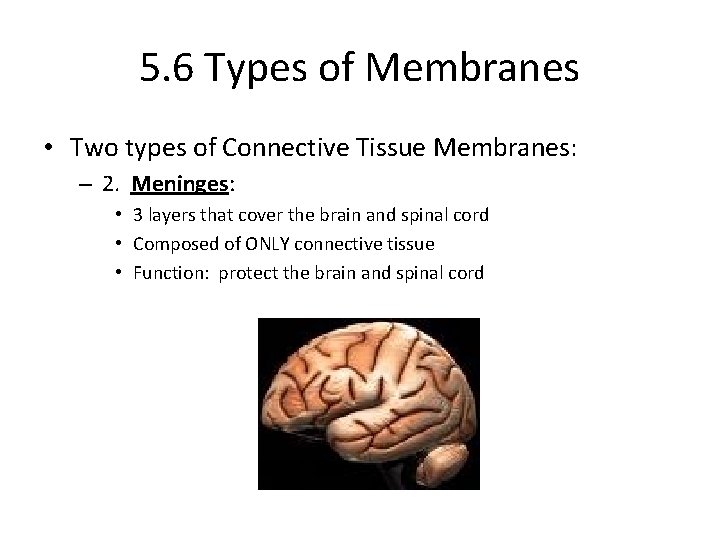
5. 6 Types of Membranes • Two types of Connective Tissue Membranes: – 2. Meninges: • 3 layers that cover the brain and spinal cord • Composed of ONLY connective tissue • Function: protect the brain and spinal cord