
5 3 Electric Potential Work is done in



















- Slides: 36
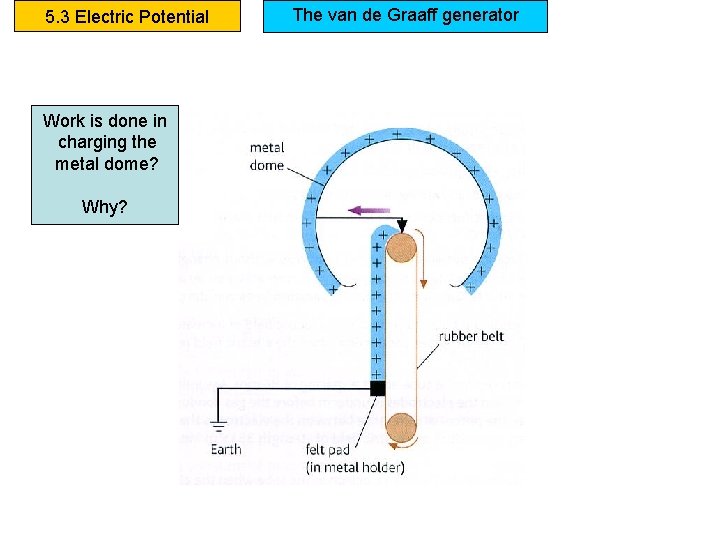
5. 3 Electric Potential Work is done in charging the metal dome? Why? The van de Graaff generator
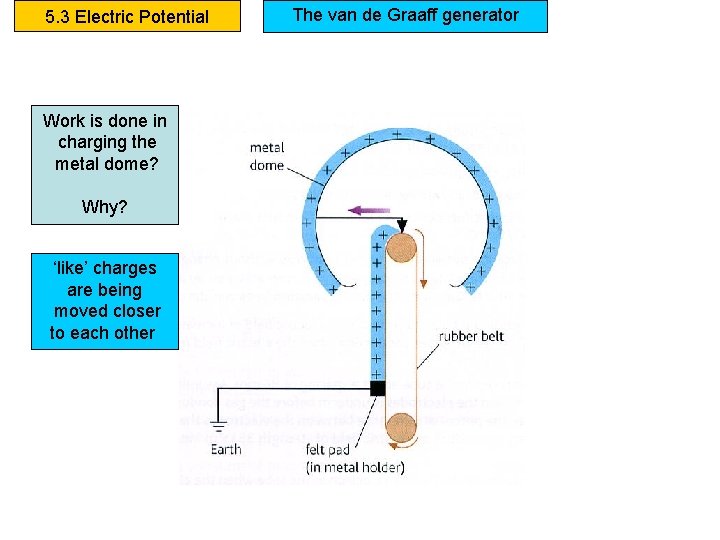
5. 3 Electric Potential Work is done in charging the metal dome? Why? ‘like’ charges are being moved closer to each other The van de Graaff generator
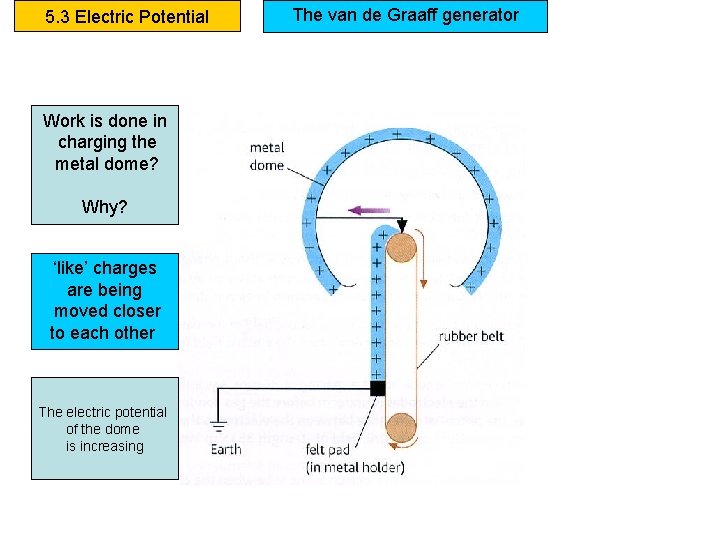
5. 3 Electric Potential Work is done in charging the metal dome? Why? ‘like’ charges are being moved closer to each other The electric potential of the dome is increasing The van de Graaff generator
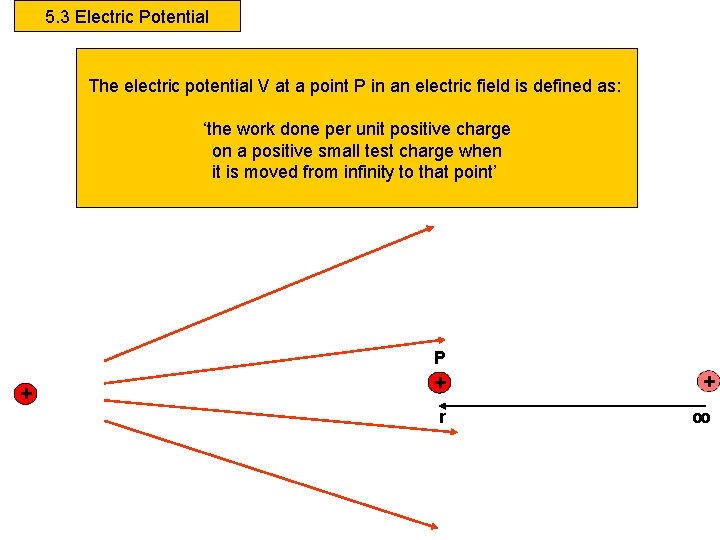
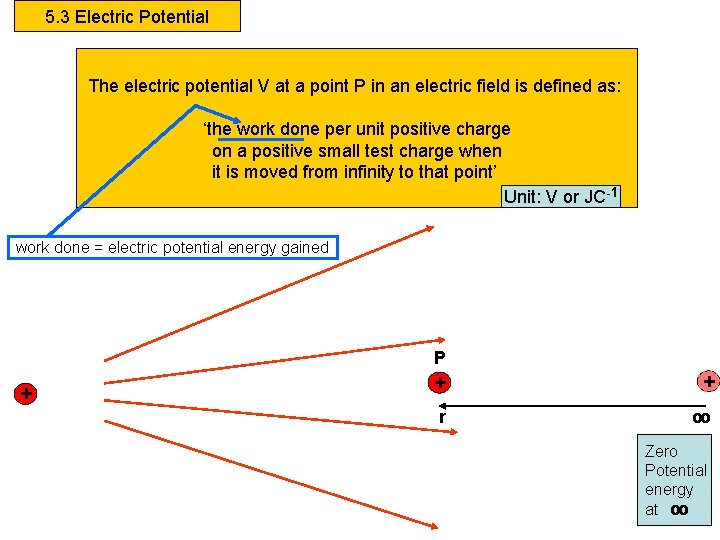
5. 3 Electric Potential The electric potential V at a point P in an electric field is defined as: ‘the work done per unit positive charge on a positive small test charge when it is moved from infinity to that point’ P + + + r oo
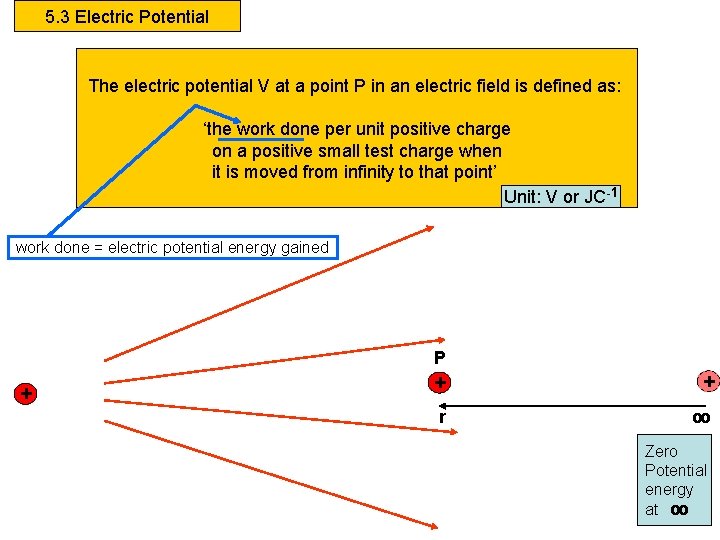
5. 3 Electric Potential The electric potential V at a point P in an electric field is defined as: ‘the work done per unit positive charge on a positive small test charge when it is moved from infinity to that point’ Unit: V or JC-1 work done = electric potential energy gained P + + + r oo Zero Potential energy at oo
5. 3 Electric Potential The electric potential V at a point P in an electric field is defined as: ‘the work done per unit positive charge on a positive small test charge when it is moved from infinity to that point’ Unit: V or JC-1 work done = electric potential energy gained P + + + r oo Zero Potential energy at oo
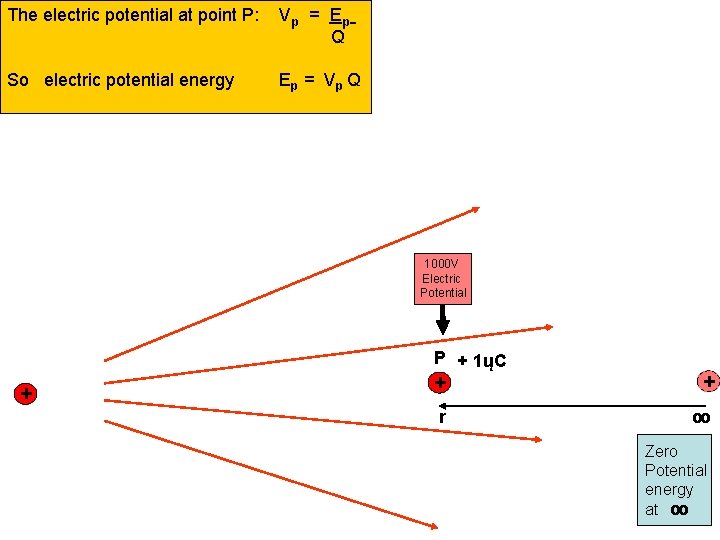
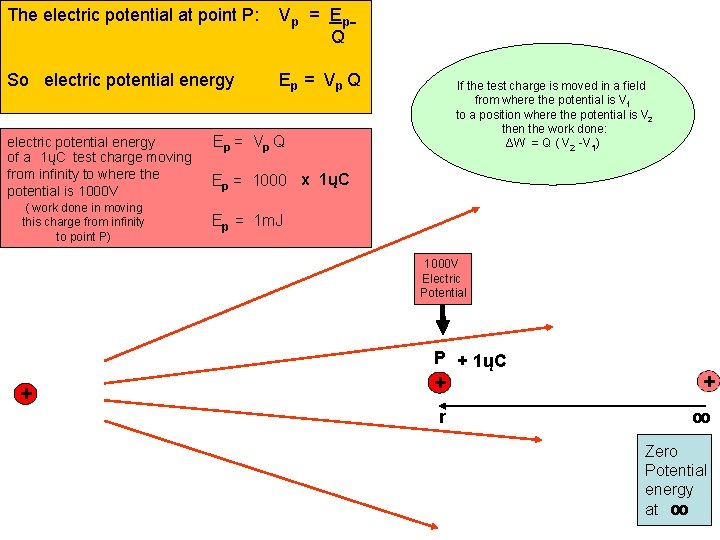
The electric potential at point P: Vp = Ep Q So electric potential energy Ep = Vp Q 1000 V Electric Potential P + 1ųC + + + r oo Zero Potential energy at oo
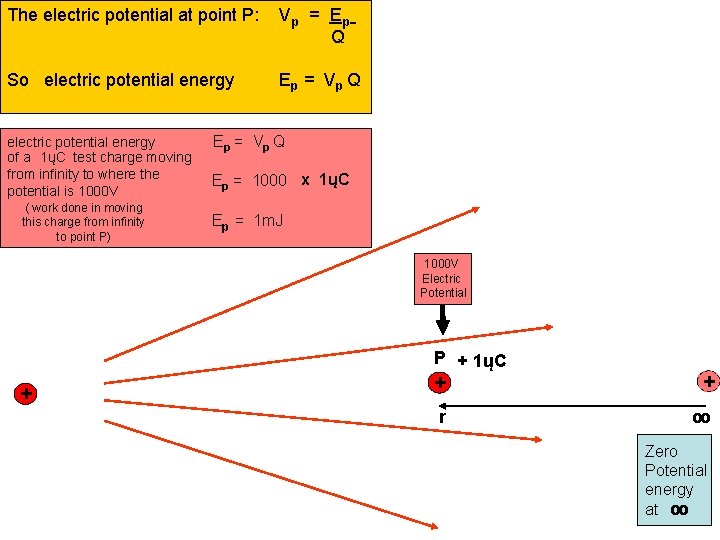
The electric potential at point P: Vp = Ep Q So electric potential energy Ep = Vp Q electric potential energy of a 1ųC test charge moving from infinity to where the potential is 1000 V ( work done in moving this charge from infinity to point P) Ep = Vp Q Ep = 1000 x 1ųC Ep = 1 m. J 1000 V Electric Potential P + 1ųC + + + r oo Zero Potential energy at oo
The electric potential at point P: Vp = Ep Q So electric potential energy Ep = Vp Q electric potential energy of a 1ųC test charge moving from infinity to where the potential is 1000 V ( work done in moving this charge from infinity to point P) If the test charge is moved in a field from where the potential is V 1 to a position where the potential is V 2 then the work done: ΔW = Q ( V 2 -V 1) Ep = Vp Q Ep = 1000 x 1ųC Ep = 1 m. J 1000 V Electric Potential P + 1ųC + + + r oo Zero Potential energy at oo
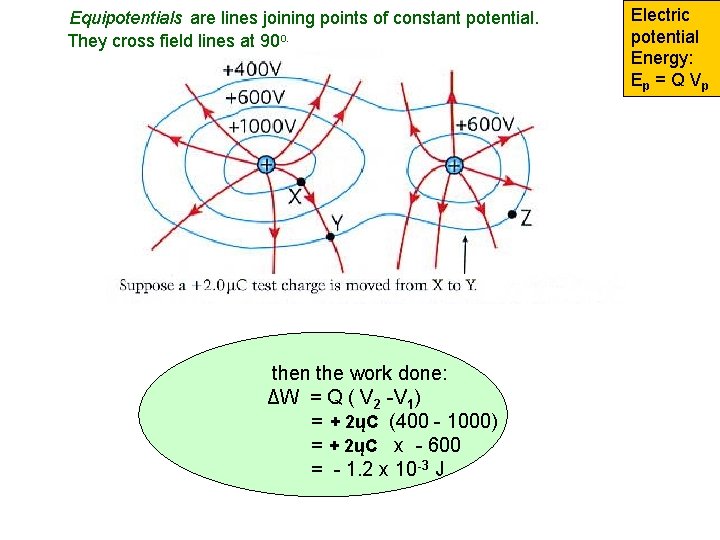
Equipotentials: are lines joining points of constant potential. They cross field lines at 90 o. then the work done: ΔW = Q ( V 2 -V 1) = + 2ųC (400 - 1000) = + 2ųC x - 600 = - 1. 2 x 10 -3 J Electric potential Energy: Ep = Q Vp
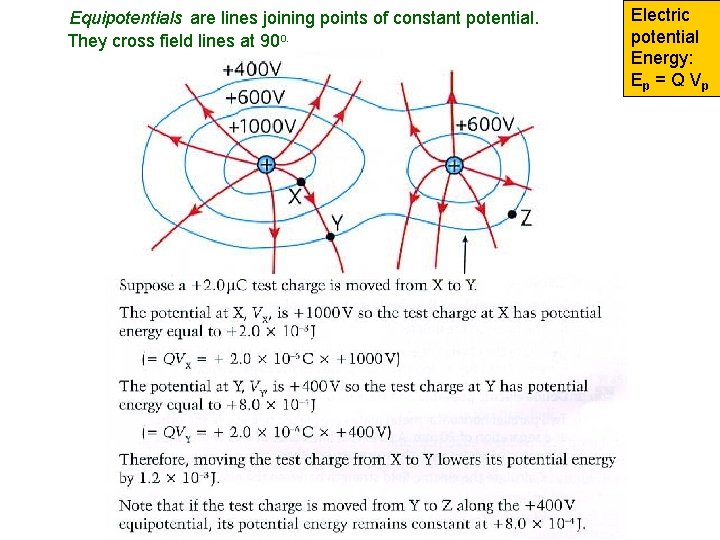
Equipotentials: are lines joining points of constant potential. They cross field lines at 90 o. Electric potential Energy: Ep = Q Vp
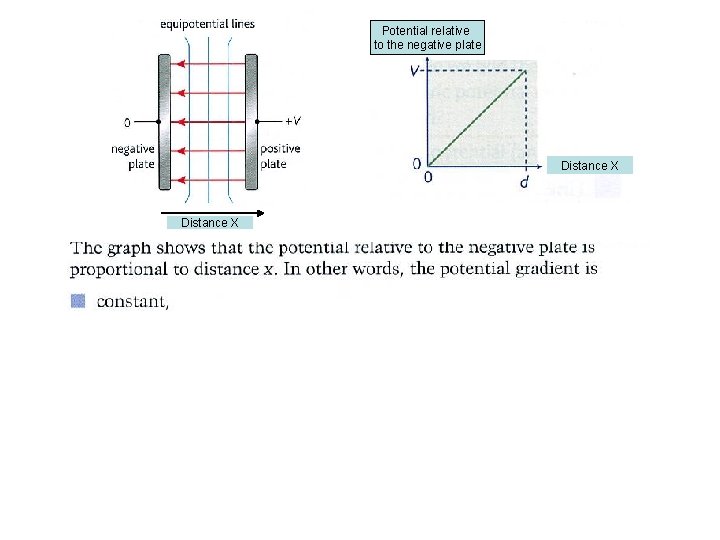
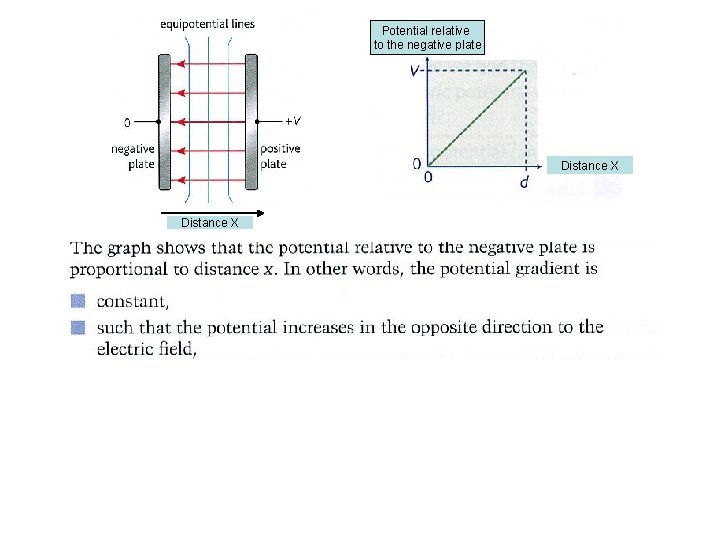
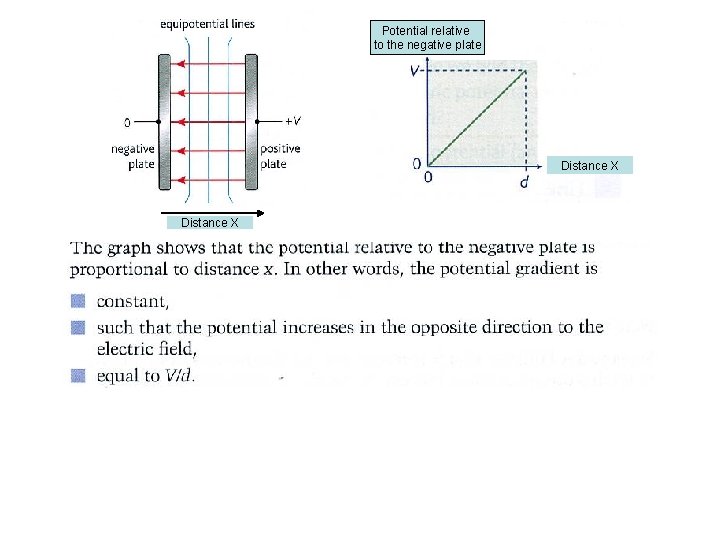
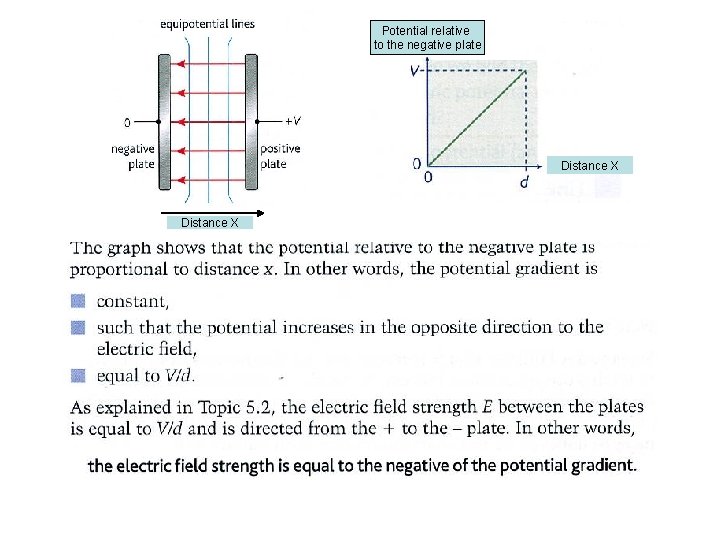
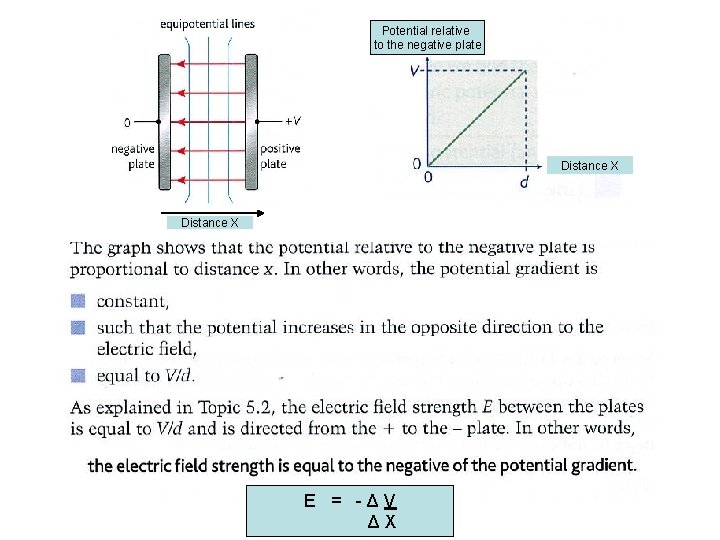
Potential relative to the negative plate Distance X E = -ΔV ΔX
Potential relative to the negative plate Distance X E = -ΔV ΔX
Potential relative to the negative plate Distance X E = -ΔV ΔX
Potential relative to the negative plate Distance X E = -ΔV ΔX
Potential relative to the negative plate Distance X E = -ΔV ΔX