
5 2 Minutes of Meeting PREPARED BY JUDELOU
5. 2 Minutes of Meeting PREPARED BY: JUDELOU C. MANCOLINTAS
What is Minutes of Meeting? • Minutes of meeting/meeting minutes are detailed notes that serve as an official written record of a meeting or conference.
Who is usually the person who takes the minutes of meeting? • The person in charge of the gathering usually asks one of the participants to tend this task. • Secretary ONE DAY, THAT SOMEONE COULD BE YOU!
Minutes of Meeting • Since meeting minutes are an official record of what transpired, accuracy is required. • You will have to take detailed notes that people must be able to refer to later if necessary.

Find out what to do BEFORE, DURING, and AFTER the meeting.

BEFORE THE MEETING • Choose your recording tool: The first thing you must do is decide how you will take your notes. Will you go old school and use a pen and paper or will you go tech and use a laptop computer, tablet, or smartphone? Check with your boss to see if he or she prefers you to use a particular method. It is unlikely but possible.
BEFORE THE MEETING • Make sure your tool of choice is in working order and have a backup just in case your original one fails. If you bring a laptop, for instance, have pen and paper handy as well. You don't want to have to stop the meeting while you search for something to write on if your computer crashes.
BEFORE THE MEETING • Read the meeting agenda before the meeting starts. It will allow you to formulate an outline for your minutes. Leave some space below each item on it and write your notes there. Doing this will make your job a little easier, as long as the person running the meeting sticks to the agenda.
DURING THE MEETING • Pass around an attendance sheet and make sure everyone signs in. You will need to include a list of all attendees in the official meeting minutes. • Make sure you know who everyone is. That way you will be able to identify who is speaking and correctly record that information.

DURING THE MEETING
DURING THE MEETING • Write down all motions, who made them, and the results of votes, if any; you don't need to write down who seconded a motion. Of course, the rules of your organization may differ so verify them first.
DURING THE MEETING • If votes on any motions or discussions are deferred until the next meeting, make a note of that. • Record the ending time of the meeting.
AFTER THE MEETING • Type up the minutes as soon as possible after the meeting while everything is still fresh in your mind. If you find an error in your notes or if you have a question, you can get it cleared up quickly by talking to other attendees.
AFTER THE MEETING • On the final copy of the minutes, Include the name of the organization, title of the committee, type of meeting (daily, weekly, monthly, annual, or special), and its purpose.
AFTER THE MEETING • Give the times it began and ended. • Provide the list of attendees and a note about who ran the meeting. You can also indicate here that you took the minutes. Include your name on the list of participants and, in parentheses after your name, say that you took the minutes. Alternatively, at the end of the document, you can sign off by writing "Respectively submitted by, " followed by your name.
AFTER THE MEETING • Proofread the minutes before you submit them. Ask someone else who attended to look them over as well. He or she will be able to let you know if you accidentally left something out. • Submit them to the person who ran the meeting unless instructed to do otherwise.

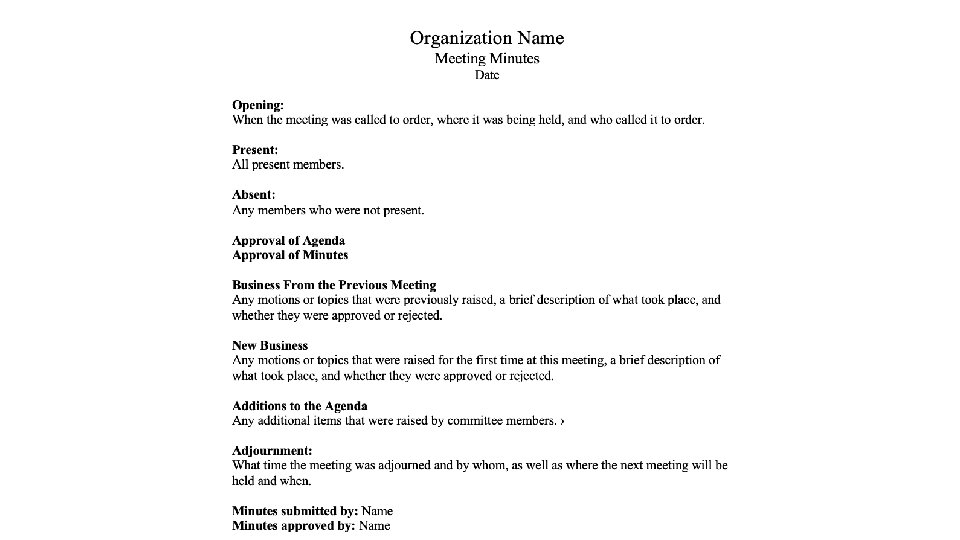
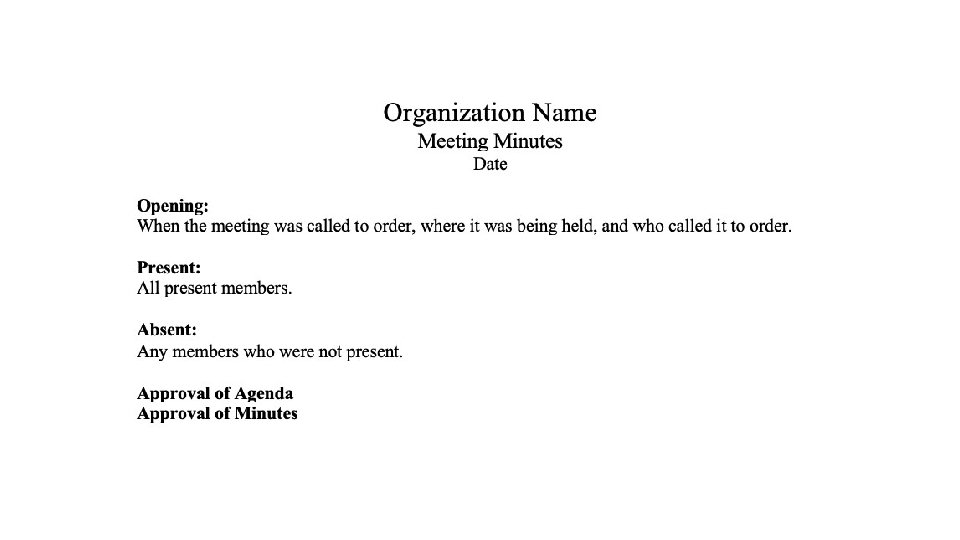
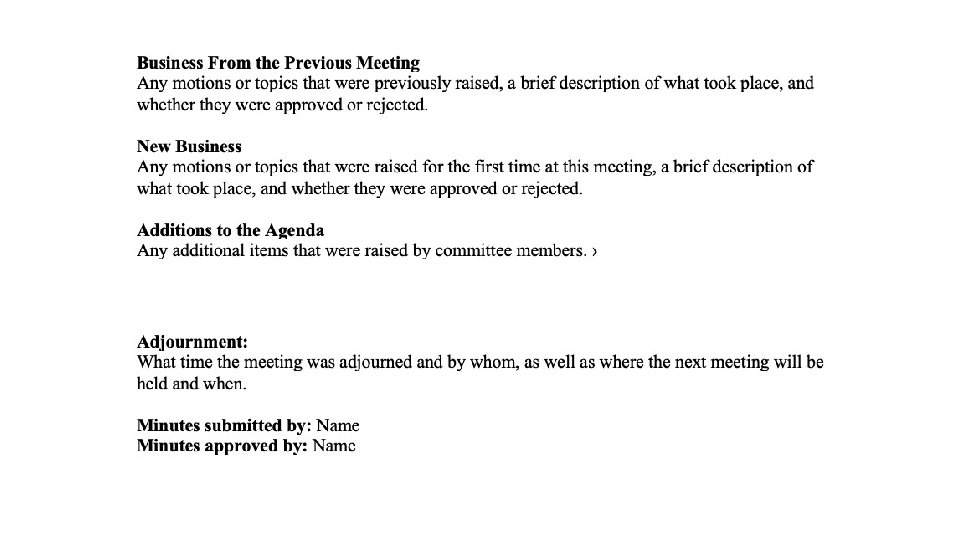
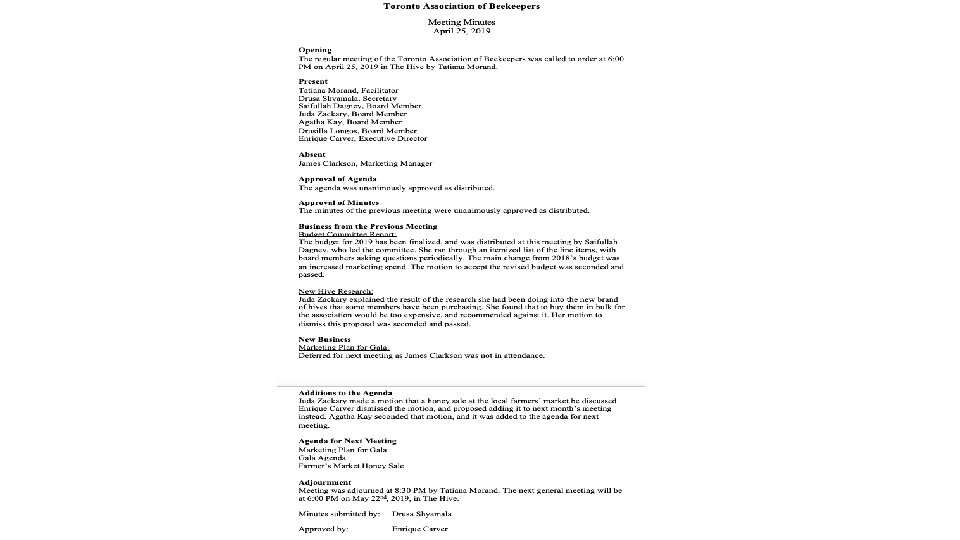
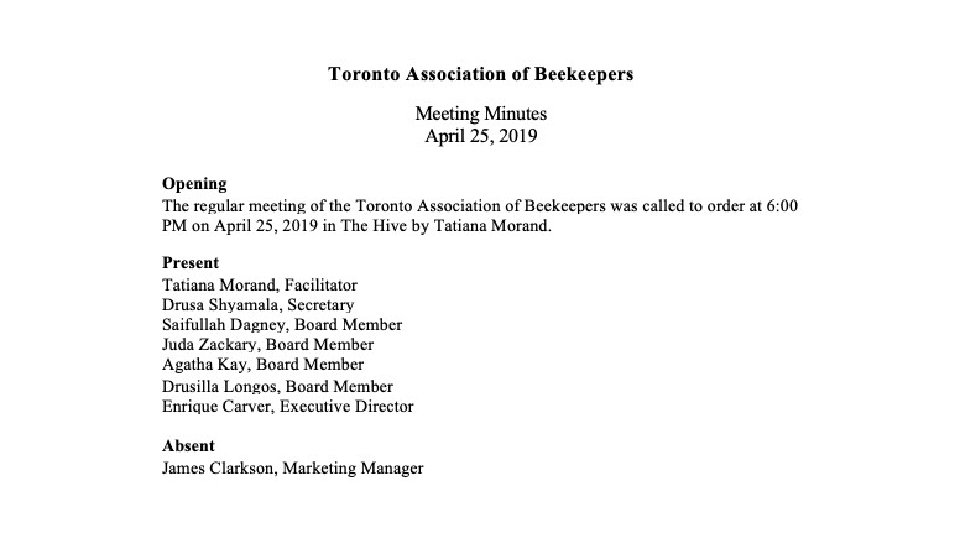
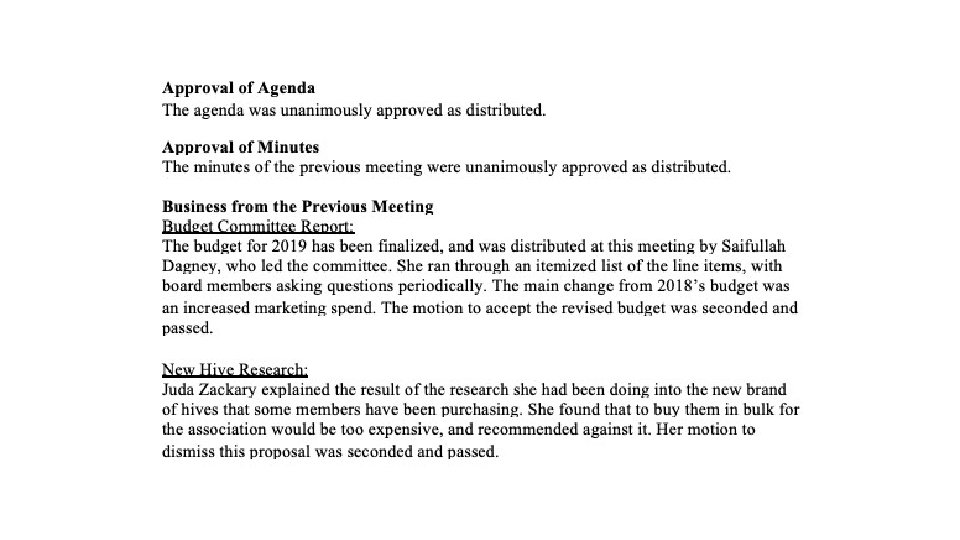
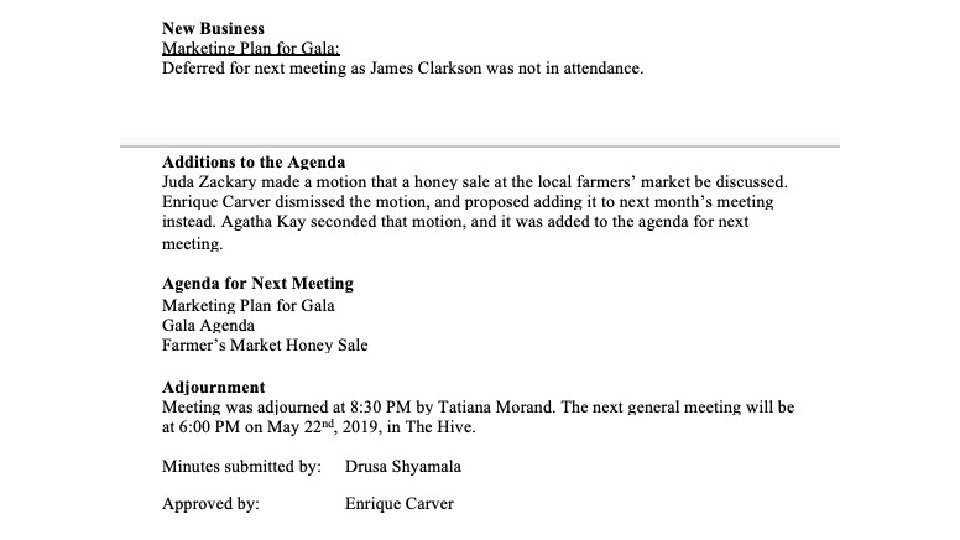
EXAMPLE FORMAT OF MINUTES OF MEETING
- Slides: 24