
5 1 Thermal Wind If the geostrophic wind
- Slides: 7
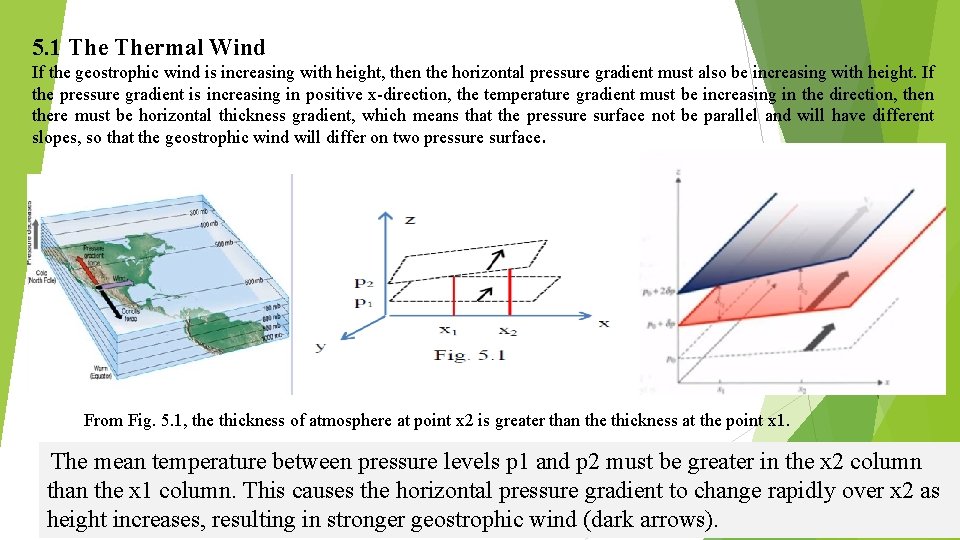
5. 1 Thermal Wind If the geostrophic wind is increasing with height, then the horizontal pressure gradient must also be increasing with height. If the pressure gradient is increasing in positive x-direction, the temperature gradient must be increasing in the direction, then there must be horizontal thickness gradient, which means that the pressure surface not be parallel and will have different slopes, so that the geostrophic wind will differ on two pressure surface. From Fig. 5. 1, the thickness of atmosphere at point x 2 is greater than the thickness at the point x 1. The mean temperature between pressure levels p 1 and p 2 must be greater in the x 2 column than the x 1 column. This causes the horizontal pressure gradient to change rapidly over x 2 as height increases, resulting in stronger geostrophic wind (dark arrows).
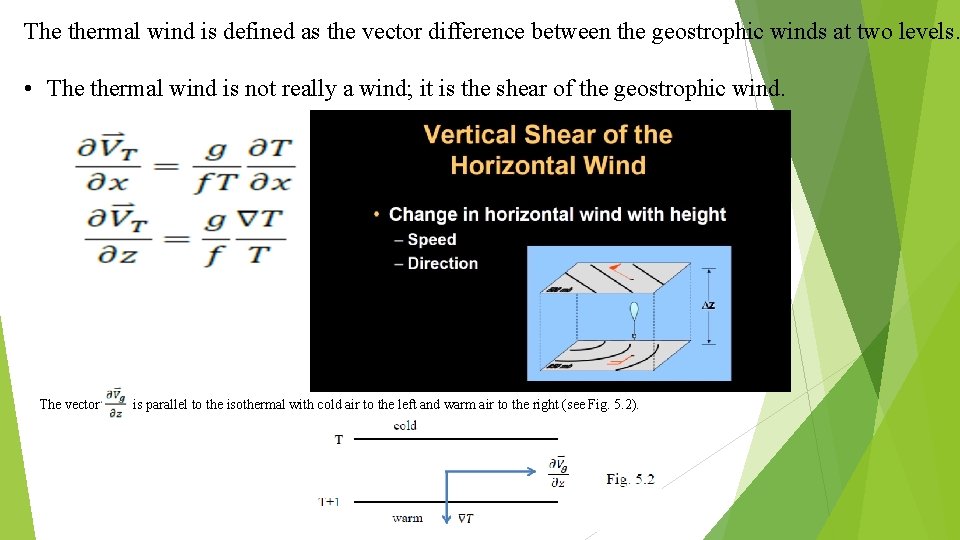
The thermal wind is defined as the vector difference between the geostrophic winds at two levels. • The thermal wind is not really a wind; it is the shear of the geostrophic wind. The vector is parallel to the isothermal with cold air to the left and warm air to the right (see Fig. 5. 2).
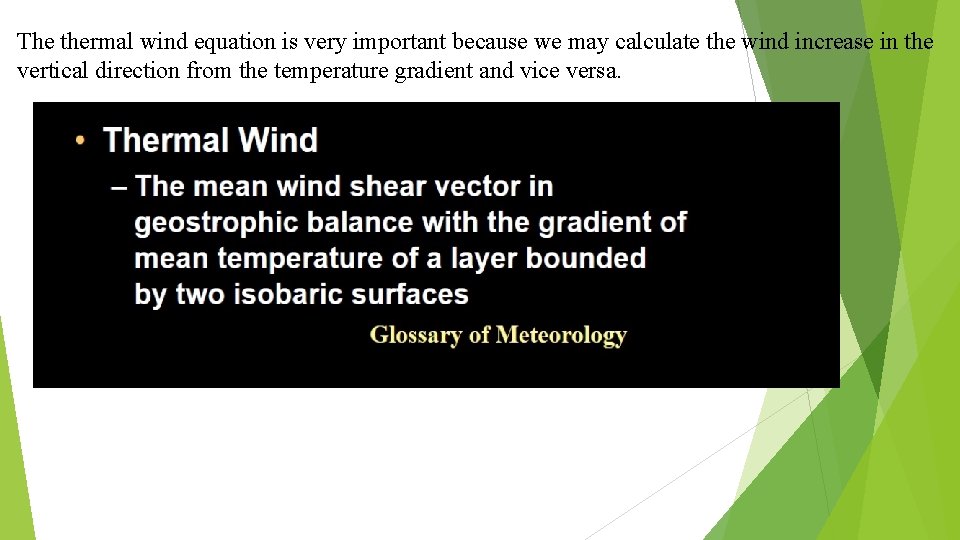
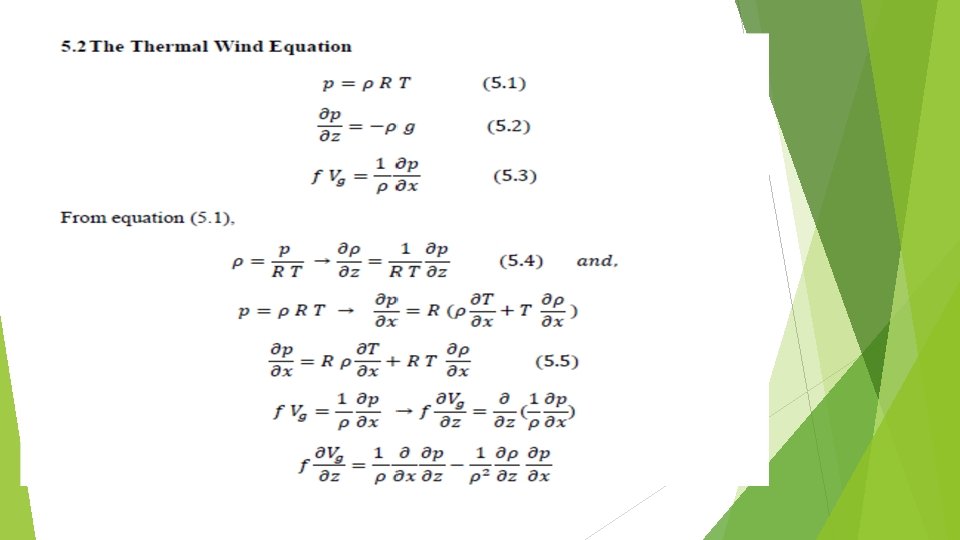
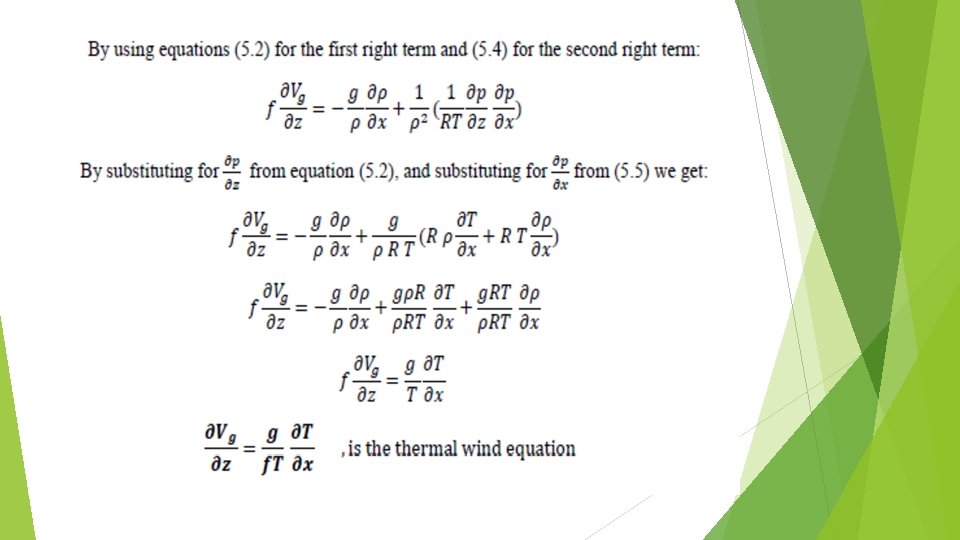
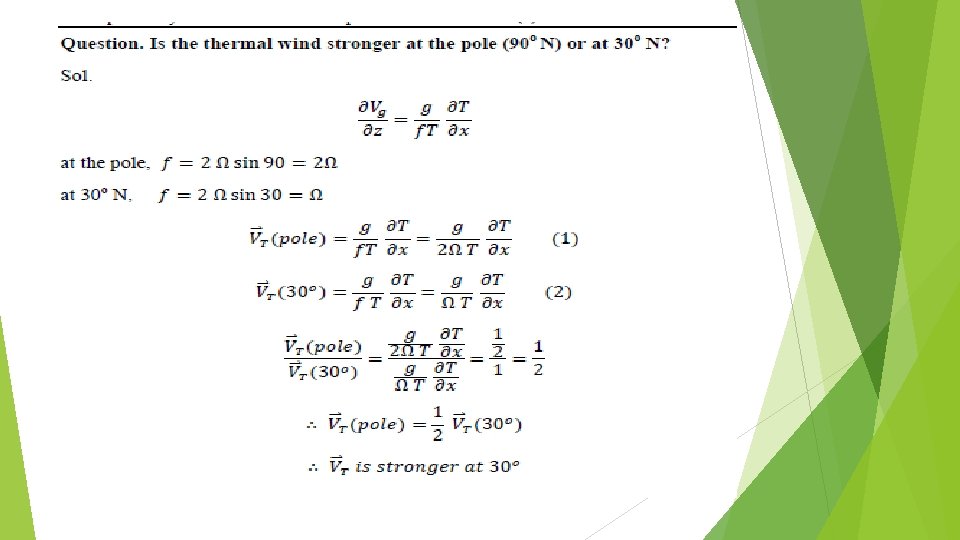
The thermal wind equation is very important because we may calculate the wind increase in the vertical direction from the temperature gradient and vice versa.