
5 1 Presidential Nominations Big Idea Civic Participation
5 -1: Presidential Nominations
Big Idea: Civic Participation in a Representative Democracy Enduring Understanding: The impact of federal policies on campaigning and electoral rules continues to be contested by both sides of the political spectrum. Learning Objective: Explain how the different processes work in a U. S. presidential election.
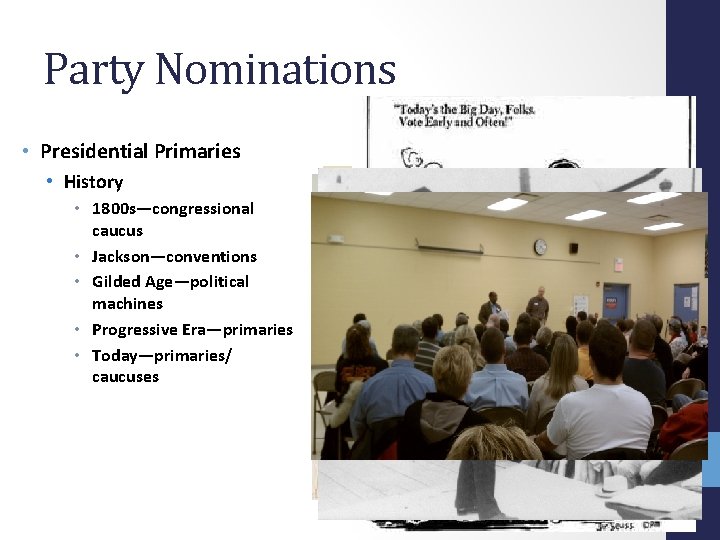
Party Nominations • Presidential Primaries • History • 1800 s—congressional caucus • Jackson—conventions • Gilded Age—political machines • Progressive Era—primaries • Today—primaries/ caucuses
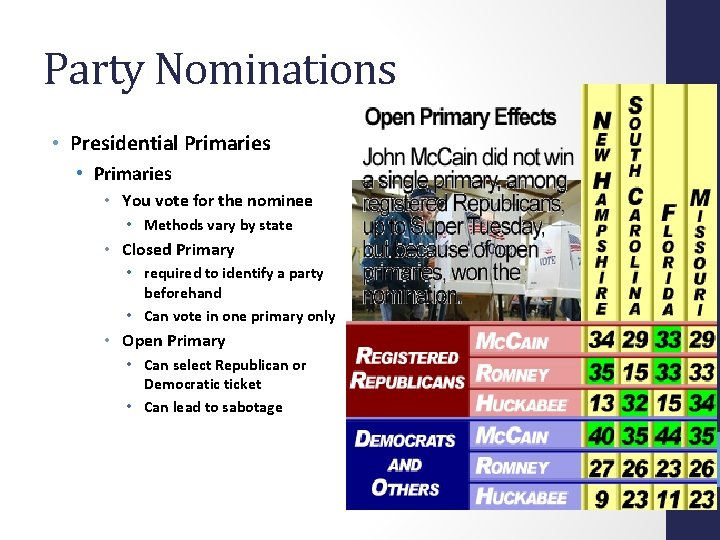
Party Nominations • Presidential Primaries • You vote for the nominee • Methods vary by state • Closed Primary • required to identify a party beforehand • Can vote in one primary only • Open Primary • Can select Republican or Democratic ticket • Can lead to sabotage
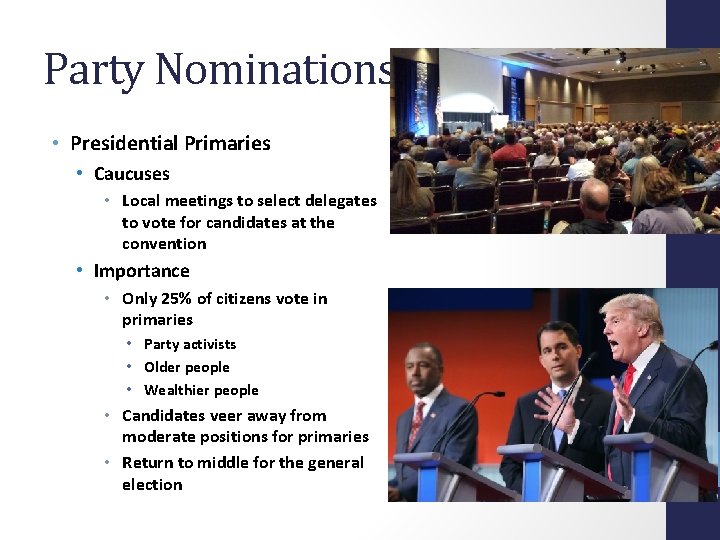
Party Nominations • Presidential Primaries • Caucuses • Local meetings to select delegates to vote for candidates at the convention • Importance • Only 25% of citizens vote in primaries • Party activists • Older people • Wealthier people • Candidates veer away from moderate positions for primaries • Return to middle for the general election
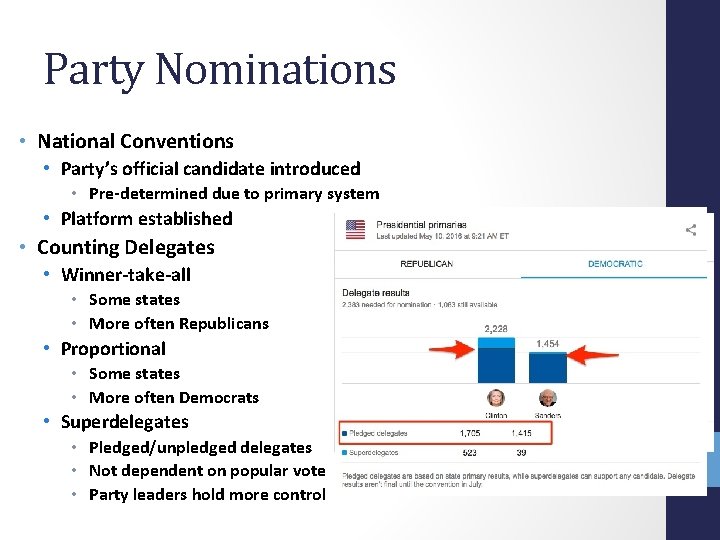
Party Nominations • National Conventions • Party’s official candidate introduced • Pre-determined due to primary system • Platform established • Counting Delegates • Winner-take-all • Some states • More often Republicans • Proportional • Some states • More often Democrats • Superdelegates • Pledged/unpledged delegates • Not dependent on popular vote • Party leaders hold more control
- Slides: 6