
5 1 Chapter Five Audit Planning and Types

- Slides: 38
5 -1 Chapter Five Audit Planning and Types of Audit Tests Mc. Graw-Hill/Irwin Copyright © 2006 by The Mc. Graw-Hill Companies, Inc. All rights reserved.
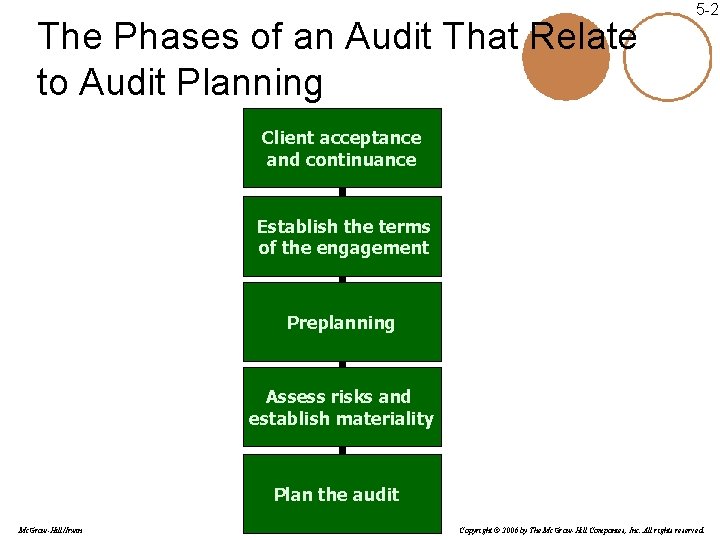
The Phases of an Audit That Relate to Audit Planning 5 -2 Client acceptance and continuance Establish the terms of the engagement Preplanning Assess risks and establish materiality Plan the audit Mc. Graw-Hill/Irwin Copyright © 2006 by The Mc. Graw-Hill Companies, Inc. All rights reserved.
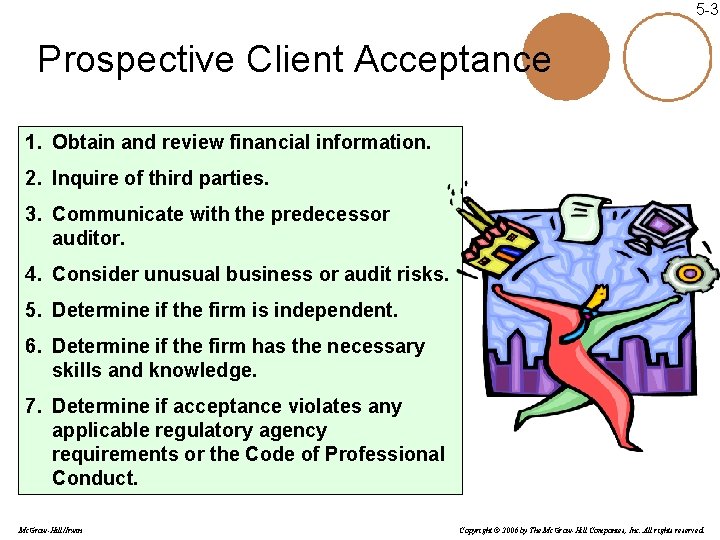
5 -3 Prospective Client Acceptance 1. Obtain and review financial information. 2. Inquire of third parties. 3. Communicate with the predecessor auditor. 4. Consider unusual business or audit risks. 5. Determine if the firm is independent. 6. Determine if the firm has the necessary skills and knowledge. 7. Determine if acceptance violates any applicable regulatory agency requirements or the Code of Professional Conduct. Mc. Graw-Hill/Irwin Copyright © 2006 by The Mc. Graw-Hill Companies, Inc. All rights reserved.
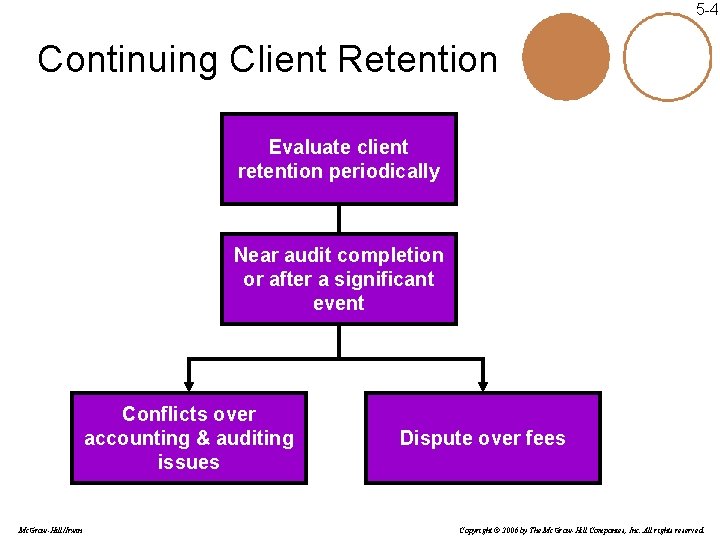
5 -4 Continuing Client Retention Evaluate client retention periodically Near audit completion or after a significant event Conflicts over accounting & auditing issues Mc. Graw-Hill/Irwin Dispute over fees Copyright © 2006 by The Mc. Graw-Hill Companies, Inc. All rights reserved.
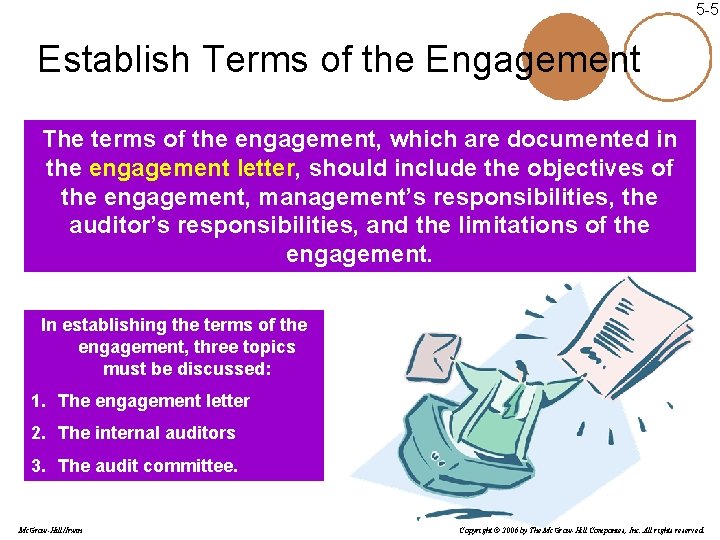
5 -5 Establish Terms of the Engagement The terms of the engagement, which are documented in the engagement letter, should include the objectives of the engagement, management’s responsibilities, the auditor’s responsibilities, and the limitations of the engagement. In establishing the terms of the engagement, three topics must be discussed: 1. The engagement letter 2. The internal auditors 3. The audit committee. Mc. Graw-Hill/Irwin Copyright © 2006 by The Mc. Graw-Hill Companies, Inc. All rights reserved.
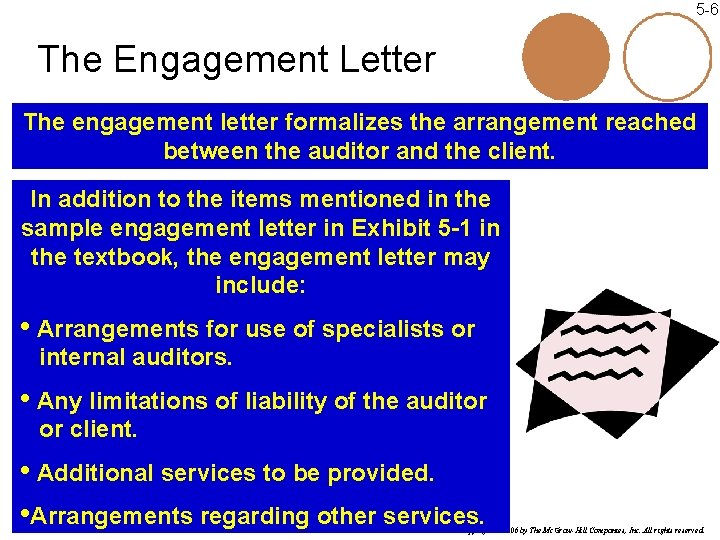
5 -6 The Engagement Letter The engagement letter formalizes the arrangement reached between the auditor and the client. In addition to the items mentioned in the sample engagement letter in Exhibit 5 -1 in the textbook, the engagement letter may include: • Arrangements for use of specialists or internal auditors. • Any limitations of liability of the auditor or client. • Additional services to be provided. • Arrangements regarding other services. Mc. Graw-Hill/Irwin Copyright © 2006 by The Mc. Graw-Hill Companies, Inc. All rights reserved.
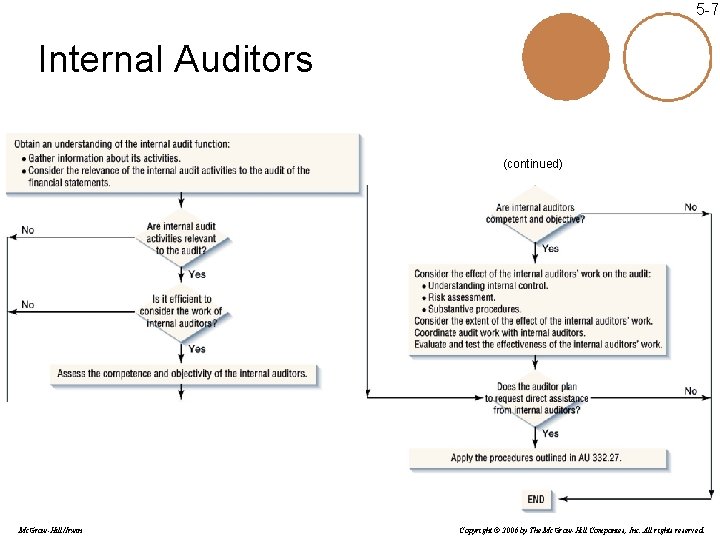
5 -7 Internal Auditors (continued) Mc. Graw-Hill/Irwin Copyright © 2006 by The Mc. Graw-Hill Companies, Inc. All rights reserved.
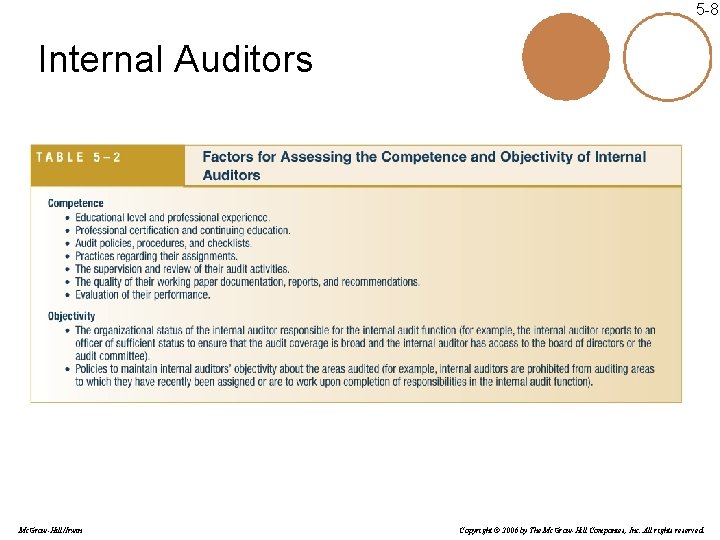
5 -8 Internal Auditors Mc. Graw-Hill/Irwin Copyright © 2006 by The Mc. Graw-Hill Companies, Inc. All rights reserved.
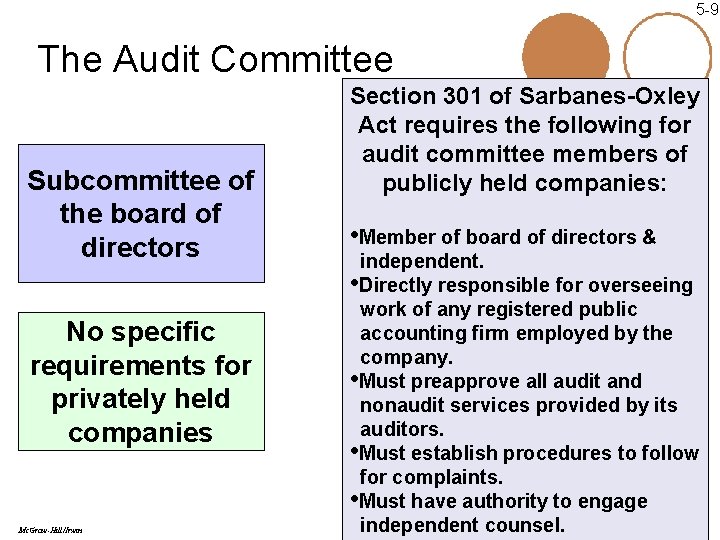
5 -9 The Audit Committee Subcommittee of the board of directors No specific requirements for privately held companies Mc. Graw-Hill/Irwin Section 301 of Sarbanes-Oxley Act requires the following for audit committee members of publicly held companies: • Member of board of directors & independent. • Directly responsible for overseeing work of any registered public accounting firm employed by the company. • Must preapprove all audit and nonaudit services provided by its auditors. • Must establish procedures to follow for complaints. • Must have authority to engage independent counsel. Copyright © 2006 by The Mc. Graw-Hill Companies, Inc. All rights reserved.
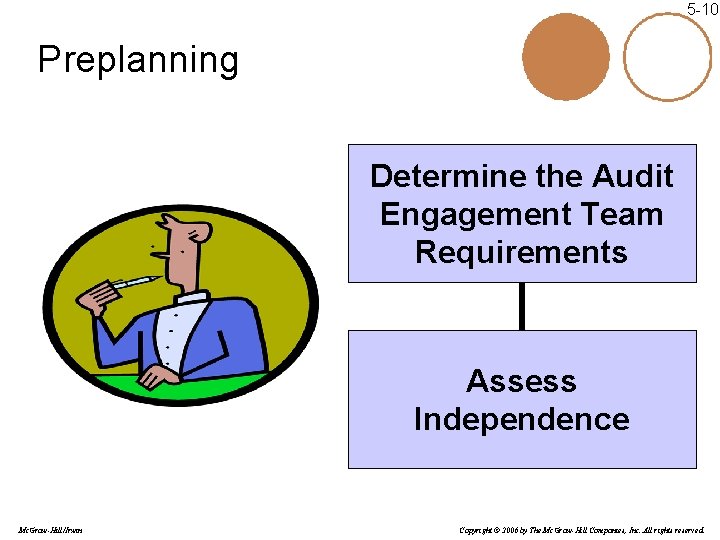
5 -10 Preplanning Determine the Audit Engagement Team Requirements Assess Independence Mc. Graw-Hill/Irwin Copyright © 2006 by The Mc. Graw-Hill Companies, Inc. All rights reserved.
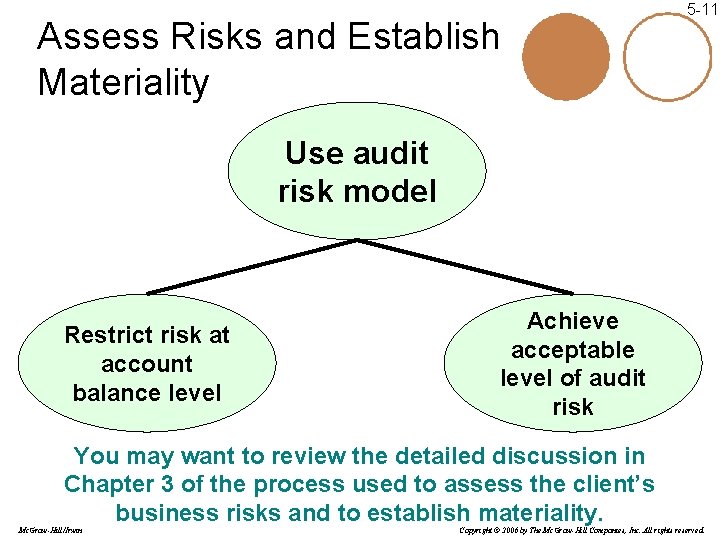
Assess Risks and Establish Materiality 5 -11 Use audit risk model Restrict risk at account balance level Achieve acceptable level of audit risk You may want to review the detailed discussion in Chapter 3 of the process used to assess the client’s business risks and to establish materiality. Mc. Graw-Hill/Irwin Copyright © 2006 by The Mc. Graw-Hill Companies, Inc. All rights reserved.
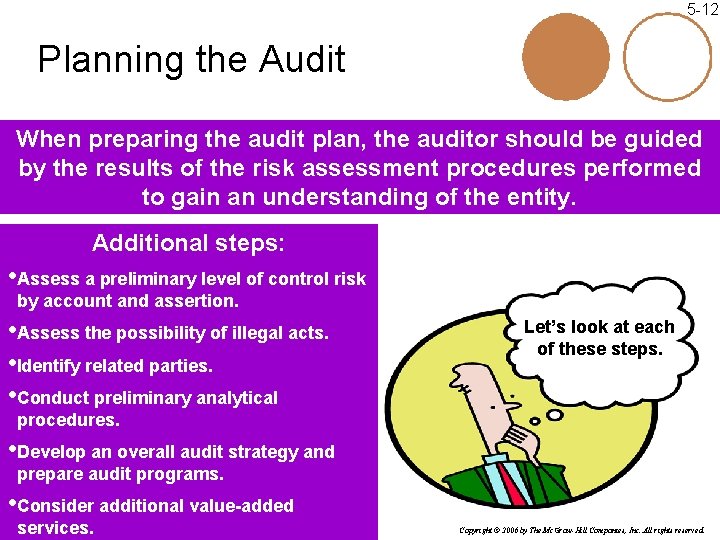
5 -12 Planning the Audit When preparing the audit plan, the auditor should be guided by the results of the risk assessment procedures performed to gain an understanding of the entity. Additional steps: • Assess a preliminary level of control risk by account and assertion. • Assess the possibility of illegal acts. • Identify related parties. • Conduct preliminary analytical Let’s look at each of these steps. procedures. • Develop an overall audit strategy and prepare audit programs. • Consider additional value-added Mc. Graw-Hill/Irwin services. Copyright © 2006 by The Mc. Graw-Hill Companies, Inc. All rights reserved.
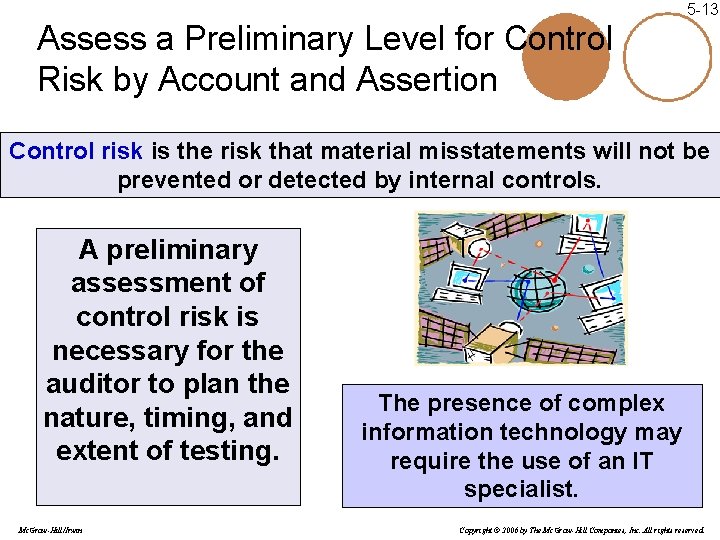
5 -13 Assess a Preliminary Level for Control Risk by Account and Assertion Control risk is the risk that material misstatements will not be prevented or detected by internal controls. A preliminary assessment of control risk is necessary for the auditor to plan the nature, timing, and extent of testing. Mc. Graw-Hill/Irwin The presence of complex information technology may require the use of an IT specialist. Copyright © 2006 by The Mc. Graw-Hill Companies, Inc. All rights reserved.
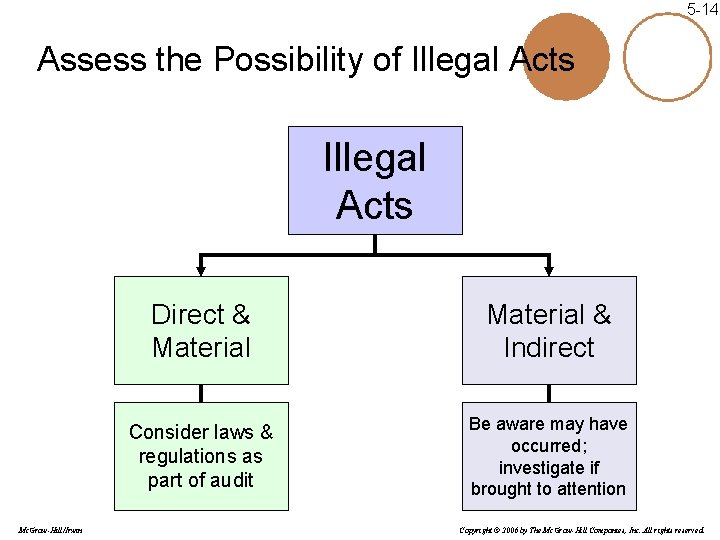
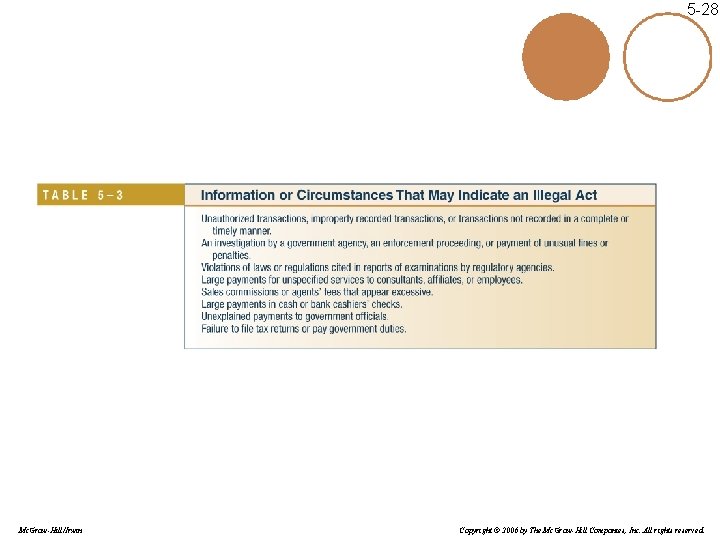
5 -14 Assess the Possibility of Illegal Acts Mc. Graw-Hill/Irwin Direct & Material & Indirect Consider laws & regulations as part of audit Be aware may have occurred; investigate if brought to attention Copyright © 2006 by The Mc. Graw-Hill Companies, Inc. All rights reserved.
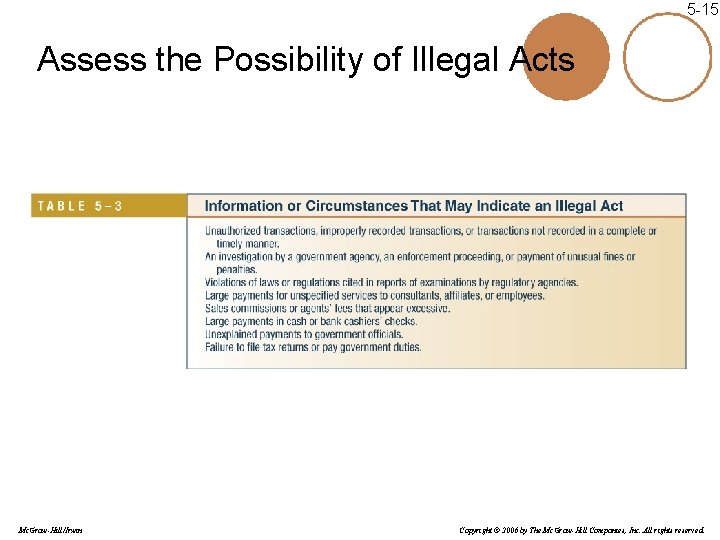
5 -15 Assess the Possibility of Illegal Acts Mc. Graw-Hill/Irwin Copyright © 2006 by The Mc. Graw-Hill Companies, Inc. All rights reserved.
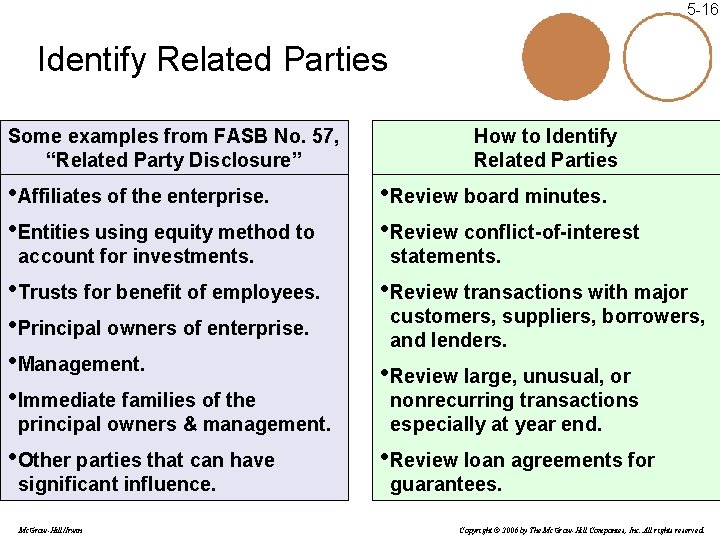
5 -16 Identify Related Parties Some examples from FASB No. 57, “Related Party Disclosure” How to Identify Related Parties • Affiliates of the enterprise. • Entities using equity method to • Review board minutes. • Review conflict-of-interest • Trusts for benefit of employees. • Principal owners of enterprise. • Management. • Immediate families of the • Review transactions with major • Other parties that can have • Review loan agreements for account for investments. principal owners & management. significant influence. Mc. Graw-Hill/Irwin statements. customers, suppliers, borrowers, and lenders. • Review large, unusual, or nonrecurring transactions especially at year end. guarantees. Copyright © 2006 by The Mc. Graw-Hill Companies, Inc. All rights reserved.
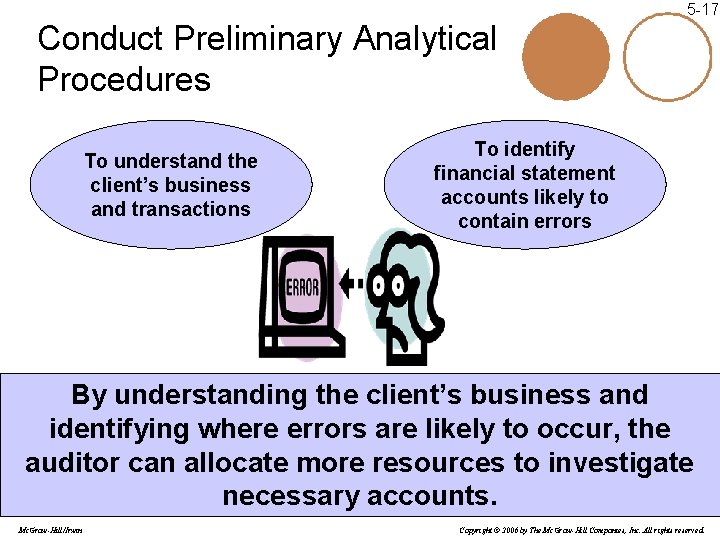
5 -17 Conduct Preliminary Analytical Procedures To understand the client’s business and transactions To identify financial statement accounts likely to contain errors By understanding the client’s business and identifying where errors are likely to occur, the auditor can allocate more resources to investigate necessary accounts. Mc. Graw-Hill/Irwin Copyright © 2006 by The Mc. Graw-Hill Companies, Inc. All rights reserved.
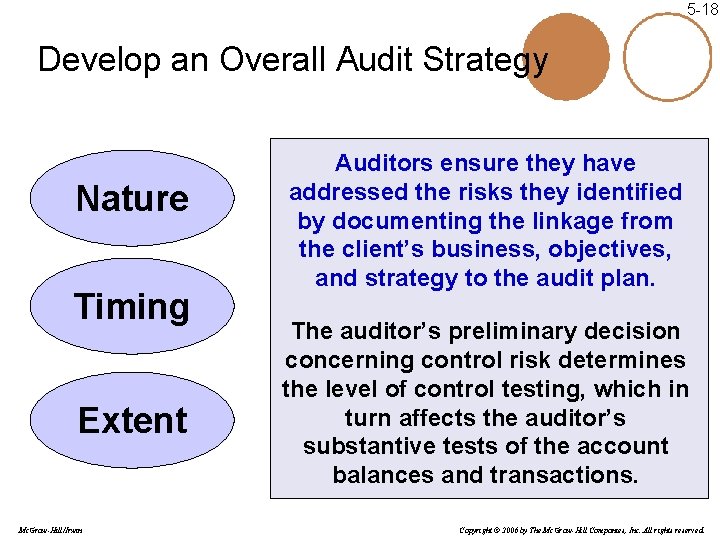
5 -18 Develop an Overall Audit Strategy Nature Timing Extent Mc. Graw-Hill/Irwin Auditors ensure they have addressed the risks they identified by documenting the linkage from the client’s business, objectives, and strategy to the audit plan. The auditor’s preliminary decision concerning control risk determines the level of control testing, which in turn affects the auditor’s substantive tests of the account balances and transactions. Copyright © 2006 by The Mc. Graw-Hill Companies, Inc. All rights reserved.
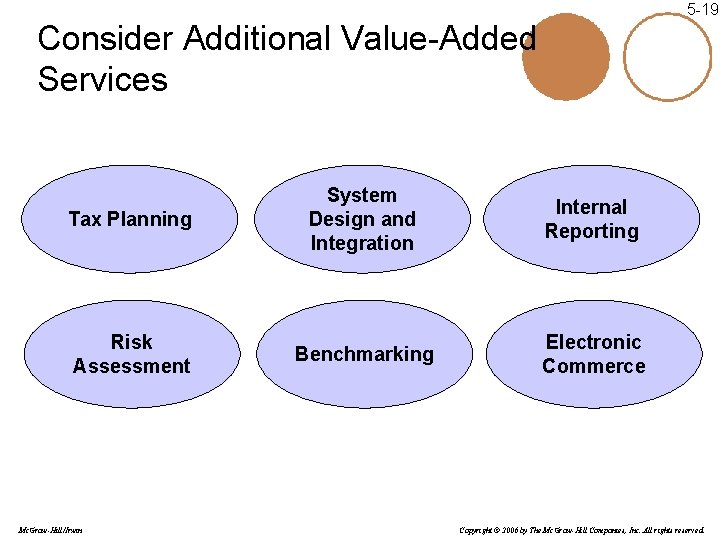
5 -19 Consider Additional Value-Added Services Tax Planning System Design and Integration Internal Reporting Risk Assessment Benchmarking Electronic Commerce Mc. Graw-Hill/Irwin Copyright © 2006 by The Mc. Graw-Hill Companies, Inc. All rights reserved.
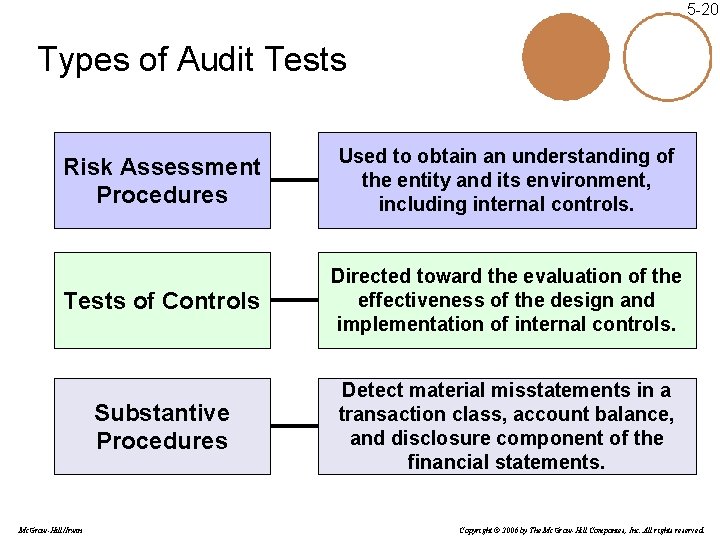
5 -20 Types of Audit Tests Risk Assessment Procedures Used to obtain an understanding of the entity and its environment, including internal controls. Tests of Controls Directed toward the evaluation of the effectiveness of the design and implementation of internal controls. Substantive Procedures Detect material misstatements in a transaction class, account balance, and disclosure component of the financial statements. Mc. Graw-Hill/Irwin Copyright © 2006 by The Mc. Graw-Hill Companies, Inc. All rights reserved.
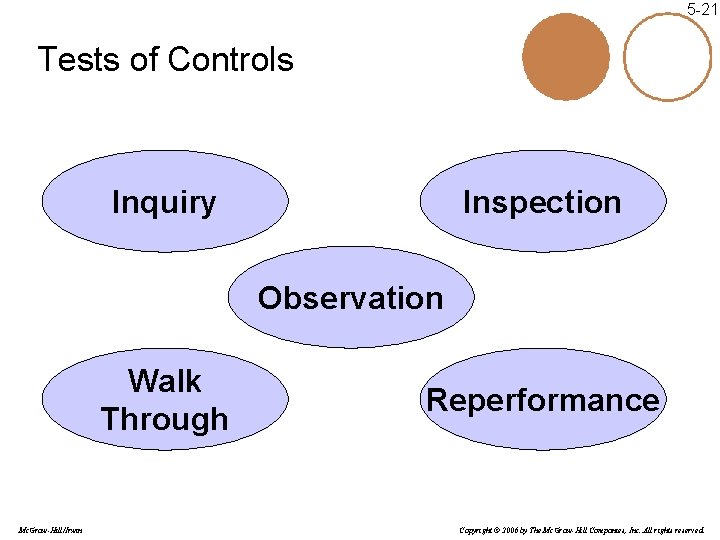
5 -21 Tests of Controls Inquiry Inspection Observation Walk Through Mc. Graw-Hill/Irwin Reperformance Copyright © 2006 by The Mc. Graw-Hill Companies, Inc. All rights reserved.
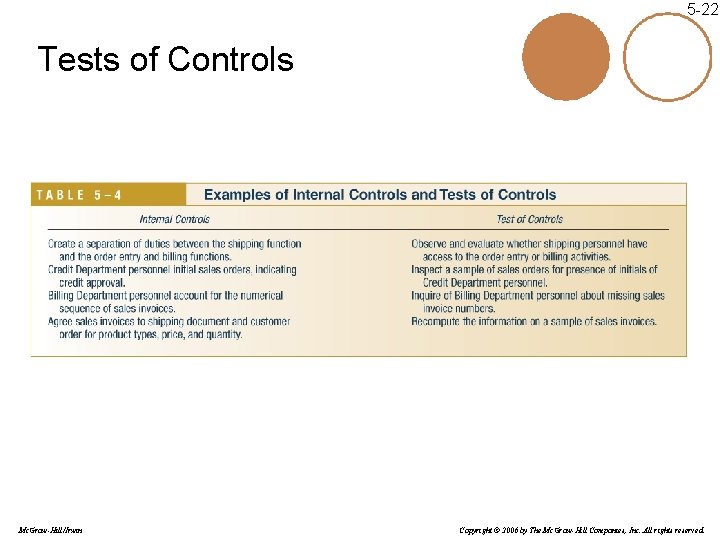
5 -22 Tests of Controls Mc. Graw-Hill/Irwin Copyright © 2006 by The Mc. Graw-Hill Companies, Inc. All rights reserved.
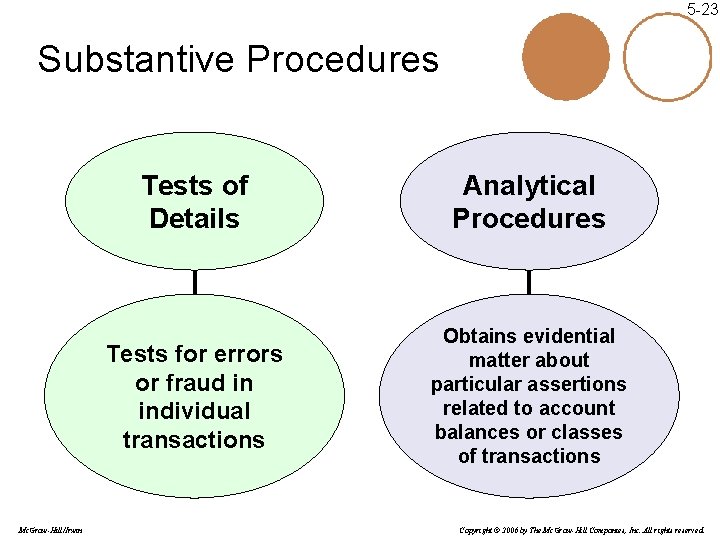
5 -23 Substantive Procedures Mc. Graw-Hill/Irwin Tests of Details Analytical Procedures Tests for errors or fraud in individual transactions Obtains evidential matter about particular assertions related to account balances or classes of transactions Copyright © 2006 by The Mc. Graw-Hill Companies, Inc. All rights reserved.
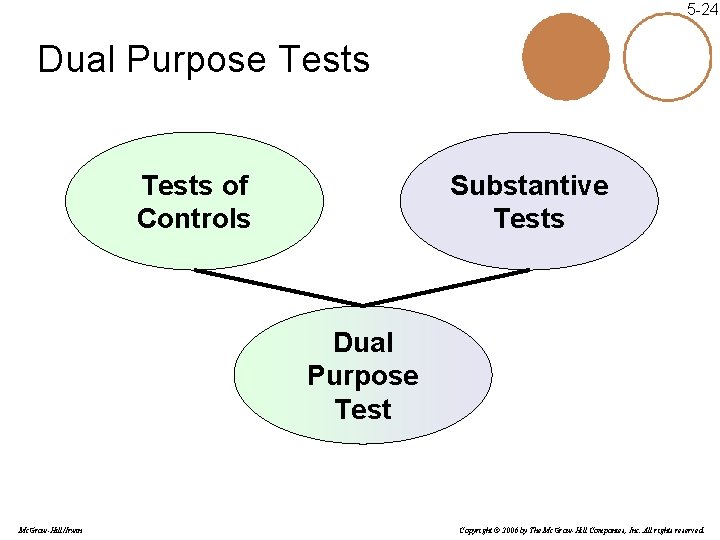
5 -24 Dual Purpose Tests of Controls Substantive Tests Dual Purpose Test Mc. Graw-Hill/Irwin Copyright © 2006 by The Mc. Graw-Hill Companies, Inc. All rights reserved.
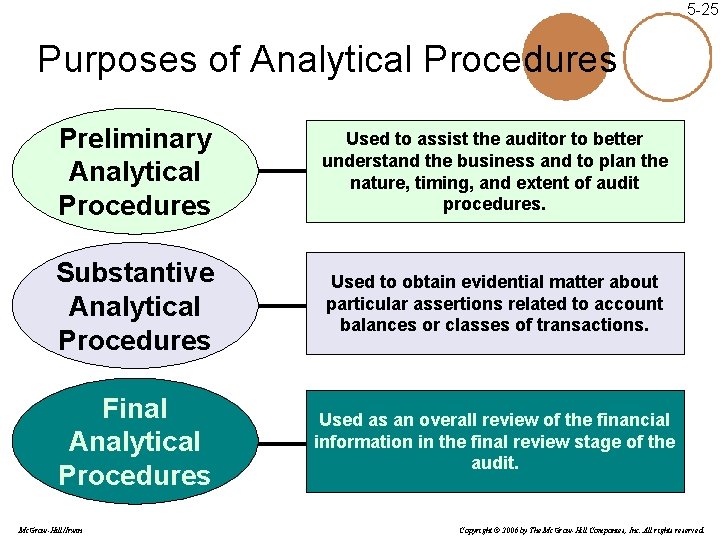
5 -25 Purposes of Analytical Procedures Preliminary Analytical Procedures Used to assist the auditor to better understand the business and to plan the nature, timing, and extent of audit procedures. Substantive Analytical Procedures Used to obtain evidential matter about particular assertions related to account balances or classes of transactions. Final Analytical Procedures Used as an overall review of the financial information in the final review stage of the audit. Mc. Graw-Hill/Irwin Copyright © 2006 by The Mc. Graw-Hill Companies, Inc. All rights reserved.
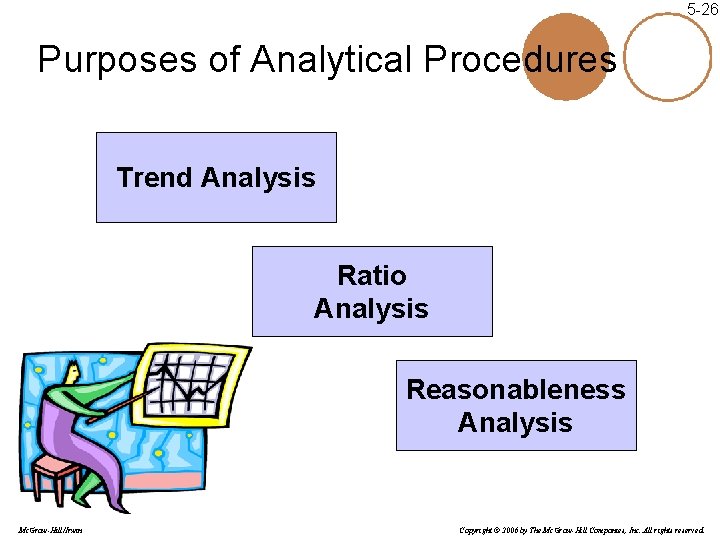
5 -26 Purposes of Analytical Procedures Trend Analysis Ratio Analysis Reasonableness Analysis Mc. Graw-Hill/Irwin Copyright © 2006 by The Mc. Graw-Hill Companies, Inc. All rights reserved.
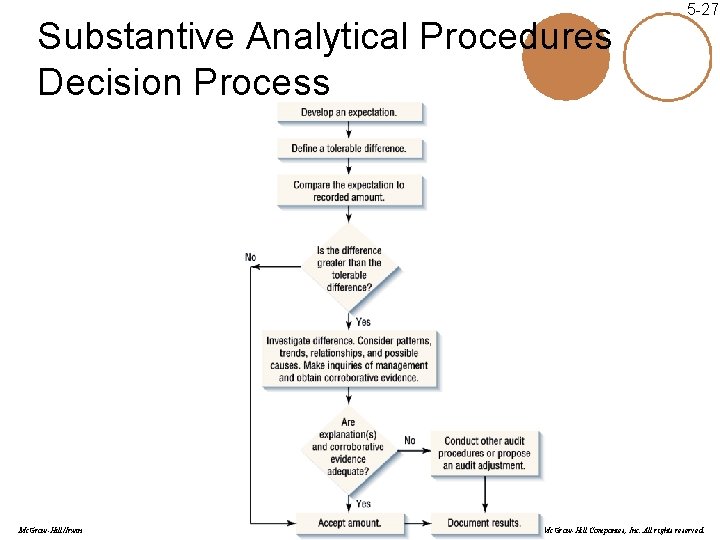
Substantive Analytical Procedures Decision Process Mc. Graw-Hill/Irwin 5 -27 Copyright © 2006 by The Mc. Graw-Hill Companies, Inc. All rights reserved.
5 -28 Mc. Graw-Hill/Irwin Copyright © 2006 by The Mc. Graw-Hill Companies, Inc. All rights reserved.
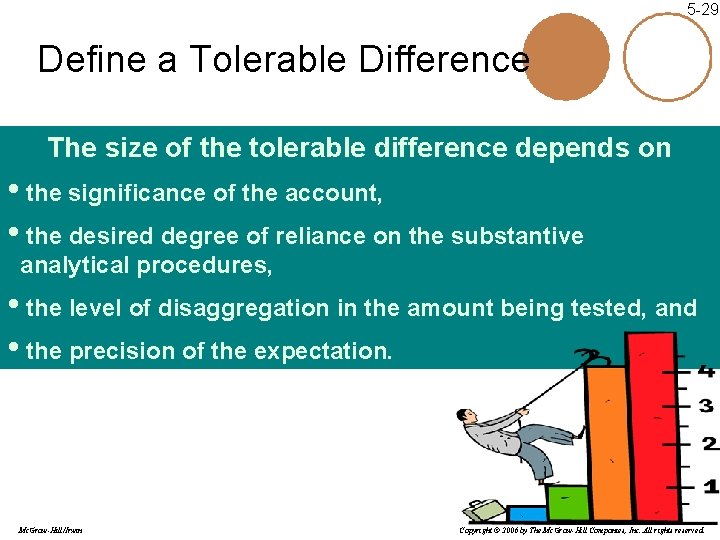
5 -29 Define a Tolerable Difference The size of the tolerable difference depends on • the significance of the account, • the desired degree of reliance on the substantive analytical procedures, • the level of disaggregation in the amount being tested, and • the precision of the expectation. Mc. Graw-Hill/Irwin Copyright © 2006 by The Mc. Graw-Hill Companies, Inc. All rights reserved.
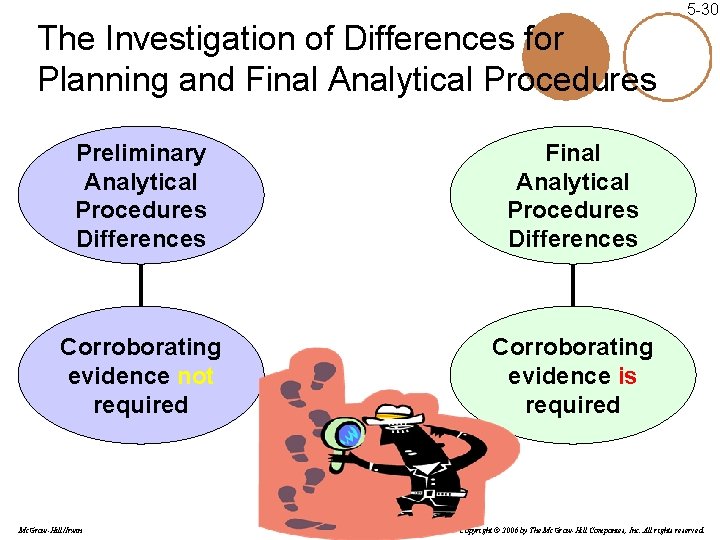
5 -30 The Investigation of Differences for Planning and Final Analytical Procedures Preliminary Analytical Procedures Differences Final Analytical Procedures Differences Corroborating evidence not required Corroborating evidence is required Mc. Graw-Hill/Irwin Copyright © 2006 by The Mc. Graw-Hill Companies, Inc. All rights reserved.
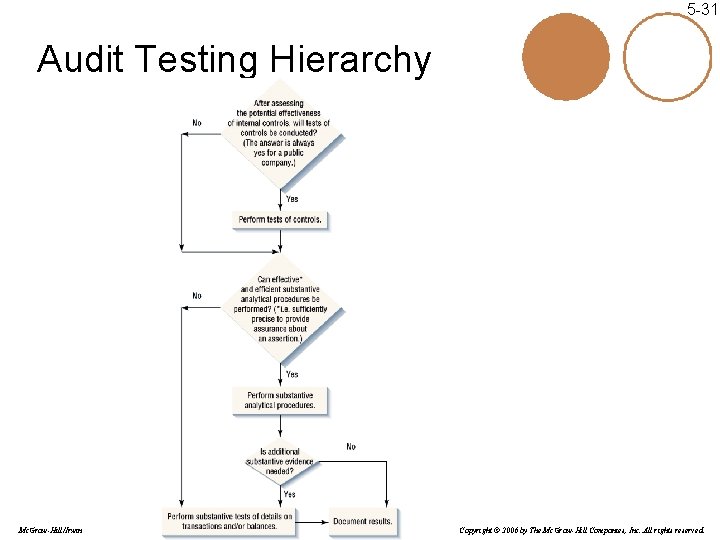
5 -31 Audit Testing Hierarchy Mc. Graw-Hill/Irwin Copyright © 2006 by The Mc. Graw-Hill Companies, Inc. All rights reserved.
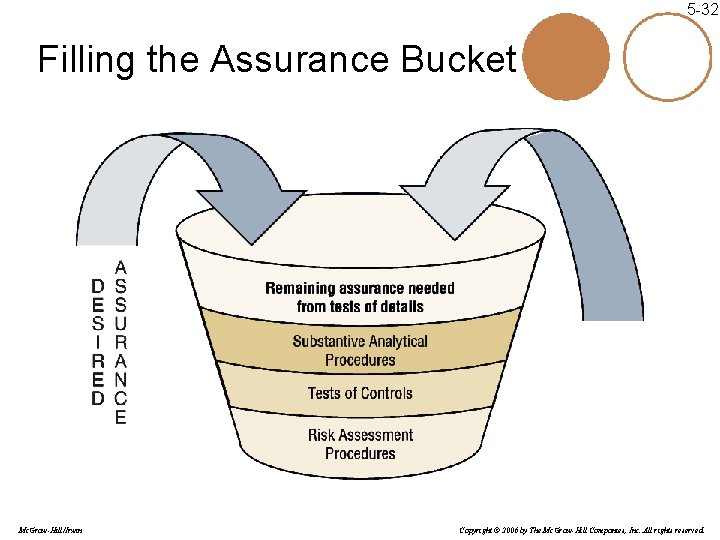
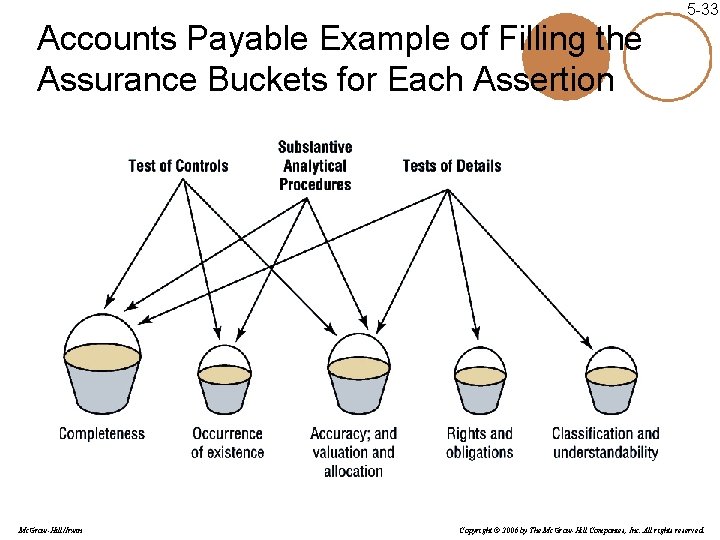
5 -32 Filling the Assurance Bucket Mc. Graw-Hill/Irwin Copyright © 2006 by The Mc. Graw-Hill Companies, Inc. All rights reserved.
5 -33 Accounts Payable Example of Filling the Assurance Buckets for Each Assertion Mc. Graw-Hill/Irwin Copyright © 2006 by The Mc. Graw-Hill Companies, Inc. All rights reserved.
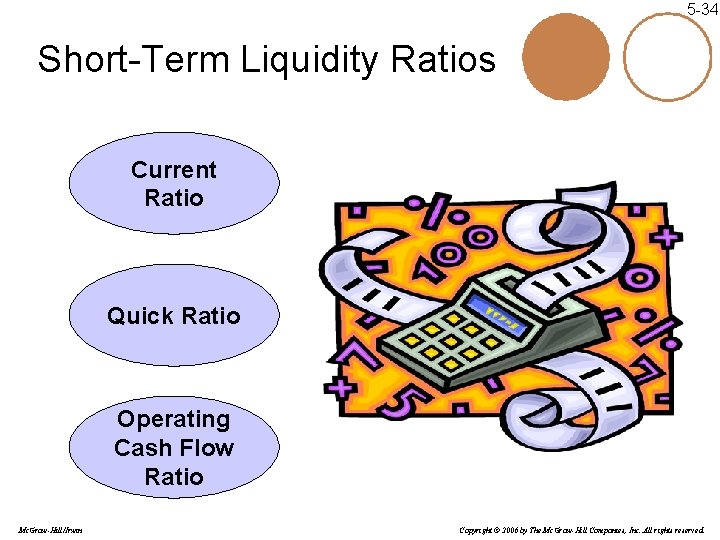
5 -34 Short-Term Liquidity Ratios Current Ratio Quick Ratio Operating Cash Flow Ratio Mc. Graw-Hill/Irwin Copyright © 2006 by The Mc. Graw-Hill Companies, Inc. All rights reserved.
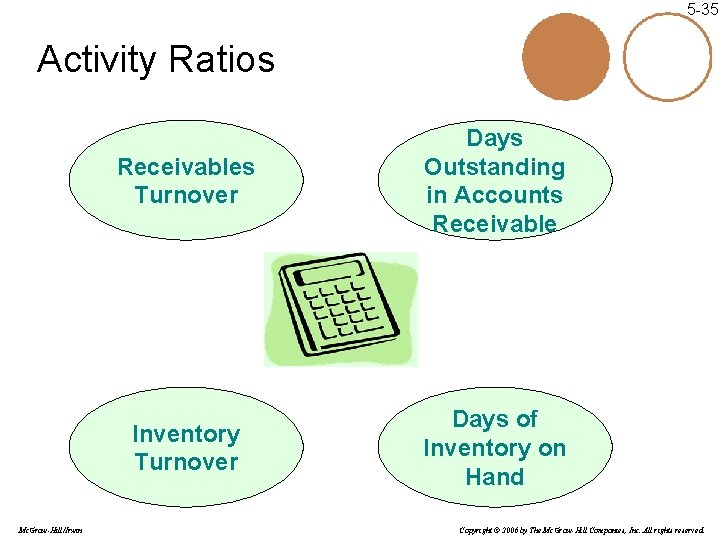
5 -35 Activity Ratios Mc. Graw-Hill/Irwin Receivables Turnover Days Outstanding in Accounts Receivable Inventory Turnover Days of Inventory on Hand Copyright © 2006 by The Mc. Graw-Hill Companies, Inc. All rights reserved.
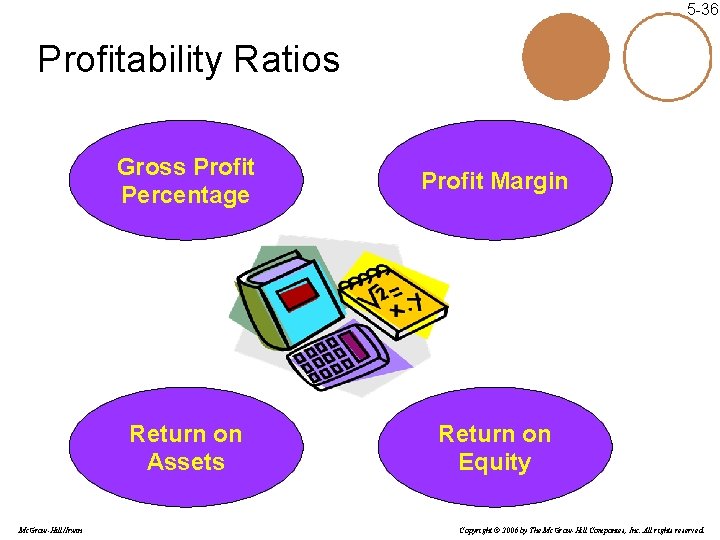
5 -36 Profitability Ratios Mc. Graw-Hill/Irwin Gross Profit Percentage Profit Margin Return on Assets Return on Equity Copyright © 2006 by The Mc. Graw-Hill Companies, Inc. All rights reserved.
5 -37 Coverage Ratios Debt to Equity Times Interest Earned Mc. Graw-Hill/Irwin Copyright © 2006 by The Mc. Graw-Hill Companies, Inc. All rights reserved.
5 -38 End of Chapter 5 Mc. Graw-Hill/Irwin Copyright © 2006 by The Mc. Graw-Hill Companies, Inc. All rights reserved.