
5 02 Types of Events Unit 5 Probability
5. 02 Types of Events Unit 5 Probability
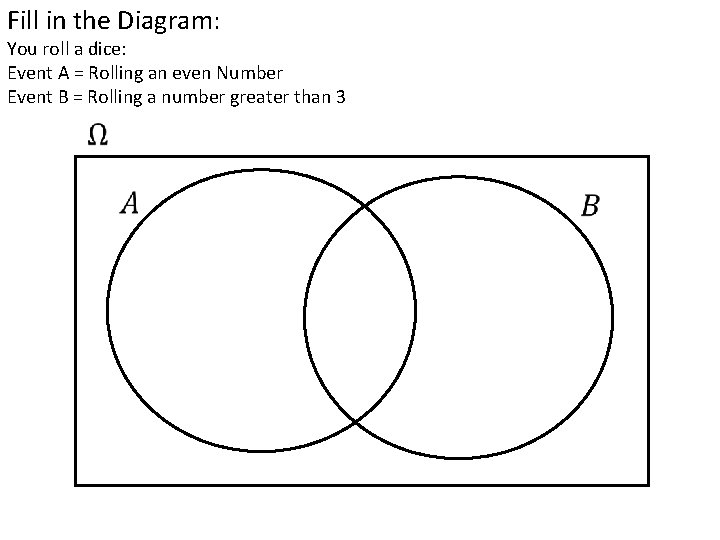
Fill in the Diagram: You roll a dice: Event A = Rolling an even Number Event B = Rolling a number greater than 3
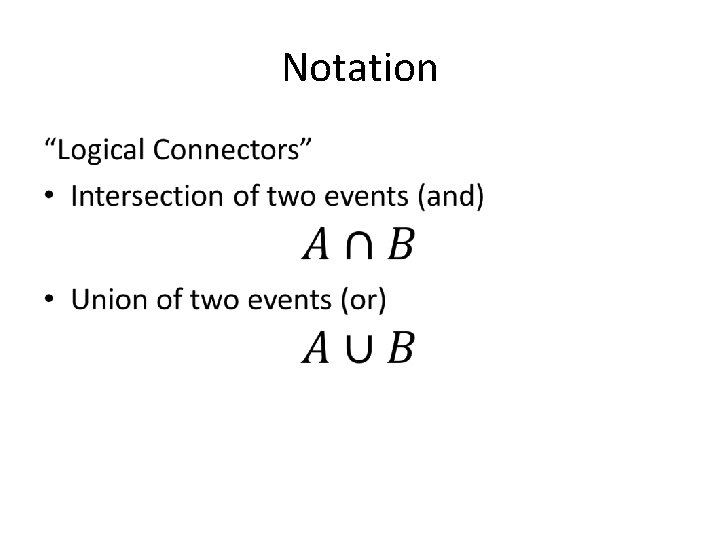
Notation •
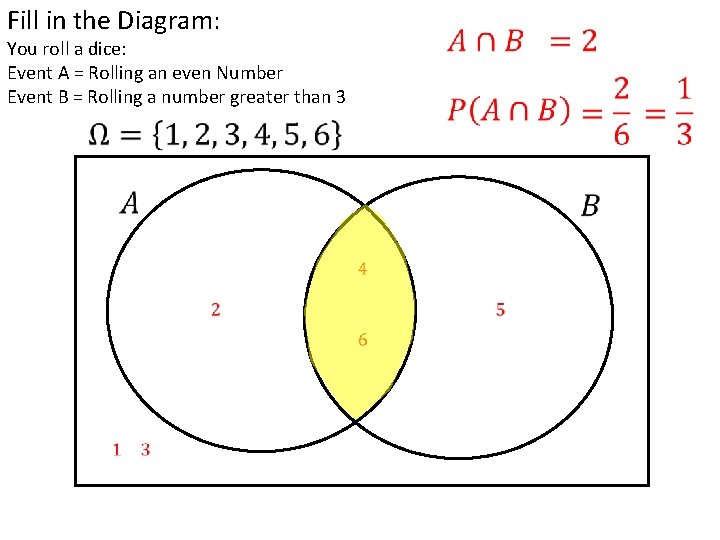
Fill in the Diagram: You roll a dice: Event A = Rolling an even Number Event B = Rolling a number greater than 3
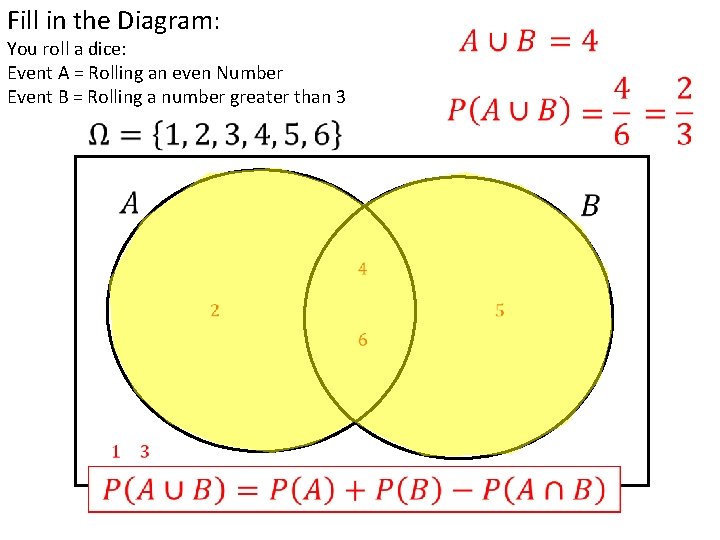
Fill in the Diagram: You roll a dice: Event A = Rolling an even Number Event B = Rolling a number greater than 3
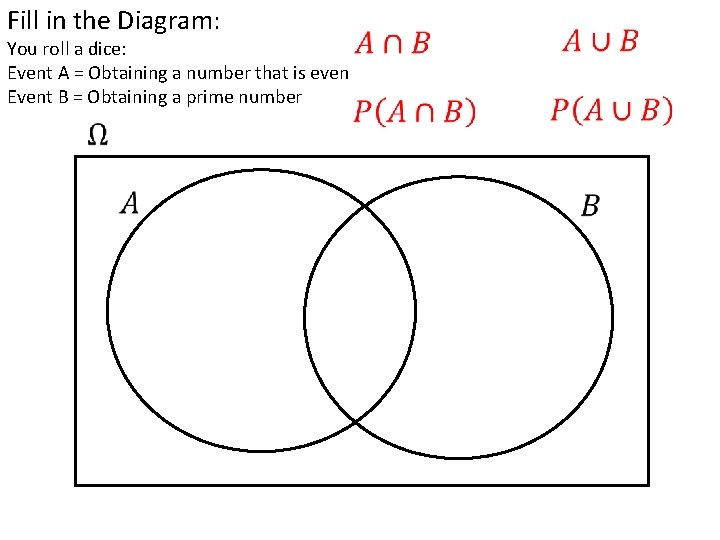
Fill in the Diagram: You roll a dice: Event A = Obtaining a number that is even Event B = Obtaining a prime number
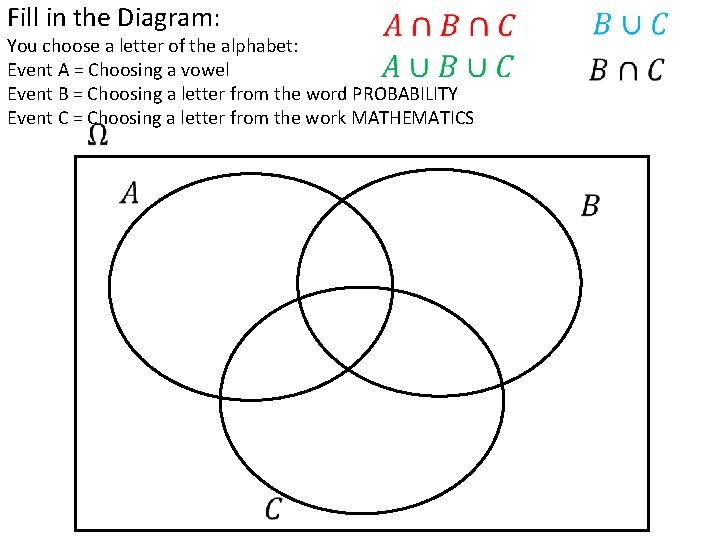
Fill in the Diagram: You choose a letter of the alphabet: Event A = Choosing a vowel Event B = Choosing a letter from the word PROBABILITY Event C = Choosing a letter from the work MATHEMATICS
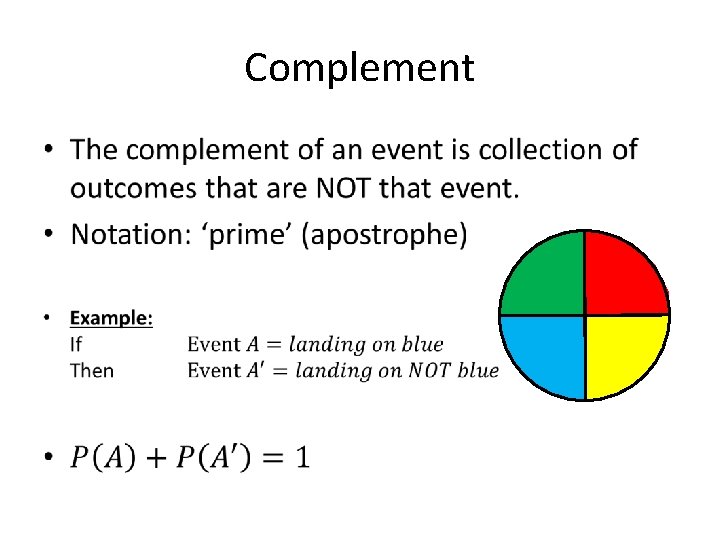
Complement •
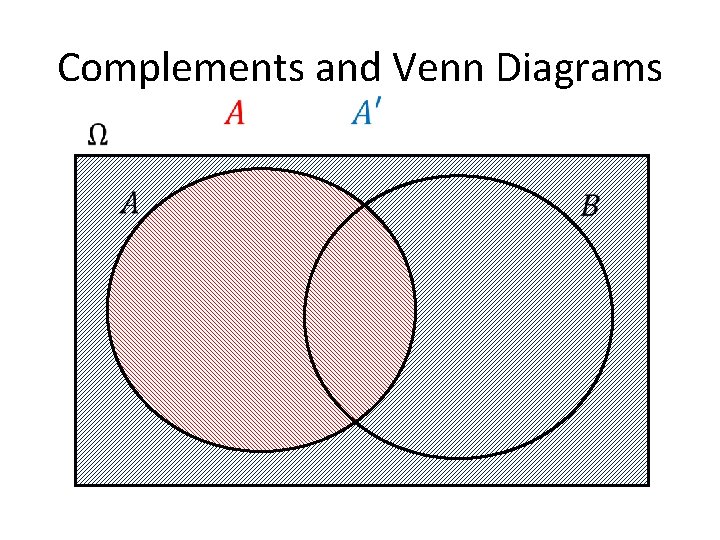
Complements and Venn Diagrams
Why study complements? • Sometimes it’s easier to calculate the probability of a complementary event and work backwards.
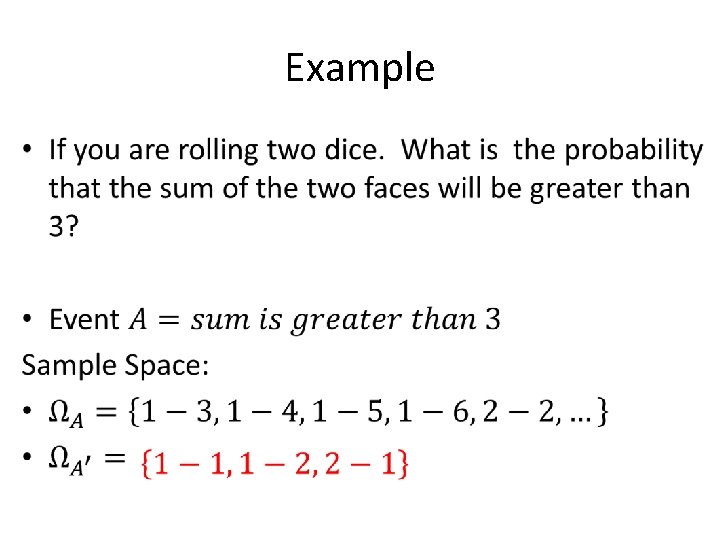
Example •
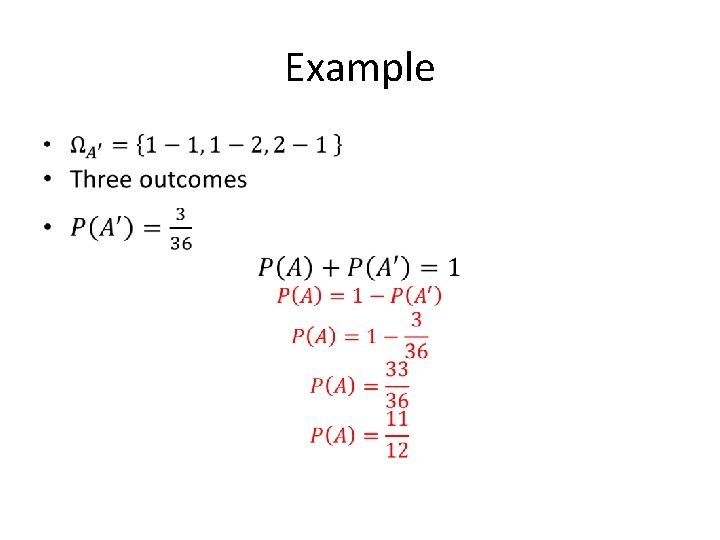
Example •
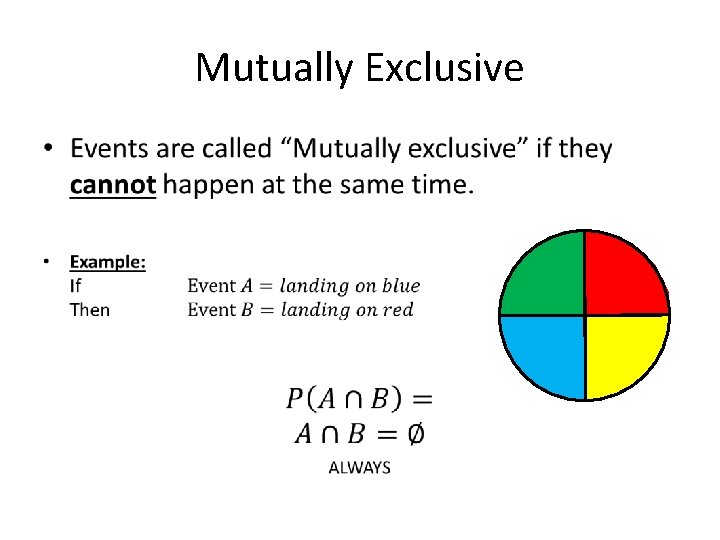
Mutually Exclusive •
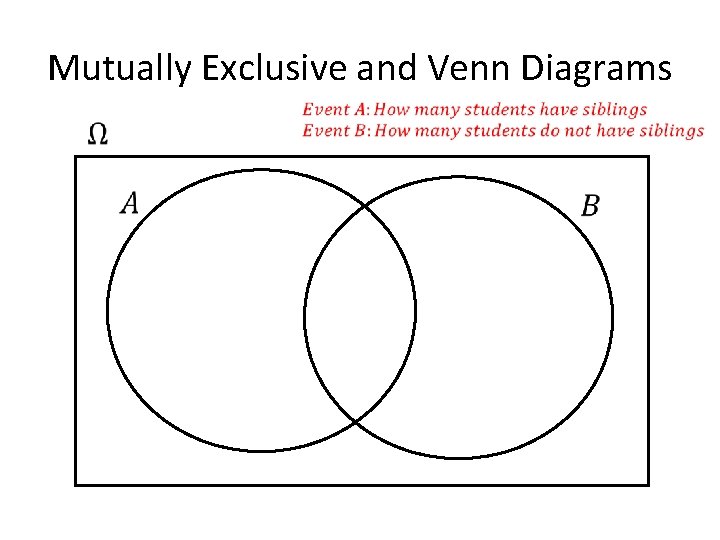
Mutually Exclusive and Venn Diagrams
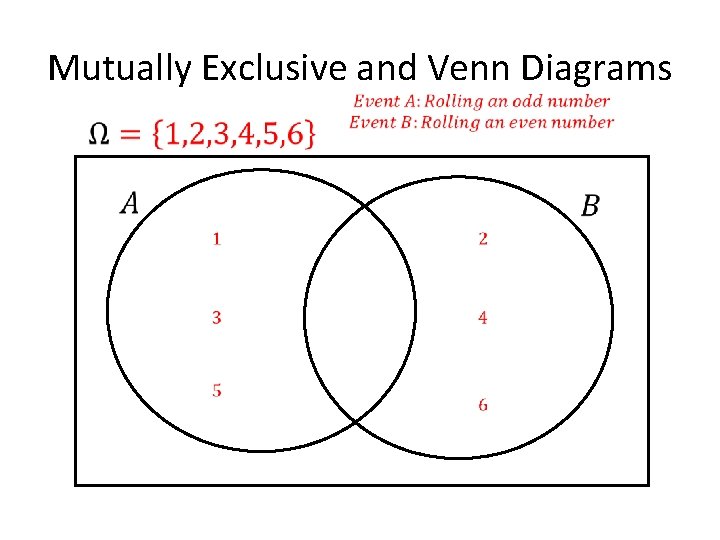
Mutually Exclusive and Venn Diagrams
Independent Events • The occurrence of one does NOT influence the probability of the other happening By dice example: If Event A= obtaining a 4 on the first roll Event B = Obtaining a 3 on the second roll By marbles (WITH REPLACEMENT): If Event A = drawing a green marble on the first pick Event B = drawing a blue marble on the second pick
Dependent Events • The occurrence of one influences the probability of the other happening By dice example: If Event A= obtaining a 4 on the first roll Event B = obtaining a sum of 11 after the second roll By marbles (WITHOUT REPLACEMENT): If Event A = drawing a green marble on the first pick Event B = drawing a blue marble on the second pick
- Slides: 17