
45 Physical and Chemical Properties Reading passage 46
- Slides: 11
45. Physical and Chemical Properties Reading passage 46. Physical and Chemical Properties Notes
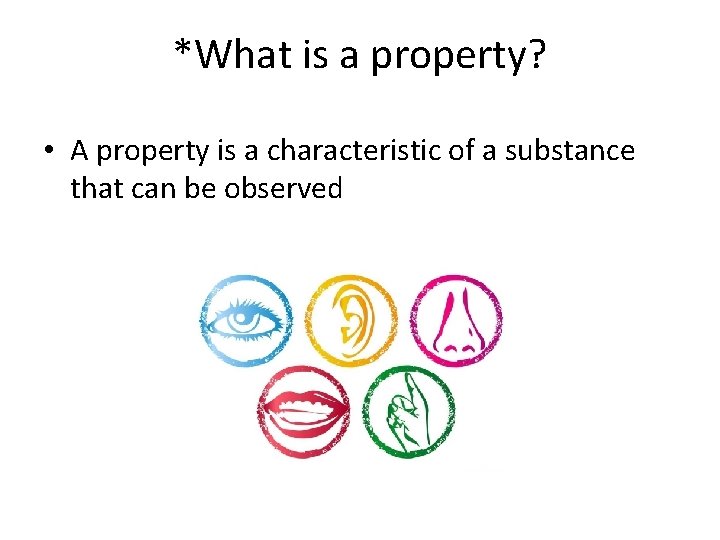
*What is a property? • A property is a characteristic of a substance that can be observed
*Physical property • A property that can be used to describe a substance using your 5 senses (see, touch, hear, smell, taste) • Physical Properties can be identified without changing what the substance is
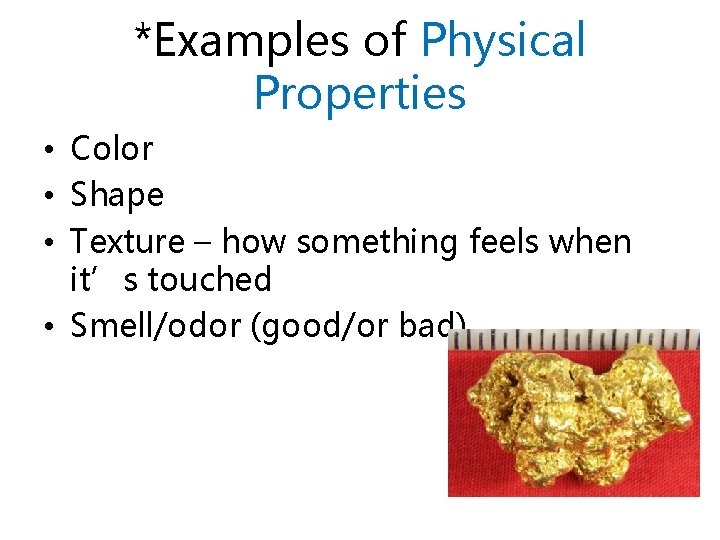
*Examples of Physical Properties • Color • Shape • Texture – how something feels when it’s touched • Smell/odor (good/or bad)
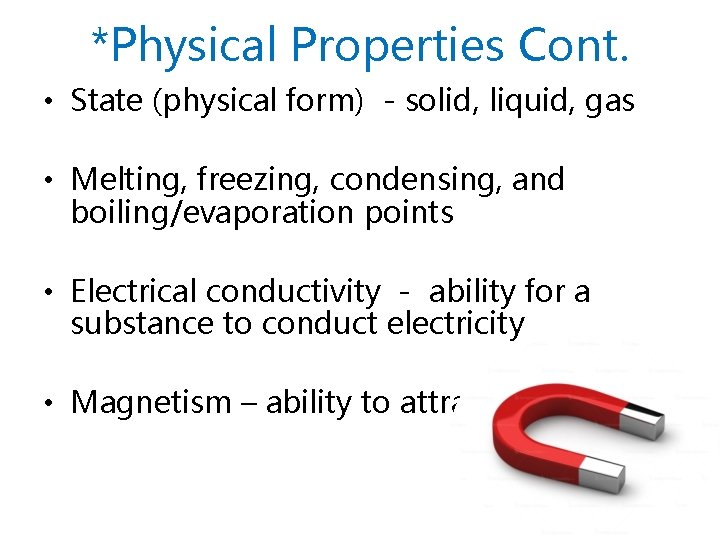
*Physical Properties Cont. • State (physical form) - solid, liquid, gas • Melting, freezing, condensing, and boiling/evaporation points • Electrical conductivity - ability for a substance to conduct electricity • Magnetism – ability to attract iron
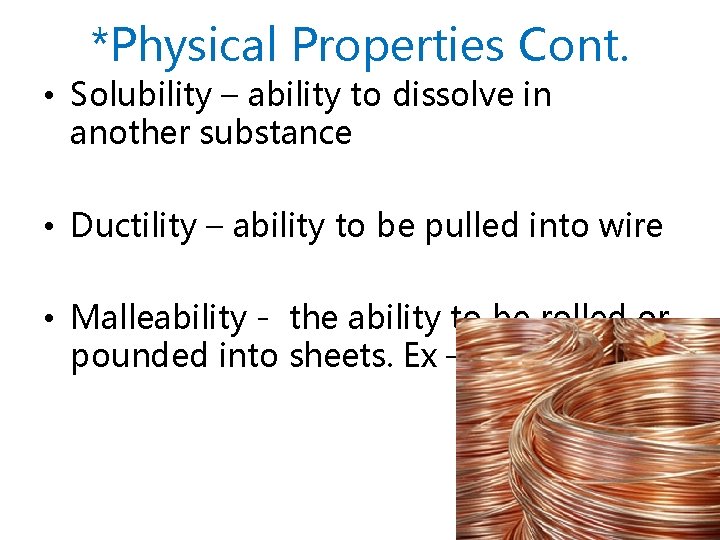
*Physical Properties Cont. • Solubility – ability to dissolve in another substance • Ductility – ability to be pulled into wire • Malleability - the ability to be rolled or pounded into sheets. Ex – aluminum
*Physical Change • A physical change affects one or more physical properties (like size, shape, state, color, etc), but DOES NOT change the chemical property (identity or composition of substance) • Ex. Cotton can be dyed red. This cotton will still be flammable and it is still cotton so you’ve only changed the color of the cotton when you dyed it
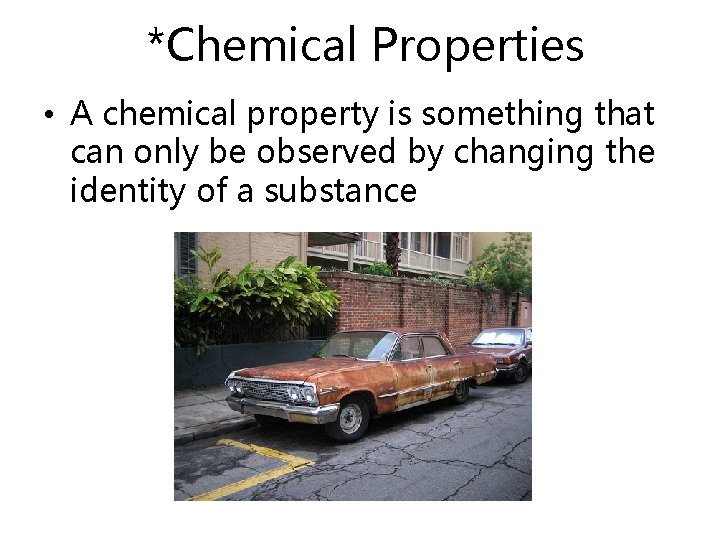
*Chemical Properties • A chemical property is something that can only be observed by changing the identity of a substance
*Examples of Chemical Properties • Energy released (in form of sound, heat, or light) • Flammability – ability to burn. Ex. Wood • Non flammability – inability to burn Ex. Ash and smoke • Reactivity – ability to combine with one or more substances and form one or more new substances • Ex. Iron is reactive to oxygen, creating rust. (iron + oxygen= rust)
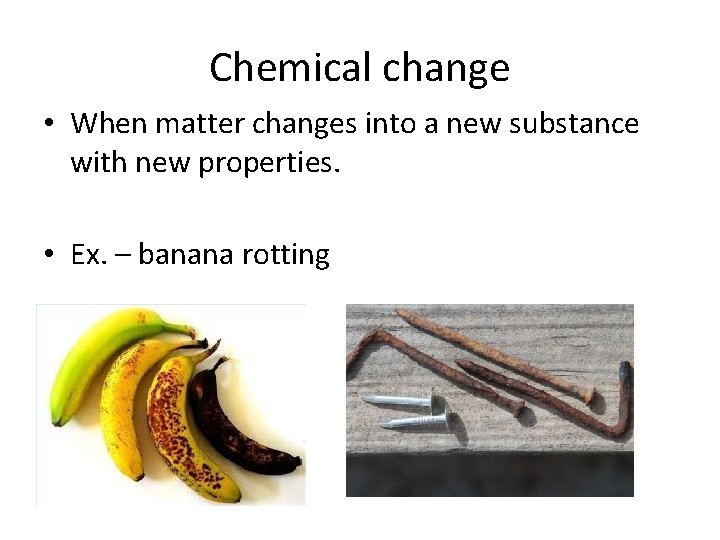
Chemical change • When matter changes into a new substance with new properties. • Ex. – banana rotting
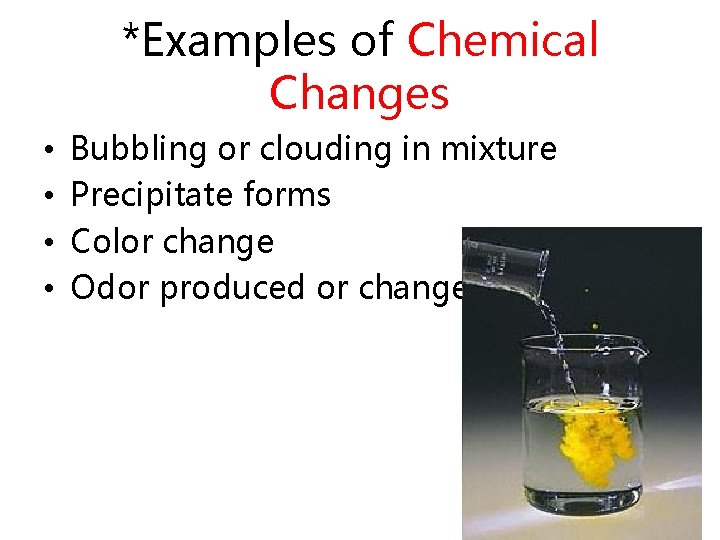
*Examples of Chemical Changes • • Bubbling or clouding in mixture Precipitate forms Color change Odor produced or changed