
40 yom presents to ED with suicidal ideation
- Slides: 13
• 40 yom, presents to ED with suicidal ideation • On review of system by Psych resident, he admits to mild CP earlier the same day • Code MI activated by ED
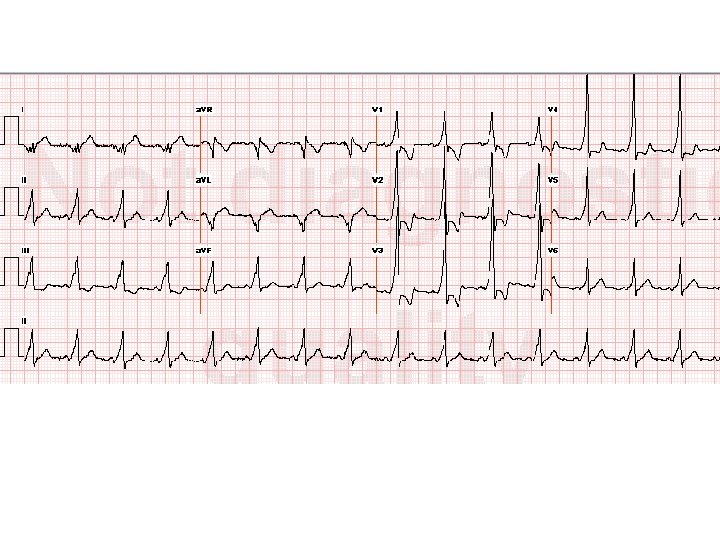
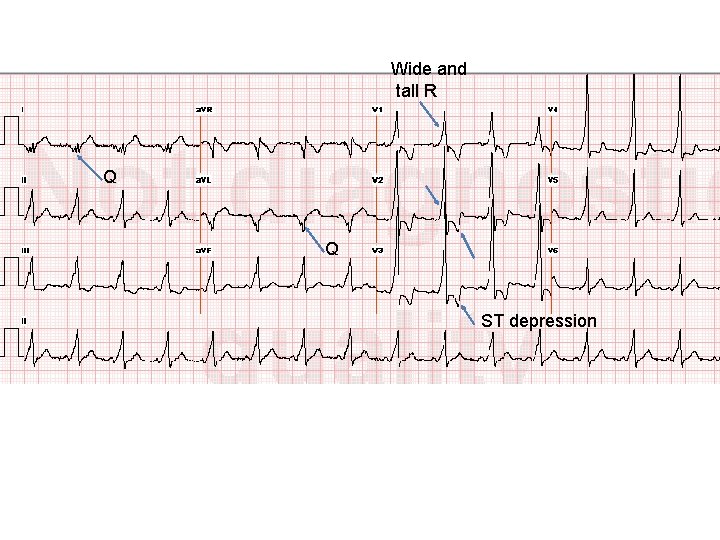
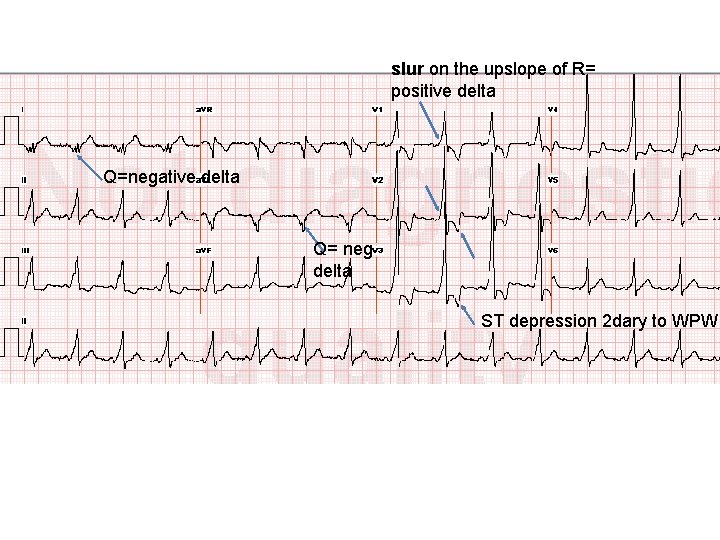
At first glance • Wide and large R wave in V 1 • Q wave in lead I and a. VL(we see a wide negative deflection, called QS wave) • ST segment depression mostly seen in V 1 -V 3
Wide and tall R Q Q ST depression
• Looking for a tall/wide R wave in V 1 and/or V 2 should be a routine step in QRS analysis on every ECG
DDx of tall R wave in V 1 or V 2 1. RVH: right sided forces make R wave big in the right precordial leads (RVH will also have R axis) 2. RBBB (will also have wide QRS, RSR’) 3. Posterior MI: posterior Q waves in V 7 -V 9 are “mirror “reflected as large R waves in. V 1 -V 3 4. WPW • Normal variant if nothing on the ECG suggests
• In this pt, the tall R wave in V 1 -V 3 may suggest posterior Q wave MI. The lateral Q waves suggest an associated lateral wall MI • The ST depression in V 1 -V 3 suggests posterior STEMI Our pt has posterior STEMI/posterior Q wave MI? ?
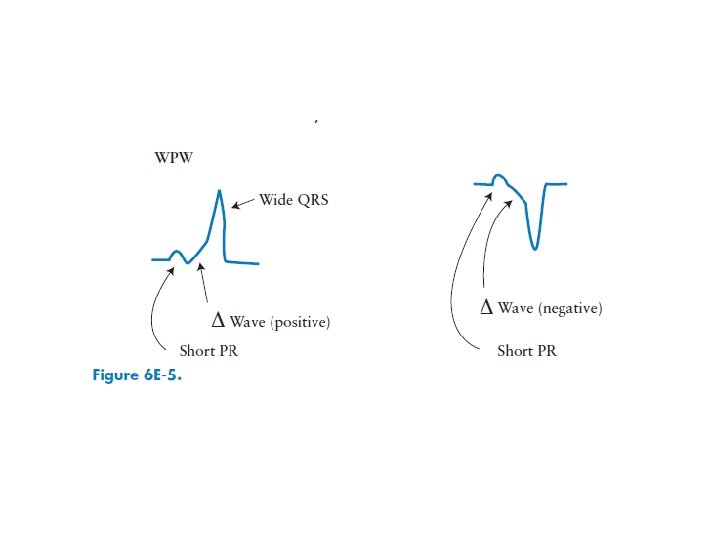
On further analysis of the ECG 1. Short PR interval (<3 small boxes, ~100 ms) 2. Wide QRS complex with delta wave *P is “riding” the upslope of R wave. *The upslope of R wave is slurred in lead V 1 (this is delta wave) Pre-excitation pattern=WPW pattern 3. ST/T depression in V 1 -V 3 is opposite in direction to the abnormal QRS, and therefore, is likely secondary to the QRS abnormality/WPW
• Since this pt does not have any real angina and since he has all 3 features of WPW, his diagnosis is WPW rather than posterior MI • In this context, the Q wave in leads I and a. VL is actually a delta wave as well (a negative delta wave), not an MI
slur on the upslope of R= positive delta Q=negative delta Q= neg delta ST depression 2 dary to WPW
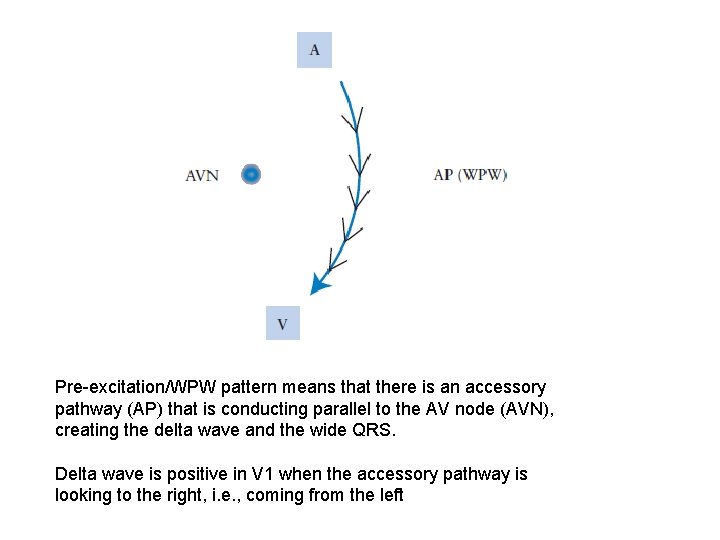
Pre-excitation/WPW pattern means that there is an accessory pathway (AP) that is conducting parallel to the AV node (AVN), creating the delta wave and the wide QRS. Delta wave is positive in V 1 when the accessory pathway is looking to the right, i. e. , coming from the left
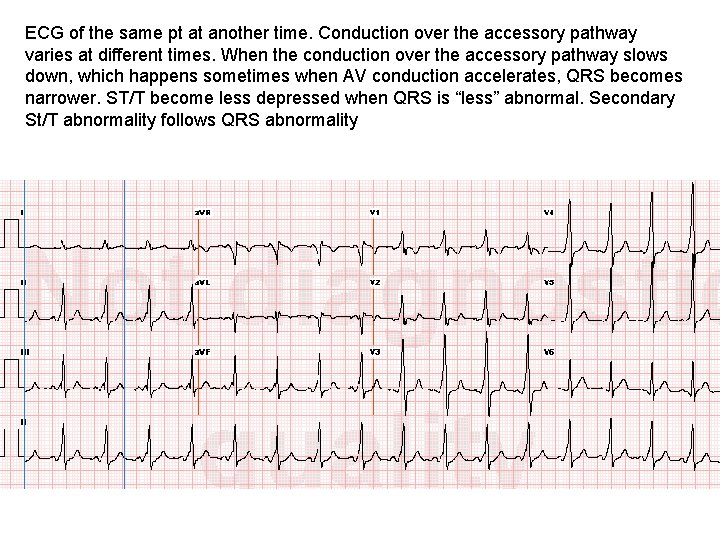
ECG of the same pt at another time. Conduction over the accessory pathway varies at different times. When the conduction over the accessory pathway slows down, which happens sometimes when AV conduction accelerates, QRS becomes narrower. ST/T become less depressed when QRS is “less” abnormal. Secondary St/T abnormality follows QRS abnormality