
4 whose of which whose of which This
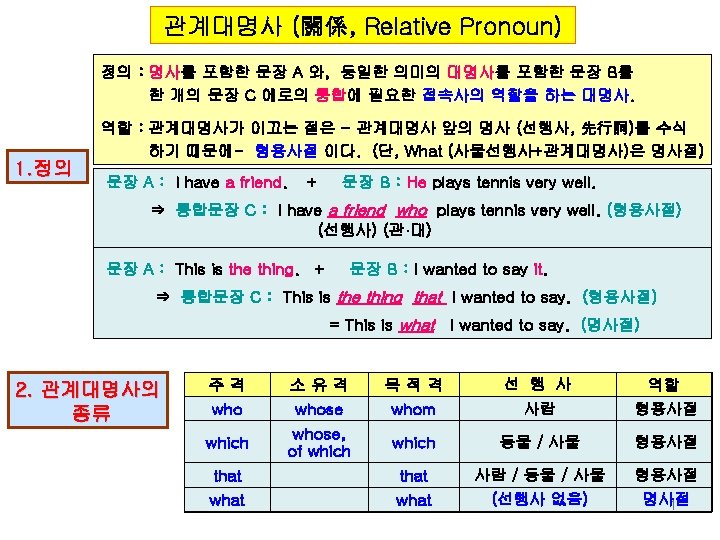
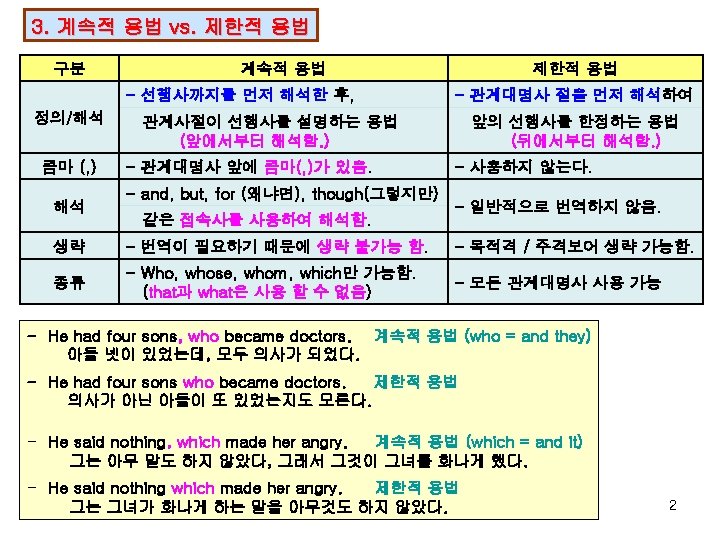
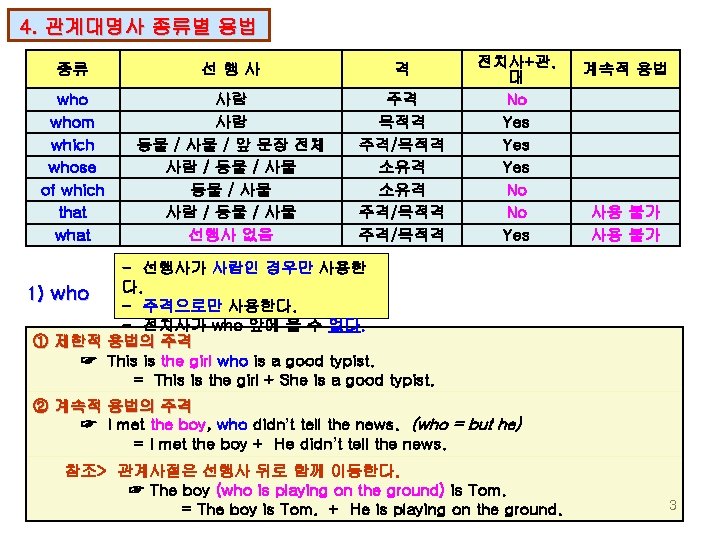
- Slides: 17
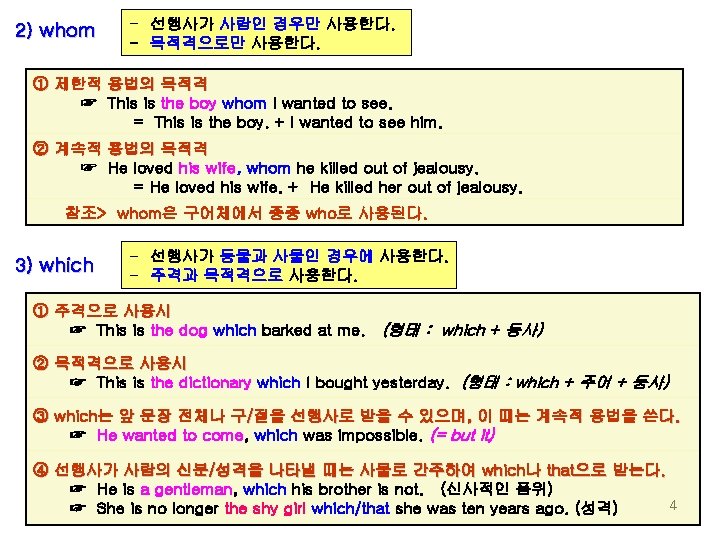
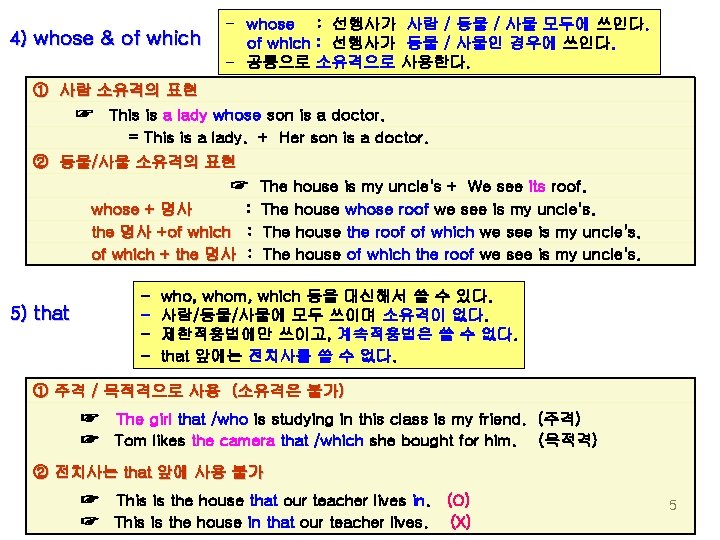
4) whose & of which - whose : 선행사가 사람 / 동물 / 사물 모두에 쓰인다. of which : 선행사가 동물 / 사물인 경우에 쓰인다. - 공통으로 소유격으로 사용한다. ① 사람 소유격의 표현 ☞ This is a lady whose son is a doctor. = This is a lady. + Her son is a doctor. ② 동물/사물 소유격의 표현 ☞ The house is my uncle's + We see its roof. whose + 명사 : The house whose roof we see is my uncle's. the 명사 +of which : The house the roof of which we see is my uncle's. of which + the 명사 : The house of which the roof we see is my uncle's. 5) that - who, whom, which 등을 대신해서 쓸 수 있다. 사람/동물/사물에 모두 쓰이며 소유격이 없다. 제한적용법에만 쓰이고, 계속적용법은 쓸 수 없다. that 앞에는 전치사를 쓸 수 없다. ① 주격 / 목적격으로 사용 (소유격은 불가) ☞ The girl that /who is studying in this class is my friend. (주격) ☞ Tom likes the camera that /which she bought for him. (목적격) ② 전치사는 that 앞에 사용 불가 ☞ This is the house that our teacher lives in. (O) ☞ This is the house in that our teacher lives. (X) 5
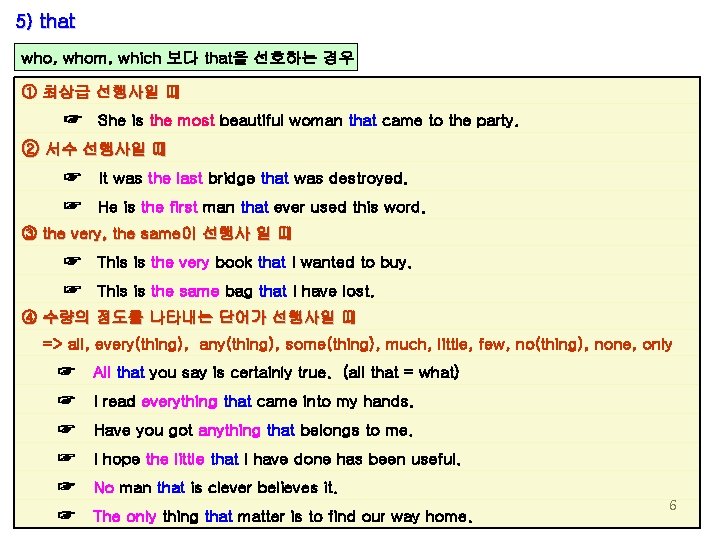
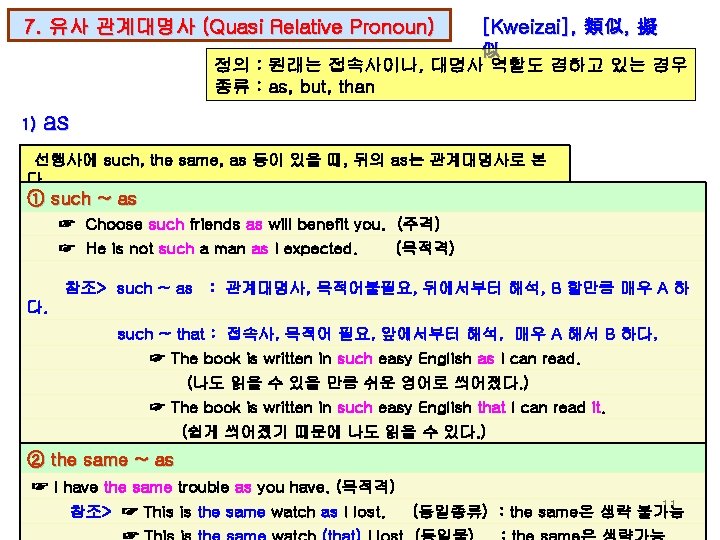
5) that who, whom, which 보다 that을 선호하는 경우 ① 최상급 선행사일 때 ☞ She is the most beautiful woman that came to the party. ② 서수 선행사일 때 ☞ It was the last bridge that was destroyed. ☞ He is the first man that ever used this word. ③ the very, the same이 선행사 일 때 ☞ This is the very book that I wanted to buy. ☞ This is the same bag that I have lost. ④ 수량의 정도를 나타내는 단어가 선행사일 때 => all, every(thing), any(thing), some(thing), much, little, few, no(thing), none, only ☞ All that you say is certainly true. (all that = what) ☞ I read everything that came into my hands. ☞ Have you got anything that belongs to me. ☞ I hope the little that I have done has been useful. ☞ No man that is clever believes it. ☞ The only thing that matter is to find our way home. 6
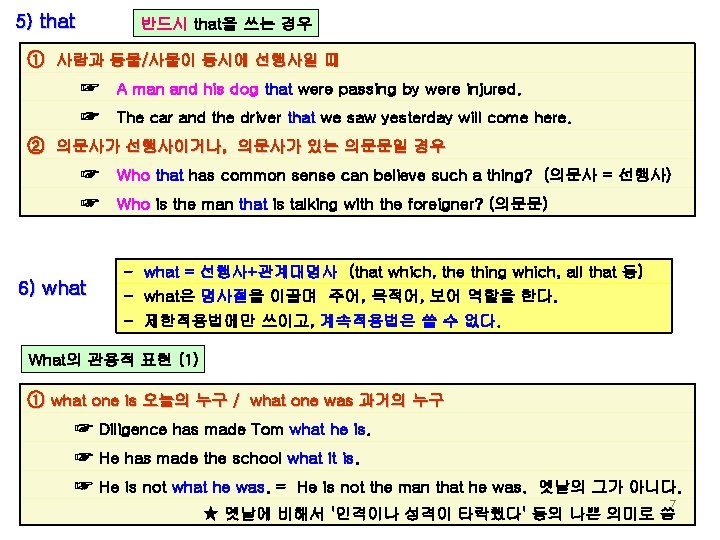
5) that 반드시 that을 쓰는 경우 ① 사람과 동물/사물이 동시에 선행사일 때 ☞ A man and his dog that were passing by were injured. ☞ The car and the driver that we saw yesterday will come here. ② 의문사가 선행사이거나, 의문사가 있는 의문문일 경우 ☞ Who that has common sense can believe such a thing? (의문사 = 선행사) ☞ Who is the man that is talking with the foreigner? (의문문) 6) what - what = 선행사+관계대명사 (that which, the thing which, all that 등) - what은 명사절을 이끌며 주어, 목적어, 보어 역할을 한다. - 제한적용법에만 쓰이고, 계속적용법은 쓸 수 없다. What의 관용적 표현 (1) ① what one is 오늘의 누구 / what one was 과거의 누구 ☞ Diligence has made Tom what he is. ☞ He has made the school what it is. ☞ He is not what he was. = He is not the man that he was. 옛날의 그가 아니다. 7 ★ 옛날에 비해서 '인격이나 성격이 타락했다' 등의 나쁜 의미로 씀
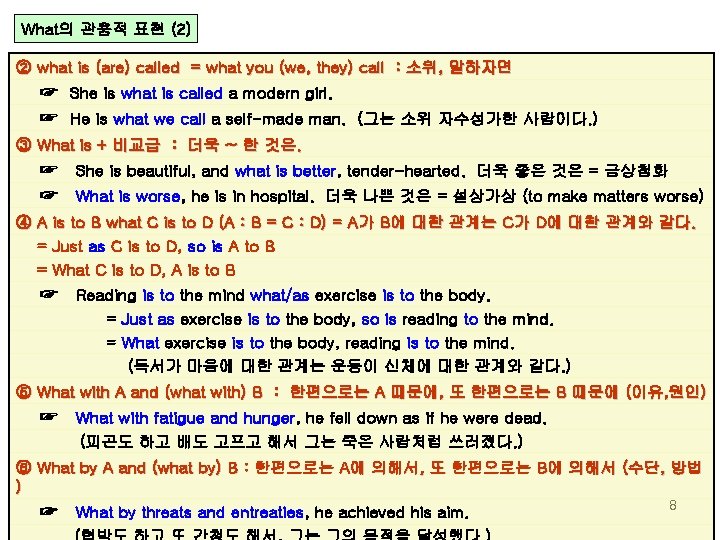
What의 관용적 표현 (2) ② what is (are) called = what you (we, they) call : 소위, 말하자면 ☞ She is what is called a modern girl. ☞ He is what we call a self-made man. (그는 소위 자수성가한 사람이다. ) ③ What is + 비교급 : 더욱 ~ 한 것은. ☞ She is beautiful, and what is better, tender-hearted. 더욱 좋은 것은 = 금상첨화 ☞ What is worse, he is in hospital. 더욱 나쁜 것은 = 설상가상 (to make matters worse) ④ A is to B what C is to D (A : B = C : D) = A가 B에 대한 관계는 C가 D에 대한 관계와 같다. = Just as C is to D, so is A to B = What C is to D, A is to B ☞ Reading is to the mind what/as exercise is to the body. = Just as exercise is to the body, so is reading to the mind. = What exercise is to the body, reading is to the mind. (독서가 마음에 대한 관계는 운동이 신체에 대한 관계와 같다. ) ⑤ What with A and (what with) B : 한편으로는 A 때문에, 또 한편으로는 B 때문에 (이유, 원인) ☞ What with fatigue and hunger, he fell down as if he were dead. (피곤도 하고 배도 고프고 해서 그는 죽은 사람처럼 쓰러졌다. ) ⑥ What by A and (what by) B : 한편으로는 A에 의해서, 또 한편으로는 B에 의해서 (수단, 방법 ) ☞ What by threats and entreaties, he achieved his aim. 8
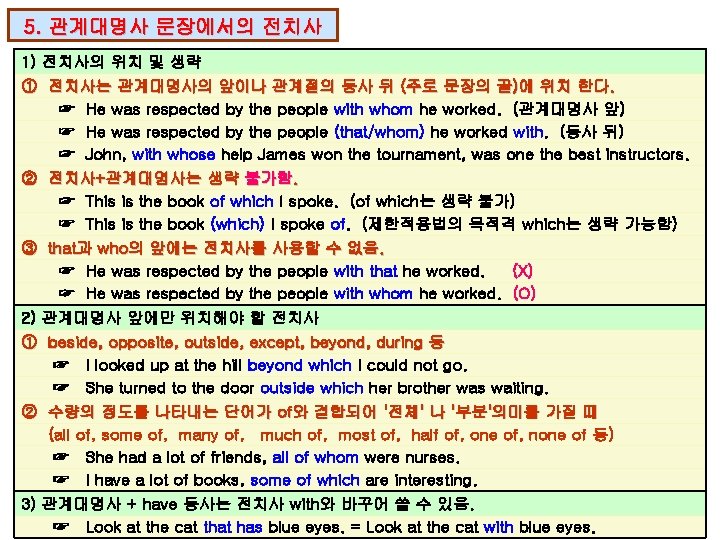
5. 관계대명사 문장에서의 전치사 1) 전치사의 위치 및 생략 ① 전치사는 관계대명사의 앞이나 관계절의 동사 뒤 (주로 문장의 끝)에 위치 한다. ☞ He was respected by the people with whom he worked. (관계대명사 앞) ☞ He was respected by the people (that/whom) he worked with. (동사 뒤) ☞ John, with whose help James won the tournament, was one the best instructors. ② 전치사+관계대명사는 생략 불가함. ☞ This is the book of which I spoke. (of which는 생략 불가) ☞ This is the book (which) I spoke of. (제한적용법의 목적격 which는 생략 가능함) ③ that과 who의 앞에는 전치사를 사용할 수 없음. ☞ He was respected by the people with that he worked. (X) ☞ He was respected by the people with whom he worked. (O) 2) 관계대명사 앞에만 위치해야 할 전치사 ① beside, opposite, outside, except, beyond, during 등 ☞ I looked up at the hill beyond which I could not go. ☞ She turned to the door outside which her brother was waiting. ② 수량의 정도를 나타내는 단어가 of와 결합되어 '전체' 나 '부분'의미를 가질 때 (all of, some of, many of, much of, most of, half of, one of, none of 등) ☞ She had a lot of friends, all of whom were nurses. ☞ I have a lot of books, some of which are interesting. 3) 관계대명사 + have 동사는 전치사 with와 바꾸어 쓸 수 있음. ☞ Look at the cat that has blue eyes. = Look at the cat with blue eyes. 9
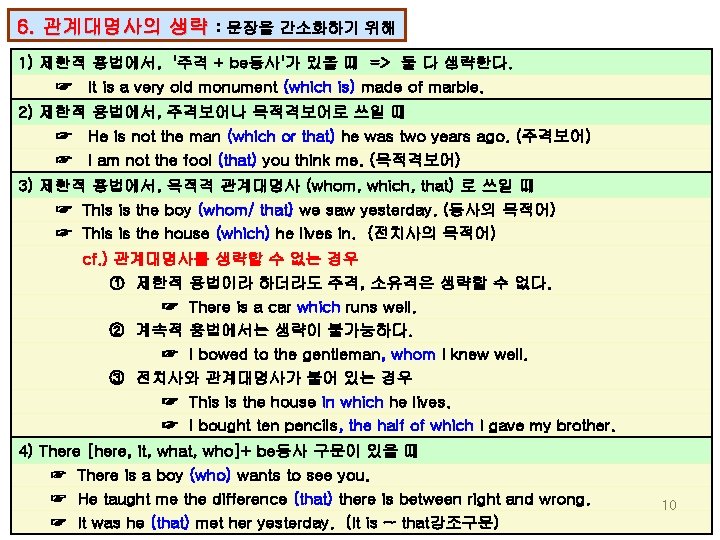
6. 관계대명사의 생략 : 문장을 간소화하기 위해 1) 제한적 용법에서, '주격 + be동사'가 있을 때 => 둘 다 생략한다. ☞ It is a very old monument (which is) made of marble. 2) 제한적 용법에서, 주격보어나 목적격보어로 쓰일 때 ☞ He is not the man (which or that) he was two years ago. (주격보어) ☞ I am not the fool (that) you think me. (목적격보어) 3) 제한적 용법에서, 목적격 관계대명사 (whom, which, that) 로 쓰일 때 ☞ This is the boy (whom/ that) we saw yesterday. (동사의 목적어) ☞ This is the house (which) he lives in. (전치사의 목적어) cf. ) 관계대명사를 생략할 수 없는 경우 ① 제한적 용법이라 하더라도 주격, 소유격은 생략할 수 없다. ☞ There is a car which runs well. ② 계속적 용법에서는 생략이 불가능하다. ☞ I bowed to the gentleman, whom I knew well. ③ 전치사와 관계대명사가 붙어 있는 경우 ☞ This is the house in which he lives. ☞ I bought ten pencils, the half of which I gave my brother. 4) There [here, it, what, who]+ be동사 구문이 있을 때 ☞ There is a boy (who) wants to see you. ☞ He taught me the difference (that) there is between right and wrong. ☞ It was he (that) met her yesterday. (It is ~ that강조구문) 10
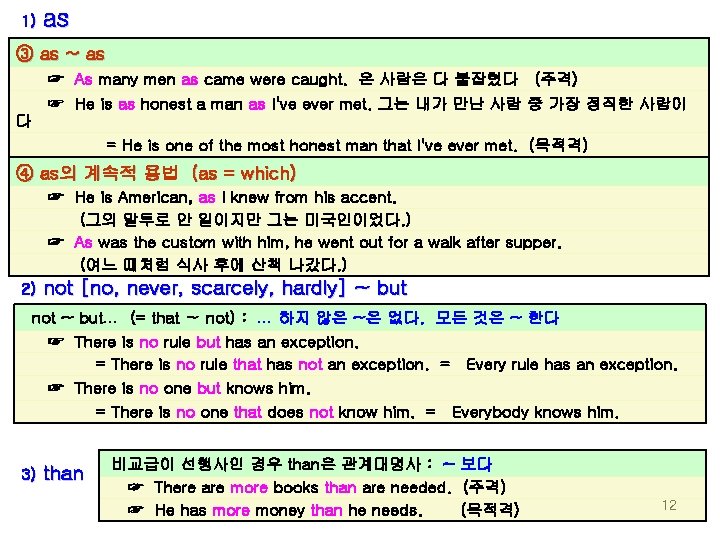
1) as ③ as ~ as ☞ As many men as came were caught. 온 사람은 다 붙잡혔다 (주격) ☞ He is as honest a man as I've ever met. 그는 내가 만난 사람 중 가장 정직한 사람이 다 = He is one of the most honest man that I've ever met. (목적격) ④ as의 계속적 용법 (as = which) ☞ He is American, as I knew from his accent. (그의 말투로 안 일이지만 그는 미국인이었다. ) ☞ As was the custom with him, he went out for a walk after supper. (여느 때처럼 식사 후에 산책 나갔다. ) 2) not [no, never, scarcely, hardly] ~ but not ~ but… (= that ∼ not) : … 하지 않은 ~은 없다. 모든 것은 ~ 한다 ☞ There is no rule but has an exception. = There is no rule that has not an exception. = Every rule has an exception. ☞ There is no one but knows him. = There is no one that does not know him. = Everybody knows him. 3) than 비교급이 선행사인 경우 than은 관계대명사 : ~ 보다 ☞ There are more books than are needed. (주격) ☞ He has more money than he needs. (목적격) 12
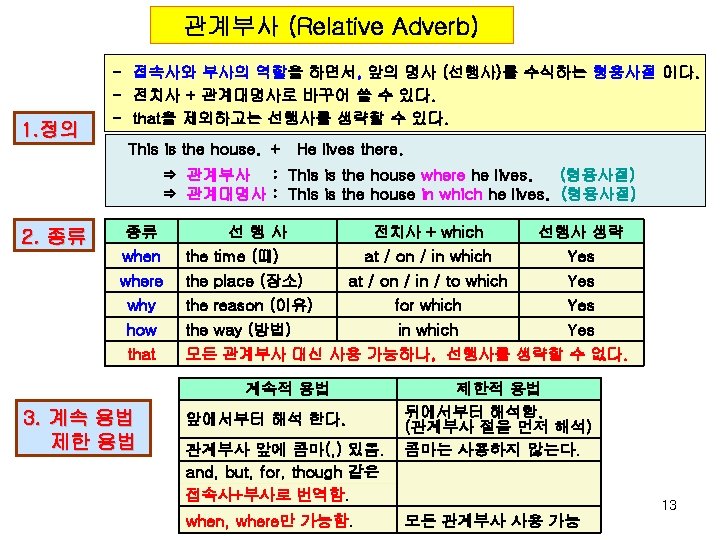
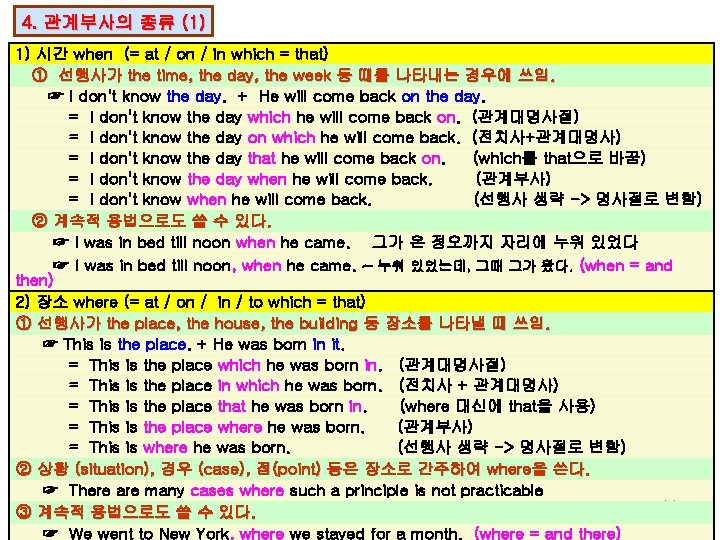
4. 관계부사의 종류 (1) 1) 시간 when (= at / on / in which = that) ① 선행사가 the time, the day, the week 등 때를 나타내는 경우에 쓰임. ☞ I don't know the day. + He will come back on the day. = I don't know the day which he will come back on. (관계대명사절) = I don't know the day on which he will come back. (전치사+관계대명사) = I don't know the day that he will come back on. (which를 that으로 바꿈) = I don't know the day when he will come back. (관계부사) = I don't know when he will come back. (선행사 생략 -> 명사절로 변함) ② 계속적 용법으로도 쓸 수 있다. ☞ I was in bed till noon when he came. 그가 온 정오까지 자리에 누워 있었다 ☞ I was in bed till noon, when he came. ~ 누워 있었는데, 그때 그가 왔다. (when = and then) 2) 장소 where (= at / on / in / to which = that) ① 선행사가 the place, the house, the building 등 장소를 나타낼 때 쓰임. ☞ This is the place. + He was born in it. = This is the place which he was born in. (관계대명사절) = This is the place in which he was born. (전치사 + 관계대명사) = This is the place that he was born in. (where 대신에 that을 사용) = This is the place where he was born. (관계부사) = This is where he was born. (선행사 생략 -> 명사절로 변함) ② 상황 (situation), 경우 (case), 점(point) 등은 장소로 간주하여 where을 쓴다. ☞ There are many cases where such a principle is not practicable 14 ③ 계속적 용법으로도 쓸 수 있다. ☞ We went to New York, where we stayed for a month. (where = and there)
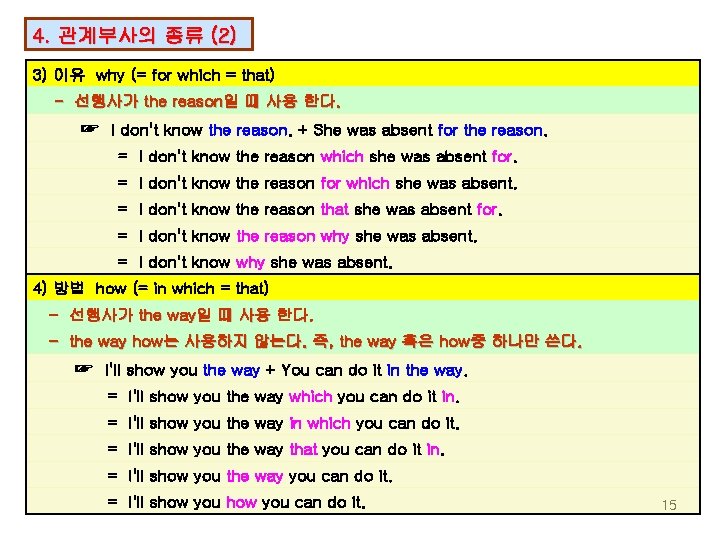
4. 관계부사의 종류 (2) 3) 이유 why (= for which = that) - 선행사가 the reason일 때 사용 한다. ☞ I don't know the reason. + She was absent for the reason. = I don't know the reason which she was absent for. = I don't know the reason for which she was absent. = I don't know the reason that she was absent for. = I don't know the reason why she was absent. = I don't know why she was absent. 4) 방법 how (= in which = that) - 선행사가 the way일 때 사용 한다. - the way how는 사용하지 않는다. 즉, the way 혹은 how중 하나만 쓴다. ☞ I'll show you the way + You can do it in the way. = I'll show you the way which you can do it in. = I'll show you the way in which you can do it. = I'll show you the way that you can do it in. = I'll show you the way you can do it. = I'll show you can do it. 15
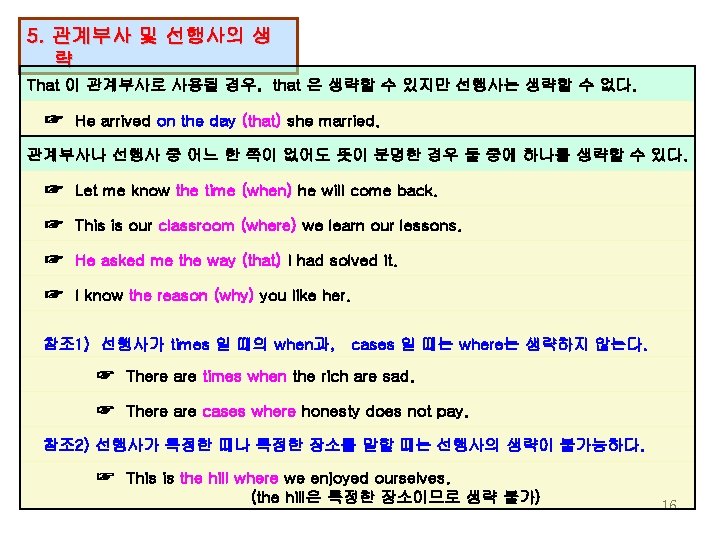
5. 관계부사 및 선행사의 생 략 That 이 관계부사로 사용될 경우, that 은 생략할 수 있지만 선행사는 생략할 수 없다. ☞ He arrived on the day (that) she married. 관계부사나 선행사 중 어느 한 쪽이 없어도 뜻이 분명한 경우 둘 중에 하나를 생략할 수 있다. ☞ Let me know the time (when) he will come back. ☞ This is our classroom (where) we learn our lessons. ☞ He asked me the way (that) I had solved it. ☞ I know the reason (why) you like her. 참조 1) 선행사가 times 일 때의 when과, cases 일 때는 where는 생략하지 않는다. ☞ There are times when the rich are sad. ☞ There are cases where honesty does not pay. 참조 2) 선행사가 특정한 때나 특정한 장소를 말할 때는 선행사의 생략이 불가능하다. ☞ This is the hill where we enjoyed ourselves. (the hill은 특정한 장소이므로 생략 불가) 16
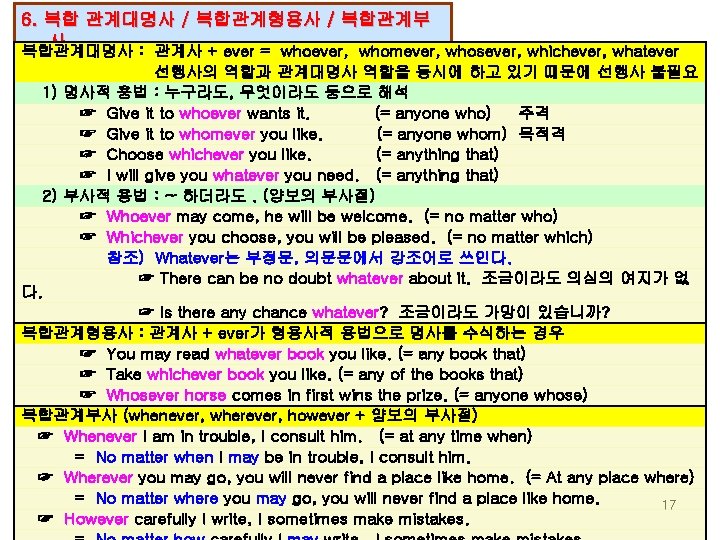
6. 복합 관계대명사 / 복합관계형용사 / 복합관계부 사 복합관계대명사 : 관계사 + ever = whoever, whomever, whosever, whichever, whatever 선행사의 역할과 관계대명사 역할을 동시에 하고 있기 때문에 선행사 불필요 1) 명사적 용법 : 누구라도, 무엇이라도 등으로 해석 ☞ Give it to whoever wants it. (= anyone who) 주격 ☞ Give it to whomever you like. (= anyone whom) 목적격 ☞ Choose whichever you like. (= anything that) ☞ I will give you whatever you need. (= anything that) 2) 부사적 용법 : ~ 하더라도. (양보의 부사절) ☞ Whoever may come, he will be welcome. (= no matter who) ☞ Whichever you choose, you will be pleased. (= no matter which) 참조) Whatever는 부정문, 의문문에서 강조어로 쓰인다. ☞ There can be no doubt whatever about it. 조금이라도 의심의 여지가 없 다. ☞ Is there any chance whatever? 조금이라도 가망이 있습니까? 복합관계형용사 : 관계사 + ever가 형용사적 용법으로 명사를 수식하는 경우 ☞ You may read whatever book you like. (= any book that) ☞ Take whichever book you like. (= any of the books that) ☞ Whosever horse comes in first wins the prize. (= anyone whose) 복합관계부사 (whenever, wherever, however + 양보의 부사절) ☞ Whenever I am in trouble, I consult him. (= at any time when) = No matter when I may be in trouble, I consult him. ☞ Wherever you may go, you will never find a place like home. (= At any place where) = No matter where you may go, you will never find a place like home. 17 ☞ However carefully I write, I sometimes make mistakes.