
4 TRANSMISI DIGITAL Transmisi Digital Karakteristik Polapola penyandian

- Slides: 56
4. TRANSMISI DIGITAL
Transmisi Digital • Karakteristik • Pola-pola penyandian kanal (Line Coding Schemes) • Beberapa pola penyandian yang lain
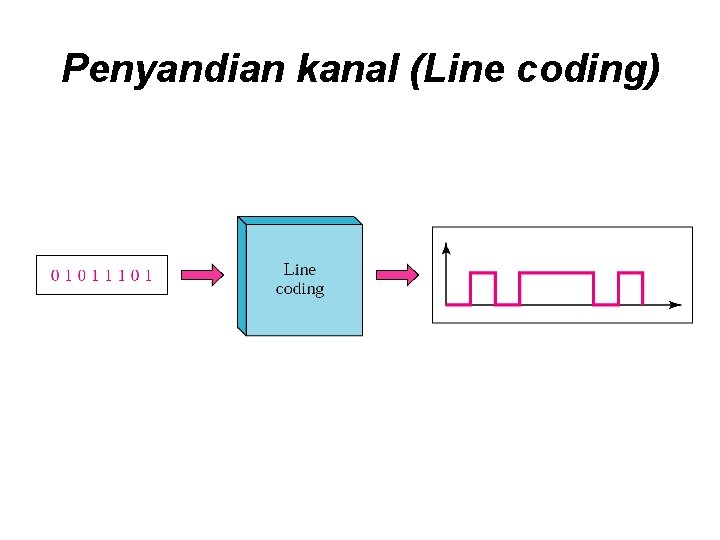
Penyandian kanal (Line coding)
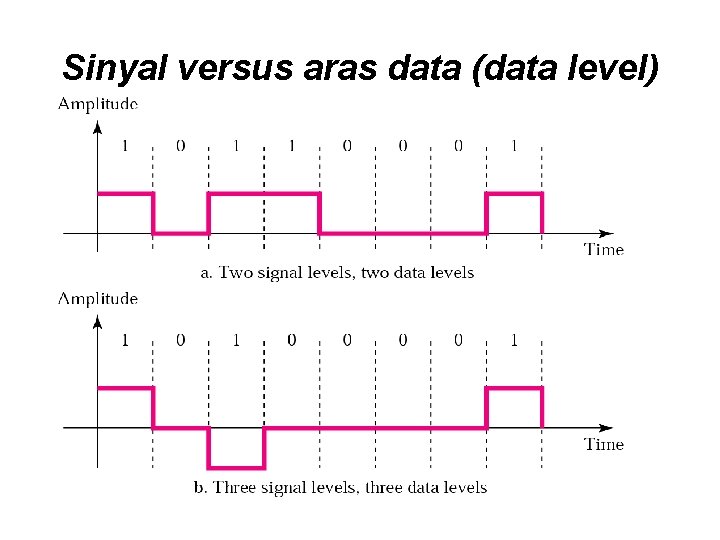
Sinyal versus aras data (data level)
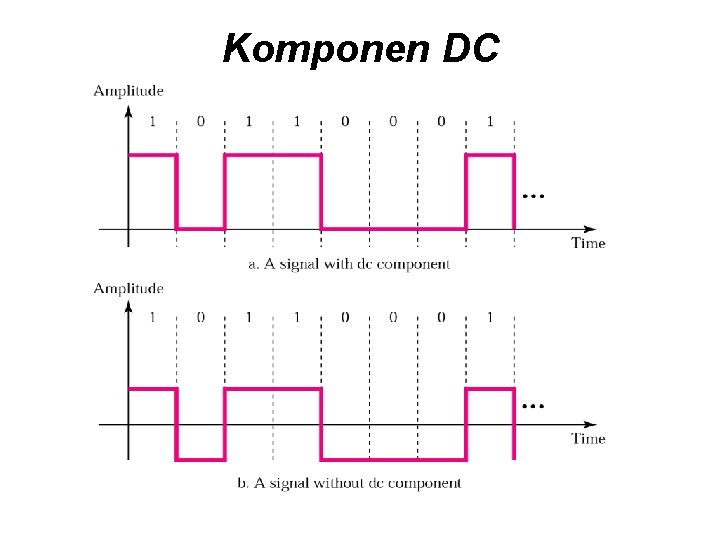
Komponen DC
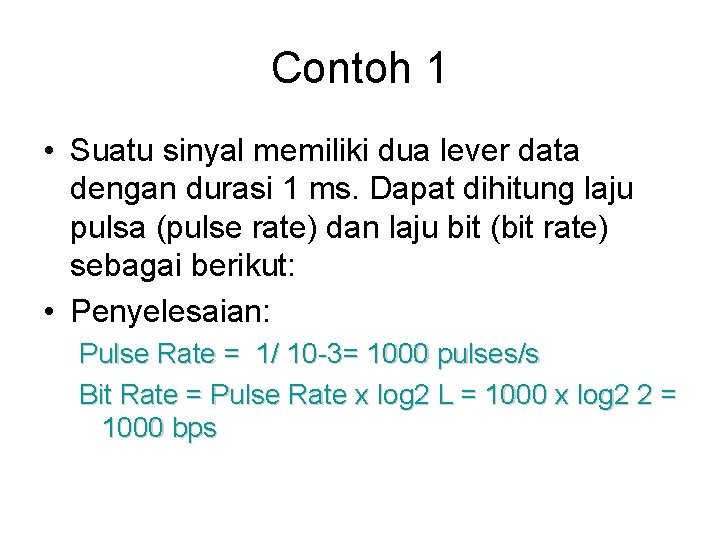
Contoh 1 • Suatu sinyal memiliki dua lever data dengan durasi 1 ms. Dapat dihitung laju pulsa (pulse rate) dan laju bit (bit rate) sebagai berikut: • Penyelesaian: Pulse Rate = 1/ 10 -3= 1000 pulses/s Bit Rate = Pulse Rate x log 2 L = 1000 x log 2 2 = 1000 bps
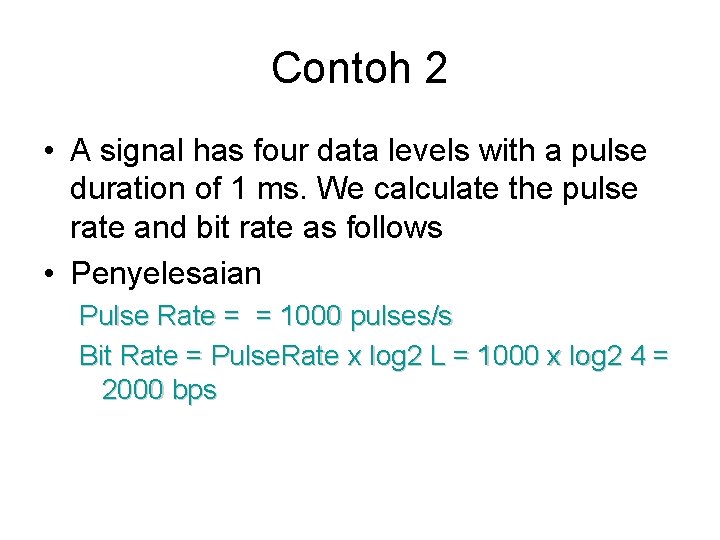
Contoh 2 • A signal has four data levels with a pulse duration of 1 ms. We calculate the pulse rate and bit rate as follows • Penyelesaian Pulse Rate = = 1000 pulses/s Bit Rate = Pulse. Rate x log 2 L = 1000 x log 2 4 = 2000 bps
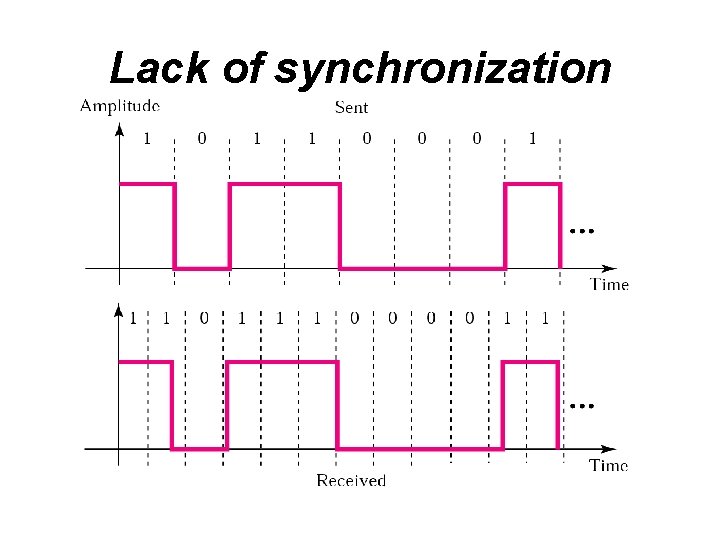
Lack of synchronization
Contoh 3 In a digital transmission, the receiver clock is 0. 1 percent faster than the sender clock. How many extra bits per second does the receiver receive if the data rate is 1 Kbps? How many if the data rate is 1 Mbps? • Penyelesaian:
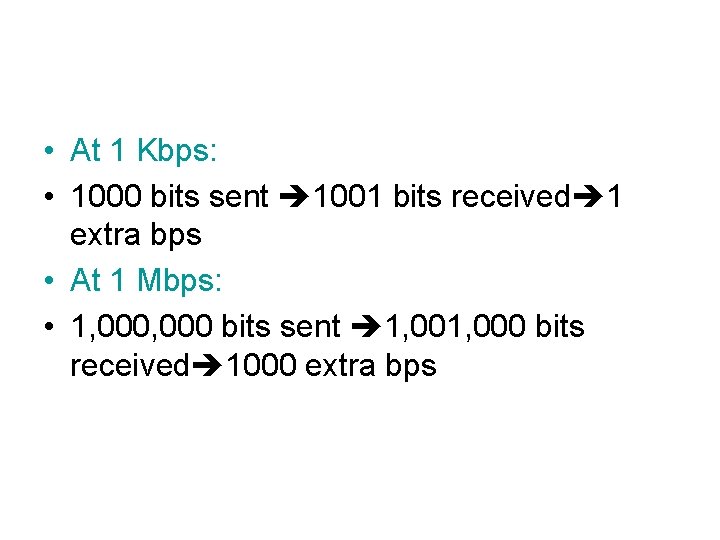
• At 1 Kbps: • 1000 bits sent 1001 bits received 1 extra bps • At 1 Mbps: • 1, 000 bits sent 1, 000 bits received 1000 extra bps
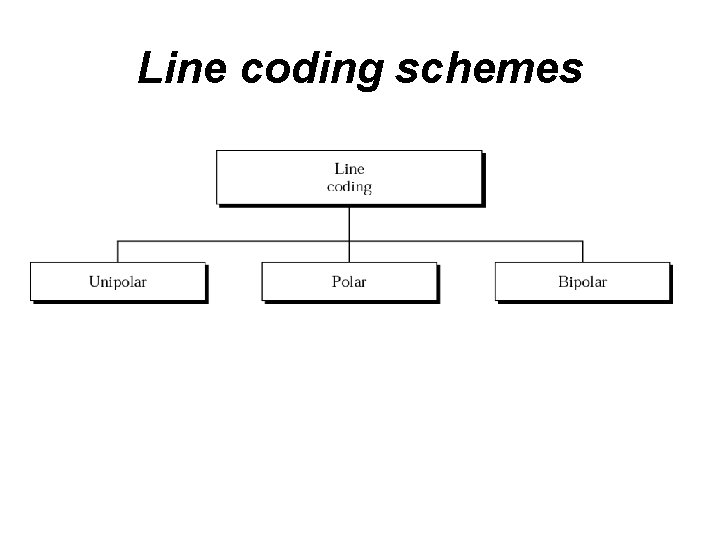
Line coding schemes
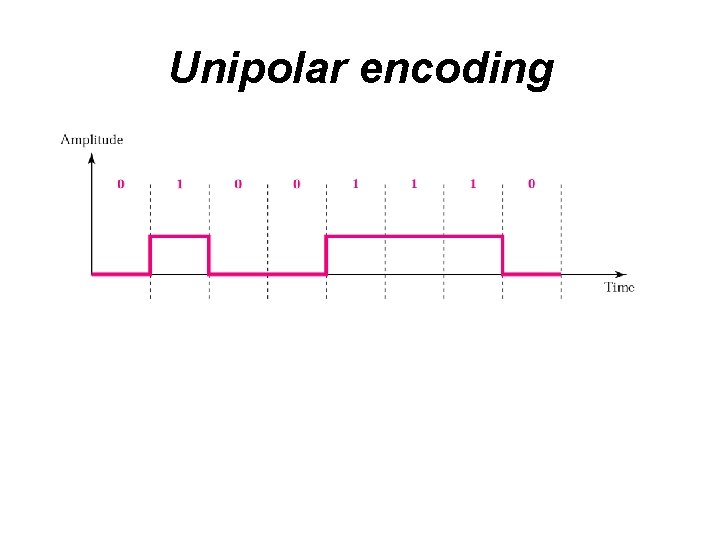
Unipolar encoding uses only one voltage level.
Unipolar encoding
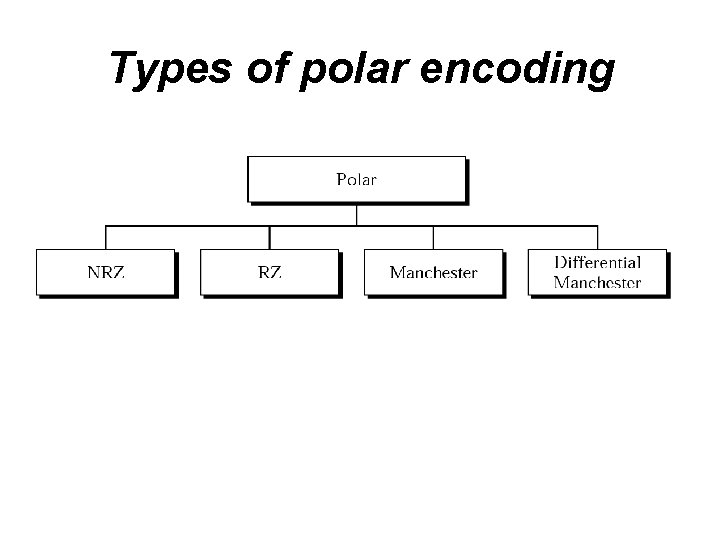
Polar encoding uses two voltage levels (positive and negative).
Types of polar encoding
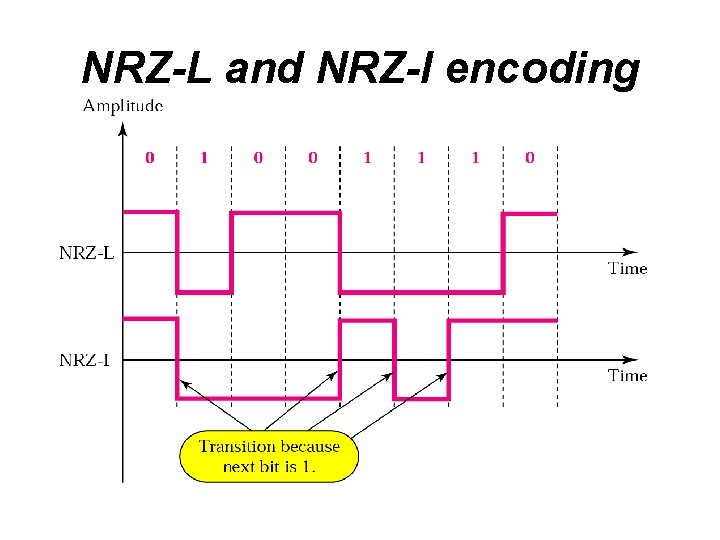
• In NRZ-L the level of the signal is dependent upon the state of the bit. In NRZ-I the signal is inverted if a 1 is encountered.
NRZ-L and NRZ-I encoding
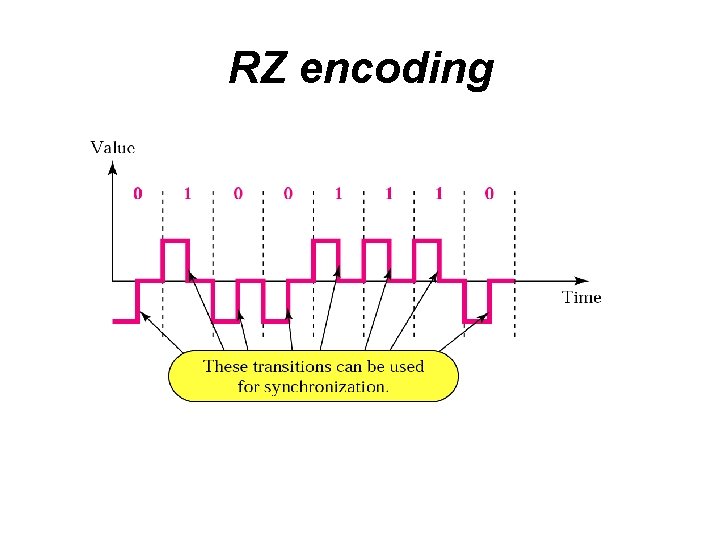
RZ encoding
A good encoded digital signal must contain a provision for synchronization.
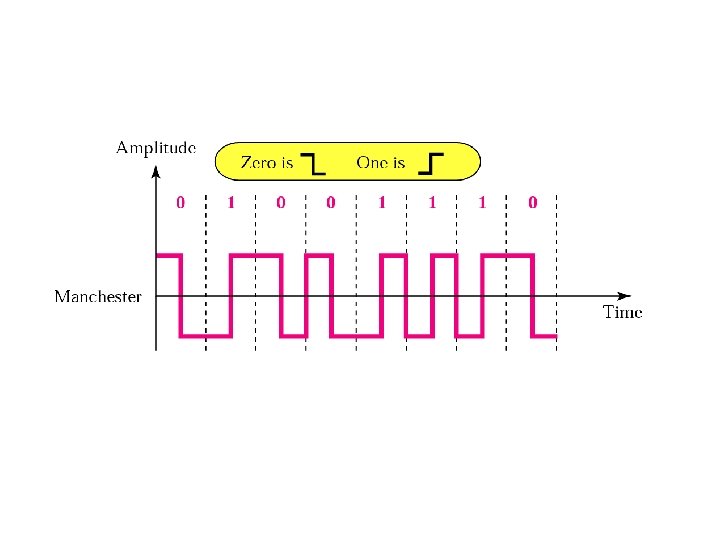
In Manchester encoding, the transition at the middle of the bit is used for both synchronization and bit representation.
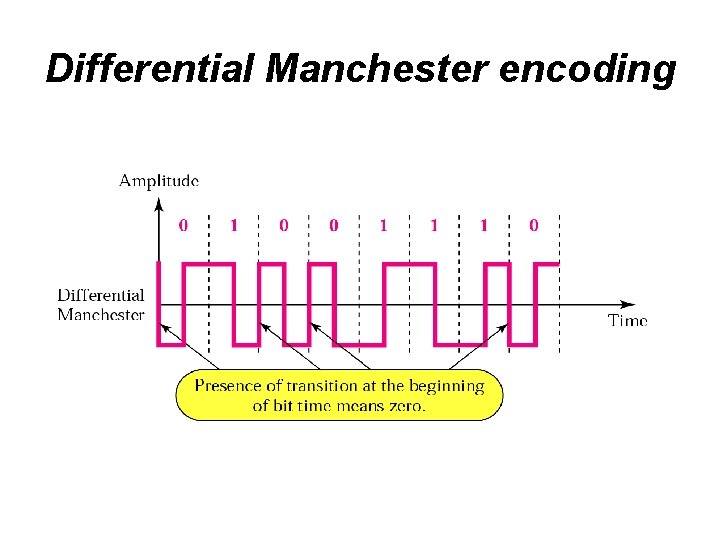
Differential Manchester encoding
In differential Manchester encoding, the transition at the middle of the bit is used only for synchronization. The bit representation is defined by the inversion or noninversion at the beginning of the bit.
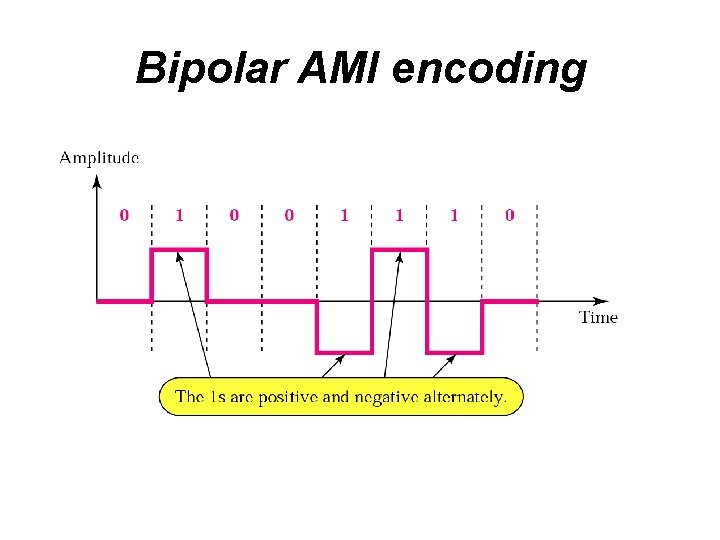
• In bipolar encoding, we use three levels: positive, zero, and negative.
Bipolar AMI encoding
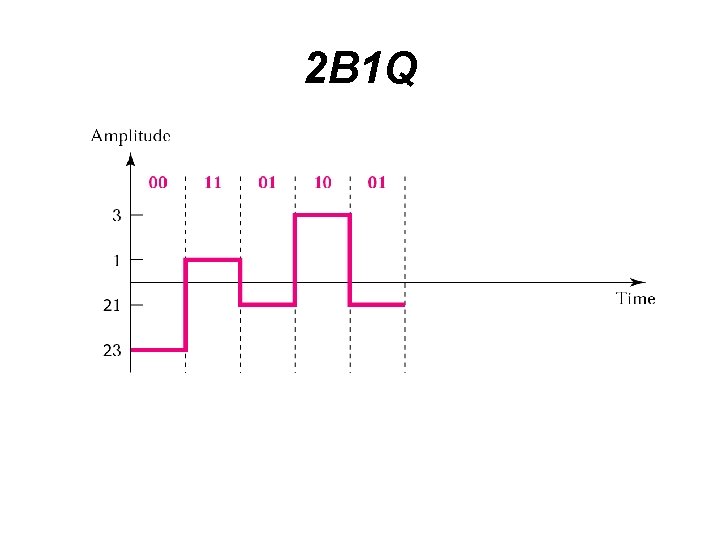
2 B 1 Q
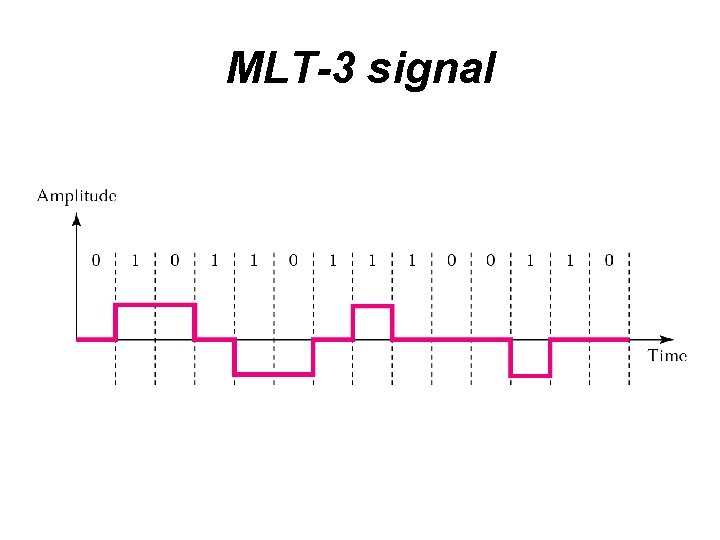
MLT-3 signal
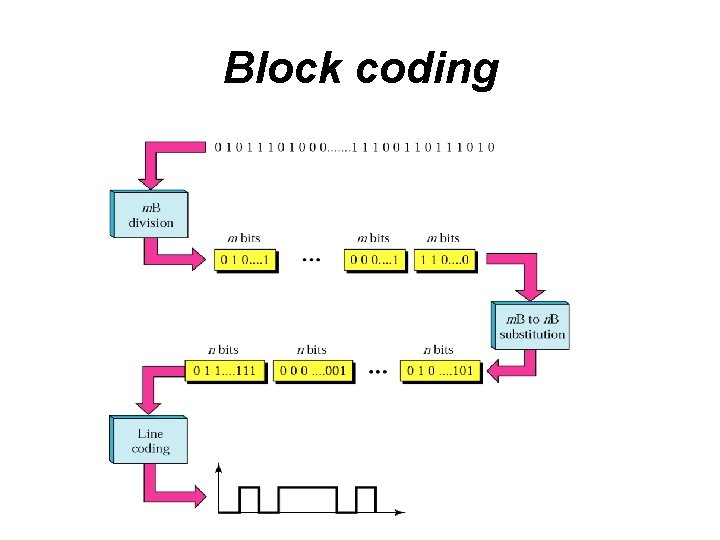
5. 2 Block Coding • Steps in Transformation • Some Common Block Codes
Block coding
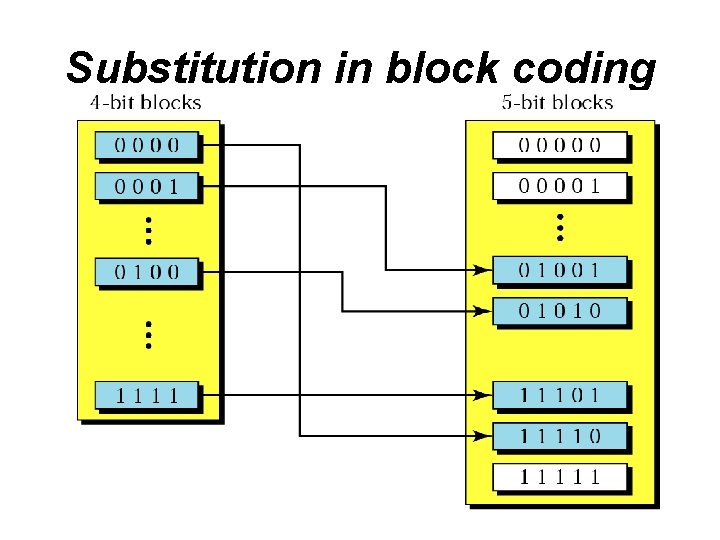
Substitution in block coding
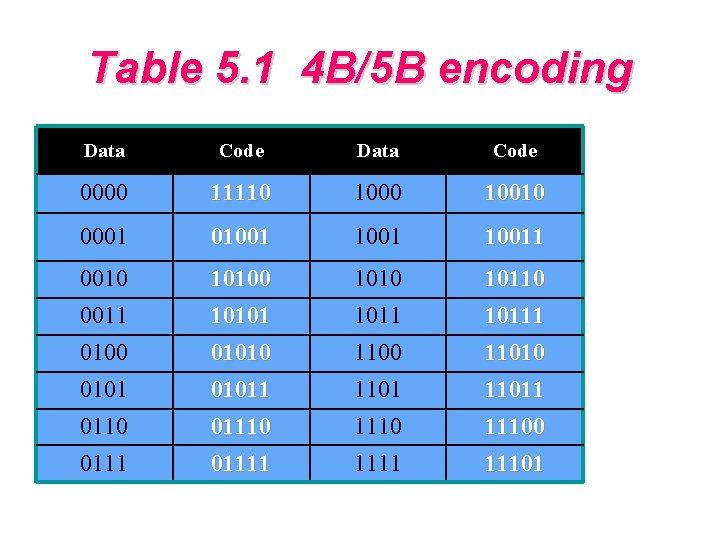
Table 5. 1 4 B/5 B encoding Data Code 0000 11110 10010 0001 010011 0010 1010 10110 0011 101010 10111 11010 1101 0110 01011 01110 11011 11100 01111 11101 0100 0101 1100
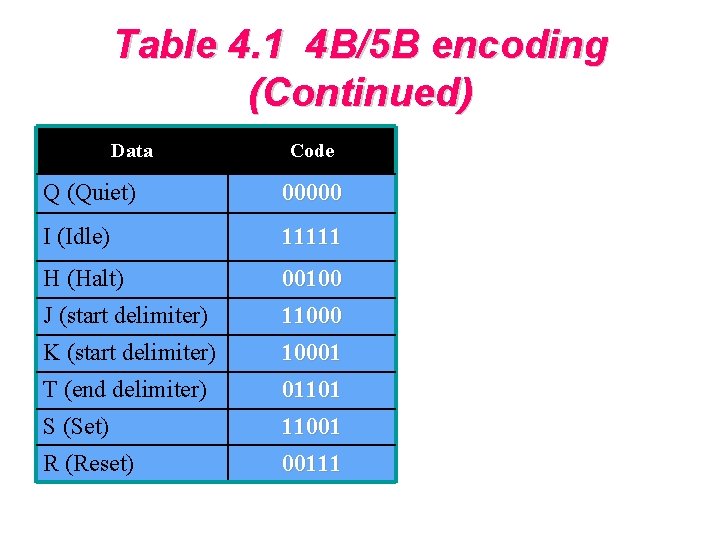
Table 4. 1 4 B/5 B encoding (Continued) Data Code Q (Quiet) 00000 I (Idle) 11111 H (Halt) 00100 J (start delimiter) 110001 K (start delimiter) T (end delimiter) S (Set) 01101 11001 R (Reset) 00111
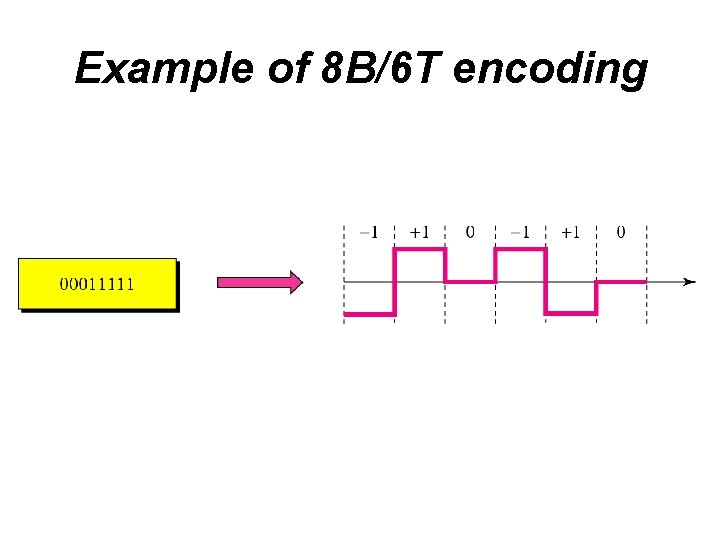
Example of 8 B/6 T encoding
5. 3 Sampling • • • Pulse Amplitude Modulation Pulse Code Modulation Sampling Rate: Nyquist Theorem How Many Bits per Sample? Bit Rate
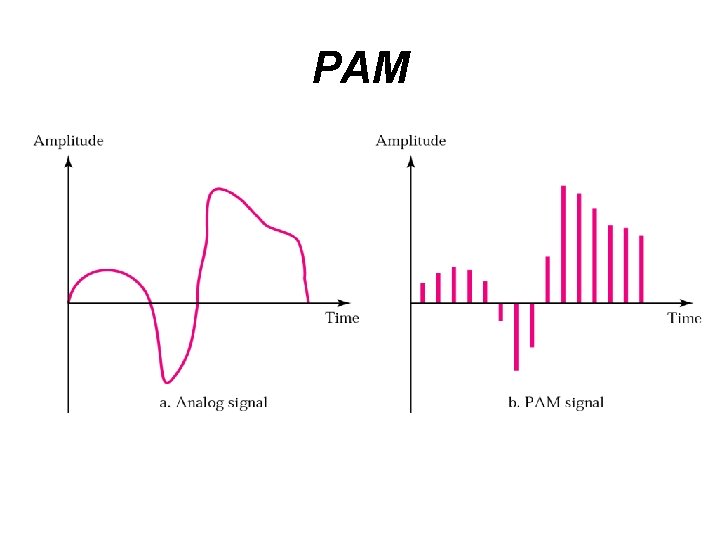
PAM
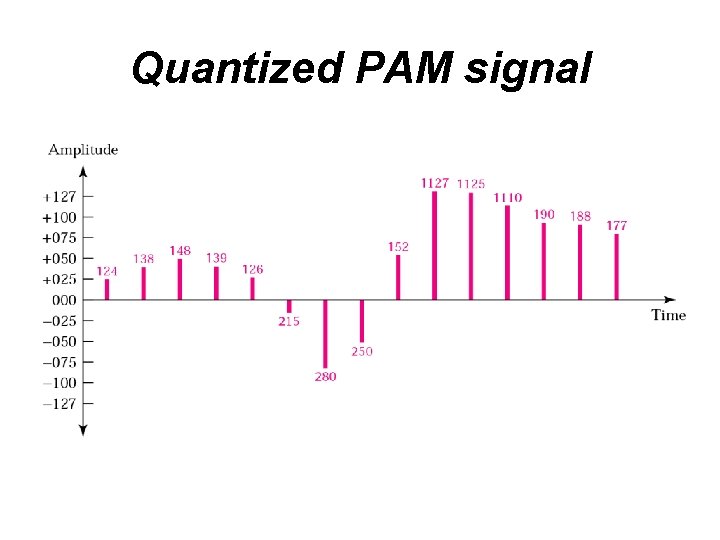
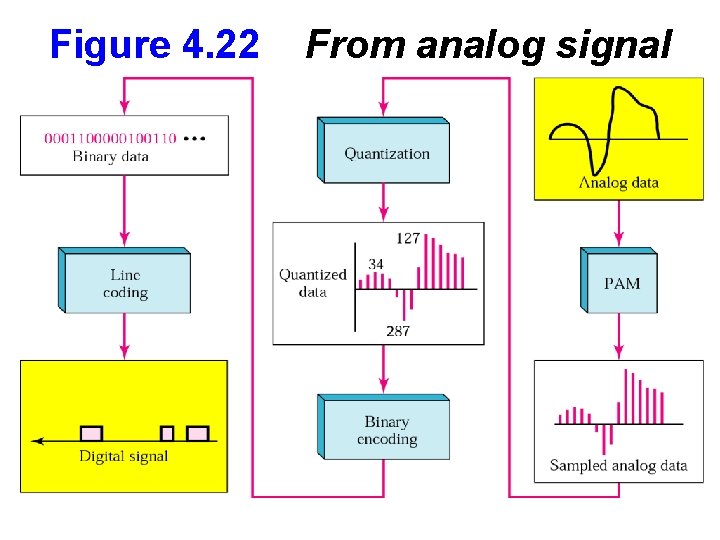
Pulse amplitude modulation has some applications, but it is not used by itself in data communication. However, it is the first step in another very popular conversion method called pulse code modulation.
Quantized PAM signal
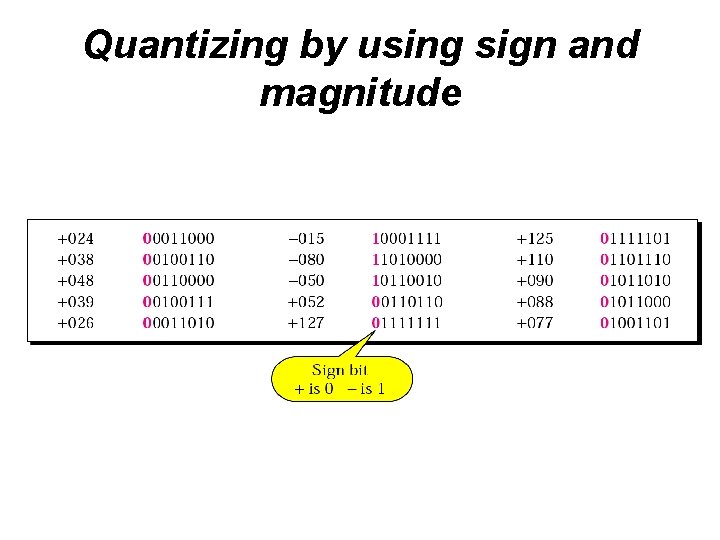
Quantizing by using sign and magnitude
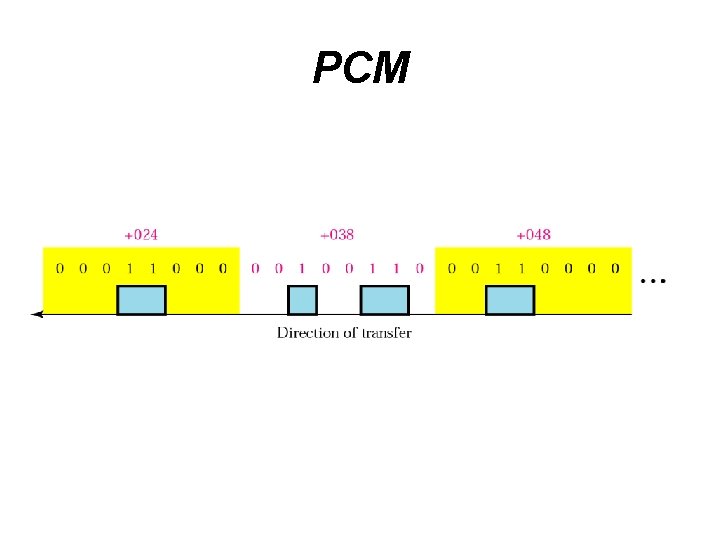
PCM
Figure 4. 22 From analog signal to PCM digital code
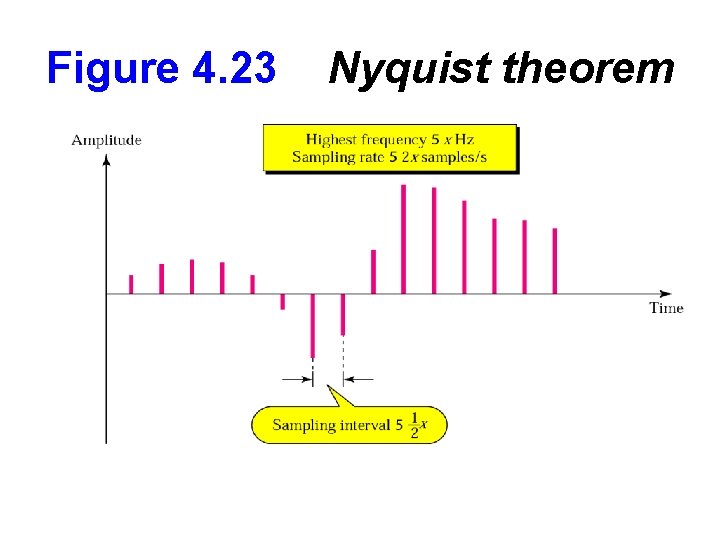
According to the Nyquist theorem, the sampling rate must be at least 2 times the highest frequency.
Figure 4. 23 Nyquist theorem
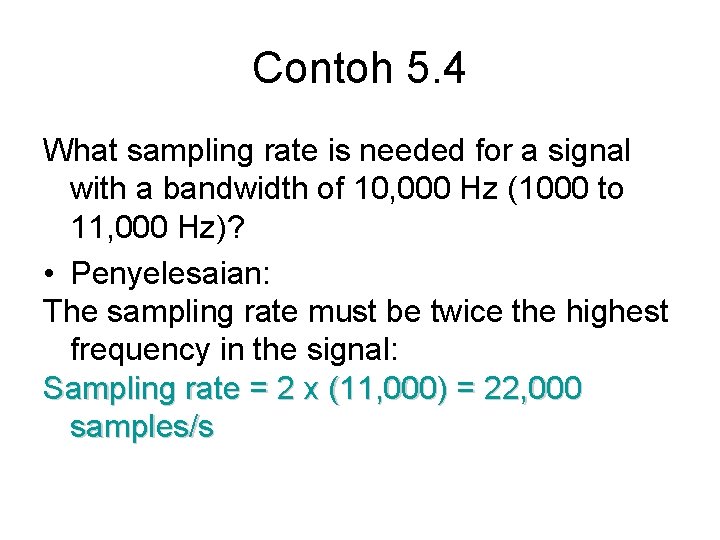
Contoh 5. 4 What sampling rate is needed for a signal with a bandwidth of 10, 000 Hz (1000 to 11, 000 Hz)? • Penyelesaian: The sampling rate must be twice the highest frequency in the signal: Sampling rate = 2 x (11, 000) = 22, 000 samples/s
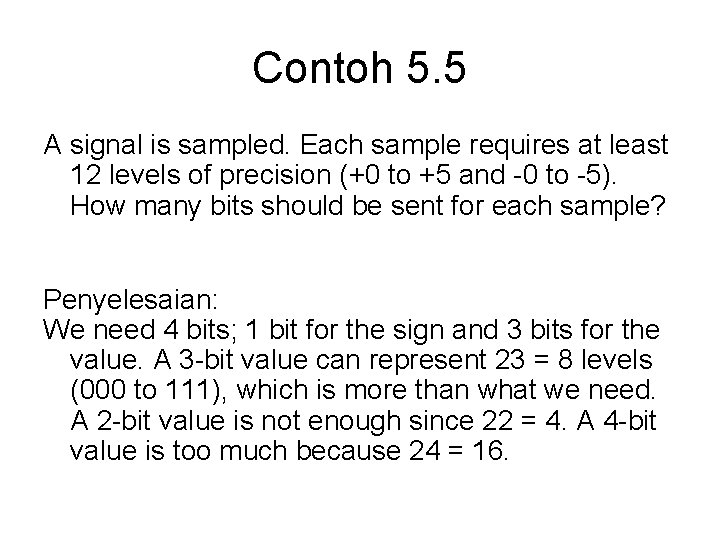
Contoh 5. 5 A signal is sampled. Each sample requires at least 12 levels of precision (+0 to +5 and -0 to -5). How many bits should be sent for each sample? Penyelesaian: We need 4 bits; 1 bit for the sign and 3 bits for the value. A 3 -bit value can represent 23 = 8 levels (000 to 111), which is more than what we need. A 2 -bit value is not enough since 22 = 4. A 4 -bit value is too much because 24 = 16.
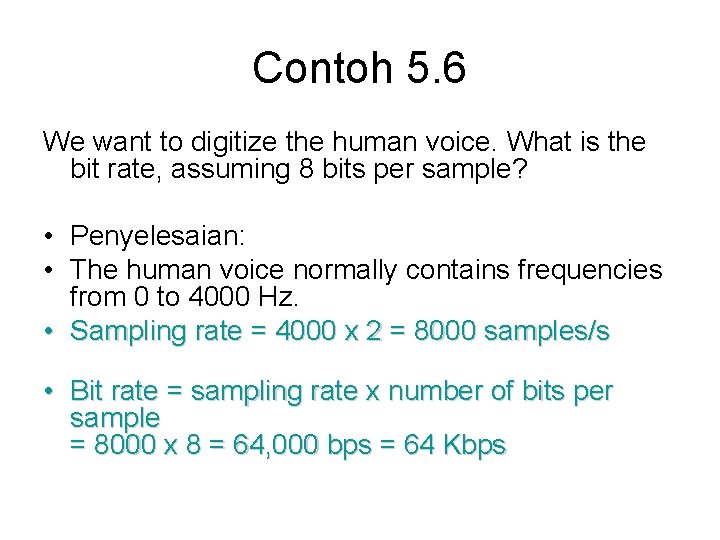
Contoh 5. 6 We want to digitize the human voice. What is the bit rate, assuming 8 bits per sample? • Penyelesaian: • The human voice normally contains frequencies from 0 to 4000 Hz. • Sampling rate = 4000 x 2 = 8000 samples/s • Bit rate = sampling rate x number of bits per sample = 8000 x 8 = 64, 000 bps = 64 Kbps
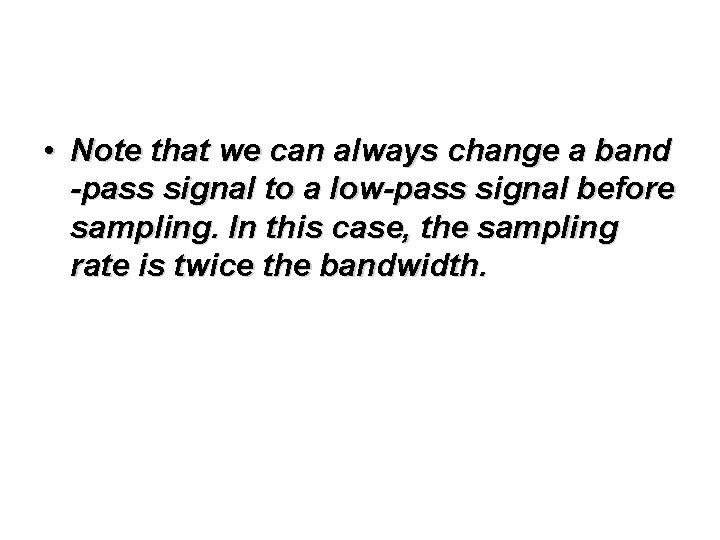
• Note that we can always change a band -pass signal to a low-pass signal before sampling. In this case, the sampling rate is twice the bandwidth.
Mode Transmisi • Parallel Transmission • Serial Transmission
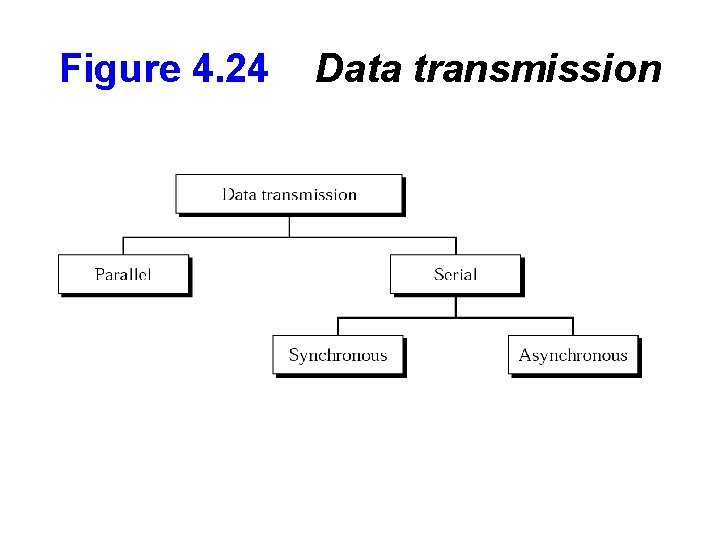
Figure 4. 24 Data transmission
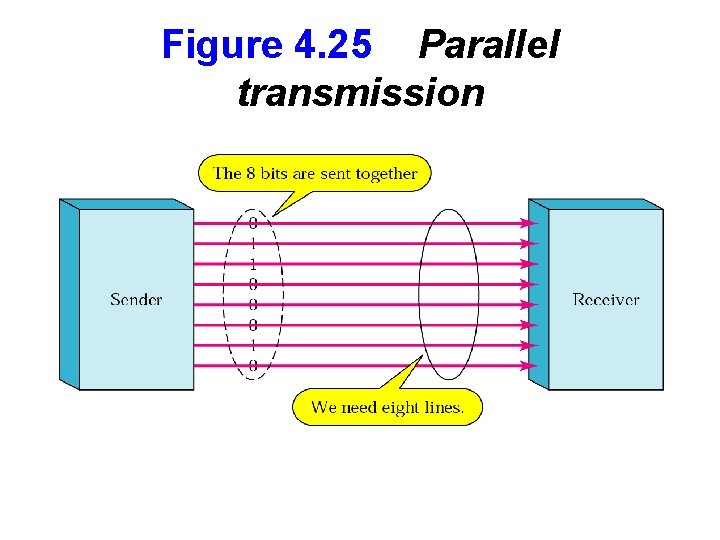
Figure 4. 25 Parallel transmission
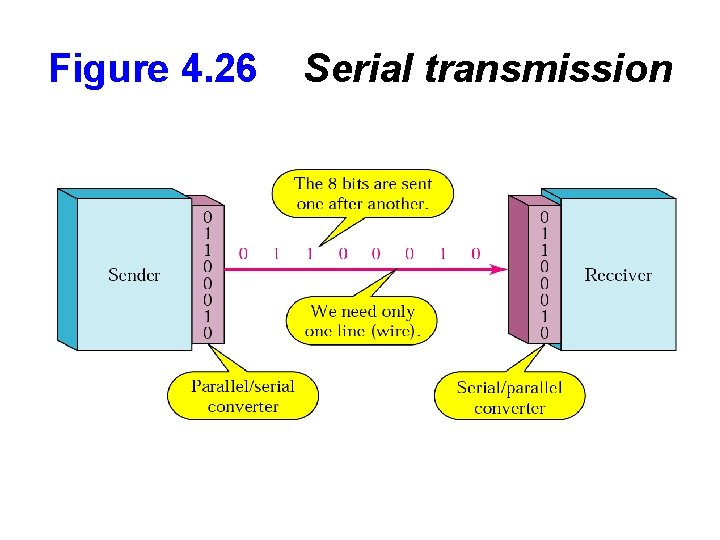
Figure 4. 26 Serial transmission
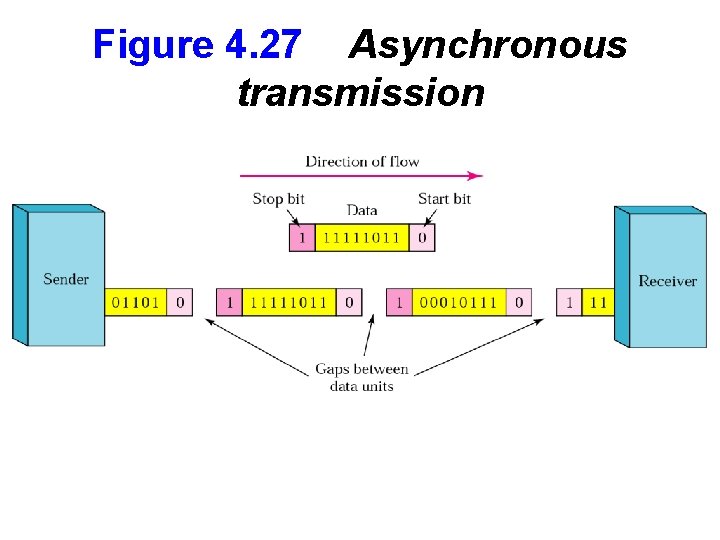
In asynchronous transmission, we send 1 start bit (0) at the beginning and 1 or more stop bits (1 s) at the end of each byte. There may be a gap between each byte.
Asynchronous here means “asynchronous at the byte level, ” but the bits are still synchronized; their durations are the same.
Figure 4. 27 Asynchronous transmission
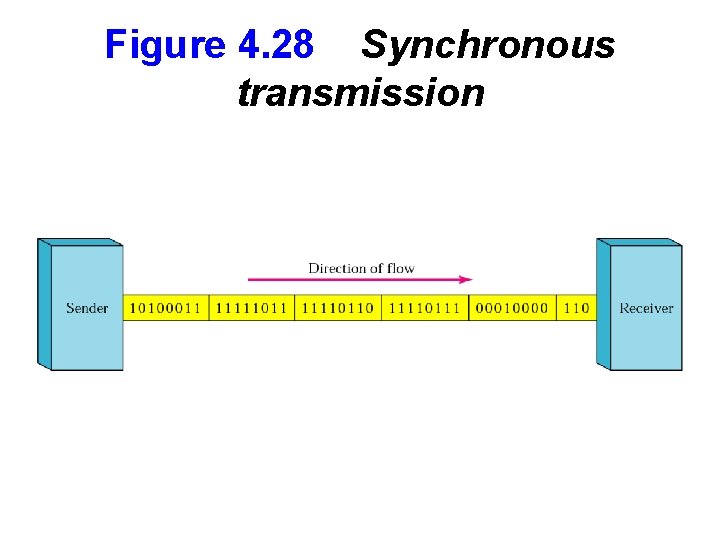
In synchronous transmission, we send bits one after another without start/stop bits or gaps. It is the responsibility of the receiver to group the bits.
Figure 4. 28 Synchronous transmission