
4 THE BRAIN AND NERVOUS SYSTEM 4 1
4 THE BRAIN AND NERVOUS SYSTEM 4. 1 The Nervous System: A Basic Blueprint 4. 4 A Tour Through the Brain 4. 2 Communication in the Nervous System 4. 5 The Two Hemispheres of the Brain 4. 3 Mapping the Brain 4. 6 The Flexible Brain PSYCHOLOGY, Twelfth Edition | Carole Wade • Carol Tavris Copyright © 2017, 2014, 2011 Pearson Education Inc. All rights reserved.
Gathers and processes information, produces responses to stimuli, and coordinates the workings of different cells e r v o u s system
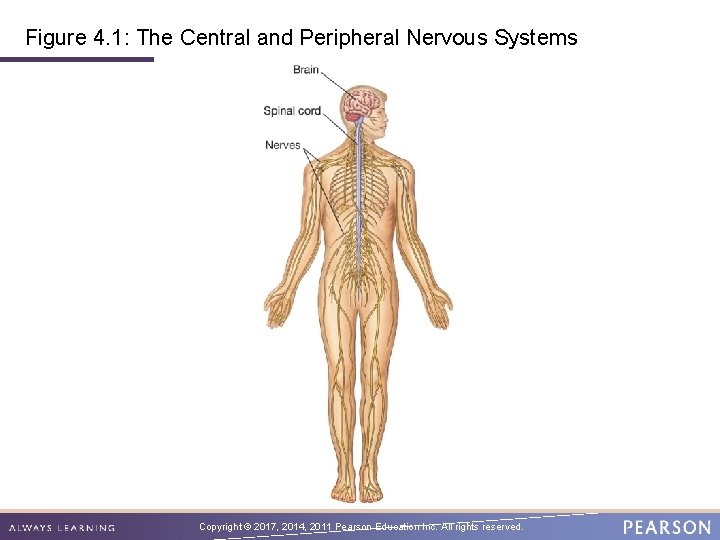
Figure 4. 1: The Central and Peripheral Nervous Systems Copyright © 2017, 2014, 2011 Pearson Education Inc. All rights reserved.
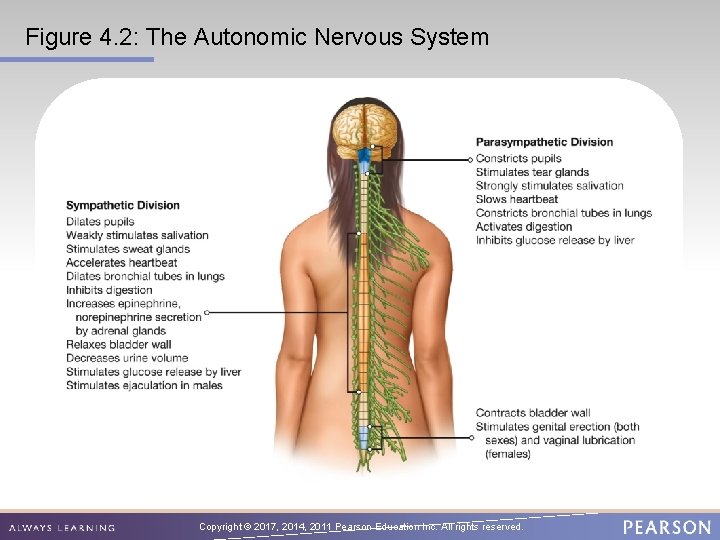
Figure 4. 2: The Autonomic Nervous System Copyright © 2017, 2014, 2011 Pearson Education Inc. All rights reserved.

The Nervous System Copyright © 2017, 2014, 2011 Pearson Education Inc. All rights reserved.
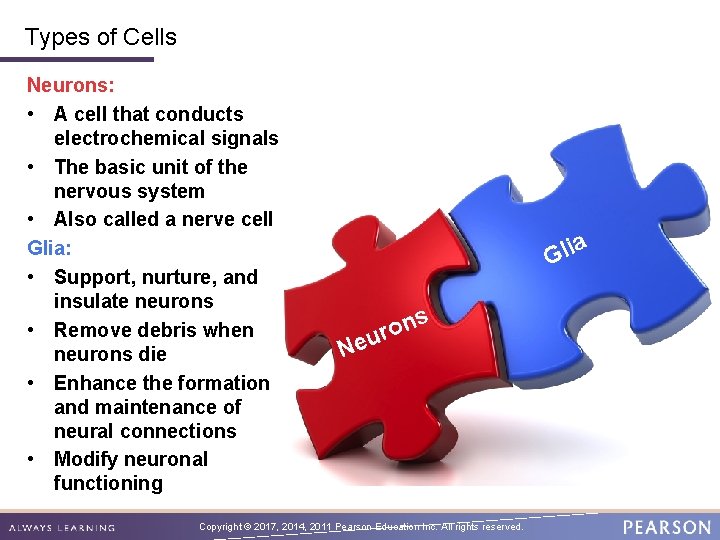
Types of Cells Neurons: • A cell that conducts electrochemical signals • The basic unit of the nervous system • Also called a nerve cell Glia: • Support, nurture, and insulate neurons • Remove debris when neurons die • Enhance the formation and maintenance of neural connections • Modify neuronal functioning a i l G s n o ur Ne Copyright © 2017, 2014, 2011 Pearson Education Inc. All rights reserved.
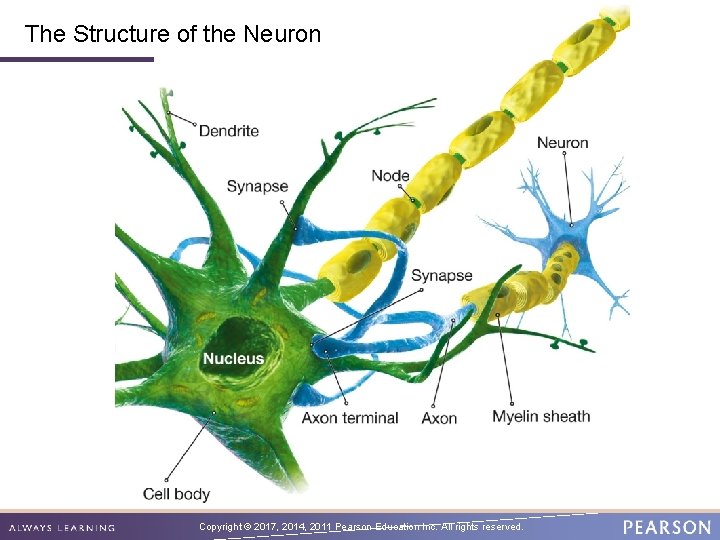
The Structure of the Neuron Copyright © 2017, 2014, 2011 Pearson Education Inc. All rights reserved.
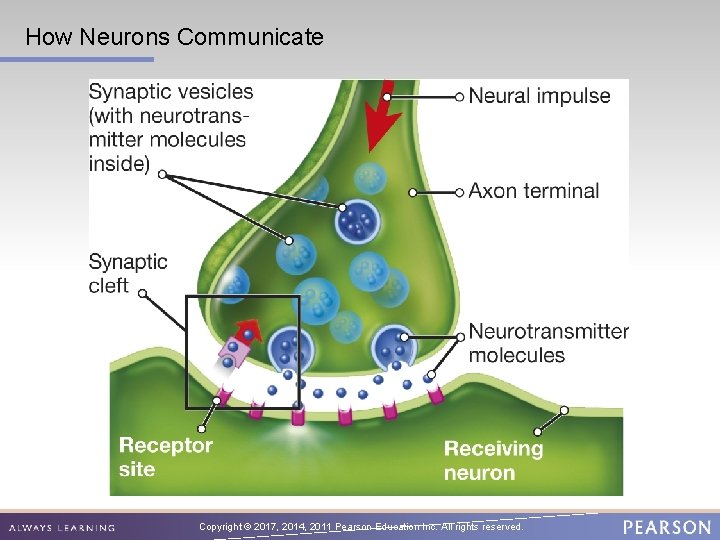
How Neurons Communicate Copyright © 2017, 2014, 2011 Pearson Education Inc. All rights reserved.
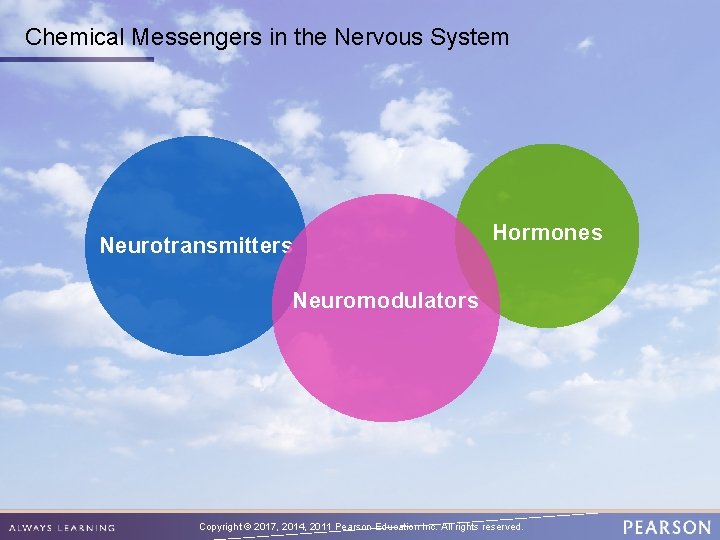
Chemical Messengers in the Nervous System Neurotransmitters Hormones Neuromodulators Copyright © 2017, 2014, 2011 Pearson Education Inc. All rights reserved.
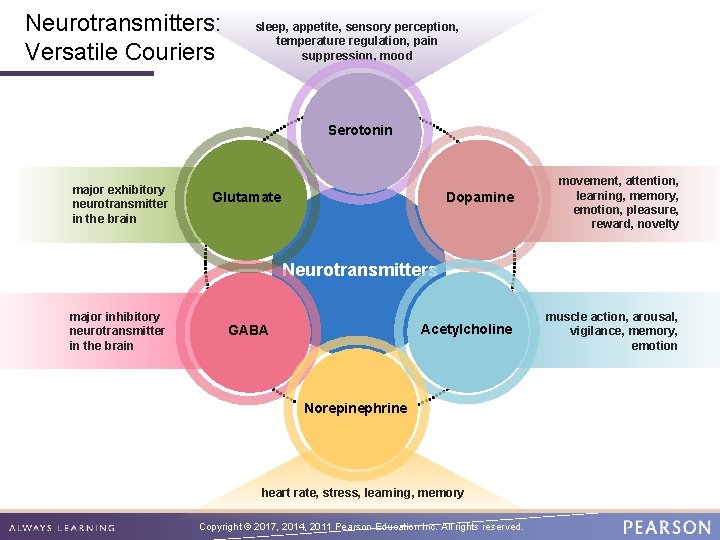
Neurotransmitters: Versatile Couriers sleep, appetite, sensory perception, temperature regulation, pain suppression, mood Serotonin major exhibitory neurotransmitter in the brain Dopamine movement, attention, learning, memory, emotion, pleasure, reward, novelty Acetylcholine muscle action, arousal, vigilance, memory, emotion Glutamate Neurotransmitters major inhibitory neurotransmitter in the brain GABA Norepinephrine heart rate, stress, learning, memory Copyright © 2017, 2014, 2011 Pearson Education Inc. All rights reserved.
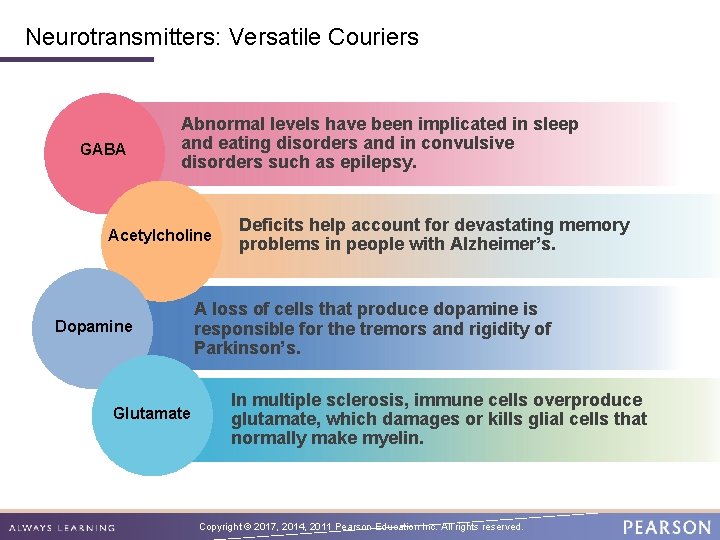
Neurotransmitters: Versatile Couriers GABA Abnormal levels have been implicated in sleep and eating disorders and in convulsive disorders such as epilepsy. Acetylcholine Dopamine Glutamate Deficits help account for devastating memory problems in people with Alzheimer’s. A loss of cells that produce dopamine is responsible for the tremors and rigidity of Parkinson’s. In multiple sclerosis, immune cells overproduce glutamate, which damages or kills glial cells that normally make myelin. Copyright © 2017, 2014, 2011 Pearson Education Inc. All rights reserved.
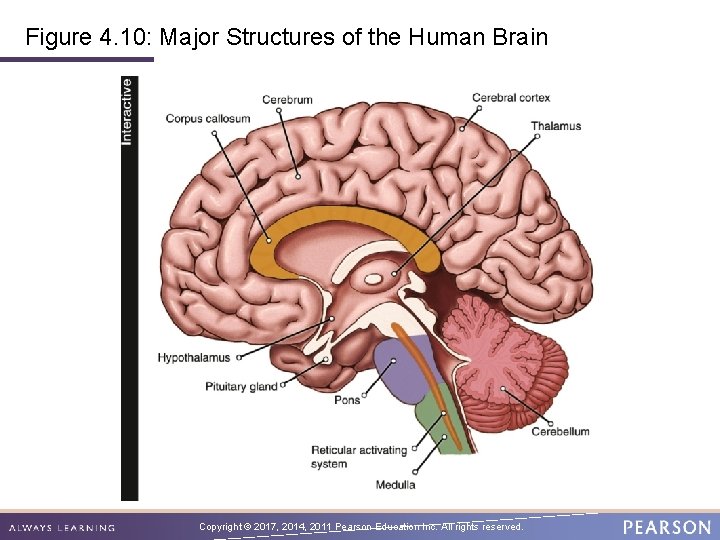
Figure 4. 10: Major Structures of the Human Brain Copyright © 2017, 2014, 2011 Pearson Education Inc. All rights reserved.
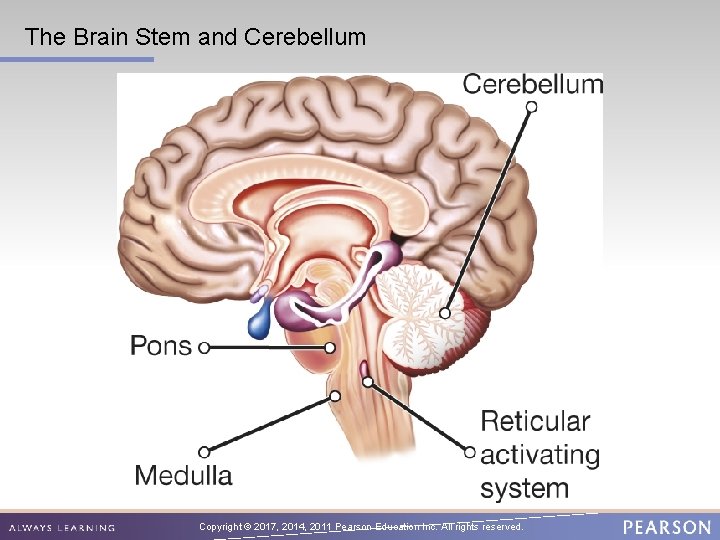
The Brain Stem and Cerebellum Copyright © 2017, 2014, 2011 Pearson Education Inc. All rights reserved.
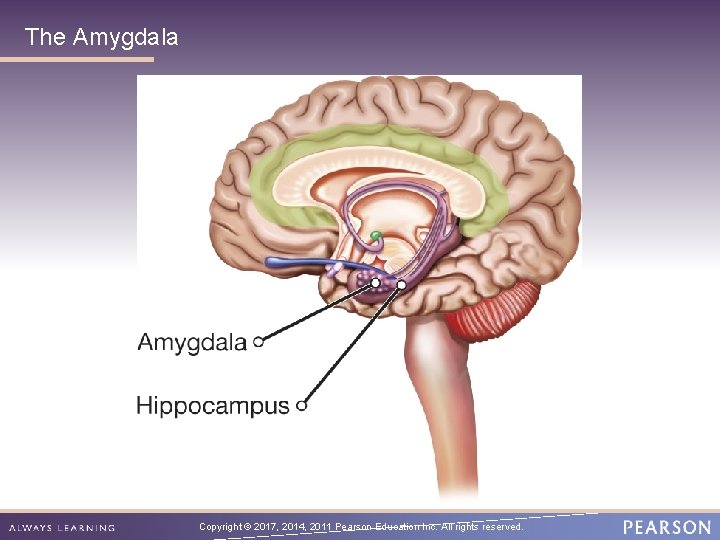
The Amygdala Copyright © 2017, 2014, 2011 Pearson Education Inc. All rights reserved.
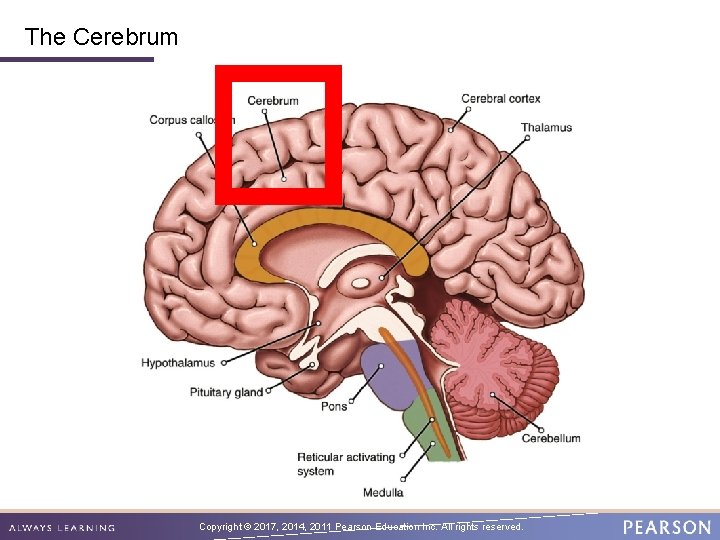
The Cerebrum Copyright © 2017, 2014, 2011 Pearson Education Inc. All rights reserved.
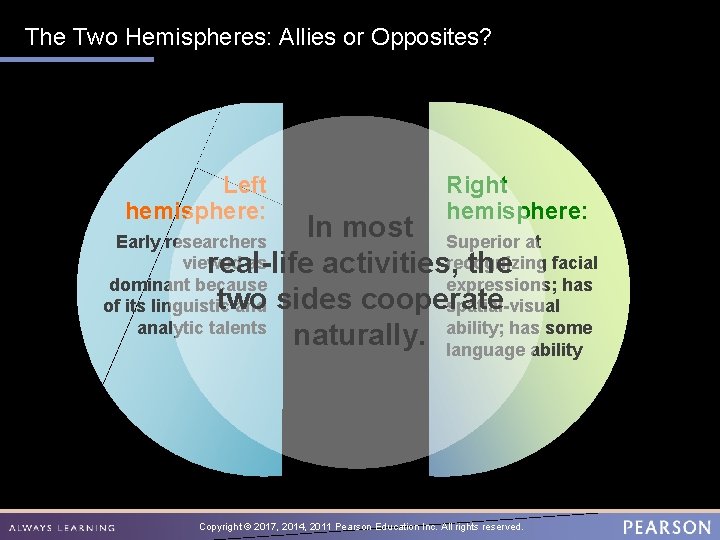
The Two Hemispheres: Allies or Opposites? Left hemisphere: Right hemisphere: In most Superior at real-life activities, recognizing the facial expressions; has two sides cooperate spatial-visual has some naturally. ability; language ability Early researchers viewed as dominant because of its linguistic and analytic talents Copyright © 2017, 2014, 2011 Pearson Education Inc. All rights reserved.
- Slides: 16