
4 SUSPENSION FEEDERS SUBSTRATE FEEDERS Feces Caterpillar Baleen

• �������� 4 ���� SUSPENSION FEEDERS SUBSTRATE FEEDERS Feces Caterpillar Baleen FLUID FEEDERS BULK FEEDERS 9/1/2021 ������ digestion 5
Food Processing • ������� food processing �������� 1. 2. 3. 4. 9/1/2021 ingestion ������ digestion ������� absorption ����� elimination ������ (����� ) ������ digestion 6
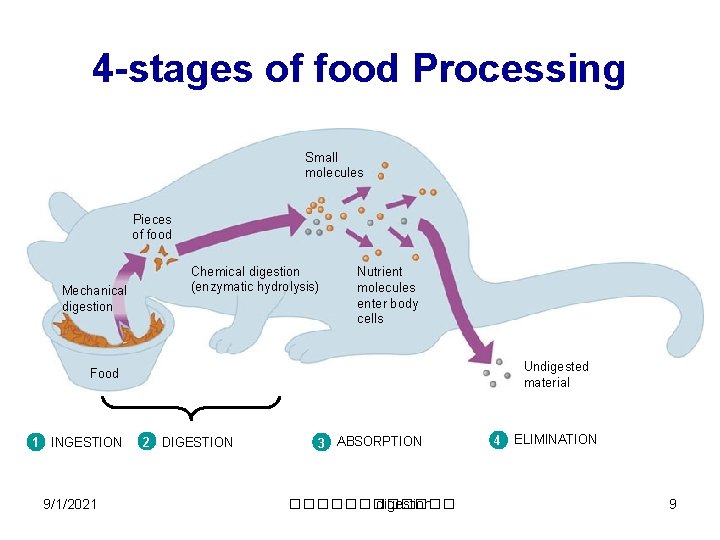
4 -stages of food Processing Small molecules Pieces of food Mechanical digestion Chemical digestion (enzymatic hydrolysis) Nutrient molecules enter body cells Undigested material Food 1 INGESTION 9/1/2021 2 DIGESTION 3 ABSORPTION ������ digestion 4 ELIMINATION 9
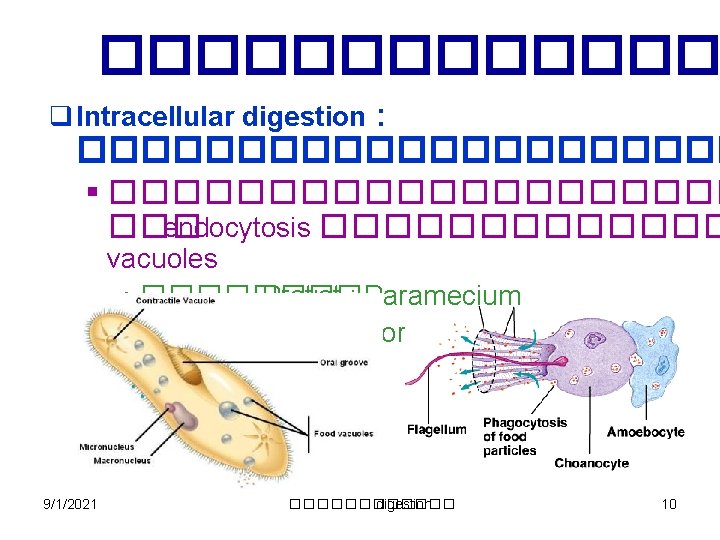
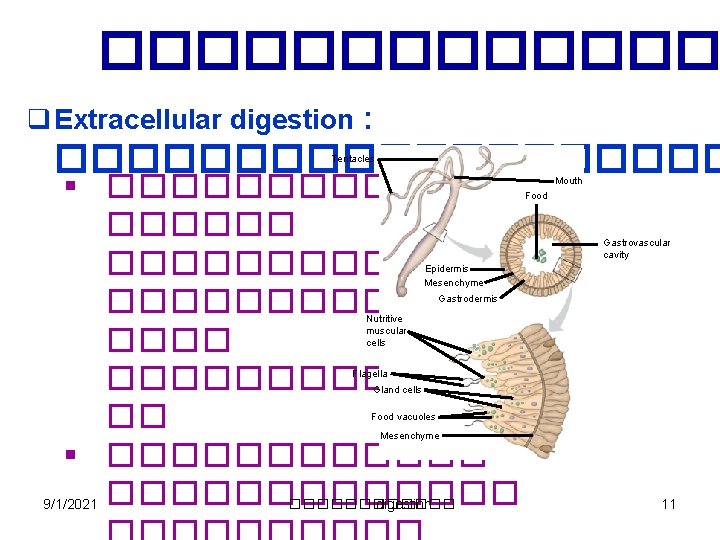
������� q Extracellular digestion : ���������� Tentacles § ������������� ������ �� § ������ 9/1/2021 ������� digestion Mouth Food Gastrovascular cavity Epidermis Mesenchyme Gastrodermis Nutritive muscular cells Flagella Gland cells Food vacuoles Mesenchyme 11
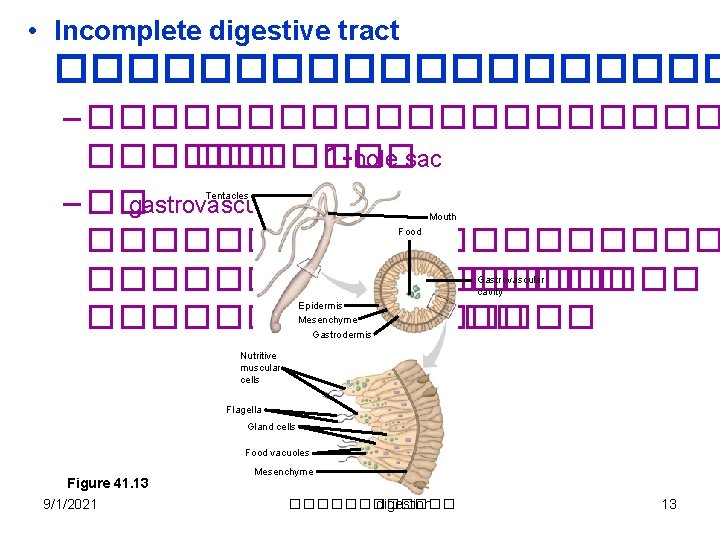
• Incomplete digestive tract ���������� – ���������� 1 -hole sac – �� gastrovascular cavity ���������� ���������������� Tentacles Mouth Food Gastrovascular cavity Epidermis Mesenchyme Gastrodermis Nutritive muscular cells Flagella Gland cells Food vacuoles Figure 41. 13 9/1/2021 Mesenchyme ������ digestion 13
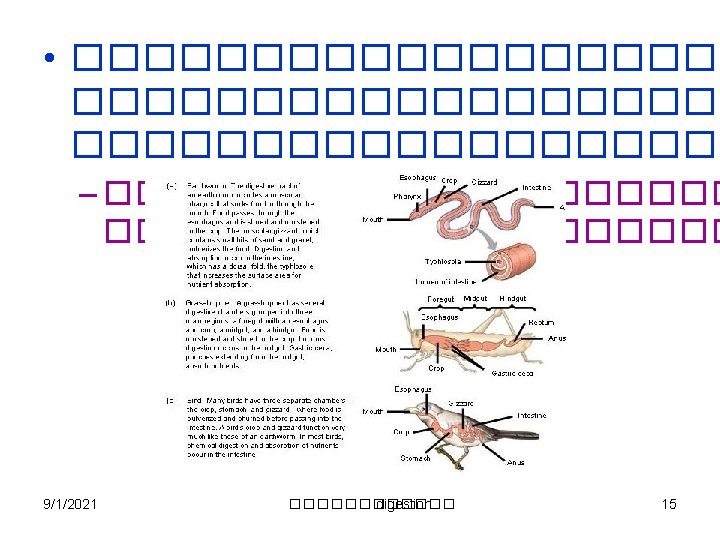
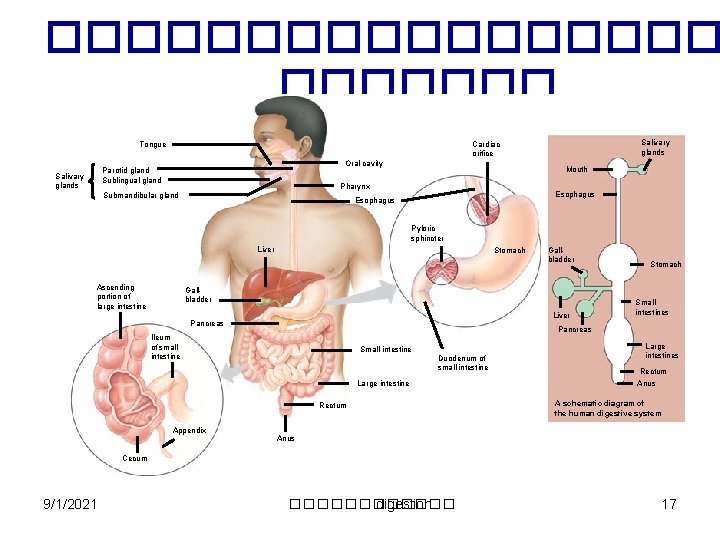
��������� Tongue Oral cavity Parotid gland Sublingual gland Salivary glands Cardiac orifice Mouth Pharynx Submandibular gland Esophagus Pyloric sphincter Liver Ascending portion of large intestine Stomach Gallbladder Liver Pancreas Small intestines Pancreas IIeum of small intestine Small intestine Duodenum of small intestine Large intestine Rectum Appendix Stomach Large intestines Rectum Anus A schematic diagram of the human digestive system Anus Cecum 9/1/2021 ������ digestion 17
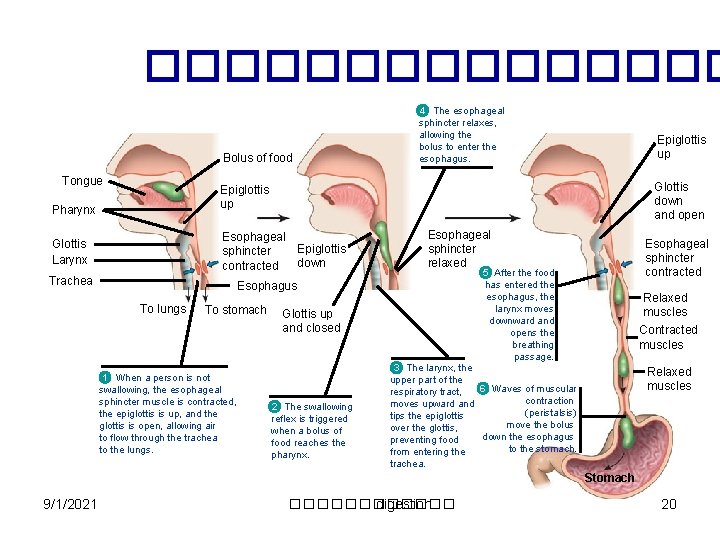
�������� Bolus of food Tongue 4 The esophageal sphincter relaxes, allowing the bolus to enter the esophagus. Epiglottis up Glottis down and open Epiglottis up Pharynx Esophageal Epiglottis sphincter down contracted Glottis Larynx Trachea Esophageal sphincter relaxed Esophagus To lungs To stomach 1 When a person is not swallowing, the esophageal sphincter muscle is contracted, the epiglottis is up, and the glottis is open, allowing air to flow through the trachea to the lungs. Glottis up and closed 2 The swallowing reflex is triggered when a bolus of food reaches the pharynx. Esophageal sphincter contracted 5 After the food has entered the esophagus, the larynx moves downward and opens the breathing passage. Relaxed muscles Contracted muscles 3 The larynx, the upper part of the 6 Waves of muscular respiratory tract, contraction moves upward and (peristalsis) tips the epiglottis move the bolus over the glottis, down the esophagus preventing food to the stomach. from entering the trachea. Relaxed muscles Stomach 9/1/2021 ������ digestion 20
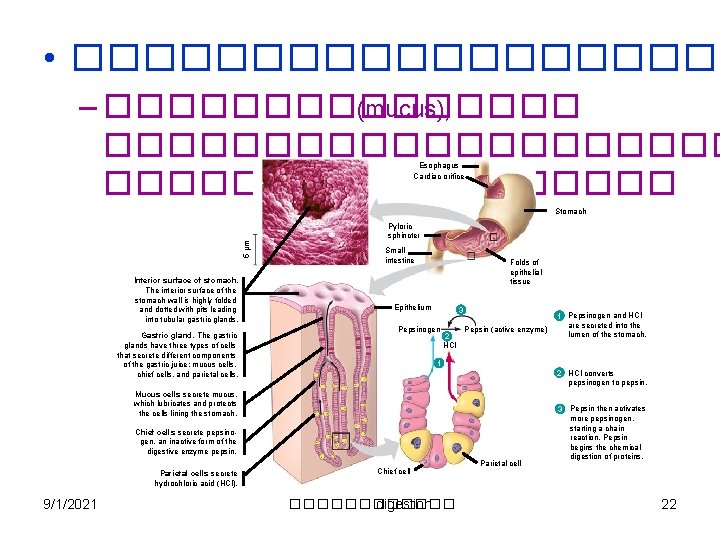
• ���������� – �������� (mucus), ���������� Esophagus Cardiac orifice Stomach 5 µm Pyloric sphincter Interior surface of stomach. The interior surface of the stomach wall is highly folded and dotted with pits leading into tubular gastric glands. Gastric gland. The gastric glands have three types of cells that secrete different components of the gastric juice: mucus cells, chief cells, and parietal cells. Small intestine Folds of epithelial tissue Epithelium 3 Pepsinogen 2 HCl Pepsin (active enzyme) 1 2 HCl converts pepsinogen to pepsin. Mucus cells secrete mucus, which lubricates and protects the cells lining the stomach. Chief cells secrete pepsinogen, an inactive form of the digestive enzyme pepsin. Parietal cells secrete hydrochloric acid (HCl). 9/1/2021 1 Pepsinogen and HCI are secreted into the lumen of the stomach. Chief cell ������ digestion Parietal cell 3 Pepsin then activates more pepsinogen, starting a chain reaction. Pepsin begins the chemical digestion of proteins. 22
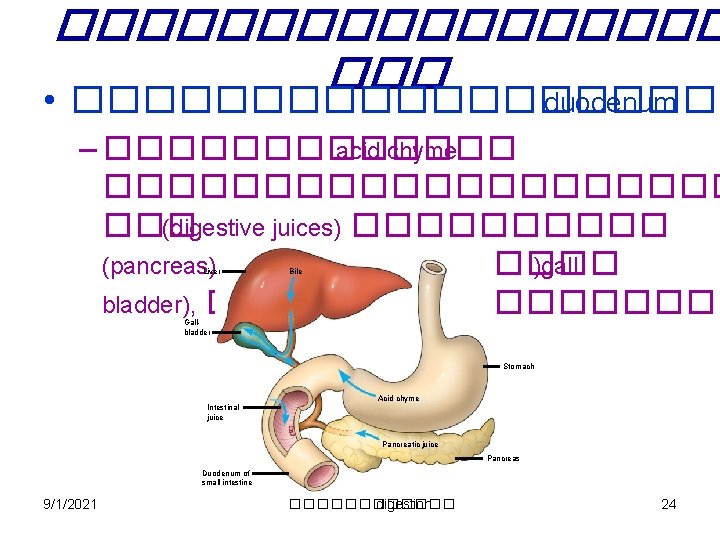
��������� ��� • ���������� duodenum – ������� acid chyme ���������� ��� (digestive juices) ����� (pancreas), ��� (liver), ���� )gall bladder), ��������� Liver Bile Gallbladder Stomach Intestinal juice Acid chyme Pancreatic juice Pancreas Duodenum of small intestine 9/1/2021 ������ digestion 24
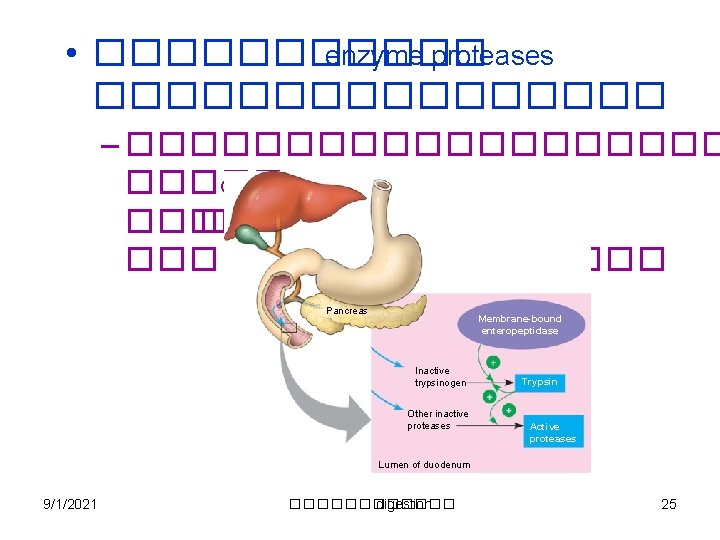
• ������ enzyme proteases �������� – ���������� duodenum ���� trypsinogen ��������� Trypsin Pancreas Membrane-bound enteropeptidase Inactive trypsinogen Other inactive proteases Trypsin Active proteases Lumen of duodenum 9/1/2021 ������ digestion 25
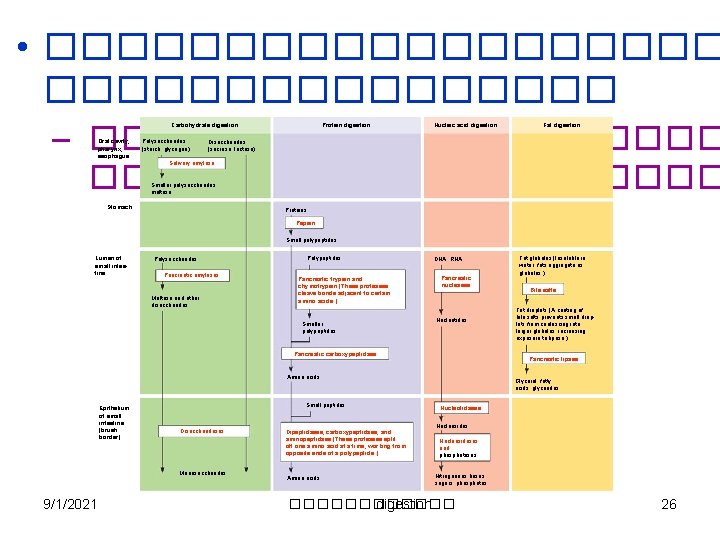
• ���������� – ���������� +���������� Protein digestion Carbohydrate digestion Oral cavity, pharynx, esophagus Polysaccharides (starch, glycogen) Nucleic acid digestion Fat digestion Disaccharides (sucrose, lactose) Salivary amylase Smaller polysaccharides, maltose Stomach Proteins Pepsin Small polypeptides Lumen of small intestine Polysaccharides Pancreatic amylases Maltose and other disaccharides Polypeptides Pancreatic trypsin and chymotrypsin (These proteases cleave bonds adjacent to certain amino acids. ) Smaller polypeptides DNA, RNA Pancreatic nucleases Nucleotides Pancreatic carboxypeptidase Small peptides Disaccharidases Monosaccharides 9/1/2021 Dipeptidases, carboxypeptidase, and aminopeptidase (These proteases split off one amino acid at a time, working from opposite ends of a polypeptide. ) Amino acids Bile salts Fat droplets (A coating of bile salts prevents small droplets from coalescing into larger globules, increasing exposure to lipase. ) Pancreatic lipase Amino acids Epithelium of small intestine (brush border) Fat globules (Insoluble in water, fats aggregate as globules. ) Glycerol, fatty acids, glycerides Nucleotidases Nucleosidases and phosphatases Nitrogenous bases, sugars, phosphates ������ digestion 26
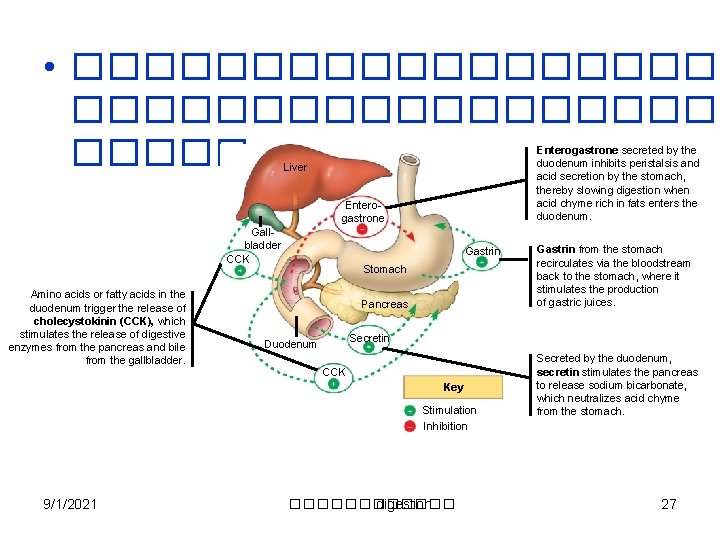
• ������������������� Enterogastrone secreted by the duodenum inhibits peristalsis and acid secretion by the stomach, thereby slowing digestion when acid chyme rich in fats enters the duodenum. Liver Enterogastrone Gallbladder CCK Amino acids or fatty acids in the duodenum trigger the release of cholecystokinin (CCK), which stimulates the release of digestive enzymes from the pancreas and bile from the gallbladder. Gastrin Stomach Pancreas Secretin Duodenum CCK Key Stimulation Inhibition 9/1/2021 Gastrin from the stomach recirculates via the bloodstream back to the stomach, where it stimulates the production of gastric juices. ������ digestion Secreted by the duodenum, secretin stimulates the pancreas to release sodium bicarbonate, which neutralizes acid chyme from the stomach. 27
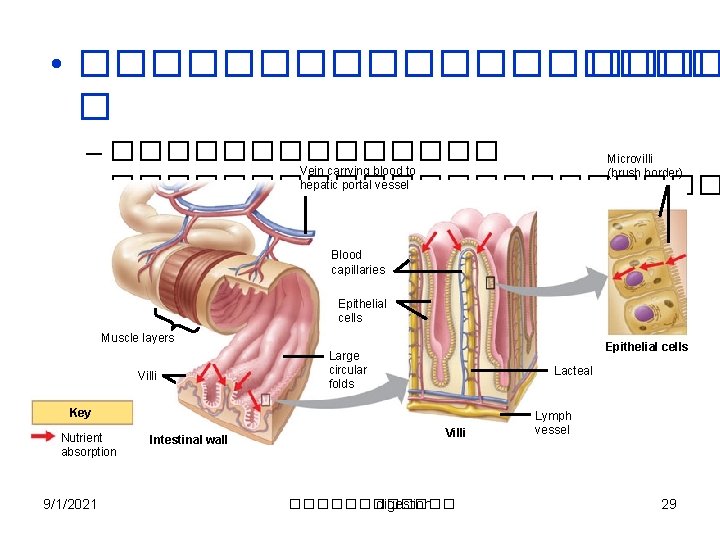
• ��������� � – ������� Microvilli Vein carrying blood to (brush border) hepatic portal vessel ����������� Blood capillaries Epithelial cells Muscle layers Villi Epithelial cells Large circular folds Lacteal Key Nutrient absorption 9/1/2021 Intestinal wall Villi ������ digestion Lymph vessel 29
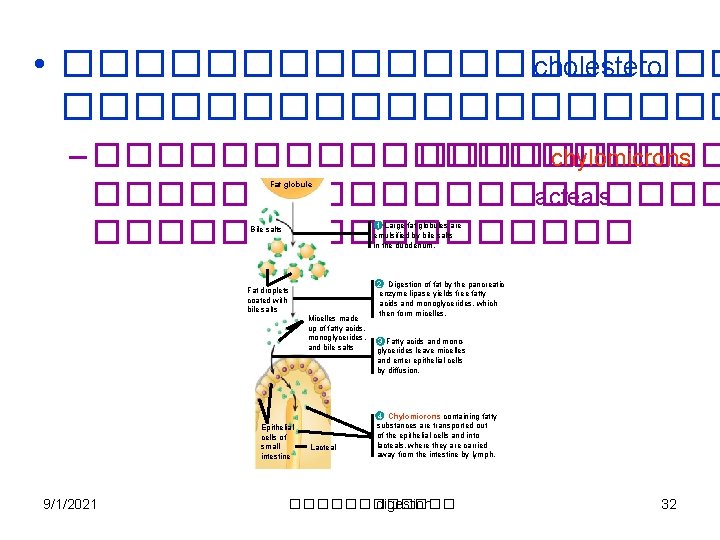
• ���������� cholesterol ���������� – ���������� chylomicrons ���������� lacteals ��������� Fat globule 1 Large fat globules are emulsified by bile salts in the duodenum. Bile salts Fat droplets coated with bile salts Epithelial cells of small intestine 9/1/2021 Micelles made up of fatty acids, monoglycerides, and bile salts Lacteal 2 Digestion of fat by the pancreatic enzyme lipase yields free fatty acids and monoglycerides, which then form micelles. 3 Fatty acids and monoglycerides leave micelles and enter epithelial cells by diffusion. 4 Chylomicrons containing fatty substances are transported out of the epithelial cells and into lacteals, where they are carried away from the intestine by lymph. ������ digestion 32
- Slides: 33