
4 STAR Spectrometer for SkyScanning SunTracking Atmospheric Research


- Slides: 20
4 STAR: Spectrometer for Sky-Scanning, Sun-Tracking Atmospheric Research Results from TCAP Summer 2012 Flights A multi-agency collaboration involving: • PNNL: Connor Flynn, J. Hubbe, E. Kassianov, B. Schmid • NASA Ames: S. Dunagan, R. Johnson, M. Kacenelenbogen, J. Redemann, P. Russell, M. Segal Rozenhaimer, Y. Shinozuka, S. Ramachandran • NASA GSFC: B. Holben, S. Sinyuk Funding: NASA, DOE ARM, BMI, PNNL
Acknowledgments AERONET: Tom Eck, Ilya Slutsker ARM Cimel PI: Laurie Gregory, Rick Wagener G 1 facility support: Mike Hubbell, Bill Svancara, Dick Hone, Celine Kluzek, John Hubbe, Duli Chand, Jason Tomlinson, Gene Dukes 2
Presentation Outline What is 4 STAR? What measurements/science can it contribute? 4 STAR TCAP Flights 4 STAR TCAP Results 3
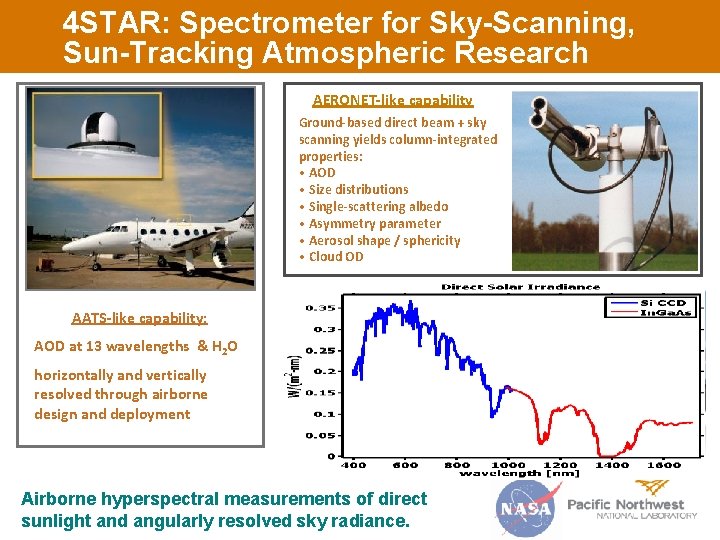
4 STAR: Spectrometer for Sky-Scanning, Sun-Tracking Atmospheric Research AERONET-like capability Ground-based direct beam + sky scanning yields column-integrated properties: • AOD • Size distributions • Single-scattering albedo • Asymmetry parameter • Aerosol shape / sphericity • Cloud OD AATS-like capability: AOD at 13 wavelengths & H 2 O horizontally and vertically resolved through airborne design and deployment Airborne measurements direct So, what hyperspectral really is 4 STAR? What does itofmeasure? 4 sunlight and angularly resolved sky radiance.
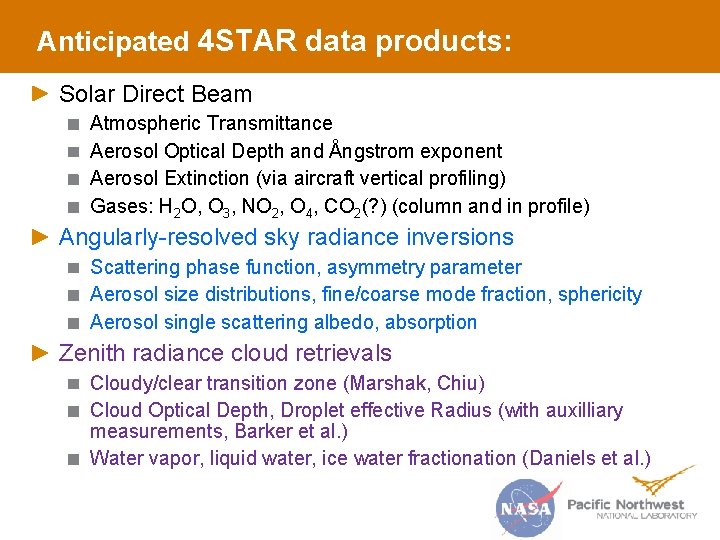
Anticipated 4 STAR data products: Solar Direct Beam Atmospheric Transmittance Aerosol Optical Depth and Ångstrom exponent Aerosol Extinction (via aircraft vertical profiling) Gases: H 2 O, O 3, NO 2, O 4, CO 2(? ) (column and in profile) Angularly-resolved sky radiance inversions Scattering phase function, asymmetry parameter Aerosol size distributions, fine/coarse mode fraction, sphericity Aerosol single scattering albedo, absorption Zenith radiance cloud retrievals Cloudy/clear transition zone (Marshak, Chiu) Cloud Optical Depth, Droplet effective Radius (with auxilliary measurements, Barker et al. ) Water vapor, liquid water, ice water fractionation (Daniels et al. )
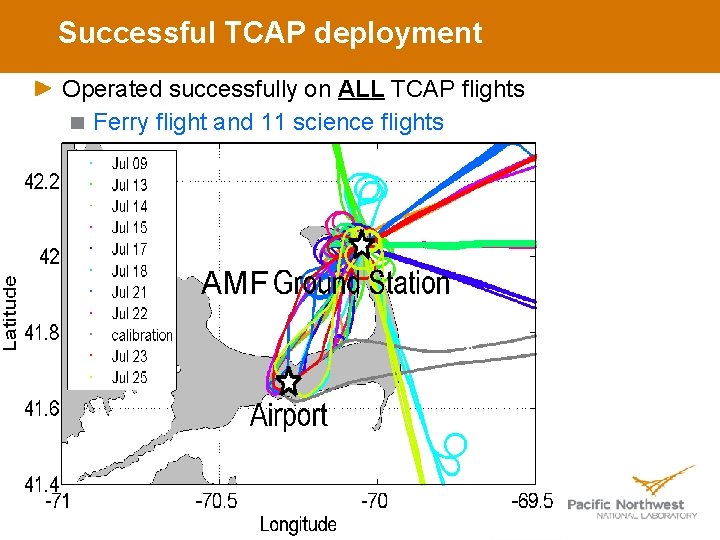
Successful TCAP deployment Operated successfully on ALL TCAP flights Ferry flight and 11 science flights AMF 6
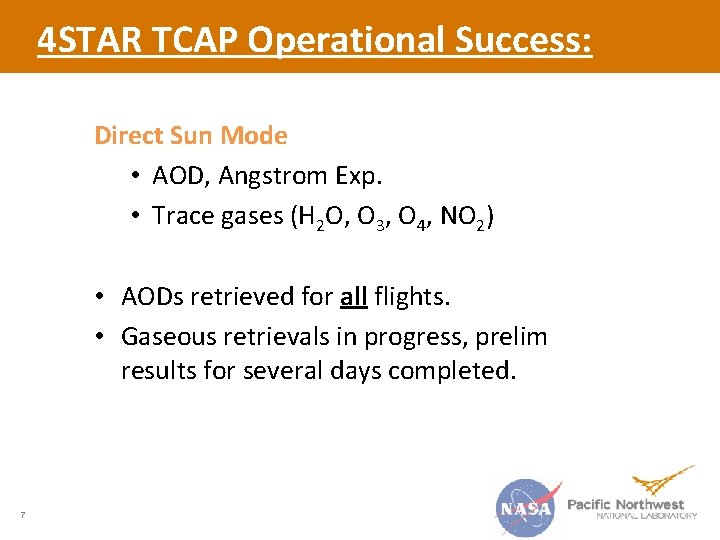
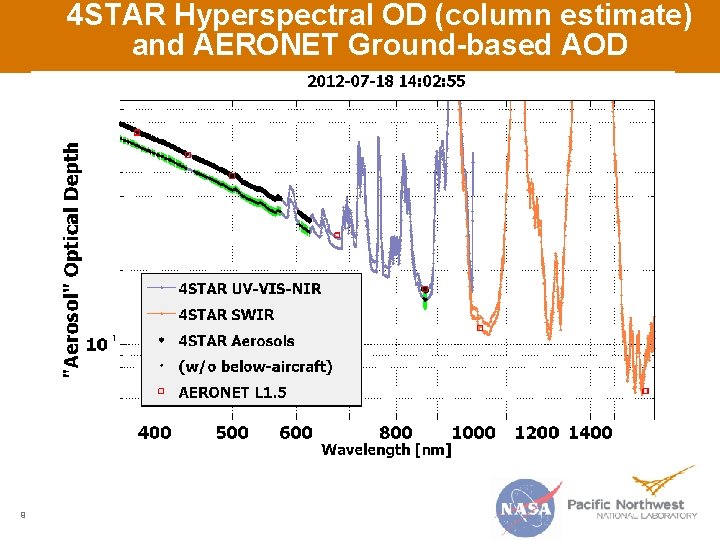
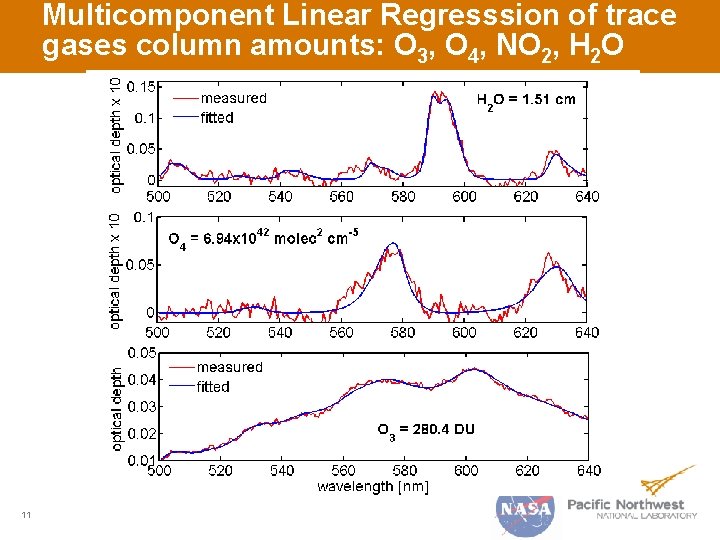
4 STAR TCAP Operational Success: Direct Sun Mode • AOD, Angstrom Exp. • Trace gases (H 2 O, O 3, O 4, NO 2) • AODs retrieved for all flights. • Gaseous retrievals in progress, prelim results for several days completed. 7
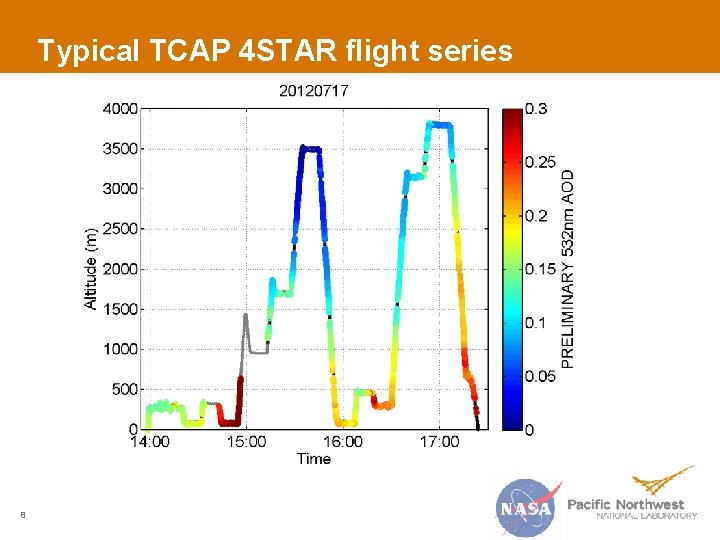
Typical TCAP 4 STAR flight series 8
4 STAR Hyperspectral OD (column estimate) and AERONET Ground-based AOD 9
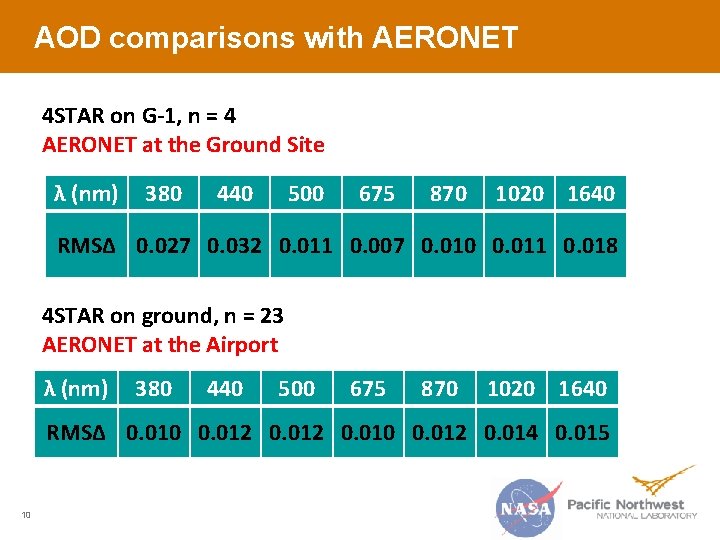
AOD comparisons with AERONET 4 STAR on G-1, n = 4 AERONET at the Ground Site λ (nm) 380 440 500 675 870 1020 1640 RMSΔ 0. 027 0. 032 0. 011 0. 007 0. 010 0. 011 0. 018 4 STAR on ground, n = 23 AERONET at the Airport λ (nm) 380 440 500 675 870 1020 1640 RMSΔ 0. 010 0. 012 0. 014 0. 015 10
Multicomponent Linear Regresssion of trace gases column amounts: O 3, O 4, NO 2, H 2 O 11
CWV retrieval from 940 nm band calibrated via “modified Langley” 12
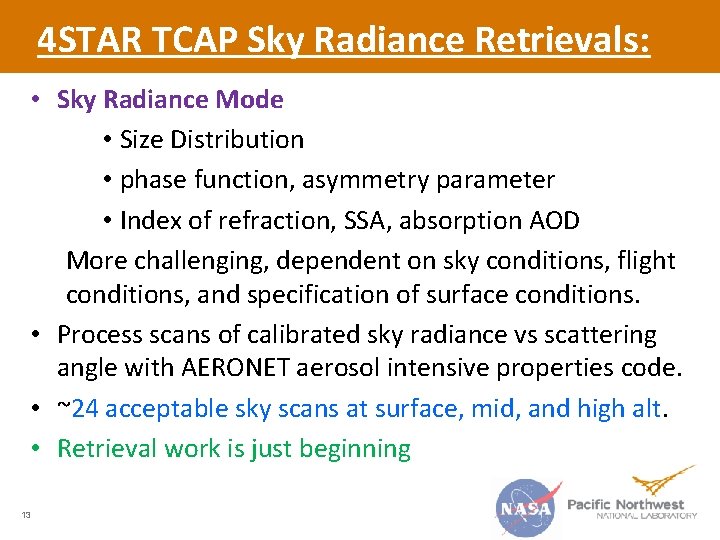
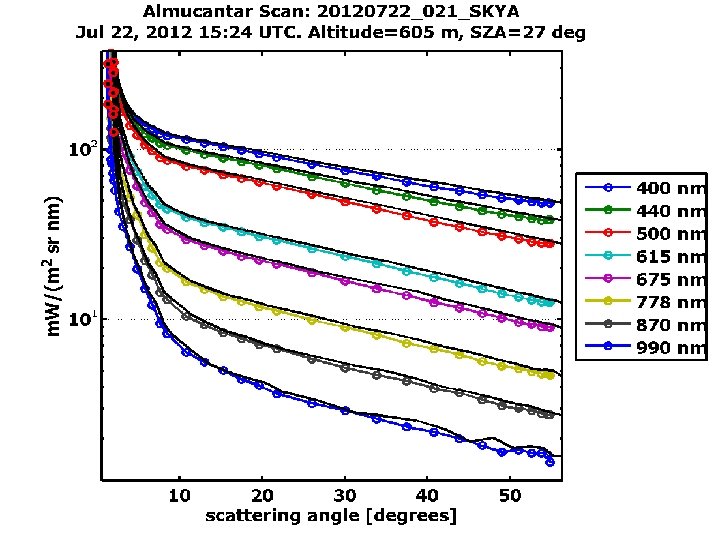
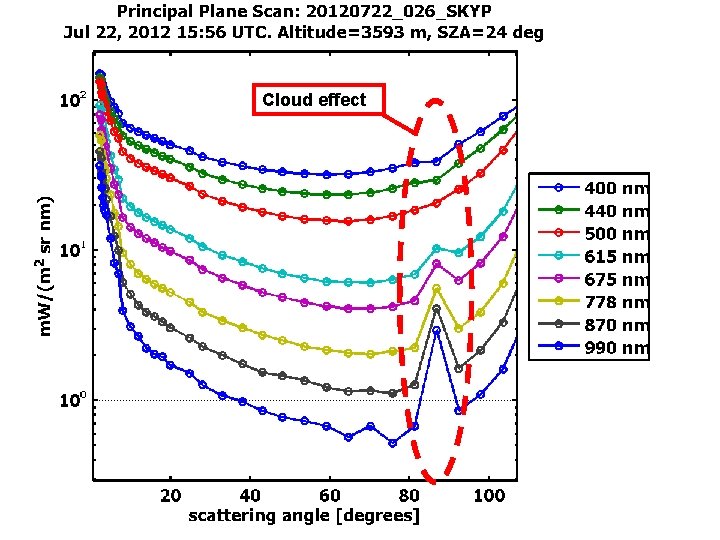
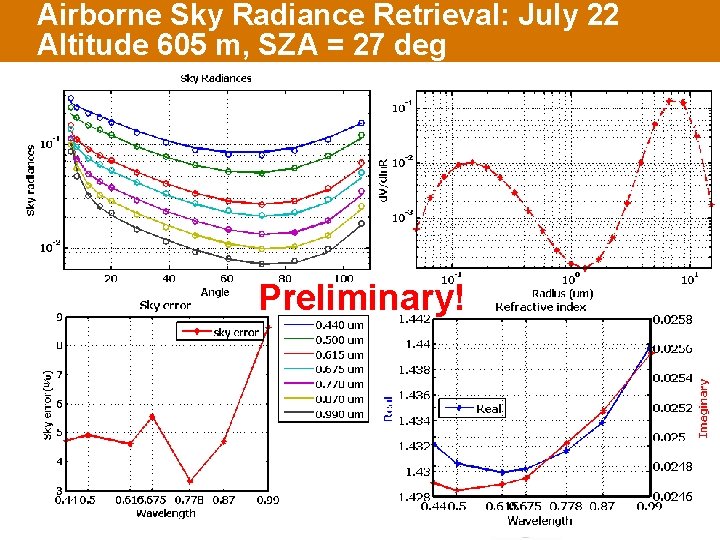
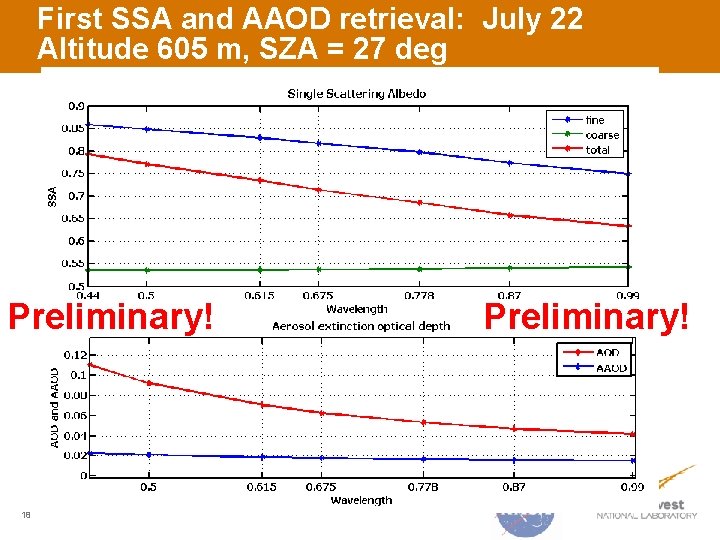
4 STAR TCAP Sky Radiance Retrievals: • Sky Radiance Mode • Size Distribution • phase function, asymmetry parameter • Index of refraction, SSA, absorption AOD More challenging, dependent on sky conditions, flight conditions, and specification of surface conditions. • Process scans of calibrated sky radiance vs scattering angle with AERONET aerosol intensive properties code. • ~24 acceptable sky scans at surface, mid, and high alt. • Retrieval work is just beginning 13
Cloud effect
Airborne Sky Radiance Retrieval: July 22 Altitude 605 m, SZA = 27 deg Preliminary! 17
First SSA and AAOD retrieval: July 22 Altitude 605 m, SZA = 27 deg Preliminary! 18 Preliminary!
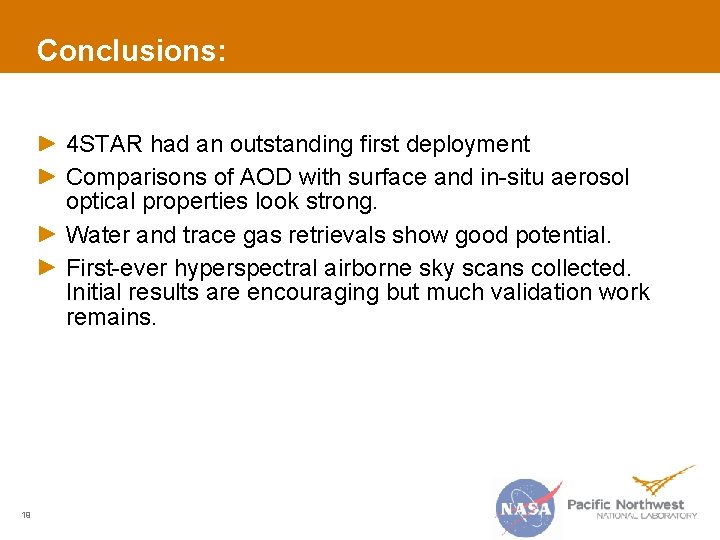
Conclusions: 4 STAR had an outstanding first deployment Comparisons of AOD with surface and in-situ aerosol optical properties look strong. Water and trace gas retrievals show good potential. First-ever hyperspectral airborne sky scans collected. Initial results are encouraging but much validation work remains. 19
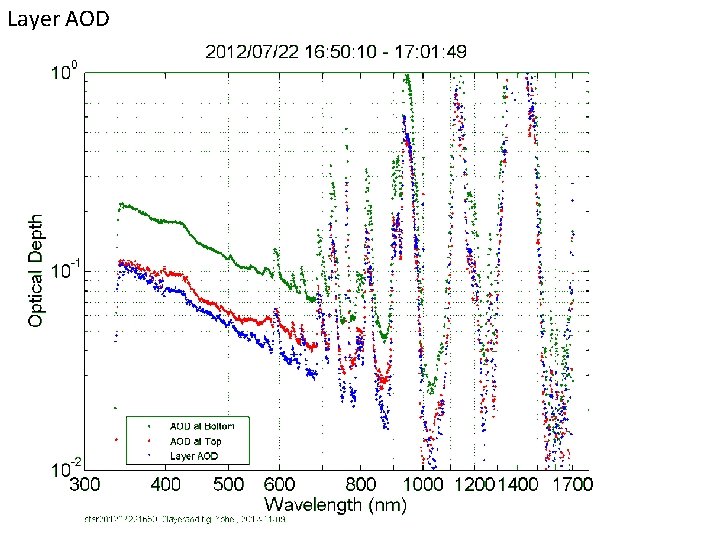
Layer AOD