
4 STAR Spectrometer for SkyScanning Sun Tracking Atmospheric
- Slides: 21
4 STAR: Spectrometer for Sky-Scanning, Sun -Tracking Atmospheric Research A collaboration involving: • PNNL: C. Flynn, B. Schmid, E. Kassianov • NASA Ames: S. Dunagan, R. Johnson, Y. Shinozuka, P. Russell, J. Redemann, J. Livingston • NASA GSFC: AERONET Team
Motivation for a Spectrometer for Sky-Scanning, Sun-Tracking Atmospheric Research (4 STAR) Future change in Earth’s surface temperature is driven by radiative forcing and climate sensitivity. Uncertainties in radiative forcing of climate are still dominated by uncertainties in forcing by aerosols, Directly (scattering and absorption of solar radiation) Indirectly (through the aerosols’ effect on clouds) 4 STAR can measure many of the quantities needed to determine direct and indirect aerosol forcing (unperturbed by sampling artifacts)
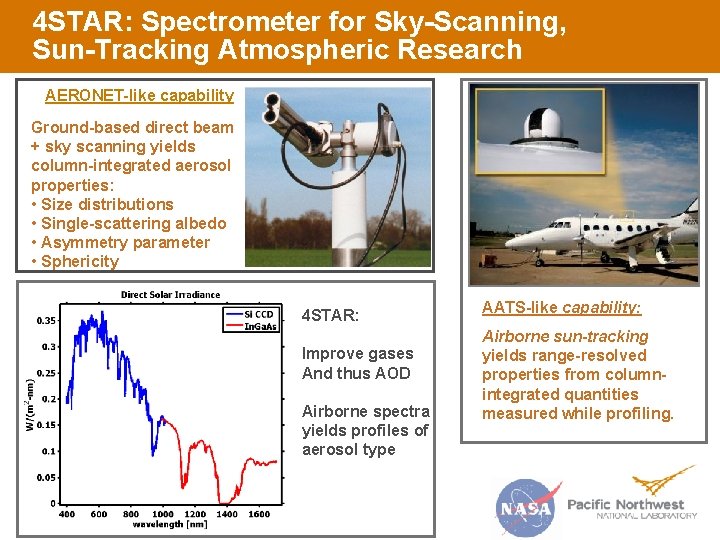
4 STAR: Spectrometer for Sky-Scanning, Sun-Tracking Atmospheric Research AERONET-like capability Ground-based direct beam + sky scanning yields column-integrated aerosol properties: • Size distributions • Single-scattering albedo • Asymmetry parameter • Sphericity 4 STAR: Improve gases And thus AOD Airborne spectra yields profiles of aerosol type AATS-like capability: Airborne sun-tracking yields range-resolved properties from columnintegrated quantities measured while profiling.
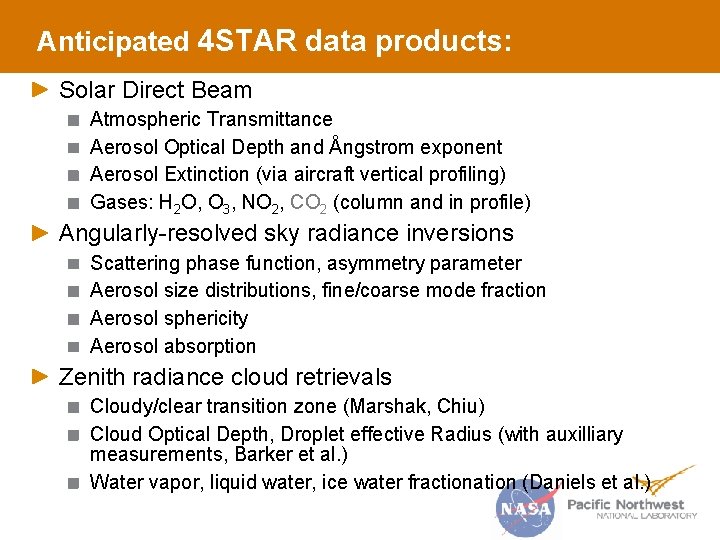
Anticipated 4 STAR data products: Solar Direct Beam Atmospheric Transmittance Aerosol Optical Depth and Ångstrom exponent Aerosol Extinction (via aircraft vertical profiling) Gases: H 2 O, O 3, NO 2, CO 2 (column and in profile) Angularly-resolved sky radiance inversions Scattering phase function, asymmetry parameter Aerosol size distributions, fine/coarse mode fraction Aerosol sphericity Aerosol absorption Zenith radiance cloud retrievals Cloudy/clear transition zone (Marshak, Chiu) Cloud Optical Depth, Droplet effective Radius (with auxilliary measurements, Barker et al. ) Water vapor, liquid water, ice water fractionation (Daniels et al. )
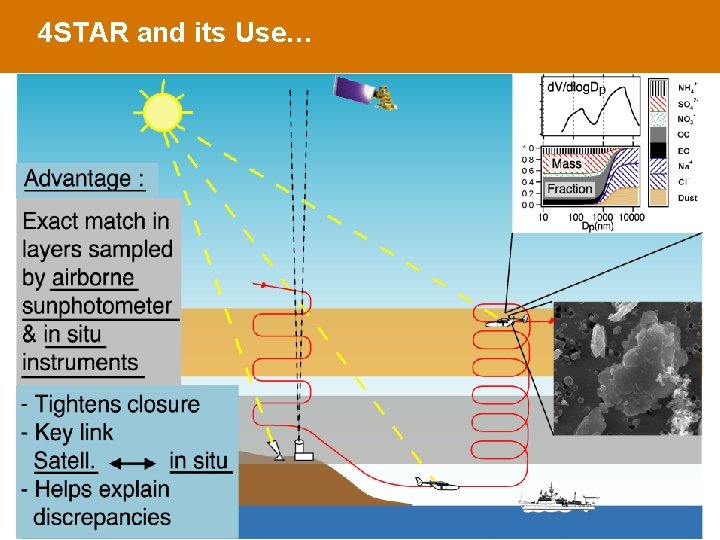
4 STAR and its Use…
6
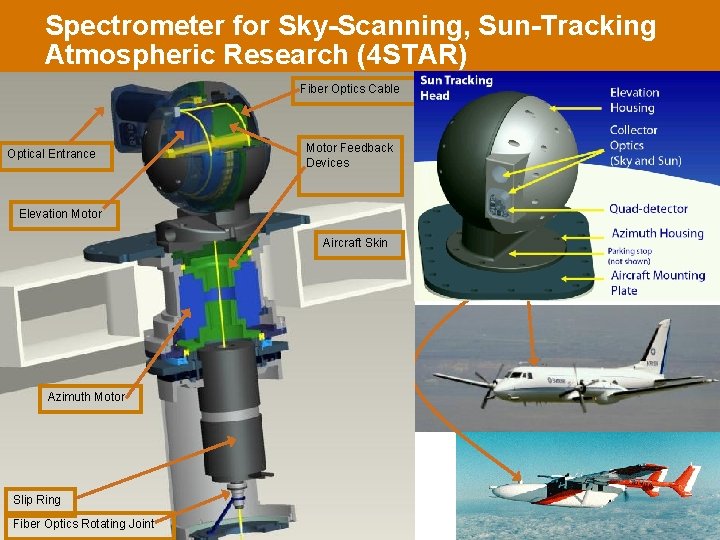
Spectrometer for Sky-Scanning, Sun-Tracking Atmospheric Research (4 STAR) Fiber Optics Cable Optical Entrance Motor Feedback Devices Elevation Motor Aircraft Skin Azimuth Motor Slip Ring Fiber Optics Rotating Joint
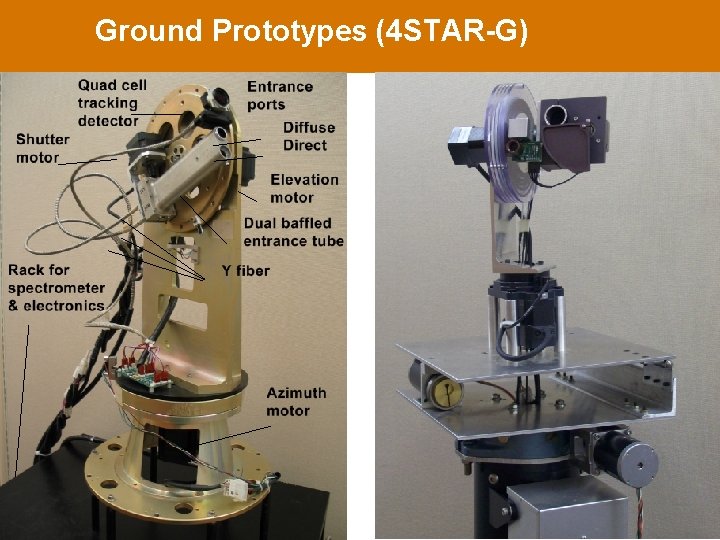
Ground Prototypes (4 STAR-G)
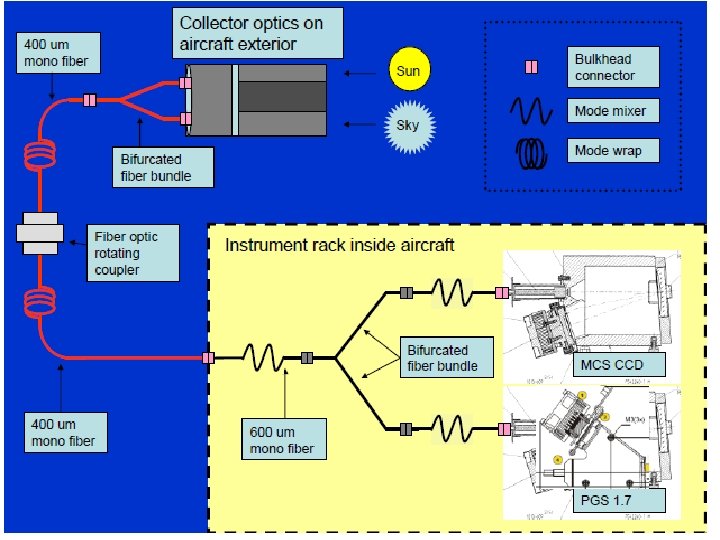
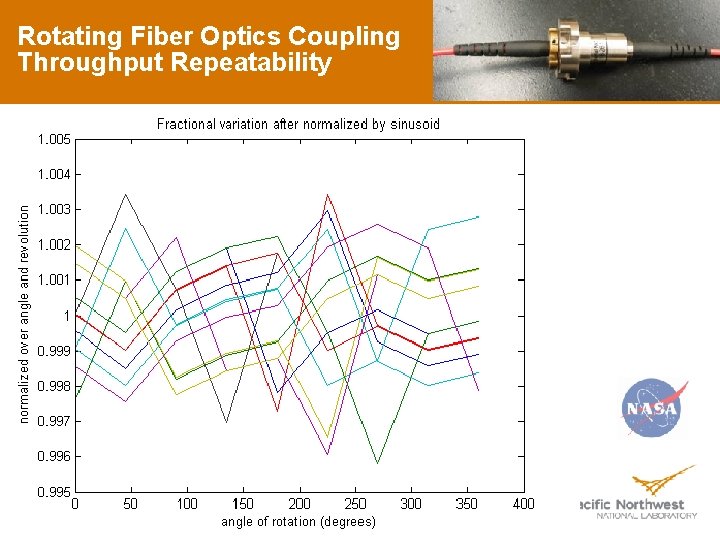
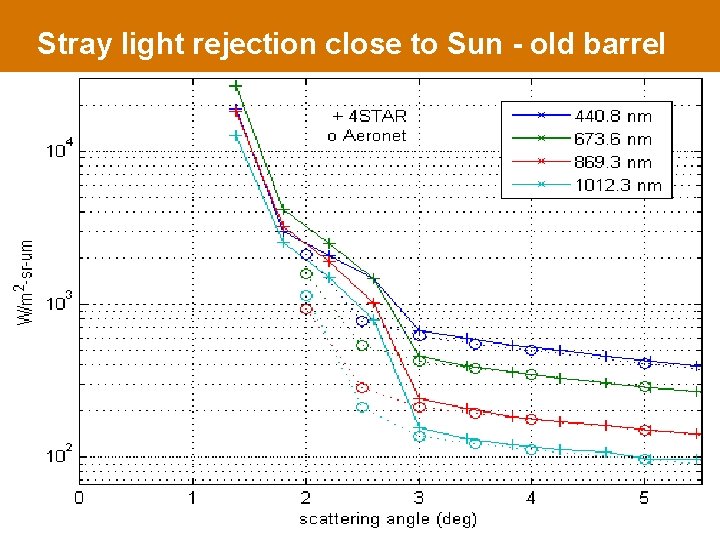
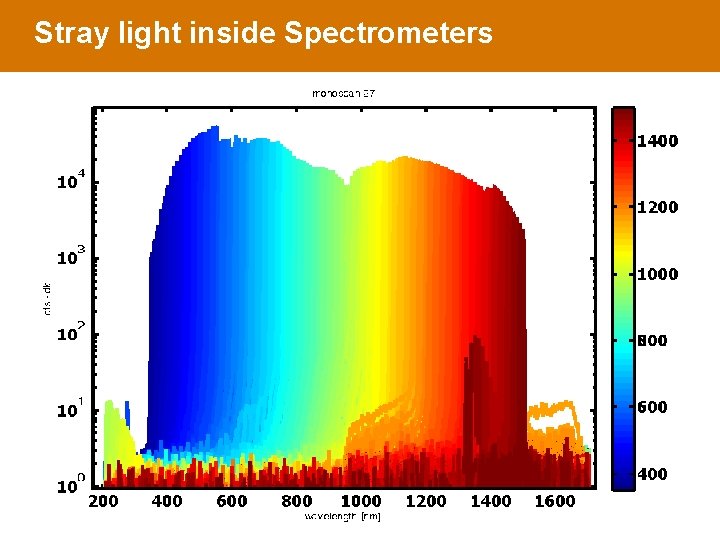
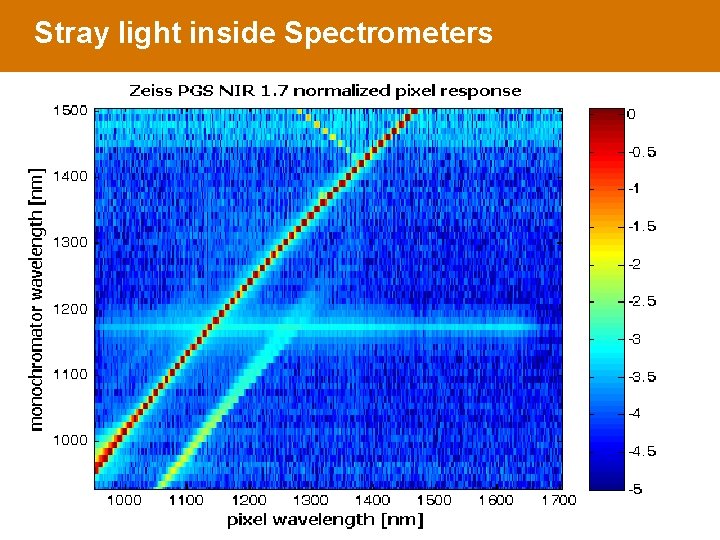
Key Technological Hurdles: Fiber optic couplings with <1% calibration stability (Connections/Rotation) Irradiance calibration to 1% over a period of months. Radiance calibration to a few percent. Stray light rejection: measure skylight down to within 3° of sun Sky scan within 100 seconds (10 km in flight) Stray light inside spectrometers
Rotating Fiber Optics Coupling Throughput Repeatability
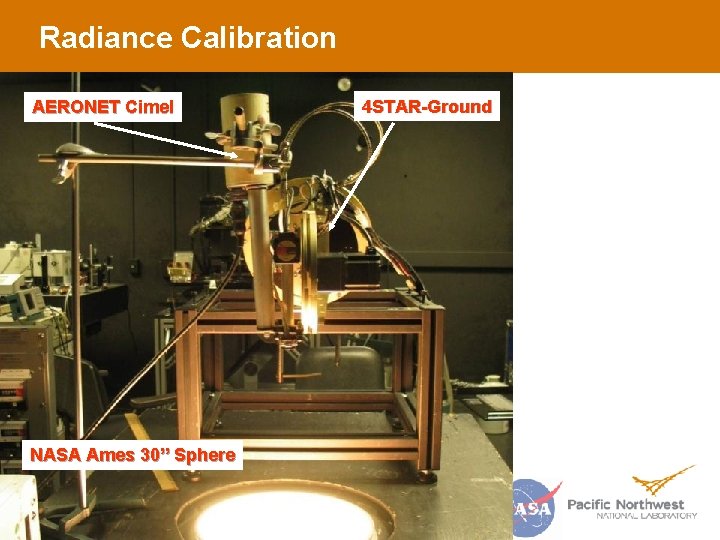
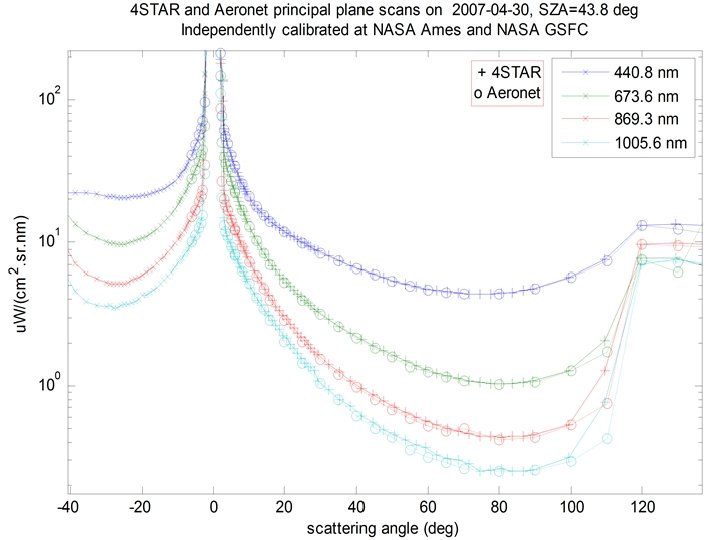
Radiance Calibration AERONET Cimel NASA Ames 30” Sphere 4 STAR-Ground
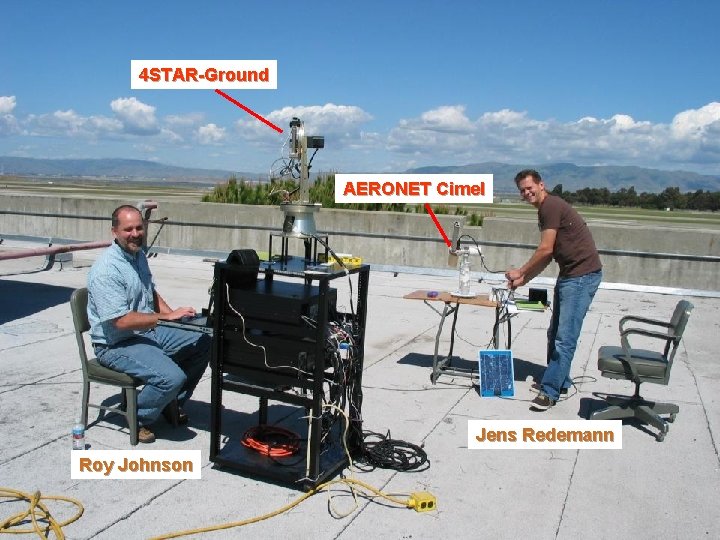
4 STAR-Ground AERONET Cimel Jens Redemann Roy Johnson
Stray light rejection close to Sun - old barrel
Size Distribution Retrieval using AERONET Code
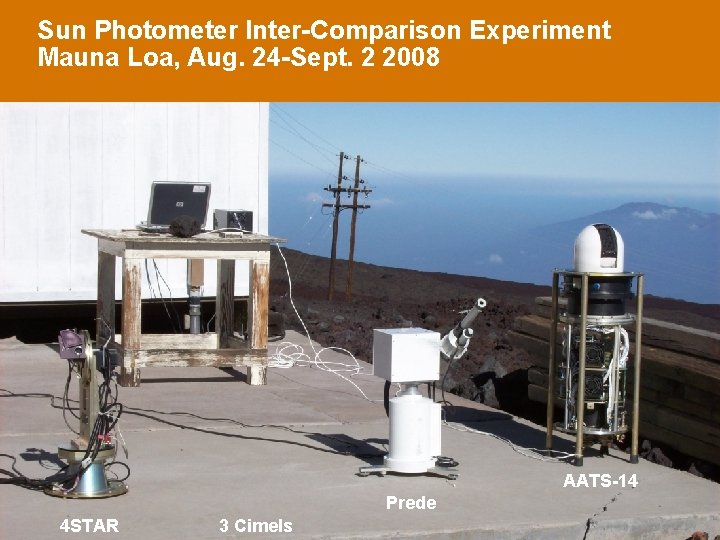
Sun Photometer Inter-Comparison Experiment Mauna Loa, Aug. 24 -Sept. 2 2008 AATS-14 Prede 4 STAR 3 Cimels
Stray light inside Spectrometers 19
Stray light inside Spectrometers 20
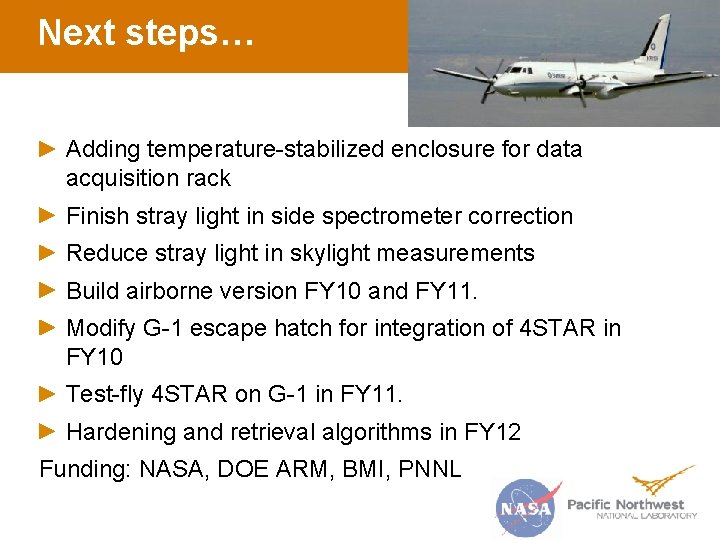
Next steps… Adding temperature-stabilized enclosure for data acquisition rack Finish stray light in side spectrometer correction Reduce stray light in skylight measurements Build airborne version FY 10 and FY 11. Modify G-1 escape hatch for integration of 4 STAR in FY 10 Test-fly 4 STAR on G-1 in FY 11. Hardening and retrieval algorithms in FY 12 Funding: NASA, DOE ARM, BMI, PNNL